
Reviewed · POMPEII & HERCULANEUM TOURS
Pompeii: Skip-the-Line Guided Tour with Expert Archaeologist
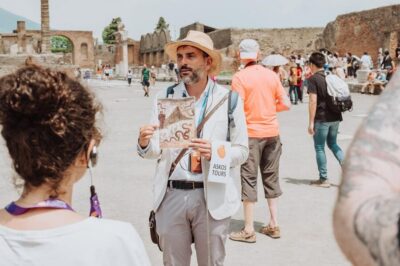
Pompeii makes far more sense when someone can explain what you are looking at. An archaeologist-led walk turns a huge field of broken walls into a living Roman town, from its bakery and ancient shops to the haunting plaster casts of people caught by Mount Vesuvius.
I like the three-hour Complete Pompeii option, which gives you time beyond the standard highlights, and I like the way guides such as Ilaria, Enzo, Anna, and Brunella use stories and small details to explain ordinary life. The main drawback is the heat and hard walking. Shade is scarce, facilities are limited, and the site can leave you tired.
Key points to know before you book

- An archaeologist leads the walk: Guides such as Ilaria, Enzo, Anna, and Brunella have brought strong subject knowledge, clear English, humor, and a real feel for the site.
- The Complete Pompeii route lasts about three hours: You can see the Forum, temples, baths, bakeries, houses, shops, casts, cemetery, walls, and more, though the exact route can change with current excavation work.
- The Express option lasts about two hours: It focuses on the Forum, temples, shops, and other central sights when you want a shorter visit.
- The entry line is handled for you: Pre-reserved skip-the-line tickets are included, but you still need to reach the correct gate 15 minutes early.
- The site is hot and uneven: Wear comfortable closed-toe shoes, carry water, and bring sun protection. High heels, strollers, and wheelchairs are not suitable.
- The price is $70 per person: That is a fair fee if you want context and efficient routing, but less appealing if you prefer wandering alone.
Why Pompeii is better with an archaeologist
Pompeii is not a compact ruin with a neat path from one famous monument to the next. It is a large, exposed city with streets, houses, public buildings, shops, walls, and partially excavated areas spread across a wide area.
On your own, you can admire the stonework and still miss what made a place important. A doorway might have led to a shop. A large basin might belong to a bakery. A simple-looking house could reveal how status, business, religion, and family life worked in Roman society.
That is where this tour earns its keep. Your guide does not simply point at walls. The walk explains how the city functioned and how archaeologists work out what happened there. Guides have included Ilaria, Enzo, Anna, Sonia, Paulo, Vito, and Brunella, among others. The strongest guides bring a lively style, answer questions well, and keep children involved without turning the visit into a school lesson.
The headsets help. Pompeii can be noisy, and stopping a group in the middle of a street is not always easy. With an earpiece, you can look at the building while still hearing the explanation. Several guides have also been praised for clear English and for keeping a mixed-age group together.
Other Roman sites within reach of Pompeii:
- Pompeii: Entry Ticket and Guided Tour with an Archaeologist
★ 4.8 · 19,459 reviews - Pompeii: Entry Ticket with Optional Audio Guide
★ 4.2 · 12,360 reviews - Pompeii: Small Group Tour with an Archaeologist
★ 4.8 · 12,264 reviews
Meeting at the Villa dei Misteri entrance
The meeting point is at Via Villa dei Misteri, 1, at the entrance gate to Pompeii Archaeological Park across from the Hortus Pompei restaurant. Look for the guide holding a green Walks sign, and arrive 15 minutes before the start.
This detail matters. The archaeological park has more than one entrance, and a pin on a map can be misleading. Give yourself extra time to find the gate rather than arriving at the last minute. The tour returns to the same general point after the walk.
You do not receive hotel pickup or transportation. You are responsible for getting to Pompeii, so this tour works best when you have already planned your route from Naples, Sorrento, or elsewhere in Campania. The meeting instructions are simple, but identification at the gate can take a moment, so keep your booking details handy.
You also need to provide the full names of everyone in your party when booking. Those names must match the passport or identity document presented for the visit, and name changes are not permitted.
The Forum, temples, and streets of Roman Pompeii

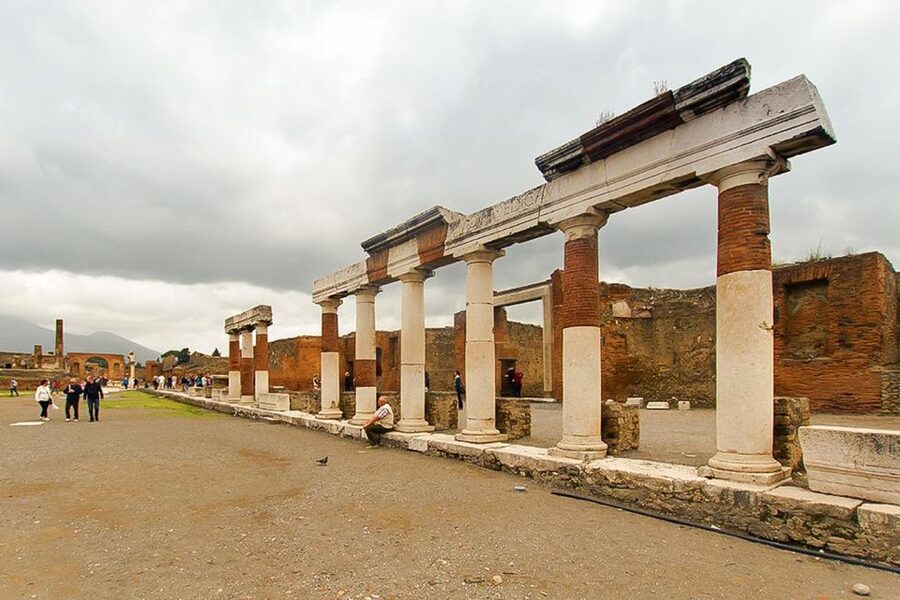
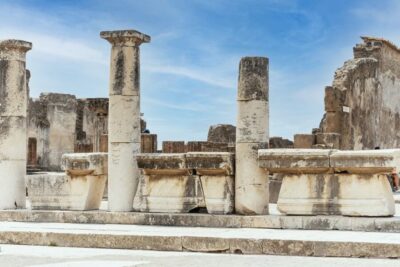
The guided route takes you into the center of Pompeii, where the Forum gives you the clearest sense of the city as a civic place. This was not just a collection of private homes. It was a working Roman town with public religion, commerce, politics, and social life packed into its streets.
From there, your guide places the temples and public buildings in context. The Temple of Apollo is one of the important stops, and it helps show how religion was part of everyday life rather than a separate activity reserved for special occasions.
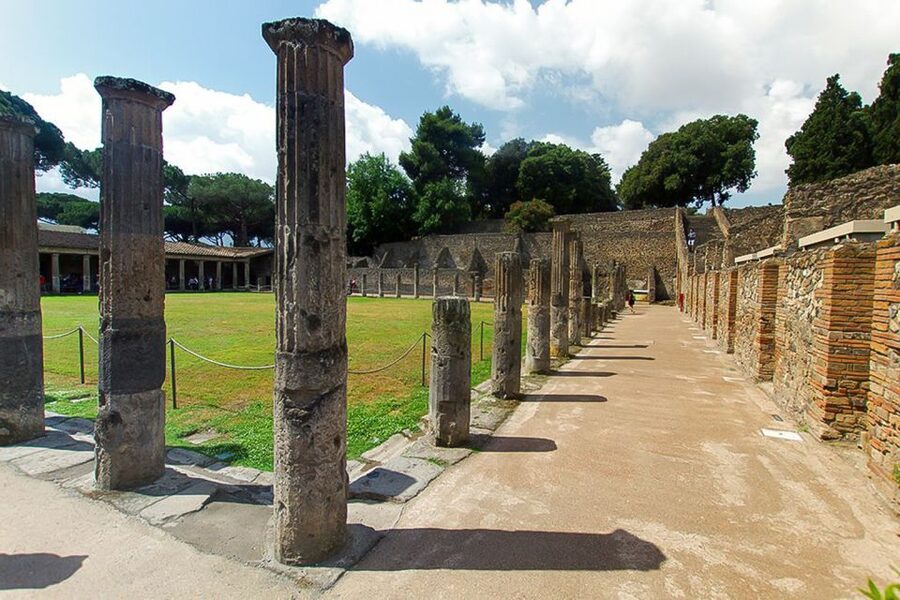
The streets are one of the pleasures of the visit. You walk along ancient paving stones and pass doorways, fountains, storefronts, and walls that still define the town’s layout. The stones can be awkward underfoot, so this is not the place for fashion shoes. The better your footwear, the more attention you can give the buildings.
I especially like the ordinary details. The grand public monuments are memorable, but shops, kitchens, bakeries, and work areas tell you how people actually lived. A guide can point out features you would likely walk past, then connect them to the people who used them nearly 2,000 years ago.
Baths, villas, bakeries, and the city’s shopping streets
The route moves beyond the central monuments to the remains of private homes, public baths, shops, and working spaces. Each gives you a different view of Pompeii.
The villas show how wealthy residents arranged rooms, courtyards, decoration, and social space. Even when much of a building is missing, the plan of the house can tell you how people moved through it and how public and private life overlapped.
The baths offer another useful lesson. They were places for washing, exercise, conversation, and social contact. A guide can explain the remains as part of a system rather than leaving you to wonder why one room has a particular shape or heating feature.
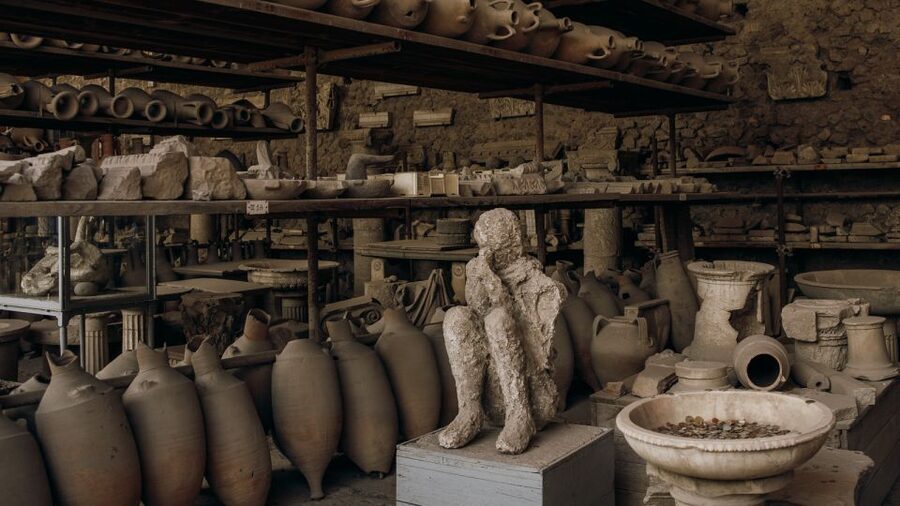
The bakery is a memorable stop because it connects archaeology to food. The remains of a Roman bakery and food that is still almost intact bring the city down to a human scale. Pompeii is easier to picture when you stop thinking only about emperors and disasters and start thinking about bread, errands, work, and meals.
You may also pass what has been described as an ancient supermarket, along with other commercial spaces. The comparison should not be taken too literally, but it gives you a quick way to understand the role of shops in daily life. Pompeii was a functioning town, not a ceremonial ruin.
A few more things to do in Pompeii
- Pompeii: Skip-the-Line Entrance Ticket with Audio Guide
★ 4.0 · 2,509 reviews - Pompeii: Guided Walking Tour with Entrance Ticket
★ 4.3 · 1,423 reviews - Pompeii: Skip-the-line-Ticket and Guided Tour
★ 4.6 · 1,152 reviews - Pompeii: Guided Tour with Skip-the-Line Entry
★ 4.9 · 812 reviews
Plaster casts and the human cost of the eruption
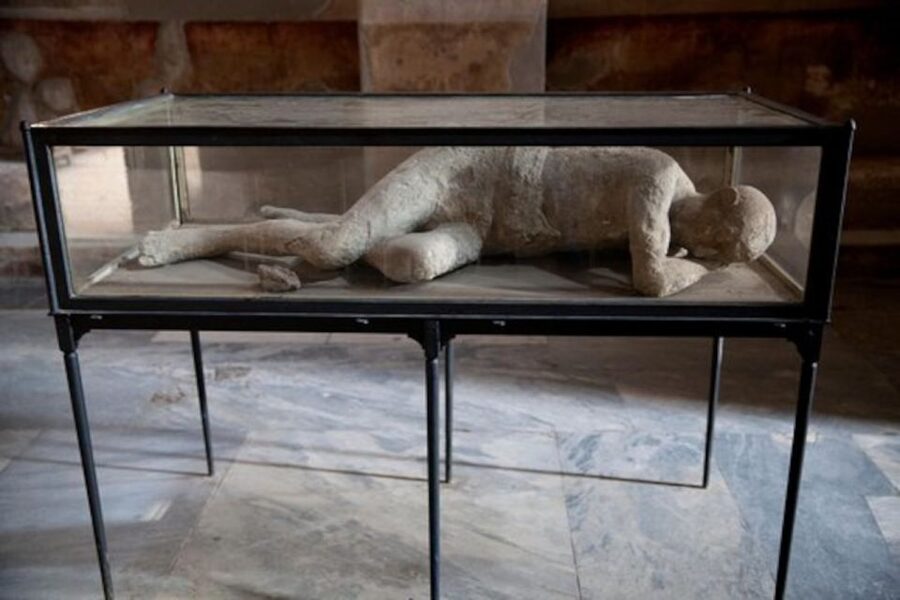
The plaster casts are among the most powerful parts of the visit. They show people and animals caught during the eruption of Mount Vesuvius in 79 AD, preserved in the shapes formed by the ash and debris around them.
These are not easy sights, and the guide’s handling matters. The best explanations provide historical context without turning suffering into spectacle. You learn about the eruption and its effect on the city while still having room to absorb the emotional weight of what you are seeing.
The casts also correct a common misunderstanding. Pompeii is not frozen as a perfect snapshot of an ordinary afternoon. The city was struck by a disaster that unfolded in stages, and archaeology continues to refine what happened. Your guide can help separate established evidence from simple dramatic storytelling.
The experience is strongest when the guide connects the casts with the streets and homes you have already seen. You are no longer looking at isolated objects. You have walked through the town, seen its businesses, and learned how its residents used the spaces. That makes the final scenes more personal.
Cemeteries, brothels, and the less polished side of town
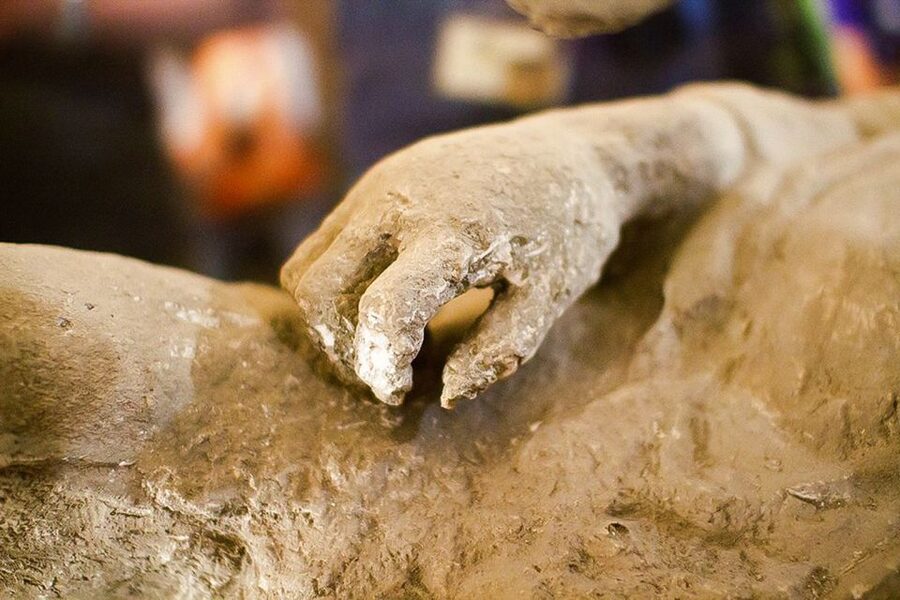
The tour can include an old cemetery and one of the city’s brothels when appropriate for the group. These stops add balance to the polished image of Roman life.
The cemetery shows how the town marked the boundary between the living city and the world beyond it. The brothel, when included, offers a frank look at an aspect of Roman society that is often softened in museum displays. Families with older children may find it useful, while parents of younger children may prefer that the guide skip or shorten it.
The itinerary is not rigid in the way a museum audio guide can be. Guides adjust the walk to current conditions, newly opened areas, and what is available on the day. That flexibility is valuable at an active archaeological site, though it also means you should not expect every group to see precisely the same rooms.
About one third of Pompeii remains uncovered, and excavation and preservation work continue. That fact changes the feel of the visit. You are not walking through a finished attraction. You are seeing a place where new information can alter the route and the story.
The city walls and views toward Naples
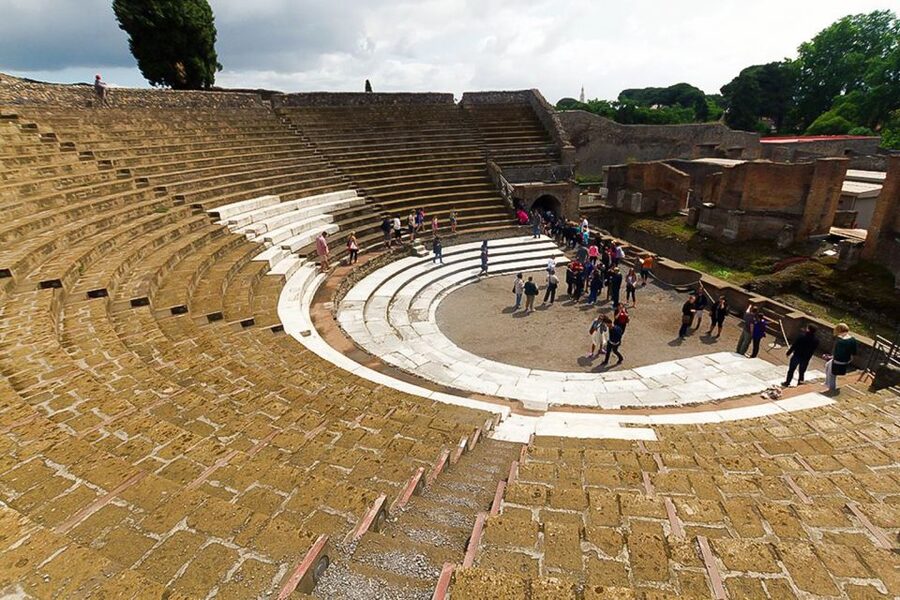
The walk can include a stretch of the old city walls, where you get broader views toward Naples. After several hours among narrow streets and walls, this open viewpoint gives your eyes a break.
The view also helps you understand Pompeii’s setting near Mount Vesuvius and the Bay of Naples. The city was not an isolated settlement. Its location connected it to trade, farming, travel, and the wider Roman world.
This part of the tour is another reason to wear practical shoes. The walk includes uneven surfaces and a moderate pace. One guide may find a shaded pause when possible, but shade is never something you should count on. In summer, the exposed stone can become exhausting.
Three hours or two: choosing the right route
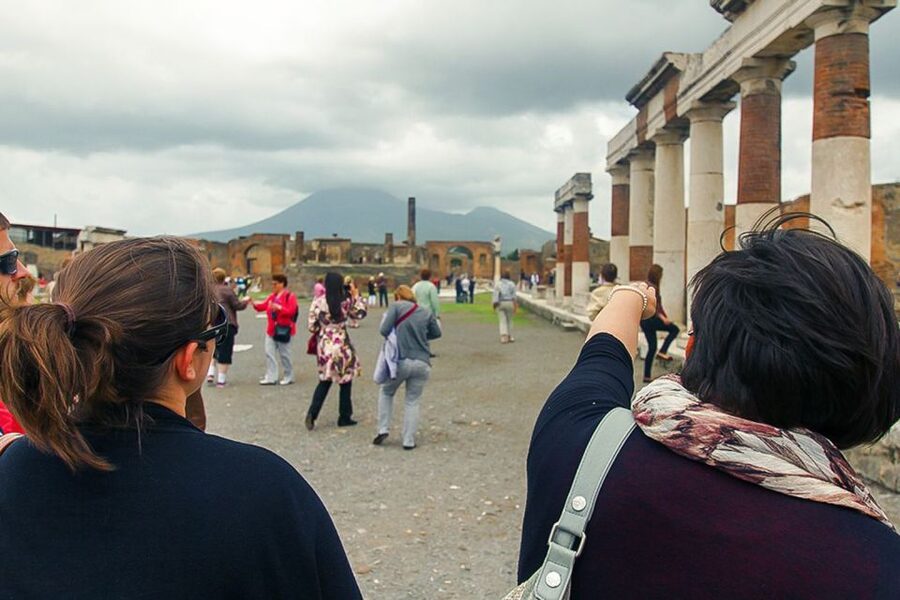
At booking, you can choose between the Complete Pompeii option, which lasts about three hours, and the Pompeii Express option, which lasts about two hours.
Choose the longer tour if Pompeii is a main reason for your visit. The extra hour gives the guide more room to move beyond the Forum and central temples. You have a better chance of seeing working spaces, private homes, baths, casts, the cemetery, and other areas while still having time for questions.
The longer option does not mean you will see every corner of Pompeii. The site is simply too large for that in three hours. But it gives you a broader picture and makes the $70 price easier to justify.
The Express option suits a tight schedule or a first taste before another activity. It focuses on the main highlights, including the Forum, temples, and shops. You still get an archaeologist’s explanation, skip-the-line entry, and a clear route, but you give up some of the quieter and more detailed parts of the city.
I would choose Express for young children, a very hot day, or a schedule that includes other major sights. I would choose Complete Pompeii for anyone with a serious interest in Roman life, archaeology, or the eruption.
What $70 buys you, and when it feels worthwhile
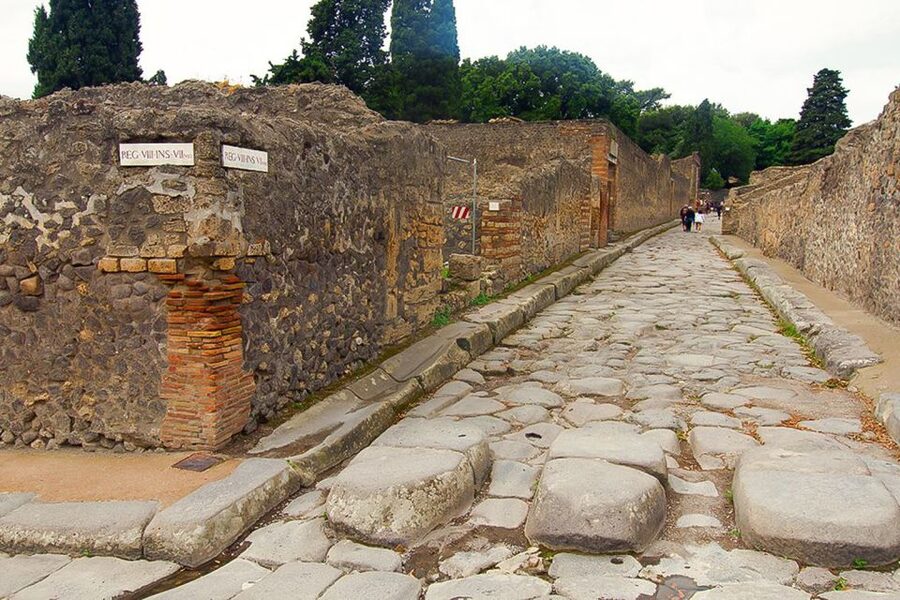
At $70 per person, this is not the cheapest way into Pompeii. You are paying for pre-reserved entry, a live official guide, a small group or private format, headsets when needed, and a route that saves you from trying to decode the site alone.
The value depends on how you travel. If you enjoy reading signs, following a map, and making your own discoveries, you may prefer a self-guided visit. You will have more freedom to stop, backtrack, or sit quietly.
I think the fee is easier to defend for a first visit. Pompeii is huge, and a guide can prevent you from spending your limited time on less important streets while missing the details that give the city meaning. A good guide also keeps the pace steady and helps you see the newly accessible areas when conditions allow.
Small groups improve the experience. You can hear the guide, ask questions, and avoid the feel of a large crowd. The exact group size is not specified, so do not assume you will receive a fully private visit unless you book that option.
The cancellation policy also helps with planning. You can cancel up to 24 hours before the tour for a full refund, and the reserve-now, pay-later option keeps some flexibility in your schedule.
Heat, walking, toilets, and what to pack
Treat Pompeii as a serious outdoor walking visit. The site has little shade, much of the ground is uneven, and the tour moves at a moderate pace for two or three hours.
Bring:
- Comfortable closed-toe shoes
- Water
- A hat and sunscreen
- Your passport or identity card
- A child’s passport or identity card if applicable
An umbrella for sun protection can help in the hottest months. One guide may pause in shaded spots, but you should prepare as if most of the walk will be under direct sun.
High heels are not allowed, and strollers are not suitable. The tour is not designed for wheelchair users or people with mobility impairments. You need to walk without major difficulty for the full route.
Facilities are limited. There may be only one toilet stop during the tour, and food and drink queues can take time. Use the facilities before entering and carry water with you rather than depending on a quick purchase inside.
Who should book this Pompeii tour
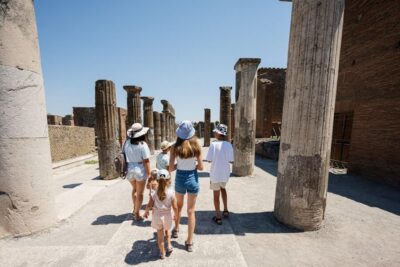
This is a strong choice for first-time visitors, families with older children, history fans, and anyone who wants the city explained rather than simply photographed. Children can follow the stories when the guide keeps the language lively, and several guides have handled family questions with care.
It also suits travelers staying in Naples or Sorrento who want a structured visit that fits into a larger day. The Express route is useful when time is tight, while the Complete Pompeii route is better when the archaeological park is the day’s main event.
I would think twice if you dislike guided pacing, cannot walk on uneven ground, or struggle with heat. You may also prefer to visit independently if your priority is spending a long time in one house or returning to a favorite area after the group moves on.
Should you book it?
Book this tour if you want Pompeii to feel like a city rather than a pile of ancient stones. The archaeologist guides, clear headsets, skip-the-line entry, and wider three-hour route make a strong case for the price.
Choose the Complete Pompeii option if you can manage the heat and walking. Choose Express if you need the Forum, temples, and shops explained in two hours. Either way, arrive early at the Villa dei Misteri entrance, wear sensible shoes, carry water, and expect a serious but rewarding visit.
FAQ
How long does the Pompeii tour last?
You can choose a two-hour Pompeii Express option or a three-hour Complete Pompeii option. Starting times vary, so check availability when booking.
What is included in the price?
The tour includes pre-reserved skip-the-line Pompeii tickets, an official Pompeii tour guide, and headsets when needed. Hotel pickup and drop-off are not included.
Where does the tour meet?
The meeting point is at the Pompeii Archaeological Park entrance on Via Villa dei Misteri, 1, across from the Hortus Pompei restaurant. Look for a guide holding a green Walks sign.
How early should I arrive?
Arrive 15 minutes before the scheduled start time. The correct entrance matters, so allow enough time to reach the gate and identify the guide.
Is the tour suitable for wheelchair users or strollers?
No. The tour is not suitable for wheelchair users, people with mobility impairments, or strollers. You should be able to walk at a moderate pace without difficulty.
What should I bring?
Bring comfortable shoes, water, sun protection, and a passport or identity card. Children also need a passport or identity card. High-heeled shoes are not allowed.
Can I cancel the booking?
Yes. You can cancel up to 24 hours in advance for a full refund. A reserve-now, pay-later option is also available.
Just added in Pompeii
- Pompeii Ruins Private Tour with Optional Skip-the-Line Entry★ 4.9 · 732 reviews
- Pompeii 3hours Villa of Mysteries tour with an Archaeologist★ 4.8 · 486 reviews
- Pompeii: Exclusive Tour with Archaeologist and Entry Tickets★ 4.9 · 634 reviews
- Pompeii: Small-Group Tour of Pompeii and Herculaneum★ 4.8 · 867 reviews
- Pompeii: Group Tour with an Archeologist Guide★ 4.4 · 490 reviews
- Pompeii: Skip-the-Line Tickets and Tour with Archaeologist★ 4.9 · 467 reviews
- Pompeii: Skip-the-Line Entry & Audioguide★ 3.8 · 225 reviews
- Pompeii: Skip-the-line-Ticket and Guided Tour★ 4.6 · 1,152 reviews
Pompeii & Herculaneum Tours, compared.
Entry Ticket and Guided Tour with an Archaeologist
Read our review →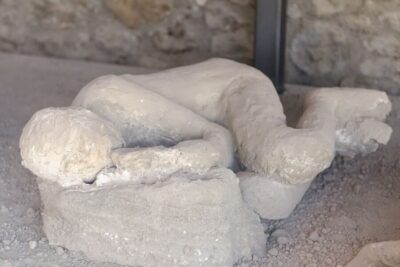



Pompeii and Mount Vesuvius Day Trip from Rome with Pizza Lunch
Read our review →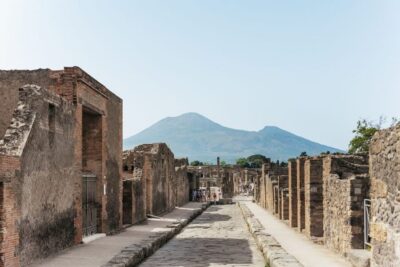
Pompeii Day Trip with Optional Vesuvius and Lunch
Read our review →Browse the lists this tour appears in