
Reviewed · POMPEII & HERCULANEUM TOURS
Pompeii: Guided Tour with Skip-the-Line Entry
Pompeii is far easier to understand with someone who can read the ruins for you. This two to three-hour walking tour links the Forum, Basilica, baths, theaters, homes, bakeries, and streets into a story about ordinary Roman life before Vesuvius erupted in 79 AD.
I like the separate skip-the-line entrance, especially when the site is busy, and I like the choice between a private visit and a small group. Guides such as Frankie, Angelo, Anna, Sasa, and Alessandra are praised for clear explanations, humor, crowd-smart routes, and good care in the heat.
The main limitation is time. Pompeii is huge, and two hours gives you the key sights rather than a full day among the ruins. Expect a lot of walking, uneven ground, strong sun, and little shade. People with pre-existing medical conditions should think carefully before booking.
Key points to know before you book
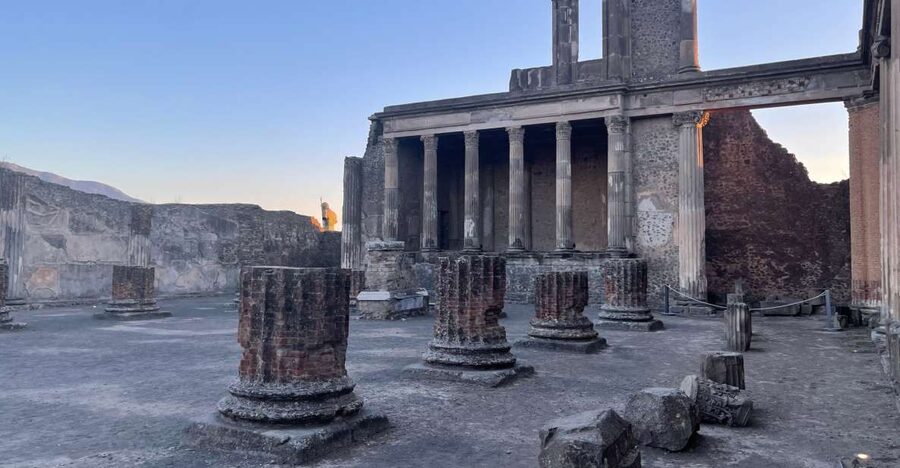
- The route covers Pompeii’s essential sights, including the Forum, Basilica, thermal baths, theaters, Antiquarium, homes, and a bakery.
- A separate skip-the-line entrance saves time, though it does not make the archaeological site quick to see.
- Guide quality is a major strength, with especially warm praise for Frankie, Angelo, Anna, Sasa, and Alessandra.
- Private and small-group options are available, so you can choose between personal attention and a lower-cost shared visit.
- The tour is best in cooler weather or at an early start, since many streets have little shade and summer heat can be severe.
- The $58 price is reasonable for a guided introduction, but you may want extra time afterward to explore independently.
Why a guide matters at Pompeii
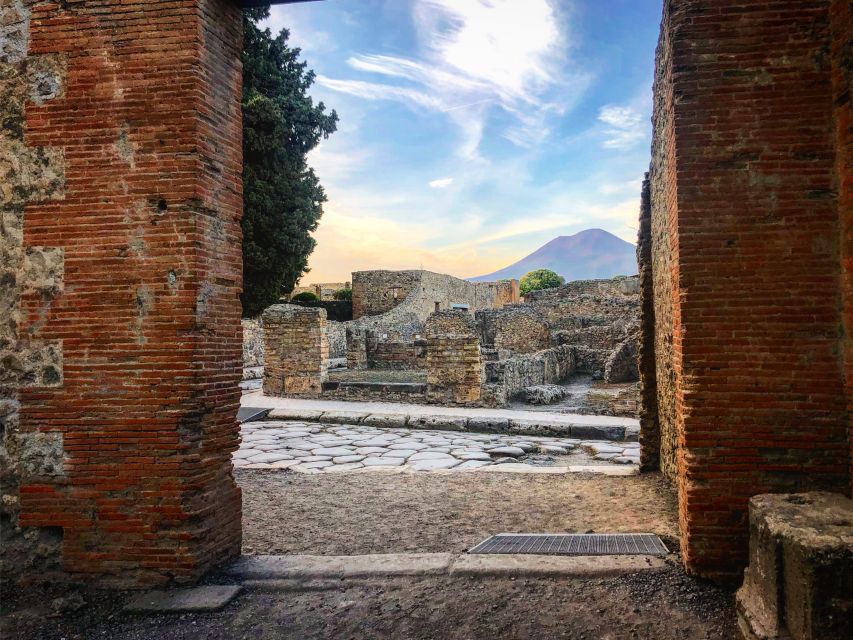
Pompeii can look like a vast field of old walls if you do not know what you are seeing. A guide points out the purpose of each building, explains how the streets worked, and helps you picture the people who used these spaces.
That context is the real value here. You are not simply walking past stones. You learn how civic buildings, shops, homes, bathing facilities, and entertainment venues fitted together in a Roman city.
The guides also add different areas of expertise. Angelo is described as a volcanologist as well as an archaeological guide, which gives him a useful way to explain both Pompeii and Vesuvius. Anna has an art-history background and a personal connection to Pompeii. Frankie is repeatedly praised for humor, storytelling, and strong English.
No specific guide can be guaranteed, so treat those names as examples of the experience’s guiding style rather than a promise. The common thread is clear explanation, friendly pacing, and a willingness to answer questions.
Other Roman sites within reach of Pompei Campania:
- Pompeii: Entry Ticket and Guided Tour with an Archaeologist
★ 4.8 · 19,459 reviews - Pompeii: Small Group Tour with an Archaeologist
★ 4.8 · 12,264 reviews - Pompeii: Skip-the-Line Entrance Ticket with Audio Guide
★ 4.0 · 2,509 reviews
Meeting at Ristorante Bar Sgambati
The meeting point is Ristorante Bar Sgambati. Look for the Enjoy Pompeii red sign.
This is a useful arrangement because it gives you a clear place to gather before entering the archaeological area. Follow the meeting instructions closely, especially if you are arriving by train or arranging a tight day around Vesuvius.
Parking is not included. If you are driving, allow time to deal with that separately. The tour itself begins as a walking visit, so comfortable shoes are more important than bringing much gear.
The experience is offered in English or Italian. You can book a shared small-group visit or choose a private format for a more personal route and more room for questions.
Entering Pompeii through a separate entrance
The skip-the-line ticket is one of the practical reasons to book this tour instead of arriving without a plan. You enter through a separate entrance, reducing the chance of spending part of your visit waiting at the main line.
This does not mean you should rush to Pompeii without checking the start time. The tour operates at set times, and availability changes by date. It also does not mean you will see the whole site in one short visit. The archaeological area is large, and the ticket only solves the entry problem.
The advantage is simple: once you meet the guide, your time can be spent looking at Pompeii rather than sorting out admission. That matters on a day when you also hope to visit Vesuvius, return to Naples, or catch a train.
One unusual date is the first Sunday of each month, when entrance is free. The information provided states that admission is free on that day. If you are visiting then, confirm how the tour price and guided service are handled before booking, since free admission does not necessarily mean a guided tour has no cost.
The Forum and civic heart of the city
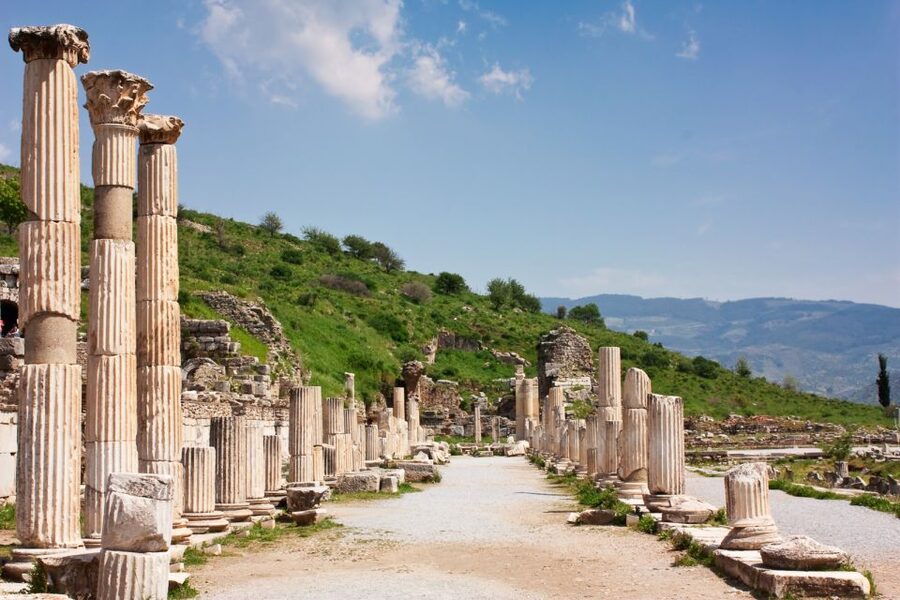
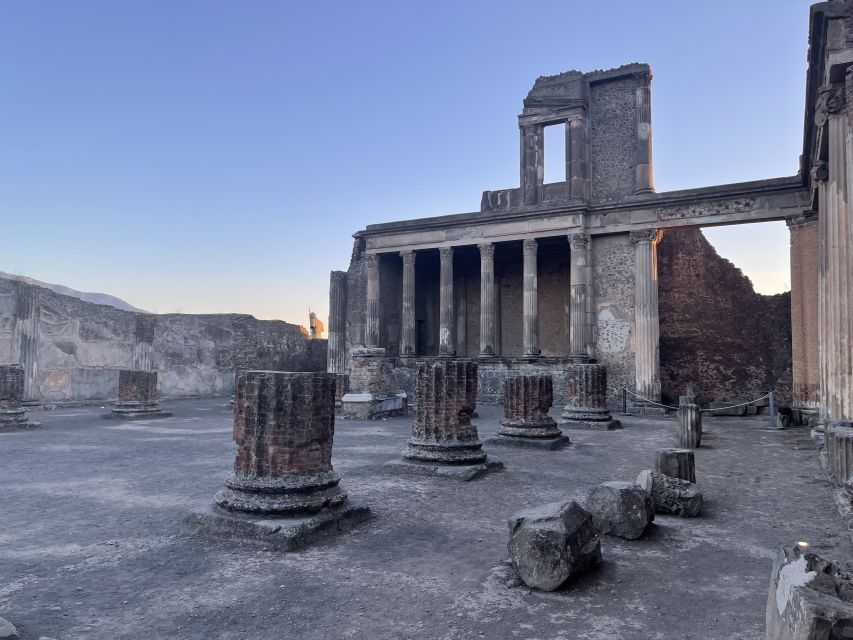
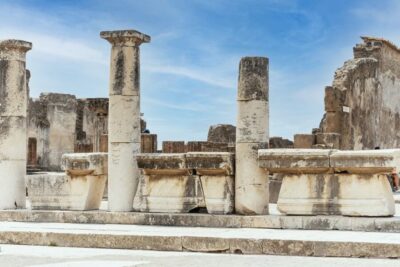
The Forum is likely to be one of the first places where the scale of Pompeii makes sense. This open civic area was central to public life, and the guide uses it to explain how the city was organized.
Nearby civic buildings help you see Pompeii as a functioning Roman community rather than only a disaster site. The Basilica is especially important because it was tied to public and legal life.
I like this part of the route because it supplies a framework for everything that follows. Once you understand the city center, a bakery or private house feels less isolated. You begin to see how business, politics, religion, and domestic life shared the same compact urban world.
The Forum can also be crowded. Guides such as Angelo and Frankie are praised for choosing routes that avoid the thickest groups when possible. That does not remove the crowds entirely, but good timing can make it easier to hear and take photographs.
A few more things to do in Pompei Campania
- Pompeii: Skip-the-line-Ticket and Guided Tour
★ 4.6 · 1,152 reviews - Pompeii: Skip-the-Line Entry Ticket with Digital Guide App
★ 4.1 · 770 reviews - Pompeii: Afternoon to Sunset Guided Tour with Ticket
★ 4.9 · 484 reviews - Pompeii: Tour with Archaeologist Guide & Skip-the-Line Entry
★ 4.5 · 478 reviews
Homes, bakeries, and ordinary Roman routines
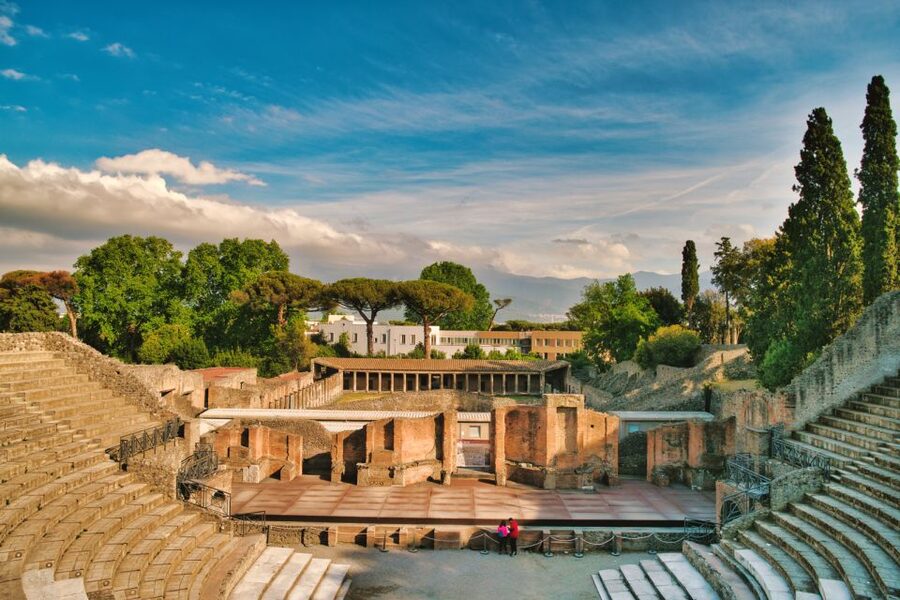
The most memorable part of Pompeii is often not the grand public building. It is the evidence of daily routines.
The tour includes commercial and residential neighborhoods, a bakery, and typical housing blocks. These places give you a more grounded picture of the city. You can consider where food was produced, how people moved through their neighborhood, and how private rooms differed from public streets.
The guide’s job here is to point out details you might otherwise pass without noticing. A wall, doorway, shop layout, or house plan can reveal how the city worked. Without that explanation, it is easy to admire the remains without understanding their purpose.
The houses also add balance to the dramatic story of the eruption. Pompeii was not simply a tragic site frozen in ash. It was a busy, prosperous Roman city with homes, workspaces, public buildings, and people carrying on with ordinary life.
The route may include important houses such as the House of the Vettii, which one guide deliberately visited early to avoid heavier crowds. That type of route planning is valuable at Pompeii, where the order of stops can affect what you see comfortably.
Thermal baths and the theater district
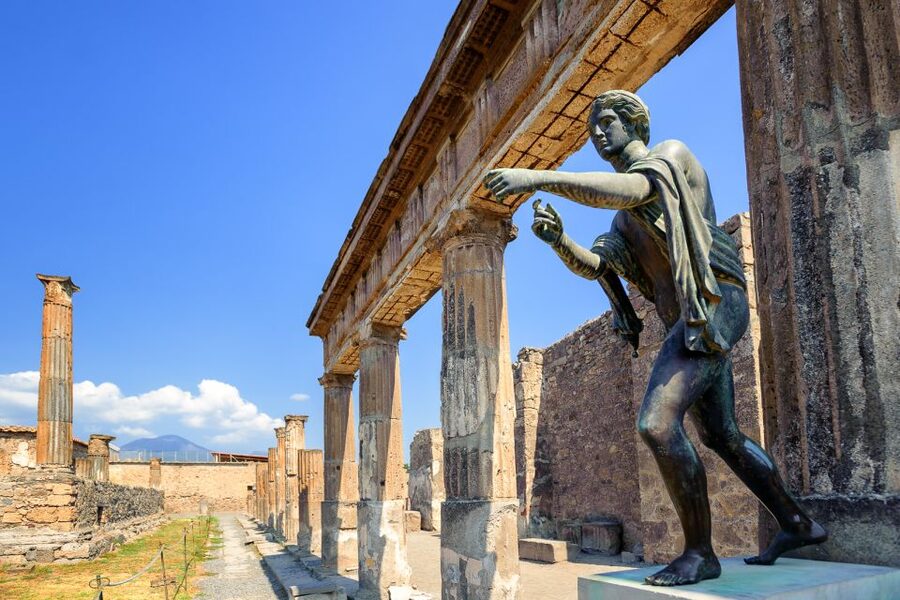
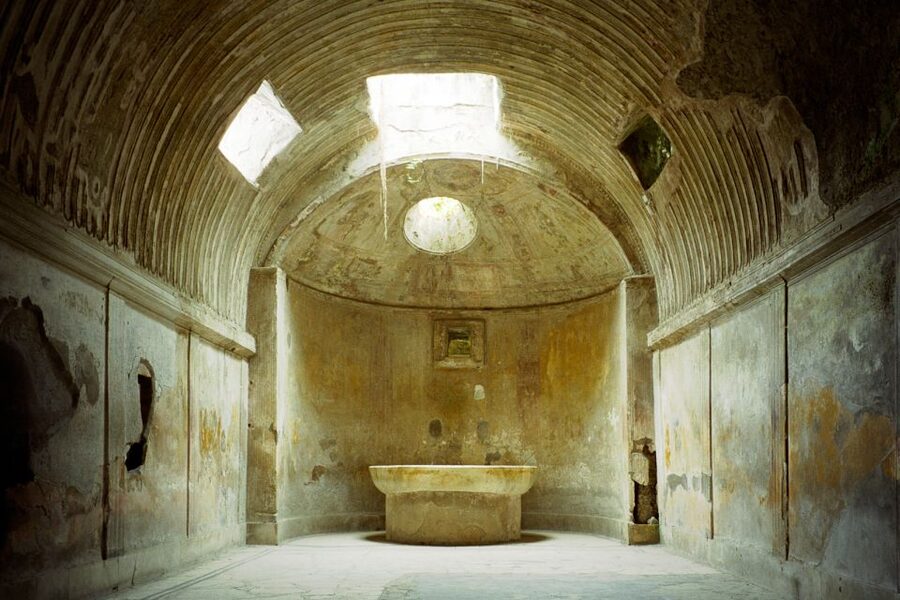
The thermal baths show how much public life depended on shared facilities. Your guide explains the buildings and their place in Roman society, helping you understand bathing as more than a quick wash.
The theaters provide another change of pace. These structures reveal Pompeii’s interest in performance and public entertainment. A guide can explain how the spaces functioned and why they mattered to the city.
The tour does not simply list the Forum, baths, and theaters as isolated stops. The better guides connect them. You move from government and business to leisure, then back to domestic spaces. That sequence makes the city feel like a community with many overlapping uses.
You should keep your expectations realistic. A two-hour visit is a highlights tour. You will see important buildings, but you may not have time to examine every room, inscription, painting, or side street. If you want a slow archaeological study, plan to remain in the park after the guided portion.
Several people have done exactly that, staying for extra independent exploration. The guide can point out what to see next, but the included service itself lasts about two to three hours.
The Antiquarium and Pompeii’s preserved objects
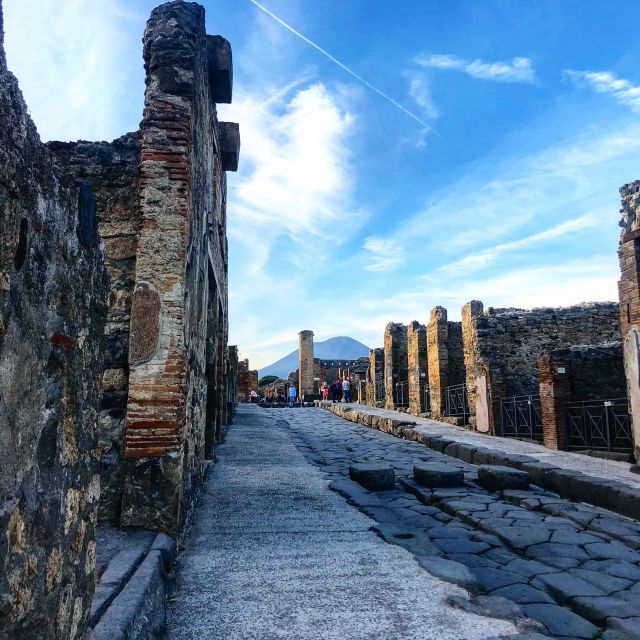
The new Antiquarium is part of the stated route. It offers another way to understand Pompeii, since objects and displays can make the city’s past more direct than walls alone.
The ruins are powerful, but a museum setting can help connect scattered evidence. It gives the guide another place to explain what was found, how Pompeii has been studied, and what the site can tell us about its people.
The tour also takes in remains linked to the eruption, including the haunting casts of victims according to the tour experience described by visitors. This is an emotional part of the visit. You may find it sobering, especially after spending time learning about ordinary homes and family life.
The guide’s tone matters here. Frankie is praised for using humor when appropriate, while other guides are described as more serious and academic. The subject itself is difficult, so families should decide how comfortable younger children will be with it.
A route shaped by the heat and the crowds
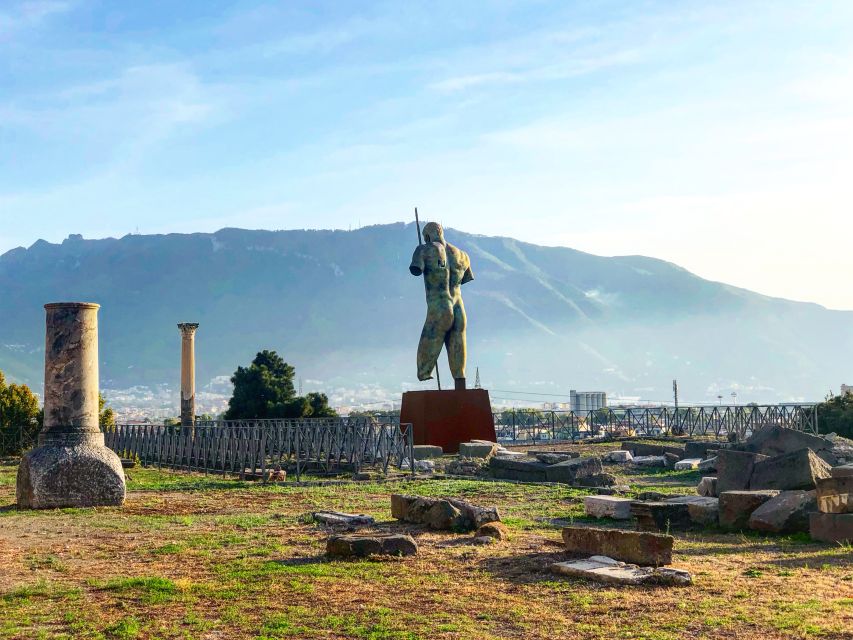
Pompeii is exposed. In hot months, the stone streets and open spaces can become exhausting, with limited shade. Several guides are praised for stopping in shaded spots, limiting time in direct sun, and watching out for uneven surfaces and trip hazards.
That care makes a real difference. Angelo is praised for finding shaded places while still explaining the site clearly. Anna adjusted her route and speaking points during very hot weather. Another guide helped an older visitor feel especially looked after.
If you have flexibility, choose an early start or a cooler season. An afternoon tour can still work, and one guide explained that mountain breezes may make later hours more comfortable, but the heat can remain intense. Bring water, wear sturdy shoes, and use sun protection.
The crowd strategy is another strong point. Guides have used reverse routes, visited major houses early, and chosen less congested paths. This is not a guarantee of an empty Pompeii, but it can help you see more and hear better.
Group, private, and family considerations
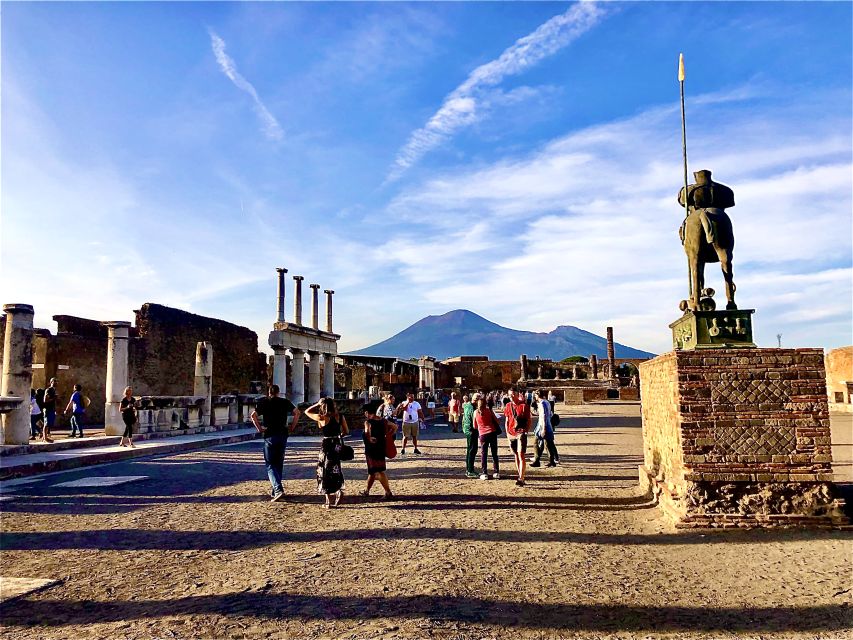
The group option is suitable if you want the structure and social ease of a shared visit. A small group can keep the cost lower while still allowing questions. One group was described as around a dozen people, a size that gave the guide room to manage the route without feeling unwieldy.
A private tour is better for a family, a couple with special interests, or anyone who wants to set the pace. A private booking made on the same day was handled smoothly, and the guide adjusted the visit around the group’s questions and interests.
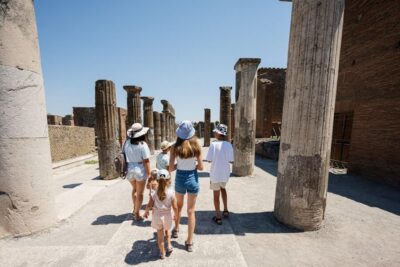
Families should know that this is not specifically a children’s tour. Children aged nine and twelve managed the walk, but the two-hour format felt long for them, and a serious presentation style did not always hold their attention. Older children who enjoy history may do well, especially with a private guide who can adapt the conversation.
The route may be tiring for anyone with mobility or health concerns. The activity is a walking tour, and the site includes ancient streets and uneven surfaces. The provider specifically says it is not suitable for people with pre-existing medical conditions.
What the $58 price gets you
At $58 per person, this sits in the reasonable middle range for a guided Pompeii visit, especially because admission and the guide are included. The skip-the-line access adds practical value when queues are long.
The price makes the most sense if you have only a few hours, want the main sights explained, or prefer not to study a map and guidebook while walking through a massive site. The guide can also help you avoid crowded paths and make the limited time count.
The value is weaker if you already have strong archaeological knowledge, want to explore alone, or plan to spend an entire day inside. In that case, you may prefer a ticket and self-guided route, then use your time to wander beyond the main highlights.
You should also budget for what is not included. Parking is excluded, and the tour does not promise an entire day of access with a guide. The guided portion is two to three hours, so add extra time only if your schedule allows and the site’s conditions suit you.
Free cancellation is available up to 24 hours before the activity for a full refund. You can also reserve now and pay later, which helps if your Campania plans are still moving around.
Who should book this Pompeii tour
I would choose this tour if Pompeii is important to you but you want a clear introduction rather than an all-day archaeological project. It is also a good fit if you are combining Pompeii with Vesuvius and need an efficient route through the main areas.
You should book it if you value stories, architecture, and daily-life details more than wandering without a plan. The guides are especially strong at making the ruins understandable, answering questions, and adjusting the route to heat and crowds.
I would choose the private option for older family members, children with limited patience, or anyone with a particular interest in art, volcanoes, Roman homes, or ancient city planning. I would choose a small group if you want good value and still prefer a human guide.
Should you book it?
Yes, if you want Pompeii to make sense quickly. The separate entrance, focused route, and strong guide reports make $58 a fair price for a two to three-hour introduction.
Book with realistic expectations. This is not a complete survey of Pompeii, and summer heat can be punishing. Arrive at the Ristorante Bar Sgambati, follow the red sign, wear good shoes, and leave extra time if you want to continue exploring after the guide departs.
FAQ
How long does the Pompeii guided tour last?
The tour lasts about two to three hours. The exact start time depends on availability for your chosen date.
What is included in the price?
The price includes a skip-the-line entry ticket, a walking tour of Pompeii, and a tour guide.
Is parking included?
No. Parking is not included in the activity.
Where is the meeting point?
Meet the guide at Ristorante Bar Sgambati. Look for the Enjoy Pompeii red sign.
Which languages are available?
The live tour is available in English and Italian.
Can I choose a private tour?
Yes. Private and small-group options are available.
Does the tour use a separate entrance?
Yes. The activity includes skip-the-line access through a separate entrance.
Can I cancel for a full refund?
Yes. You can cancel up to 24 hours in advance for a full refund.
Is the tour suitable for people with medical conditions?
The activity is not suitable for people with pre-existing medical conditions. It is a walking tour through a large archaeological site, so consider the physical demands before booking.
Just added in Pompei Campania
- Pompeii 3hours Villa of Mysteries tour with an Archaeologist★ 4.8 · 486 reviews
- Pompeii: Small-Group Tour of Pompeii and Herculaneum★ 4.8 · 867 reviews
- Pompeii: Skip-the-Line Entry & Audioguide★ 3.8 · 225 reviews
- Pompeii: Skip-the-line-Ticket and Guided Tour★ 4.6 · 1,152 reviews
- Pompeii: Afternoon to Sunset Guided Tour with Ticket★ 4.9 · 484 reviews
- Pompeii: Skip-the-Line Entry Ticket with Digital Guide App★ 4.1 · 770 reviews
- Pompeii: Tour with Archaeologist Guide & Skip-the-Line Entry★ 4.5 · 478 reviews
- Pompeii: Day Tour of Pompeii and Vesuvius with Bus Transfer★ 4.2 · 250 reviews
Pompeii & Herculaneum Tours, compared.
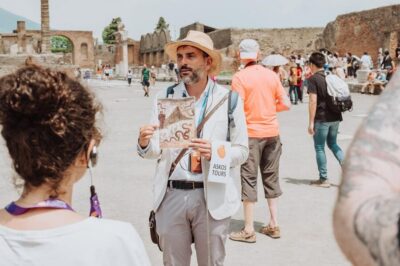
Entry Ticket and Guided Tour with an Archaeologist
Read our review →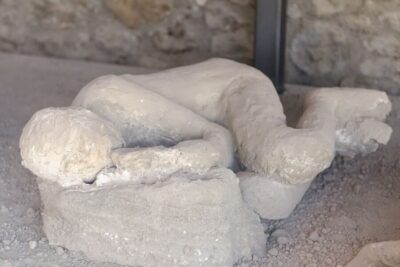



Pompeii and Mount Vesuvius Day Trip from Rome with Pizza Lunch
Read our review →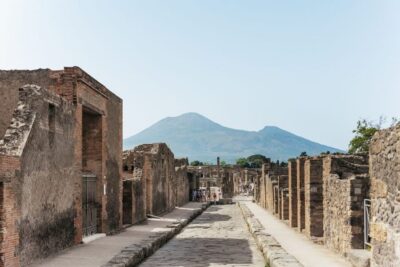
Pompeii Day Trip with Optional Vesuvius and Lunch
Read our review →Browse the lists this tour appears in