
Reviewed · POMPEII & HERCULANEUM TOURS
Pompeii: Small Group Tour with an Archaeologist
Pompeii is not a tidy ruin with a few columns and a nice view. It is a full Roman city, with streets, bakeries, public baths, theaters, homes, shops, temples, and drainage channels spread over a huge area. This tour gives you a useful human guide to that bewildering place, led by an archaeologist who can explain what you are seeing instead of leaving you to guess.
I like two things especially: the guide helps you spot small clues, such as cart tracks in the roads and details that distinguish a shop from a home, and you are free to stay inside the site after the guided walk. The main drawback is time. Two hours gives you a strong introduction, but Pompeii is so large that you will need more time afterward if you want to see it properly.
Key points
- A real city, not just a ruin field: Visit the Forum, temples, theaters, baths, houses, shops, and brothel.
- Archaeologist-led interpretation: Guides such as Roxanne, Nicoletta, Paolo, Teresa, and Mario have been praised for clear storytelling and strong command of the site.
- Choose your pace: Book a two-hour shared or private tour, or a three-hour version that includes the Villa of the Mysteries.
- Free time matters: The guided portion ends inside the archaeological park, so you can continue on your own.
- Small details bring Pompeii to life: Look for handprints on fountains, cart marks, painted walls, mosaics, and domestic clues.
- Plan for uneven ground: Expect steps, ramps, inclines, and long walks. This is not a good choice for wheelchair users or people with serious mobility limits.
Why an archaeologist makes Pompeii easier to understand
Pompeii can overwhelm you within minutes. The site is broad, the streets are rough, and many buildings look like bare walls until someone explains what happened there. A good guide gives you a framework: how Roman public life worked, how houses were arranged, what the paintings meant, and how archaeologists read the remains.
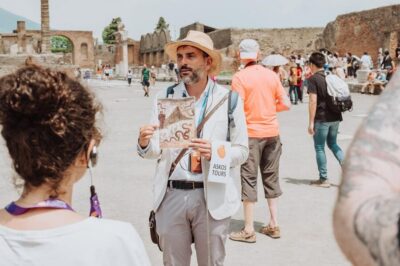
The guides on this tour are not simply there to point at ruins. The strongest ones turn small features into useful evidence. You might learn how an entrance suggests that a building was a shop rather than a private home, or notice handprints on a fountain that you would otherwise walk past.
Several guides are praised for making the place feel personal. Roxanne is described as warm, funny, and easy to listen to. Nicoletta has been noted for adjusting the route to avoid crowded areas and direct sun. Teresa has worked on excavations at Pompeii, giving her explanations a practical connection to the site. Paolo, Mario, Anna, Alessandra, and others are also praised for combining facts with stories and humor.
The exact guide is not guaranteed, but the tour is built around this archaeologist-led approach. That is the main reason to book it instead of simply buying admission and wandering in alone.
Other Roman sites within reach of Pompei Campania:
- Pompeii: Entry Ticket and Guided Tour with an Archaeologist
★ 4.8 · 19,459 reviews - Pompeii: Skip-the-Line Entrance Ticket with Audio Guide
★ 4.0 · 2,509 reviews - Naples: Pompeii and Mt. Vesuvius with Lunch and Wine Tasting
★ 4.5 · 2,454 reviews
Entering through Porta Marina Superiore
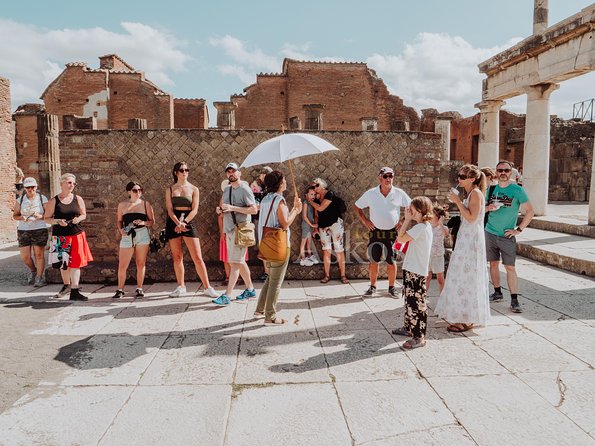
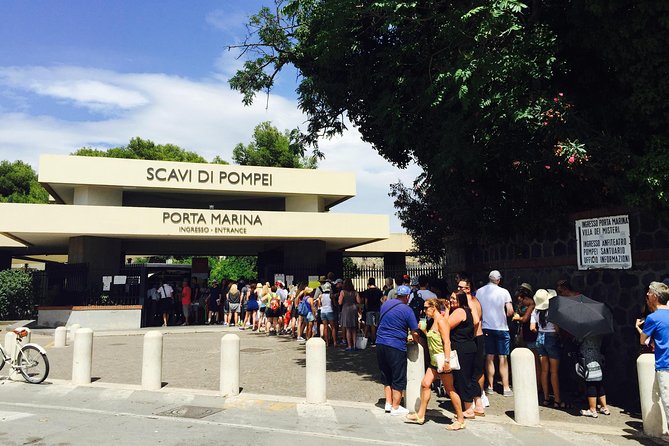
The tour begins at one of Pompeii’s ancient gates, Porta Marina Superiore. The meeting point can vary by the option you book, with locations around Via Villa dei Misteri, Via Roma, or the Hortus Pompei restaurant and garden bar.
Pay close attention to your confirmation so you go to the correct place. One practical tip is to make sure your name is checked off at arrival. A small mix-up once left a group searching inside for its guide, which is an avoidable nuisance at a site this large.
The tour includes the Pompei Express entry ticket and skip-the-ticket-line access. It does not include transportation, food, or drinks, so you need to arrange your own way to Pompeii and carry water for the walk.
Large bags and luggage are not allowed. A free cloakroom is located near the Porta Marina Superiore entrance, subject to availability. Bring a passport or identity card, or a copy, as required for entry.
The Forum, temples, and the center of daily life
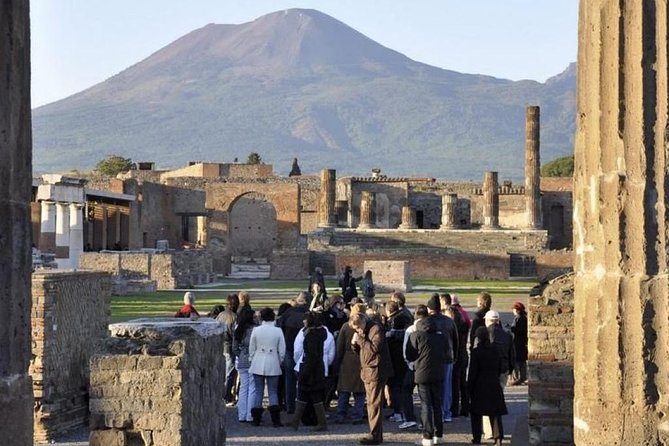
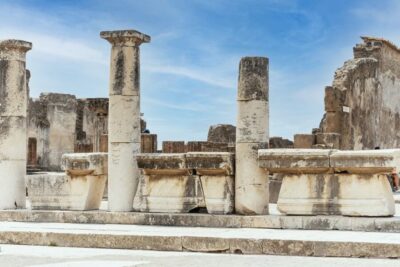
The Forum is the natural starting point for understanding Pompeii. This was the city’s public heart, where civic, religious, and commercial life came together. From here, you can look toward Mount Vesuvius, the volcano that buried the city in AD 79.
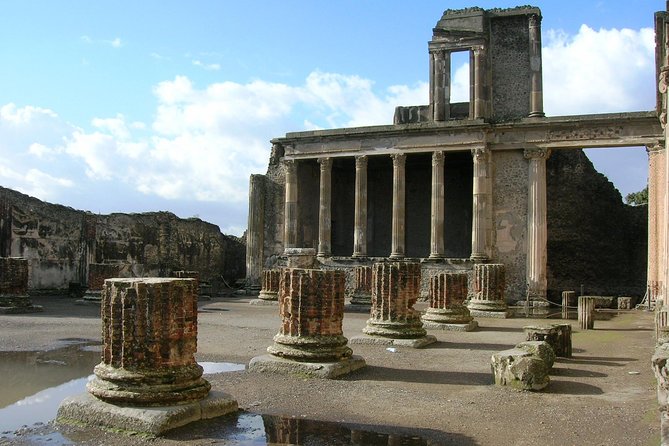
Your guide takes you through the Temple of Apollo, the Temple of Jupiter, the Basilica, and the main public spaces. Each stop helps explain how Pompeii functioned rather than treating the ruins as isolated monuments.
The Basilica was tied to business and legal affairs. The temples show the religious side of Roman life. The Forum itself reveals the scale of the city and the importance of public space.
I find this part especially useful early in the visit because it gives you a mental map. Once you understand the Forum, the rest of Pompeii feels less like a maze. You also begin to see that the city was not frozen as a perfect museum. It was a working place, changed by different eras, repairs, businesses, and private tastes.
Crowds can gather around the Forum, especially at busy times. A strong guide may adjust the order or take you to nearby areas first. That flexibility has helped some groups avoid the worst congestion.
Houses, baths, and the details of Roman life
Pompeii’s private buildings are often more revealing than the grand monuments. The House of Menander, House of the Faun, and House of the Vettii show the range of Roman domestic life, from large residences with impressive decoration to spaces shaped around business and household work.
The House of the Faun is one of the major homes on the route. The House of the Vettii is especially valuable for its wall paintings and clues about the owners’ status and taste. Your guide can point out the difference between grand ceremonial rooms and more practical parts of the home.
The Forum Baths show how Roman bathing was both social and practical. You can learn how these public facilities were heated and arranged, and why baths mattered so much in city life.
The route also includes a bakery. That stop helps move the visit away from wealthy homes and monuments. Pompeii was full of ordinary work, food production, trade, and services. The combination of homes, baths, shops, and bakeries gives you a better idea of how people actually lived.
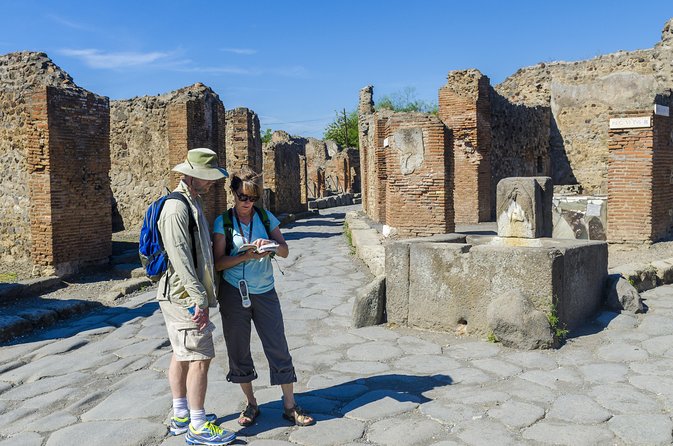
Look closely at the roads. Cart tracks remain visible in places, and guides may point out how the street layout worked. Details like these make Pompeii feel less like a collection of walls and more like a city where people moved, traded, ate, worshipped, and argued.
Same base, a different kind of day:
- Pompeii: Skip-the-line-Ticket and Guided Tour
★ 4.6 · 1,152 reviews - Pompeii: Small-Group Tour of Pompeii and Herculaneum
★ 4.8 · 867 reviews - Pompeii: Guided Tour with Skip-the-Line Entry
★ 4.9 · 812 reviews - Pompeii: Skip-the-Line Entry Ticket with Digital Guide App
★ 4.1 · 770 reviews
The Lupanar and Pompeii’s adult side
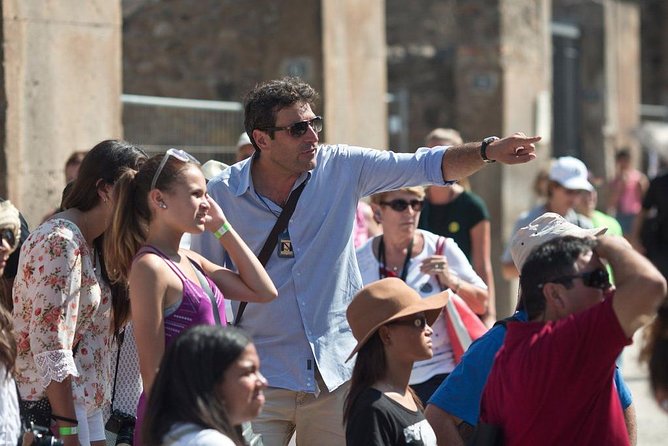
The Lupanar, commonly identified as Pompeii’s brothel, is one of the site’s most talked-about stops. You can see narrow rooms, stone beds, and preserved frescoes. The guide explains how the building got its name and places it within the broader social world of Pompeii.
This is an adult-themed part of the visit. The sexual imagery and graffiti are direct, so parents should decide if the material suits their children. One family found that a ten-year-old was mostly unaware of the adult context, but that will depend on the child and the guide’s explanation.
The Lupanar is also a good reminder that Pompeii was not a polished fantasy of Roman life. The graffiti, working spaces, service businesses, and modest rooms reveal the less formal side of the city.
The theaters and a memorable sense of scale
The Great Theater is often a highlight. Walking into the theater gives you one of those sudden moments when the ancient city feels physically present. It is easier to picture performances, public gatherings, and the shared life of the town when you are standing in a space designed for a crowd.
The itinerary also includes other theater areas and public buildings. The guide explains how entertainment fitted into civic life and how these structures related to the rest of the city.
Do not underestimate the distances. Pompeii is huge. One visitor estimated that walking from one side of the archaeological park to the other could take about half an hour. A two-hour tour cannot cover every important building, and even a three-hour tour is selective.
That is not a flaw in the tour. It is simply the nature of Pompeii. The guide’s job is to choose a useful route and show you the key areas without exhausting you before the visit is over.
The Villa of the Mysteries adds a remarkable third hour
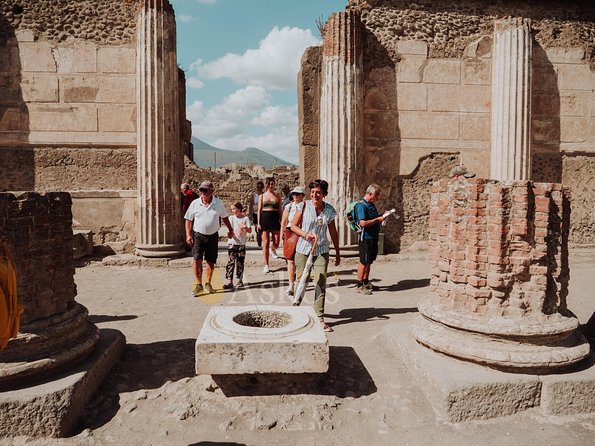
The three-hour option includes the Villa of the Mysteries, a separate highlight with famous frescoes. It is a good choice if you want more than a general introduction and have the energy for additional walking.
The villa’s painted rooms are among the most striking parts of the visit. The frescoes are not just decoration. Their figures and scenes raise questions about ritual, identity, and the purpose of the room. A guide can help you look at the paintings carefully instead of treating them as colorful walls.
The extra hour has real value because the villa adds a different kind of experience. The main route shows the city’s public and domestic life. The Villa of the Mysteries gives you a closer look at elite decoration and painted storytelling.
If you are visiting in the afternoon, check the closing time before choosing the longer option. One afternoon group finished at 4 p.m. with only about an hour left before the park closed, and some areas had already shut. A morning start gives you more room to continue exploring afterward.
Frescoes, mosaics, and plaster casts
Pompeii’s decoration is one of its great rewards. You will see preserved frescoes, mosaics, and other artwork in houses and public buildings. Some details are bold and polished, while others are small signs of ordinary taste and daily use.
Your guide can tell you where to look and explain what a design suggests about the owner, room, or building. Without that help, it is easy to glance at a painting and move on without understanding why it matters.
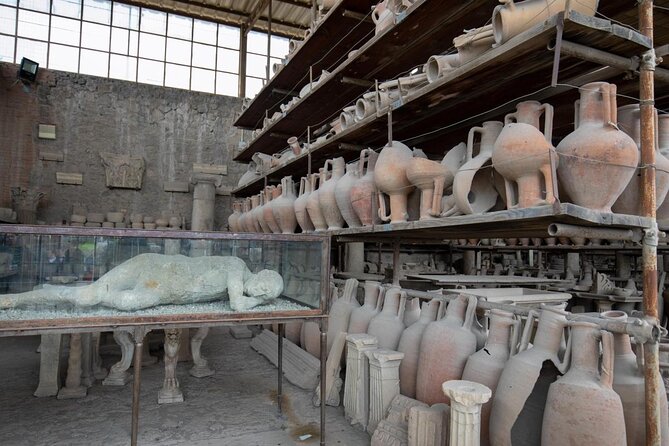
The plaster casts require a little care in expectation. They are not always displayed in the dwellings themselves. Current displays include three casts in sealed glass cases, according to one recent visit, so the exact presentation may differ from what older guidebooks describe.
This is one area where temporary closures and crowd control can change the route. The park may adjust the itinerary, and not every building will be open on every visit. The tour still gives you a strong selection, but you should not expect every famous room to be accessible.
Two hours or three, shared or private?
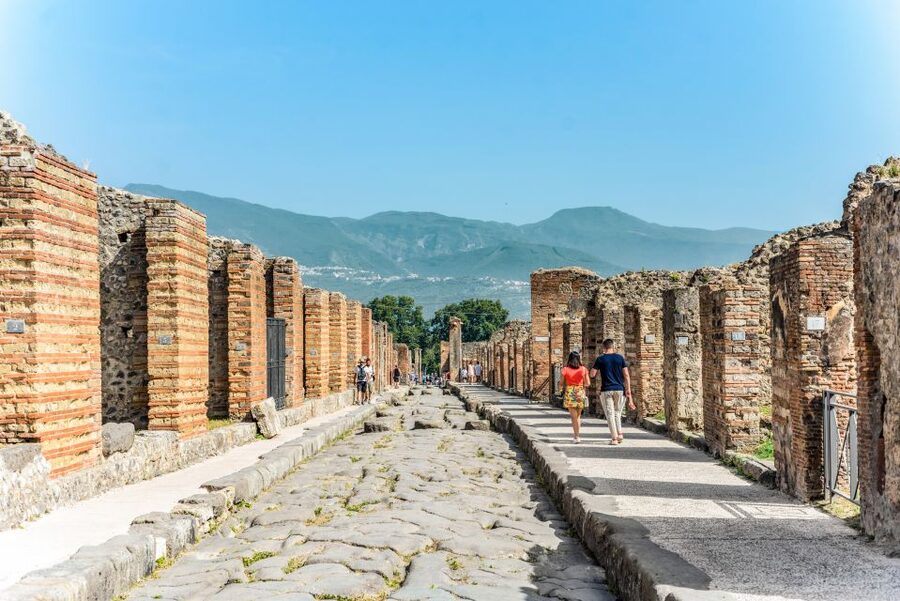
The two-hour tour works well if you want a clear introduction and plan to explore on your own. It covers major public buildings, houses, baths, the Lupanar, theater areas, and important streets. The guide’s final suggestions can help you choose where to go next.
The three-hour option is better if you prefer a longer guided explanation and want to include the Villa of the Mysteries. The extra time costs more energy as well as time, since the ground is uneven and the site is spread out.
A shared small group offers a good balance of price and access to an archaeologist. At about $40 per person, the cost is reasonable for admission plus two hours of guided interpretation, especially at a site where it is easy to miss the most useful details.
A private group makes more sense for families, friends, or anyone who wants to ask many questions and keep a personal pace. The available languages can differ between shared and private options, so check carefully if you need English, Italian, French, Spanish, German, or Portuguese.
Headsets are provided for groups of 16 or more. Smaller groups may not need them, but you should stay close to the guide in crowded spaces.
Practical comfort and mobility advice
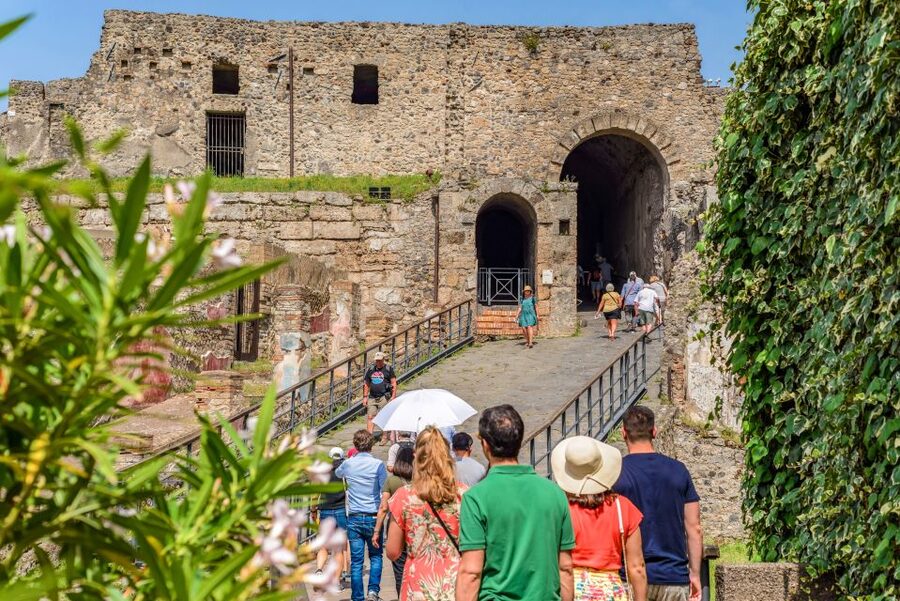
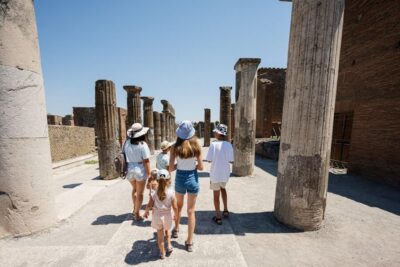
Wear sturdy, comfortable shoes. The streets are uneven, and the route includes steps, ramps, slopes, and some inclines and declines. A walking stick or wheelchair may be difficult to manage, and the experience is not recommended for wheelchair users or people with major mobility limitations.
Bring water and protect yourself from the sun. One guide was praised for moving the group out of direct sunlight when possible, but you should still plan for exposed areas.
Smoking is not allowed inside the site. Dogs over 10 kilograms are not allowed, and children must be accompanied by an adult.
At the end, you are dropped near Villa dei Misteri, the archaeological park, or Via Roma, depending on the booking option. You can usually remain inside the park after the guided portion, which is one of the tour’s most useful features. Do not rush away. Use the guide’s suggestions to see another house, street, or public building at your own pace.
Should you book the Pompeii archaeologist tour?
I would book this tour if you are visiting Pompeii for the first time and want the ruins to make sense quickly. The strongest value comes from the guide’s ability to explain small details, connect the buildings, and help you avoid wasting half a day wandering without a plan.
Choose two hours if you want an efficient introduction followed by independent exploring. Choose three hours if the Villa of the Mysteries and its frescoes are high on your list, or if you prefer to have more interpretation built into the visit.
I would skip it only if you strongly prefer complete independence, have severe mobility limits, or want to spend the entire day moving at your own pace without a set route. For most visitors, though, the combination of entry, an archaeologist, major highlights, and free time afterward makes this a sensible way to begin Pompeii.
FAQ
How long does the Pompeii tour last?
You can choose a two-hour guided tour or a three-hour version that includes the Villa of the Mysteries.
Is the Pompeii entry ticket included?
Yes. The Pompei Express entry ticket is included, along with skip-the-ticket-line access.
Can I explore Pompeii after the guided tour?
Yes. You are free to remain inside the archaeological site and continue exploring on your own after the tour.
Which languages are available?
Tours are offered in English, Italian, French, Spanish, German, and Portuguese. Shared and private options may not offer the same languages, so check the selected option carefully.
Is the tour suitable for wheelchair users?
No. The tour is not suitable for wheelchair users or people with significant mobility impairments because of uneven ground, steps, ramps, and inclines.
Are food, drinks, and transportation included?
No. You arrange your own transportation, and food, drinks, and personal expenses are not included.
Just added in Pompei Campania
- Pompeii 3hours Villa of Mysteries tour with an Archaeologist★ 4.8 · 486 reviews
- Pompeii: Small-Group Tour of Pompeii and Herculaneum★ 4.8 · 867 reviews
- Pompeii: Skip-the-line-Ticket and Guided Tour★ 4.6 · 1,152 reviews
- Pompeii: Skip-the-Line Entry & Audioguide★ 3.8 · 225 reviews
- Pompeii: Guided Tour with Skip-the-Line Entry★ 4.9 · 812 reviews
- Pompeii: Afternoon to Sunset Guided Tour with Ticket★ 4.9 · 484 reviews
- Pompeii: Skip-the-Line Entry Ticket with Digital Guide App★ 4.1 · 770 reviews
- Pompeii: Tour with Archaeologist Guide & Skip-the-Line Entry★ 4.5 · 478 reviews
Pompeii & Herculaneum Tours, compared.
Entry Ticket and Guided Tour with an Archaeologist
Read our review →


Pompeii Small Group Tour with an Archaeologist
Read our review →
Pompeii and Mount Vesuvius Day Trip from Rome with Pizza Lunch
Read our review →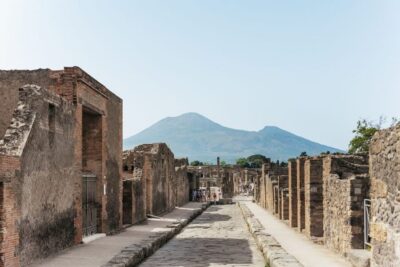
Pompeii Day Trip with Optional Vesuvius and Lunch
Read our review →Browse the lists this tour appears in