
Reviewed · POMPEII & HERCULANEUM TOURS
Pompeii: Entry Ticket with Optional Audio Guide
Pompeii is not a museum of tidy displays. It is a full Roman city, with streets, bakeries, baths, temples, theaters, villas, and election notices still set among the ruins. You walk where people once shopped, worshipped, bathed, and watched performances before Vesuvius buried the town in AD 79.
I like the freedom to explore without being tied to a group, and I like that a reserved ticket can spare you the longest ticket-buying queues. The optional audio guide also helps you make sense of a very large site, though its directions can be confusing, and some buildings may be closed when the commentary describes them.
Key points to know before you go
- Choose your Pompeii carefully: Pompei Express covers the ancient city only, while Pompei+ adds several suburban villas.
- Allow at least several hours: The site is large enough for a full day, and even a short visit involves plenty of walking.
- Pick up the audio guide at Porta Marina Superiore: It is not handed to you at every entrance.
- Bring headphones and identification: Headphones are not included, Bluetooth headphones do not work with the physical device, and your ID is held as a deposit.
- Arrive prepared for sun and uneven walking: Water, comfortable shoes, and a site map will make the day much easier.
- Expect a self-guided visit: This ticket provides entry and optional audio commentary, not a personal guide.
What this Pompeii ticket actually gives you
For about $26 per person, you get reserved admission to one of Italy’s most important archaeological sites and one valid day to use it. That price is reasonable if you value flexibility and want to avoid buying a ticket at the gate, but it is not a guided tour. You are paying for access, not for someone to lead you through the city.
Your voucher arrives on your phone. At the entrance, you show it and begin your visit. The process sounds simple, but the entrances and ticket points can be confusing, especially when queues form. One useful tip is to follow the signs for visitors with vouchers rather than joining the longest line for people buying tickets on site.
The ticket is best for independent visitors who already know a little about Pompeii or who enjoy setting their own pace. You can spend ten minutes in a grand villa, pause for photographs, or move quickly through an area that interests you less. Families also gain from this freedom, since younger children may not last through a fixed-length guided walk.
You can cancel up to 24 hours before the visit for a full refund, and the reserve-now, pay-later option gives you some breathing room when your Campania plans are still shifting. The ticket is also wheelchair accessible, although ancient streets and archaeological ruins can never offer the same ease as a modern museum.
Other Roman sites within reach of Pompeii:
- Pompeii: Entry Ticket and Guided Tour with an Archaeologist
★ 4.8 · 19,459 reviews - Pompeii: Small Group Tour with an Archaeologist
★ 4.8 · 12,264 reviews - Pompeii Small Group Tour with an Archaeologist
★ 5.0 · 6,593 reviews
Pompei Express or Pompei+?
This is the most important choice when booking. Pompei Express includes the ancient city of Pompeii but not the suburban villas. You will still see the main streets, public buildings, temples, theaters, baths, market areas, and major houses within the central archaeological site.
Pompei+ includes the ancient city plus Villa of the Mysteries, Villa of Diomedes, and Villa Regina in Boscoreale with its Antiquarium. These places sit outside the central city, so the Plus option is not simply a few extra rooms around the corner. It adds more stops and requires more planning.
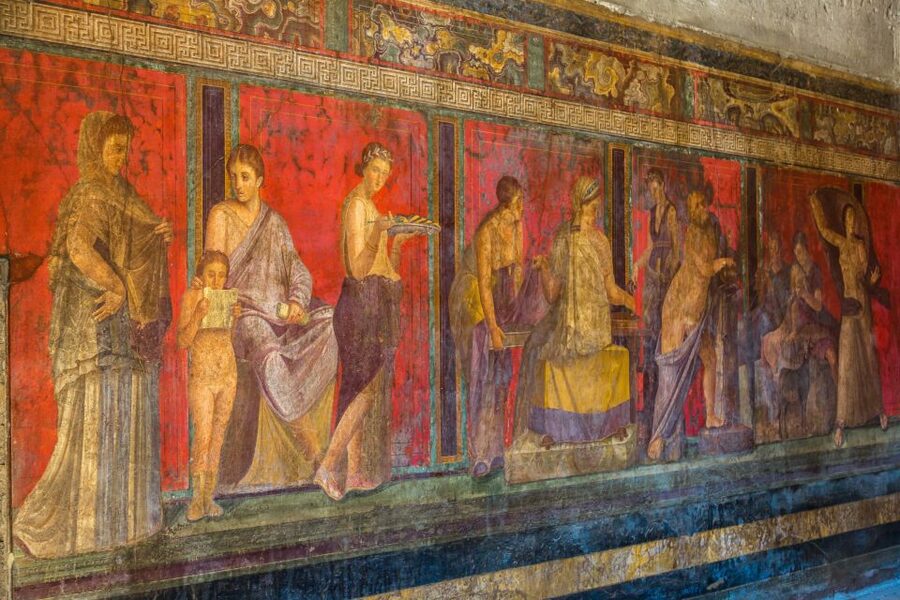
I think Pompei+ is worth considering if you have enough time and want the famous frescoes of the Villa of the Mysteries. The villa is one of the most memorable parts of the wider Pompeii area, with painted rooms that help you picture how much color and decoration Roman homes once held.
If your schedule is tight, Pompei Express may be the wiser choice. The central city is huge, and some people manage only part of it in a full day. Adding the suburban sites can leave you rushing through the main ruins, which are the reason most people come.
The last entry for Pompei+ is 3:30 p.m. from November 1 through March 31 and 5:30 p.m. from April 1 through October 31. Do not choose Plus late in the day unless you have checked the season and allowed enough time for the extra locations.
Walking into a city buried by Vesuvius

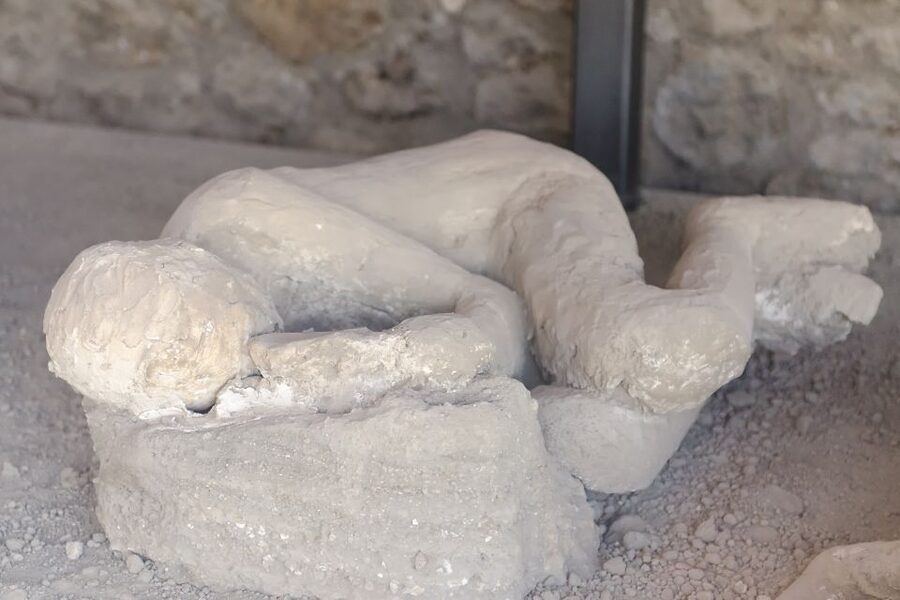
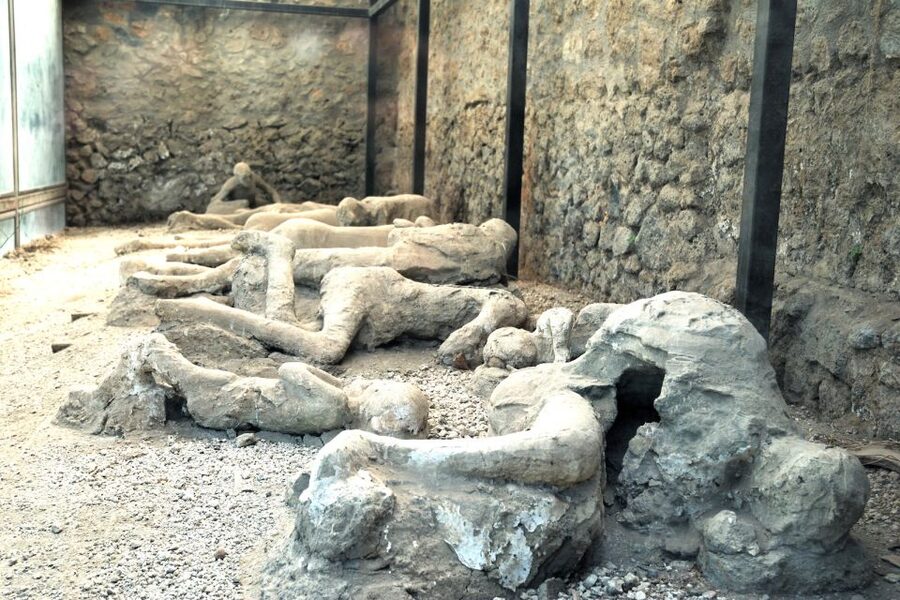
The power of Pompeii begins before you identify a single building. You walk down paved Roman streets, passing walls and doorways that were sealed under volcanic ash for centuries. The eruption killed the city’s residents and buried their homes, shops, and public spaces in one sudden event.
That story is often told in dramatic terms, but the site feels most convincing when you notice ordinary details. You can see where Romans bought food, how people entered houses, and how public life revolved around baths, theaters, temples, and open streets.
The market area gives you a useful starting point. It shows Pompeii as a working town rather than a collection of grand monuments. The public baths reveal intricate mosaics and the care given to communal spaces. These smaller details help you understand daily life more clearly than a single statue or triumphal arch.
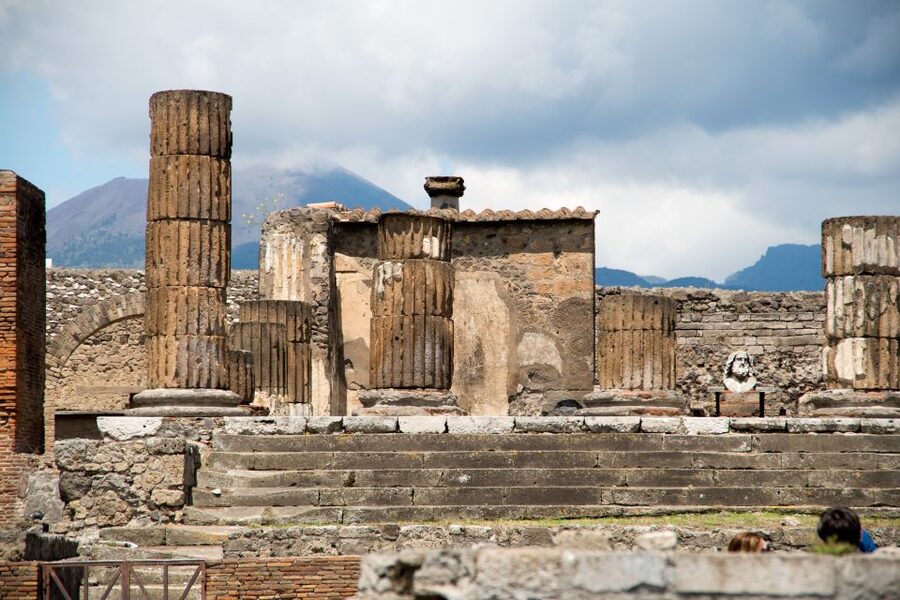
Vesuvius remains visible in the distance. Framed behind the ruins, it gives the visit an uncomfortable edge. You are not simply looking at an old town. You are looking at a place that was interrupted by the mountain still looming above it.
The houses and frescoes worth finding

Pompeii’s private homes are among its best stops, but they can be easy to miss if you wander without a map. The House of the Faun is a major example of Hellenistic design, with large rooms and fine decorative work. Its scale gives you a sense of the wealth held by the city’s elite.
The Villa of the Mysteries is the standout suburban addition. Its frescoes are especially important, and the rooms offer a stronger sense of private Roman life than the broad streets do. If you select Pompei+, make this villa a priority rather than treating it as an optional extra at the end of a tiring day.
Not every building shown in an audio guide will be open. Closures can leave you listening to an explanation while looking at a locked doorway or an incomplete view. That is a normal problem at a working archaeological site, but it is worth keeping expectations sensible.
You may also find that some buildings have limited explanatory signs. The audio guide fills part of that gap, but it does not replace a person who can answer questions or point out exactly where to stand inside a house. If you want a tightly organized interpretation, a live guide is a better fit than this ticket.
A few more things to do in Pompeii
- Pompeii: Skip-the-Line Entrance Ticket with Audio Guide
★ 4.0 · 2,509 reviews - Pompeii: Archaeological Park Tour with Ticket on request
★ 4.5 · 2,283 reviews - Pompeii: Guided Walking Tour with Entrance Ticket
★ 4.3 · 1,423 reviews - Pompeii: Skip-the-line-Ticket and Guided Tour
★ 4.6 · 1,152 reviews
Temples, theaters, baths, and the amphitheater

The temples of Venus, Apollo, and Jupiter show the religious side of Pompeii. Even when columns are incomplete, the spaces make sense when you imagine processions, offerings, and civic ceremonies moving through the city.
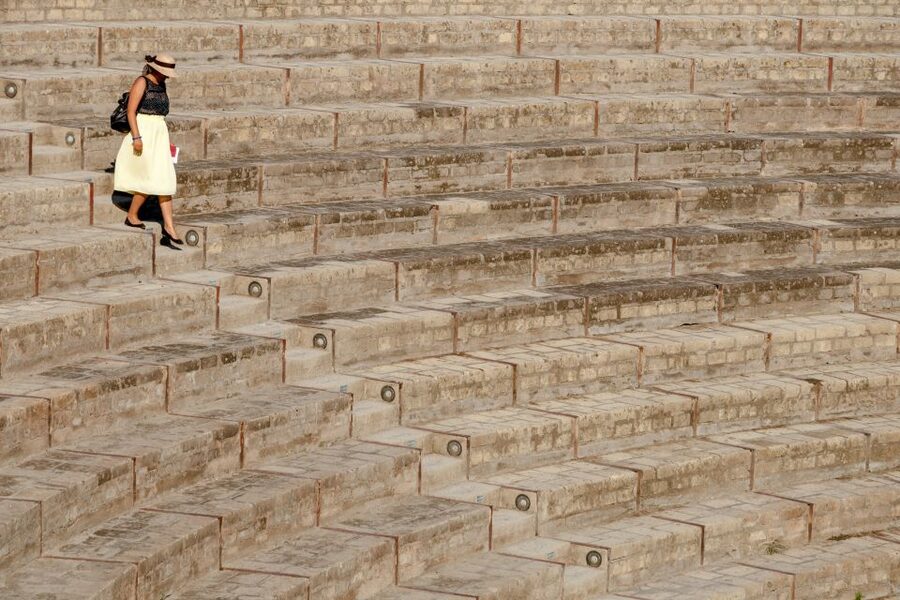
The theaters are easier to appreciate once you consider their setting. You can stand where an audience once gathered and look across the seating and stage area. The amphitheater gives another view of public entertainment and the size of Pompeii as a Roman town.
The site’s scale matters here. You might begin by visiting the most famous houses and then spend the afternoon moving between public buildings. Or you can use the map to create a route that avoids crossing the same streets repeatedly. Without a plan, it is easy to lose time walking back and forth.
Bathrooms, toilets, and rest points are spread around the archaeological area, but you should still carry water. Summer heat and exposed stone make the walking harder than the distance on a map suggests. Comfortable shoes are essential, since the ancient paving can be uneven.
Using the optional audio guide
The audio guide is useful because Pompeii does not explain every building in detail. It can provide background on the city and direct you toward notable places, while a map helps you keep track of where you have been.
The physical audio guide is collected inside the site at the official audio guide desk near the ticket office, specifically at Porta Marina Superiore. You need a valid ID as a deposit for the device. Bring headphones because they are not included, and Bluetooth headphones do not work with the physical unit.
The available audio guide languages include English, Italian, Chinese, Japanese, Portuguese, Russian, German, and French. The supplied information also describes a digital audio guide in English, German, French, Italian, and Spanish, so check the exact option selected at booking.
The device can be very helpful for orientation, but do not expect perfect navigation. The map function may help you find your position and locate sights, yet the commentary can sometimes fail to match the building in front of you. At times, the instructions do not say exactly where to stand inside a house.
I would use the audio guide selectively. Listen fully at the major villas, baths, temples, and theaters, then move on when the commentary becomes repetitive. If you prefer a clear route and lively storytelling, consider hiring a separate guide at the site, but remember that this ticket itself does not include one.
How much time should you allow?
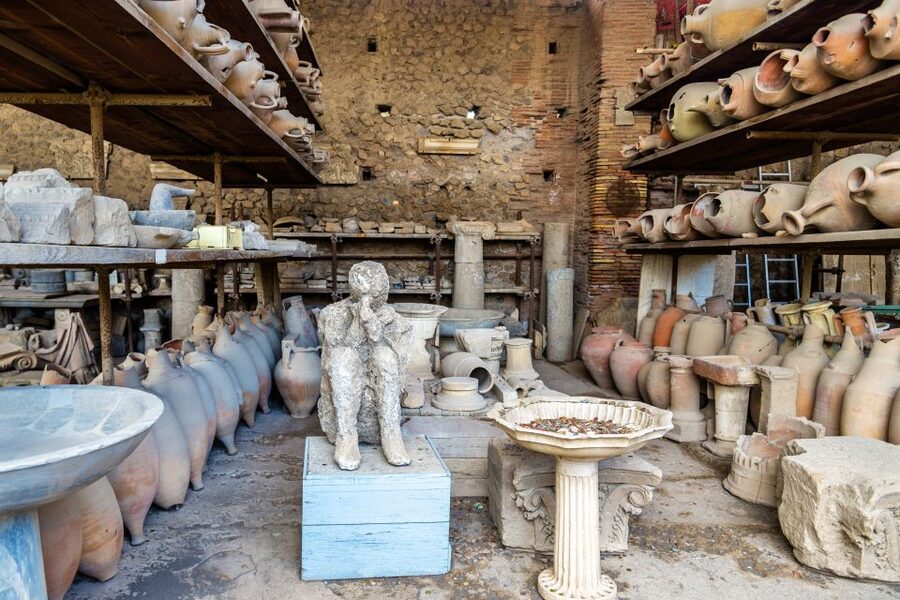
The official validity is one day, not a fixed tour lasting a certain number of hours. That gives you room to tailor the visit, but the site is so large that your available time still matters.
With only two hours, you can see a worthwhile section if you arrive with a short list. Choose the main streets, a major house, one public building, and the amphitheater or theater. You will not see everything, and trying to do so can turn the visit into a hurried march.
A half day works better for first-time visitors. You can focus on the central city and pause at the places that interest you most. A full day lets you move more slowly and consider Pompei+ if the suburban villas fit your schedule.
Early morning is a smart choice for cooler weather and lighter crowds. A late afternoon visit can work too, but check closing times and the last-entry rules, especially with Pompei+. The ancient city is large enough that entry shortly before closing is poor value.
Meeting points, queues, and practical snags

The meeting point can vary by the option booked, so read the voucher carefully before setting out. The activity ends back at the meeting point, but you are exploring independently rather than returning with a guide at a set time.
The entrance process is the main weak spot. Signage can be unclear, and visitors have sometimes been directed between different ticket offices before finding the correct desk. If you have an audio guide, remember that collecting it at Porta Marina Superiore may affect which entrance makes the most sense for your route.
Keep your phone charged so you can show the voucher. Carry your passport or ID card, since identification is required and may also be needed for the audio guide deposit. Luggage storage is available, which is useful if you arrive with bags, though traveling light will make the long walk easier.
Pompeii is wheelchair accessible, but accessibility does not mean every ancient surface is smooth or every building is equally easy to enter. If mobility is a concern, staff can help you understand the practical route, and it is sensible to allow extra time.
Who will get the most from this experience?
I would choose this ticket if you want control over the day, need flexible timing, or are happy exploring with a map and audio commentary. It is also a good match for families because you can stop for breaks and change plans without holding up a group.
History-minded visitors will have plenty to see, but you should arrive with modest expectations about interpretation. The ruins are extraordinary, yet some buildings are closed and some areas offer little written explanation. The audio guide helps, but it can be awkward to operate.
I would hesitate if you have only a short window and want someone to show you the essential sights in order. In that case, a live guided visit may make better use of your time. I would also think twice about Pompei+ if you cannot reach the suburban villas before the final entry time.
The value is strongest for a full or half day. At $26, reserved access and a whole day in Pompeii compare well with the cost of many organized excursions, especially if you do not need transportation or a guide. The value is weaker if you enter late, skip the audio guide, and see only a small corner of the city.
Should you book the Pompeii entry ticket?
Book it if you want to explore independently and can give Pompeii enough time. Choose Pompei Express for a focused visit to the ancient city, or Pompei+ when the Villa of the Mysteries and other suburban sites are high on your list.
Add the audio guide if you want more context than the signs provide, but bring wired headphones and your ID. Plan your route before entering, arrive with water and sturdy shoes, and do not assume every building described will be open.
This is a practical, flexible way to enter Pompeii, not a substitute for a personal guide. For many visitors, that trade-off is worth it because the ruins reward slow wandering and the freedom to stop whenever a doorway, mosaic, or distant view of Vesuvius catches your attention.
FAQ
Is this a guided tour of Pompeii?
No. The ticket provides reserved entry and an optional physical or digital audio guide. A live guided tour is not included.
What is included with the Pompei Express ticket?
Pompei Express includes entry to the ancient city of Pompeii. It does not include the suburban villas, including the Villa of the Mysteries.
What does the Pompei+ ticket include?
Pompei+ includes the ancient city of Pompeii, Villa of the Mysteries, Villa of Diomedes, and Villa Regina in Boscoreale with the Antiquarium.
What is the last entry time for Pompei+?
From November 1 through March 31, the last entry is 3:30 p.m. From April 1 through October 31, the last entry is 5:30 p.m.
Where do I collect the physical audio guide?
You collect it inside the Pompeii archaeological site at the official audio guide desk near the ticket office, at Porta Marina Superiore.
Do I need headphones for the audio guide?
Yes. Headphones are not included, and Bluetooth headphones do not work with the physical audio guide device.
Do I need identification to rent the audio guide?
Yes. A valid ID is required as a deposit for the audio guide device.
Is Pompeii wheelchair accessible?
Yes, the activity is listed as wheelchair accessible. Ancient streets and ruins may still have uneven surfaces and varying access between buildings.
Just added in Pompeii
- Pompeii Ruins Private Tour with Optional Skip-the-Line Entry★ 4.9 · 732 reviews
- Pompeii 3hours Villa of Mysteries tour with an Archaeologist★ 4.8 · 486 reviews
- Pompeii: Exclusive Tour with Archaeologist and Entry Tickets★ 4.9 · 634 reviews
- Pompeii: Small-Group Tour of Pompeii and Herculaneum★ 4.8 · 867 reviews
- Pompeii: Group Tour with an Archeologist Guide★ 4.4 · 490 reviews
- Pompeii: Skip-the-Line Tickets and Tour with Archaeologist★ 4.9 · 467 reviews
- Pompeii: Skip-the-Line Entry & Audioguide★ 3.8 · 225 reviews
- Pompeii: Skip-the-Line Guided Tour with Expert Archaeologist★ 4.8 · 196 reviews
Pompeii & Herculaneum Tours, compared.

Entry Ticket and Guided Tour with an Archaeologist
Read our review →



Pompeii and Mount Vesuvius Day Trip from Rome with Pizza Lunch
Read our review →
Pompeii Day Trip with Optional Vesuvius and Lunch
Read our review →
Naples or Sorrento: Full-Day Pompeii and Mount Vesuvius Tour
Read our review →Browse the lists this tour appears in