
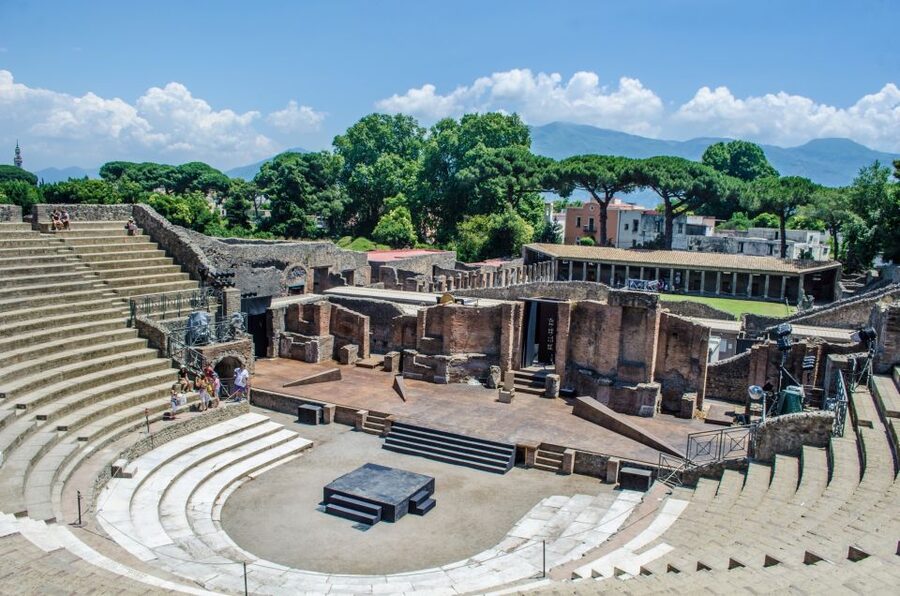
Reviewed · POMPEII & HERCULANEUM TOURS
Pompeii: Skip-the-line-Ticket and Guided Tour
Pompeii is most powerful when you stop seeing it as a field of ruins and start seeing an ancient town frozen in place by volcanic ash. This two-hour guided walk takes you from Porta Marina Superiore through streets, homes, public buildings, and artwork while an archaeologist explains how the city worked.
I like the reserved entrance, which saves you from waiting at the ticket line, and I like the focus on daily life: bakeries, baths, temples, theaters, and a brothel tell you more than grand monuments alone. The main drawback is time. Two hours gives you a strong introduction, but Pompeii is huge, and you will need extra time afterward if you want to explore beyond the main route.
Key points to know before booking
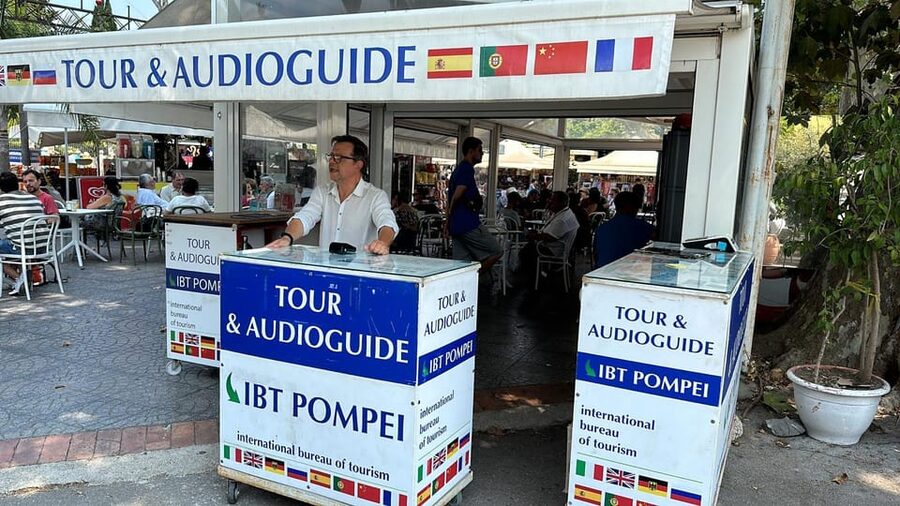
- Porta Marina Superiore begins the tour: You meet at the IBT Center/Touristation office near Chalet Donna Lucia, then enter through one of Pompeii’s ancient gates.
- The guide gives the ruins a story: You’ll hear about Roman homes, public life, religion, entertainment, and everyday routines rather than simply seeing walls and stones.
- Mount Vesuvius remains in view: The volcano that buried Pompeii rises beyond the city, giving the visit a powerful sense of place.
- Headsets are included: These matter when the group spreads out among Pompeii’s broad streets and courtyards.
- The two-hour route covers the essentials: Expect the forum, baths, temples, bakery, theater, brothel, mosaics, frescoes, and key streets.
- A semiprivate option is available: The smaller format has a maximum of 12 people and can make it easier to hear the guide and ask questions.
Why a guide makes Pompeii easier to understand
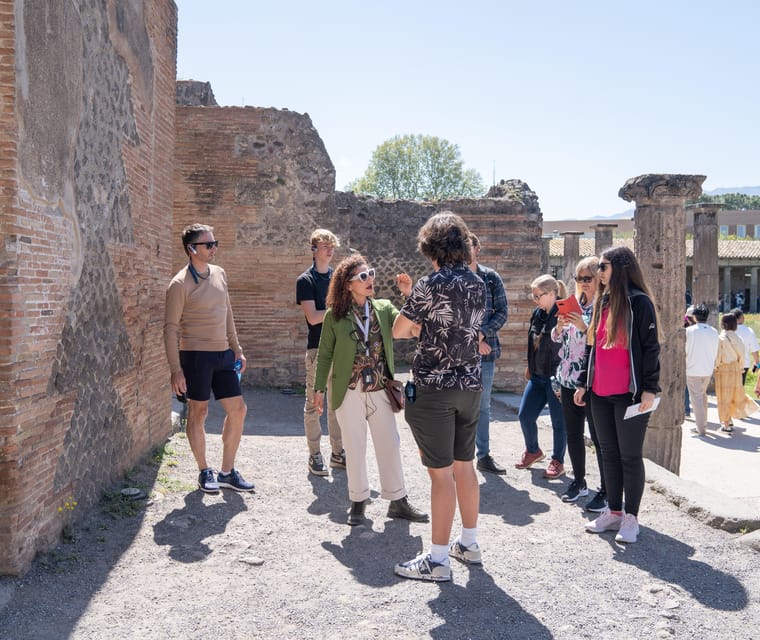
Pompeii can be confusing without context. You may see a doorway, a fragment of painted plaster, or a line of stepping stones and have no idea what role it played. A good guide connects those pieces to the people who lived, worked, worshipped, shopped, and relaxed here.
That is the main value of this experience. Guides such as Diana, Ester, Roberta, Paul, Liliana, Marcela, and Valentina have led departures, and the tour is offered in English, Italian, French, and Spanish. The exact guide depends on your date and language, but the format is designed around explanation, not simply escorting you through the gates.
I especially like the attention given to ordinary life. The forum matters, but so do the bakery, baths, and theater. These places show how the city functioned from morning to night. One guide may explain classical languages, another may focus on humor and household routines, and another may spend more time on the people behind the buildings. That variation is normal on a live guided tour.
The best guides also help you read the artwork. Pompeii’s mosaics and frescoes are not just pretty decoration. They offer clues about taste, wealth, religion, business, and the way Romans presented themselves. Without a guide, you can admire the colors. With one, you have a better chance of understanding why the images were placed there.
Other Roman sites within reach of Pompei Campania:
- Pompeii: Entry Ticket and Guided Tour with an Archaeologist
★ 4.8 · 19,459 reviews - Pompeii: Small Group Tour with an Archaeologist
★ 4.8 · 12,264 reviews - Pompeii: Skip-the-Line Entrance Ticket with Audio Guide
★ 4.0 · 2,509 reviews
Meeting at Piazza Esedra and entering through Porta Marina
The meeting point is Piazza Esedra, 11, at the IBT Center/Touristation office next to Chalet Donna Lucia. This is important: the office is not right by the main archaeological entrance or directly beside the train station. Give yourself time to find it, especially if you are arriving by train or walking with a family group.
The office provides assistance, Wi-Fi, and a city map. From there, the tour moves toward Porta Marina Superiore, one of Pompeii’s seven gates. Starting at a city gate is a useful introduction because it places you at the edge of the ancient town before leading you into its streets.
The reserved entry is a practical benefit, but do not read skip the line as skip every wait. You still need to meet the group, pass through security if required, and stay with the guide during the opening part of the visit. The real advantage is avoiding the standard ticket queue and having the entrance arranged in advance.
Bring your passport or ID card. Identification is required for all participants. Large bags, umbrellas, oversize luggage, smoking, and pets are not allowed, with a limited exception for small dogs. Small dogs must be on a leash and carried inside buildings.
The forum and Pompeii’s main streets
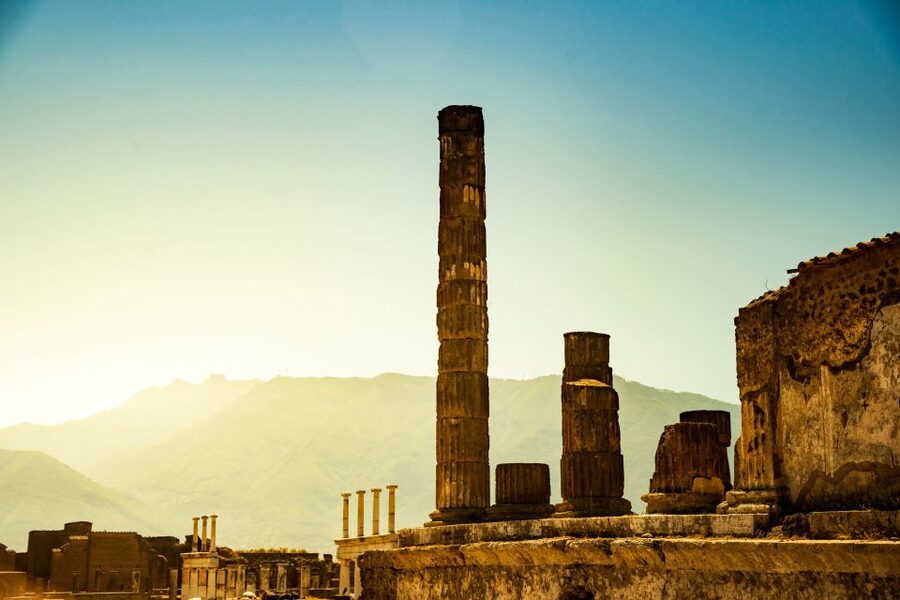
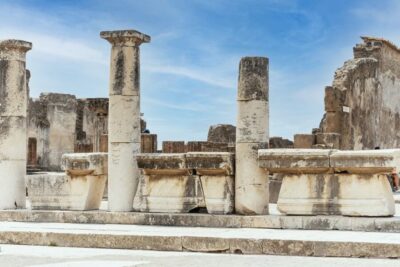
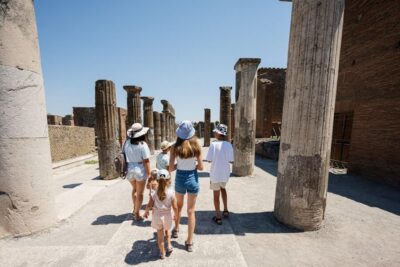
The forum was the heart of Pompeii. This is where the tour begins to make the city feel organized rather than random. Broad public spaces, temples, civic buildings, and commercial areas show how religion, politics, business, and social life met in one place.
Your guide will likely use the streets leading to the forum to explain how Pompeii was laid out. The exact buildings visited can depend on access and the day’s conditions, but the route is built around the city’s key areas rather than a single house or monument.
This is also where Mount Vesuvius enters the story. The volcano rises beyond the rooftops and broken walls, a constant reminder of what happened in AD 79. The view is not a separate mountain excursion, but it adds meaning to the walk. You are looking at the city that was buried by the volcano, with the volcano still visible beyond it.
The forum can be crowded, particularly during busy periods. Headsets help, but you should still stay close enough to see the guide’s gestures and demonstrations. A larger group can make it harder to hear, which is one reason I prefer the semiprivate option for visitors who want more room for questions.
Baths, temples, bakery, and theater
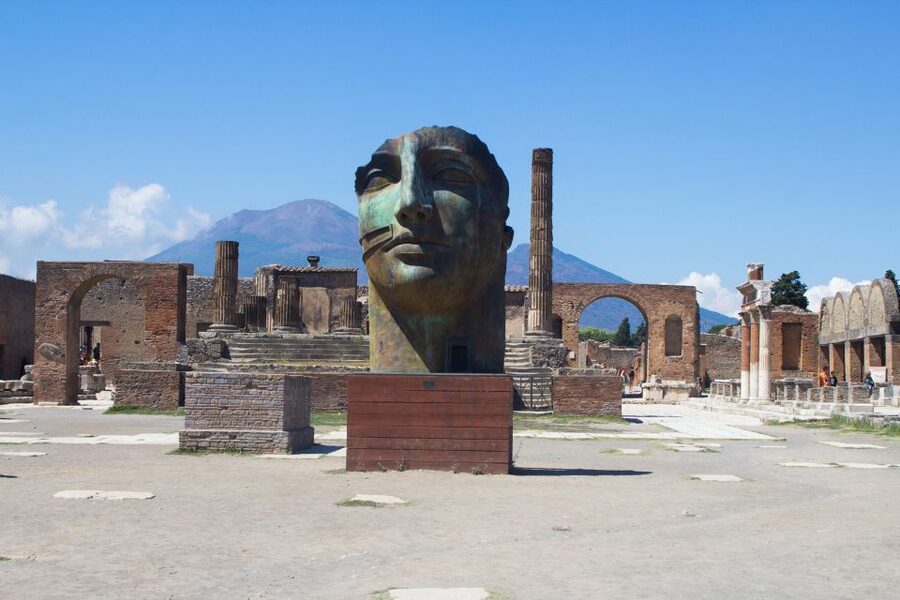
The route continues into the parts of Pompeii that show how people spent their time. The baths reveal the importance of public washing, exercise, conversation, and social contact. Temples show that religion was woven into daily life, rather than kept apart in a modern sense.
The bakery is one of the most memorable stops because it brings the ancient city down to household scale. You are not just studying government or emperors. You are looking at the practical business of feeding a town. A guide can help you notice the working features that otherwise blend into the stonework.
The great theater shifts the mood again. Pompeii was not only a place of work and worship. It had entertainment, performances, and public gatherings. The theater helps you picture the city as a living community, not merely a disaster site.
The brothel is another well-known stop. Your guide can place it within the wider social structure of the Roman town, though the amount of time spent there will vary. Visitors often find that guided explanation is especially useful here because the building’s purpose and decorations are easy to misread without context.
A few more things to do in Pompei Campania
- Pompeii: Skip-the-Line Entry Ticket with Digital Guide App
★ 4.1 · 770 reviews - Pompeii: Afternoon to Sunset Guided Tour with Ticket
★ 4.9 · 484 reviews - Vatican: Museums & Sistine Chapel Entrance Ticket
★ 4.5 · 144,003 reviews - Milan: Cathedral and Duomo’s Terraces Entrance Ticket
★ 4.6 · 61,054 reviews
Frescoes, mosaics, and homes preserved by ash
Pompeii’s preserved artwork is one of the strongest reasons to take a guided tour. Frescoes and mosaics survive in places where you might expect only bare walls. The volcanic ash covered the city quickly, helping preserve rooms, surfaces, and objects that would otherwise have disappeared.
Look closely at the details. A floor mosaic, painted wall, or household decoration can reveal social status and personal taste. The guide may also explain how archaeologists restored buildings and interpreted what remained. This turns the artwork into evidence rather than background scenery.
The ash did not preserve every building in perfect condition, and access to individual houses can change. Some areas may be closed for conservation, crowd control, or other site rules. Still, the tour gives you a sensible overview of the major artistic and architectural features available along the route.
I would not expect to see every famous corner of Pompeii in two hours. The site is too large for that. Think of this as a guided introduction that helps you recognize what matters, then use the remaining time to return to places that caught your attention.
What the two-hour schedule really gives you
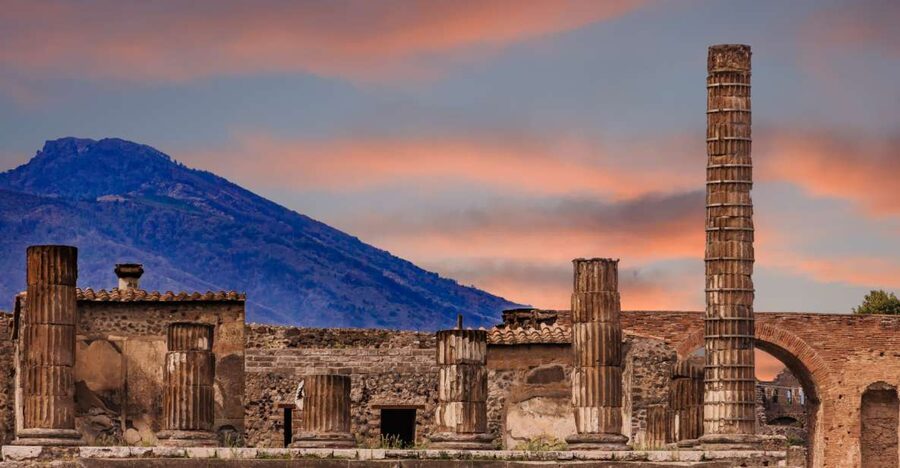
Two hours is long enough for a well-paced overview, but short for a full exploration. You should expect to keep moving. Guides need to cover the main streets and major buildings while managing the group, so this is not a slow, unstructured wandering tour.
That pace works well if you are visiting Pompeii between Naples and Sorrento, or if your schedule includes only part of a day. One practical arrangement is to leave luggage at Pompeii Scavi station, take the tour, and continue onward. Luggage storage is not included in the experience, so you need to arrange that separately.
If you have a full day for the archaeological area, the tour can work as an opening lesson. Afterward, you can explore independently with a better sense of direction. A map is included, and the guide can point out additional areas to see once the formal tour ends.
The route involves uneven ancient streets and walking through a large archaeological site. This experience is not suitable for wheelchair users or people with mobility impairments. Free admission is available for disabled visitors with certified disability, but the stated tour format itself is not designed for reduced mobility.
Group size, headsets, and guide quality
Group size can make a major difference at Pompeii. A small group of six can feel personal, and groups have sometimes ended up with only three or four people. The semiprivate option allows a maximum of 12, which is a useful middle ground between a private guide and a large coach-style group.
The headset is included and should be checked at the start. That small step matters. Pompeii has open streets, courtyards, and distractions in every direction, so the group may not stand in one tight circle for the whole explanation.
Guide quality is central to the experience. The strongest guides keep people moving while still answering questions, explain Roman life in clear terms, and use humor without turning the visit into a performance. Several guides, including Valentina, Laura, Annorita, Theresa, Marcela, and Liliana, have been praised for making the history easy to follow and for connecting buildings to daily routines.
Language ability can vary by guide. The tour is offered in four languages, but English accents and speaking styles are not identical. If you have trouble understanding your guide, move closer and use the headset volume. A larger group can also make listening harder.
Is $64 good value for Pompeii?
At $64 per person, this is not the cheapest way to enter Pompeii. You are paying for the archaeological-area ticket, reserved entrance, a two-hour guide, headset, map, and assistance at the tourist office. Food, drinks, transport, hotel pickup, and the Villa dei Misteri are not included.
The value depends on how much context you want. If you already know Pompeii well and enjoy studying maps or signs alone, an independent visit may cost less and give you more control over your pace. If this is your first visit, the guide can prevent you from spending two hours looking at disconnected ruins.
I think the price is easiest to justify when you choose a small group, care about the stories behind the buildings, and have limited time. It feels less attractive if you want a long, leisurely visit or if you plan to pay for the tour and then leave immediately without using the extra time inside the site.
Children pay the listed full price, so families should include that when comparing options. The non-refundable policy also matters. Confirm your date, starting time, language, meeting point, and family plans before booking.
Who should book this Pompeii tour?
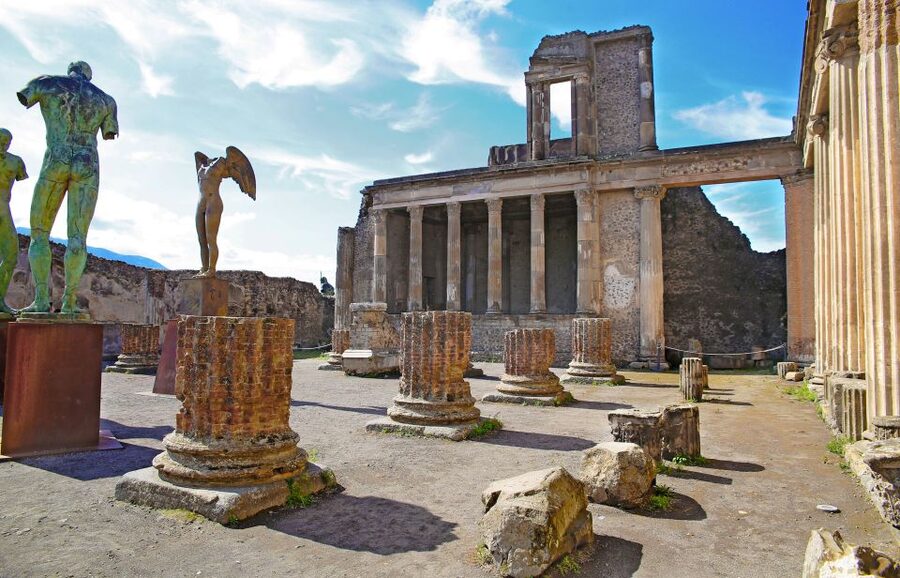
I would choose this tour if you are visiting Pompeii for the first time, have roughly half a day, or want help understanding Roman daily life. It suits couples, families, and small groups who prefer a clear route and a live explanation instead of an audio guide or printed information.
It is also a good fit for a day that links Naples and Sorrento. The two-hour length leaves room for onward travel, though you must check your train timing carefully. Train schedules do not always match tour departure times, so do not assume the next train will fit neatly after your booking.
I would be more cautious if you have limited mobility, dislike fixed schedules, or want to cover the entire archaeological area. In those cases, the site’s uneven surfaces, large scale, and short tour window may work against you.
Final verdict: a strong first look at Pompeii
I recommend this tour for the way it turns Pompeii from scattered ruins into a functioning city. The forum, baths, bakery, theater, brothel, mosaics, and frescoes each add a different piece, while Mount Vesuvius gives the whole visit its dramatic backdrop.
The main compromise is the two-hour limit and the $64 cost. You are buying orientation and interpretation, not an all-day archaeological expedition. Choose the semiprivate format if your budget allows, arrive early at the Piazza Esedra meeting point, bring identification, wear practical shoes, and plan extra time afterward if you want more than the highlights.
FAQ
Where does the Pompeii tour meet?
Meet at the IBT Center/Touristation office at Piazza Esedra, 11, next to Chalet Donna Lucia.
How long does the guided tour last?
The guided tour lasts two hours.
What language is the tour offered in?
The live guide is available in Italian, French, Spanish, and English.
Is Pompeii admission included?
Yes. The Pompeii archaeological-area ticket and reserved entrance are included.
Is entrance to Villa dei Misteri included?
No. Entrance to Villa dei Misteri is not included.
What places can I expect to see?
The route includes Pompeii’s main streets, forum, baths, temples, bakery, great theater, brothel, and examples of preserved frescoes, artwork, and mosaics.
Is a headset provided?
Yes. A headset is included so you can hear the guide during the walking tour.
Do I need to bring identification?
Yes. A passport or ID card is required for all participants.
Can I bring luggage or a large bag?
No. Large bags, oversize luggage, and umbrellas are not allowed. Hotel pickup, drop-off, food, and drinks are also not included.
Just added in Pompei Campania
- Pompeii 3hours Villa of Mysteries tour with an Archaeologist★ 4.8 · 486 reviews
- Pompeii: Small-Group Tour of Pompeii and Herculaneum★ 4.8 · 867 reviews
- Pompeii: Skip-the-Line Entry & Audioguide★ 3.8 · 225 reviews
- Pompeii: Guided Tour with Skip-the-Line Entry★ 4.9 · 812 reviews
- Pompeii: Afternoon to Sunset Guided Tour with Ticket★ 4.9 · 484 reviews
- Pompeii: Skip-the-Line Entry Ticket with Digital Guide App★ 4.1 · 770 reviews
- Pompeii: Tour with Archaeologist Guide & Skip-the-Line Entry★ 4.5 · 478 reviews
- Pompeii: Day Tour of Pompeii and Vesuvius with Bus Transfer★ 4.2 · 250 reviews
Pompeii & Herculaneum Tours, compared.
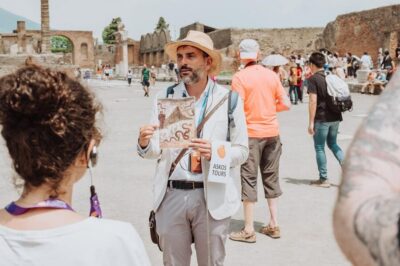
Entry Ticket and Guided Tour with an Archaeologist
Read our review →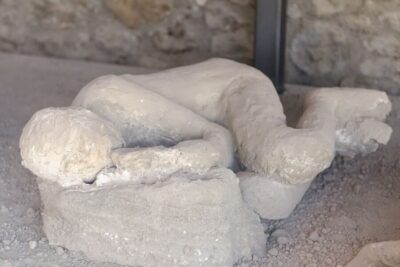



Pompeii and Mount Vesuvius Day Trip from Rome with Pizza Lunch
Read our review →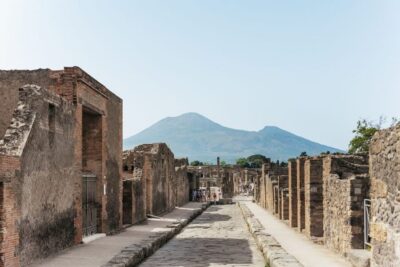
Pompeii Day Trip with Optional Vesuvius and Lunch
Read our review →Browse the lists this tour appears in