

Reviewed · POMPEII & HERCULANEUM TOURS
Pompeii: Exclusive Tour with Archaeologist and Entry Tickets
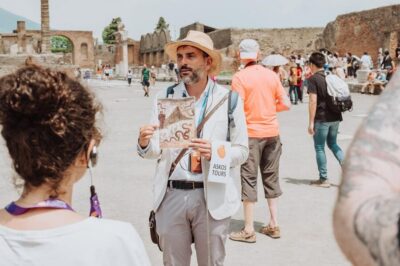
Pompeii is easier to understand when someone helps you read it. In two hours, this archaeologist-led walk takes you from the old Porta Marina gate through the Forum, temples, baths, houses, taverns, and theatre, while pointing out the small details that are easy to miss alone. I especially like the small-group format and the fact that tickets and a headset are included.
I also like the guide’s focus on ordinary Roman life, not only grand monuments. Antonio, Riccardo, Livio, Raffaelle, and other guides have been praised for clear explanations, good pacing, humor, and patience with children. The tradeoff is simple: two hours is only an introduction to a huge archaeological park, so you may want to remain afterward if you have the time.
Key points to know before you book
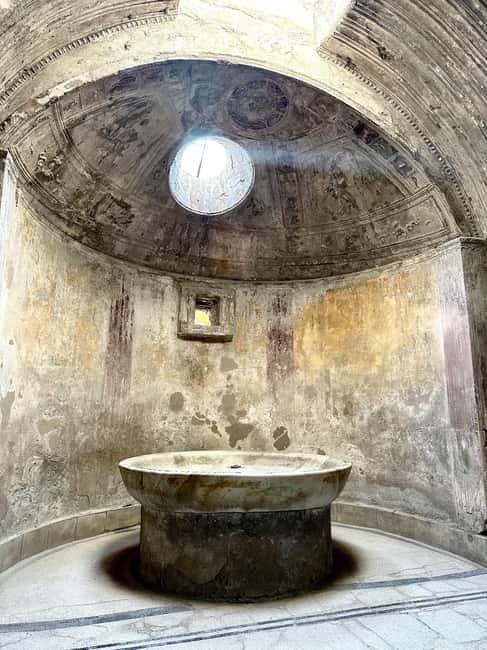
- Porta Marina meeting point: Meet outside the entrance opposite Pompei Scavi-Villa dei Misteri station.
- A real site-led explanation: The tour connects streets, houses, shops, temples, and public buildings to daily Roman life.
- Major highlights included: You visit the Forum, Basilica, Temples of Jupiter and Apollo, baths, Macellum, large houses, brothel, and theatre.
- Small group or private option: Choose a shared small-group visit or reserve a private slot for more personal attention.
- Useful audio support: Headsets help you follow the guide in a large, busy archaeological park.
- Good value at $50: Admission, an express ticket, a licensed guide, and two hours of focused sightseeing are included.
Why a guide helps at Pompeii
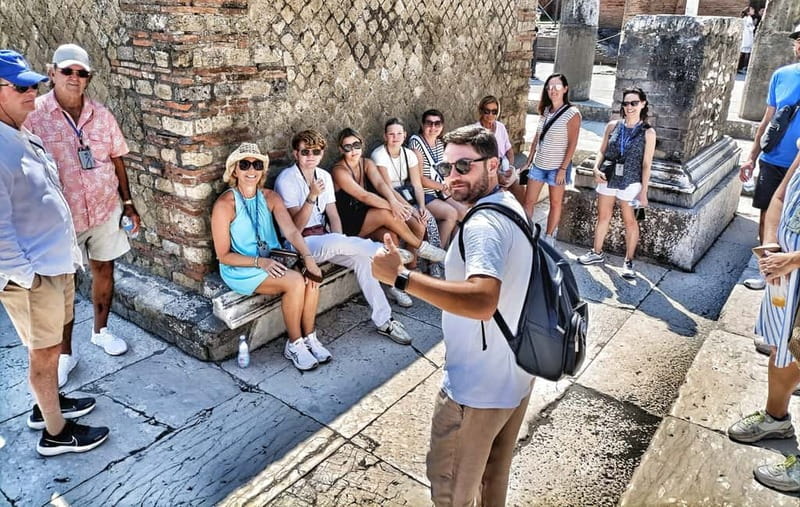
Pompeii can look like a maze of broken walls if you do not know what you are seeing. A doorway may be the remains of a shop, a painted room may reveal a family’s status, and a worn stone street can explain how carts and pedestrians moved through the city. The buildings are impressive, but the connections between them are what make the visit meaningful.
This tour gives you a useful framework quickly. Instead of wandering from one ruin to the next, you follow a route through civic buildings, religious sites, private homes, food shops, entertainment spaces, and places connected with the eruption. You get the broad story first, then you can return to the areas that interest you most.
The archaeologist guides are the main reason to choose this experience over a self-guided visit. Antonio is repeatedly praised for his passion and clear explanations, while Riccardo is noted for his command of Pompeii, Latin, and Greek. Livio is described as warm, funny, and precise, and Raffaelle is praised for working well with adults and children.
Guide assignments can change, so you should not book on the assumption that one specific person will lead your tour. The important point is that the experience is designed around a licensed guide with archaeological training and experience at the site.
Other Roman sites within reach of Pompeii:
- Pompeii: Entry Ticket and Guided Tour with an Archaeologist
★ 4.8 · 19,459 reviews - Pompeii: Entry Ticket with Optional Audio Guide
★ 4.2 · 12,360 reviews - Pompeii: Small Group Tour with an Archaeologist
★ 4.8 · 12,264 reviews
Entering through Porta Marina
The meeting point is outside Pompeii’s Porta Marina entrance, directly opposite the Pompei Scavi-Villa dei Misteri station on the Circumvesuviana railway. This is a practical location if you are arriving by train, but check your station carefully. Pompeii has three train stations, and arriving at the wrong one can turn a simple meeting into a rushed start.
Look for a guide holding a sign marked Pompei VIP. Have your full name, surname, and the ages of everyone in your party submitted through the booking messages before arrival. Pompeii’s current ticket rules require those details, and every participant, including children, should carry a passport or identity card. A photo of the document is accepted according to the tour instructions.
Porta Marina is one of Pompeii’s original entrances. Passing through it gives the visit a strong sense of arrival, but the first few minutes can also be busy. Stay close to the guide while tickets are checked and the group is organized.
Skip-the-line entry is valuable here because it saves time at the ticket queue. It does not mean the archaeological park will be empty. Pompeii is a major attraction, and other groups will be moving through the same streets, particularly around the Forum and the most famous houses.
The Forum and Basilica reveal the public city
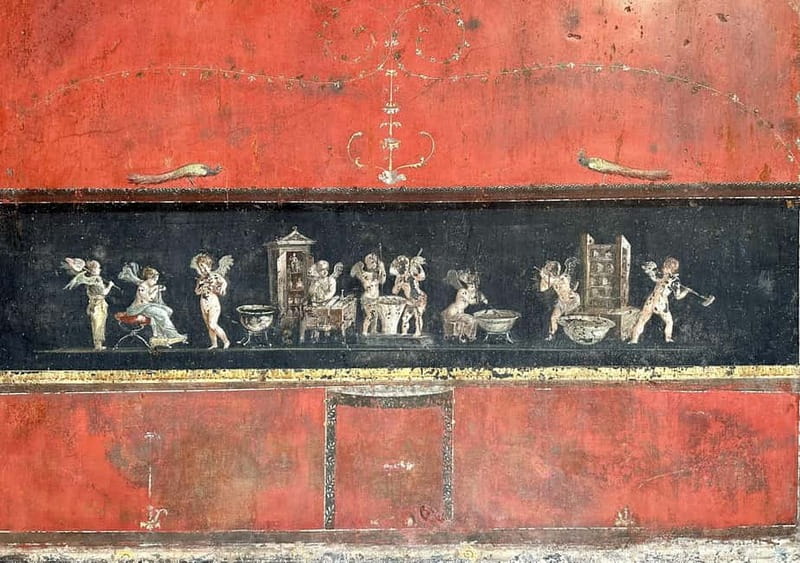
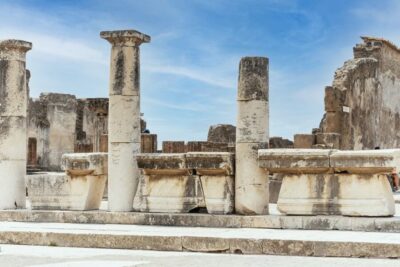
The route begins with the Basilica and the Foro Civile di Pompei, the civic center of the ancient town. This is where the tour shifts from a collection of ruins to a picture of public life. The guide explains how political, legal, religious, and commercial activity came together in this central area.
The Basilica is especially useful early in the tour because it helps you understand the scale and purpose of Pompeii’s public buildings. The Forum then gives you a sense of the city’s layout and social order. Look beyond the columns and imagine the open space as the place where people came to conduct business, discuss public matters, and take part in civic life.
I like this part of the route because it gives context to everything that follows. Once you understand the Forum as the heart of the city, the temples, market, baths, and homes feel connected rather than scattered.
Temples of Jupiter and Apollo
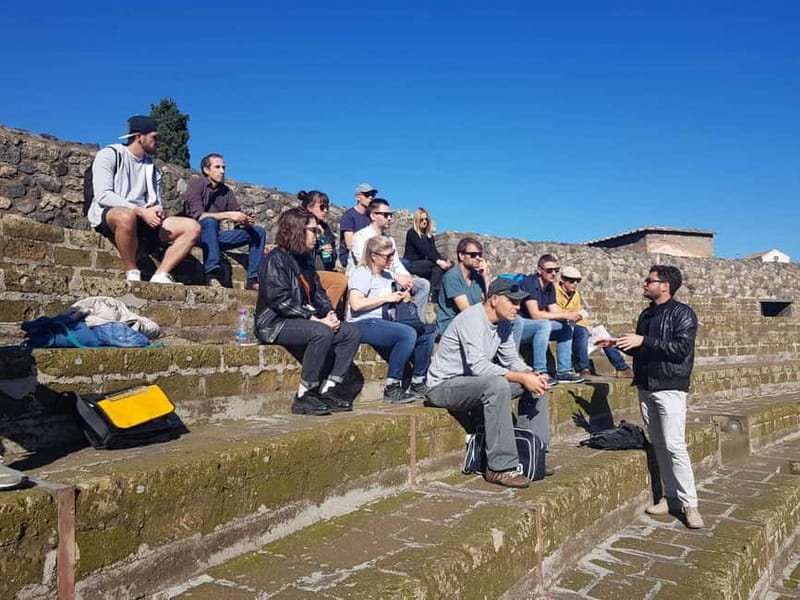
The Temple of Jupiter and Temple of Apollo introduce Pompeii’s religious world. Their placement near the Forum shows how closely public authority and worship were linked in Roman towns.
Your guide points out architectural details and explains the role these sanctuaries played in the city. The Temple of Apollo is among Pompeii’s oldest religious sites, while the Temple of Jupiter helps you see the formal character of the Forum district. You will spend part of the visit looking at columns and foundations, but the explanation gives those remains a purpose.
This is also a good place to ask questions. The tour is not only a list of dates and names. Guides such as Riccardo and Antonio are praised for answering questions and explaining how archaeologists interpret what they find.
A few more things to do in Pompeii
- Pompeii: Skip-the-Line Entrance Ticket with Audio Guide
★ 4.0 · 2,509 reviews - Pompeii: Archaeological Park Tour with Ticket on request
★ 4.5 · 2,283 reviews - Pompeii: Guided Walking Tour with Entrance Ticket
★ 4.3 · 1,423 reviews - Pompeii: Skip-the-line-Ticket and Guided Tour
★ 4.6 · 1,152 reviews
Baths, market, and the human cost of the eruption
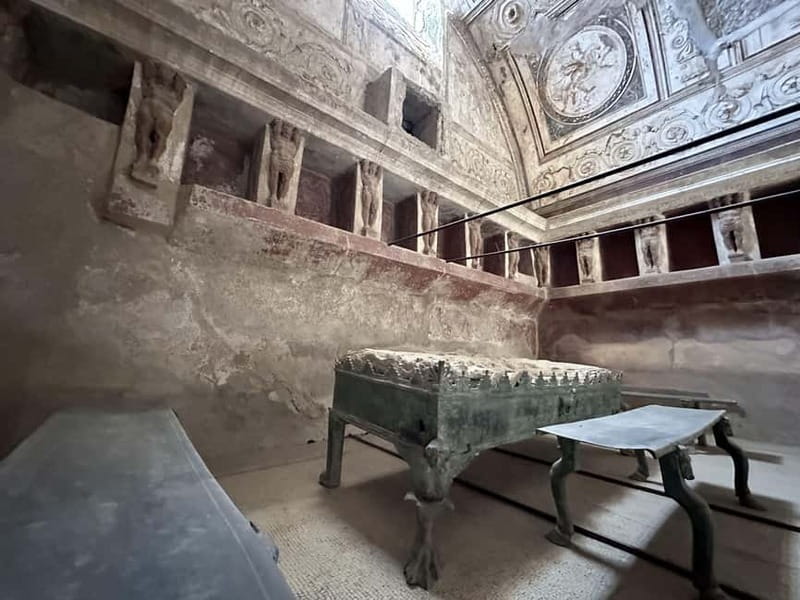
The Forum Baths show how much daily life depended on shared public facilities. The remains help you picture a city where social routines took place outside the home as well as within it.
At the Macellum, the ancient market, the tour turns toward food, trade, and the people who lived and worked in Pompeii. The plaster casts associated with the site are among the most difficult parts of the visit. They bring the eruption down to a human scale.
The casts are haunting because they preserve the shapes of people caught in the disaster. This is not a light sightseeing stop, and some children may find it upsetting. The guide’s role matters here. A thoughtful explanation can place the casts in context without turning tragedy into spectacle.
Pompeii was buried in 79 AD after Mount Vesuvius erupted. The city’s streets, homes, shops, paintings, and personal objects survived under volcanic material for nearly two thousand years. The guide also explains the continuing work of excavation and the methods used to understand the site.
Houses filled with art and social clues
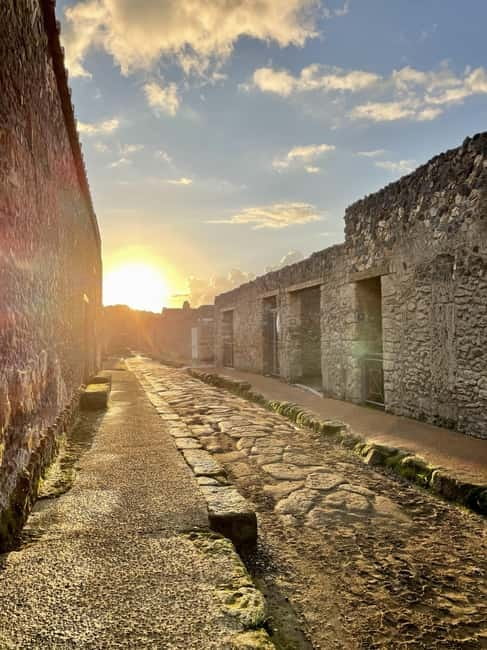
The House of the Tragic Poet, House of the Vettii, and House of the Faun show the private side of Pompeii. These homes are valuable not simply because they are large or beautifully decorated, but because their layouts reveal how Roman families displayed wealth, hosted visitors, and organized domestic life.
The House of the Vettii is known for its painted decoration, while the House of the Faun is one of the site’s grand residences. Frescoes and mosaics are the stars here. Colors may have faded in places, but enough remains to show the care and expense that went into decorating Roman interiors.
The House of the Tragic Poet adds another perspective. A guide can help you distinguish between what is known, what is inferred, and what remains uncertain. That kind of explanation is more useful than simply being told that a room is old or important.
The houses are also where a two-hour tour can feel brisk. There may be stops for photographs, but you will not have unlimited time in every room. If decorative art is your main interest, note the houses you want to revisit after the guided walk.
Taverns, bakeries, and the Lupanare
Pompeii becomes especially lively in the commercial areas. The Thermopolium taverns and ancient bakeries show how residents bought food, worked, and met one another during the day. These places make the city feel practical and familiar.
The Lupanare, Pompeii’s brothel, is one of the most famous stops. Its small rooms and surviving paintings often attract crowds, so the guide may need to keep the group moving. The site is adult in subject matter, and families may want to prepare younger children in advance.
I value these stops because they move the visit away from emperors and temples. You see the ordinary systems that kept a town running: food preparation, trade, service work, and social life. Pompeii’s power lies in this mix of the grand and the everyday.
The theatre district completes the route
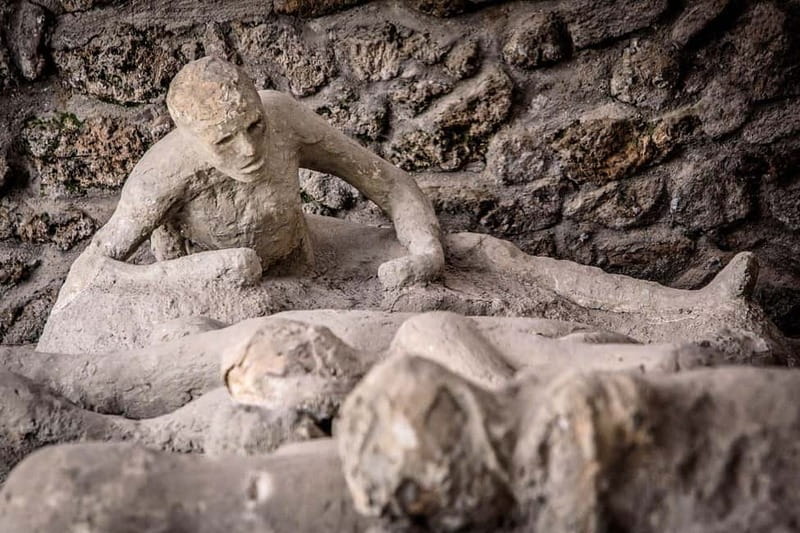
The Large Theatre closes the main sightseeing route. Its scale shows the importance of public entertainment in Roman society and gives you a different view of Pompeii’s architecture.
By this point, the route has moved from civic life to worship, bathing, shopping, domestic life, food, sex, and entertainment. That sequence is well chosen. You do not just see isolated attractions. You build a picture of how the city functioned.
The tour finishes back near Pompeii’s entrances, with drop-off points at Pompeii Ruins and Piazza Esedra. Your guide can also point out what to see on your own afterward. This final advice is useful because the park is too large to cover fully in two hours.
How much do you see in two hours?
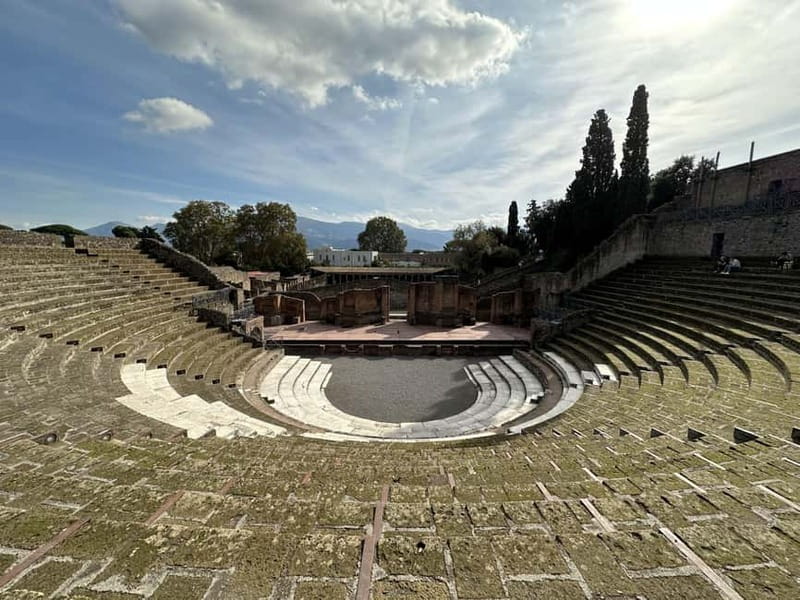
Two hours is a sensible length for a first orientation, especially in hot weather or when you are combining Pompeii with another Campania visit. You get a carefully selected route rather than an exhausting march across every district.
Still, Pompeii is enormous. Several people who enjoyed the tour wished they had planned more time afterward, and one person remained at the site for the rest of the day. If you have the energy, use the guided walk as your introduction, then continue independently once you know where the main areas are.
The pace is usually described as well judged, with time for photographs and questions. It can feel fast if you want to study every fresco or read every sign. Comfortable shoes are essential, and bring water. The ancient streets are uneven, and the tour is not suitable for wheelchair users or people with mobility impairments.
Small group, private booking, and headsets
A shared small group keeps the cost down and makes it easier to move through the park. The included headset is a practical touch. Pompeii is open and often noisy, so standing a few steps behind the guide should not mean missing the explanation.
A private booking costs more than the advertised shared rate, but it may suit families, couples, or anyone with a strong interest in archaeology. You can ask more questions, adjust the pace, and spend more time on the details that matter to you. The shared option is the better value if you mainly want a clear introduction.
The guides are praised for being friendly, organized, and responsive before the visit. That matters at a large site where a missed meeting point or wrong station can create unnecessary stress.
Is $50 a fair price?
At $50 per person, the tour offers solid value if you want guidance. The price includes skip-the-line entry, Pompeii admission, the express ticket, a two-hour guided visit, a licensed archaeologist, a small group, and a headset. You are also paying for a route that reduces the risk of missing the key buildings.
A self-guided visit may cost less, but the savings come with a tradeoff. Without a guide, you must do more work to understand the layout, identify the important rooms, and decide how to use your limited time. Pompeii rewards curiosity, but its scale can make independent sightseeing inefficient on a first visit.
Transportation, food, and drinks are not included. You arrange your own way to the entrance, with the train station opposite the meeting point being the most obvious reference point provided for this activity.
Who should book this Pompeii tour?
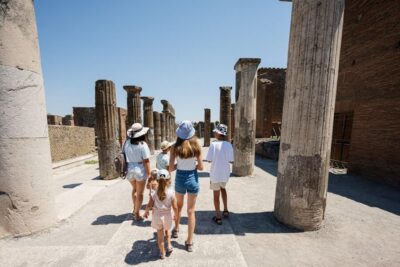
I would choose this tour if you are visiting Pompeii for the first time, have only a few hours, or want the ancient city explained rather than simply photographed. Families may appreciate the lively style and manageable duration, while history fans will benefit from the archaeological context and excavation details.
It is also a good fit if you are coming from Sorrento or another Campania base and want a straightforward morning or afternoon plan. The tour has been used as a starting point by people who then continued through the site alone.
I would think twice if you have mobility limits, dislike walking on uneven ground, or want a quiet, slow examination of every fresco. You should also avoid treating two hours as a complete Pompeii visit. It is a strong introduction, not the whole story.
Should you book it?
Book this experience if you want the main story of Pompeii delivered clearly, with entry handled and the most important districts linked into one route. The guide’s archaeological background, headsets, and small group make the $50 price reasonable for a first visit.
Skip it only if you already know the site well, have plenty of time for independent research, or prefer to wander without a schedule. For most first-time visitors, I would use the guided two hours to get your bearings, then remain at Pompeii afterward and explore at your own pace.
FAQ
Where does the Pompeii tour meet?
The meeting point is outside Pompeii’s Porta Marina entrance, opposite the Pompei Scavi-Villa dei Misteri station on the Circumvesuviana railway. The guide holds a sign marked Pompei VIP.
How long does the guided visit last?
The guided tour lasts two hours. You may continue exploring the archaeological park independently afterward.
Are Pompeii entry tickets included?
Yes. Skip-the-line entry tickets, Pompeii admission, and the express ticket are included.
Is this a private tour?
You can choose between a shared small-group tour and a private booking. Select your preferred option when booking.
Which languages are available?
The live guide service is available in English, Italian, French, and Spanish.
Do I need to bring identification?
Yes. Pompeii’s ticket rules require the full name and surname of each participant. Bring a passport or identity card, including for children. A photo of the document is accepted according to the tour instructions.
What should I bring?
Bring comfortable shoes, water, and your passport or identity card. Food and drinks are not included in the tour.
Is the tour suitable for wheelchair users?
No. The experience is not suitable for wheelchair users or people with mobility impairments. Electric wheelchairs are also not allowed.
Just added in Pompeii
- Pompeii Ruins Private Tour with Optional Skip-the-Line Entry★ 4.9 · 732 reviews
- Pompeii 3hours Villa of Mysteries tour with an Archaeologist★ 4.8 · 486 reviews
- Pompeii: Small-Group Tour of Pompeii and Herculaneum★ 4.8 · 867 reviews
- Pompeii: Skip-the-Line Tickets and Tour with Archaeologist★ 4.9 · 467 reviews
- Pompeii: Group Tour with an Archeologist Guide★ 4.4 · 490 reviews
- Pompeii: Skip-the-Line Entry & Audioguide★ 3.8 · 225 reviews
- Pompeii: Skip-the-Line Guided Tour with Expert Archaeologist★ 4.8 · 196 reviews
- Pompeii: Skip-the-line-Ticket and Guided Tour★ 4.6 · 1,152 reviews
Pompeii & Herculaneum Tours, compared.
Entry Ticket and Guided Tour with an Archaeologist
Read our review →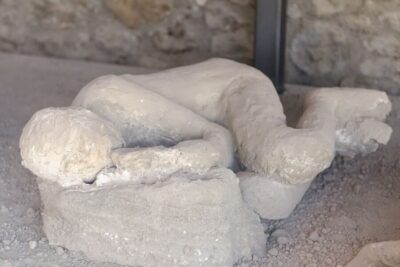



Pompeii and Mount Vesuvius Day Trip from Rome with Pizza Lunch
Read our review →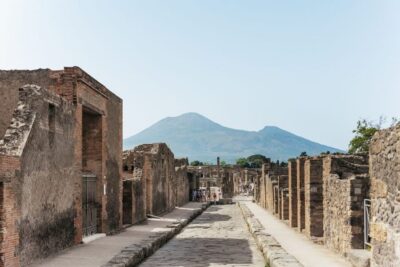
Pompeii Day Trip with Optional Vesuvius and Lunch
Read our review →Browse the lists this tour appears in