
Reviewed · POMPEII & HERCULANEUM TOURS
Pompeii: Group Tour with an Archeologist Guide
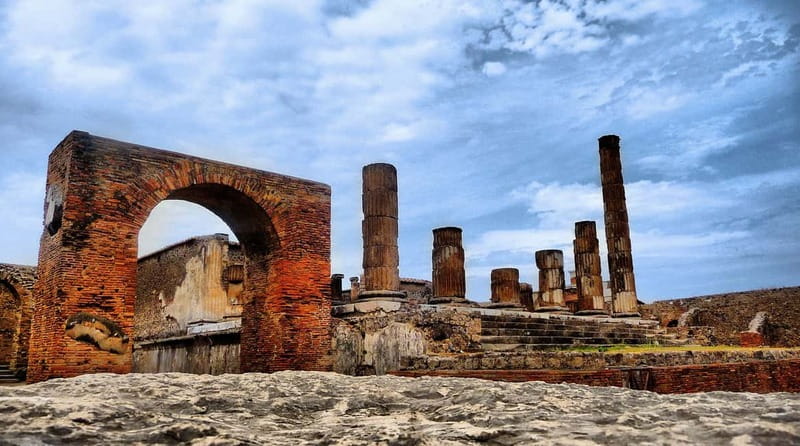
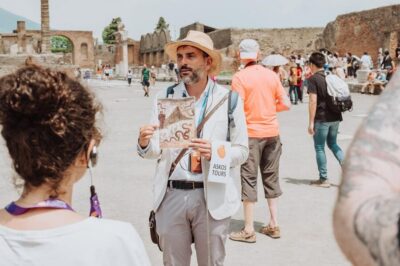
Pompeii is far too large and layered to understand by simply wandering through it. This two-hour archaeologist-led tour takes you past the Forum, baths, theaters, named houses, and plaster casts, giving the broken walls a human meaning. I especially like the skip-the-line entry and the way the guide keeps the route focused for a short visit.
I also like that you can remain inside Pompeii after the guided portion and continue exploring on your own. Guides such as Lena, Laura, Giuseppe, Alfonso, Eraldo, and Antonio have been praised for clear English, strong storytelling, and a good pace. The main drawback is the group setting: it can be fairly large, and two hours offers a useful introduction rather than a full study of this huge site.
Key points at a glance
- Start beside the train station: Meet at the Tempio Travel office on the first floor of the Circumvesuviana station.
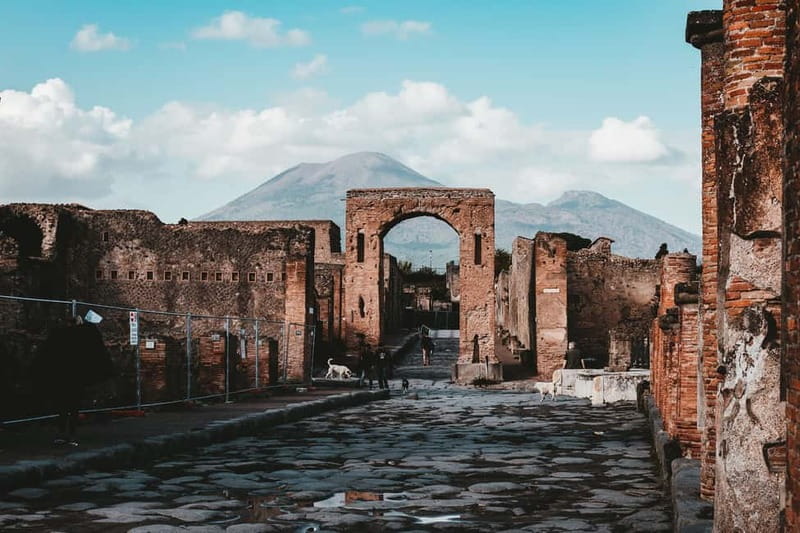
- Enter through Porta Marina: The tour moves into Pompeii’s western section, where many of the best-known buildings are found.
- See the essential sights: Expect the Basilica, Forum, baths, Lupanar, main street, theaters, plaster casts, and several famous houses.
- Learn from an archaeologist guide: The guide explains how to read the streets, rooms, paintings, and public buildings instead of leaving you to guess.
- Useful for a tight schedule: The two-hour format suits cruise passengers and anyone making a short stop in Pompeii.
- Plan for sun and uneven ground: Wear comfortable shoes, carry an ID, and leave luggage or large bags behind.
Why Pompeii works better with a guide
Pompeii can look simple at first: stone streets, roofless rooms, faded paintings, and walls damaged by centuries of exposure. The site becomes much more striking when someone explains what each space was for and how the pieces fit together.
A guide helps you tell a bakery from a house, a public building from a private courtyard, and a decorative painting from a clue about Roman daily life. Without that context, you may walk past an important doorway or spend too much time in a less significant corner.
The guide also gives you a route through a large archaeological area. This matters because Pompeii is not a compact monument with one obvious path. The tour concentrates on the western part of the city, where many major buildings and named houses are located.
The best guides on this departure have a clear, friendly style. Eraldo is described as informative and engaging. Alfonso is praised for answering questions and adding detail without making the subject dull. Giuseppe is known for his enthusiasm for Pompeii and Roman history, while Lena and Laura have been praised for explaining complex points clearly and keeping families moving together.
Your guide may be someone else, but the format gives you a useful advantage: you can ask questions as you go. The whispers headset supplied for larger groups also helps you hear the explanation without standing shoulder to shoulder with the guide.
Other Roman sites within reach of Pompeii:
- Pompeii: Entry Ticket and Guided Tour with an Archaeologist
★ 4.8 · 19,459 reviews - Pompeii: Entry Ticket with Optional Audio Guide
★ 4.2 · 12,360 reviews - Pompeii: Small Group Tour with an Archaeologist
★ 4.8 · 12,264 reviews
Meeting at Tempio Travel and entering through Porta Marina
The meeting point is the Tempio Travel office on the first floor of the Circumvesuviana train station. Look for the building with the red Tempio Travel logo, and allow enough time to find the office before your scheduled start.
There has been some confusion about the exact stair location, so check your booking details carefully and ask at the station if needed. The important point is that you do not meet directly at the ruins. You first collect your guide at the travel office, then proceed to the archaeological entrance.
The tour enters at Porta Marina, one of the main approaches to ancient Pompeii. This is a practical starting point because it leads into the western side of the city and puts you close to several major sights.
Skip-the-line access is valuable here. It does not mean the site will be empty, especially at busy times, but it saves you from waiting in the standard ticket queue. For a two-hour visit, every saved minute helps.
Bring a passport or other ID card, even though the tour itself is short. Large bags and luggage are not allowed, so do not arrive with your full suitcase after checking out of a hotel. Free parking may be available, but only if the lot is open and spaces remain.
The Forum, Basilica, and public heart of Pompeii
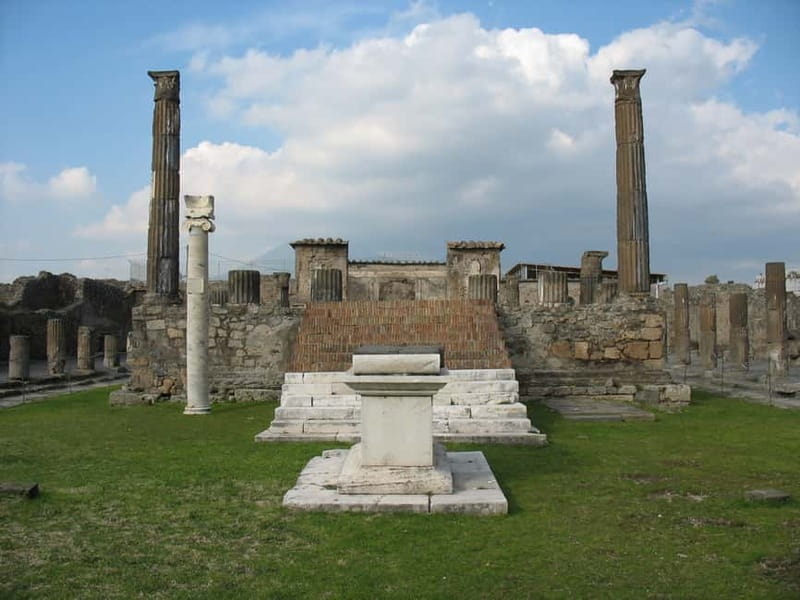
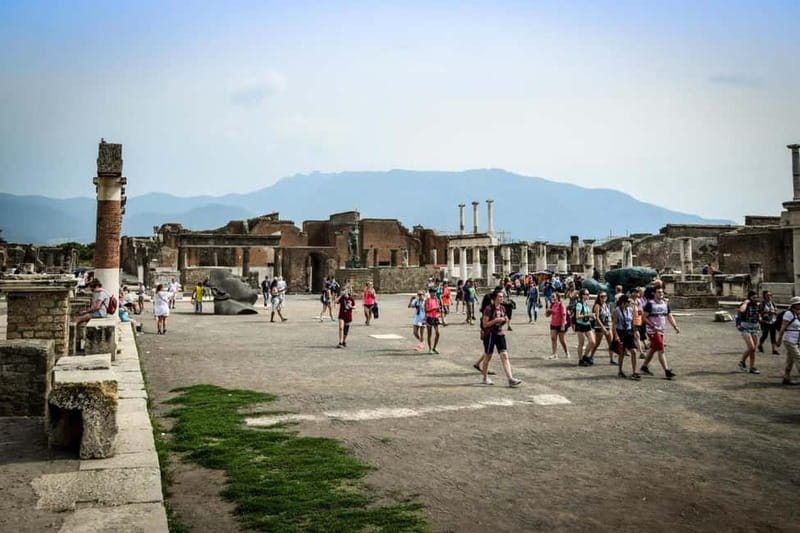
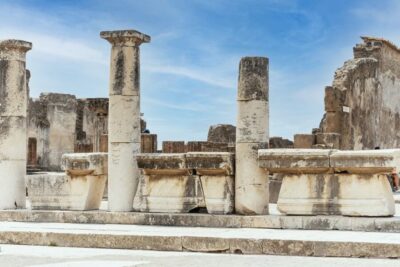
The Forum is one of the most important stops because it shows how public life was arranged in Roman Pompeii. Rather than looking at it as an empty square, listen for the guide’s explanation of the surrounding buildings and how this central area worked.
The nearby Basilica adds another piece to the picture. It was a major public building, and its broad remains give you a sense of the scale of civic life in the city.
This is where a guide can turn scattered stone into a readable plan. You may be shown how the streets connect, which structures had public functions, and how the city’s important spaces were positioned around the Forum.
The route does not attempt to cover every corner. That is sensible. Pompeii is too large for a complete visit in two hours, and a direct route helps you see the major sights without spending the whole tour marching from one distant point to another.
Baths, streets, and the Lupanar

The Roman baths reveal how much daily life depended on shared public spaces. The guide helps you understand the different areas and the role bathing played in Roman society.
You also walk along the main street, where worn paving stones and ancient buildings bring the city plan into view. The streets are not simply scenic remains. They show how people moved through Pompeii, how buildings faced one another, and how homes and businesses occupied the same urban area.
The Lupanar, commonly described as Pompeii’s brothel, is another memorable stop. Its small rooms and surviving decorations attract attention, but the guide’s explanation gives the building a wider social setting.
Some parts of the site can feel crowded, especially around the best-known rooms. A larger group may need to pause at the edge of a passage while the guide gathers everyone. The supplied headsets help, though the earpieces can feel slightly uncomfortable over a long period.
A few more things to do in Pompeii
- Pompeii: Skip-the-Line Entrance Ticket with Audio Guide
★ 4.0 · 2,509 reviews - Pompeii: Guided Walking Tour with Entrance Ticket
★ 4.3 · 1,423 reviews - Pompeii: Skip-the-line-Ticket and Guided Tour
★ 4.6 · 1,152 reviews - Pompeii: Guided Tour with Skip-the-Line Entry
★ 4.9 · 812 reviews
Theaters and Pompeii’s public entertainment

The theaters provide a change of scale from the narrow streets and private houses. They show that Pompeii was not only a place of homes, shops, and civic offices. Public entertainment had its own dedicated spaces.
The tour includes the theaters, but do not expect a long lecture at every building. The guide has to balance the size of the group, walking time, and the number of sights included in the route.
That balance is one reason the two-hour length works well for a first visit. You get enough explanation to understand the city, but you are not committed to a half-day lecture in the heat. At the end, you can continue on your own if you want more time with the theaters or other parts of the ruins.
Famous houses and the art on their walls
Pompeii’s private houses are among its greatest rewards. The route includes the House of the Tragic Poet and the House of the Golden Cupid, along with other named homes.
These names can sound like a list until you see how the houses preserve clues about status, taste, family life, and Roman decoration. Rooms were arranged around courtyards, and walls could carry painted scenes, patterns, and figures.
The frescoes are a major reason to choose a guide. A guide can point out what you are looking at, explain the purpose of a room, and place the artwork within the wider setting of the house. Without that help, you may notice only the color and age of the paint.
The condition of individual rooms can vary. Some paintings are easier to see than others, and certain houses may have restricted access on a given day. The tour promises these named houses and other famous homes, but the exact viewing order can change with site conditions.
The Garden of the Fugitives and the plaster casts
The Garden of the Fugitives is one of the most sobering parts of the visit. It is connected with the people who attempted to flee during the eruption of Mount Vesuvius in 79 AD.
The plaster casts of Pompeii’s citizens make the disaster personal in a way that the city walls alone cannot. They are not simply archaeological objects. They show the final moments of people caught by the eruption, and the guide’s explanation helps you approach this difficult material with care.
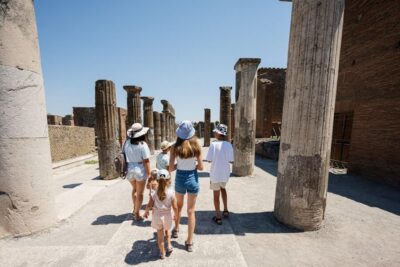
This part of the tour may affect children differently. The experience can work for families, and one guide has been praised for engaging children between eight and twelve, but parents should explain beforehand that the casts depict victims of a catastrophe.
The Garden of the Fugitives also changes the mood of the tour. After the public buildings, houses, and paintings, you are reminded that Pompeii was not merely abandoned. Its people faced a sudden and deadly event.
What two hours really gives you
Two hours is enough for a strong orientation, not enough to see all of Pompeii. That distinction matters when you book.
You should expect to see the major western-area highlights, hear the story behind the buildings, and leave with a clear idea of how the ancient city was organized. You should not expect to examine every house, street, theater, and wall painting at leisure.
I think this is a good length for a first visit, especially in hot weather. One guide kept a good pace and helped the group cover the important sights without dragging the tour out. Another timed the visit well for a warm afternoon, when two hours was enough before the sun became tiring.
The tradeoff is that the route can feel brisk if you want detailed photography or long periods in each house. Stay close to the group, listen through the headset, and save your personal exploration for after the tour.
That post-tour freedom is a real advantage. You can return to a house that caught your attention, walk farther along the streets, or spend more time near the theaters. The guide can also suggest ways to spend the rest of the day in modern Pompeii.
Weather, shoes, and physical demands
Pompeii is an outdoor archaeological site with uneven stone surfaces and considerable walking. Comfortable shoes are essential. This is not a suitable choice for people with mobility impairments.
Sun can be intense, even outside the hottest part of the day. Carry water and sun protection, and consider a hat or umbrella. A visitor bought a paper umbrella near the entrance during a hot afternoon, which gives you an idea of how exposed some parts of the route can feel.
Rain does not always cancel the visit. One guide continued the tour on a rainy day, but you should bring your own umbrella or raincoat. Roadside stalls outside the entrance may sell rain gear, but it is better not to depend on finding the right item at the last moment.
Large bags and luggage are not allowed. This is especially important if you are arriving by train with baggage or coming straight from a hotel. Arrange storage before you reach the meeting point.
Is $50.11 a fair price?
At $50.11 per person, the tour is not the cheapest way to enter Pompeii, but the price includes the two-hour guide, skip-the-line entrance ticket, and headsets for larger groups.
The value comes from the interpretation and time saved. A self-guided visit may cost less, but you would need to plan your own route through a very large site and work out what you are seeing. If you have only a morning, an afternoon, or a cruise-day window, avoiding the ticket line and following a focused route can justify the extra cost.
It is also good value if you are visiting Pompeii for the first time. The public buildings, houses, frescoes, baths, theaters, and casts carry more meaning when you understand their purpose.
The value is weaker if you already know Pompeii well or want a slow, specialist study of individual buildings. In that case, the group pace and fixed two-hour route may feel limiting.
Free parking is included only if it is open and available. Food, drinks, and hotel transfers are not included, so budget for those separately.
Booking details that matter
The tour is offered in English and Italian. You can cancel up to 24 hours before the activity for a full refund, and the reserve-now, pay-later option keeps you from paying at the time of booking.
On the first Sunday of each month, Pompeii entrance is free, but tickets cannot be reserved ahead of time and entry is not guaranteed. If you are visiting on that day, paid skip-the-line access may not apply in the usual way, so plan for uncertainty.
The activity ends back at the meeting point. Hotel pickup and drop-off are not provided. Afterward, the guide can point you toward the Sanctuary Dedicated to Our Lady of the Holy Rosary, just a short distance from the archaeological site.
Who should book this Pompeii tour?
I would choose this tour if you want the key sights explained by a live guide and you have only two or three hours. It suits first-time visitors, cruise passengers, families who benefit from a clear route, and anyone who would rather not study a site map before arriving.
It is also a good choice if frescoes, Roman homes, public baths, and the human story of the eruption matter more to you than seeing every last street.
I would look elsewhere if you need step-free access, dislike group tours, want a private pace, or plan to spend a full day examining the site in detail. For everyone else, the combination of a focused route, entry ticket, and archaeologist guide makes this a practical introduction to Pompeii. Stay afterward if you can. The guided portion gives you the framework, and the extra time lets you follow your own curiosity.
FAQ
How long does the Pompeii tour last?
The guided tour lasts two hours. You may continue exploring Pompeii on your own afterward.
Where does the tour meet?
Meet at the Tempio Travel office on the first floor of the Circumvesuviana train station. Look for the building with the red Tempio Travel logo.
Where does the tour end?
The activity ends back at the meeting point.
Does the tour include Pompeii entrance tickets?
Yes. Skip-the-line entrance tickets are included.
Which languages are available?
The live guide is available in English and Italian.
What sights are included?
The route includes Porta Marina, the Basilica, Forum, baths, Lupanar, main street, theaters, plaster casts, the Garden of the Fugitives, the House of the Tragic Poet, the House of the Golden Cupid, and other named houses.
Can I bring luggage or a large bag?
No. Luggage and large bags are not allowed.
Is the tour suitable for people with mobility impairments?
No. The activity is not suitable for people with mobility impairments. Comfortable shoes are recommended.
What happens if I visit on the first Sunday of the month?
Entrance is free on the first Sunday of each month, but tickets cannot be reserved ahead of time, so entry is not guaranteed.
Just added in Pompeii
- Pompeii Ruins Private Tour with Optional Skip-the-Line Entry★ 4.9 · 732 reviews
- Pompeii 3hours Villa of Mysteries tour with an Archaeologist★ 4.8 · 486 reviews
- Pompeii: Exclusive Tour with Archaeologist and Entry Tickets★ 4.9 · 634 reviews
- Pompeii: Small-Group Tour of Pompeii and Herculaneum★ 4.8 · 867 reviews
- Pompeii: Skip-the-Line Tickets and Tour with Archaeologist★ 4.9 · 467 reviews
- Pompeii: Skip-the-Line Entry & Audioguide★ 3.8 · 225 reviews
- Pompeii: Skip-the-Line Guided Tour with Expert Archaeologist★ 4.8 · 196 reviews
- Pompeii: Skip-the-line-Ticket and Guided Tour★ 4.6 · 1,152 reviews
Pompeii & Herculaneum Tours, compared.
Entry Ticket and Guided Tour with an Archaeologist
Read our review →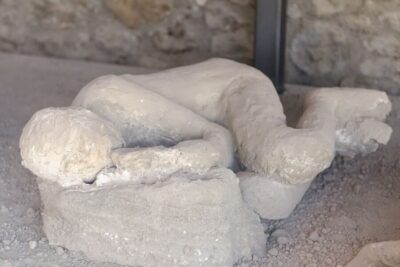



Pompeii and Mount Vesuvius Day Trip from Rome with Pizza Lunch
Read our review →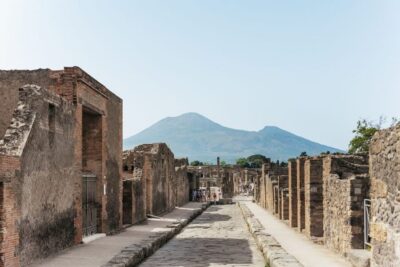
Pompeii Day Trip with Optional Vesuvius and Lunch
Read our review →Browse the lists this tour appears in