
Reviewed · POMPEII & HERCULANEUM TOURS
Herculaneum: Tickets & Tour with a Local Archaeologist
Herculaneum is the ancient Roman town where wooden doors, beds, furniture and food survived the eruption of Mount Vesuvius. A licensed archaeologist helps you notice why that matters. This is not just a walk past broken walls. You enter homes with upper floors, trace original streets and see the skeletons of people who sought shelter by the old waterfront.
I like the small-group feel and the way guides such as Raffaele Romano, Riccardo and Enrica turn hard archaeology into clear stories. I also like the two-hour length: enough time to understand the town without exhausting a family after a morning at Pompeii.
The main caution is pace. Two hours goes quickly, and a few visitors found that a slower guide left less time for extra buildings. Some groups also had trouble hearing when the site was noisy, though headsets are supplied when the group exceeds 11 people.
Key points to know before you book
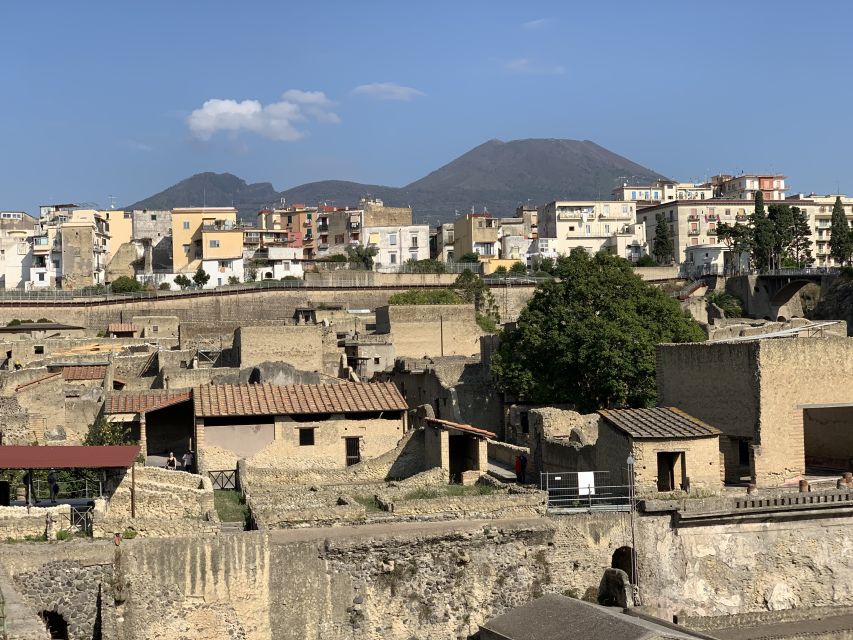
- See a Roman town in unusually complete condition: Herculaneum preserves wood, furnishings, upper floors and carbonized food that rarely survive at ancient sites.
- Follow an archaeologist-led route: Expect explanations of daily life, construction, art, water systems and the eruption, not only dates and names.
- Visit the most atmospheric buildings: The House of the Deer, House of Neptune and Amphitrite, public baths, House of Skeletons and Augustales shrine are central stops.
- Plan for a focused two hours: The route gives you a strong overview, but you may not see every corner of the archaeological site.
- Compare it with Pompeii: Herculaneum is smaller and more intimate, with better-preserved domestic details in several areas.
- Check mobility needs in advance: The site is not suitable for wheelchair users, and electric wheelchairs are not allowed.
Why Herculaneum feels different from Pompeii
Pompeii gives you scale. Herculaneum gives you closeness.
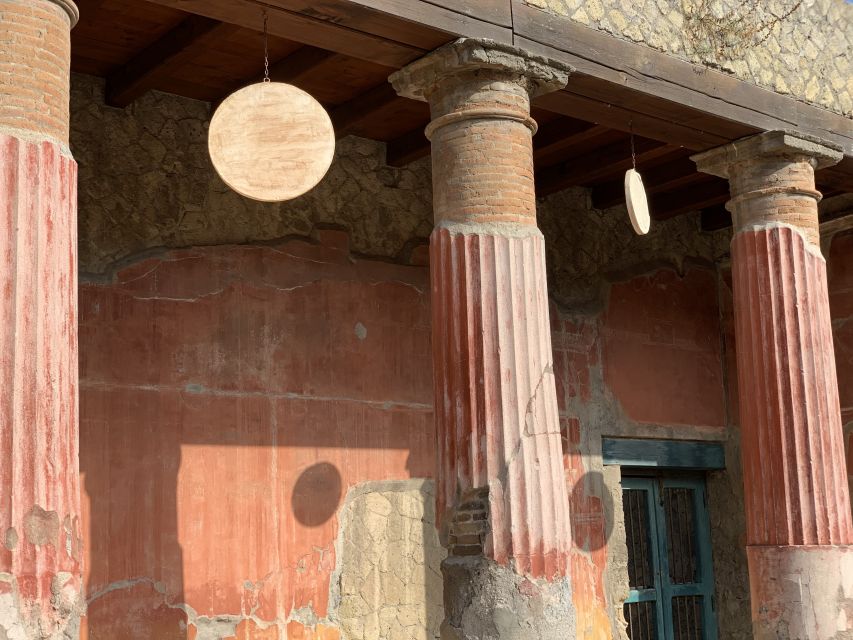
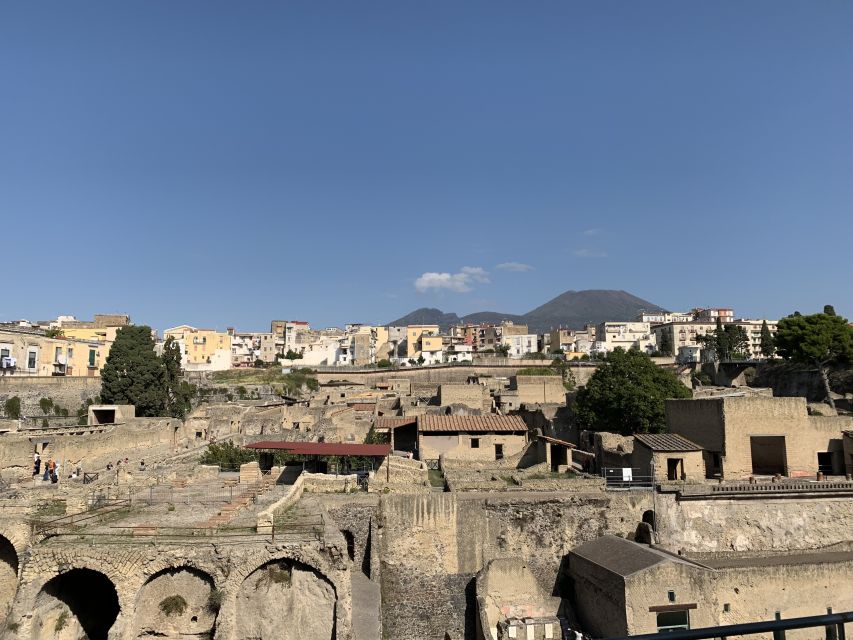
The two towns were both buried in the eruption of 79 AD, but Herculaneum was covered by a much thicker mass of volcanic material. That helped preserve features that usually vanish: timber, household objects, painted rooms and parts of upper stories. You can look at a doorway and still imagine the practical work of opening and closing it each day.
The site also feels more compact. That makes it easier to grasp as a lived-in town during a two-hour visit. Instead of walking long distances between major ruins, you spend more time examining rooms, pavements and small signs of daily life.
I would not treat this as a replacement for Pompeii if you have time for both. Pompeii offers a wider view of Roman urban life. Herculaneum offers a more intimate look at homes and the final moments of a seaside community. If your schedule allows both, the contrast makes each site clearer.
Other Roman sites within reach of Pompeii:
- Pompeii: Entry Ticket and Guided Tour with an Archaeologist
★ 4.8 · 19,459 reviews - Pompeii: Entry Ticket with Optional Audio Guide
★ 4.2 · 12,360 reviews - Pompeii: Small Group Tour with an Archaeologist
★ 4.8 · 12,264 reviews
Meeting the archaeologist at Biglietteria Ercolano
The meeting point is the ticket office, known as Biglietteria Ercolano. Arrive 10 minutes before the start. That small buffer matters because the guide needs to gather the group and handle entry before the route begins.
Your guide will speak English, Italian, Spanish or French. The exact guide can vary, but the experience has included archaeologists and guides such as Raffaele Romano, Riccardo, Giovanni, Carlo, Ornella and Enrica. Raffaele Romano is described as having doctoral training in archaeology, while other guides bring strong local knowledge and a gift for storytelling.
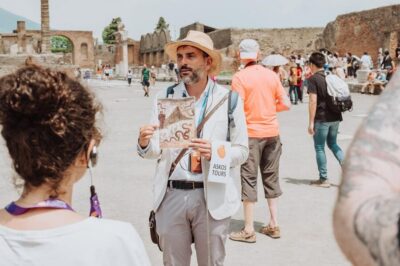
That range is useful because Herculaneum needs interpretation. A painted wall may look attractive, but the guide can explain its place in a Roman house. A drain, fountain or shop counter can reveal how water, food and trade worked. The best guides also connect Roman words and customs to modern language and life, making the subject easier to hold onto.
The group may be private, depending on the booking. Larger groups receive headsets when there are more than 11 people. If you are traveling with children, ask them to stay close enough to hear. One family found a strong accent hard for younger children to follow, and another group occasionally lost the guide’s words amid site noise.
House of the Deer and the feel of Roman comfort
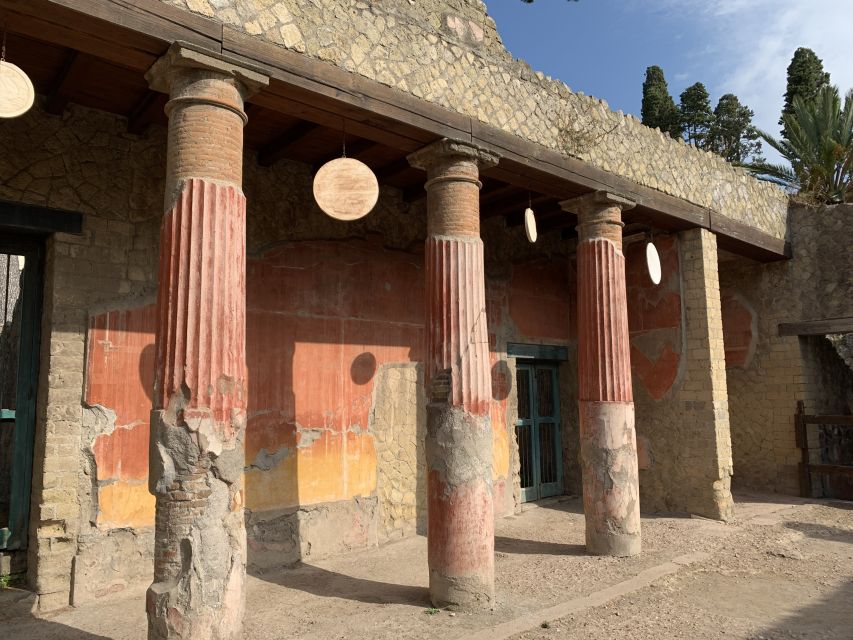
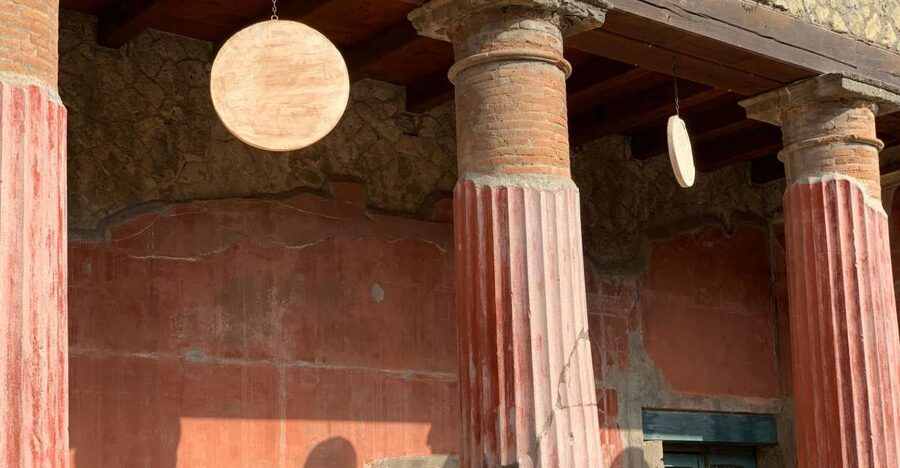
The House of the Deer, or Casa dei Cervi, is one of the grand domestic stops. The name comes from its decoration and sculptures, and the building helps you picture Herculaneum as a place of leisure as well as commerce.
Here, the guide can explain how a wealthy Roman home was arranged and how rooms related to courtyards, views and social life. Herculaneum’s preserved upper floors and domestic details make this more than a plan on a signboard. You get a sense of how people moved through a house and how status was displayed through decoration.
This is also a good point to ask questions about Roman households. Who used each room? Which spaces were public? How were guests received? A guide can make those distinctions clear, while a self-guided visit might leave you admiring a wall without understanding its purpose.
Neptune, Amphitrite and brilliant household decoration
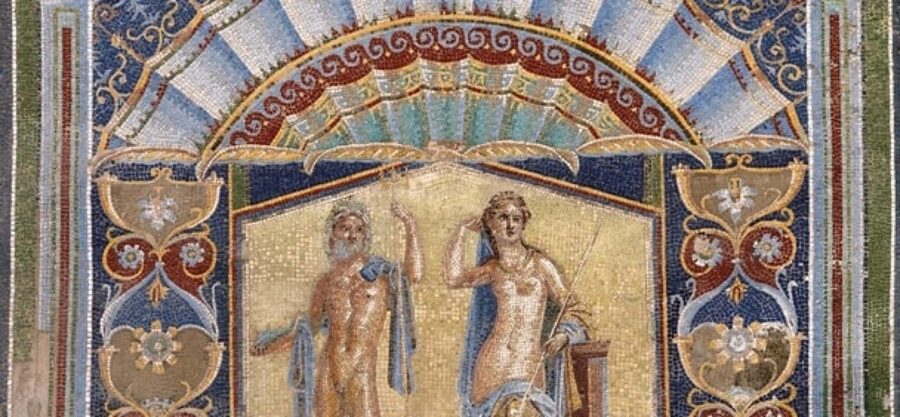
The House of Neptune and Amphitrite is one of the route’s visual highlights. Its mosaics and painted decoration show how Roman homeowners used mythological scenes, color and pattern to make ordinary rooms impressive.
The name refers to the mosaic image of Neptune and Amphitrite. Look closely at the workmanship and the way small pieces were placed to form figures and borders. The guide’s role here is to point out details you could easily pass without seeing, then explain what the images meant in a Roman setting.
Some people who visit both sites prefer Pompeii’s largest frescoes, so do not expect every room at Herculaneum to surpass Pompeii artistically. Herculaneum’s strength is the combination of decoration and preservation. You may see a smaller room, but it can retain more of its original character.
A few more things to do in Pompeii
- Pompeii: Skip-the-Line Entrance Ticket with Audio Guide
★ 4.0 · 2,509 reviews - Pompeii: Archaeological Park Tour with Ticket on request
★ 4.5 · 2,283 reviews - Pompeii: Guided Walking Tour with Entrance Ticket
★ 4.3 · 1,423 reviews - Pompeii: Skip-the-line-Ticket and Guided Tour
★ 4.6 · 1,152 reviews
The Augustales shrine and public life
The Sacellum of the Augustales was linked to the Augustales, a group connected with the imperial cult. This stop shifts the tour from private homes to public identity and civic life.
Your guide can explain how religion, politics and local status overlapped in Roman towns. Buildings like this were not simply places to perform rituals. They also showed loyalty, belonging and position within the community.
This is the kind of stop that benefits most from an expert explanation. Without context, it can look like another set of walls. With the story behind it, you begin to see how Roman power reached into local neighborhoods and how public buildings helped shape a town’s identity.
House of Skeletons and the human cost of the eruption
The House of Skeletons is one of the more somber parts of the route. Its name points to the remains found in the building, and the guide handles the subject as part of the town’s human story rather than as a spectacle.
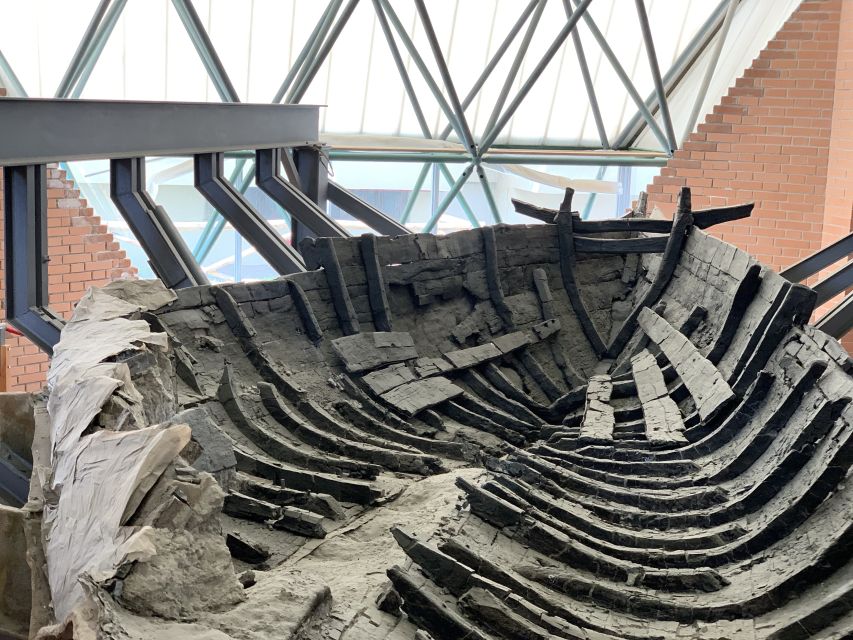
The boat houses near the ancient shoreline are even more haunting. People appear to have sought refuge there as the eruption unfolded, but the heat and volcanic material overtook them. The skeletons remain a direct reminder that this was not only a disaster described in ancient texts. It happened to real families in rooms and passageways that you can still enter.
I appreciate the chance to pause here. The site can tempt people into quick photographs, but the remains call for care. A good guide gives you the historical setting without turning suffering into entertainment.
This is also where Herculaneum differs from Pompeii in mood. Pompeii’s plaster casts are widely known. Herculaneum’s boat-house remains offer a different kind of encounter, made more powerful by their setting close to the ancient waterfront.
Shops, baths and the mechanics of daily life
The route through the archaeological site includes original cobbled streets, shops, taverns and public baths. These places help balance the grand houses with ordinary routines.
In the shops and food spaces, you can imagine residents buying supplies, eating, working and meeting friends. The guide may point to counters, storage areas and signs of commercial activity. These details are often more memorable than a list of emperors because they connect the site to things you still do today: shopping, cooking, bathing and socializing.
The public baths show how much engineering supported Roman comfort. Water systems, heating arrangements and room design reveal a society that valued bathing as a daily social habit, not merely a private wash. The guide can explain how water moved through the town and how the buildings were used.
The paths are uneven and include stairs. Two visitors in their early 60s who described themselves as generally fit had no trouble with them, but the tour is not suitable for wheelchair users. Bring water, especially in warm weather, since food and drinks are not included.
A two-hour route and the question of pace
The tour begins and ends at the ticket office, with the main stops arranged inside the archaeological site. You can expect a focused route rather than free time to wander. That structure is helpful if you want a clear introduction, especially on a first visit.
Two hours is enough to cover the town’s main ideas: wealthy homes, decoration, worship, bathing, commerce and the eruption. It is also short enough to fit beside other Campania plans.
The tradeoff is that you cannot study every room at length. One small group felt the guide moved too slowly and that more ground could have been covered. Another group appreciated having a guide tailor the route to its interests. This tells you what to expect: the experience can change with the guide, group size and questions asked.
If you want a fast survey, tell the guide early. If you care more about architecture, Roman art or the eruption victims, say so. Several guides have adapted their explanations to the group’s background and interest, which is one reason a private group can be worth considering.
Is $58 a fair price?
At $58 per person, this is not the cheapest way to enter Herculaneum. You are paying for skip-the-line admission and two hours with a live licensed guide, not simply for access to the ruins.
I consider that fair value if this is your first visit or if you want the site to make sense quickly. The archaeology is easy to admire but not always easy to read. A guide adds meaning to household layouts, mosaics, baths, water systems and the skeletons. Several guides have also offered the kind of context that an audio guide or a printed map cannot provide.
The value is strongest for families, first-time visitors and anyone comparing Herculaneum with Pompeii. Children may find the preserved homes and Roman routines easier to grasp than a long sequence of collapsed walls. The two-hour format also helps if you are combining the visit with other Campania sights.
The price is less compelling if you already know Herculaneum well and want a long, quiet inspection of every building. In that case, the fixed route may feel too limited. You might prefer independent time after a short introduction, if your admission arrangement allows it.
Practical details for a smoother visit
Wear shoes that handle cobbled streets and stairs. Bring water and a passport or ID card, as both are listed among the required items.
The site is not suitable for wheelchair users, and electric wheelchairs are not allowed. Do not assume every path will feel easy for a visitor with limited mobility.
Book with cancellation flexibility if your Campania schedule may change. You can cancel up to 24 hours before the tour for a full refund, and the reserve-now, pay-later option lets you hold a place without paying immediately.
English, Italian, Spanish and French are available. A headset is provided if the group exceeds 11 people, but in a noisy area you should still stay near the guide. If you are booking for children, a private group may make it easier to control the pace and keep explanations clear.
Who should book this Herculaneum tour?
Book it if you want the site explained by someone who can read the evidence, not simply point out the buildings. The strongest part of the experience is the human scale: how people lived in these homes, used the baths, worked in shops and reacted to the eruption.
It suits families, couples, history fans and anyone who found Pompeii too broad to absorb in one visit. It also works well for people with only two hours who want a guided route through the most important areas.
Think twice if you need step-free access, if you prefer to wander alone or if you want a full-day archaeological study. You may also want to request a faster pace at the start.
For most first-time visitors, I would book it. Herculaneum rewards close looking, and the right guide helps you see what the walls cannot explain on their own.
FAQ
How long does the Herculaneum tour last?
The tour lasts two hours. It starts and finishes at Biglietteria Ercolano.
Where is the meeting point?
Meet at the Biglietteria Ercolano ticket office. You should arrive 10 minutes before the tour begins.
Is entrance to Herculaneum included?
Yes. Skip-the-line entrance tickets are included with the guided tour.
Which languages are available?
Live guides are available in English, Italian, Spanish and French.
Are private groups available?
Yes. A private group option is available.
Are headsets provided?
Headsets are provided when the group exceeds 11 people.
Is the tour suitable for wheelchair users?
No. The experience is not suitable for wheelchair users, and electric wheelchairs are not allowed.
What should I bring?
Bring your passport or ID card and water. Food and drinks are not included.
Just added in Pompeii
- Pompeii Ruins Private Tour with Optional Skip-the-Line Entry★ 4.9 · 732 reviews
- Pompeii 3hours Villa of Mysteries tour with an Archaeologist★ 4.8 · 486 reviews
- Pompeii: Exclusive Tour with Archaeologist and Entry Tickets★ 4.9 · 634 reviews
- Pompeii: Small-Group Tour of Pompeii and Herculaneum★ 4.8 · 867 reviews
- Pompeii: Group Tour with an Archeologist Guide★ 4.4 · 490 reviews
- Pompeii: Skip-the-Line Tickets and Tour with Archaeologist★ 4.9 · 467 reviews
- Pompeii: Skip-the-Line Entry & Audioguide★ 3.8 · 225 reviews
- Pompeii: Skip-the-Line Guided Tour with Expert Archaeologist★ 4.8 · 196 reviews
Pompeii & Herculaneum Tours, compared.
Entry Ticket and Guided Tour with an Archaeologist
Read our review →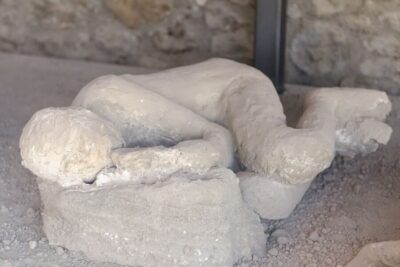

Pompeii and Mount Vesuvius Day Trip from Rome with Pizza Lunch
Read our review →
Pompeii Day Trip with Optional Vesuvius and Lunch
Read our review →Browse the lists this tour appears in