
Reviewed · POMPEII & HERCULANEUM TOURS
From Naples: Ruins of Pompeii
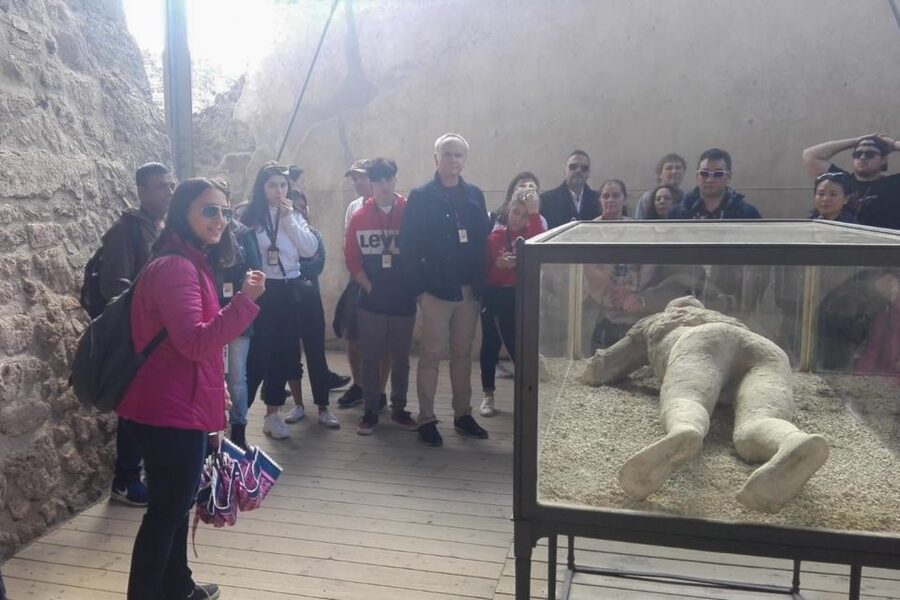
Pompeii is not a single grand monument. It is a whole Roman town, with bakeries, bathhouses, theaters, shops, villas, and streets still laid out beneath Mount Vesuvius. This tour gives you a practical way to see its main sights without wrestling with Naples traffic or figuring out the archaeological site on your own. The preserved shopping street and the house linked to Pompeii’s richest man give the ruins a human scale.
I like the round-trip pickup from central Naples, especially if you are staying near the waterfront, Piazza Garibaldi, or Via Medina. I also like the guide-led format: guides such as Fabio, Maria, Salvatore, and Anita have been praised for clear explanations and for keeping groups together in the heat and crowds. The tradeoff is simple: about 40 to 50 minutes can go into each road journey, while the site visit lasts about two hours.
Key points to know before booking
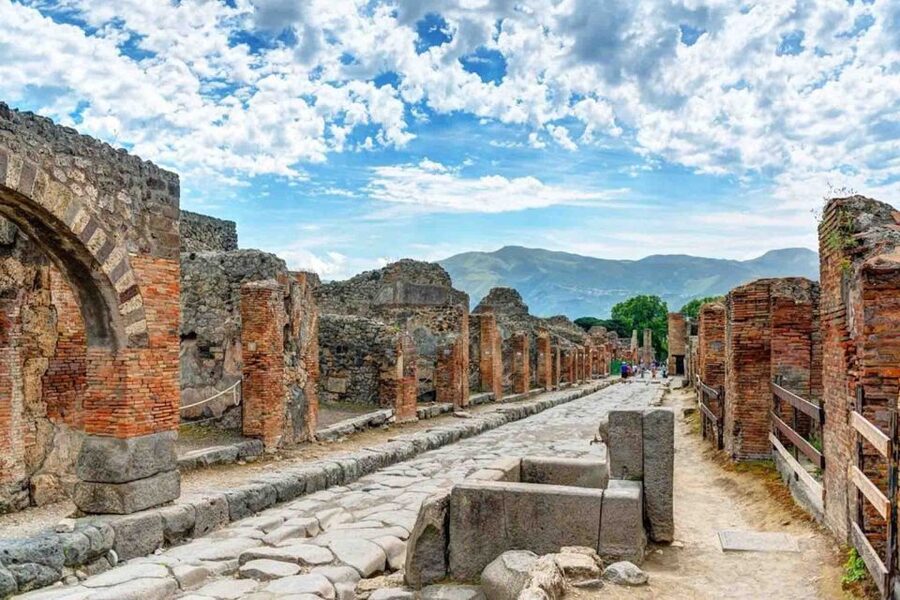
- Pompeii is a town, not just a ruin: You walk through streets, shops, bakeries, theaters, baths, villas, and public squares.
- Two hours covers the highlights: It works well for a first visit, but it is not enough for a detailed archaeological study.
- Central Naples pickup is included: Meeting points range from the Lungomare Caracciolo to Napoli Centrale near Piazza Garibaldi.
- Your guide format can vary: A live guide is offered in English, Italian, or Spanish. An audio guide may replace the live guide if fewer than six people join that language.
- The walk is exposed and uneven: Comfortable shoes, a hat, and sunscreen are essential, and the tour is not suitable for wheelchair users or people with mobility impairments.
- A cameo and coral stop may be added: This factory visit depends on available time, so treat it as an extra rather than a guaranteed part of the day.
Why Pompeii works best with a guide
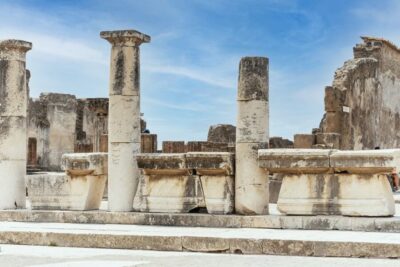
Pompeii can look like a field of broken walls if you do not know what you are seeing. A guide helps turn a stone counter into an ancient bakery, a broad paved road into a shopping street, and a villa into a clue about wealth and social rank.
The strongest part of this outing is the connection between ordinary life and the disaster that preserved it. You are not only looking at temples or official buildings. You see where people bought food, washed, worked, watched performances, and lived in homes of very different sizes.
A guide can also keep the visit moving. Pompeii is large, and two hours disappears quickly. The better guides described here, including Salvatore, Fabio, Maria, and Anita, are praised for being clear, engaging, and attentive to the group. One guide kept finding shade during a very hot day, while another made sure an elderly member of the group could move safely and was not pushed aside by other tour groups.
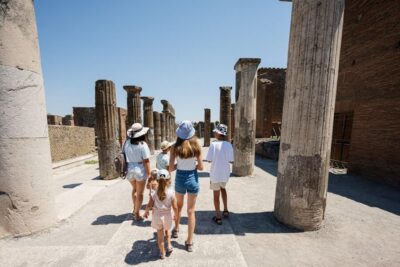
That kind of care matters. The archaeological site can be crowded, and the ground is not always smooth. A guide who watches the group lets you concentrate on the ruins instead of constantly checking whether you are still with everyone else.
Other Roman sites within reach of Naples:
- From Naples: Pompeii Ruins & Mount Vesuvius Day Tour
★ 4.3 · 11,459 reviews - Naples or Sorrento: Full-Day Pompeii and Mount Vesuvius Tour
★ 4.6 · 4,235 reviews - Herculaneum: Skip-the-Line Guided Tour with Archaeologist
★ 4.8 · 3,439 reviews
Getting from Naples to the archaeological site
The pickup plan is designed for people staying in central Naples. Early meeting points begin at about 8:00 a.m. along Lungomare Caracciolo, including the Royal Continental Hotel, Grand Hotel Vesuvio, Grand Hotel Saint Lucia, and Eurostars Hotel Excelsior. A meeting point at Molo Beverello follows at about 8:10 a.m.
The vehicle then works through central locations near Via Medina, Corso Umberto, and Piazza Giuseppe Garibaldi. Pickup times listed for those areas run from roughly 8:20 to 8:45 a.m. The exact point and time need to be confirmed with the provider after booking, so do not simply arrive at the nearest hotel and assume the vehicle will find you.
The drive is listed as about 20 minutes, but practical road time can be longer. One visitor reported around 45 minutes each way, and Naples traffic can be unpredictable. That is the main cost of choosing a group transfer. Still, many people will find the trade worthwhile. Driving yourself through Naples and then dealing with parking near Pompeii is a poor use of a holiday morning.
Vehicles can range from a coach to a minibus. Several outings used clean, air-conditioned vehicles, and one particularly small group had only eight people. Another departure had a transport delay and switched to a comfortable minivan. Allow a little patience at the pickup stage, since several central meeting points mean the vehicle may be collecting people from different parts of Naples.
The driver may wait only five minutes for a late passenger. Arrive early, keep your phone available, and stand where the provider told you to meet. A sheet with passenger names has helped people find the correct guide in crowded pickup areas.
Entering Pompeii and finding the Roman town
Once you reach the Pompeii Archaeological Site, the guided walk lasts about two hours. You should expect a steady route through the best-known areas rather than free time to wander wherever you please.
That structure is helpful on a first visit. Pompeii has enough streets and buildings to swallow a full day, and without a plan you can spend too much time looking at walls without understanding them. The guide chooses a path that links domestic, commercial, religious, and public life.
The site was buried after the eruption of Mount Vesuvius in 79 A.D. The covering material helped preserve many parts of the town for centuries. Today, the remains offer an unusually direct look at a Roman settlement in the first century.
Your guide will explain how the buildings fit together and what their features suggest about daily life. The focus is not only on the eruption. You learn how people used their homes, shops, streets, public buildings, and leisure spaces before the disaster.
The route may pass through a necropolis, the forum, and ancient bathhouses. These places show different sides of the town. The forum was a central civic area, while the baths reveal how public facilities formed part of Roman social life. The necropolis places the town’s public life alongside its customs around death.
Bakeries, pizzerias, and the old shopping street
The ancient shopping street is one of the most memorable sections because it feels practical rather than ceremonial. You can see preserved bakeries and food shops, including places described as pizzerias in the tour material.
Do not expect a modern pizza kitchen. The value is in seeing how food production and selling were built into the street. Stone counters, ovens, and shopfronts help you picture a city where people bought prepared food or basic provisions close to home.
This is where the guide’s commentary makes a real difference. Without explanation, a bakery can look like a low wall and a few stone fittings. With context, it becomes part of the neighborhood economy. You begin to imagine the sounds and routines of people buying bread, working behind counters, and moving between shops.
For families, this section can be easier to grasp than a formal public building. For adults, it offers a useful correction to the idea that Pompeii was only a city of wealthy villas. The streets also supported everyday workers, tradespeople, and customers.
Other ruins to walk round near Naples:
- Naples: National Archaeological Museum Ticket & Audio App
★ 4.4 · 617 reviews - Naples: National Archaeological Museum of Naples Guided Tour
★ 4.8 · 498 reviews - Naples: City Walking Tour w/ Underground Roman Ruins Ticket
★ 4.5 · 247 reviews - Pompeii: Archaeological Park Tour with Ticket on request
★ 4.5 · 2,283 reviews
The theater, forum, baths, and public life
The tour includes an ancient Roman theater, one of the clearest reminders that entertainment was part of civic life. Your guide can explain how the theater fits into the wider town and how public buildings helped shape the rhythm of Roman society.
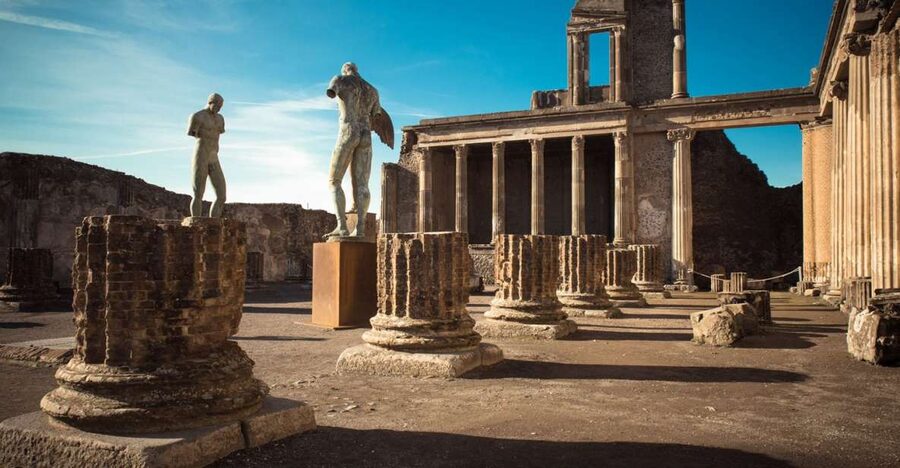
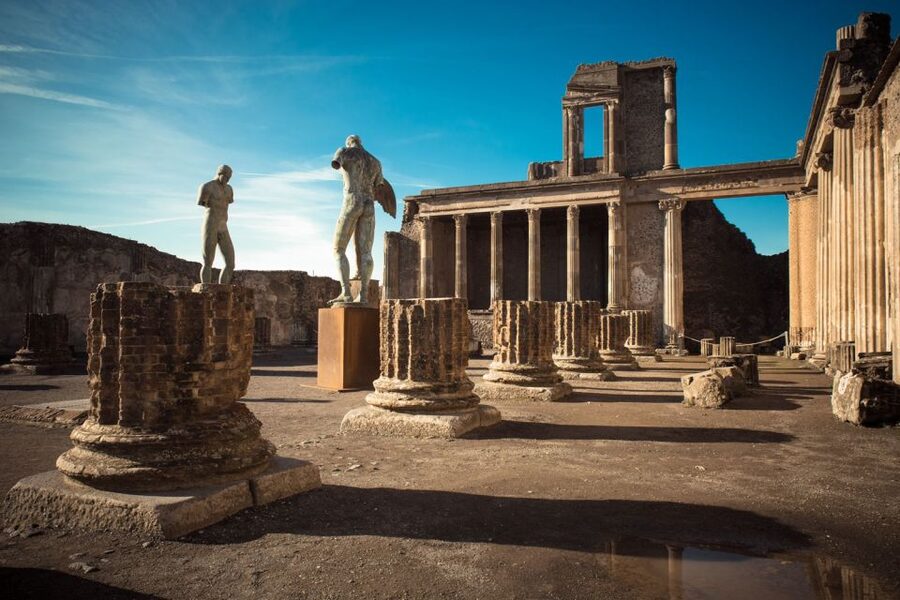
The forum offers a different experience. It was a major public space, and its scale helps you understand Pompeii as an organized city rather than a scattered collection of homes. The open area and surrounding buildings also provide some of the tour’s most recognizable views.
The bathhouses show another side of Roman life. They were not simply places to wash. They were public buildings connected with routine, social contact, and the city’s shared infrastructure. You will get more from these rooms if you pay attention to the guide’s explanation of how they functioned.
The route also includes a necropolis. Its presence outside or near the town’s main activity gives you a chance to consider Roman attitudes toward burial and remembrance. It is a quieter stop than the forum or theater, but it adds balance to the tour.
The house of Pompeii’s richest man
One of the tour’s distinctive stops is the house associated with the richest man in Pompeii. This helps show the sharp difference between a large, wealthy residence and the smaller commercial spaces along the shopping street.
The appeal is not simply the label of wealth. A large house can reveal how status was displayed through space, decoration, courtyards, and the arrangement of rooms. Your guide gives you a way to read those features instead of walking past them as empty walls.
This stop also gives the tour a useful social contrast. In the same morning, you may see a food shop used by ordinary residents and a residence built to express power and money. That combination is more revealing than seeing only the famous public monuments.
Guide, audio guide, or bilingual commentary
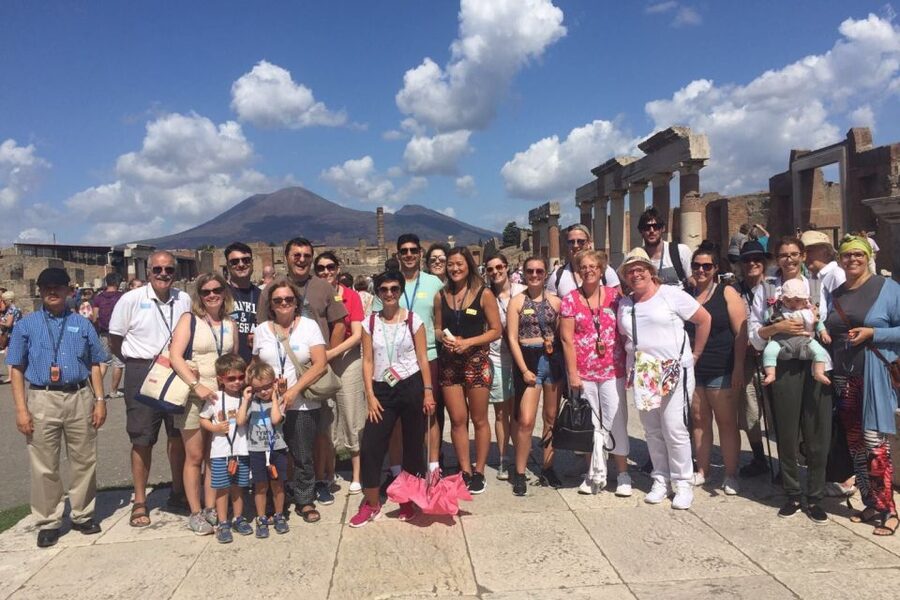
The experience is offered in English, Italian, and Spanish with a live guide when the minimum group size is reached. If fewer than six participants join a particular language group, an audio guide is provided instead. Optional audio guide languages include French, Chinese, German, Japanese, Russian, and Portuguese.
This means the exact format is not fixed. You may receive a live guide, or you may follow recorded commentary with the group. The tour can also be bilingual, so check the option you select and do not assume every departure operates in one language only.
The live guides described in the tour information have different strengths. Fabio is identified as an archaeologist, while Salvatore was praised for keeping the group comfortable in high temperatures and Maria for managing a group through crowded areas. An audio guide can still work well if you prefer a steady pace, but it will not offer the same chance to ask questions or adjust the explanation to the group.
The onboard multilingual commentary helps set the scene during the transfer. At Pompeii, the two-hour walking tour provides the main interpretation. If you want detailed answers about a particular house or inscription, a live guide is the better choice when available.
The possible cameo and coral factory stop
If time permits, the route may include a local factory where you learn about cameo and coral craft. These jewels are made from coral and seashells, and the visit connects the day to a traditional Campania craft.
This stop can add variety after the ruins. It is also a chance to understand a regional art form rather than spending every minute among archaeological remains. One past outing included the stop and found it enjoyable.
Keep your expectations clear, though. The factory visit is conditional on time and should not be the reason you book the tour. Traffic, group timing, and the length of the Pompeii walk can affect whether it happens.
Price, time, and what you receive
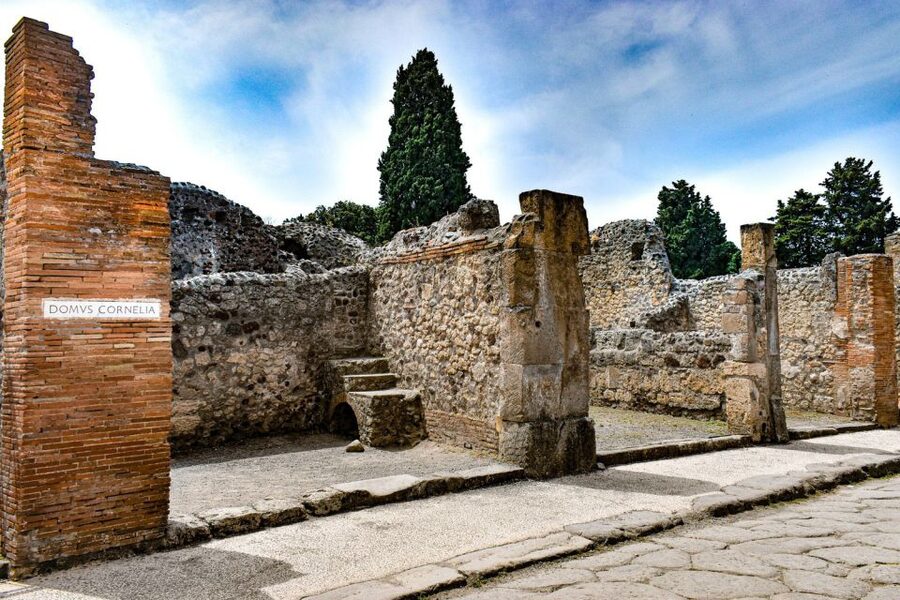
At $59 per person, the value depends on what you would otherwise need to arrange. The price includes round-trip transportation from selected Naples pickup points and a two-hour Pompeii walk. Pompeii admission is included if you choose the option that lists the entry ticket.
That last point matters. Check the exact package before paying, because not every option necessarily has identical inclusions. Lunch is not included, so plan to eat before or after the outing rather than expecting a meal at the archaeological site.
For a first visit, the price is reasonable if you value transport and orientation. You are paying for convenience as much as for sightseeing. The main limitation is time: a two-hour visit gives you the central highlights but not every section of Pompeii.
A private guide or full-day archaeological visit would suit someone with a serious academic interest. This shorter group outing is better for a visitor who wants the key streets, public buildings, shops, villas, and historical setting before returning to Naples.
The total outing is listed as three to four hours, though actual road conditions can stretch the day. Return drop-offs use the same general central areas, including the waterfront, Via Medina, Corso Umberto, and Piazza Garibaldi.
Heat, walking, and practical preparation
Wear comfortable shoes. Pompeii requires walking on ancient streets and uneven surfaces, and the tour is not suitable for wheelchair users or people with mobility impairments.
Bring a sun hat and sunscreen. Much of the visit is outdoors, and summer heat can be intense. A guide who adjusts the pace and seeks shade can make a big difference, but you should still prepare for direct sun.
Large bags and luggage are not allowed. Bring only what you need for the walk. This is especially important if you are trying to fit the tour between hotel checkout and a flight, since you cannot treat the archaeological site as a luggage-storage stop.
If you have a flight later the same day, allow a generous buffer. One outing returned without disrupting a same-day flight plan, but Naples traffic can change the calculation. The tour usually runs smoothly, yet no short transfer through the city should be treated as perfectly predictable.
Who should book this Pompeii tour
I would choose this tour if you are staying in Naples and want a straightforward first look at Pompeii without arranging trains, tickets, and a guide separately. It is especially useful for couples, families, and small groups who want transport handled from the start.
It also suits you if you prefer interpretation over wandering. The bakery street, theater, forum, baths, necropolis, and wealthy house mean more when someone explains how they fit into Roman life.
I would choose another format if you want several hours of independent exploration, detailed study of inscriptions, or a slower look at less famous buildings. Two hours is enough for a strong introduction, not a complete visit.
The overall experience has earned a 4.3 rating from 204 reviews, with especially strong praise for guide quality, clear organization, clean transport, and careful group management. The recurring concern is not the ruins or the guides. It is the time spent on the road compared with the time inside Pompeii.
Should you book it?
Book this tour if you want Pompeii’s main sights, a live explanation when group numbers allow, and easy round-trip transport from central Naples. Guides such as Fabio, Maria, Salvatore, and Anita have helped make the short visit informative and manageable.
Skip it if you dislike fixed schedules or want to explore every corner at your own pace. For most first-time visitors, though, the combination of transport, entry option, and a focused two-hour route makes this a sensible way to meet Pompeii.
FAQ
How long does the Pompeii tour take?
The full experience lasts about three to four hours. The listed travel time is about 20 minutes each way, and the guided visit inside Pompeii lasts about two hours.
Is transportation from Naples included?
Yes. Round-trip transportation from selected pickup points in Naples is included.
Where can I meet the tour?
Pickup points include hotels and meeting areas along Lungomare Caracciolo, Molo Beverello, Via Medina, Corso Umberto, and Piazza Giuseppe Garibaldi. You need to contact the provider after booking to confirm your exact time and location.
Is Pompeii admission included?
Pompeii entry is included if you select the option that includes the entry ticket. Check the inclusions of your chosen option before booking.
What languages are available with a live guide?
Live guides are available in English, Italian, and Spanish.
What happens if fewer than six people join my language?
If the minimum of six participants is not reached for a live guide, each participant receives an audio guide instead.
Are other audio guide languages available?
Optional audio guides are available in French, Chinese, German, Japanese, Russian, and Portuguese.
Can I bring luggage or a large bag?
No. Luggage and large bags are not allowed on the tour.
Is the tour suitable for wheelchair users?
No. The experience is not suitable for wheelchair users or people with mobility impairments.
Is lunch included?
No. Lunch is not included in the price.
Can the tour include a cameo and coral factory?
A stop at a local factory may be included if time permits. It is not guaranteed on every departure.
Just added in Naples
- Boat excursion with lunch on board to discover Ischia★ 5.0 · 474 reviews
- Tour of the island of Ischia in schooner★ 5.0 · 208 reviews
- Vesuvius National Park Skip-the-Line Ticket★ 3.8 · 221 reviews
- Naples: The Holy Mile 3-Hour Guided Tour★ 4.9 · 711 reviews
- Procida: Boat Tour with Swimming Stops and Underwater Photos★ 5.0 · 322 reviews
- Pompeii and Vesuvius Full-Day Tour from Amalfi Coast★ 4.4 · 319 reviews
- From Naples: Pompeii and Herculaneum Tour with Lunch★ 4.3 · 444 reviews
- From Naples: Pompeii & Herculaneum with Archaeologist Guide★ 4.8 · 665 reviews
Pompeii & Herculaneum Tours, compared.
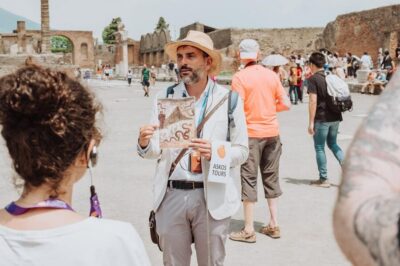
Entry Ticket and Guided Tour with an Archaeologist
Read our review →



Pompeii and Mount Vesuvius Day Trip from Rome with Pizza Lunch
Read our review →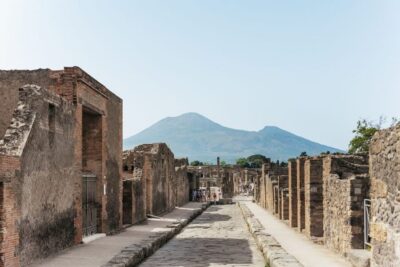
Pompeii Day Trip with Optional Vesuvius and Lunch
Read our review →Browse the lists this tour appears in