
Reviewed · ANCIENT RUINS & TEMPLES
Naples: National Archaeological Museum of Naples Guided Tour
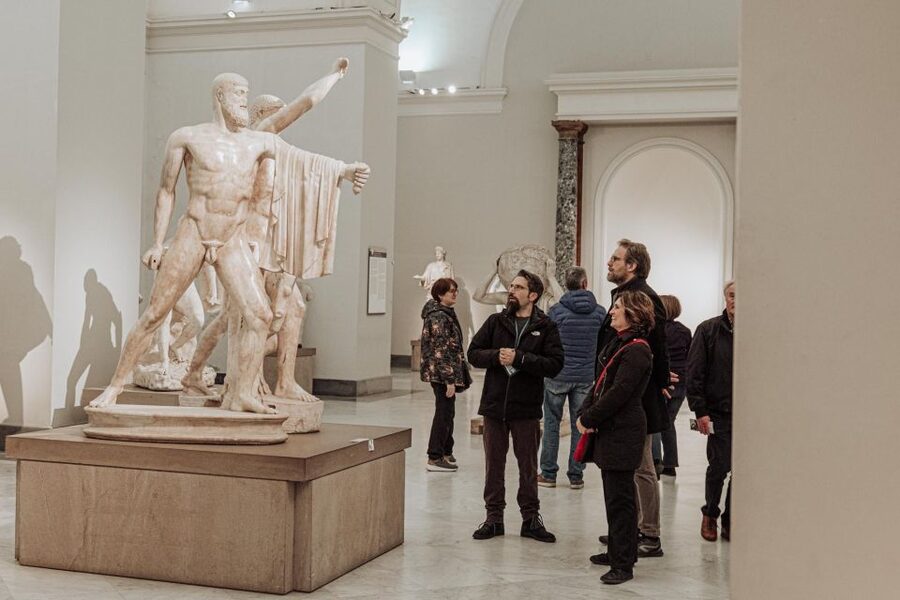
The best reason to visit Naples’ National Archaeological Museum is simple: it brings the ancient sites around Mount Vesuvius into one remarkable building. Here you can see frescoes, mosaics, sculptures, coins, and household objects removed from Pompeii and Herculaneum, then hear how they fit together. The Farnese Hercules and Toro Farnese are major highlights, but the smaller objects often explain ancient life better.
I like the way this tour gives you a path through a huge museum instead of leaving you to guess where to begin. I also like the archaeologist guide, with guides such as Nicoletta, Silvia, Salvatore, and Carmine praised for clear explanations and lively storytelling. The main drawback is time: two hours is enough for a strong overview, not every gallery, and some people have found it hard to hear when the guide’s microphone or audio system was weak.
Key points at a glance
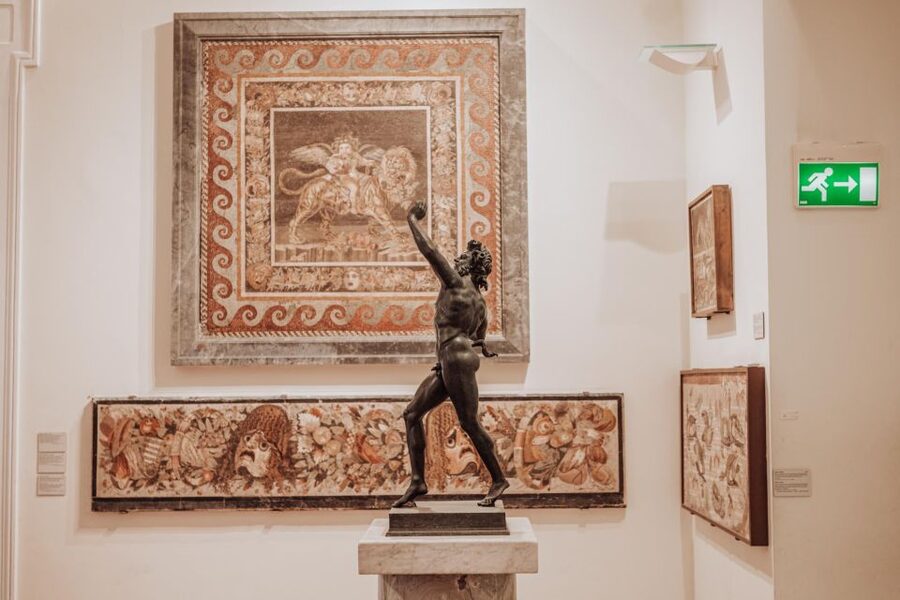
- Pompeii and Herculaneum in one place: See frescoes, mosaics, and objects rescued from the Vesuvius eruption of 79 AD.
- The Farnese Collection: Focus on the Hercules, Toro Farnese, Greek gods, and Roman imperial portraits.
- A useful two-hour route: The guide leads you through the museum’s main treasures, then you can continue alone.
- Archaeology rather than a simple art walk: Guides explain how objects were found, used, and connected to nearby ancient sites.
- Best after Pompeii: The museum makes much more sense after you have seen the buildings and streets where many objects came from.
- A practical entry advantage: Skip-the-line access saves time, though you still need to meet the guide outside the ticket office.
Why this museum deserves two hours
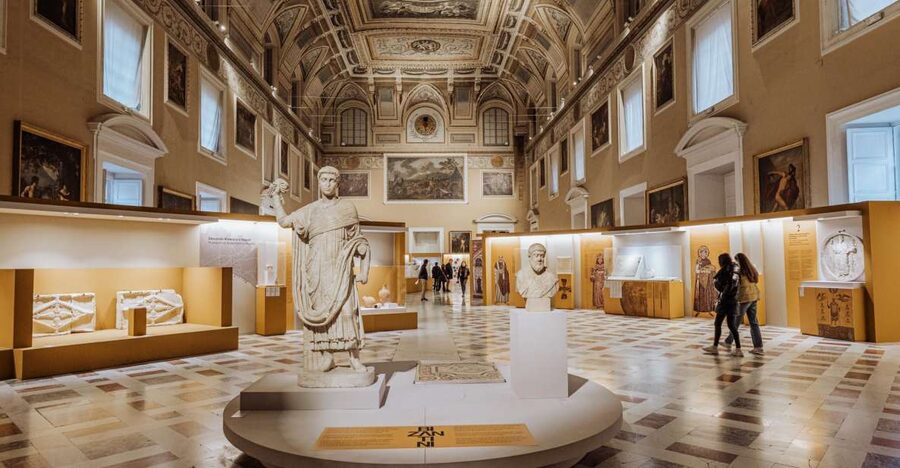
Naples’ National Archaeological Museum is not a small collection you can casually browse in half an hour. It occupies a grand historic building and holds an enormous range of Greek and Roman material. The size is part of its appeal, but it can also be confusing. One gallery may present monumental sculpture, the next delicate wall painting, and another a mass of everyday objects from a Roman town.
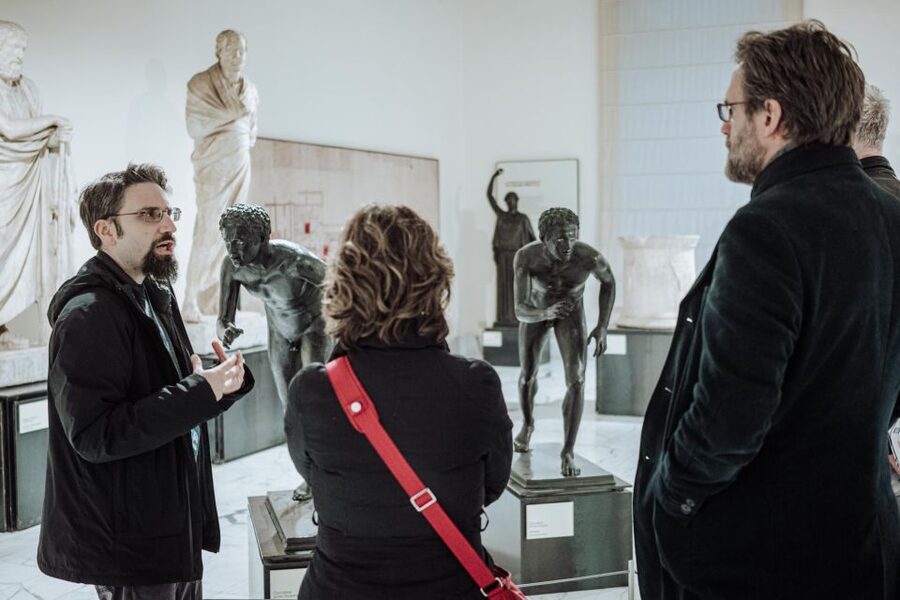
That is where a guide earns the fee. You are not simply shown a famous statue and sent on your way. A good guide explains what you are looking at, why it matters, and how it connects to Campania. Several guides on this tour have worked as practicing archaeologists or teach archaeology, which can add useful context to objects that might otherwise seem like disconnected antiques.
The museum is especially valuable if your Naples visit includes Pompeii or Herculaneum. At the excavation sites, you see houses, streets, temples, and shops in their original setting. At the museum, you see the art and possessions that once filled those spaces. Put together, the two visits give you a far clearer picture of Roman life around the Bay of Naples.
Other ruins to walk round near Naples:
- From Naples: Pompeii Ruins & Mount Vesuvius Day Tour
★ 4.3 · 11,459 reviews - Naples: National Archaeological Museum Ticket & Audio App
★ 4.4 · 617 reviews - Naples: City Walking Tour w/ Underground Roman Ruins Ticket
★ 4.5 · 247 reviews
Meeting the guide outside the ticket office
The meeting point is outside the museum ticket office. Look for the guide holding an ASKOS TOURS sign. This is a straightforward arrangement, but allow enough time to find the entrance and gathering point in central Naples.
The tour includes admission to the museum. Standard adult entry is listed as 20 euros, with a reduced 2 euro price for EU citizens aged 18 to 25. The tour price is $52 per person, so you are paying a premium above the ticket itself for the guide, organization, and skip-the-line access. That premium makes the most sense if you want help choosing the important rooms and understanding what you see.
There is no transportation, food, or drink included. You make your own way to the museum and meet the group there. The tour is offered in English or Italian, with starting times varying by date.
The Farnese Hercules and the power of ancient sculpture
The Farnese Collection is the first major reason to book this tour. Its best-known works include the Farnese Hercules, the enormous Toro Farnese, sculptures of Greek gods, and portraits of Roman emperors. These are not minor pieces tucked into a corner. They are the kind of large-scale works that make you stop and adjust your sense of size and ambition in ancient art.
The Farnese Hercules shows the hero leaning on his club after one of his labors. The sculpture’s physical scale and muscular detail are obvious, but a guide can point out the more subtle choices in pose and expression. You begin to see that the figure is not just a study of strength. It also suggests fatigue, thought, and the burden of heroic achievement.
The Toro Farnese, or Farnese Bull, is another centerpiece. Its crowded composition tells a mythological story through several figures and a powerful animal. Without explanation, it can be difficult to know where to look first. A guide helps you read the action and notice how the sculptor creates movement within a massive block of marble.
I particularly like this part of the visit for people who think ancient sculpture is all stiff faces and calm poses. These works are dramatic, theatrical, and physically forceful. They show how Greek myths continued to shape Roman art and how later collectors valued these objects as symbols of learning and prestige.
Pompeii frescoes and Herculaneum mosaics
The museum’s Pompeii and Herculaneum collections give the tour its strongest connection to the local area. The objects were preserved because the eruption of Mount Vesuvius in 79 AD buried the towns under volcanic material. That catastrophe destroyed lives, but it also protected wall paintings, mosaics, furnishings, and other details that would normally have disappeared.
The frescoes are among the museum’s most memorable sights. Their colors and decorative patterns can seem startlingly fresh, especially when you remember that they came from private homes and public buildings nearly two thousand years ago. A guide can explain how the paintings fitted into Roman rooms and what their subjects reveal about taste, mythology, status, and domestic life.
The mosaics reward a slower look. Some show geometric designs or decorative borders, while others depict figures and scenes with astonishing detail. The famous Alexander mosaic, showing Alexander the Great and Darius, is an important work, though its condition and restoration status can vary. Check what is currently visible when you visit, since individual displays may be under treatment.
If you have already walked through Pompeii, this gallery becomes more meaningful. You may recognize the kind of room where a mosaic belonged or understand why a painted wall mattered to the owner of a house. If you have not yet visited Pompeii, the museum still works well as an introduction, but you may appreciate the objects more after seeing the site itself.
Several people have found the best order to be Pompeii first, followed by the museum. That is not a rule, but it is good advice. The outdoor ruins show the setting. The museum then supplies the fine details.
Other museums and galleries in Naples:
- Vatican: Museums & Sistine Chapel Entrance Ticket
★ 4.5 · 144,003 reviews - Vatican Museums & Sistine Chapel Tour with Optional Basilica
★ 4.3 · 67,413 reviews - Vatican Museums, Sistine Chapel & St Peter’s Basilica Guided Tour
★ 4.5 · 39,149 reviews - Florence: Skip-The-Line Uffizi Gallery Timed Entry Ticket
★ 4.5 · 27,832 reviews
A two-hour route through a very large collection
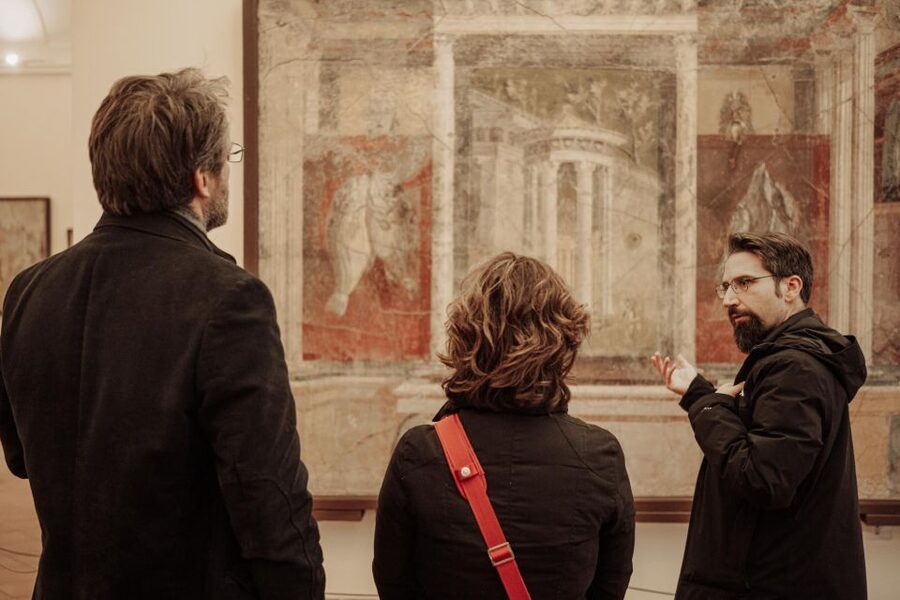
The tour lasts about two hours. That length is a strength if you want a focused introduction, but it also sets a clear limit. You will not see every floor or collection. The guide has to make choices, usually concentrating on the Farnese sculptures and the Pompeii and Herculaneum material.
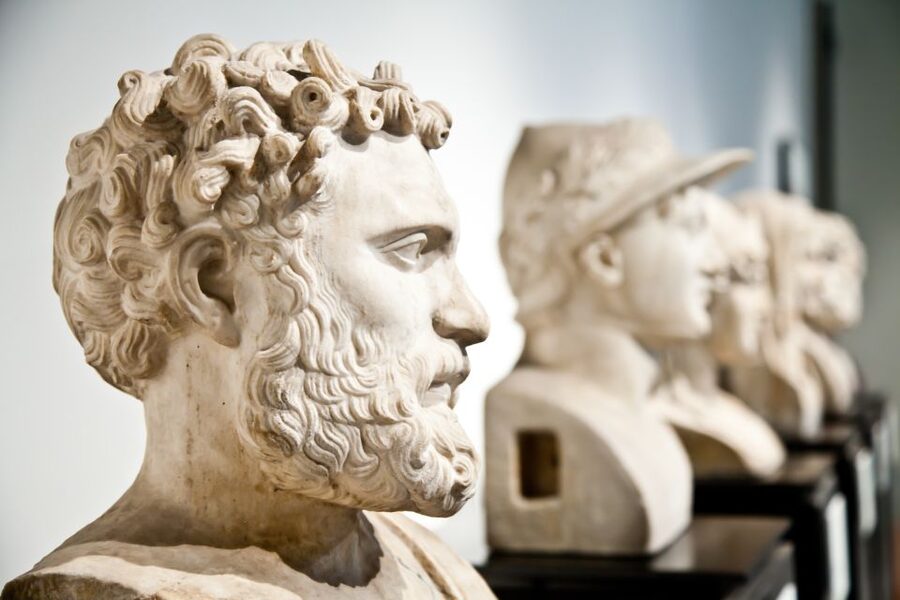
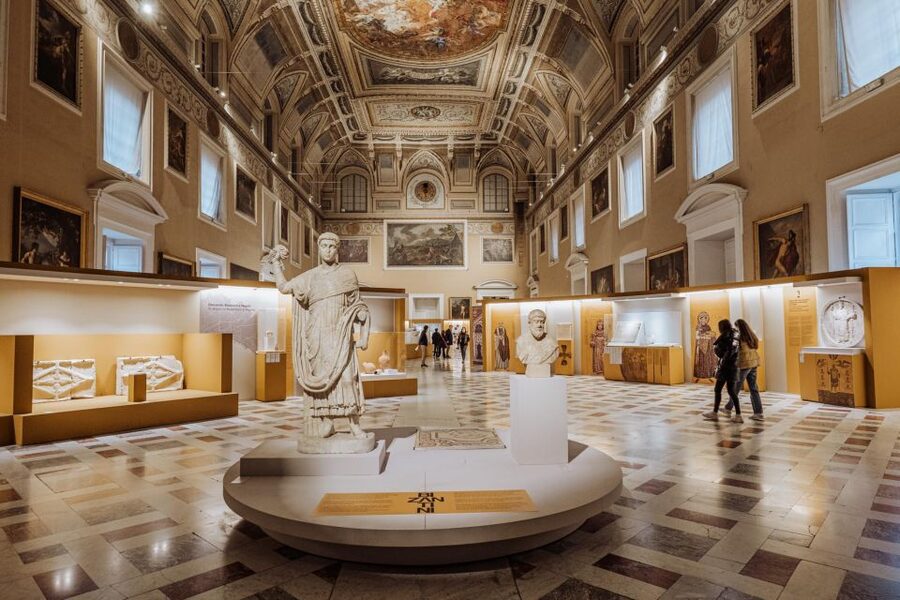
A well-paced visit may move through grand sculpture galleries, rooms filled with busts, and areas containing ancient paintings, mosaics, coins, and household objects. You can expect stops at the main highlights rather than a room-by-room survey. The route may vary according to the guide, museum access, crowd levels, and temporary exhibitions.
This is not a tour for ticking off every object in the building. It is better understood as a framework. The guide gives you the museum’s main story, points out pieces you might miss, and explains how to continue on your own.
That final point matters. After the guided portion, you can remain in the museum and revisit a favorite statue or explore rooms not included in the route. One useful strategy is to mark two or three areas you want to return to rather than trying to remember everything. The Hercules, a favorite mosaic, or a gallery of domestic objects may deserve a second look once you have the general picture.
What the guides add to the experience
The most praised part of this tour is the quality of the guiding. Nicoletta has been noted for connecting the museum to the Roman era around the Bay of Naples and for making the subject feel personal. Silvia has been described as an archaeologist who works at Pompeii and teaches at a university. Salvatore has been praised for making the art approachable and answering questions in detail.
Carmine, Adele, Laura, Barbara, Vincent, and other guides have also led tours, so the exact personality and route depend on your departure. The common thread is subject knowledge paired with an effort to keep the material understandable. That combination matters here because the museum can otherwise feel like a long list of names and dates.
A guide can also answer the questions that labels rarely cover. Why was a particular object found in a villa? How did a Roman viewer understand a mythological image? Why did a later collector value one sculpture so highly? These are the questions that turn a display into a story.
Some groups have been small, including one with only five or six participants. That makes it easier to ask questions and stay close to the guide. Group size can vary, so do not assume every departure will feel private.
Hearing the explanations and moving through the galleries
The museum’s scale and hard surfaces can make sound difficult. Several people found an audio system or microphone helpful, while others reported trouble hearing when the guide had a sore throat or when the sound equipment was weak. If clear audio is important to you, ask at the start whether headsets or earpieces are being used.
One participant who is hard of hearing found the provided earpiece worked well. That is encouraging, but the experience may still depend on the day’s equipment and the guide’s voice. Stay near the guide when possible and raise your hand if you miss an explanation.
Expect to walk and stand for much of the two-hour tour. There are places to rest, but the route is designed for movement through galleries rather than long seated talks. The museum does not suit people with mobility impairments on this activity, and it is not suitable for wheelchair users. Non-folding wheelchairs, electric wheelchairs, baby strollers, large bags, and oversize luggage are not allowed.
Is $52 a fair price?
The $52 price is fair if you value interpretation and time saved. The museum’s adult entry alone is 20 euros, so the rest covers the archaeologist guide, tour organization, and skip-the-line access. You are not buying a private tour, but you are paying for a clearer route through one of Naples’ most demanding museums.
The value is strongest for first-time visitors, people who have already been to Pompeii, and anyone who does not feel comfortable making sense of classical art alone. It is also useful if your Naples schedule is tight. Two focused hours can prevent you from wandering aimlessly and missing the collection’s major works.
The value is weaker if you already know the museum well, prefer to read labels quietly, or want to inspect every gallery at your own pace. You may still benefit from the entry arrangement, but the guided route will not cover everything.
Free admission on the first Sunday of the month can also change the calculation. If your visit falls on that day, check the current museum arrangements and decide if the guide’s expertise and time savings still justify the tour price.
Who should book this museum tour?
I would choose this tour for anyone planning both Pompeii and the National Archaeological Museum. The pairing is especially strong, since each visit explains the other. Families and mixed-interest groups may also benefit because a lively guide can make the sculpture and mythology easier to follow than a silent gallery visit.
History lovers, art beginners, and visitors who want to ask questions will get the most from it. The tour also suits people who prefer a clear overview before exploring alone.
I would think twice if you have limited mobility, need a fully accessible route, or dislike standing and walking indoors. I would also avoid booking it if your main goal is to see every collection, since two hours cannot do that.
Final verdict
Book this tour if you want the museum’s major works explained by an archaeologist rather than simply pointed out. The Farnese Hercules, Toro Farnese, Pompeii frescoes, and ancient mosaics are impressive on their own, but the connections to Pompeii, Herculaneum, and Roman life make them far more memorable.
The best plan is to visit Pompeii first if your schedule allows, then take this museum tour. Stay afterward to revisit the pieces that caught your eye. That combination gives you both the ancient streets and the art that once filled them, making the $52 fee a sensible choice for a first visit.
FAQ
How long does the National Archaeological Museum tour last?
The guided tour lasts two hours. You can remain in the museum afterward to see additional exhibits or revisit the main highlights.
What language is the tour offered in?
The live guide conducts the tour in English or Italian. The available language depends on the departure you choose.
What does the $52 price include?
The price includes the tour, an archaeologist guide, and entry to the National Archaeological Museum of Naples. Transportation, food, and drinks are not included.
Where do I meet the guide?
Meet outside the ticket office of the Archaeological Museum of Naples. The guide carries an ASKOS TOURS sign.
Is skip-the-line entry included?
Yes. The activity includes skip-the-ticket-line access to the museum.
Can I bring luggage or use a wheelchair?
Oversize luggage, large bags, baby strollers, non-folding wheelchairs, and electric wheelchairs are not allowed. The activity is not suitable for people with mobility impairments or wheelchair users.
Just added in Naples
- Boat excursion with lunch on board to discover Ischia★ 5.0 · 474 reviews
- Tour of the island of Ischia in schooner★ 5.0 · 208 reviews
- Vesuvius National Park Skip-the-Line Ticket★ 3.8 · 221 reviews
- Naples: The Holy Mile 3-Hour Guided Tour★ 4.9 · 711 reviews
- Procida: Boat Tour with Swimming Stops and Underwater Photos★ 5.0 · 322 reviews
- Pompeii and Vesuvius Full-Day Tour from Amalfi Coast★ 4.4 · 319 reviews
- From Naples: Pompeii & Herculaneum with Archaeologist Guide★ 4.8 · 665 reviews
- From Naples: Pompeii and Herculaneum Tour with Lunch★ 4.3 · 444 reviews
Ancient Ruins & Temples, compared.
Archaeological Park Tour with Ticket on request
Read our review →
Discover the Ancient Ruins of Pompeii: Day Trip from Rome
Read our review →
Agrigento: Valley of the Temples Skip-the-Line Sunset Tour
Read our review →
Agrigento and the Valley of the Temples Day Tour
Read our review →
Agrigento: Valley of the Temples Ticket & App Audioguide
Read our review →
Pompeii Ruins Private Tour with Optional Skip-the-Line Entry
Read our review →
National Archaeological Museum Ticket & Audio App
Read our review →Browse the lists this tour appears in