
Reviewed · POMPEII & HERCULANEUM TOURS
From Naples: Pompeii & Herculaneum with Archaeologist Guide
Pompeii is famous, but Herculaneum is the surprise. Its carbonized wood, bright wall paintings, mosaics, and seaside skeletons make ancient Roman life feel unusually close. This tour gives you both sites in one day, with an archaeologist guide to explain details you could easily walk past.
I like the skip-the-line entry and the comfortable shared minibus from Naples. I also like the small-group limit of 20, since guides such as Rafael, Roberta, Gennaro, and Michele have been praised for clear explanations, humor, and an eye for small details. The tradeoff is simple: two huge archaeological sites in seven hours means you see the key areas, not everything.
Key points
- Herculaneum first: See preserved wooden objects, mosaics, paintings, thermal baths, and the ancient beach where more than 300 skeletons were found.
- Pompeii’s essential sights: Walk from the Marina Gate to the Basilica, Forum, baths, bakery, brothel, private houses, and plaster casts.
- Archaeologist-led sightseeing: Your guide provides context on Roman homes, public life, religion, food, and the eruption of Mount Vesuvius in 79 AD.
- Easy Naples transport: Meet opposite Naples Central Station at Starhotels Terminus, then ride in a modern shared minibus.
- Useful time saver: Skip-the-line tickets matter most when Pompeii is crowded and you have a fixed return time.
- Active day out: Expect uneven paving, stairs, slopes, heat, and rain exposure. It is not suitable for wheelchair users or people with limited mobility.
Why seeing Herculaneum before Pompeii works
The order is smart. Herculaneum is smaller and more concentrated, so you begin with a site where the guide can show you striking details without the scale of Pompeii becoming overwhelming.
The town was buried under roughly 20 meters of mud during the eruption. That heavy material helped preserve objects that usually vanish from ancient sites, including wooden features, household items, mosaics, and painted walls. You get a strong sense of actual homes and daily routines, rather than only monumental ruins.
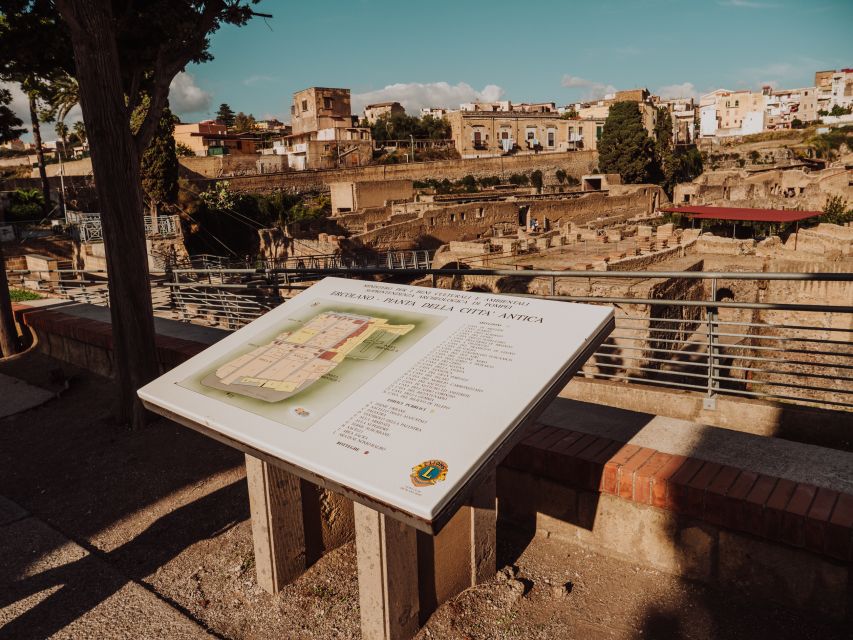
The visit lasts about two hours. That is enough time to see the Temple of the Augustali, the thermal baths, the Forum, the Samnite House, the Gymnasium, and the House of the Dears. Your guide also takes you toward the old beach, where more than 300 skeletons were discovered.
That last stop can be difficult to see, but it gives the eruption a human scale. Herculaneum was not simply a town frozen in place. It was a community caught in a disaster, and the remains show both ordinary life and sudden death.
Other Roman sites within reach of Naples:
- From Naples: Pompeii Ruins & Mount Vesuvius Day Tour
★ 4.3 · 11,459 reviews - Naples or Sorrento: Full-Day Pompeii and Mount Vesuvius Tour
★ 4.6 · 4,235 reviews - Herculaneum: Skip-the-Line Guided Tour with Archaeologist
★ 4.8 · 3,439 reviews
Meeting in Naples and riding south
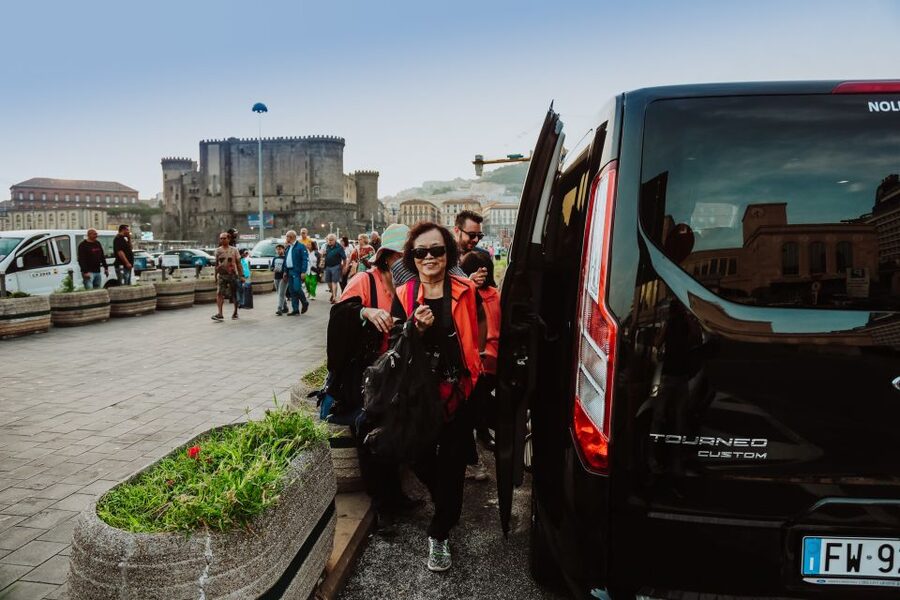
The meeting point is in front of the Starhotels Terminus entrance, directly opposite Naples Central Station. Look for the guide holding an Askos Tours sign. This location is useful if you are staying near the station, arriving by train, or using Naples as a base for a day trip.
The minibus ride to Ercolano takes about 45 minutes. A driver handles the tolls, parking, and traffic, leaving you free to listen to the guide or rest before the walking begins. The vehicle is described as modern, air-conditioned, and clean, though seating space can feel a little tight for some people.
The group can include up to 20 participants. That is not an intimate private tour, but it is far more manageable than a large coach group. Headsets may be provided, which helps you hear the guide while standing in a busy courtyard or moving through narrow streets.
Bring your passport or identity card. Large bags and luggage are not allowed, so leave suitcases at your hotel or station storage rather than arriving with a full travel load.
Herculaneum’s preserved houses and seaside remains
Herculaneum rewards close looking. The surviving wood is one of its best features. Door frames, furniture pieces, and other carbonized objects help you understand that Roman homes were built with more timber than the stone ruins alone suggest.
The paintings and mosaics are just as important. Some are still surprisingly crisp, and a guide can explain how decoration signaled taste, wealth, and the purpose of each room. Without help, you may see a colorful wall and move on. With an archaeologist, you are more likely to understand what you are seeing and why it survived.
The Temple of the Augustali offers a look at local religious life. The Samnite House shows an earlier architectural tradition, while the thermal baths point to the daily routines of washing, socializing, and public life. The Forum, Gymnasium, and residential houses widen the picture beyond one type of building.
The House of the Dears is another useful stop because it shows how Roman domestic space could be designed for comfort and display. The name refers to decorative features associated with the house. Your guide can connect such details to how elite residents used courtyards, gardens, and decorated rooms.
The beach area is the most sobering part of the visit. The skeletons found there show people seeking refuge near the shore. It is a powerful reminder that the eruption was not merely a natural event in the background of Roman history.
Herculaneum has slopes, stairs, and uneven surfaces. Wear shoes with good grip, and keep water close. This is not a site for rushing in flimsy sandals.
The transfer to Pompeii and the lunch break
After Herculaneum, the minibus takes about 30 minutes to reach Pompeii. A lunch break of roughly 40 to 45 minutes comes before the guided walk.
Food is not included. You can eat at the available restaurant or bring your own food if you prefer to keep costs down. One practical warning is worth noting: the restaurant option can become expensive, with one reported estimate of about €30 per person. The break is short, so plan your choice before the group arrives rather than losing valuable sightseeing time deciding.
This pause is also your chance to use the restroom, refill water, and rest your legs. Pompeii is much larger than Herculaneum, and the second walking section can feel demanding after two hours on your feet already.
A few more things to do in Naples
- Naples: Naples Underground Entry Ticket and Guided Tour
★ 4.4 · 21,781 reviews - Naples: Catacombs of San Gennaro Entry Ticket & Guided Tour
★ 4.6 · 7,941 reviews - Naples: Spanish Quarters Underground Guided Tour
★ 4.8 · 5,064 reviews - Naples: Street Food Walking Tour with Local Guide
★ 4.8 · 4,256 reviews
Pompeii’s public buildings and private homes
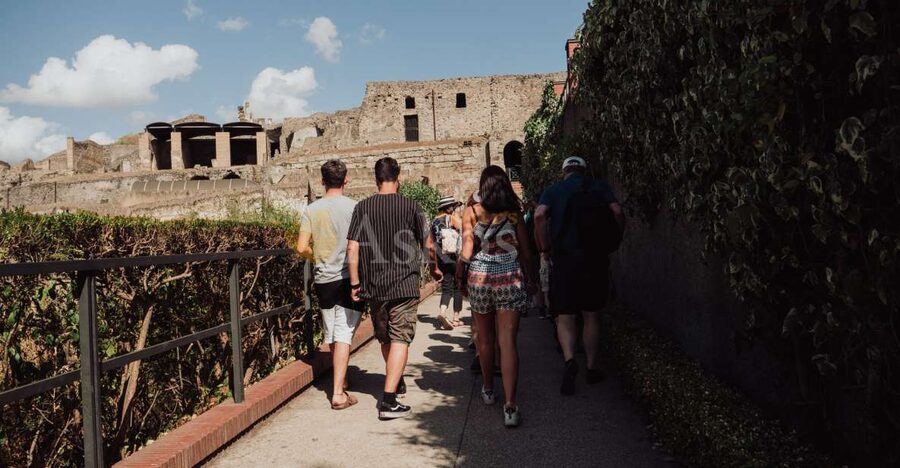
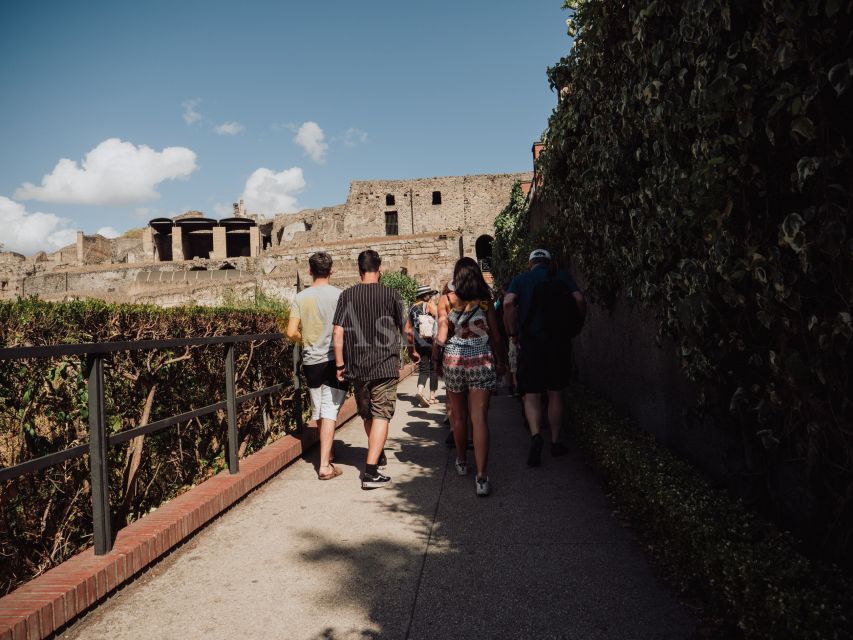
The Pompeii walk lasts about two hours. That is enough for a guided introduction to the main public buildings and several memorable houses, but it is not enough to explore the entire excavation.
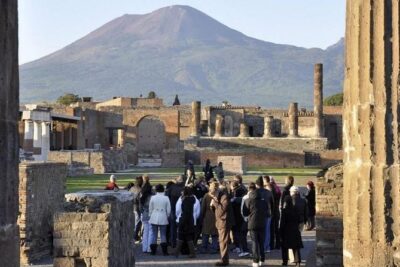
You enter through the Marina Gate, one of the city’s main gateways, then move toward the Basilica and Forum. The Basilica was tied to law and business, while the Forum served as the city’s main civic and religious center. These spaces help you picture Pompeii as a working Roman town, not simply a collection of abandoned walls.
The Forum Baths show how public bathing fit into everyday life. The Lupanar, or brothel, is one of the site’s most famous stops, though the small rooms and surviving images deserve a thoughtful explanation rather than a quick joke.
The bakery and Termopolium Capuano bring the focus back to ordinary meals and commerce. A bakery reveals the practical side of feeding a city. A thermopolium was a food-and-drink counter, a place where residents could buy prepared items rather than cook every meal at home.
The House of Faun is one of Pompeii’s grandest private residences. Its scale and decoration help explain the gap between wealthy households and more modest homes. The House of the Tragic Poet offers a different look at domestic decoration and storytelling through art.
The plaster casts are among the most affecting sights. They were made from cavities left in the ash by bodies, preserving the final positions of people and animals. They can be upsetting, especially after seeing the skeletons at Herculaneum, but they are also central to understanding the human cost of the eruption.
Your guide connects these places to Roman routines: where people worked, washed, worshipped, ate, entertained themselves, and lived at home. That is the main reason to take this tour rather than simply entering with a map.
What the archaeologist guide adds

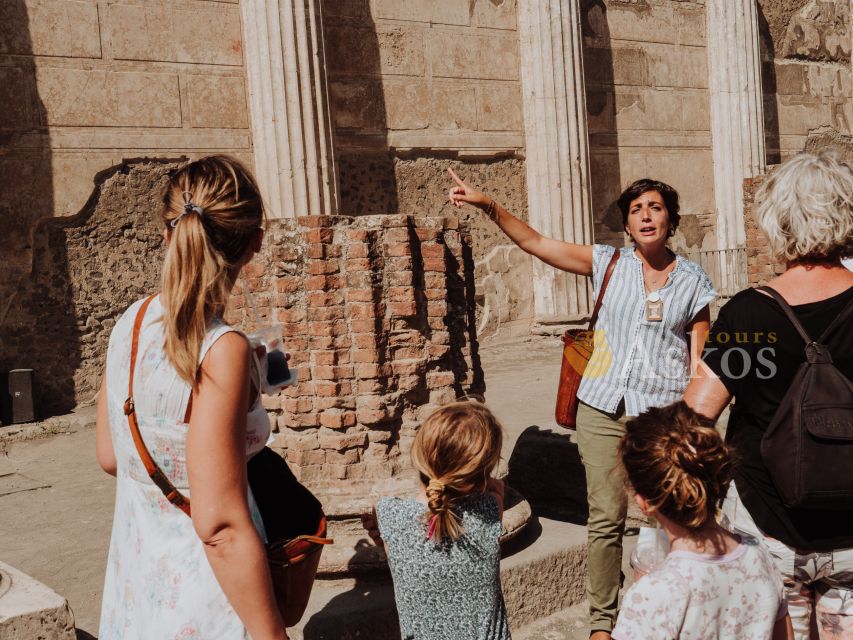
The guide is the heart of the day. The most effective guides do not merely name buildings. They explain what the rooms were for, point out construction details, answer questions, and keep the group moving when the sites are crowded.
Guides featured on different departures include Rafael, Roberta, Gennaro, Michele, Vito, Julia, and others. Rafael has been noted for his humor and quick thinking, while Roberta has been praised for patient explanations. Michele’s archaeological work at Herculaneum gave him a particularly strong connection to that site. Your guide is not guaranteed to be one of these people, but the standard described for the tour is an expert English-speaking guide.
Headsets are especially useful at Pompeii. The ruins spread over a large area, and the guide may be explaining a bakery or house while other groups pass nearby. You can keep your eyes on the site instead of standing shoulder to shoulder around the guide.
The pace aims to be steady rather than frantic. That said, several people would prefer more time at both locations, especially Pompeii. You should book this experience for a guided overview, not for a slow archaeological study.
Is $168.79 good value?
At $168.79 per person, this is not the cheapest way to visit Pompeii and Herculaneum. You are paying for shared transport from Naples, entrance tickets to both sites, an archaeologist guide, parking, tolls, and the convenience of returning to the original meeting point.
The value improves if you have only one day for the area. Buying separate tickets, finding transport to both towns, managing local connections, and arranging a guide can take time and create extra friction. Skip-the-line entry is also useful when Pompeii has a long queue and you have a set schedule.
The price does not include lunch. Add that cost, or bring food if you want to avoid the restaurant expense. You also need to make your own way to Starhotels Terminus and arrive on time, since the driver waits only up to five minutes for late arrivals.
For a shore excursion or a short Naples visit, the price is easier to justify. If you are staying in Campania for several days and want to study the ruins slowly, independent visits or separate specialist tours may give you more time.
Who should book this seven-hour tour?
I would choose this for a first visit to the area, especially if you want both sites but do not want to handle regional transport. It suits couples, families with older children, and anyone who prefers a clear plan and historical context.
It is also a good fit for people arriving in Naples by train. The central meeting point removes the need to find a distant pickup location, and the return to Starhotels Terminus makes onward travel simpler.
You should think twice if you dislike group schedules. The lunch break has a fixed length, the walking route is guided, and the group must stay together. Pompeii alone can occupy a full day, so anyone hoping to inspect every street, house, or fresco will feel rushed.
The tour is not recommended for wheelchair users or people with limited mobility. The sites include stairs, uneven paving, and significant grades. Rain does not cancel the activity, so bring a raincoat in unsettled weather. In strong sun, a hat, water, and comfortable walking shoes will make the day much easier.
How to get the most from the day
Wear shoes made for old stone streets, not just city pavements. You will walk over uneven ground and climb or descend stairs at both sites.
Bring only what you need. A passport or identity card is required, while large luggage and large bags are not allowed. Pack water, sun protection, and a small snack if you do not want to buy lunch.
Listen closely at Herculaneum. Its smaller size can make the visit feel less famous than Pompeii, but the preserved wood and painted rooms are among the strongest reasons to book both sites together.
At Pompeii, stay near the guide and use the headset if one is provided. The ruins are spread out, and it is easy to miss an explanation while looking at a house or taking photographs.
Allow a little patience for the return journey. The final minibus ride takes about 45 minutes, and traffic around Naples can affect the exact arrival time. The stated end point is back at Starhotels Terminus.
Should you book it?
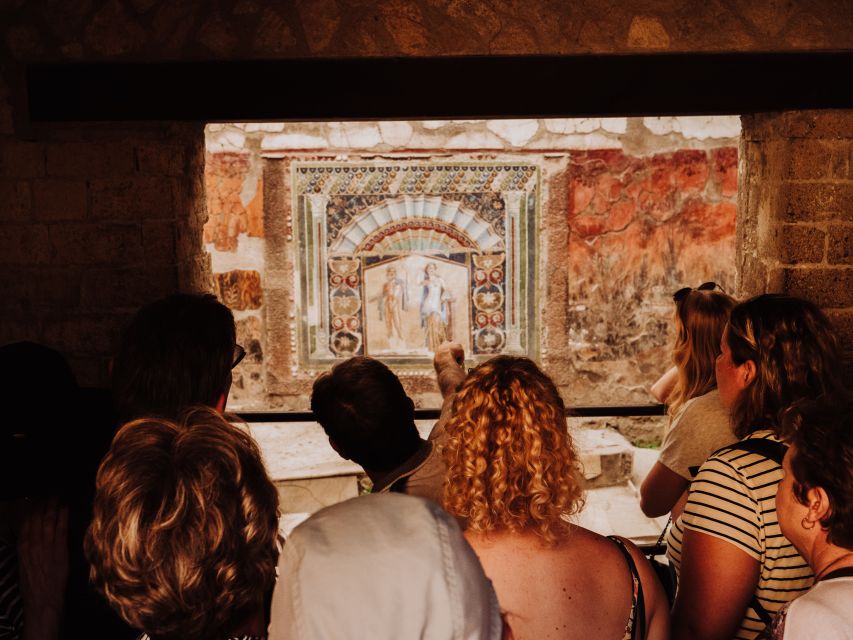
Book this tour if you want the best-known sights at Pompeii and Herculaneum in one organized day, with an archaeologist bringing the ruins to life. The combination of preserved Herculaneum interiors, Pompeii’s public buildings, skip-the-line entry, and direct minibus transport offers strong value for a short Naples stay.
Skip it if you want hours of free exploration, dislike walking on uneven ground, or need an accessible route. For most first-time visitors who can handle a full day on their feet, this is an efficient and rewarding way to meet two extraordinary Roman towns.
FAQ
Where does the tour start?
Meet in front of the Starhotels Terminus entrance, opposite Naples Central Station. Look for the guide holding an Askos Tours sign.
Where does the tour end?
The activity ends back at the Starhotels Terminus meeting point.
How long does the experience last?
The tour lasts about seven hours. The schedule includes transport, around two hours at Herculaneum, a lunch break of roughly 40 to 45 minutes, around two hours at Pompeii, and the return drive.
Are entrance tickets included?
Yes. The tour includes a Pompei Express entrance ticket and a Herculaneum entrance ticket, listed at €16 each.
Is lunch included?
No. Meals are not included. You can buy lunch during the break or bring your own food.
What language is the tour in?
The live guided tour is conducted in English.
Is the tour suitable for people with limited mobility?
No. The tour is not suitable for wheelchair users or people with mobility impairments because both archaeological sites include uneven surfaces, stairs, and slopes.
Just added in Naples
- Boat excursion with lunch on board to discover Ischia★ 5.0 · 474 reviews
- Tour of the island of Ischia in schooner★ 5.0 · 208 reviews
- Vesuvius National Park Skip-the-Line Ticket★ 3.8 · 221 reviews
- Naples: The Holy Mile 3-Hour Guided Tour★ 4.9 · 711 reviews
- Procida: Boat Tour with Swimming Stops and Underwater Photos★ 5.0 · 322 reviews
- Pompeii and Vesuvius Full-Day Tour from Amalfi Coast★ 4.4 · 319 reviews
- From Naples: Pompeii and Herculaneum Tour with Lunch★ 4.3 · 444 reviews
- From Naples: Pompeii Guided Tour with Skip-the-Line Tickets★ 4.8 · 1,171 reviews
Pompeii & Herculaneum Tours, compared.
Entry Ticket and Guided Tour with an Archaeologist
Read our review →


Pompeii and Mount Vesuvius Day Trip from Rome with Pizza Lunch
Read our review →
Pompeii Day Trip with Optional Vesuvius and Lunch
Read our review →Browse the lists this tour appears in