
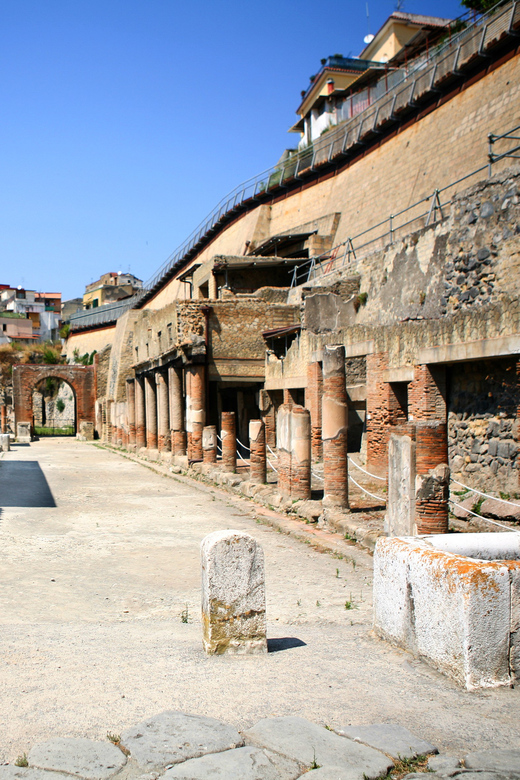
Reviewed · POMPEII & HERCULANEUM TOURS
Ercolano: Herculaneum Entry Ticket with Optional Audio Guide
Herculaneum gives you something Pompeii often cannot: a close look at an ancient town where roofs, doors, beds, food, and wall paintings survived the eruption of Mount Vesuvius in 79 AD. You walk down cobbled streets and step into buildings that still feel startlingly complete.
I like the site’s manageable size and the chance to see Roman life at eye level, from shops and baths to household rooms and mosaics. I also like that you can explore independently and take your time. The main catch is the audio guide: it can add useful context, but the app is sometimes hard to follow, and some visitors find the ticket redemption process slower than expected.
Key points to know before you go
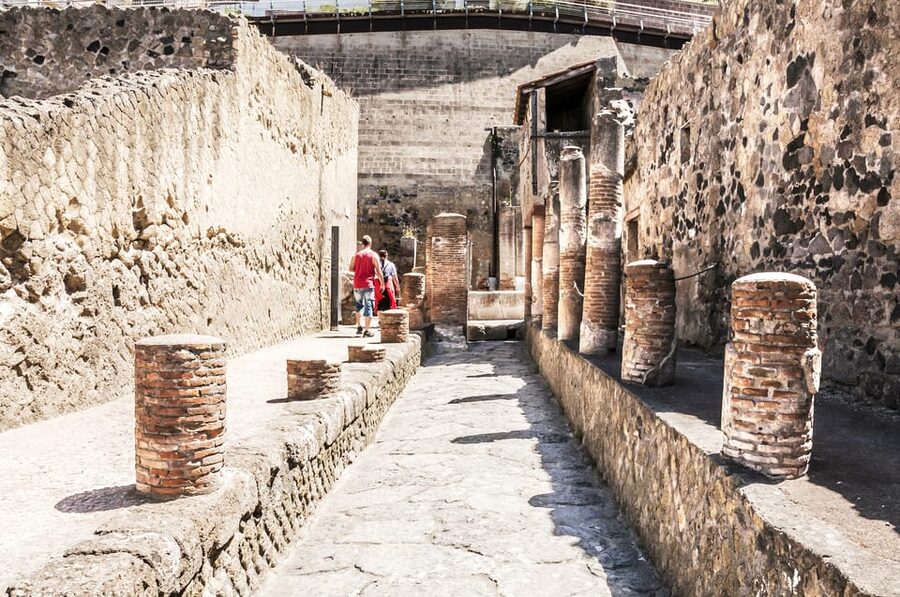
- Expect a remarkably preserved town: Roofs, doors, beds, food, frescoes, mosaics, and other objects survived beneath volcanic material.
- Allow about three hours: Herculaneum is smaller than Pompeii, so you can see a great deal without feeling worn down by its size.
- Choose your audio carefully: The digital app is listed in English, French, Italian, and Spanish, while the activity information also lists German among the audio options.
- Download before arriving: Mobile coverage at the site can be weak, and the app may use a good deal of data.
- Wear sturdy, comfortable shoes: You will walk over cobbled streets and uneven archaeological paths.
- Go early or out of season: Summer heat can be strong, while quieter months make it easier to stop and look closely.
Why Herculaneum feels different from Pompeii
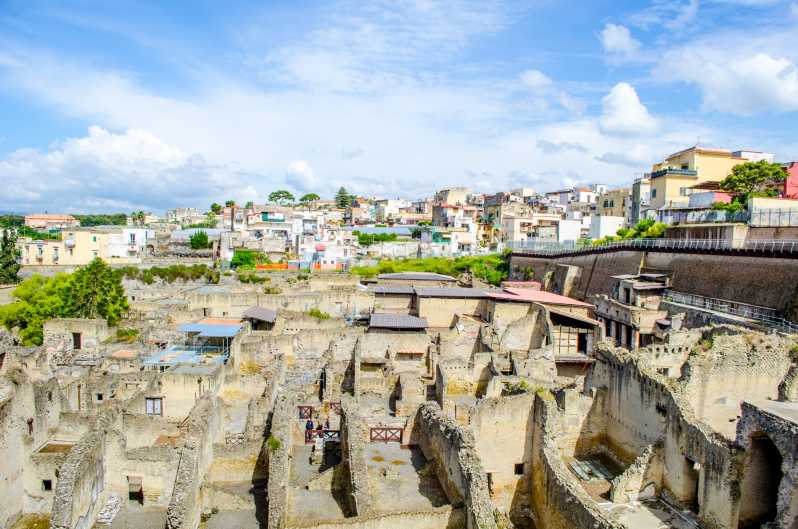
Pompeii is larger and more famous, but Herculaneum rewards a slower, more focused visit. Its smaller footprint makes it easier to understand the shape of the town and to move from one building to the next without spending much of your day searching for the highlights.
The preservation is the real draw. Pompeii was covered mainly by ash and pumice, while Herculaneum was buried under hot volcanic material that sealed many buildings. That difference helps explain why parts of Herculaneum retain upper structures, wooden elements, household objects, and vivid decoration.
You can walk through spaces that still show how people lived and worked. The site includes shops, houses, a public gymnasium, and public bathing facilities. Look up at the surviving walls and roofs, then look down at the mosaics and street surfaces. The contrast between grand decoration and ordinary domestic details gives the town its power.
The story is not only about architecture. Around 300 skeletons were found in the area near the ancient shoreline, where people apparently gathered while trying to escape. This is one of the most sobering parts of the visit. It puts a human face on the eruption and keeps the site from becoming just a collection of attractive ruins.
Other Roman sites within reach of Pompeii:
- Pompeii: Entry Ticket and Guided Tour with an Archaeologist
★ 4.8 · 19,459 reviews - Pompeii: Entry Ticket with Optional Audio Guide
★ 4.2 · 12,360 reviews - Pompeii: Small Group Tour with an Archaeologist
★ 4.8 · 12,264 reviews
Entering the archaeological area
You redeem the mobile voucher at the online ticket desk on site. This sounds simple, but allow a little patience. The ticket desk and admission area can be confusing to locate at first, and the process may involve more than a quick QR code scan.
Some people have found that pre-booked tickets still required them to join the same line used by other ticket holders. That does not make the booking useless, especially if you value flexibility and the cancellation terms, but it can lessen the time-saving benefit.
The price is listed at about $21 per person. That is reasonable if you want a straightforward entry ticket and plan to spend several hours exploring. It is less attractive if the audio guide fails to work or if you discover that the same admission process is available for less when buying directly at the archaeological site.
The booking offers free cancellation up to 24 hours before the visit and a reserve-now, pay-later option. Those terms can help if your Naples-area plans are still shifting. Check the current availability and entry time before you set your day around it.
Walking the ancient streets
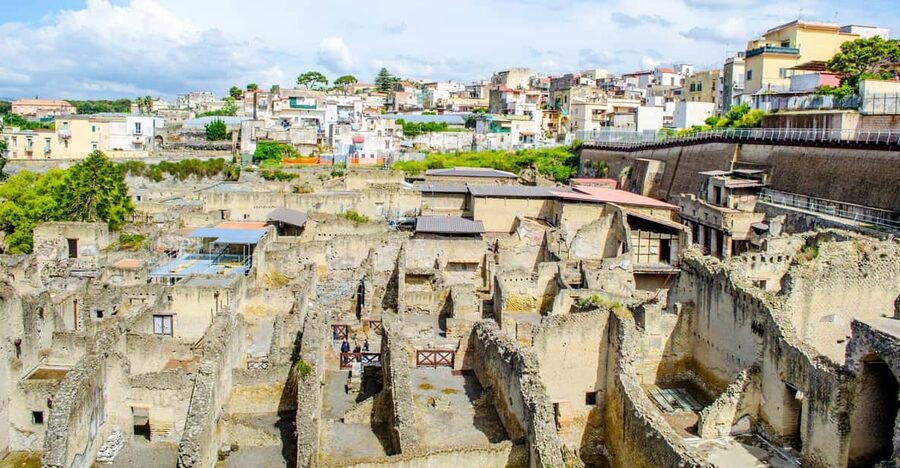
Once inside, start by getting your bearings rather than rushing toward the most famous buildings. Herculaneum is compact, but the site contains enough rooms, details, and side paths to reward a methodical visit.
The cobbled streets help you picture the town as a working Roman community. Shops opened onto the roads, homes were arranged around interior spaces, and public buildings served daily needs beyond the private household. Even without a guide, the surviving layout makes the site easier to read than many scattered ruins.
This is a good place to slow down and look at thresholds, wall surfaces, doorways, and floor patterns. You may notice a painted panel in one room, a practical storage feature in another, or a household detail that says more about ordinary life than a monumental building can.
Some areas have shade beneath roofs or inside buildings, which helps in summer. Still, bring water and consider an umbrella for sun protection. The exposed streets can be hot, particularly during the warmer opening season.
Houses, frescoes, and household life
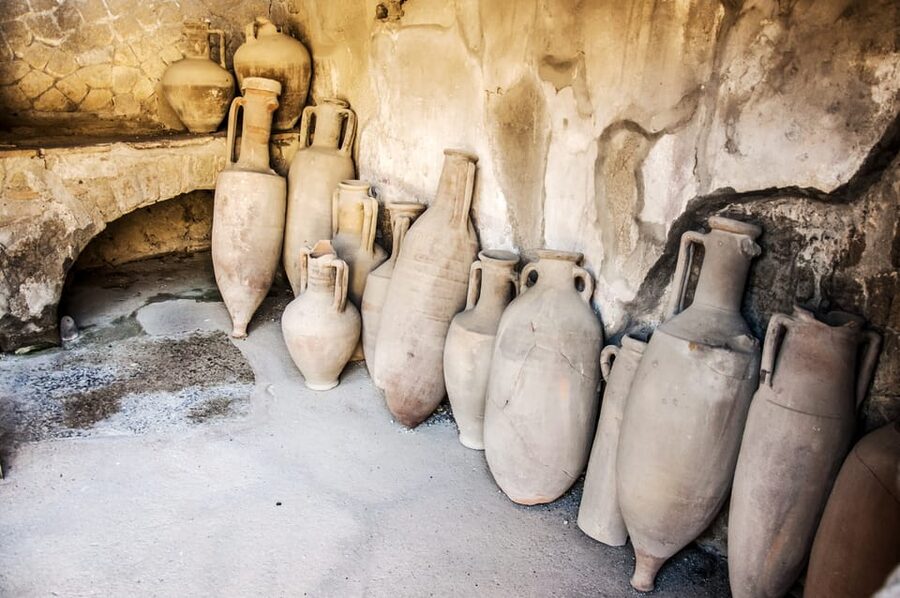
The houses are the heart of the visit. Herculaneum lets you enter intact or partly intact buildings and imagine the daily rituals that took place there before the eruption.
Look at the relationship between decorated rooms and work areas. Frescoes and mosaics show wealth and taste, but the broader value comes from seeing these features in their original setting. You are not looking at an isolated museum piece. You are seeing decoration attached to a home, a shop, or a public space.
The site preserves artifacts that have kept their original form for almost 2,000 years. Roofs and doors are especially striking because they make the buildings feel less like empty shells. Beds, food, and other objects add another layer, showing what people owned, used, and stored.
I recommend resisting the urge to photograph every room and move on. Choose a few spaces and spend time examining the walls, floors, and room arrangement. The site is compact enough that you can afford to pause.
The drawback is that signs do not always provide enough information. Several parts of the archaeological area would be easier to understand with clearer descriptions of each room and building. If you are interested in architecture, social structure, or the details of Roman domestic life, the audio guide or a separate guidebook becomes more useful.
A few more things to do in Pompeii
- Pompeii: Skip-the-Line Entrance Ticket with Audio Guide
★ 4.0 · 2,509 reviews - Pompeii: Archaeological Park Tour with Ticket on request
★ 4.5 · 2,283 reviews - Pompeii: Guided Walking Tour with Entrance Ticket
★ 4.3 · 1,423 reviews - Pompeii: Skip-the-line-Ticket and Guided Tour
★ 4.6 · 1,152 reviews
Baths and public buildings
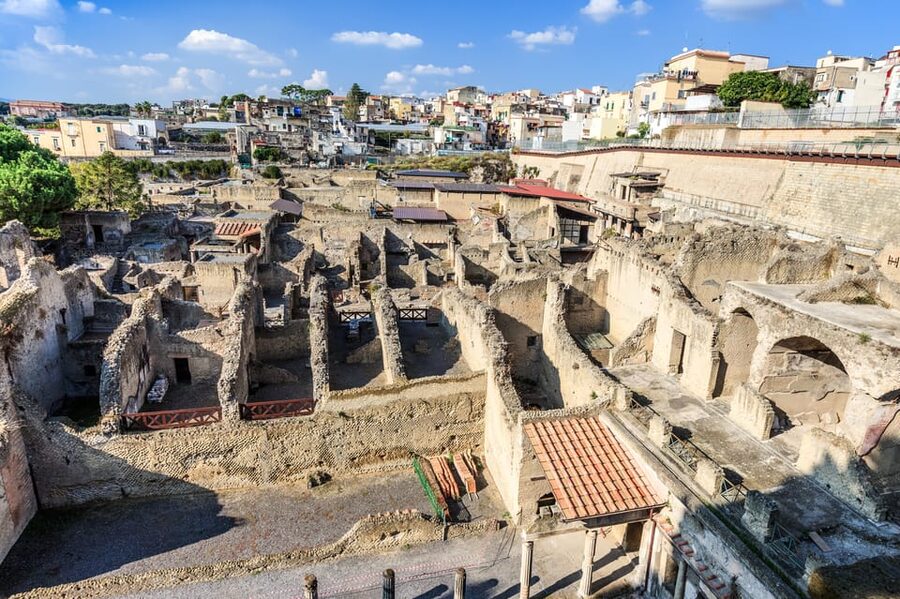
The public swimming baths and gymnasium show that Herculaneum was more than a row of private homes. These buildings reveal the town’s shared routines and social structure.
The baths are particularly valuable because they help you picture how public facilities worked in Roman life. You can examine the rooms, decoration, and surviving features while considering the practical side of bathing, socializing, and maintaining public spaces.
The public gymnasium adds another piece to the picture. Together, these buildings make the visit broader than a tour of wealthy houses. They show a town with commercial, domestic, and civic life.
Herculaneum is a good choice if you prefer a site where you can connect individual rooms to a wider community. The smaller scale helps. You can move from a shop to a house, then to a public building, and keep a clear sense of where you are.
The shoreline and the human cost of 79 AD
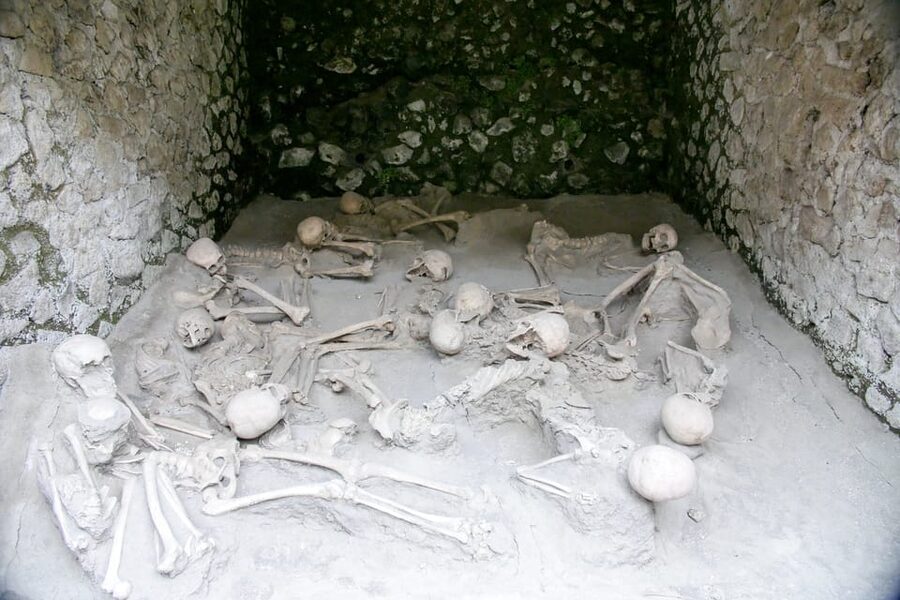
The area associated with the ancient waterfront is one of the most moving parts of the site. The 300 skeletons found there represent people who did not escape the eruption.
This section changes the mood. The frescoes and mosaics may first catch your eye, but the shoreline reminds you that Herculaneum was not preserved by a gentle pause in time. It was destroyed in a sudden disaster.
I would not rush through this area. You do not need a long explanation to understand its importance, but some historical context helps. The audio guide can provide that context, though its quality depends on the option you receive and how well the app works on your phone.
The site’s haunting quality comes from this combination of beauty and loss. A painted wall can be elegant, a street can look almost peaceful, and then the remains near the waterfront bring the disaster back into focus.
Choosing between the digital and physical audio guides
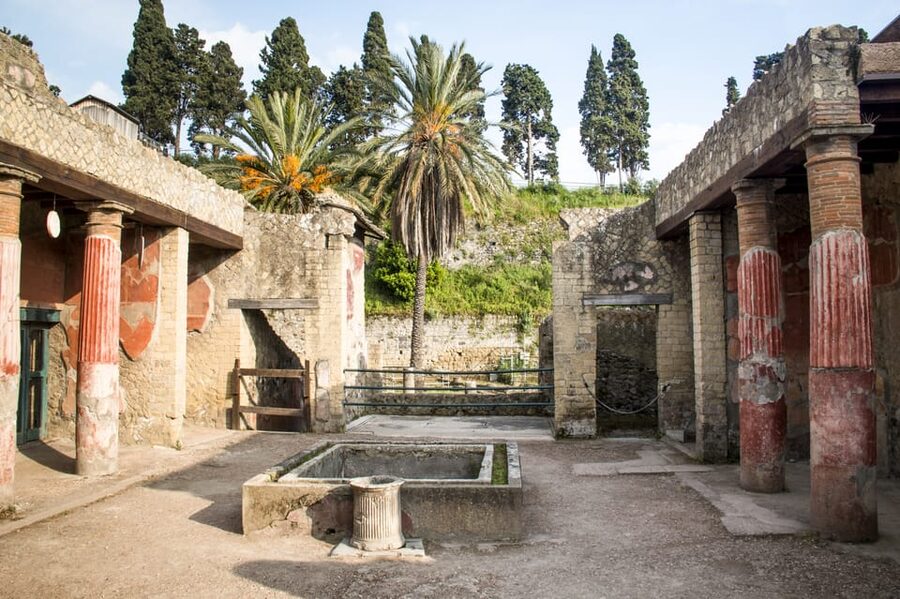
There are two audio guide formats. One uses a digital app downloaded to your smartphone. The other is a physical audio guide device.
The digital guide is convenient because you already have your phone with you. It is listed as available in English, French, Italian, and Spanish. The broader activity information also lists German among the audio options, so check the language shown for your selected ticket before booking.
Download the app and its content before reaching Herculaneum. Mobile coverage can be limited inside the site, and the app may use a lot of data. Bring headphones, since using the phone speaker in crowded or enclosed spaces is awkward and can disturb the atmosphere.
The app’s content can be interesting, especially when it explains people, social structure, and household life rather than only pointing out walls and columns. The weakness is navigation. It may be unclear which track belongs to the building in front of you, and the map and location tracking do not always make it easy to follow a suggested route.
Some people stop using the app after a short time because it feels confusing. Others find it helpful once they work out the numbering and sequence. If you want a smooth, story-led visit, a live guide would likely suit you better, but this ticket does not include one.
The physical device avoids some phone and data problems, though you should confirm exactly what is included with the option you select. If the audio guide matters a lot to you, check that it is available at the redemption point before leaving the ticket desk.
How long to stay and when to visit
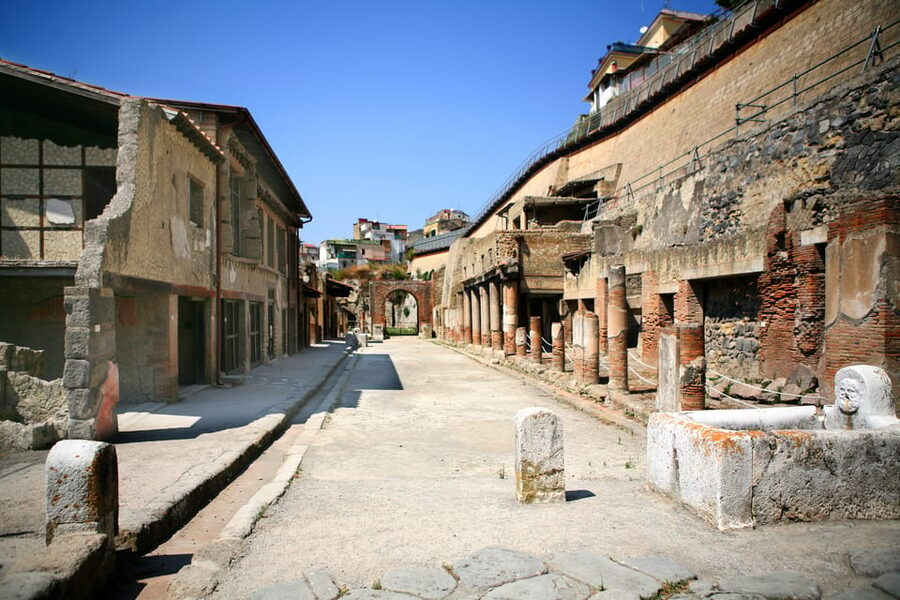
Plan around three hours for a solid visit. That is enough time to walk the main streets, enter many of the notable buildings, look at the frescoes and artifacts, and spend time at the waterfront area.
You can stay longer if you like close observation, photography, or archaeology. The ticket is valid for one day, so you are not forced into a short timed route. Still, the site is not designed as a full-day attraction for everyone. Its compact size means many people feel satisfied after a few focused hours.
Opening times change by season:
- From March 16 to October 14, the site is open from 9:30 AM to 7:30 PM. Last admission is at 6:00 PM, and you must leave the archaeological area by 7:00 PM.
- From October 15 to March 15, it is open from 8:30 AM to 5:00 PM. Last admission is at 3:30 PM, and you must leave by 4:40 PM.
Arrive early if you want cooler temperatures and a quieter start. The quieter winter months can make it easier to stand in a room and study the details without being hurried. Summer visits are still worthwhile, but heat can shape your pace. Use shaded buildings and covered streets when you need a break.
Facilities are basic. Do not count on the café for a full refreshment stop, and carry water with you.
Who should book this ticket
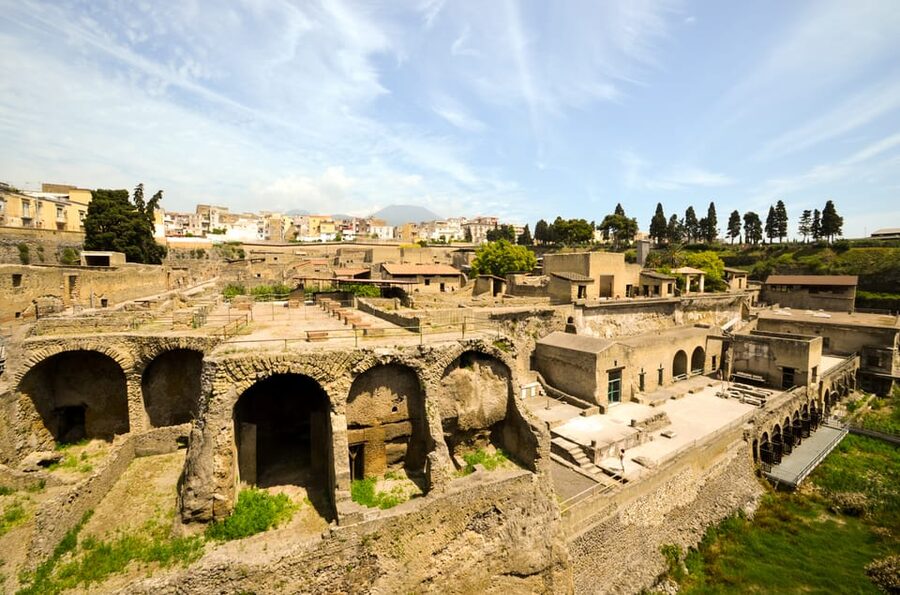
I would recommend this experience to independent visitors who want to set their own pace and do not need transport or a live guide included. It suits history fans, architecture lovers, and anyone who found Pompeii too large or tiring.
Families and first-time visitors can also manage the site well because it is more compact than Pompeii. The uneven streets and heat mean you should plan footwear and breaks carefully.
If you want a polished narrative with every building explained, this is not the strongest option on its own. The audio guide can be uneven, and information boards are limited in some areas. A live guide or a good printed guidebook would add structure.
The ticket is also worth considering if your plans may change, thanks to free cancellation up to 24 hours in advance and the option to reserve now and pay later. Just compare the total price with buying directly at the site, especially if you do not need an audio guide.
Should you book Herculaneum with the audio option?
Book it if you want to explore one of the best-preserved ancient towns at your own pace and value a simple one-day entry ticket. Herculaneum is smaller than Pompeii but no less affecting, with better-preserved homes, vivid decoration, public buildings, and the haunting remains near the ancient shore.
Choose the audio option only if you are prepared to download it before arriving and bring headphones. If clear storytelling matters more than independence, look for a live guide instead. For everyone else, the entry ticket alone gives you plenty to see, and three careful hours can make this one of the strongest historical stops in Campania.
FAQ
Where is Herculaneum located?
Herculaneum is in Campania, Italy, near Mount Vesuvius and the better-known archaeological site of Pompeii.
How long is the ticket valid?
The ticket is valid for one day.
How much does entry cost?
The listed price is $21 per person. The final amount may vary by ticket option and booking conditions.
Does the ticket include a guided tour?
No. A live guided tour is not included.
Is an audio guide available?
Yes. You can select a digital audio guide app or, if offered with your chosen option, a physical audio guide device.
Which languages are available?
The digital app is listed in English, French, Italian, and Spanish. The activity information also lists German among the audio guide languages, so confirm the language shown for your selected option.
What should I wear?
Wear comfortable shoes and dress appropriately for walking around an archaeological site. Sun protection is also useful during the warmer months.
What are the summer opening hours?
From March 16 to October 14, opening hours are 9:30 AM to 7:30 PM. Last admission is at 6:00 PM, and the archaeological area must be cleared by 7:00 PM.
What are the winter opening hours?
From October 15 to March 15, opening hours are 8:30 AM to 5:00 PM. Last admission is at 3:30 PM, and the archaeological area must be cleared by 4:40 PM.
Can I cancel the booking?
Yes. You can cancel up to 24 hours in advance for a full refund. The booking also offers a reserve-now, pay-later option.
Just added in Pompeii
- Pompeii Ruins Private Tour with Optional Skip-the-Line Entry★ 4.9 · 732 reviews
- Pompeii 3hours Villa of Mysteries tour with an Archaeologist★ 4.8 · 486 reviews
- Pompeii: Exclusive Tour with Archaeologist and Entry Tickets★ 4.9 · 634 reviews
- Pompeii: Small-Group Tour of Pompeii and Herculaneum★ 4.8 · 867 reviews
- Pompeii: Group Tour with an Archeologist Guide★ 4.4 · 490 reviews
- Pompeii: Skip-the-Line Tickets and Tour with Archaeologist★ 4.9 · 467 reviews
- Pompeii: Skip-the-Line Entry & Audioguide★ 3.8 · 225 reviews
- Pompeii: Skip-the-Line Guided Tour with Expert Archaeologist★ 4.8 · 196 reviews
Pompeii & Herculaneum Tours, compared.
Entry Ticket and Guided Tour with an Archaeologist
Read our review →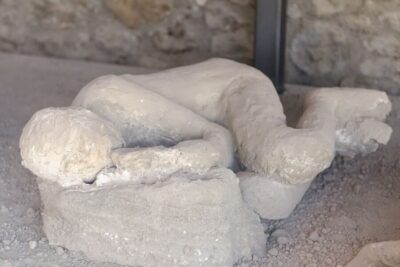



Pompeii and Mount Vesuvius Day Trip from Rome with Pizza Lunch
Read our review →
Pompeii Day Trip with Optional Vesuvius and Lunch
Read our review →Browse the lists this tour appears in