
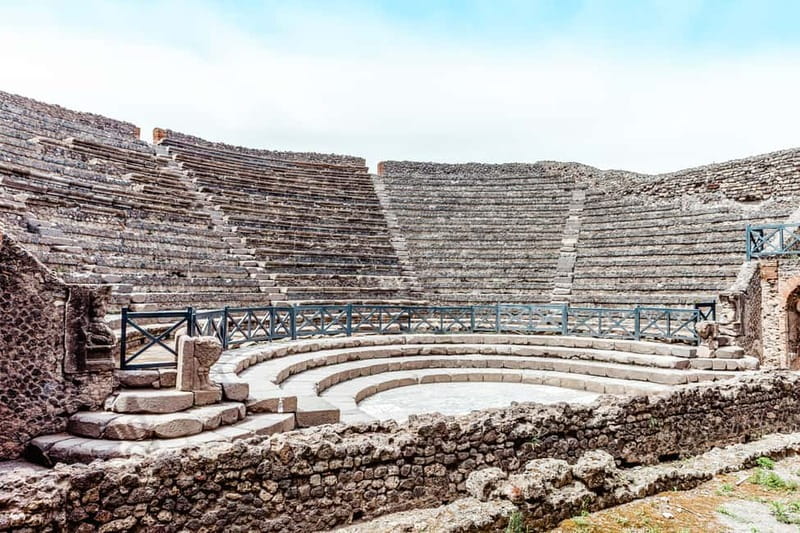
Reviewed · POMPEII & HERCULANEUM TOURS
Pompeii Ruins Private Tour with Optional Skip-the-Line Entry
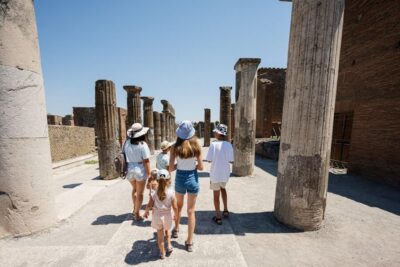
Pompeii is not a tidy museum behind glass. It is an entire Roman town, with roads, fountains, shops, homes, temples, and election notices still fixed in place. A private guide helps you read this enormous site before the old streets, rough footing, and sheer scale wear you down. The Forum and Porta Marina provide a strong first look at public life and city design.
I like the private format, which lets your guide adjust the pace and answer questions rather than follow a fixed group script. I also like the guides’ practical storytelling. Imma, Rossella, Daniela, Giulia, Lucia, Carmen, and others have been praised for explaining small details of daily life, from how a doorway might reveal a shop to how Roman families used their homes. The main drawback is time: two hours gives you a fine introduction, not a complete visit.
Key points to know before booking
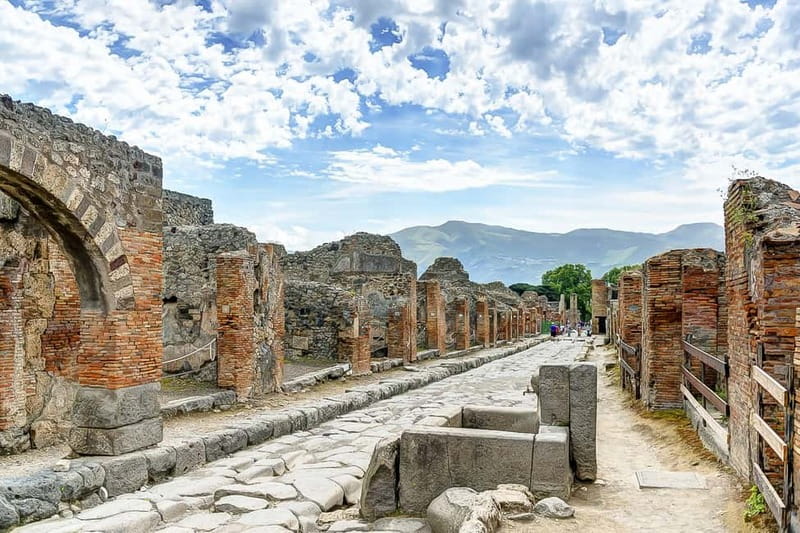
- Porta Marina sets the scene: Enter near one of Pompeii’s original gates and begin with the city’s connection to the outside world.
- The Forum is the central stop: Temples, porticoes, law courts, and civic buildings show how public life worked.
- Private guiding makes a difference: You can ask about Roman food, work, families, religion, and customs as you walk.
- Guides suit different groups: Daniela and Giulia have been especially good at keeping families and teenagers involved, while Lucia and Francesca bring archaeological training.
- Two hours is tightly focused: You will see major highlights, but Pompeii is too large to cover in one short tour.
- Check your meeting point: The guide may meet you at the tour office outside the ruins rather than inside the archaeological park.
Why Pompeii works best with a guide
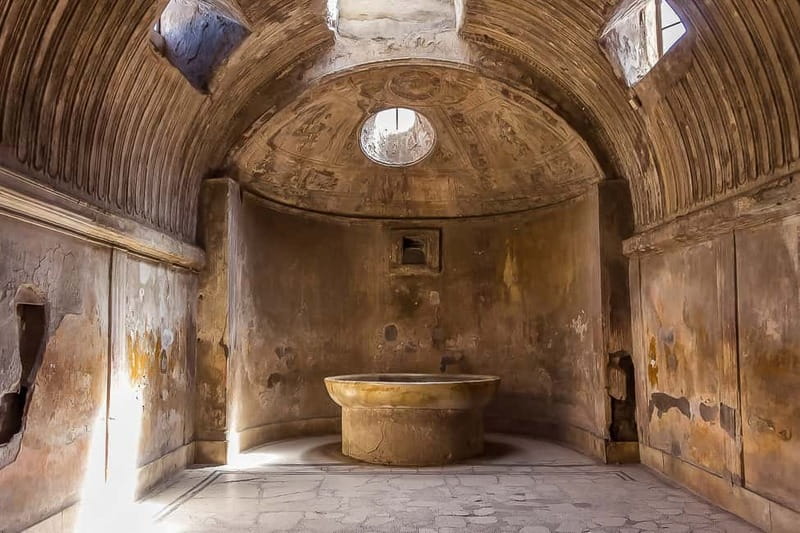
Pompeii can be bewildering on your own. You walk through a doorway and find another courtyard, another street, another weathered wall. At first, the remains may look like disconnected stones. A good guide turns them into a town with a purpose.
This was a provincial Roman city of about 20,000 people. Before the eruption of Mount Vesuvius in 79 AD, people lived, traded, worshipped, argued, ate, worked, and entertained themselves here. The eruption buried the city beneath roughly 20 feet of ash and pumice. That covering preserved ordinary objects and building details for about 1,700 years, until excavations brought much of Pompeii back into view.
The value of this tour is not simply getting from one famous building to another. It is learning how to interpret what you see. A doorway may suggest a shop rather than a private home. A public building may reveal how law and politics shaped the town. A worn road tells you something about carts and foot traffic. The guide supplies the missing connections.
That is particularly useful for families. Giulia and Daniela have been praised for explaining the site clearly without turning the visit into a lecture. Alexandra and Julia have also done well with teenagers, using stories and manageable amounts of information. If your group includes children or adults with very different interests, the private setting gives you a better chance of keeping everyone involved.
Other Roman sites within reach of Pompeii:
- Pompeii: Entry Ticket and Guided Tour with an Archaeologist
★ 4.8 · 19,459 reviews - Pompeii: Entry Ticket with Optional Audio Guide
★ 4.2 · 12,360 reviews - Pompeii: Small Group Tour with an Archaeologist
★ 4.8 · 12,264 reviews
Starting at Porta Marina
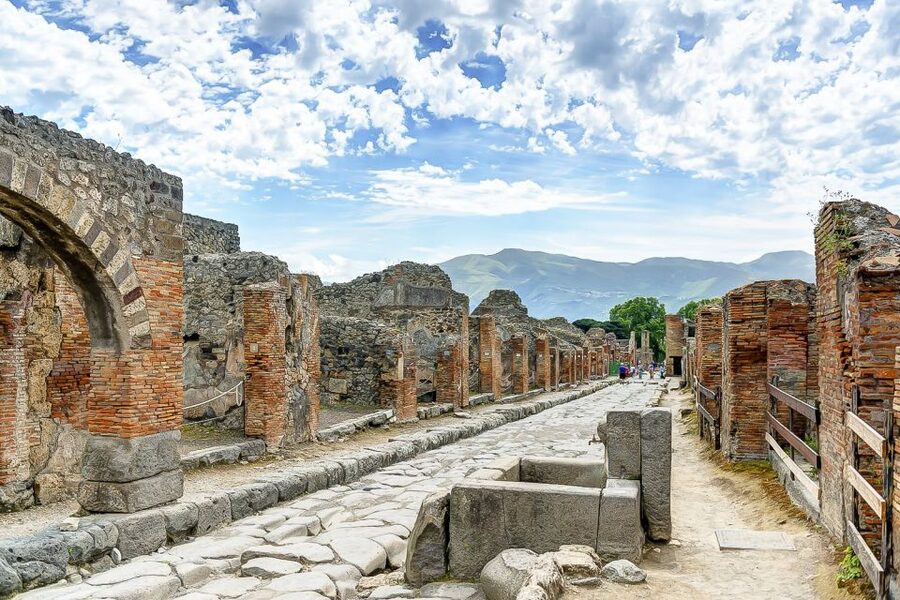
The tour includes access to Porta Marina, one of Pompeii’s original entrances. This is a sensible place to begin because it gives you an immediate sense of movement into the city. Ancient gates were not just practical openings. They controlled access, marked the edge of town, and connected Pompeii with the roads and activity beyond its walls.
Your guide can use the gate to explain how the city was arranged and how visitors might have entered in Roman times. From there, you begin walking along ancient streets. Expect uneven surfaces and long stretches of exposed ruins. Pompeii is not difficult because of steep climbs alone. The greater challenge is the hard, irregular footing and the distance between major buildings.
This is also where you should settle into the tour’s pace. One guide received criticism for moving too quickly for a person with a knee problem, despite being told about it. That is an important reminder: tell your guide about mobility limits at the start, and speak up if the pace is too fast. Other guides have been praised for patience, shade breaks, and adjusting the route.
The meeting details deserve attention. The exact starting point depends on the option you book, and at least one visitor expected to meet the guide inside the ruins but needed to go first to the tour company office outside. Read the meeting instructions carefully and allow time to find the correct place.
Reading the Forum and public buildings
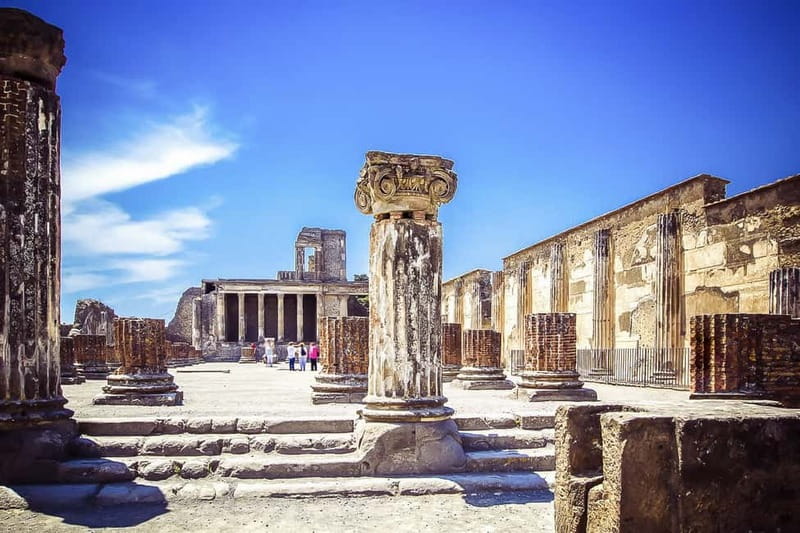
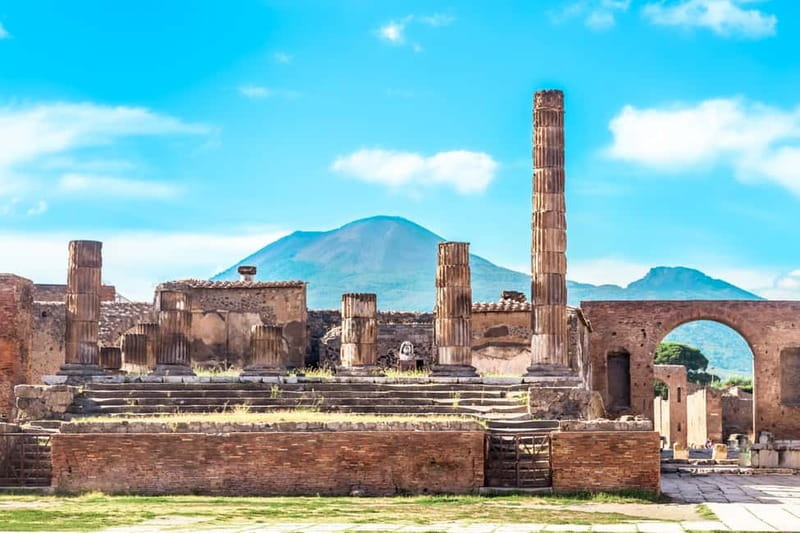
The Forum is the heart of the standard route. This large public square gathered the city’s religious, legal, and civic life in one place. Around it, you will see temples, porticoes, and law courts. The ruins may be fragmentary, but the layout makes the city’s priorities clear: public business, worship, commerce, and political life all met here.
I find the Forum most useful when a guide explains how to look at space rather than simply listing names. Ask how the buildings were used, who had access to them, and what ordinary residents might have done nearby. Your private guide can spend more time on the questions that interest your group, though the two-hour limit means the route must remain selective.
The Forum also helps balance the emotional parts of Pompeii. The city is famous for the eruption and the plaster casts of people and animals caught in the disaster. Yet the Forum reminds you that Pompeii was a functioning town first. Its residents had schedules, jobs, families, religious duties, and public concerns long before the final day.
Guides such as Lucia, who has archaeological training, can add helpful context to the remains. Francesca and Carmen have also been praised for explaining how to identify details in the buildings. You are not just looking at broken walls. You are learning what those walls once did.
Everyday Roman streets, homes, and work
The most rewarding part of Pompeii is often the ordinary material. Walk the streets and you begin to picture a working town rather than an archaeological site. The route may include homes, commercial spaces, public buildings, and the narrow transitions between them.
Small observations make the visit memorable. Carmen has explained how the opening of a doorway can help distinguish a shop from a regular house. That sort of detail is exactly why I would choose a private guide here. A sign or threshold that you might pass without a thought can become evidence of how a Roman business operated.
The guides also discuss how people lived, loved, worked, and played. Those broad themes are useful because Pompeii is not only about grand architecture. The site lets you ask practical questions about Roman life: Where did people meet? How did homes connect to the street? What did a shopfront tell passersby? How did civic buildings serve the community?
You should expect some uneven pacing in this part of the tour. There is a lot to see, and guides need to keep moving if they want to reach the Forum and other major stops. If you prefer household details over public monuments, say so early. The private format may allow the guide to give those parts more attention, but no two-hour route can cover every important street.
Other ruins to walk round near Pompeii:
- Pompeii: Archaeological Park Tour with Ticket on request
★ 4.5 · 2,283 reviews - Discover the Ancient Ruins of Pompeii: Day Trip from Rome
★ 3.5 · 2,247 reviews - From Naples: Pompeii Ruins & Mount Vesuvius Day Tour
★ 4.3 · 11,459 reviews - Agrigento: Valley of the Temples Skip-the-Line Sunset Tour
★ 4.5 · 1,512 reviews
The plaster casts and the human cost
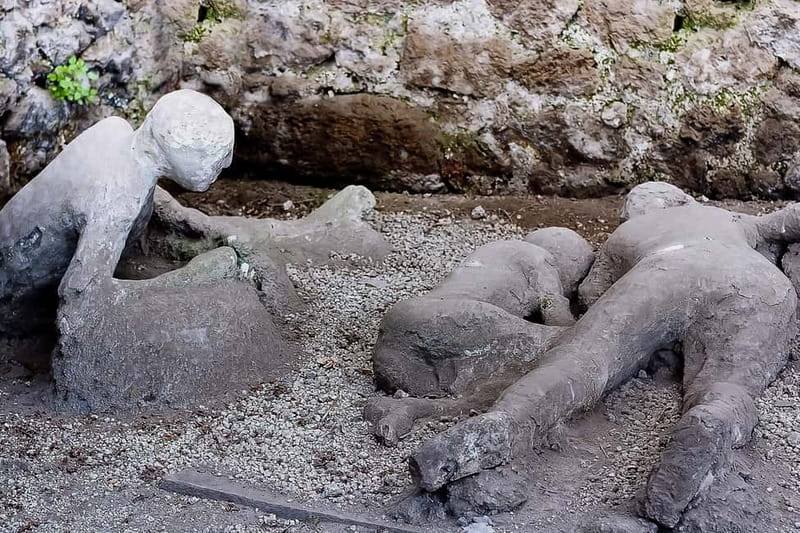
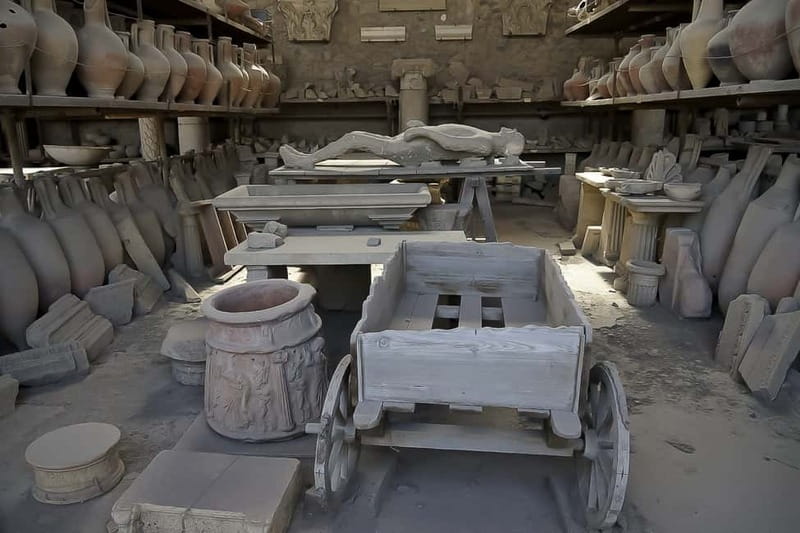
The plaster casts are among Pompeii’s most powerful sights. Archaeologists used cavities left in the hardened ash by decomposed bodies to create casts showing the final positions of people and animals. These are not simply archaeological objects. They make the eruption personal.
The tour places the catastrophe in context. About 20,000 people lived in the town, and around 2,000 died. Layers of ash and pumice covered homes, streets, possessions, and bodies. The preservation is remarkable, but the subject can be difficult, especially for children.
A guide can help you approach the casts with care and explain what they reveal without reducing the experience to spectacle. Several guides have been praised for combining facts with stories and for making the past feel understandable to different ages. For a family, that tone matters. You can ask for a clear explanation without turning the visit into a grim lecture.
I would not rush this part. Two hours is already a compact schedule, but the casts deserve a quiet moment. If your guide is moving quickly, ask to pause. The private setting gives you a better chance to shape the visit around what your group can handle.
What two hours can and cannot do
Pompeii is huge. The tour’s two-hour length is its greatest practical advantage and its clearest limit. You can see important highlights without giving up an entire day, which works well if you are combining Pompeii with other Campania sights. You cannot expect to inspect every neighborhood, house, and outlying building.
The strongest use of the time is a guided introduction. You will likely leave with a grasp of the city’s layout, the role of the Forum, the significance of Porta Marina, and the daily life preserved beneath the ash. You can then decide if you want to continue on your own.
One family used the tour as a first pass, then explored more afterward and visited the Villa of the Mysteries with a separate Pompeii Plus ticket. That is a smart way to use the experience. Let the guide explain the main framework, then continue independently if you have the energy and the correct ticket.
Some guides may adapt the end point to suit your plans. Julia reportedly finished near the Casina dell’Aquila so the group could rest and refresh before exploring more. Do not assume every booking includes this arrangement, but it is worth asking your guide if you need a particular exit or nearby stopping point.
Guide quality and language choices
The guide is the main reason to book this experience rather than simply enter Pompeii alone. The strongest guides combine accurate information with a natural pace and a willingness to answer questions.
Lucia, Francesca, and Carmen bring archaeological training or experience that can add depth to small details. Rossella has led tours in English and French, with a style that mixes facts and anecdotes. Imma has been praised for explaining background details without losing sight of the places in front of you. Daniela has kept groups moving while still checking how they were doing.
The available languages are English, Spanish, French, Italian, and German. Guide assignment depends on availability, so you cannot necessarily select a particular person. Still, the range of languages makes this a practical choice for mixed-language groups.
The private format is especially useful when you have questions about Roman life beyond the standard facts. You can ask about homes, shops, families, religion, or public buildings and get an answer suited to your group. That flexibility is harder to find in a large group walking behind a flag.
Price, group size, and real value
The listed price is $254.89 per group of up to eight people. That is not a cheap entrance experience for one person, but the calculation changes if you fill most of the group. A party of six to eight can divide the cost and receive a private two-hour guide rather than paying individual prices for a large shared tour.
Check the booking option carefully. Skip-the-line express entry is included with some choices and must be added or purchased separately with others. The price therefore needs to be compared with the actual option you select, not just the headline figure.
Free parking may be available, but it is not something to treat as guaranteed. The tour ends back at the meeting point, and the exact location can vary. The booking also allows cancellation up to 24 hours before the activity for a full refund, and you can reserve now and pay later.
Bring a passport or ID card. Large bags and luggage are not allowed. Wear practical shoes, carry water, and be ready for exposed streets and uneven ground. Those last suggestions are basic Pompeii sense, not luxury extras.
Who should book this Pompeii tour?
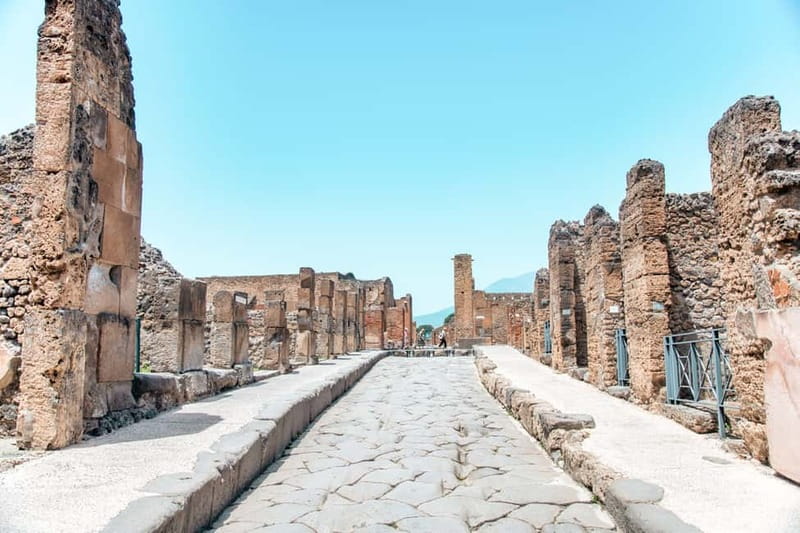
I would choose this tour for a family, a small group of friends, or anyone with only a morning or afternoon for the ruins. It is also a good match if you want to ask questions, dislike crowded group tours, or want help making sense of Roman daily life.
It works particularly well for teenagers because the guides can adjust the explanation and use stories instead of a long string of dates. It also suits first-time visitors who want the main public buildings and a clear introduction before exploring more on their own.
I would think twice if you want a slow, highly detailed archaeological study in one visit. Two hours cannot cover Pompeii fully, and the pace may feel brisk if you need frequent rests. If you have mobility concerns, discuss them right away and make sure your guide understands what pace works for you.
On the first Sunday of each month, Pompeii entrance is free, but tickets cannot be reserved ahead of time and entry is not guaranteed. That may change the value calculation, especially for a small group, but the uncertainty is worth considering.
Should you book it?
Book this tour if you want Pompeii to make sense, not just a long walk among ruins. The private guide, multiple language options, and focused route give you a useful first look at the Forum, Porta Marina, streets, public buildings, and plaster casts.
Skip it if you already know the site well and plan to spend many hours exploring every corner independently. For most first-time visitors, though, the cost is easier to justify when shared among several people. Choose the ticket option with care, confirm the meeting point, and treat the two hours as an introduction that can guide the rest of your Pompeii visit.
FAQ
How long is the Pompeii tour?
The guided tour lasts two hours. Starting times depend on availability.
Is the tour private?
Yes. It is offered as a private group experience.
How many people can join one group?
The listed price covers a group of up to eight people.
Is skip-the-line entry included?
Skip-the-line express entry depends on the option selected. Some options include it, while another option requires tickets to be added separately.
Which languages are available?
The live guide may conduct the tour in English, Spanish, French, Italian, or German.
Where does the tour start?
The meeting point may vary depending on the option booked. Check the booking details carefully, since the guide may meet you at the tour company office outside the ruins.
Does the tour include Porta Marina?
Yes. Access to Porta Marina is included.
What should I bring?
Bring a passport or ID card. Large bags and luggage are not allowed.
Can I cancel the booking?
You can cancel up to 24 hours in advance for a full refund.
Is Pompeii free on the first Sunday of the month?
Entrance is free on the first Sunday of each month, but tickets cannot be reserved ahead of time, so entry is not guaranteed.
Just added in Pompeii
- Pompeii 3hours Villa of Mysteries tour with an Archaeologist★ 4.8 · 486 reviews
- Pompeii: Exclusive Tour with Archaeologist and Entry Tickets★ 4.9 · 634 reviews
- Pompeii: Small-Group Tour of Pompeii and Herculaneum★ 4.8 · 867 reviews
- Pompeii: Group Tour with an Archeologist Guide★ 4.4 · 490 reviews
- Pompeii: Skip-the-Line Tickets and Tour with Archaeologist★ 4.9 · 467 reviews
- Pompeii: Skip-the-Line Guided Tour with Expert Archaeologist★ 4.8 · 196 reviews
- Pompeii: Skip-the-line-Ticket and Guided Tour★ 4.6 · 1,152 reviews
- Pompeii: Skip-the-Line Entry & Audioguide★ 3.8 · 225 reviews
Pompeii & Herculaneum Tours, compared.
Entry Ticket and Guided Tour with an Archaeologist
Read our review →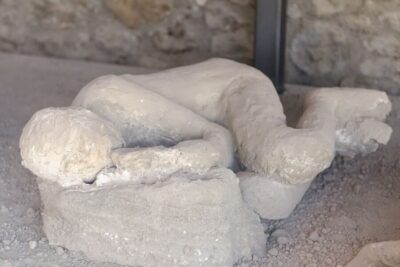


Pompeii and Mount Vesuvius Day Trip from Rome with Pizza Lunch
Read our review →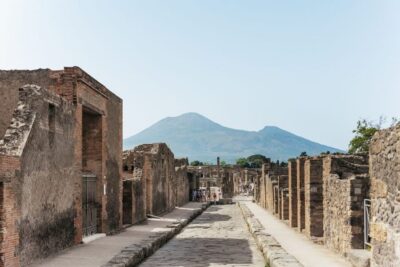
Pompeii Day Trip with Optional Vesuvius and Lunch
Read our review →Browse the lists this tour appears in