
Reviewed · POMPEII & HERCULANEUM TOURS
Pompeii: Entry Ticket and Guided Tour with an Archaeologist
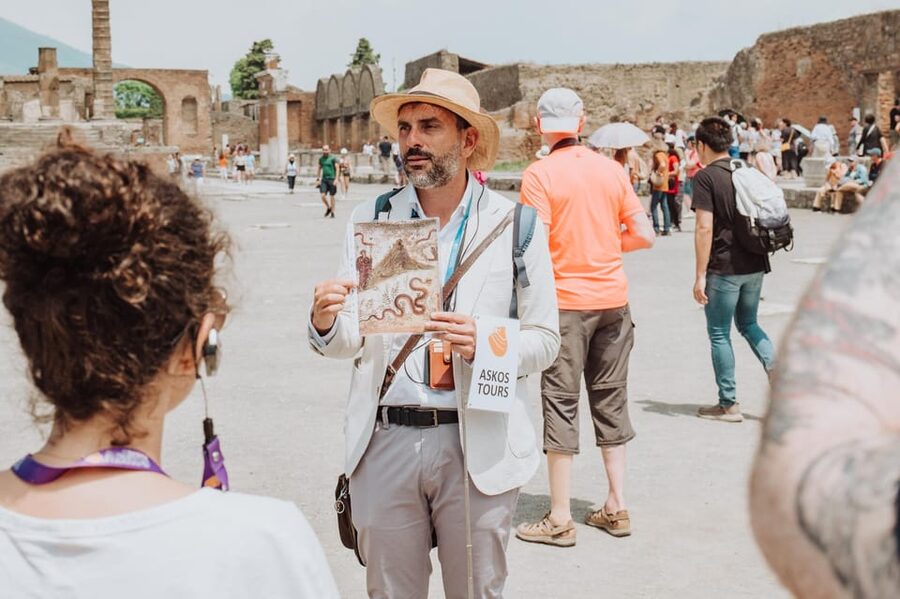
Pompeii is not a tidy collection of ruins. It is a full Roman town, with streets, houses, shops, temples, theaters, and public baths spread across a vast site. This tour gives you a useful route through that maze, led by an archaeologist who can explain what you are seeing rather than leaving you to guess at every broken wall. I especially like the small group of up to 20 and the skip-the-ticket-line access, two details that matter at a busy and confusing archaeological site.
The itinerary also hits the right mix: grand public spaces such as the Forum and Temple of Apollo, private homes such as the House of the Faun and House of Menander, and everyday places such as the Termopolium and Lupanar. The main drawback is physical. Pompeii’s old paving stones are uneven, the site involves plenty of walking, and the tour is not suitable for wheelchair users or people with mobility impairments.
Key points to know before booking
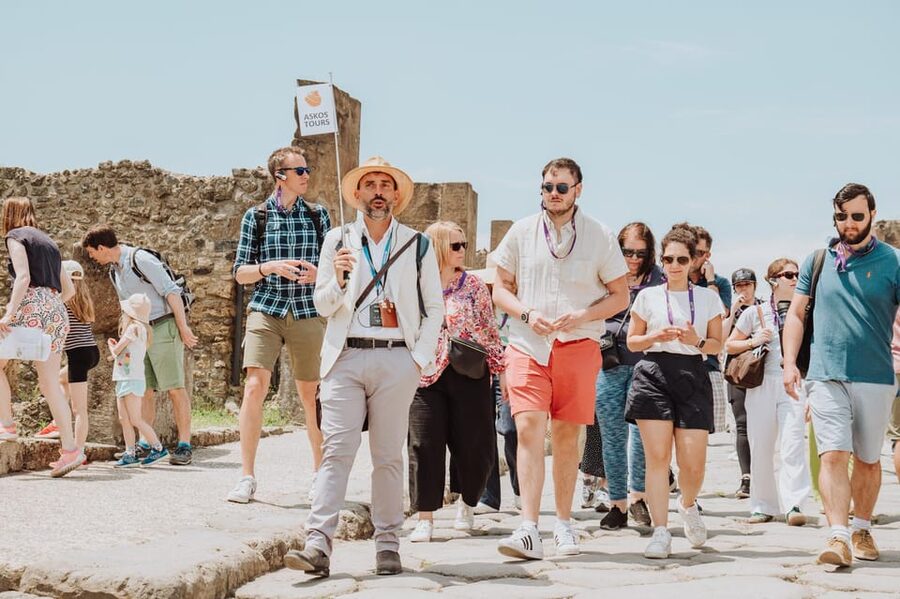
- A two-hour route with real historical context: You see major landmarks without trying to cover every corner of Pompeii.
- Archaeologist-led interpretation: Guides including Teresa, Anna, Alfredo, Raffaella, and Sergio have been praised for explaining both the buildings and the daily lives of Pompeii’s residents.
- A practical small-group size: Groups can reach 20 people, with headsets supplied when there are 10 or more participants.
- The most useful highlights are included: Expect the Forum, House of the Faun, Lupanar, House of Menander, Macellum, baths, theaters, and plaster casts.
- Plan for uneven ground: Comfortable shoes and water are essential, and you may need to manage a few steps.
- Good value at $35: The price includes the Pompei Express entrance ticket and a live guide, saving you from wandering through a huge site without a plan.
Why a guide helps at Pompeii
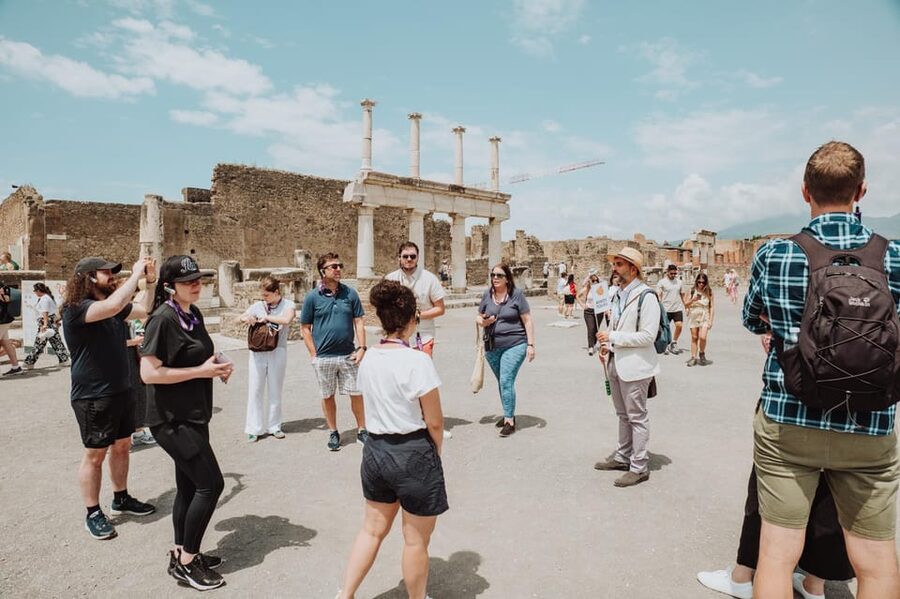
Pompeii can look obvious at first. You see a street, a doorway, a column, and a painted wall. But the meaning is often hidden in the details: a raised sidewalk, a shop counter, a household shrine, or the size of a public building.
That is where this tour earns its place. An archaeologist guide can explain how a room was used, how public and private life fit together, and what daily life may have looked like before Mount Vesuvius erupted in 79 AD. Guides such as Teresa, Anna Sorrento, Alfredo, Raffaella, and Paolo have been praised for making the site understandable without turning the walk into a dry lecture.
I particularly value the attention given to ordinary people. Pompeii is famous for grand villas and dramatic casts, but the shops, baths, streets, and modest homes tell you how the city worked. A guide can connect those pieces, helping you see Pompeii as a living town rather than a field of isolated ruins.
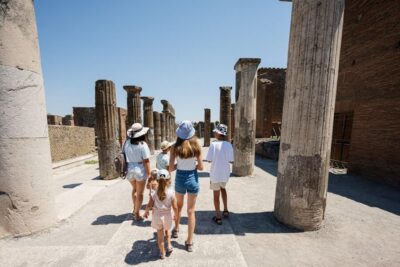
The small group makes that explanation easier to follow. Groups can include up to 20 people, so this is not a private tour, but it is still far more manageable than joining a large crowd. For groups of 10 or more, headsets are provided. They help when you are standing away from the guide, though one practical warning is worth noting: crowded areas can make the earpiece harder to hear, so stay close and check that the sound is clear.
Other Roman sites within reach of Pompei Campania:
- Pompeii: Small Group Tour with an Archaeologist
★ 4.8 · 12,264 reviews - Pompeii: Skip-the-Line Entrance Ticket with Audio Guide
★ 4.0 · 2,509 reviews - Naples: Pompeii and Mt. Vesuvius with Lunch and Wine Tasting
★ 4.5 · 2,454 reviews
Starting at Porta Marina and the ancient entrance
The tour begins from a designated meeting point, with the exact location depending on the option you book. One listed starting point is Via Villa dei Misteri 2. The route then passes through Porta Marina, one of Pompeii’s principal entrances.
This is a useful beginning because it gives you a sense of Pompeii’s scale. You are not entering a single monument with a neat sequence of rooms. You are entering an ancient city, and the entrance leads into a network of streets that once carried residents, merchants, officials, and visitors.
Your guide may spend about 10 minutes around this opening section. That is enough time to orient you without using up too much of the two-hour tour. From the start, wear shoes with firm soles. Pompeii’s paving can be rough and irregular, and the ground becomes tiring if you are not prepared for a long walk.
Temple of Apollo and the road to the Forum
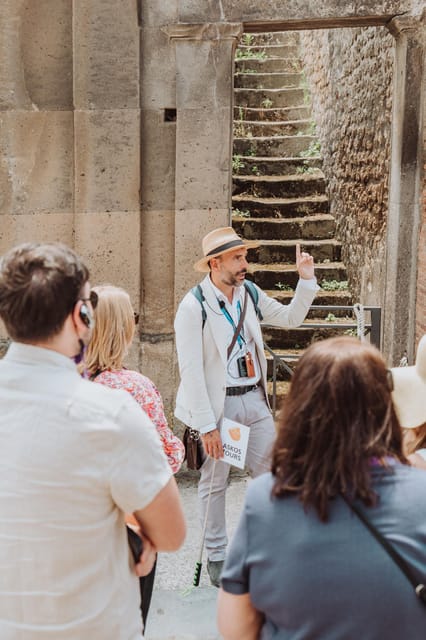
The next stop passes by the Temple of Apollo, one of the important religious buildings near the heart of Pompeii. You should not expect a long indoor visit here. The scheduled time is about 10 minutes, so the guide is likely to use the temple as part of the wider story of the city’s public and religious center.
The route continues toward the Foro Civile di Pompei, or the Civil Forum. This is the place where Pompeii’s civic, commercial, and religious life came together. The tour allows roughly 20 minutes here, enough to explain the layout and point out the surrounding buildings.
The Forum can be hard to read on your own. Large open spaces do not always reveal their former purpose, especially when columns and walls are incomplete. A guide helps you understand how the area functioned as a public meeting place and why the buildings around it mattered.
This section also gives you a first taste of the tour’s balance. You get major public monuments, but the guide keeps moving so the visit does not become stuck in one impressive square. If you want detailed time at every building, two hours will feel short. If you want a strong introduction before exploring independently, the pace works well.
The House of the Faun and Pompeii’s private life
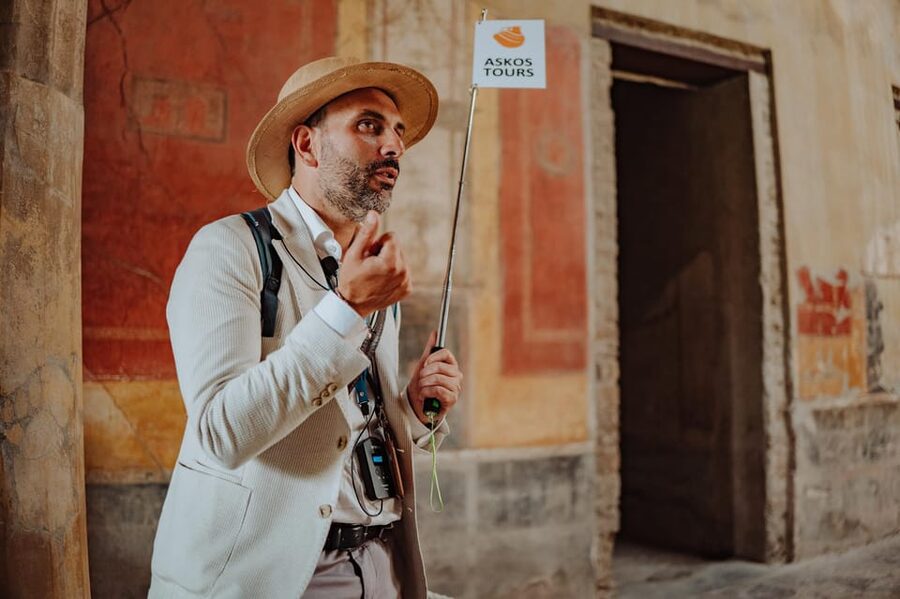
The House of the Faun receives about 20 minutes of guided attention. It is one of the site’s best-known residences, and its scale helps you understand that Pompeii included homes of very different sizes and levels of wealth.
The value here is not just seeing an impressive house. The guide can explain how rooms connected, how domestic space reflected social status, and how art and architecture shaped the experience of the household. The House of the Faun gives you a way to think about Pompeii’s upper-class residents, but the wider route prevents the tour from presenting their lifestyle as the whole city.
This is one of the stops where a trained guide adds clear value. Without context, you may remember a courtyard or mosaic but miss how the house worked as a social space. With a good explanation, the floor plan becomes easier to picture, and you begin to understand why Pompeii’s homes are so important to archaeologists.
The pace also allows time for photographs. Several guides have been praised for allowing stops without making the group feel rushed. Still, be ready to move when the group does. Pompeii covers a great deal of ground, and lingering at every attractive wall will cut into your time later.
A few more things to do in Pompei Campania
- Pompeii: Skip-the-line-Ticket and Guided Tour
★ 4.6 · 1,152 reviews - Pompeii: Skip-the-Line Entry Ticket with Digital Guide App
★ 4.1 · 770 reviews - Pompeii: Afternoon to Sunset Guided Tour with Ticket
★ 4.9 · 484 reviews - Vatican: Museums & Sistine Chapel Entrance Ticket
★ 4.5 · 144,003 reviews
Lupanar, shops, and the less polished side of Pompeii
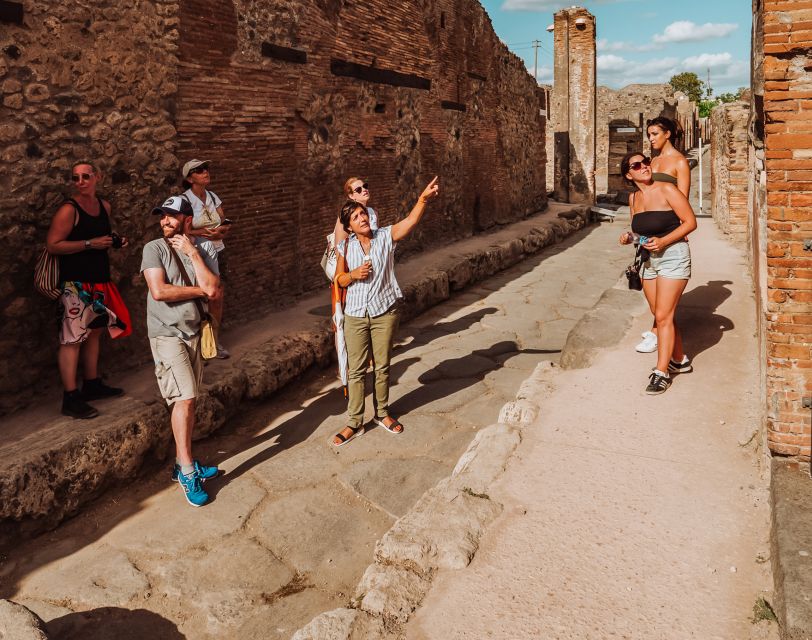
The Lupanar, Pompeii’s brothel, is another 20-minute guided stop. It is one of the site’s most talked-about buildings, but it deserves more than a quick laugh or a glance at its wall paintings.
Your guide can place it within the everyday commercial life of the city and explain what the small rooms and surviving decorations reveal about Roman society. This is also a reminder that Pompeii’s preserved remains are valuable because they include ordinary, awkward, and practical parts of urban life, not only temples and elite villas.
The itinerary also includes the Termopolium, an ancient food counter. This is a particularly useful stop for imagining daily routines. A shop or food outlet may feel more familiar than a temple, and it helps you connect the ancient city with basic activities such as buying prepared food and moving through busy streets.
You should expect the subject matter at the Lupanar to be direct. The site is historical, not sanitized, and families should decide if the content suits younger children. Unaccompanied minors are not permitted on the activity.
House of Menander and the Roman household
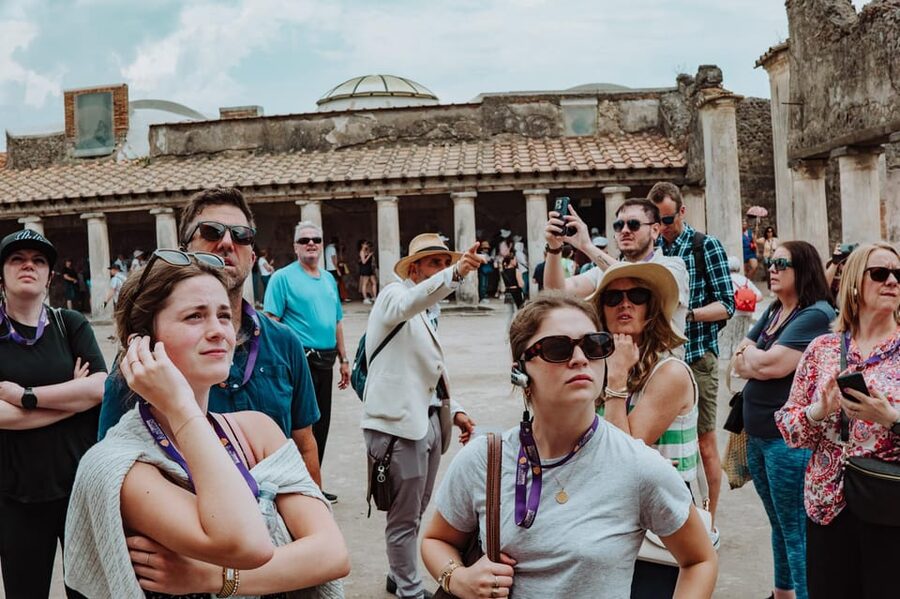
The House of Menander gets about 20 minutes. Like the House of the Faun, it opens a window onto domestic life, but it also adds another example of how wealthy homes were arranged and decorated.
I like having two private houses in the same short tour. One house alone can seem like an isolated grand residence. Seeing more than one helps you compare spaces and notice that Pompeii was not built to a single pattern. The guide can point out household organization, decoration, and the relationship between private rooms and shared areas.
This stop is also a good place to ask questions. Guides such as Anna, Giancarlo, and Raffaella have been praised for explaining small details and responding to questions clearly. A short tour becomes much more useful when you can ask why a room looks a certain way or how archaeologists interpret what remains.
Macellum and the Forum Baths
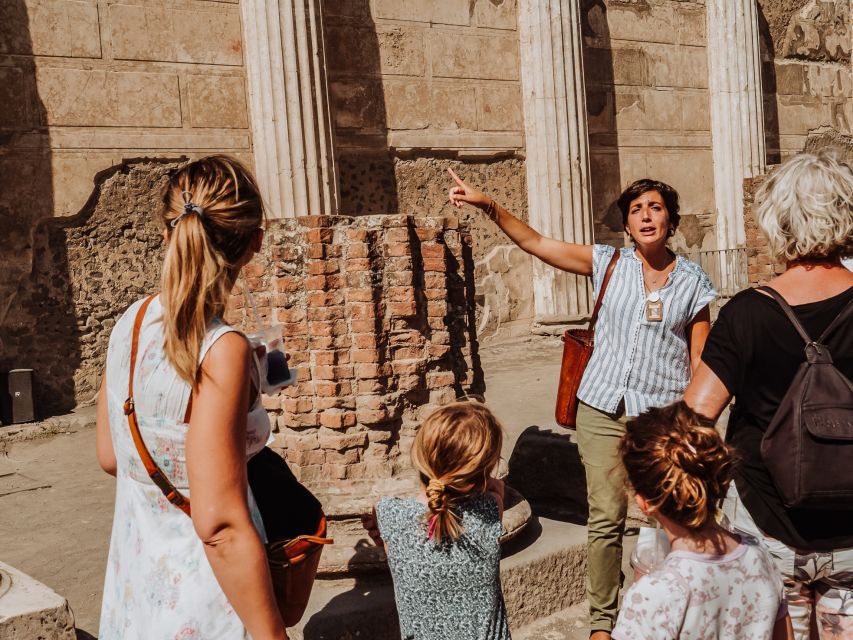
The Macellum, an ancient market building, receives about 10 minutes. It brings the tour back from private homes to public commerce. You can think of it as part of the city’s food and trading system, where the practical business of supplying Pompeii took place.
The Forum Baths follow, with another 10 minutes. Public baths were not simply places to wash. They were part of Roman social life, and the buildings show how engineering, leisure, and community space overlapped.
These shorter stops are useful because they broaden the picture. The tour does not focus only on famous villas and dramatic remains. It also shows how residents shopped, bathed, worshiped, worked, and spent time in public.
At the same time, 10 minutes is not enough for a full study of either site. Think of these stops as a guided introduction. If a bath complex or market catches your interest, note its location and return after the tour, when you can take your time.
Plaster casts, theaters, and the human story
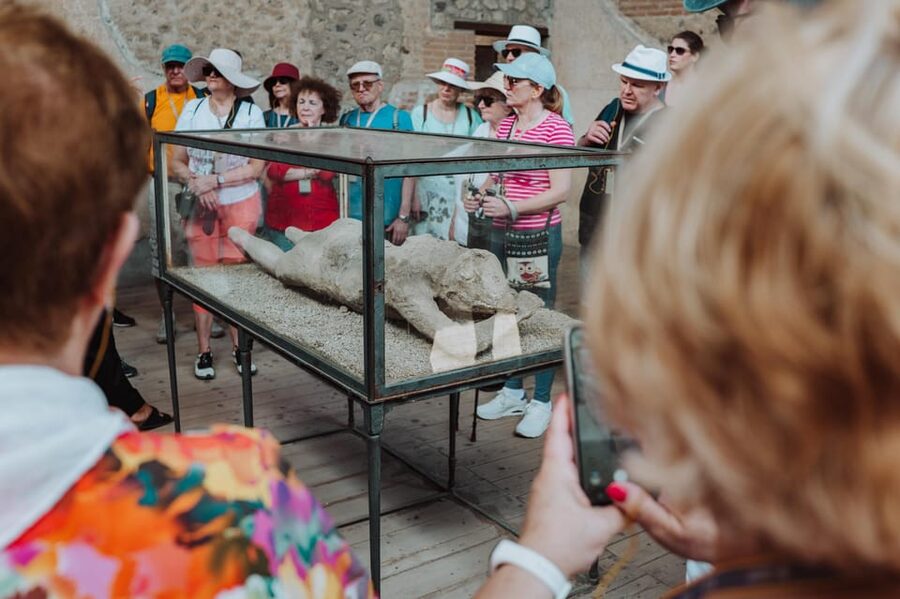
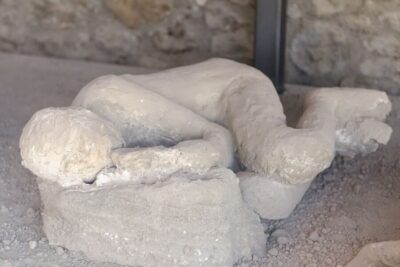
The route also includes the poignant plaster casts of victims and the historic theaters. The casts can be emotionally difficult. They are not just archaeological objects, and the guide’s explanation can help place them in the events of the eruption without turning the moment into spectacle.
The theaters offer a different view of Pompeii, showing the city’s public entertainment and shared culture. Together, these places add human weight to the tour. You see both the sudden destruction of 79 AD and the ordinary routines that made Pompeii a functioning town before the eruption.
Not every stop is timed as a formal visit in the itinerary, so the exact order and amount of time may change. That is normal at Pompeii, where access, crowds, weather, and site conditions can affect the route. The main benefit is that your guide knows how to connect the major areas into a sensible walk.
What two hours really gives you
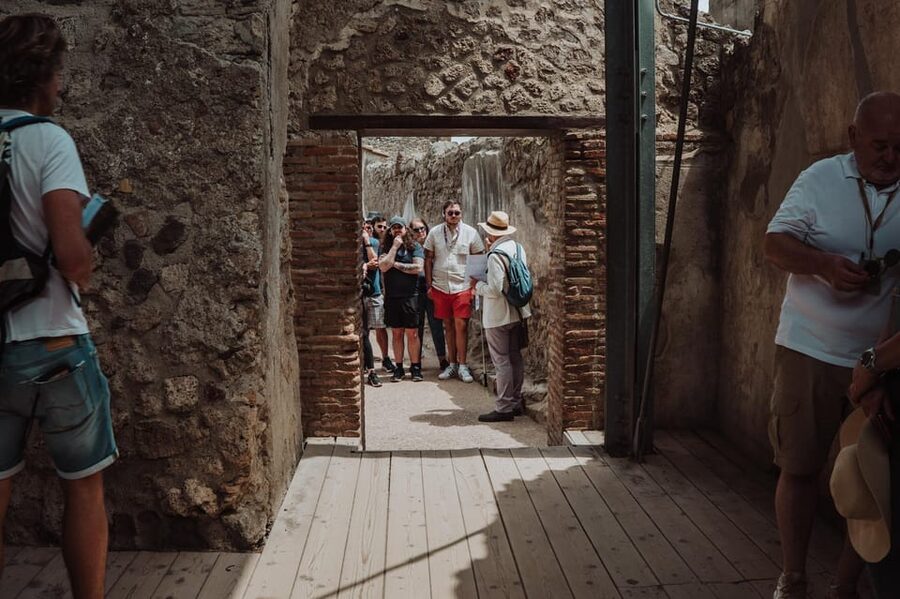
Two hours is enough for a strong first look, not a complete exploration. Pompeii is enormous, and even an efficient route leaves much unseen. Several people who continued alone after the guided portion found themselves walking for hours and getting turned around, so take the guide’s suggestions seriously when planning your extra time.
The tour’s greatest strength is orientation. You see the major landmarks, learn how the city fits together, and finish with advice about what to explore next. Guides may point you toward additional ruins or the modern city of Pompeii.
The pace can feel brisk for anyone who wants long photo stops or detailed visits inside every house. It can also feel longer than two hours if the weather is hot or wet. Rain has not stopped guides from running the route, but it makes the uneven ground more tiring. Bring water, especially if you intend to stay inside the site afterward, and carry a snack if you expect to continue walking.
Is $35 a fair price?
At $35 per person, this tour offers solid value for a major archaeological site. The fee includes the Pompei Express entrance ticket, the archaeologist guide, the small-group format, and headsets for groups of 10 or more.
The real question is not simply the ticket price. It is how much you value a clear route and an expert explanation. If you are comfortable reading site maps, researching Roman architecture, and identifying buildings on your own, you may prefer a self-guided visit. But if Pompeii feels overwhelming, the guide can save time and give meaning to places that might otherwise look like piles of stone.
The ticket-line access is also practical. It does not shorten the walking inside Pompeii, but it can reduce wasted time before you begin. For a short visit from Naples, Sorrento, or another part of Campania, that matters.
Transportation, hotel pickup, food, and drinks are not included. You must reach Pompeii yourself and confirm the meeting point for your chosen option. Some people have managed train delays by contacting the organizers and moving to a later time slot, but you should still allow a sensible margin before your start time.
Who should book this Pompeii tour?
I would choose this tour if you have only a few hours, want the main sights explained, or feel unsure how to read a large archaeological site. It suits first-time visitors, history fans, couples, and families with older children who can manage a long walk and the adult subject matter at the Lupanar.
It is also a good fit if you want to continue exploring alone afterward. The guided route gives you a foundation, then the extra recommendations help you use the rest of your day more wisely.
I would hesitate if you need step-free access, use a wheelchair or mobility scooter, or dislike walking on uneven surfaces. The activity is not suitable for people with mobility impairments, and mobility scooters are not allowed. Under-18s should bring a passport or ID to qualify for free admission, according to the site information.
The tour is offered in English, Spanish, French, Italian, Portuguese, and German. Check your selected language and meeting point before booking, since those details can vary by option.
Should you book it?
Book this tour if you want Pompeii to make sense, not just look impressive. The strongest part is the human scale: houses, baths, shops, food counters, markets, and public spaces are tied together into a picture of daily Roman life.
At $35, the ticket and guide make it a sensible choice for a first visit. Just wear sturdy shoes, bring water, stay near the guide when using the headset, and save time afterward if you want to explore further. If you want a quiet, slow study of every building, go independently for a second visit. For a first introduction, this guided route gives you a much better start.
FAQ
How long does the Pompeii guided tour last?
The tour lasts two hours.
What is included in the ticket price?
The price includes the Pompei Express entrance ticket, an archaeologist guide, the small-group tour, and headsets for groups of 10 or more.
How much does the tour cost?
The listed price is $35 per person.
How large is the tour group?
The small group can include up to 20 people.
Which languages are available?
The live guide is available in English, Spanish, French, Italian, Portuguese, and German.
Does the tour include skip-the-line entry?
Yes. Skip-the-ticket-line access is included.
Which Pompeii landmarks are covered?
The route includes Porta Marina, the Temple of Apollo, the Civil Forum, House of the Faun, Lupanar, House of Menander, Macellum, and the Forum Baths. It also includes major streets, theaters, the Termopolium, and plaster casts of victims.
Is transportation included?
No. Hotel pickup, hotel drop-off, and transportation are not included.
Is the tour suitable for wheelchair users?
No. The activity is not suitable for wheelchair users or people with mobility impairments. Mobility scooters are also not allowed.
Are children allowed to join?
Unaccompanied minors are not allowed. Visitors under 18 are advised to bring a passport or ID to qualify for free admission.
Can I bring a dog?
Only dogs weighing no more than 10 kilograms and measuring no more than 40 centimeters in height are permitted. They must be on a leash, carried in the buildings, and their waste must be collected.
Just added in Pompei Campania
- Pompeii 3hours Villa of Mysteries tour with an Archaeologist★ 4.8 · 486 reviews
- Pompeii: Small-Group Tour of Pompeii and Herculaneum★ 4.8 · 867 reviews
- Pompeii: Skip-the-Line Entry & Audioguide★ 3.8 · 225 reviews
- Pompeii: Skip-the-line-Ticket and Guided Tour★ 4.6 · 1,152 reviews
- Pompeii: Guided Tour with Skip-the-Line Entry★ 4.9 · 812 reviews
- Pompeii: Afternoon to Sunset Guided Tour with Ticket★ 4.9 · 484 reviews
- Pompeii: Skip-the-Line Entry Ticket with Digital Guide App★ 4.1 · 770 reviews
- Pompeii: Tour with Archaeologist Guide & Skip-the-Line Entry★ 4.5 · 478 reviews
Pompeii & Herculaneum Tours, compared.



Pompeii and Mount Vesuvius Day Trip from Rome with Pizza Lunch
Read our review →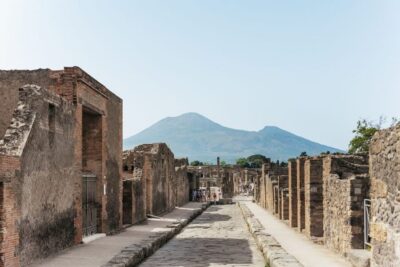
Pompeii Day Trip with Optional Vesuvius and Lunch
Read our review →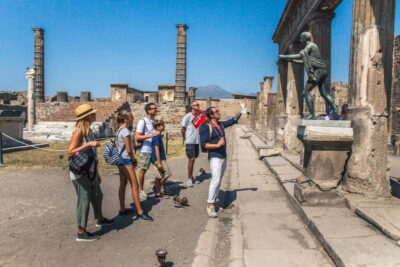
Naples or Sorrento: Full-Day Pompeii and Mount Vesuvius Tour
Read our review →Browse the lists this tour appears in