

Reviewed · POMPEII & HERCULANEUM TOURS
Pompeii: Tour with Archaeologist Guide & Skip-the-Line Entry
Pompeii makes far more sense with someone to explain what you are seeing. An archaeologist guide can turn a broken wall, a road stone, or a faded shop counter into a clue about Roman daily life. The two-hour route covers the essential sights, from the theater district to the forum, without asking you to wander the huge site alone.
I like the skip-the-line entrance, especially when the gates are crowded, and I like the guides’ practical approach. Angelo, Teresa, Paolo, Roberta, Lilian, and others are praised for clear explanations, humor, and advice on what to see afterward. The main drawback is that two hours only gives you an introduction, and the meeting point can be hard to spot if you arrive in a hurry.
Key points to know before you book
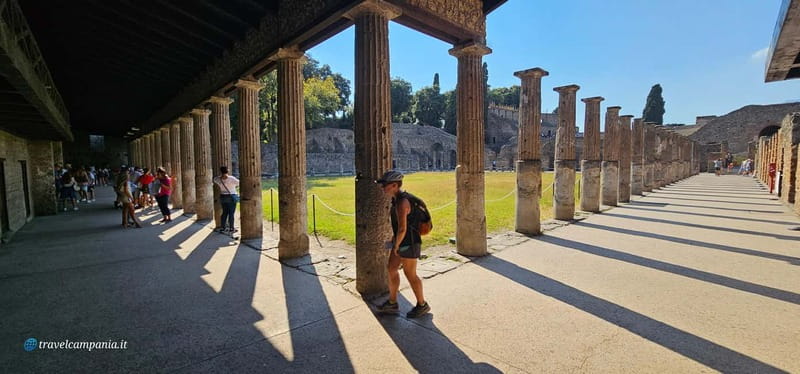
- An archaeology guide gives the ruins a human scale: Learn about homes, baths, food shops, roads, trade, and daily customs instead of seeing only piles of stone.
- The route includes Pompeii’s headline sights: Expect Porta Marina, Teatro Piccolo, the House of Menander, a Thermopolium, the Stabian Baths, the Lupanare, and the forum.
- The final ten minutes are free time: Use them to ask a last question, get your bearings, or begin exploring beyond the guided route.
- Headsets may be part of the tour: Groups larger than eight use a radioguide, while smaller language groups may use an audio guide with an English-speaking guide.
- The $57 price buys more than admission: You get the Pompeii Express ticket and an authorized archaeology guide, but not transport, food, or gratuity.
- Plan for site conditions: Bags and bikes are not allowed, and the activity is not suitable for wheelchair users or people with mobility impairments.
Why Pompeii is better with a guide
Pompeii is not a single monument. It is a whole Roman town, with streets, houses, public buildings, businesses, religious spaces, and entertainment venues spread over a large archaeological area. Without context, a grand building can look like another jumble of columns.
That is where this tour earns its keep. Your guide explains how the city developed from its founding in the seventh century BC, then shows how the eruption of Mount Vesuvius in AD 79 froze parts of everyday life in place. You are not simply looking at ruins. You are learning how people cooked, bathed, worked, entertained themselves, and moved through town.
I especially like the focus on ordinary life. The best moments are often not the grandest ones. A road detail, a shop counter, a house layout, or a place where horses could be tied can reveal more about Pompeii than a long lecture on emperors.
The guide also helps you read the damage correctly. Pompeii was buried under ash and debris, which preserved buildings and objects in a way few ancient cities can match. The famous plaster casts are powerful, but the broader value of the site is the setting around them: a Roman city you can walk through street by street.
Other Roman sites within reach of Pompei Campania:
- Pompeii: Entry Ticket and Guided Tour with an Archaeologist
★ 4.8 · 19,459 reviews - Pompeii: Small Group Tour with an Archaeologist
★ 4.8 · 12,264 reviews - Pompeii: Skip-the-Line Entrance Ticket with Audio Guide
★ 4.0 · 2,509 reviews
Starting at the Welcome box
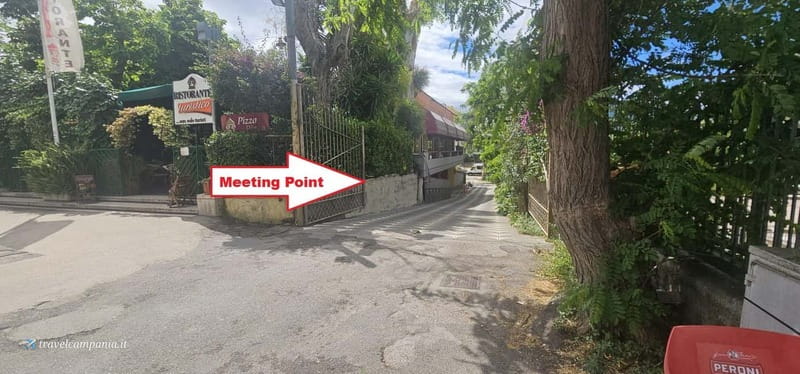
The tour begins at the Welcome box near the Pompeii entrance area and ends back at the meeting point. Take a little time to find it before the scheduled start. One of the few negative points in the feedback is that the check-in location can be difficult to identify once you arrive at the site.
Bring your passport or identity card, including one for each child. A copy is accepted. Since bags are not allowed, pack lightly and check the current storage arrangements at the entrance. One useful practical detail is that free lockers are available at the gates for backpacks, and water fountains can be found inside the archaeological area, although they may not be clearly marked.
Transport is not included, so you arrange your own way to Pompeii. The tour itself lasts about two hours. That timing works well for a first visit, a day trip, or a planned stop before spending extra time exploring alone.
Porta Marina: your first view of the ancient city
The visit starts at Porta Marina, one of Pompeii’s main entrances. Your guide spends about ten minutes here, setting the scene before the route moves deeper into the city.
This is a useful opening because Pompeii can feel confusing at first. The entrance, roads, walls, and surviving buildings need a little explanation before the town begins to feel like a place where people once lived rather than an open-air collection of ruins.
Your guide also gives the basic timeline: Pompeii was founded in the seventh century BC and later became a Roman city before the eruption. That long development matters. The site is not a single-period snapshot, but a place shaped by centuries of change.
Teatro Piccolo and the city’s public life

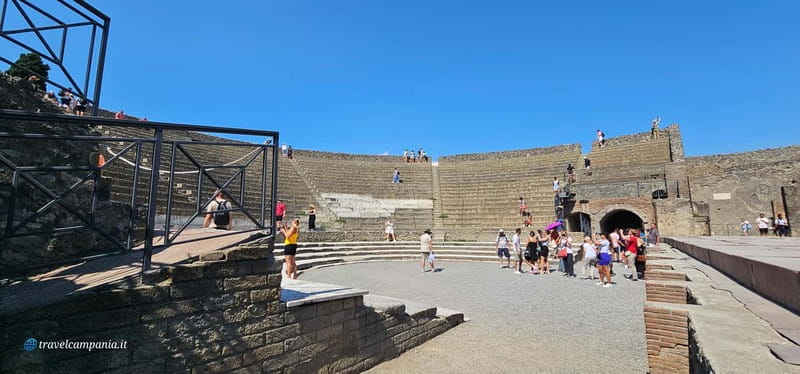
The next stop is Teatro Piccolo, or the small theater, with about ten minutes of guided explanation. The theater offers a change of mood from the streets and houses. Here, your guide can help you picture Pompeii as a social city with performances, public gatherings, and shared entertainment.
The stop is brief, so do not expect a full theater lecture. Its value is in showing that Pompeii was not just a residential town. Public spaces were central to Roman life, and buildings such as this help you understand how residents spent time together.
Because the tour route is fixed and relatively short, the guide must keep moving. If theaters interest you most, make a note to ask whether there is more to see after the formal tour.
A few more things to do in Pompei Campania
- Pompeii: Skip-the-line-Ticket and Guided Tour
★ 4.6 · 1,152 reviews - Pompeii: Guided Tour with Skip-the-Line Entry
★ 4.9 · 812 reviews - Pompeii: Skip-the-Line Entry Ticket with Digital Guide App
★ 4.1 · 770 reviews - Pompeii: Afternoon to Sunset Guided Tour with Ticket
★ 4.9 · 484 reviews
House of Menander: reading a Roman home
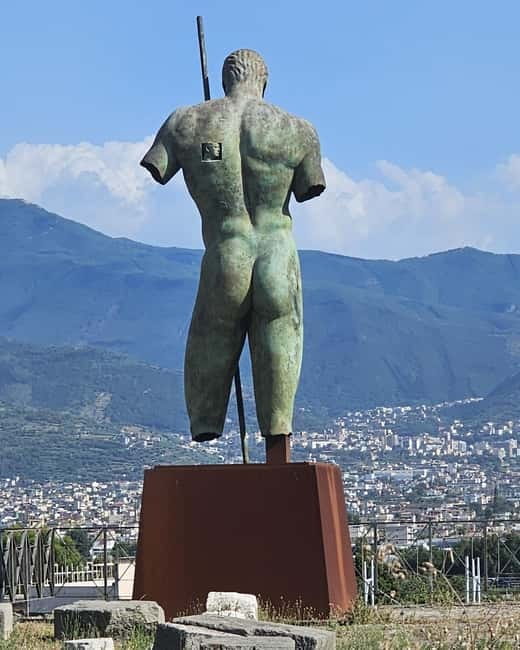
The House of Menander receives about fifteen minutes. This is one of the stops where an archaeology guide adds real value, because a Roman house can be hard to interpret from its walls alone.
Your guide can point out how rooms were arranged and what that layout suggests about family life, status, entertaining, and household work. The name comes from a famous ancient playwright, and the house is known for its decoration and scale. Even when details have faded, the structure helps you picture how domestic space worked in Pompeii.
This stop also slows the pace in a useful way. Rather than rushing past several buildings, you get time to ask questions and notice smaller features. Guides such as Teresa and Lilian are praised for explaining everyday life in a clear, friendly way, which suits this part of the route particularly well.
Thermopolium: a glimpse of Roman street food
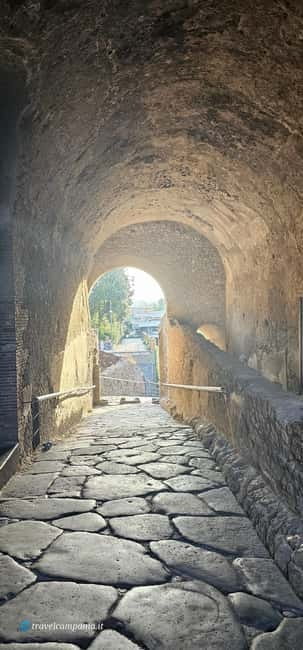
The Thermopolium is one of the most accessible stops for modern visitors because it resembles something familiar: a food counter. The guided visit lasts about fifteen minutes.
Look for the built-in counter and imagine the practical side of Roman town life. This was not a modern restaurant in the same sense, but it served ready food and drink to people who lived or worked nearby. The stop helps you see Pompeii as a working town with customers, shopkeepers, and quick meals, not just villas and temples.
I like this part of the route because it connects archaeology with habits you still recognize. People needed food during the day, businesses served them, and the street was a place of trade. Ask your guide to explain what can be known from the shop design and what remains uncertain.
Stabian Baths: more than a place to wash
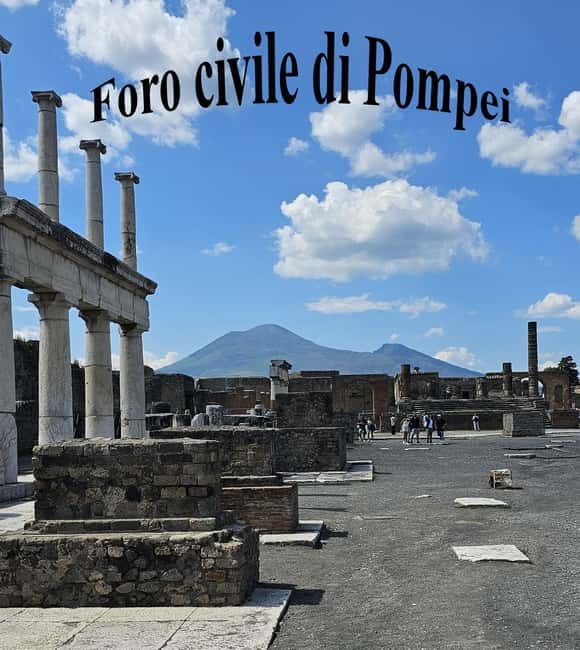
The Stabian Baths receive another fifteen-minute explanation. Roman baths were social centers as well as places to clean up, and your guide helps you understand the different rooms and their purpose.
This is another stop where the surviving architecture benefits from interpretation. You may see walls, doorways, and floors, but the original sequence of bathing and social activity is not always obvious. A guide can explain how the complex functioned and why public baths mattered so much in Roman towns.
The baths also give you a sense of Roman engineering and shared public life. Pompeii’s residents did not experience the city only through private homes. They used public facilities, met friends, conducted business, and built daily routines around them.
Lupanare: a sensitive but important stop
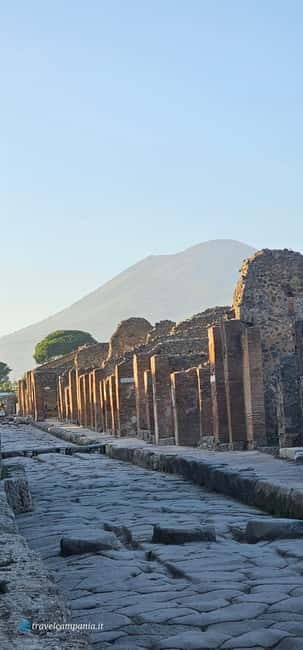
The Lupanare, Pompeii’s brothel, gets the longest scheduled stop at about twenty minutes. This is not included as a cheap shock tactic. It is a chance to discuss sex work, social customs, and the limits of what archaeology can tell us.
The building is famous for its small rooms and painted imagery. Your guide can explain the evidence without reducing the site to a collection of sensational details. The stop is useful because it shows another part of urban life that is often left out of polished accounts of Roman culture.
This is also one of the places where crowding can affect the experience. Some guides adjust the pace and take groups to less busy areas when possible. Headsets help you follow the explanation when other groups are nearby, although one person found the earpieces too loud. If the volume bothers you, ask the guide to adjust it early.
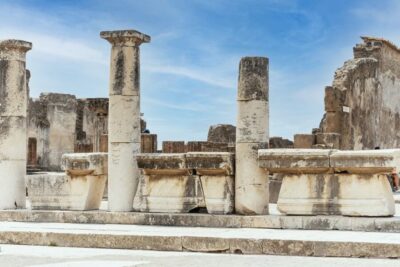
The Forum: Pompeii’s civic center

The final main stop is the Foro Civile di Pompei, or the city forum. The guided explanation lasts about fifteen minutes, followed by roughly ten minutes of free time.
The forum brings together many of the themes from the tour. It was a civic, commercial, and religious center, so this is where Pompeii’s public identity becomes clearest. Your guide can help you understand how the open square related to nearby buildings and why the forum mattered to the whole city.
The free time is short, but useful. You can take photographs, look again at a detail, or ask a final question before the formal tour ends. The activity returns to the meeting point, but you are encouraged to remain at Pompeii if you want to see more. Several guides offer suggestions for continuing independently, which is important because the two-hour route cannot cover the full site.
What the guide and headsets add
The guide is the main reason to choose this experience instead of simply buying entry. Names praised for their clear, lively approach include Angelo, Teresa, Paolo, Roberta, Lilian, Imme, and Mario. The exact guide depends on the date and language, but the consistent strength is interpretation: explaining small details, answering questions, and helping you connect buildings with daily life.
The guides also appear to handle mixed groups well. One account describes a guide managing different ages and nationalities during difficult weather, while another notes that the tour was not rushed and still made room for detailed explanations.
Audio equipment matters at Pompeii because the site can be crowded and open. Groups larger than eight use a radioguide. If there are no more than four participants in the same language, the format may be an audio guide with a guide speaking English. That arrangement is worth understanding before you book if you want a fully live explanation in your selected language.
Languages offered are Italian, Spanish, French, English, and German. Check the language and group arrangement when choosing your time.
Is $57 a fair price?
At $57 per person, this is not the cheapest way to enter Pompeii. You are paying for two things: the Pompeii Express admission ticket and an authorized guide with archaeology expertise.
I think the price is fair if this is your first visit or if you have only a few hours. Pompeii is large, and the cost of missing key buildings, losing time at the entrance, or failing to understand what you are seeing can be higher than the ticket difference. Skip-the-line entry is especially useful during busy periods.
The value is weaker if you already know the site well, have several hours for independent exploration, or prefer to read at your own pace. The tour covers highlights, not every corner. Think of it as a strong introduction, then stay on afterward if time allows.
You can cancel up to 24 hours before the activity for a full refund, and reserve now while paying later. Those terms help if your Campania plans depend on train connections or changing weather.
Who should book this Pompeii tour?
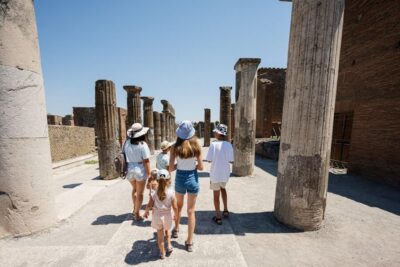
I would choose this tour for a first visit, a short day trip, or anyone who wants the ruins explained in plain language. It suits families and mixed-age groups because the guide keeps the focus on stories, buildings, and daily habits rather than only dates and names.
It also works well if you are coming by train and have a tight schedule. Train delays have caused people to miss the original start, and the local team has sometimes helped move them to another tour or arrange general access. That cannot be guaranteed, so leave a sensible buffer, but the flexibility is reassuring.
I would not choose it if you need wheelchair access or have significant mobility limits. The activity is not suitable for wheelchair users or people with mobility impairments. It is also not suitable for people over 95 years old, and bags, bikes, alcohol, and drugs are not allowed.
Should you book it?
Book it if you want Pompeii to feel like a lived-in city rather than a silent ruin. The guide, skip-the-line admission, and focused route make the $57 cost reasonable, especially for a first visit.
Just treat the two hours as an introduction. Arrive early enough to find the Welcome box, carry identification, bring only what you need, and plan to stay afterward if you want more time with the forum, houses, and streets. If you prefer complete freedom or already understand Roman archaeology, independent entry may suit you better. For most first-time visitors, though, a good guide makes the site far easier to read.
FAQ
How long does the Pompeii tour last?
The guided visit lasts approximately two hours. The route includes about ten minutes of free time at the forum, and you may continue exploring Pompeii independently afterward.
What is included in the price?
The price includes a Pompeii Express entrance ticket and an authorized guide with archaeology expertise. Transport, lunch, and gratuity are not included.
Which languages are available?
Live guiding is available in Italian, Spanish, French, English, and German. If a same-language group has no more than four participants, the format may be an audio guide with a guide in English.
Do I need identification?
Yes. Bring a passport or identity card for each participant, including children. A copy of a passport or identity card is accepted.
Are bags allowed inside Pompeii?
Bags are not allowed. Free lockers are available at the gates for backpacks, according to the practical information provided for the site. Bikes, alcohol, and drugs are also not allowed.
Is the tour suitable for wheelchair users?
No. The activity is not suitable for wheelchair users or people with mobility impairments.
Just added in Pompei Campania
- Pompeii 3hours Villa of Mysteries tour with an Archaeologist★ 4.8 · 486 reviews
- Pompeii: Small-Group Tour of Pompeii and Herculaneum★ 4.8 · 867 reviews
- Pompeii: Skip-the-Line Entry & Audioguide★ 3.8 · 225 reviews
- Pompeii: Skip-the-line-Ticket and Guided Tour★ 4.6 · 1,152 reviews
- Pompeii: Guided Tour with Skip-the-Line Entry★ 4.9 · 812 reviews
- Pompeii: Afternoon to Sunset Guided Tour with Ticket★ 4.9 · 484 reviews
- Pompeii: Skip-the-Line Entry Ticket with Digital Guide App★ 4.1 · 770 reviews
- Pompeii: Day Tour of Pompeii and Vesuvius with Bus Transfer★ 4.2 · 250 reviews
Pompeii & Herculaneum Tours, compared.
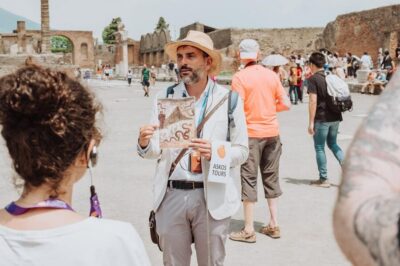
Entry Ticket and Guided Tour with an Archaeologist
Read our review →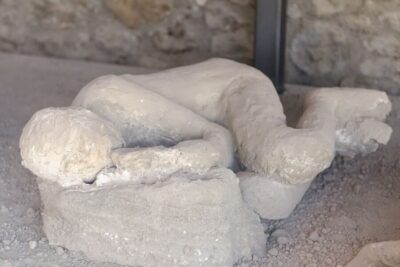



Pompeii and Mount Vesuvius Day Trip from Rome with Pizza Lunch
Read our review →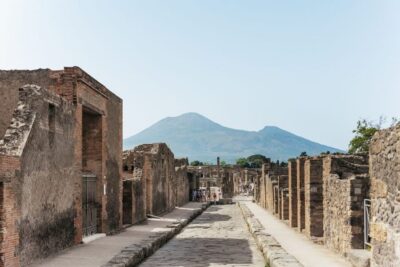
Pompeii Day Trip with Optional Vesuvius and Lunch
Read our review →Browse the lists this tour appears in