
Reviewed · COOKING CLASSES
Rome: Traditional Pasta with Cocktails Cooking Class
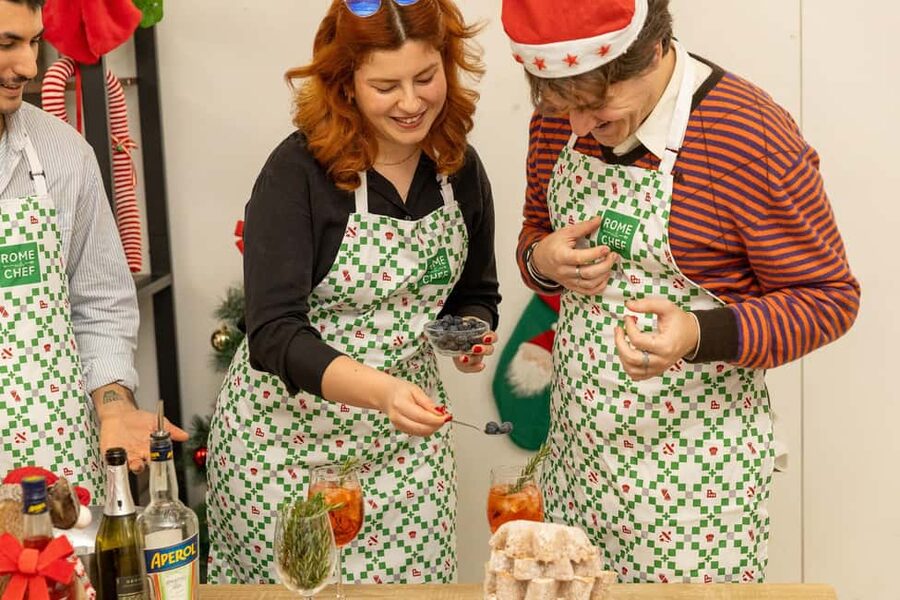
Rome knows how to turn a meal into an event, and this three-hour pasta and spritz class does exactly that. You make fresh pasta by hand, prepare either carbonara or cacio e pepe, and mix three famous Italian drinks while a chef and mixologist keep the pace lively.
I like the hands-on format: you do not simply watch a demonstration, and you eat the food you prepare. I also like the small class size, capped at 14 people, which gives you a better chance to ask questions and work directly with the host. The main drawback is dietary flexibility. Gluten-free, vegan, and dairy-free participants cannot be accommodated, and the class is not suitable for coeliac disease or gluten intolerance.
Key points at a glance
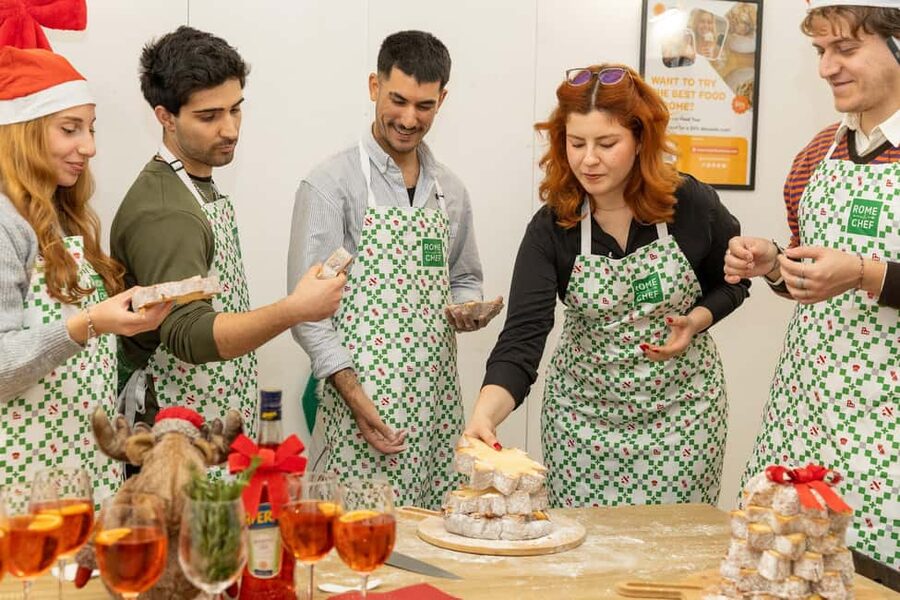
- Three drinks, not just one: Prepare an Aperol spritz, a Hugo spritz, and a limoncello spritz during the class.
- Fresh pasta from scratch: Work with pasta dough, then pair it with carbonara or cacio e pepe.
- Small English-speaking groups: Classes have no more than 14 people, with private groups available.
- A social evening: Music, conversation, dancing, and plenty of relaxed kitchen banter are part of the mood described by hosts such as Angela, Benjamin, Laura, and Sushi.
- A meal is included: You eat your handmade pasta and drink the cocktails you prepare, with water and soft drinks available.
- Useful take-home material: Recipes are provided, so the class can continue in your own kitchen.
What the Rome pasta and spritz class is really like
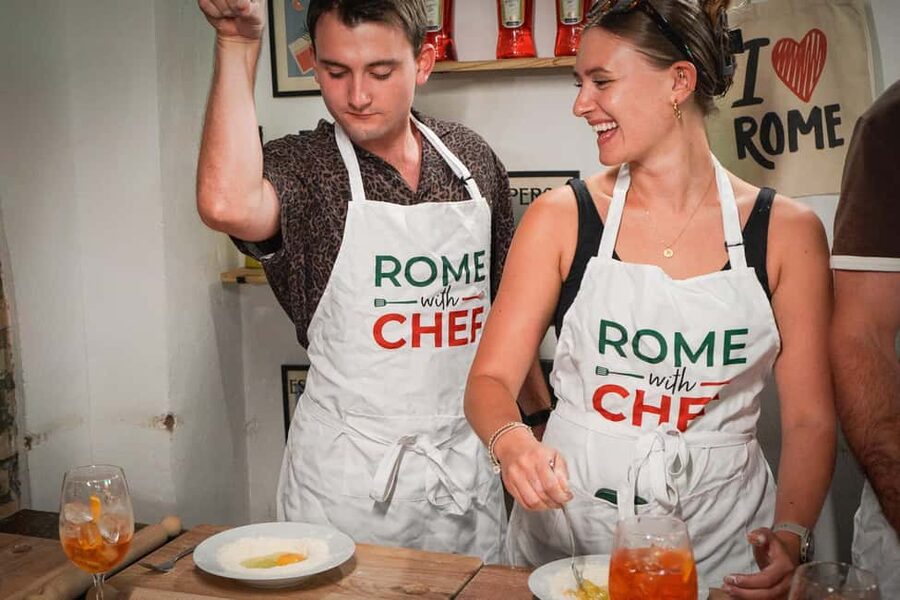
This is a cooking lesson with a party rhythm. You arrive at Via Cesare Balbo 19, around the corner from the entrance to Hotel 77, and look for the Rome With Chef sign. The class ends at the same point, so you do not need to arrange transport between separate parts of the experience.
The basic idea is simple: cook, mix, eat, and repeat. The host combines the work of a chef with the skills of a mixologist, explaining both the food and the drinks in English. That combination gives the class more variety than a pasta lesson alone. You are not spending three hours on one recipe.
The phrase drunken cooking is part of the playful branding, but the practical experience is a food workshop with three alcoholic drinks included. If you do not drink alcohol, or if you prefer a quiet technical lesson, this may not be your best match. If you enjoy meeting people while learning a few recipes, the format makes good sense.
More Cooking Classes in Rome
- 3 in 1 Cooking Class near Navona: Fettuccine, Ravioli & Tiramisu
★ 5.0 · 7,376 reviews - Rome: Pasta & Tiramisu Class with Fine Wine by the Vatican
★ 4.9 · 4,852 reviews - Rome: Pasta Making Class with Wine, Limoncello, and Dessert
★ 4.9 · 3,177 reviews
Making three classic Italian spritzes
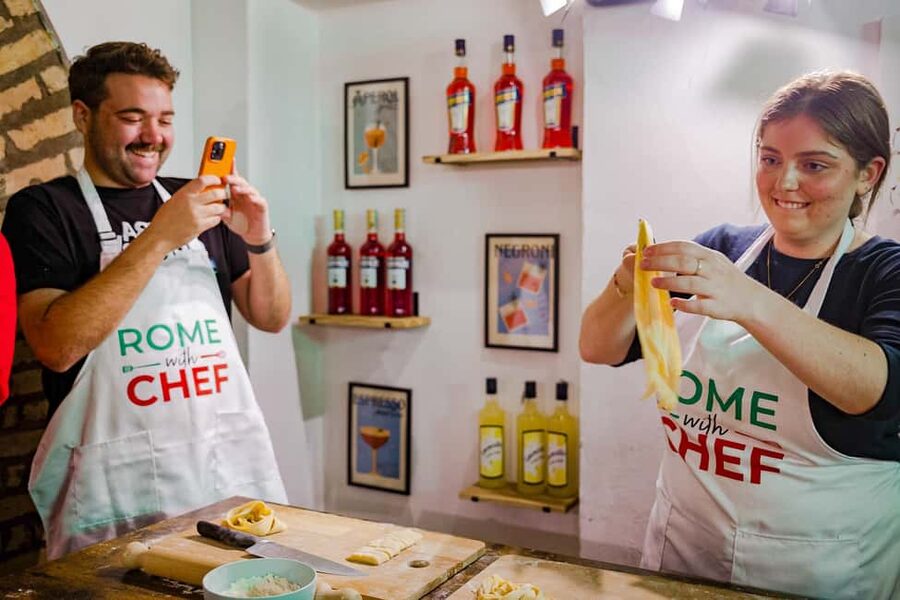
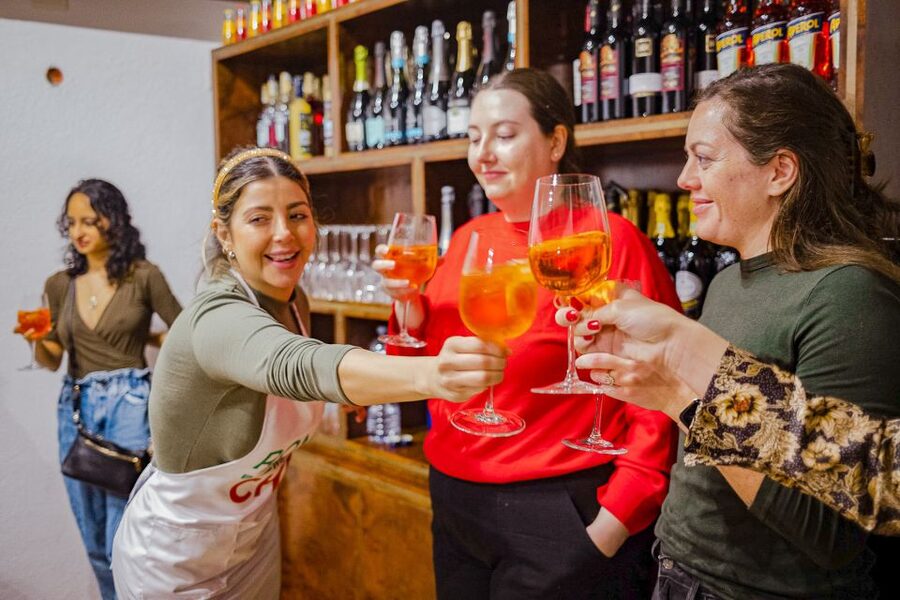
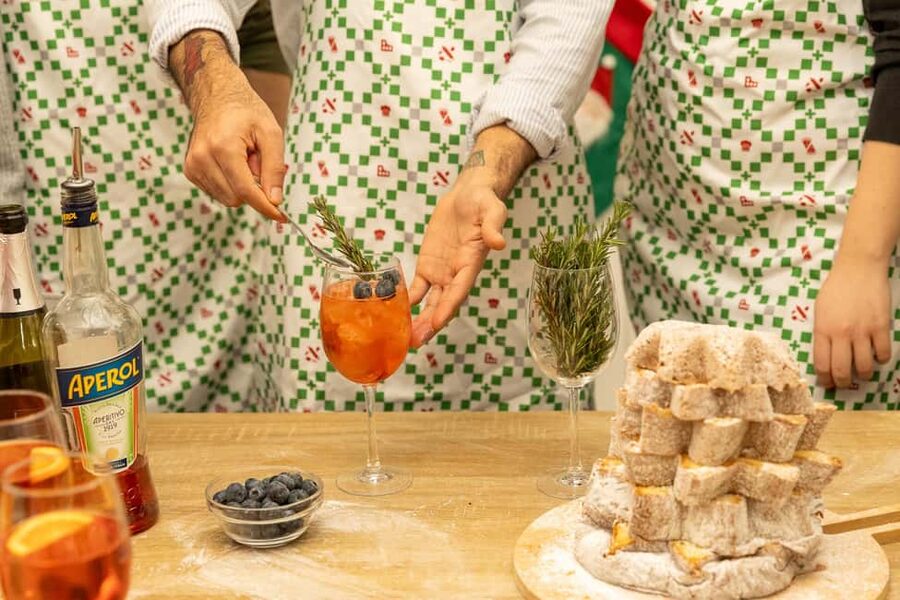
The drink portion covers three spritzes: Aperol, Hugo, and limoncello. Each has a different flavor profile, so the class is not simply a repeat of the same drink.
The Aperol spritz is the familiar orange-colored option. The Hugo spritz offers a lighter change of pace, while the limoncello spritz brings a citrus-led finish. You prepare one of each, and the included drinks are part of the overall meal rather than an optional extra.
The spritz has roots reaching back to the 1800s, and the class uses that drink tradition as a way to introduce a recognizable part of Italian social life. You learn the basic preparation while the mixologist host talks you through the process. The information is practical, not a long history lecture, which suits the informal setting.
I see two advantages here. First, you can compare three drinks in one sitting. Second, you leave with recipes and a better sense of what to order or recreate later. The main caution is pace. Three cocktails over a three-hour class can feel like a lot, especially if you are already tired from sightseeing. Water and soft drinks are available without limit, so use them.
Rolling pasta and choosing your Roman sauce
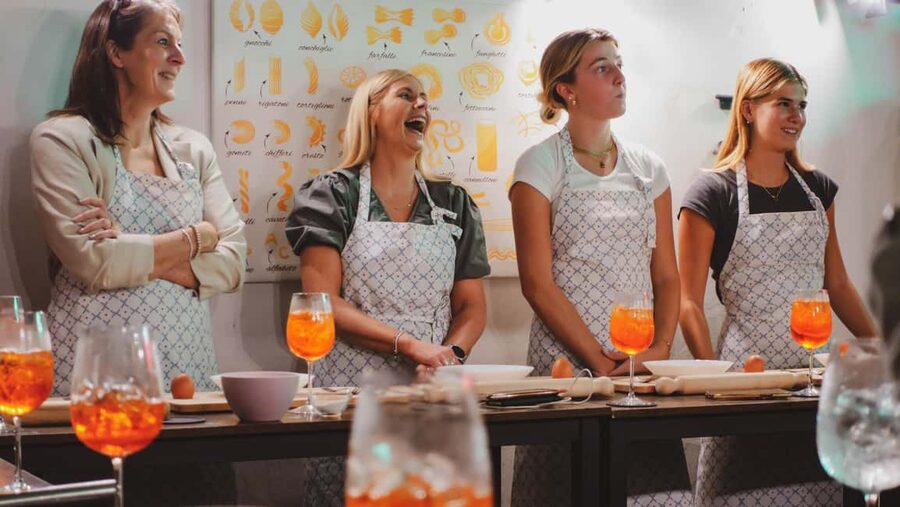
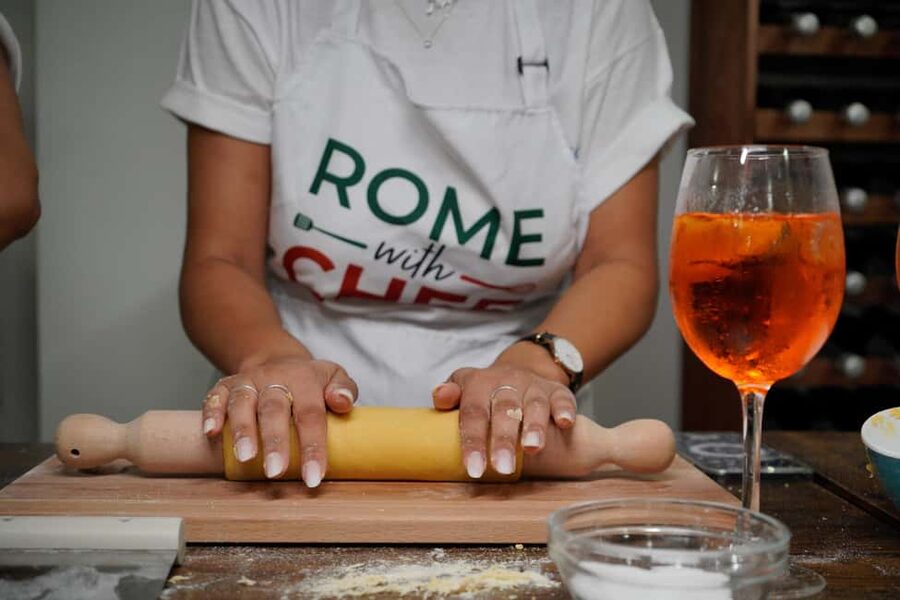
The central food activity is making fresh Italian pasta. You work with the ingredients and prepare the pasta yourself, rather than receiving a finished plate from the kitchen. That matters because pasta-making is one of those Rome experiences that becomes more useful once you understand the texture and handling.
The class then moves to one of two well-known Roman sauces: carbonara or cacio e pepe. The choice is yours, according to the supplied details. Both recipes are famously simple on paper, which means technique matters.
Carbonara depends on the balance of pasta, egg, cheese, and the traditional savory element used in the recipe. Cacio e pepe is even more stripped back, built around cheese and pepper. Neither sauce needs a long ingredient list. The value of being shown the method is that you can see how the sauce comes together instead of guessing at home.
The pasta is then covered with your chosen sauce and served as the meal. Vegetarian options are available, though the supplied information does not specify which sauce or ingredients are adjusted. If you are vegetarian, tell the operator before the class so the kitchen can plan properly.
This is not a professional culinary course, and you should not expect advanced restaurant training. It is better suited to someone who wants a clear, social introduction to fresh pasta and two Roman standards. The recipes to take home make the lesson more useful than a meal you simply forget after leaving.
The hosts shape the evening
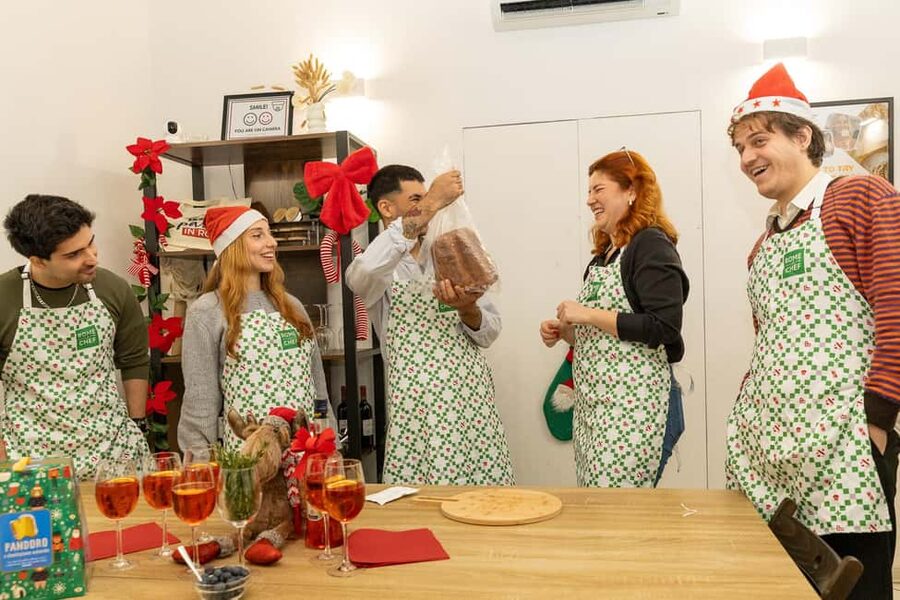
The food and drinks matter, but the host has a major effect on the experience. Names connected with recent sessions include Angela, Benjamin, Giovanna, Laura, Marzia, Gia, Jim, Jem, Sushi, Sunny, and Dela. Staffing can change, so you should not book expecting one particular person unless the operator confirms it.
The strongest pattern in the feedback is the energy of the hosts. Angela is repeatedly singled out for creating a warm, playful class, with cooking, music, dancing, and laughter mixed into the lesson. Benjamin is praised for keeping the group engaged and for offering city tips alongside the cooking. Laura is described as combining music and banter with clear instruction.
Other hosts, including Marzia, Gia, Jem, and Sushi, are also described as friendly and easy to follow. That gives you a useful clue about the tone: this is not a silent, formal kitchen school. You can expect an outgoing presentation and a fair amount of interaction.
That style works especially well for birthdays, couples, solo visitors who want an easy social activity, and groups of friends. One birthday celebration was made part of the evening, and several sessions were treated as a highlight of a Rome visit. The same energy may be less appealing if you want a calm, highly structured lesson with little conversation.
Other classes where you do the cooking in Rome:
- Rome: 3-in-1 Fettuccine, Ravioli, and Tiramisu Cooking Class
★ 4.9 · 2,704 reviews - Rome: Fettuccine Pasta Cooking Class in Rome’s City Center
★ 4.8 · 2,414 reviews - Learn to Make Pasta & Tiramisu with Wine and Limoncello Included
★ 5.0 · 2,345 reviews - Rome: Fettuccine and Tiramisu Cooking Class with Wine
★ 4.8 · 2,013 reviews
Why the group size matters
The maximum group size is 14 people. That is not a private lesson, but it is small enough to keep the activity personal compared with a large food demonstration.
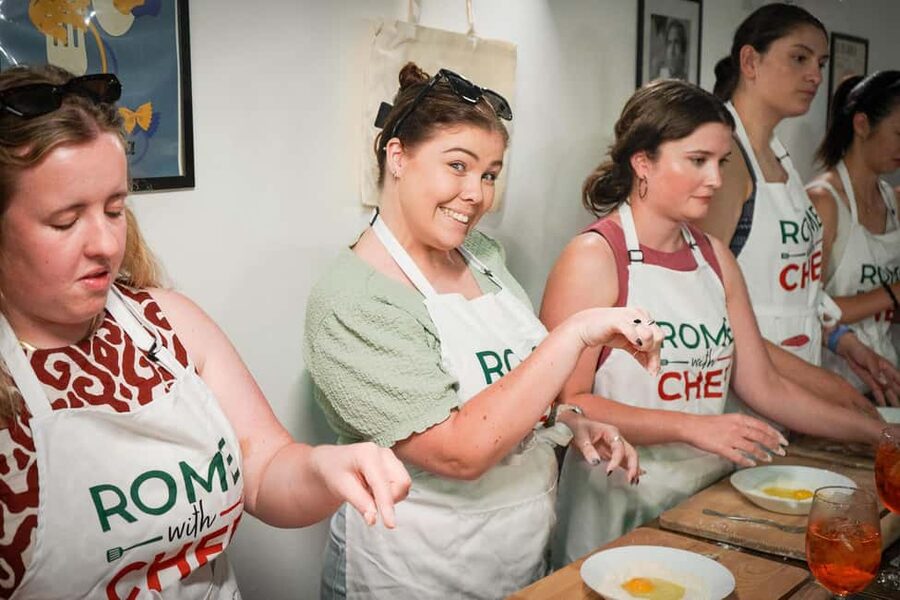
A class of this size gives you a better chance to handle the ingredients, hear the instructions, and ask for help with pasta or sauce. It also creates the social side of the evening. You share the final meal with people who may have arrived as strangers, which is part of the appeal.
The tradeoff is that the pace is shaped by the whole group. You may wait briefly while others finish a step, or find that some kitchen tasks are shared rather than done entirely alone. The experience is designed for participation, but it is still a group class.
Private groups are available. That option is worth considering for a birthday, family gathering, or friends who want to control the social mix. The supplied information does not give a separate private-group price, so check the available option when booking.
Food, drinks, and value at $100.82
The price is $100.82 per person. At first glance, that is more than the cost of an ordinary pasta dish in Rome. The comparison is not quite fair, though, because this includes instruction, fresh ingredients, handmade pasta, three spritzes, the meal, water, soft drinks, and recipes to take home.
I consider the price reasonable if you value the activity as much as the dinner. You are paying for a hosted experience, not simply for calories. The class also combines two things you might otherwise book separately: a cooking lesson and a tasting of Italian cocktails.
The value is weaker if you are mainly looking for a cheap meal or if you already make fresh pasta confidently. In that case, the social setting and cocktail workshop become the main reasons to go. The class also becomes less worthwhile for anyone who cannot eat the prepared food.
The meal is vegetarian-friendly, but the restrictions are firm. The class cannot accommodate coeliac disease, gluten intolerance, vegan diets, or lactose intolerance because the menu uses wheat and dairy products. If you have any other dietary restriction, contact the operator in advance rather than assuming a change can be made on the day.
Location and timing in Rome
The meeting point is Via Cesare Balbo 19, 00184, near Hotel 77. Look for the Rome With Chef sign outside the class, around the corner from the hotel entrance. The activity begins and ends at this same address.
The class lasts three hours, but the starting time depends on availability. That makes it easy to place into a Rome schedule, though you should leave enough breathing room around it. Cooking, eating, and three drinks are not activities to squeeze between two timed museum entries.
An evening booking makes natural sense because the pasta becomes dinner and the spritzes fit the hour. A daytime session can work just as well if you want your main meal earlier. Since the class ends where it begins, you can continue your evening from the meeting point without having to collect luggage or change locations.
The experience is conducted in English. A private group can be requested, but the standard format is a small shared class.
What to bring and how to prepare
Wear something comfortable and practical. You will be handling food and working around a cooking setup, so clothes you do not mind wearing during a hands-on lesson are sensible. The supplied details do not specify an apron, so do not rely on one being available unless the operator confirms it.
Arrive ready to participate. This is not a show where you sit back while a chef does everything. You will make pasta, help prepare sauces, and take part in the spritz workshop. The more willing you are to ask questions and work with the group, the more you will get from the session.
Pace yourself with the alcohol. You receive an Aperol spritz, a Hugo spritz, and a limoncello spritz, along with unlimited water and soft drinks. You can enjoy the social side without treating every drink as something to finish quickly.
If you have dietary restrictions, contact the provider before booking or as soon as possible afterward. The class specifically cannot accept vegan, gluten-free, coeliac, gluten-intolerant, or dairy-free participants. Vegetarian food is available.
Who should book this class
I would point this class toward people who want a social Rome activity rather than a formal cooking qualification. It suits couples, friends, birthday groups, and solo visitors who like meeting people over food.
It is also a good choice if you have limited time in Rome and want a single activity that combines local food, drinks, instruction, and dinner. You do not need to arrange a separate restaurant reservation after the class because you eat what you prepare.
Families with older children may want to check the alcohol arrangements before booking. The supplied information does not give a minimum age, so ask the provider directly if that matters for your group.
This is less suitable for strict dietary needs, non-drinkers seeking a quiet class, or anyone wanting a highly technical lesson. It is also not the right pick if you want to sample many finished dishes. The menu focuses on handmade pasta, one Roman sauce, and three spritzes.
Is the Rome pasta and cocktails class worth booking?
Book it if you want to spend three hours cooking with an outgoing English-speaking host, meeting a small group, and eating a meal you helped make. The strongest reasons are the hands-on pasta work, the three different spritzes, the recipes to take home, and the warm teaching style associated with hosts such as Angela, Benjamin, Laura, and Giovanna.
Think twice if the dietary restrictions affect you, if you dislike alcohol-centered activities, or if you prefer a quiet and serious culinary school. For everyone else, $100.82 is a fair price for a cooking lesson, dinner, drinks, and a social evening in Rome. The class is at its best when you treat it as an experience with food at its center, not simply as a way to get a plate of pasta.
FAQ
How long does the cooking class last?
The class lasts three hours. Starting times vary, so check availability when choosing your booking.
Where does the activity start and finish?
It starts at Via Cesare Balbo 19, 00184, around the corner from the Hotel 77 entrance. Look for the Rome With Chef sign. The activity ends back at the same meeting point.
Which drinks are included?
You prepare and receive one Aperol spritz, one Hugo spritz, and one limoncello spritz. Unlimited water and soft drinks are also included.
What food will I make?
You make fresh handmade pasta and choose either carbonara or cacio e pepe. You then eat the pasta and sauce you prepare. Vegetarian options are available.
Can the class accommodate gluten-free, vegan, or dairy-free diets?
No. The class cannot accommodate coeliac disease, gluten intolerance, vegan diets, or lactose intolerance because the menu uses gluten and dairy products. Contact the provider in advance about any other dietary restriction.
Is the class available as a private group?
Yes. A private group option is available. Check the booking details for availability and pricing.
More classes and workshops in Rome
- Rome: Traditional Pizza Cooking Class near Piazza Navona
★ 4.7 · 1,241 reviews - Rome: Combo Pizza and Pasta Cooking Class with Wine
★ 4.7 · 938 reviews - Rome: Traditional Pasta Making Class with Wine & Gelato
★ 4.9 · 677 reviews - Rome: Roman Master Chef Cooking Class with Wine
★ 5.0 · 633 reviews
More pasta to make and eat in Rome
- Become a Masterchef in Rome: Pasta, Ravioli and Tiramisù Class
★ 5.0 · 2,156 reviews - Pasta Cooking Class Near the Colosseum with 3 Spritz Cocktails
★ 5.0 · 1,686 reviews - Enjoy Spritz and Pasta Making in Piazza Navona
★ 5.0 · 1,681 reviews - Rome: Pasta & Tiramisu Cooking Class near the Spanish Steps
★ 4.8 · 1,395 reviews
Just added in Rome
- Civitavecchia Private Transfer: From the Port to Rome Airport★ 5.0 · 309 reviews
- Civitavecchia Shore Excursion: Best of Rome Private Tour★ 5.0 · 247 reviews
- Civitavecchia Private Transfer from ship to FCO airport or Rome★ 5.0 · 245 reviews
- Food Tasty and History Tour in Civitavecchia★ 5.0 · 256 reviews
- Palatine Hill and Roman Forum Tour with Fast-Track Entrance★ 4.2 · 417 reviews
- Tivoli: Villa D’Este & Villa Adriana Pass & App Audioguide★ 4.4 · 364 reviews
- Tivoli: Villa D’Este Entry Ticket and App Audio Guide★ 4.3 · 191 reviews
- Vatican Museums & Sistine Chapel Skip-the-Line Guided Tour★ 4.6 · 254 reviews
Cooking Classes, compared.
3 in 1 Cooking Class near Navona: Fettuccine, Ravioli & Tiramisu
Read our review →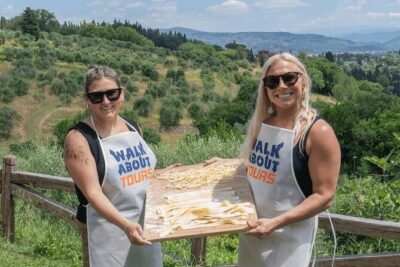
Florence Pizza or Pasta Class with Gelato Making at a Tuscan Farm
Read our review →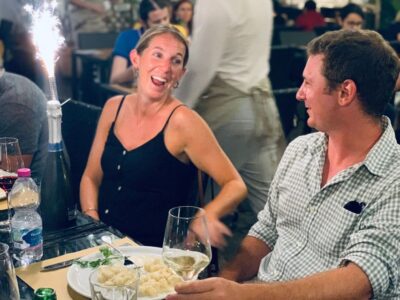
Pasta & Tiramisu Class with Fine Wine by the Vatican
Read our review →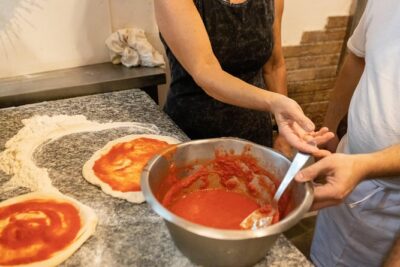
Authentic Pizza Making Class in Naples with Appetizers and Drink
Read our review →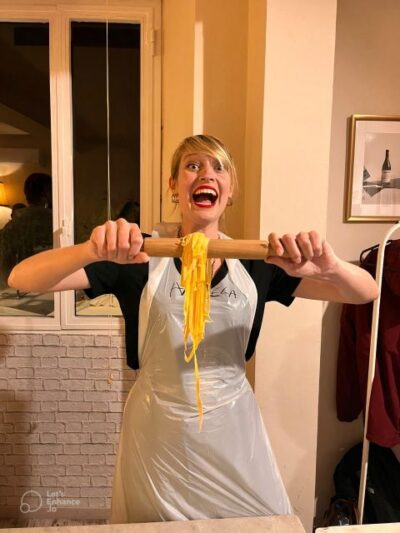
Pasta Making Class with Wine, Limoncello, and Dessert
Read our review →
3-in-1 Fettuccine, Ravioli, and Tiramisu Cooking Class
Read our review →Browse the lists this tour appears in