
Reviewed · COOKING CLASSES
Rome: 3-in-1 Fettuccine, Ravioli, and Tiramisu Cooking Class
Rome’s best cooking classes leave you with more than a full stomach. Here, you make tiramisu, ravioli, and fettuccine from scratch, then sit down to eat the meal you helped prepare. It is a practical way to spend three hours in central Rome, especially when you want a break from churches and ancient stones.
I like the hands-on pace and the clear English instruction. I also like the social setup: classes can include around 19 or 20 people, so you have a good chance to meet couples, families, and solo visitors from different countries. The main caution is that the schedule can feel rushed for some people, and the chef may not sit down to eat with the class.
Key points at a glance
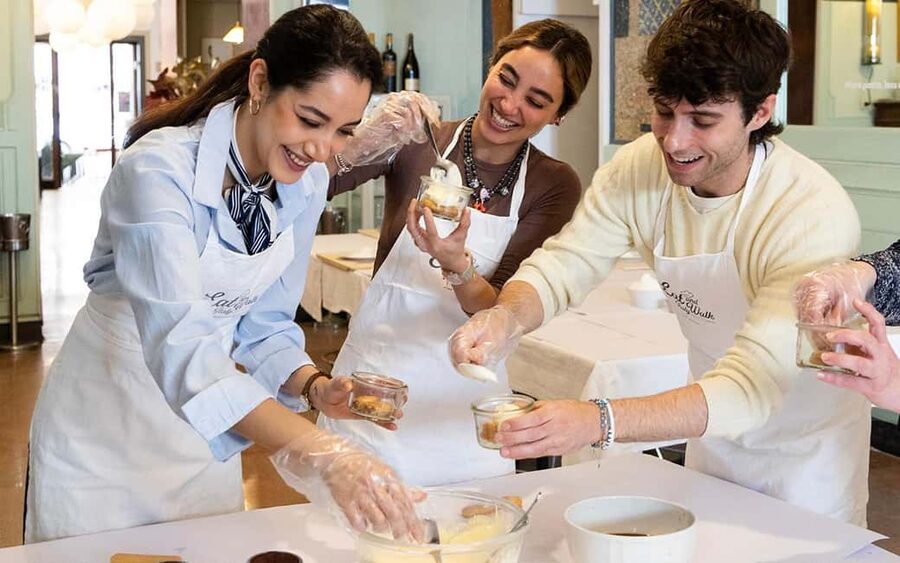
- Three Italian staples in one class: Make tiramisu first, then fresh ravioli and fettuccine.
- A central Rome address: Meet at Restaurant Gusto on Via Giuseppe Zanardelli 14.
- Your meal is included: Eat fettuccine with tomato and basil, cacio e pepe, or amatriciana, plus ravioli with butter and sage.
- Friendly English instruction: Chefs such as Lori, Mattia, Mimi, Leo, Tommy, and Carlotta have led recent classes.
- A useful finish: Wine or a non-alcoholic drink is included, along with limoncello or coffee and water.
- Good for mixed ages: Children under four are not allowed, but a family group ranging from teenagers to older adults has managed the class comfortably.
Three Roman recipes, one busy afternoon
This class packs a lot into its three-hour format. You do not simply watch a chef toss flour around and then receive a plate at the end. You work with the dough, shape the pasta, prepare dessert, and learn small cooking tricks you can use at home.
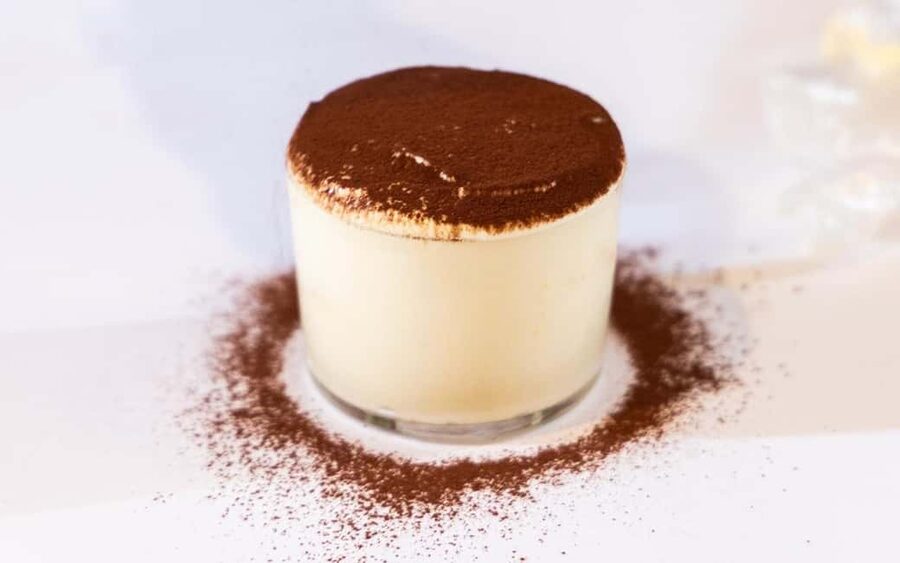
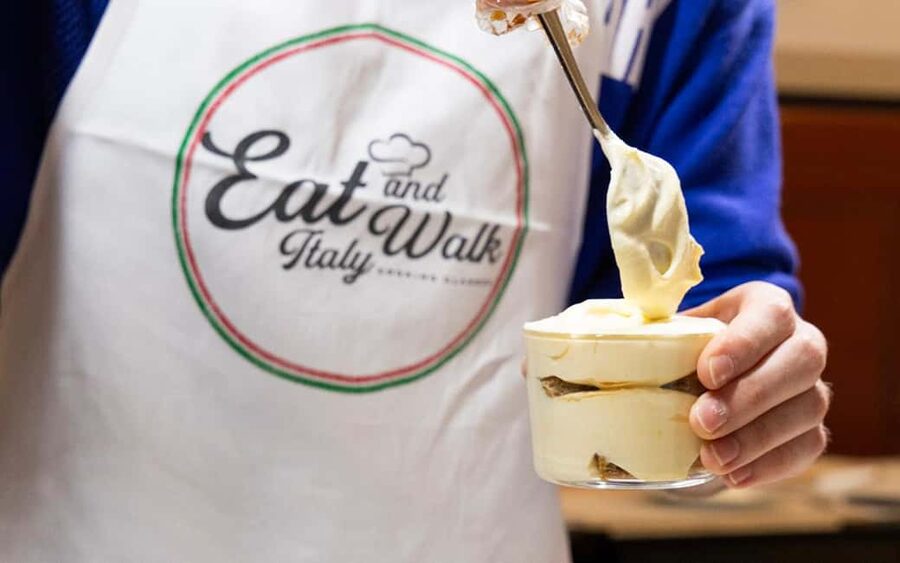
The order begins with tiramisu. That is a sensible choice. Tiramisu needs time to chill and set, so making it first gives the dessert time to rest while you turn to pasta. You learn the basic method, assemble your portion, and then move on to the dough.
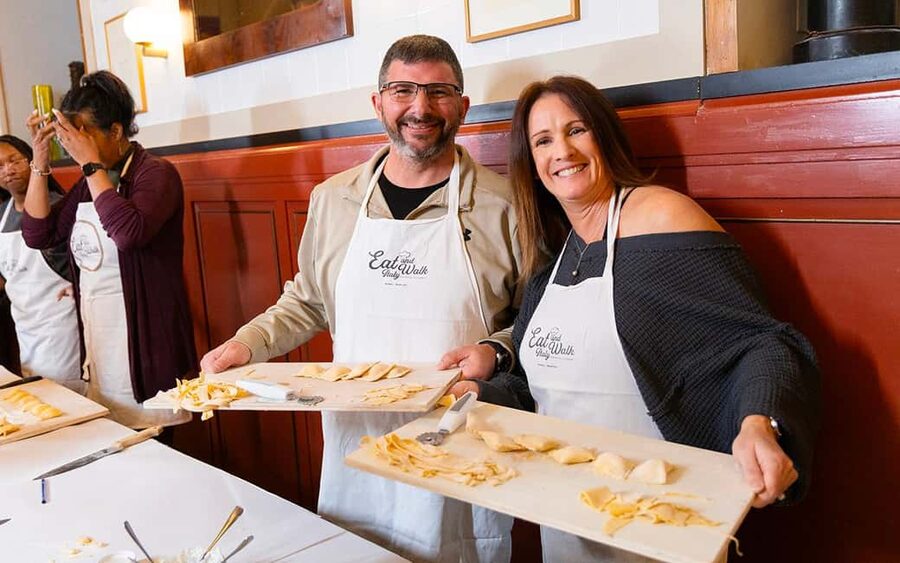
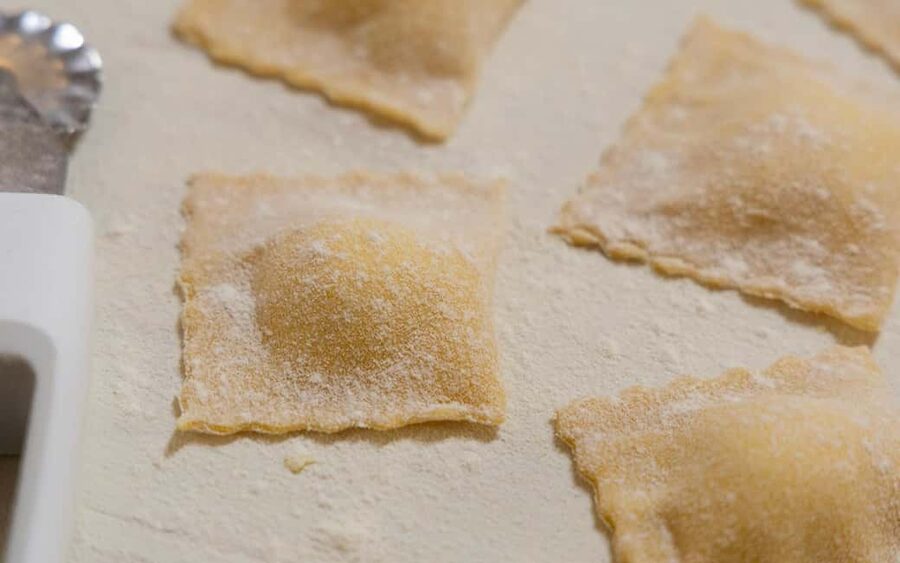
Next comes fresh pasta. The chef explains how to make the dough and how to work it into two different forms. Fettuccine gives you long ribbons, while ravioli requires more care because you must place the filling, fold the pasta, and seal the edges.
The class also covers fillings for different seasons. That is one of the more useful parts for home cooks. You are not only shown a single recipe, but also given a sense of how Italian cooks match ingredients to the time of year.
At the end, you sit down to eat. The included meal is fettuccine with your choice of tomato and basil, cacio e pepe, or amatriciana, plus ravioli dressed with butter and sage. You also receive a glass of Italian wine or a non-alcoholic drink, followed by limoncello or coffee.
More Cooking Classes in Rome
- 3 in 1 Cooking Class near Navona: Fettuccine, Ravioli & Tiramisu
★ 5.0 · 7,376 reviews - Rome: Pasta & Tiramisu Class with Fine Wine by the Vatican
★ 4.9 · 4,852 reviews - Rome: Pasta Making Class with Wine, Limoncello, and Dessert
★ 4.9 · 3,177 reviews
Starting at Restaurant Gusto on Via Giuseppe Zanardelli
The meeting point is Restaurant Gusto, at Via Giuseppe Zanardelli 14 in central Rome. That location makes the class easy to pair with sightseeing in the historic center, though you should still allow time to reach the restaurant and find the entrance before your scheduled start.
You do not need a separate food tour or restaurant booking afterward. The class itself includes the meal you make, which makes the activity especially useful on a busy sightseeing day. You can spend the morning around Rome’s monuments, take the class in the afternoon, and finish with dinner already handled.
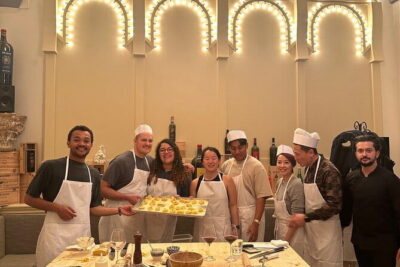
The setting is a restaurant rather than a private home. That means you get a proper dining room and a practical kitchen setup, but you should not expect a tiny family gathering around a grandmother’s kitchen table. One group had about 20 people, and another had 19. That size can make the room lively and social, though it also means the chef must divide attention among many hands.
The venue has air conditioning, an important comfort point during Rome’s warmer months. It is also wheelchair accessible. Pets are not allowed, and children under four cannot join.
Tiramisu first, with a little strategy
Beginning with tiramisu helps the class flow. You prepare the dessert before the pasta, then let it rest while you work on the main course.
The class is not designed as a pastry-school lesson. You will learn a workable Italian dessert method rather than spend hours on advanced decoration. That is a plus for most people. Tiramisu is forgiving, familiar, and easy to repeat at home.
Several class participants found the explanation easy to follow, including people who already thought they knew how to make tiramisu. The method shown here was described as simpler and tastier than their usual approach. That makes this part useful even if tiramisu is already in your cooking rotation.
If you want a polished restaurant dessert made entirely by a pastry chef, this is not that experience. You are there to take part. Your finished tiramisu may look homemade, because it is homemade. That is the point.
Rolling dough for fettuccine and ravioli
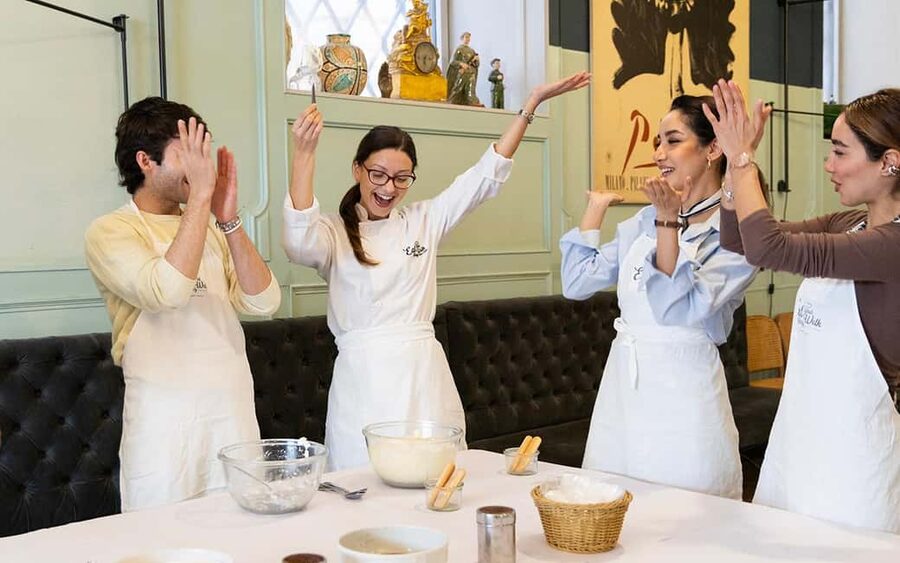
The pasta section is the heart of the activity. The chef shows you how to make pasta dough from basic ingredients, then helps you turn it into two shapes.
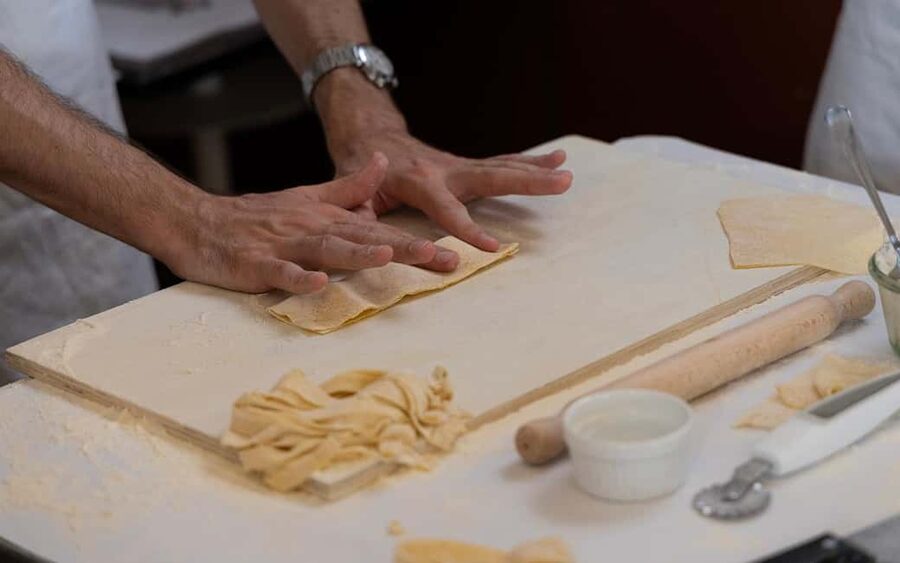
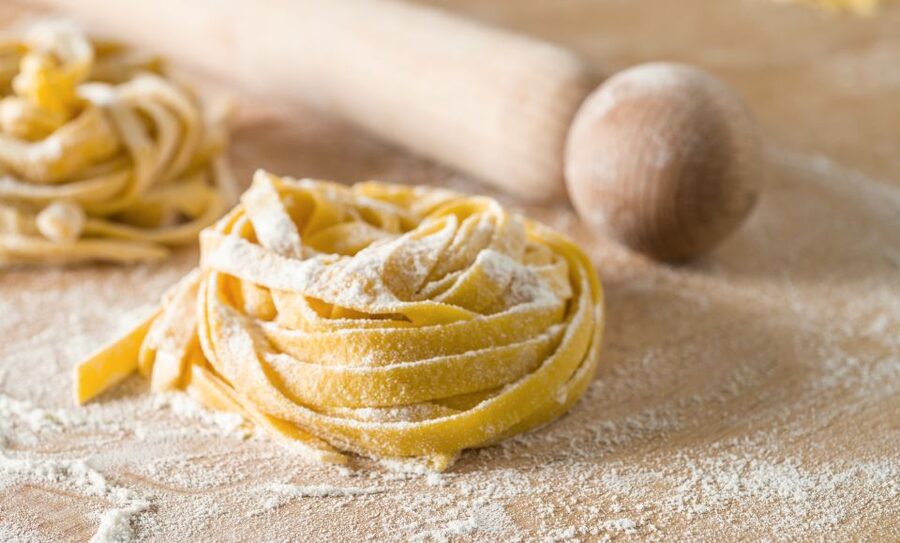
Fettuccine is the easier form to understand. You work the dough, shape it into sheets, and cut it into ribbons. It is a satisfying process because the change from rough dough to neat strands happens quickly.
Ravioli requires more precision. You need to manage the filling, fold the dough, and press the edges closed without trapping too much air. The chef demonstrates the technique and helps when someone needs an extra hand.
This is where the instructor matters most. Recent classes have been led by chefs including Carlotta, Lori, Mattia, Mimi, Leo, Tommy, Furio, Valentina, Maria, and others. The names change by session, so you cannot book a particular chef based on the general activity details. Still, the repeated pattern is clear: the strongest part of the class is the chef’s ability to keep the group moving while giving individual help.
Chef Lori, for example, was praised for giving attention to both the full group and individual cooks. Chef Mattia handled a group ranging in age from 15 to 83, adjusting his help for different skill levels. Chef Leo kept a group moving while checking on each person. Those details matter because pasta dough can go from too sticky to too dry in a hurry.
You should also expect a little comedy and conversation. Chefs such as Tommy, Mimi, and Carlotta have been described as funny, warm, and encouraging. That makes the class easier for beginners, particularly if you worry about making a mess in front of other people.
Other classes where you do the cooking in Rome:
- Rome: Fettuccine Pasta Cooking Class in Rome’s City Center
★ 4.8 · 2,414 reviews - Rome: Traditional Pasta with Cocktails Cooking Class
★ 5.0 · 2,374 reviews - Learn to Make Pasta & Tiramisu with Wine and Limoncello Included
★ 5.0 · 2,345 reviews - Rome: Fettuccine and Tiramisu Cooking Class with Wine
★ 4.8 · 2,013 reviews
Choosing your fettuccine sauce
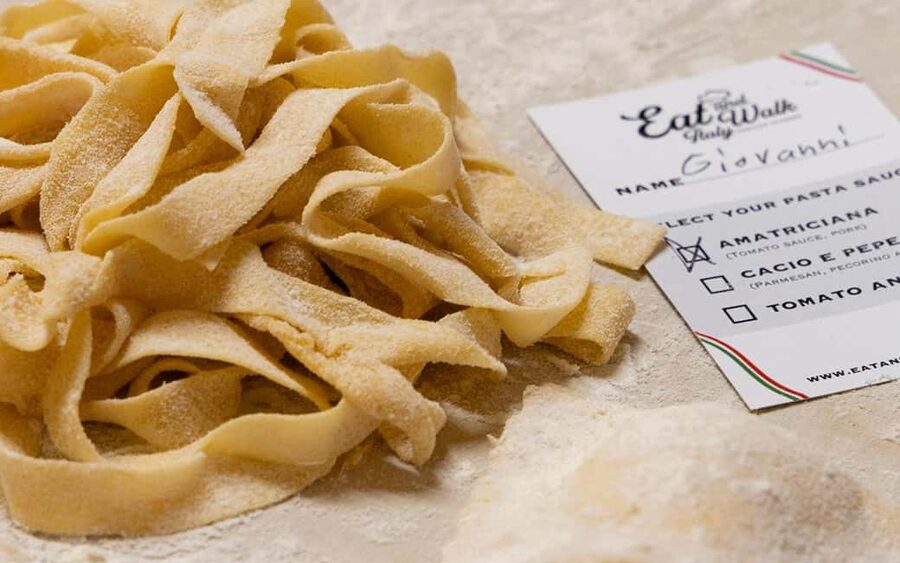
Your fettuccine comes with a choice of three sauces:
- Tomato and basil
- Cacio e pepe
- Amatriciana
This gives you a small but useful taste of Roman cooking. Tomato and basil is the most straightforward option. Cacio e pepe highlights cheese and pepper, while amatriciana brings a more forceful, savory profile.
The ravioli is served with butter and sage. That is a restrained pairing that lets you taste the pasta and filling instead of burying them under a heavy sauce.
The class does not promise a choice of ravioli filling or a long menu of substitutions. If you have dietary restrictions, allergies, or strong dislikes, ask before booking or contact the provider in advance. The supplied details do not specify vegetarian, vegan, gluten-free, or allergy accommodations.
Eating the pasta you made
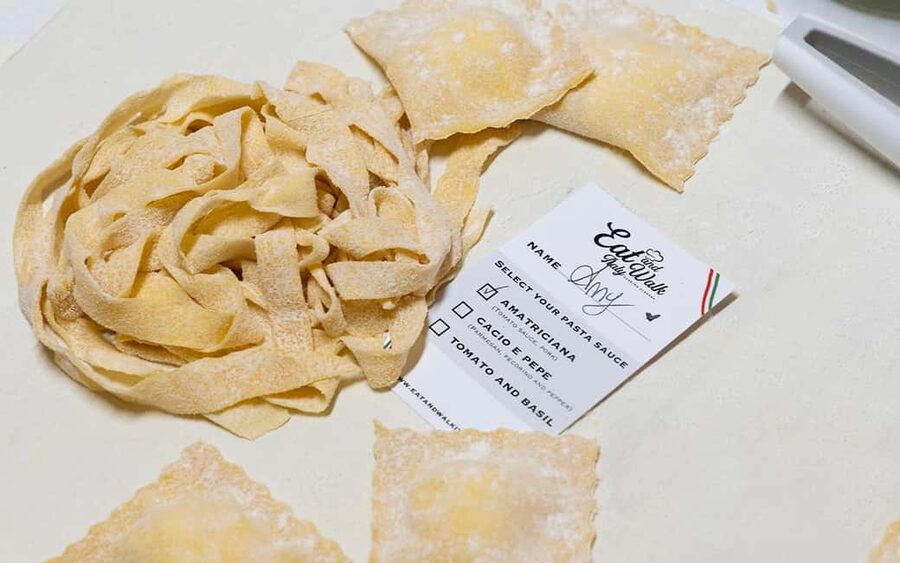
The final meal is the payoff. You sit down with the pasta you have just shaped and taste the difference between dried supermarket pasta and fresh dough.
The meal includes water, one glass of wine or a non-alcoholic drink, and either limoncello or coffee. That makes the ending feel like a proper Italian meal rather than a quick sample at the kitchen counter.
The wine is part of the value, but expectations should be sensible. One class participant found the white wine was served warm. That may have been an isolated service issue, but it is worth noting if wine quality and temperature matter greatly to you.
You may eat with the chef or without the chef, depending on how the session runs. One useful suggestion from a participant was that the chef could sit down with the group. The instructor’s job is to teach and manage the kitchen, so do not count on a long shared dinner with the chef.
Still, sitting with the people from your class gives the meal a social edge. You have already kneaded dough together, compared ravioli shapes, and laughed over small mistakes. By the time the plates arrive, introductions are easy.
How much value do you get for $81?
At $81 per person, this is not the cheapest meal in Rome. But it is also not simply a three-course restaurant lunch. You receive instruction, ingredients, use of the cooking space, a complete meal, wine or a soft drink, limoncello or coffee, and water.
The strongest value comes if you want to repeat the recipes at home. The class teaches practical skills rather than offering a demonstration you will quickly forget. You learn the basics of pasta dough, how to shape two types of pasta, how fillings can change with the seasons, and a tiramisu method.
It is also good value for a special occasion. A birthday couple used the class as part of a 30th birthday celebration, and other couples treated it as a shared activity during their Rome stay. You are paying for an event as much as for lunch.
The value is lower if you only want a quiet meal or already have advanced pasta-making skills. The group format means you will share the instructor’s time, and the process can feel hurried for some cooks. One class finished in about two hours, even though the activity is advertised as three hours. Timing can vary, so do not schedule a tight museum reservation immediately afterward.
Who will enjoy this class most?
I would recommend it to first-time pasta makers, couples, families with older children, and solo visitors who like meeting people. It works particularly well for a group with mixed cooking experience because the chef demonstrates each step and then moves around to help.
Teenagers can enjoy it, too. One family expected their teens to be doubtful, but they ended up liking the class. The activity also suits older adults, provided they are comfortable taking part at a work surface and handling the pasta-making steps.
It is a good rainy-day plan and a welcome change after several hours of sightseeing. It also gives you a skill you can use after Rome, which is more lasting than a quick photo stop.
I would think twice if you dislike group activities, need a very slow pace, or want a private lesson. A class of roughly 19 or 20 people can be lively, but it will not offer constant one-to-one instruction.
Practical details that affect your decision
The class is conducted in English. The chef’s personality will shape your session, and recent instructors have included Lori, Mattia, Mimi, Leo, Tommy, Carlotta, Furio, Valentina, Maria, and others.
The advertised duration is three hours, with starting times depending on availability. Some sessions may run closer to two hours, so leave a little flexibility in your plans.
You can cancel up to 24 hours before the activity for a full refund. You can also reserve now and pay later, which helps if your Rome plans are still shifting.
Tips and extra food or drinks are not included. The listed drinks are covered, but anything beyond them is your responsibility.
The class is wheelchair accessible. It is not suitable for children under four, and pets are not allowed.
My verdict: book it if you want to cook, not just eat
I would book this class if I wanted one social, practical activity in central Rome. The combination of three familiar Italian dishes, an included meal, English instruction, and a glass of wine makes the $81 price reasonable for a three-hour experience.
The best reason to go is the pasta. You get your hands into the dough, make both fettuccine and ravioli, and learn enough to try again at home. The tiramisu adds a sweet finish without turning the class into a long pastry lesson.
Skip it if you want a private kitchen, a small intimate group, or a leisurely meal with the chef. For everyone else, especially couples, families with older children, and people who like learning by doing, this is an enjoyable way to taste Rome and take a useful piece of Italy home with you.
FAQ
Where does the cooking class meet?
The meeting point is Restaurant Gusto at Via Giuseppe Zanardelli 14 in central Rome.
How long does the activity last?
The advertised duration is three hours. Some class sessions may finish closer to two hours, so allow flexibility around the activity.
What dishes will I make?
You will prepare tiramisu, ravioli, and fettuccine from scratch.
What sauce choices are available for the fettuccine?
You can choose tomato and basil, cacio e pepe, or amatriciana.
What comes with the meal?
The meal includes fettuccine with your chosen sauce, ravioli with butter and sage, tiramisu, water, and either a glass of wine or a non-alcoholic drink. You also receive limoncello or coffee.
Is the class taught in English?
Yes. The instructor language is English.
Is the activity wheelchair accessible?
Yes, the activity is wheelchair accessible.
Can young children join the class?
Children under four are not allowed to participate. Pets are also not allowed.
More classes and workshops in Rome
- Become a Masterchef in Rome: Pasta, Ravioli and Tiramisù Class
★ 5.0 · 2,156 reviews - Pasta Cooking Class Near the Colosseum with 3 Spritz Cocktails
★ 5.0 · 1,686 reviews - Rome: Pasta & Tiramisu Cooking Class near the Spanish Steps
★ 4.8 · 1,395 reviews - Rome: Traditional Pizza Cooking Class near Piazza Navona
★ 4.7 · 1,241 reviews
Just added in Rome
- Civitavecchia Private Transfer: From the Port to Rome Airport★ 5.0 · 309 reviews
- Civitavecchia Shore Excursion: Best of Rome Private Tour★ 5.0 · 247 reviews
- Civitavecchia Private Transfer from ship to FCO airport or Rome★ 5.0 · 245 reviews
- Food Tasty and History Tour in Civitavecchia★ 5.0 · 256 reviews
- Palatine Hill and Roman Forum Tour with Fast-Track Entrance★ 4.2 · 417 reviews
- Tivoli: Villa D’Este & Villa Adriana Pass & App Audioguide★ 4.4 · 364 reviews
- Tivoli: Villa D’Este Entry Ticket and App Audio Guide★ 4.3 · 191 reviews
- Vatican Museums & Sistine Chapel Skip-the-Line Guided Tour★ 4.6 · 254 reviews
Cooking Classes, compared.

3 in 1 Cooking Class near Navona: Fettuccine, Ravioli & Tiramisu
Read our review →
Florence Pizza or Pasta Class with Gelato Making at a Tuscan Farm
Read our review →
Pasta & Tiramisu Class with Fine Wine by the Vatican
Read our review →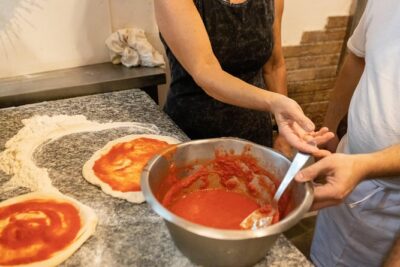
Authentic Pizza Making Class in Naples with Appetizers and Drink
Read our review →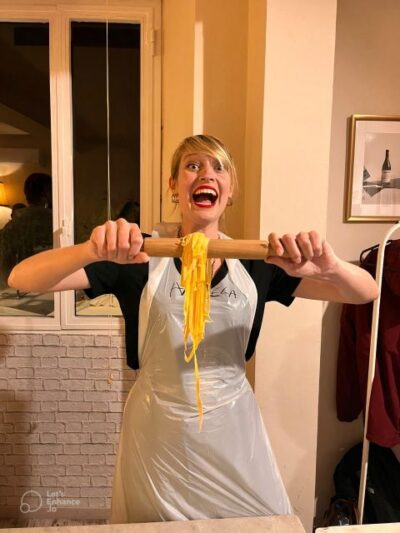
Pasta Making Class with Wine, Limoncello, and Dessert
Read our review →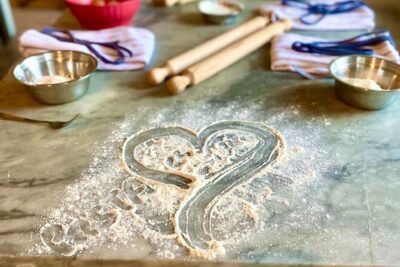
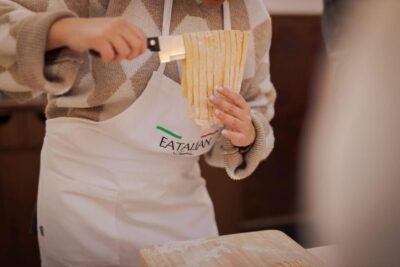
Fettuccine Pasta Cooking Class in Rome’s City Center
Read our review →Browse the lists this tour appears in