
Reviewed · COLOSSEUM & ROMAN FORUM TOURS
Palatine Hill and Roman Forum Tour with Fast-Track Entrance
Rome’s oldest power center is easier to understand when someone helps you read the stones. This tour begins on Palatine Hill, where Rome’s founding legends meet imperial ruins, then drops into the Roman Forum, the city’s former political and religious heart.
I like the fast-track entrance, which cuts out some of the ticket-line hassle, and I like the guides’ story-led approach. Simona, Anton, Andy, Katia, and others are praised for clear explanations, humor, and the ability to make half-ruined buildings feel real. The main drawback is the price, $293.41 per person, which is steep for a two-hour visit, especially if the entrance line is already short.
Key points to know before you book
- Palatine Hill comes first, with views toward the Circus Maximus and the Roman Forum valley.
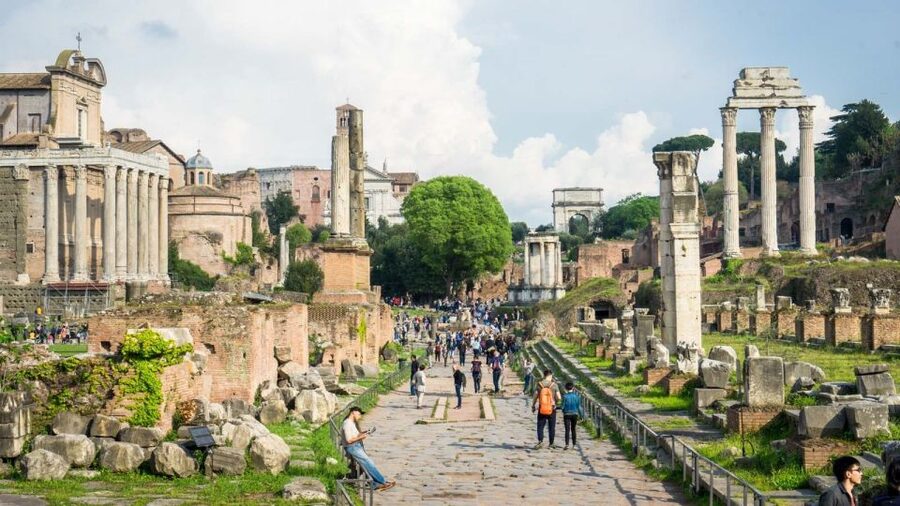
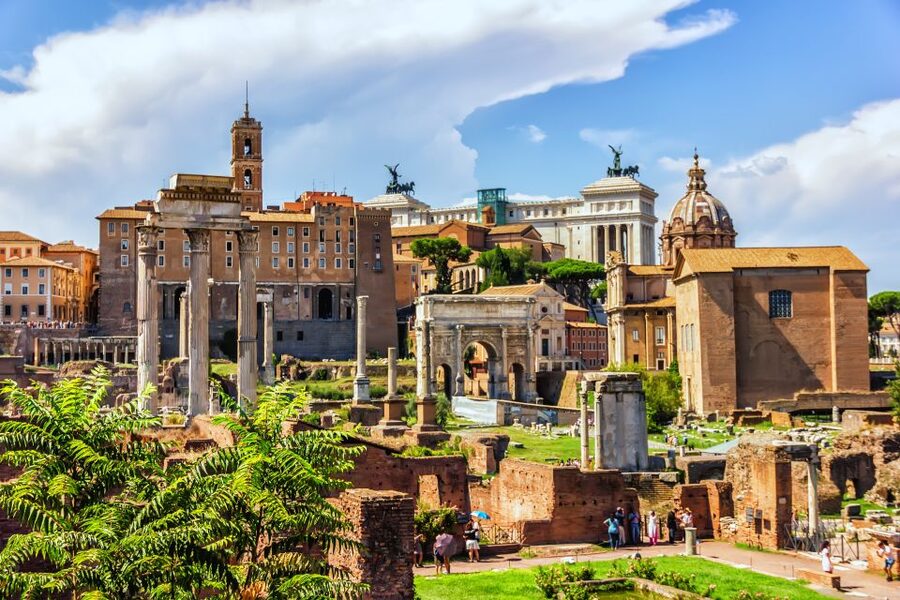
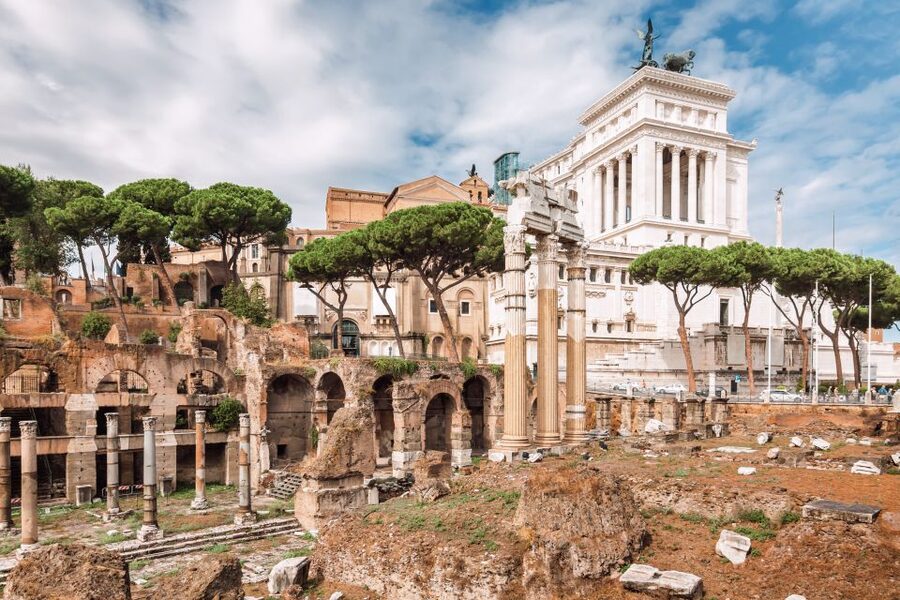
- The Roman Forum includes major sights such as the Temple of Julius Caesar, Arch of Titus, Senate House, and Basilica of Maxentius.
- Stories give the ruins meaning, from Romulus and Remus to triumphal processions along the Sacred Way.
- Headsets help in noisy conditions, especially when the group is larger than eight people.
- Expect stairs, heat, and a fair amount of walking, with no access for wheelchair users or people with mobility limitations.
- Your ID details matter, since your full name and date of birth are checked against your booking at the entrance.
Why Palatine Hill is the right place to begin
The tour starts at the meeting point in front of Oppio Caffe, on Via delle Terme di Tito at the corner of Via Nicola Salvi. Your guide holds a sign with your name, so take a moment to check the exact location before setting out. The area is close to Rome’s major ancient sites, but the streets around the Colosseum can be confusing, so allow enough time to find the cafe.
From there, you enter the archaeological area and head toward Palatine Hill. This is a smart order for the tour. The hill gives you a physical sense of Rome’s beginnings before you confront the much larger spread of the Forum below.
Palatine Hill was the site of an older settlement dating to the ninth century BC. It is also tied to the familiar founding story of Romulus and Remus, the abandoned brothers said to have been raised by a wolf. The tale is part myth, part political origin story, and a useful way to understand how Rome explained its own rise.
Your guide helps connect the legend to the remains around you. That matters here because many buildings are incomplete. Without a guide, you may see walls, foundations, and scattered columns without knowing which belonged to a palace, temple, or public building.
Other ways into ancient Rome:
- Colosseum, Roman Forum & Palatine Guided Tour
★ 4.7 · 63,148 reviews - Rome: Colosseum, Palatine Hill and Roman Forum Guided Tour
★ 4.8 · 32,814 reviews - Rome: Guided Tour of Colosseum, Roman Forum & Palatine Hill
★ 4.7 · 27,897 reviews
The views from Palatine Hill
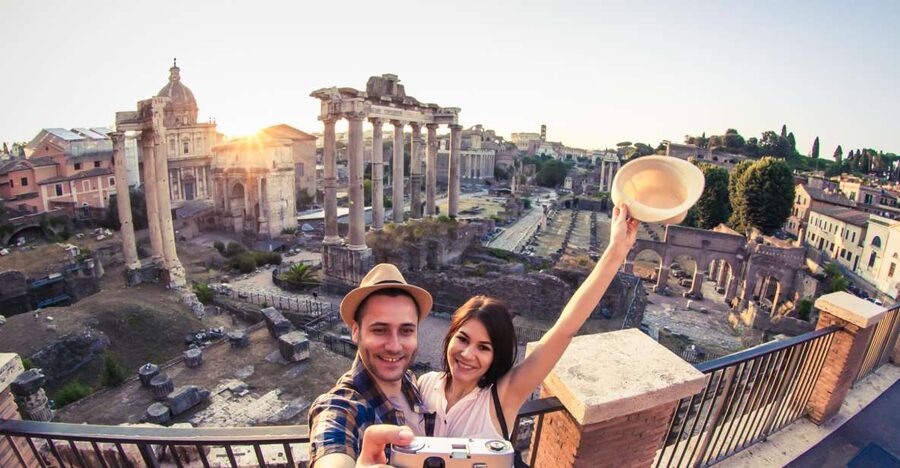
One of the tour’s best moments comes from the hilltop views. You look toward the Circus Maximus and across the valley of the Roman Forum, with the ruins spread below like a giant archaeological floor plan.
The view is not just a photo stop. It helps you understand how the ancient city was arranged. The Forum was not an isolated monument. It was linked to the hill, the political center, temples, roads, and public spaces that made Rome work.
The climb does require effort. Several people describe the walk as manageable but note stairs, and one guide made sure to allow time for water, restrooms, and photos. Wear shoes with a firm sole and expect sun exposure. This is not a good outing for anyone who needs step-free access, has serious mobility problems, or is dealing with a condition made worse by heat and walking.
Take your photos here, but do not rush away from the explanation. The guide’s account of the hill’s myths and imperial use often gives this first part more shape than the ruins can provide on their own.
Moving into the Roman Forum
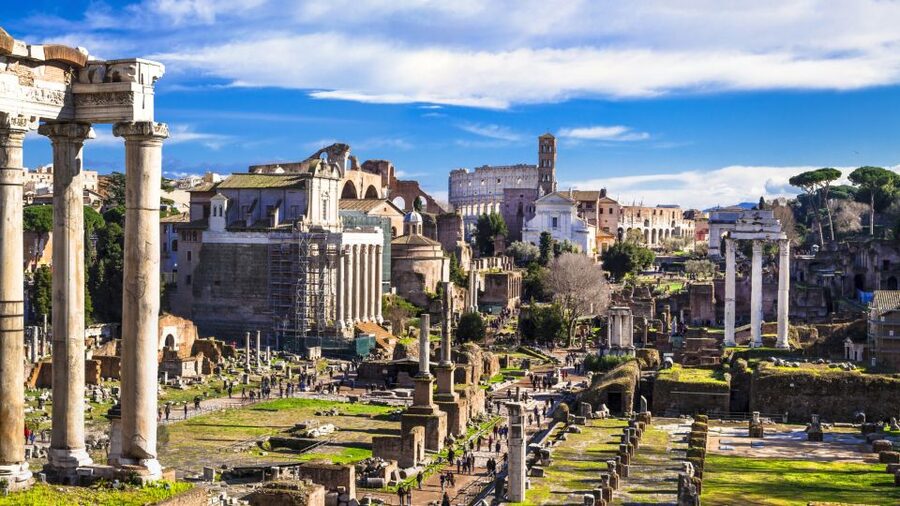
After Palatine Hill, the route continues into the Roman Forum. This was the center of public life in ancient Rome, and it remains one of the most important archaeological areas in the city.
The Forum is wide and uneven. You will walk among fragments of temples, public buildings, arches, paving stones, and columns. Some structures are surprisingly recognizable. Others are little more than foundations. A guide is especially useful for explaining what has disappeared and helping you picture the original buildings without pretending that the ruins are complete.
The pace is generally focused rather than leisurely. The listed duration is two hours, though some visits have run closer to an hour and a half. That makes the tour a good introduction, but you may want to remain in the archaeological area afterward if your ticket and schedule allow. One useful approach is to treat the guided portion as a framework, then spend extra time looking at the places that caught your attention.
The tour ends back at the meeting point according to the activity details, but the exact flow can depend on the group and the guide. Confirm the finishing point and any onward plans before you leave.
The Temple of Julius Caesar and the Forum’s central story
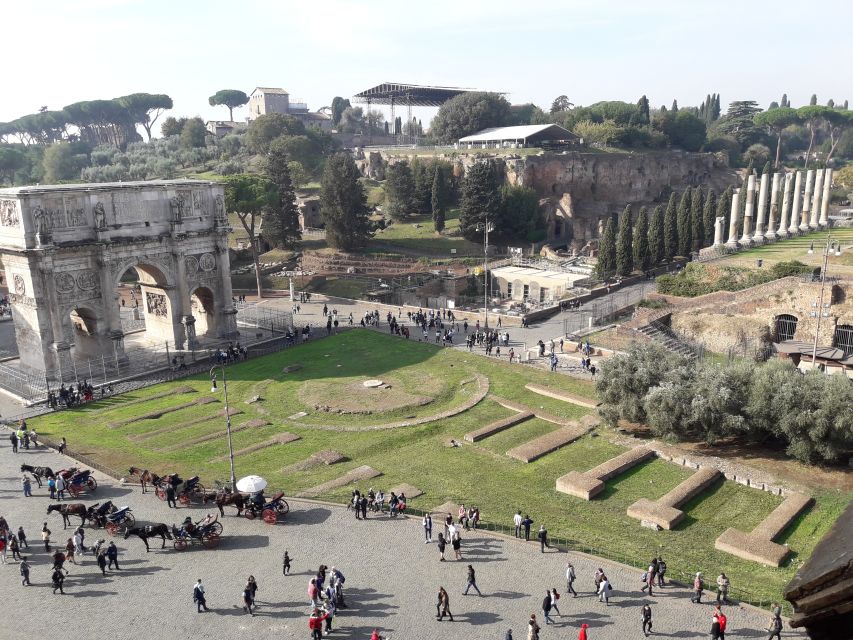
The Temple of Julius Caesar is one of the key stops. It marks the place associated with Caesar’s cremation and later worship, connecting the Forum to the political upheaval that changed Rome from republic to empire.
This is the kind of sight that benefits from a good explanation. On its own, the remaining structure may not look dramatic. With context, it becomes part of the story of power, public memory, and the way Roman leaders were honored after death.
The guide may also help you separate fact from legend. Ancient Rome is full of stories that were repeated for political reasons, religious reasons, or simply because later generations wanted a clear explanation. A strong guide makes that distinction without burying you in academic language.
Same base, a different kind of day:
- Vatican: Museums & Sistine Chapel Entrance Ticket
★ 4.5 · 144,003 reviews - Vatican Museums & Sistine Chapel Tour with Optional Basilica
★ 4.3 · 67,413 reviews - Vatican Museums, Sistine Chapel & St Peter’s Basilica Guided Tour
★ 4.5 · 39,149 reviews - Rome: Colosseum & Forum with Audio Guide App -Optional Arena
★ 4.2 · 24,770 reviews
The Arch of Titus and imperial victory
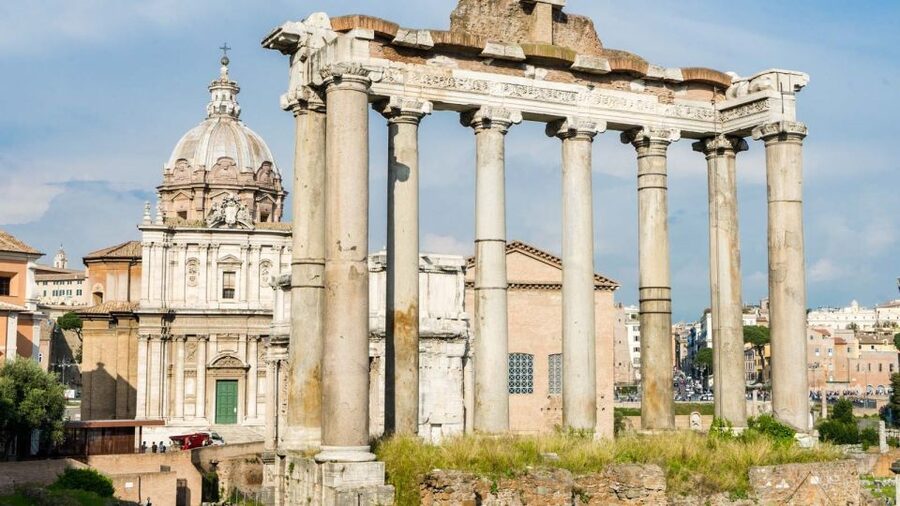
The Arch of Titus is another important stop. Its reliefs celebrate a Roman victory and show how military success was turned into public ceremony.
Look closely at the idea of the triumph. Roman armies did not simply return home after a campaign. Victories were presented through processions, monuments, sacred rituals, and captured wealth. The arch gives that political theatre a physical form.
The stop also connects directly to the Sacred Way, the ceremonial road through the Forum. This was the route used for important processions, including triumphal marches. Your guide explains how the road worked as both a practical route and a stage for Roman power.
The site is full of such connections. A column or broken road is not just an isolated object. It may mark a religious space, a political message, or part of a carefully planned public ceremony.
The House of the Vestal Virgins
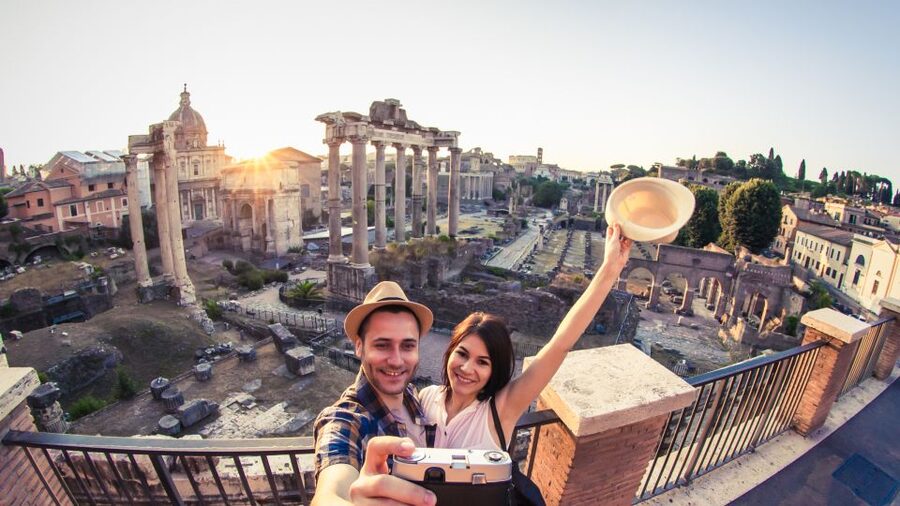
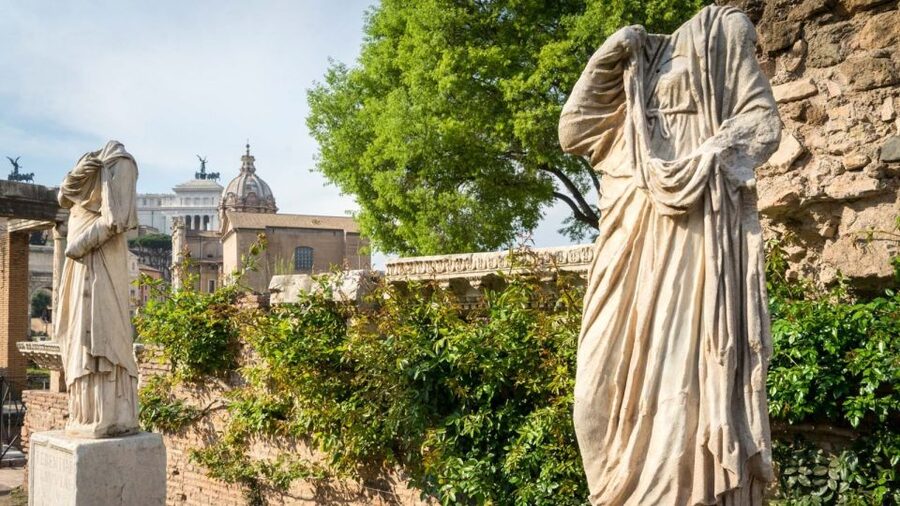
The House of the Vestal Virgins offers a different view of Roman society. The Vestals served the goddess Vesta and tended the sacred fire, holding a religious role with unusual status and responsibility.
The remains can be easy to miss if you do not know what you are seeing. This is another place where the guide’s explanation does the heavy lifting. You learn how the household fit into the Forum and why the women connected to it mattered to Roman religious life.
The Forum becomes more interesting when you move beyond emperors and generals. The Vestals show how religion, public duty, gender, and political prestige could overlap in ancient Rome.
The Senate House and Basilica of Maxentius
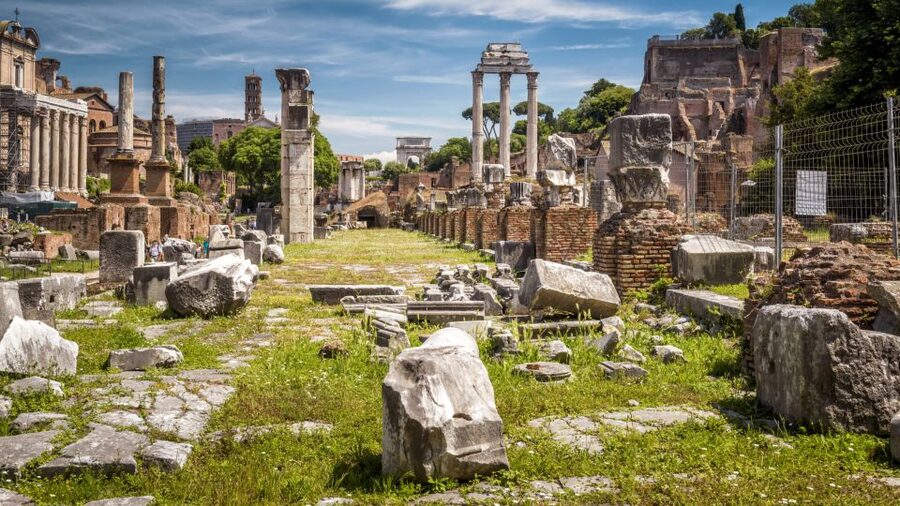
The Senate House, or Curia, brings you back to Roman government. This was linked to the political body that debated laws, power, and the direction of the state. Its presence helps you picture the Forum as a working civic center, not just a field of ruins.
The Basilica of Maxentius shows another side of Roman public architecture. In Roman usage, a basilica was a large public hall used for legal, commercial, and civic activity. It was not originally a church in the later Christian sense.
Its scale is one of the most memorable parts of the Forum. Even in ruin, the surviving structure gives you a sense of the engineering and ambition behind Roman construction. A guide can point out the vaulting and explain how the building’s size shaped the space around it.
This is also where the tour’s emphasis on Roman technology becomes useful. Several guides have been praised for helping people understand how much planning, labor, and engineering went into the city. You will not see every detail on a quick visit, but you will gain a clearer idea of how advanced the building methods were.
The guide can make or break this visit
The strongest part of this activity is the human explanation. Guides named Simona, Anton, Andy, Katia, Zenda, Giorgio, Samuele, and others have been praised for clear English, humor, dramatic storytelling, and the ability to answer questions.
One guide used photographs to show what buildings may have looked like before their collapse. Another made the stories entertaining enough for a nine-year-old child to follow. Andy was also careful to include someone with limited mobility, while other guides paused for water, photos, and sound checks.
That variety matters. The Forum can be hot, noisy, and visually overwhelming. A guide who simply recites dates will lose you. A guide who tells you why a building mattered, what happened there, and how it relates to the next stop gives the site a readable order.
Headsets are provided for groups of more than eight. They are helpful when other groups are nearby or when you are standing several steps away from the guide. The sound system has been praised for working well, though you should still tell the guide if you cannot hear clearly.
The tour is offered in Portuguese, English, Italian, Spanish, German, and French. Check the selected language and starting time when booking, since availability can vary.
Is fast-track entry worth the price?
The advertised price is $293.41 per person, which places this firmly in the expensive category for a two-hour tour. The value depends on what you want from the visit.
You are paying for the entrance, a live guide, fast-track access through a separate entrance, and either a private service or a small group option of up to 20 people, depending on the booking selected. You are not paying for food, drinks, hotel transport, or access to the Colosseum.
Fast-track entry can be useful during busy periods, but it does not promise a completely line-free arrival. Security checks remain in place, and metal detectors can create delays. If the Forum entrance is quiet on your chosen day, the access feature may feel less valuable. The guided explanation is the stronger reason to book.
For a first visit to Rome, I can see the appeal. Two hours gives you a clear introduction to the city’s oldest core without asking you to plan the route or research every monument in advance. For someone already well versed in Roman archaeology, the price may be harder to justify unless the private format or a specific guide is important to you.
What to bring and what to leave behind
Bring a valid passport or ID card. The full name and date of birth supplied during booking are checked at the entrance, and you can be refused entry if the information does not match your identification.
Comfortable shoes are essential. The route includes walking and stairs, and the ancient surfaces are not designed for modern ease. Carry water, but remember that food and drinks are not included in the tour.
Large bags, backpacks, suitcases, baby strollers, walking frames, selfie sticks, glass objects, sprays, aerosols, weapons, alcohol, and drugs are not allowed. There is no cloakroom, so do not arrive with luggage you need to store.
If you have a visual or hearing impairment, tell the local operator when booking. The activity is not suitable for wheelchair users, people with mobility impairments, those with back problems, or people with certain pre-existing medical conditions.
Free cancellation is available up to 24 hours before the tour for a full refund. You can also reserve now and pay later, which helps if your Rome schedule is still moving around.
Who should book this Palatine Hill and Forum tour?
I would choose this for a first-time Rome visitor who wants the ancient center explained in plain language. It suits anyone who likes history but does not want to read a guidebook beside every fragment of wall.
Families may appreciate the dramatic stories, especially with a guide who knows how to keep younger people involved. The headsets also help older children follow along in a busy setting.
I would be more cautious if you dislike group pacing, need a slow and fully accessible route, or have already spent serious time studying the Forum. You may get more from a longer private visit, provided the added cost works for you.
Should you book it?
Book this tour if you want clear storytelling, organized access, and the main Palatine Hill and Forum sights in one efficient visit. The guides are the main attraction, and the best ones turn the ruins into a connected story about myth, religion, government, war, and engineering.
Think carefully about the price. At $293.41 per person, this is not a casual budget add-on. It makes the most sense when you value a private or small-group experience, need help interpreting the ruins, and want to make the most of a short stay in Rome.
FAQ
How long does the tour last?
The advertised duration is two hours. Some visits may finish a little earlier, so check the starting time and allow extra time if you want to remain in the archaeological area afterward.
Where does the tour begin?
Meet in front of Oppio Caffe on Via delle Terme di Tito, at the corner of Via Nicola Salvi. The guide holds a signboard with your name.
Where does the activity end?
The activity ends back at the meeting point listed for the tour.
Is the Colosseum included?
No. The tour includes Palatine Hill and the Roman Forum, but Colosseum entry is not included.
Is fast-track entry included?
Yes. Fast-track access through a separate entrance to Palatine Hill and the Roman Forum is included. You must still pass through security and metal detectors.
Do I need identification?
Yes. Every person entering must carry a valid passport or ID card. Your full name and date of birth are checked against the booking information.
What languages are available?
The live guide service is available in Portuguese, English, Italian, Spanish, German, and French.
Can I bring a backpack or suitcase?
No. Large bags, backpacks, and suitcases are not permitted, and there is no cloakroom service. Small bags may be allowed, subject to security rules.
Just added in Rome
- Civitavecchia Private Transfer: From the Port to Rome Airport★ 5.0 · 309 reviews
- Civitavecchia Shore Excursion: Best of Rome Private Tour★ 5.0 · 247 reviews
- Civitavecchia Private Transfer from ship to FCO airport or Rome★ 5.0 · 245 reviews
- Food Tasty and History Tour in Civitavecchia★ 5.0 · 256 reviews
- Tivoli: Villa D’Este & Villa Adriana Pass & App Audioguide★ 4.4 · 364 reviews
- Tivoli: Villa D’Este Entry Ticket and App Audio Guide★ 4.3 · 191 reviews
- Vatican Museums & Sistine Chapel Skip-the-Line Guided Tour★ 4.6 · 254 reviews
- From Rome: Villa D’Este & Villa Adriana Day Trip with Lunch★ 4.4 · 289 reviews
Colosseum & Roman Forum Tours, compared.
Colosseum, Roman Forum & Palatine Guided Tour
Read our review →
Colosseum & Forum with Audio Guide App -Optional Arena
Read our review →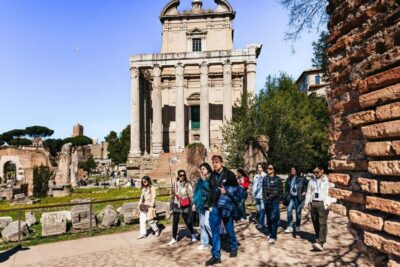
Colosseum, Forum & Palatine Hill Tour & Optional Arena
Read our review →
Colosseum, Roman Forum, Palatine with Multimedia Video
Read our review →
Colosseum: Underground and Ancient Rome Tour
Read our review →
Colosseum, Forum, Palatine Hill Entry & Audioguide App
Read our review →Browse the lists this tour appears in