
Reviewed · COOKING CLASSES
3 in 1 Cooking Class near Navona: Fettuccine, Ravioli & Tiramisu
Making pasta in Rome is one of those activities that gives you more than a meal. You learn how flour, eggs, patience, and a little elbow grease become fettuccine and ravioli. This three-hour class near Piazza Navona also includes tiramisu, wine, coffee, and limoncello, so you leave with both dinner and a useful souvenir.
I like the hands-on pace, which works well for first-time cooks, and I like the relaxed teaching style associated with instructors such as Carlotta, Lori, Mimi, Leo, Maria, Paris, and Mattia. The main thing to keep in mind is that you make the pasta and filling, but not the sauces. If sauce technique is your main goal, this class will not cover that part.
Key points at a glance
- Three Italian staples in one sitting: Prepare tiramisu, fettuccine, and ricotta ravioli during a single class.
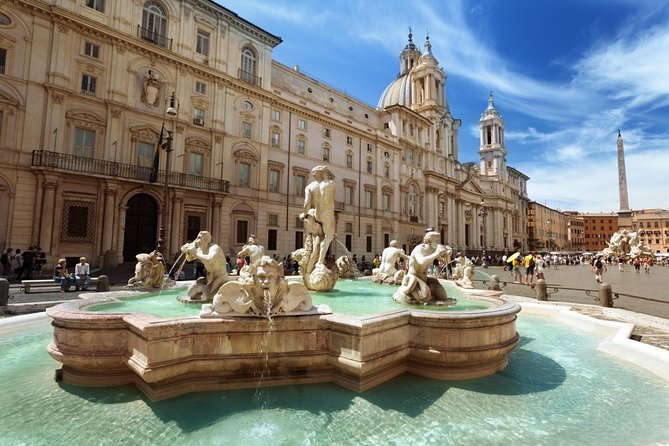
- A central Rome address: Meet at Via Giuseppe Zanardelli, 14, within easy reach of Piazza Navona and public transportation.
- Good for complete beginners: The chef demonstrates each step and helps you keep pace, so you do not need previous cooking experience.
- A proper meal follows the lesson: Eat your own pasta with a choice of cacio e pepe, tomato and basil, or amatriciana, plus ravioli with butter and sage.
- A social group setting: The class allows up to 18 people, creating a lively but still manageable shared table.
- One important limitation: Sauces are selected and served with the pasta, but sauce-making is not part of the hands-on lesson.
Why this Rome cooking class works so well
At $83.44 per person, this is not the cheapest meal in Rome. It is also not simply a dinner with a short demonstration attached. You spend about three hours learning, preparing food, eating a multi-course meal, and having drinks. I see the price as fair if you want an activity as well as dinner, especially since the class includes wine or a soft drink, water, and your choice of coffee or limoncello.
The value comes from the range. Many pasta classes focus on one shape and one dish. Here, you handle three familiar Italian favorites. Fettuccine teaches you how to work and cut pasta dough. Ravioli adds filling, folding, and sealing. Tiramisu gives you a dessert you can make without special equipment once you return home.
The class is taught in English, which matters when the chef is explaining dough texture or showing how to close a raviolo. The tone is intended to be friendly and approachable rather than formal. Instructors such as Lori and Carlotta are praised for keeping the room lively, while Leo, Maria, Mimi, Paris, and Mattia are noted for patient, clear instruction. Your chef depends on the date and schedule, but the teaching format remains the same.
More Cooking Classes in Rome
- Rome: Pasta & Tiramisu Class with Fine Wine by the Vatican
★ 4.9 · 4,852 reviews - Rome: Pasta Making Class with Wine, Limoncello, and Dessert
★ 4.9 · 3,177 reviews - Rome: 3-in-1 Fettuccine, Ravioli, and Tiramisu Cooking Class
★ 4.9 · 2,704 reviews
Finding the cooking space on Via Giuseppe Zanardelli
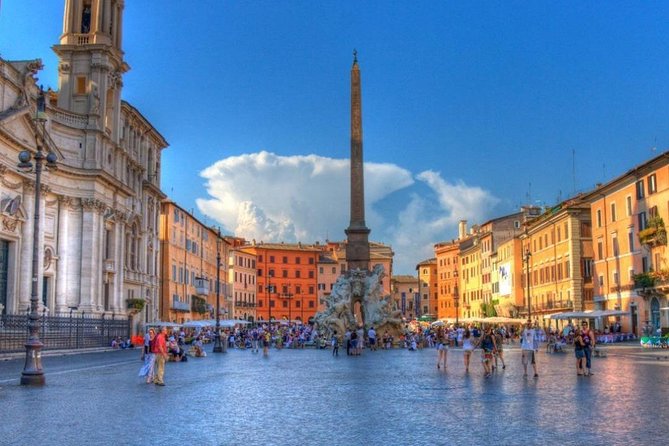
You make your own way to Via Giuseppe Zanardelli, 14. The location is near public transportation and close to the central sights around Piazza Navona, making it easy to add before or after sightseeing.
I would avoid placing this class between two tightly scheduled museum visits. Rome streets can slow you down, and you need to arrive ready to work rather than rushing through the door. Since the activity runs at several start times during the day, you can often choose a morning, afternoon, or evening slot that fits your plans.
Once you arrive, you meet the chef and the rest of the group, then put on an apron. The group can reach 18 people. That is large enough to create conversation and a holiday atmosphere, but small enough for the chef to circulate and help people who need an extra hand.
This is a good first or last activity in Rome. On your first day, it gives you an easy introduction to Italian food. On your last day, it leaves you with recipes and techniques to take home. It also makes sense on a rainy afternoon, when your feet may need a break from the Forum, Colosseum, and Vatican.
Starting with tiramisu before the pasta
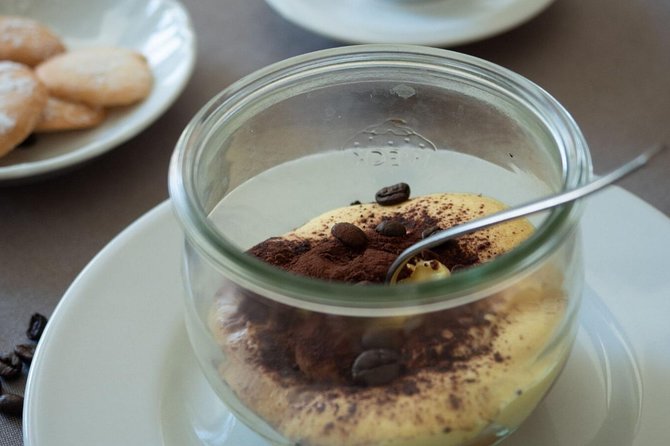
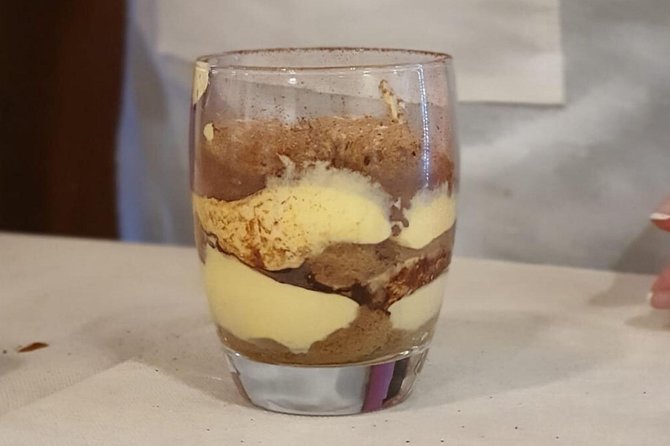
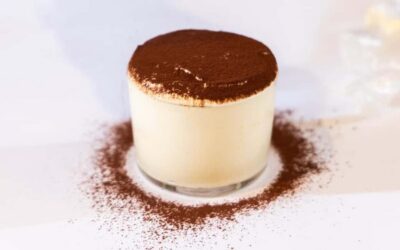
The class begins with tiramisu. That order is smart. Tiramisu needs time to settle, so preparing it first gives the dessert a chance to rest while you work on the pasta.
You follow a traditional recipe and assemble your own portion. This is less technically demanding than pasta, so it lets you settle into the class before tackling dough. It is also a useful lesson for beginners because the finished dessert depends more on careful assembly than advanced cooking skills.
Coffee is part of the classic tiramisu flavor, but the class has accommodated alternatives for people who dislike coffee. If that matters to someone in your group, ask the chef about options at the start.
The dessert is saved for the end, alongside coffee or limoncello. That small pause between making and eating it adds to the satisfaction. You do not just watch a chef prepare dessert in front of you. You remember how your own portion came together.
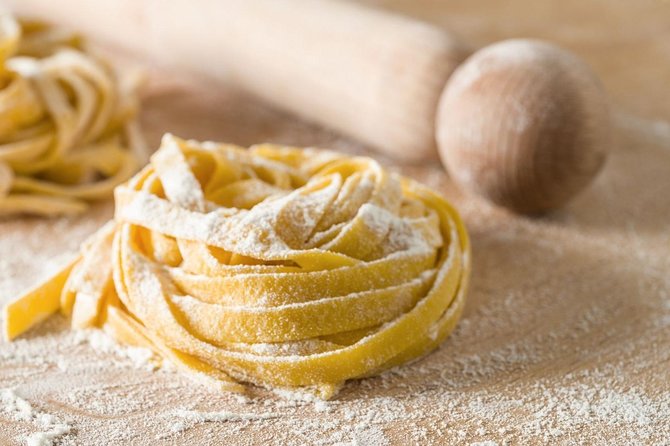
Rolling and cutting fresh fettuccine
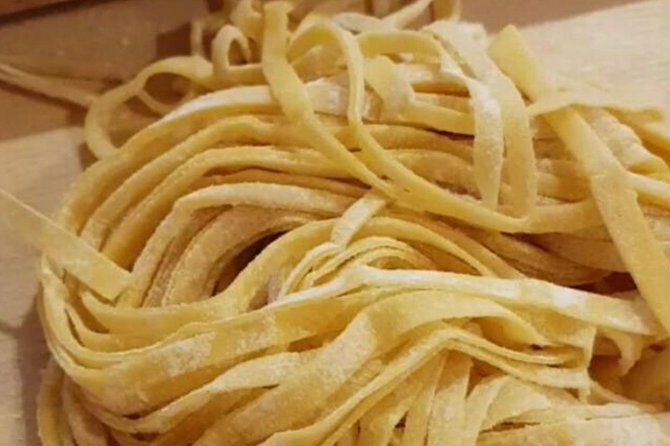
Next comes the pasta dough. The chef shows you how to turn the ingredients into a workable dough, then guides you through rolling and shaping it. You do not need to arrive with strong cooking skills. The class is built for beginners, and the instructors are used to helping people who have never made fresh pasta.
Fettuccine is a sensible first pasta shape. It is familiar, forgiving, and easy to recognize once it is cut. You learn the basic feel of fresh dough and gain a technique you can repeat in your own kitchen.
The finished fettuccine comes with your choice of sauce:
- Cacio e pepe
- Tomato and basil
- Amatriciana
Here is the detail that deserves attention: you choose the sauce, but you do not make it during the class. The kitchen prepares the sauces, and your finished pasta is cooked and served. That keeps the class moving and avoids a long lesson in professional kitchen work, but it also means you will not learn the full recipe for the sauce at the table.
The choice still gives you some control over the meal. Cacio e pepe is the simple Roman option, tomato and basil is the mildest choice, and amatriciana brings a stronger, more savory flavor. If you are unsure, ask the chef what suits the pasta best.
Other classes where you do the cooking in Rome:
- Rome: Fettuccine Pasta Cooking Class in Rome’s City Center
★ 4.8 · 2,414 reviews - Rome: Traditional Pasta with Cocktails Cooking Class
★ 5.0 · 2,374 reviews - Learn to Make Pasta & Tiramisu with Wine and Limoncello Included
★ 5.0 · 2,345 reviews - Rome: Fettuccine and Tiramisu Cooking Class with Wine
★ 4.8 · 2,013 reviews
Folding ricotta and Parmigiano ravioli
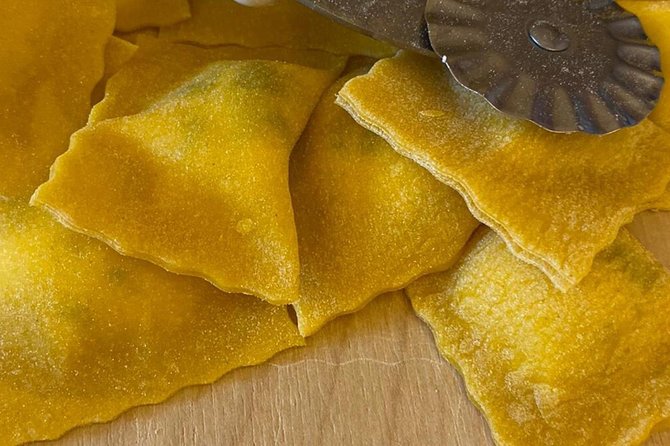
Ravioli is the most rewarding part for many first-time pasta makers because it feels like a real test of control. You prepare a filling based on ricotta and Parmigiano, then fill and seal the pasta. The filling can also reflect seasonally available ingredients, so the exact preparation may vary.
The chef guides you through the practical details: how much filling to use, where to place it, and how to close the pasta without leaving air pockets or open edges. You do not need perfect shapes. The point is to learn the method and produce ravioli that can be cooked and eaten.
The ravioli is served with butter and sage. It is a restrained sauce that lets the filling and fresh pasta do the work. Compared with the more assertive fettuccine options, this course is gentler and more focused on texture.
I would pay close attention during this section. Ravioli takes more care than fettuccine, but it is also the dish most likely to impress friends at home. A classmate who is unsure about doing the ravioli portion may be tempted to skip it, but that would remove one of the most useful parts of the lesson.
Sitting down to eat what you made
After the preparation, the kitchen cooks the pasta and brings it back to you. You sit down with your group to eat the results, rather than leaving with uncooked dough or a quick taste at the worktable.
The meal includes your fettuccine with its chosen sauce, ravioli with butter and sage, and your tiramisu. You also receive water and a glass of wine or a soft drink. Red or white wine is available with the pasta, depending on your preference.
The shared meal is an important part of the experience. Cooking alone at home can teach technique, but it does not offer the same social rhythm. Here, the class shifts from instruction to conversation, and the food gives everyone an easy subject to talk about.
Portions are intended as part of a class meal rather than a huge restaurant dinner. One portion-related comment described them as a little small, so do not book this expecting an all-day feast. You should leave satisfied, but the main value is the combination of instruction and food.
At the end, you have tiramisu with either Italian coffee or a shot of limoncello. The limoncello is a cheerful Roman finish, while coffee makes more sense if you are still walking around the city afterward.
What the chef style means for your experience
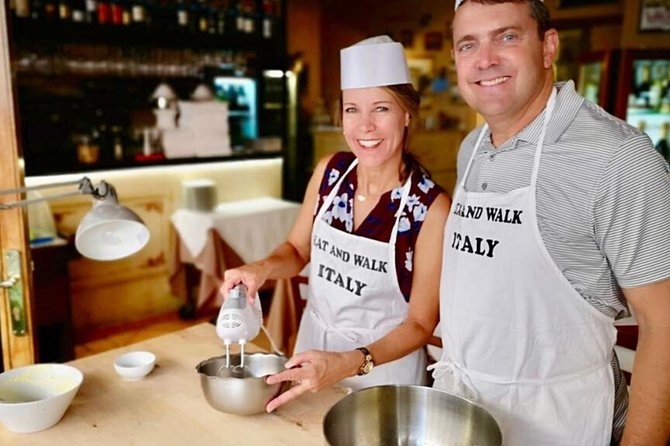
The instructor can vary. Names associated with this class include Carlotta, Lori, Mimi, Leo, Maria, Paris, Mattia, Tom, Furio, and others on the rotating team. Carlotta is energetic and hands-on. Lori is known for patience and humor. Mimi has a particularly family-friendly approach, while Leo is praised for clear instructions and a relaxed manner.
That variety matters because the chef shapes the mood. One session may feel especially lively, another more calm and methodical. The common thread is beginner-friendly guidance in English and direct help at the table.
Families should find this format workable. Children around 11 have taken part successfully, and the activity gives younger cooks a clear job at each stage. Still, the class lasts about three hours, so very young children may find the later pasta work tiring. The group setting also means you share the room with other cooks rather than receiving private instruction.
This is a good choice for couples, families, solo visitors who enjoy meeting people, and friends who want an activity with a meal built in. It is less suitable for someone seeking an advanced culinary course or private chef training.
The practical value of the recipes
The best souvenir is not a photograph of pasta. It is the ability to make it again.
The recipes are designed to be approachable at home. You learn dishes that do not require rare ingredients or complicated equipment. Fettuccine, ravioli, and tiramisu are useful choices because they work for a family dinner, a dinner party, or a rainy weekend project.
Some participants have received recipes for the pasta, tiramisu, and three sauces afterward. Ask the team before leaving how the recipes will be provided, especially if you want to recreate the sauces as well as the pasta.
Take mental notes during the dough lesson. The most useful information is often not a precise number, but the signs of properly worked dough and the feel of the finished pasta. Watch how the chef handles sticky dough, how thin the sheets should be, and how firmly ravioli needs to be sealed.
A few limitations to consider before booking
The biggest limitation is the missing sauce lesson. You will choose among cacio e pepe, tomato and basil, and amatriciana, but the sauces are prepared by the kitchen. That is clearly important if your main goal is to master Roman sauce recipes.
The second consideration is group size. Up to 18 people means this is a group activity, not a private workshop. The upside is energy and conversation. The downside is that you may occasionally wait for space or the chef’s attention.
The third is timing. Three hours is a meaningful block in a busy Rome itinerary. I would not schedule a major timed attraction immediately afterward. The class has several starting times, which helps, but allow room for the activity to run at its natural pace.
Finally, this is a pasta and dessert class, not a full tour of Roman cuisine. You will not learn pizza, gelato, espresso technique, or a long list of regional dishes. The focused menu is part of its strength, but you should book it for pasta and tiramisu rather than for broad culinary coverage.
Booking, cancellation, and small details
The experience is booked in advance on average, so popular times can fill early. Choose your start time carefully and arrive at Via Giuseppe Zanardelli, 14 with enough time to find the cooking space.
You receive confirmation at booking, and the ticket is mobile. The activity is offered in English and operates near public transportation.
Cancellation is free up to 24 hours before the start time for a full refund. Cancellations or changes made within 24 hours are not accepted for a refund. The cut-off uses local Rome time.
Who should book this experience?
Book it if you want to learn by doing, eat a meal afterward, and bring practical Italian recipes home. It is especially useful for first-time pasta makers, families with older children, and people who want a relaxed break from churches and ancient ruins.
The $83.44 price makes sense when you count the instruction, three dishes, wine or a soft drink, water, coffee or limoncello, and the social setting. If you only want a cheap plate of pasta, go to a trattoria. If you want a polished, advanced kitchen course, choose a more specialized workshop.
For most visitors, I would book this class when the schedule fits. Just remember the key trade-off: you make the pasta and tiramisu yourself, but the kitchen handles the sauces. If that sounds like the right balance, this is a friendly and practical way to spend three hours near Piazza Navona.
FAQ
Where does the cooking class meet?
The meeting point is Via Giuseppe Zanardelli, 14, 00186 Rome, Italy. The location is near public transportation and close to the Piazza Navona area.
How long does the class last?
The experience lasts approximately three hours.
What dishes will I make?
You will make tiramisu, fresh fettuccine, and ravioli filled with ricotta and Parmigiano.
Do I make the pasta sauces?
No. You choose cacio e pepe, tomato and basil, or amatriciana for the fettuccine, but making the sauce is not included.
What sauce comes with the ravioli?
The ravioli is served with butter and sage.
Are drinks included?
Yes. The experience includes water and a glass of wine or a soft drink. At the end, you choose either a shot of limoncello or hot Italian coffee.
Is the class taught in English?
Yes. The class is offered in English.
Do I need cooking experience?
No. The class is designed for all experience levels and includes hands-on instruction from the chef.
How many people can attend?
The maximum group size is 18 people.
Can I cancel for a full refund?
Yes. You can cancel at least 24 hours before the start time for a full refund. Cancellations or changes made less than 24 hours before the start time are not refunded.
More classes and workshops in Rome
- Become a Masterchef in Rome: Pasta, Ravioli and Tiramisù Class
★ 5.0 · 2,156 reviews - Pasta Cooking Class Near the Colosseum with 3 Spritz Cocktails
★ 5.0 · 1,686 reviews - Rome: Pasta & Tiramisu Cooking Class near the Spanish Steps
★ 4.8 · 1,395 reviews - Rome: Traditional Pizza Cooking Class near Piazza Navona
★ 4.7 · 1,241 reviews
Just added in Rome
- Civitavecchia Private Transfer: From the Port to Rome Airport★ 5.0 · 309 reviews
- Civitavecchia Shore Excursion: Best of Rome Private Tour★ 5.0 · 247 reviews
- Civitavecchia Private Transfer from ship to FCO airport or Rome★ 5.0 · 245 reviews
- Food Tasty and History Tour in Civitavecchia★ 5.0 · 256 reviews
- Palatine Hill and Roman Forum Tour with Fast-Track Entrance★ 4.2 · 417 reviews
- Tivoli: Villa D’Este & Villa Adriana Pass & App Audioguide★ 4.4 · 364 reviews
- Tivoli: Villa D’Este Entry Ticket and App Audio Guide★ 4.3 · 191 reviews
- Vatican Museums & Sistine Chapel Skip-the-Line Guided Tour★ 4.6 · 254 reviews
Cooking Classes, compared.
Florence Pizza or Pasta Class with Gelato Making at a Tuscan Farm
Read our review →
Pasta & Tiramisu Class with Fine Wine by the Vatican
Read our review →
Authentic Pizza Making Class in Naples with Appetizers and Drink
Read our review →
Pasta Making Class with Wine, Limoncello, and Dessert
Read our review →
3-in-1 Fettuccine, Ravioli, and Tiramisu Cooking Class
Read our review →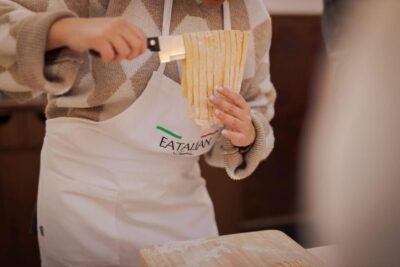
Fettuccine Pasta Cooking Class in Rome’s City Center
Read our review →Browse the lists this tour appears in