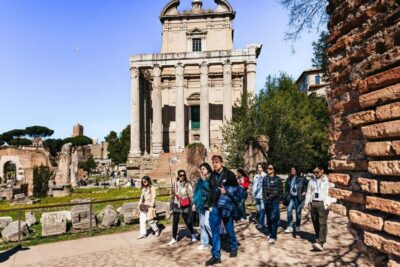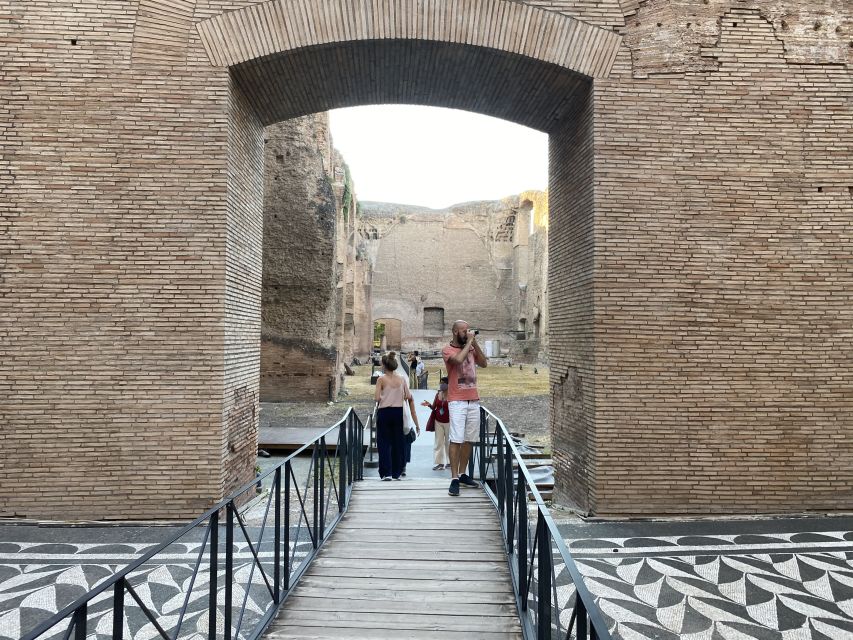
Reviewed · TOURS IN ROME
Rome: Caracalla Baths & Circus Maximus — Private or Shared
The Baths of Caracalla give you one of Rome’s clearest looks at daily life in the imperial era. Their huge brick walls, mosaic floors, and vanished rooms make the ancient bathing routine easier to picture than a pile of broken columns ever could. I like the way this tour explains both the social side of the baths and the clever engineering under your feet.
I also like the small-group format, which makes it easier to ask questions and keep up with the guide. Guides such as Chiara, Francesca, Lars, Anestis, and Mario have been praised for turning bare ruins into a story you can follow. The main drawback is Circus Maximus: little of the original arena remains, so that half of the tour depends on imagination.
At a glance
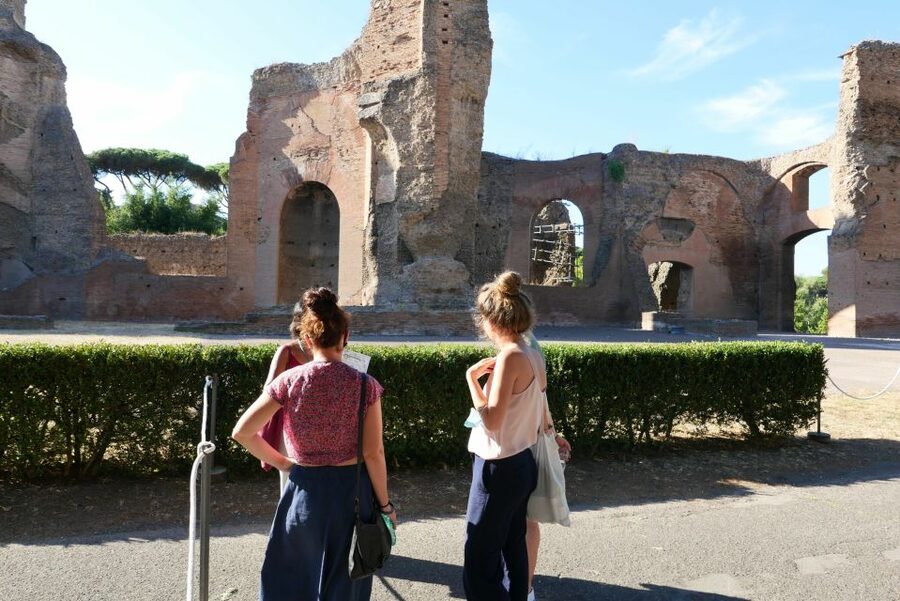
- Caracalla’s enormous bathing complex: Walk through monumental rooms, surviving mosaics, and the remains of a building designed for thousands of people.
- An archaeologist guide: Expect explanations of Roman bathing customs, underfloor heating, mosaics, public games, and early Roman myths.
- A maximum of 10 people: Small groups leave room for questions and often create a more personal visit.
- Circus Maximus in 30 minutes: Hear about chariot races and Roman games, but expect far fewer visible remains than at the baths.
- A quieter side of ancient Rome: The archaeological area feels more peaceful than the Colosseum zone.
- $77 for 90 minutes: The price makes the most sense if you value expert interpretation and a small group, rather than simply paying for access to ruins.
Why Caracalla works better than Circus Maximus
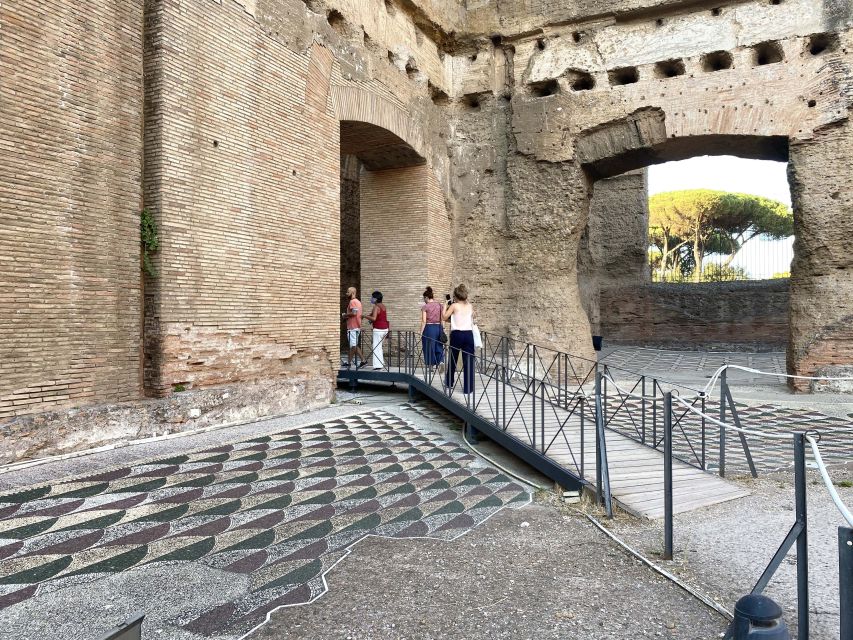
This tour pairs two Roman leisure sites, but they offer very different experiences. The Baths of Caracalla are a substantial archaeological complex with towering walls and visible decoration. Circus Maximus is an open site where the original spectacle has mostly disappeared.
That contrast matters when you decide how to spend your time. At the baths, the guide can point to actual rooms, floors, heating systems, and architectural details. At Circus Maximus, the guide supplies the structure that the site itself no longer provides.
I find this pairing useful because it shows two sides of Roman public life. The baths were places for washing, exercise, conversation, relaxation, and culture. The circus was a vast venue for public games, political theater, and noisy mass entertainment.
The tour also takes place in a greener archaeological part of Rome, close to the Colosseum but away from its densest crowds. That gives you a calmer setting, though you should not expect the same visual impact at both stops.
A few more things to do in Rome
- Rome by Golf Cart Private Tour: Beyond the Landmarks
★ 5.0 · 4,361 reviews - Early Morning Vatican, Sistine, St. Peter’s Semi or Private Tour
★ 5.0 · 3,779 reviews - Rome on a Golf Cart Semi-Private Tour Max 6 with Private Option
★ 5.0 · 2,502 reviews
Meeting at Circo Massimo
You meet at the exit of the Circo Massimo Metro station in the direction of Laurentina, in front of the FAO building. Look for a yellow sign with the local partner’s name.
Arrive at least five minutes early. There is a sign-up process before the walk begins, and arriving late could create needless stress. The meeting point is practical for anyone using the Metro, but you should check the exact station exit before setting out.
The tour begins at Viale Aventino, 3. From there, your guide takes you through the archaeological area toward the Baths of Caracalla. Hotel pickup and drop-off are not included, so you handle your own transport to and from the meeting point.
You receive a sterilized headset, a small but useful detail in a historic site where wind, traffic, and other groups can make listening difficult. The audio equipment is especially helpful if you are in the larger end of the group, though the cap is 10 people.
Walking through the Baths of Caracalla
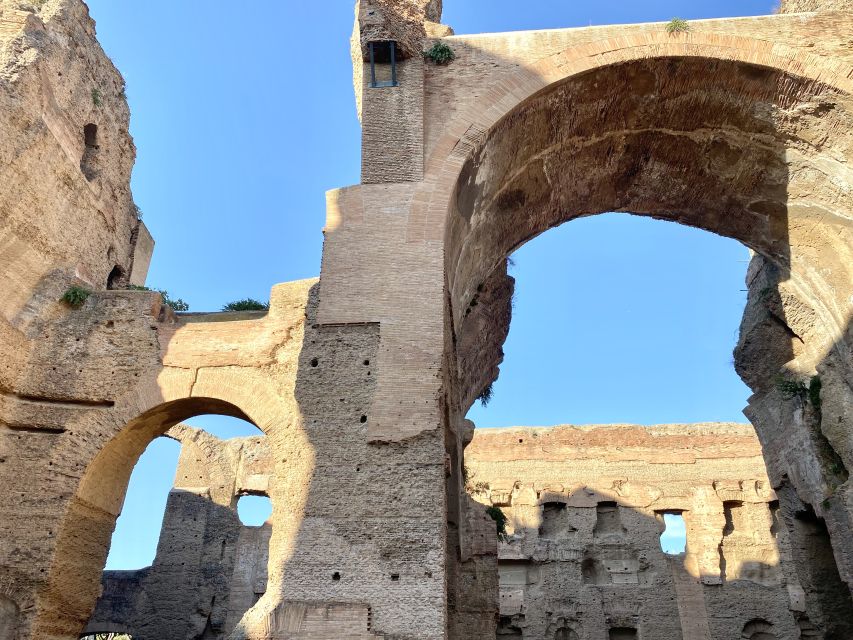
The baths are the clear centerpiece. Built during the imperial period, the complex was far more than a place to wash. Your guide explains how an ancient Roman could spend part of a day moving through different rooms and services designed for both body and mind.
You begin to understand the scale as soon as you see the remaining walls. They are not delicate fragments. They are massive stretches of brickwork that hint at the original height and size of the complex.
The guide then helps you follow the routine of a typical visit. The exact order could vary, but the important point is that Roman bathing involved a sequence of spaces, temperatures, social encounters, and physical activity. It was a public institution and a daily meeting place, not simply an ancient version of a modern shower.
Roman heating under the floor
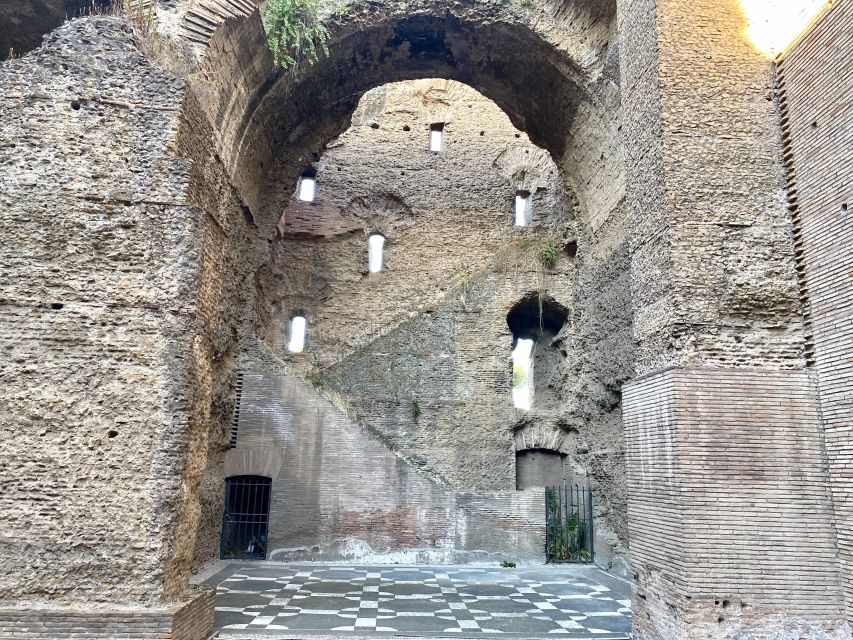
One of the most useful parts of the tour is the explanation of the heating system. Romans used a labor-intensive method that sent hot air beneath raised floors and through parts of the walls.
You can look at the surviving architecture with new eyes once you understand this system. The floor was not just a decorative surface. It was part of a carefully planned network that helped control heat in different rooms.
The guide explains how workers maintained the desired temperature and how the complex required constant labor. This is the sort of detail that turns impressive ruins into a functioning building. Instead of seeing only walls, you begin to picture fires, fuel, maintenance, water, workers, bathers, and a steady flow of people.
It is also a good reminder that Roman engineering was practical as well as grand. The baths were built to serve public life, but they depended on a large workforce operating behind the scenes.
Same base, a different kind of day:
- Vatican: Museums & Sistine Chapel Entrance Ticket
★ 4.5 · 144,003 reviews - Vatican Museums & Sistine Chapel Tour with Optional Basilica
★ 4.3 · 67,413 reviews - Colosseum, Roman Forum & Palatine Guided Tour
★ 4.7 · 63,148 reviews - Vatican Museums, Sistine Chapel & St Peter’s Basilica Guided Tour
★ 4.5 · 39,149 reviews
Mosaics, walls, and vanished grandeur
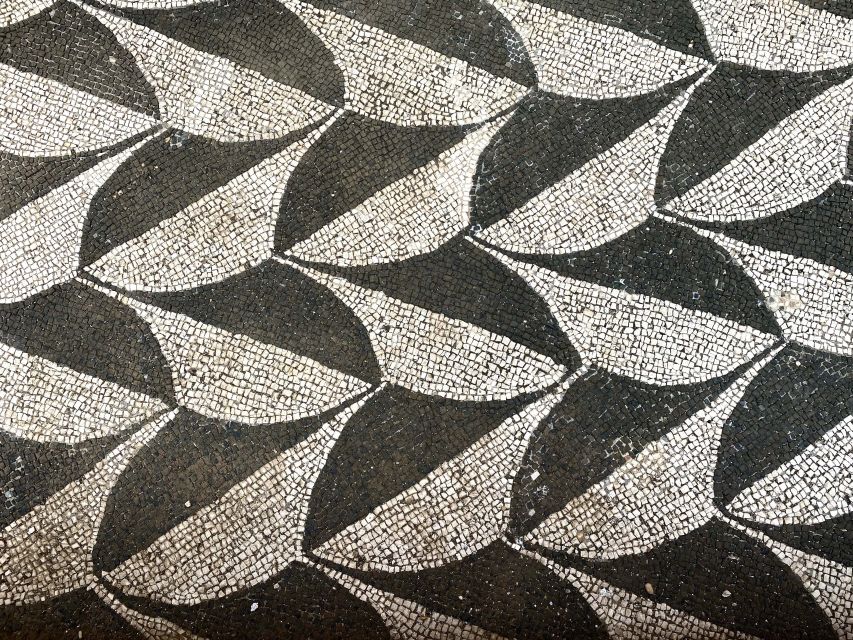
The surviving mosaics are among the most rewarding details. Geometric designs remain visible in parts of the complex, and some areas retain enough decoration to suggest how richly finished the rooms once were.
You might find yourself looking down as often as up. The height of the walls catches your attention, but the floors show how carefully the interior was designed. Even incomplete sections can reveal the standard of the original building.
Some people may expect the baths to look fully restored. They do not. The power of the place comes from the combination of preserved surfaces and missing pieces. Your guide fills in what cannot be seen, explaining how grand the complex was before centuries of change and stone removal.
The setting also helps. The baths are less frantic than the Colosseum area, and several people have found the visit peaceful as well as informative. That quieter mood gives you time to look closely rather than hurry from one photo stop to the next.
Circus Maximus and the Roman games
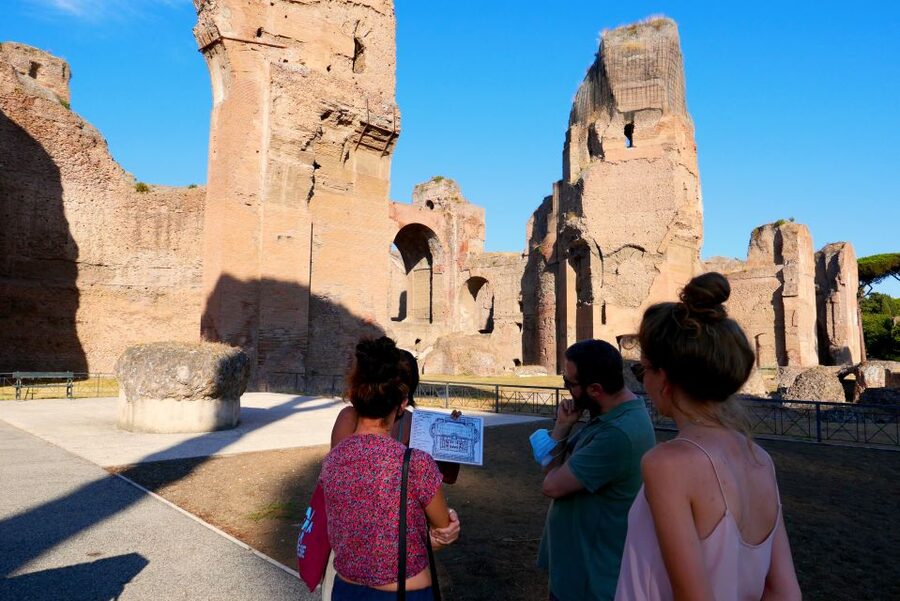
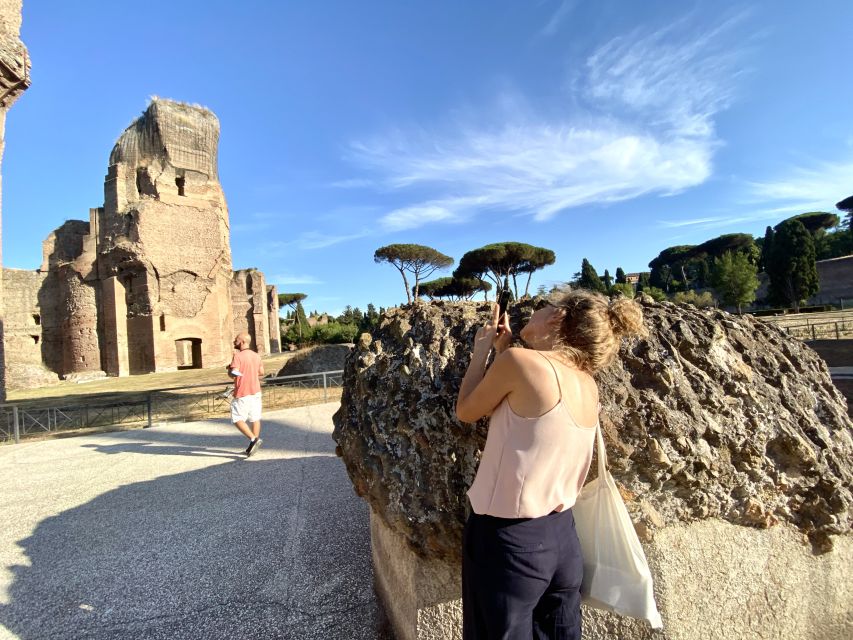
After about an hour at the baths, the tour moves to Circus Maximus for roughly 30 minutes. This was the enormous venue associated with chariot races and the Roman Ludi, public celebrations that could continue for several days and include different forms of entertainment.
Your guide talks you through the roar of the crowd, the racing, and the public excitement that once filled the site. You also hear about gladiatorial events and the role of games in Roman society.
The key point is that Circus Maximus was not a small local arena. It was planned for huge crowds and is described as the largest structure ever built for public games. The physical remains you see today do not match that description, so the guide’s storytelling does much of the work.
This is where expectations matter. You will not walk into a complete stadium with seating, gates, and a preserved racing track. Much of the site is open ground, and one person specifically found this portion less satisfying because there is not much left to see.
Still, the stop has value if you enjoy historical reconstruction. Your guide can explain how the circus functioned and how its games fit into Roman public life. The visit also reaches back to the city’s early myths and gods, connecting the site to the period before Rome became an empire.
What the guide adds
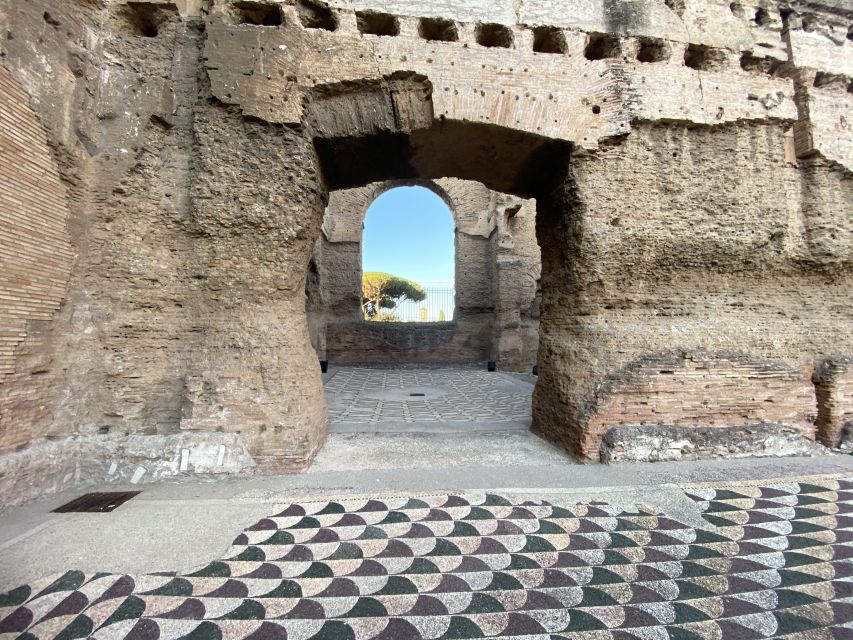
This tour depends heavily on the person leading it. The baths are impressive on their own, but their size and partial condition can leave you wondering what each room did. A strong guide gives you a map in your head.
Past guides have included Chiara, Francesca, Lars, Anestis, Mario, Sam, Alicia, and Samuele. English, Italian, Spanish, French, German, and Portuguese tours are available. Guides have been praised for clear explanations, humor, patience, and the ability to answer questions without rushing.
Several particularly strong guides have also helped visitors understand Rome beyond the formal subject. One guide used nearby buildings and monuments to explain the surroundings on the way to the baths. Another was appreciated for discussing art, architecture, reunification, and fascist-era buildings as well as ancient Rome.
That does not mean every guide will offer the same personality or amount of extra conversation. It does mean the format gives you a chance to ask. In a group of no more than 10, you are not lost in a crowd, and a private booking gives you still more control over the pace.
Occasionally, a lightly booked departure may feel almost private. Some visitors have found themselves alone or with only a few people, and the operator continued rather than canceling. That is a pleasant possibility, not something you should assume will happen.
Is $77 a fair price?
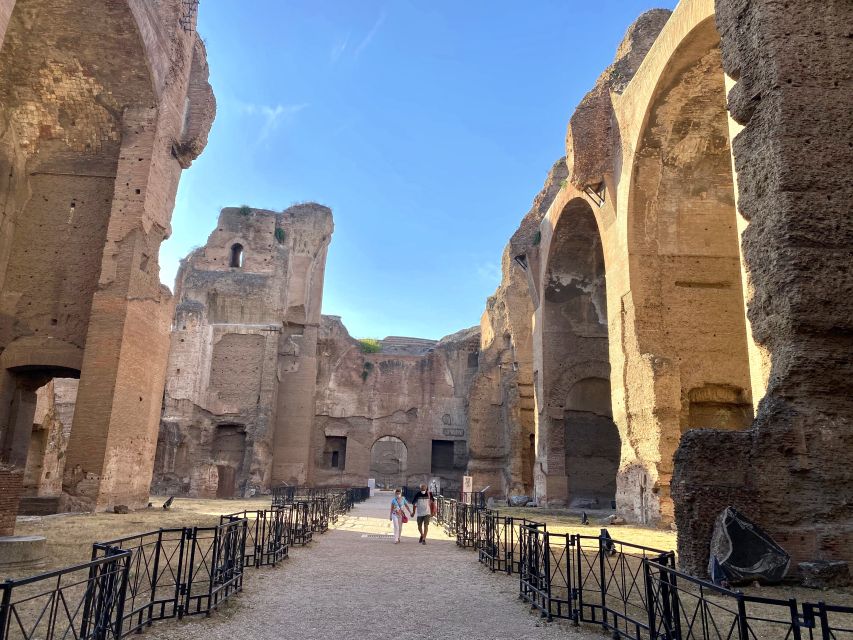
At $77 per person, this is not the cheapest way to see the Baths of Caracalla. You are paying for the entrance fee, an archaeologist guide, the headset, and on-site assistance, along with the convenience of a structured visit.
The value depends on how you like to tour. If you are comfortable reading signs and researching Roman architecture in advance, you may find the price high for 90 minutes. One visitor felt this tour cost more than other Rome activities and was less good value, despite praising the guide.
I see the price as easier to justify if you want context rather than simple admission. The heating system, bathing routine, mosaics, and missing architecture are much easier to understand with a guide who can connect the details.
The private and small-group choices also change the calculation. A private tour can suit a family that wants to ask many questions or move at its own pace. A shared group keeps the cost more manageable while retaining the benefit of live interpretation.
You should also remember that the official duration is only 1.5 hours. Some guides have gone longer when the group wanted more explanation, but you should plan around the advertised time rather than count on an extension.
Who should book this experience?
I would recommend it to you if you have already seen Rome’s headline monuments and want a quieter ancient site with a strong daily-life angle. It also suits first-time visitors who want a short introduction to Roman engineering and public entertainment without committing to a full-day archaeological tour.
Families can benefit from the clear sequence of the visit, especially if children respond better to stories about heating, racing, crowds, and daily routines than to lists of emperors. The short duration helps, though the walking surface and the size of the complex make comfortable shoes important.
History fans and architecture students will find the baths especially rewarding. You can spend much of the visit studying construction, surviving decoration, and the relationship between practical systems and public luxury.
I would hesitate to recommend it if Circus Maximus is your main reason for booking. The site has strong historical importance, but its visible remains are limited. Book this for the Baths of Caracalla, and treat the circus as a useful second chapter.
Practical details before you go
Wear comfortable walking shoes. The tour takes place outdoors and inside an archaeological monument, so sensible footwear will make the visit easier.
Large bags, trolleys, and large backpacks are not allowed inside the monuments. Pets, drones, weapons, and sharp objects are also prohibited, and baby strollers are not allowed.
The activity is wheelchair accessible, but the restrictions on bags and strollers still apply. If you need a specific arrangement, check the details before booking.
Participants under 18 and European citizens under 25 must carry an official document or a digital copy. Weather can also affect the tour. In poor conditions, the activity may be canceled, with an alternative date or full refund offered.
You can cancel up to 24 hours in advance for a full refund, and the reserve-now, pay-later option leaves your plans flexible. Languages include English, Italian, Spanish, French, German, and Portuguese.
My verdict: book it for the baths
I would book this tour if I wanted to understand how Roman public life worked, not just photograph ancient walls. The Baths of Caracalla deliver the memorable portion: huge masonry, surviving mosaics, clever heating, and enough structure for a guide to rebuild the experience in your mind.
The 30-minute Circus Maximus stop is less visually rewarding, so set your expectations correctly. You are visiting the place of the stadium, not a complete stadium.
At $77, the tour is best value for visitors who want a small group and an expert explanation. If you prefer to explore independently or need a longer itinerary for the same price, it may feel costly. For most history-minded visitors, though, the calm setting and superb baths make this a worthwhile break from Rome’s busiest sights.
FAQ
How long does the tour last?
The scheduled duration is 1.5 hours. About one hour is spent at the Baths of Caracalla and about 30 minutes at Circus Maximus.
Where is the meeting point?
Meet at the exit of the Circo Massimo Metro station in the direction of Laurentina, in front of the FAO building. Look for a yellow label showing the local partner’s name.
What languages are available?
The tour is offered in English, Italian, Spanish, French, German, and Portuguese.
How many people can join the shared tour?
The group has a maximum of 10 participants. Private and small-group options are also available.
Is the tour accessible by wheelchair?
The activity is listed as wheelchair accessible. Large bags, trolleys, baby strollers, and large backpacks are not allowed inside the monuments.
What happens if the weather is bad?
The activity may be canceled in unfavorable weather. If that happens, you can choose an alternative date or receive a full refund.
Just added in Rome
- Civitavecchia Private Transfer: From the Port to Rome Airport★ 5.0 · 309 reviews
- Civitavecchia Shore Excursion: Best of Rome Private Tour★ 5.0 · 247 reviews
- Civitavecchia Private Transfer from ship to FCO airport or Rome★ 5.0 · 245 reviews
- Food Tasty and History Tour in Civitavecchia★ 5.0 · 256 reviews
- Palatine Hill and Roman Forum Tour with Fast-Track Entrance★ 4.2 · 417 reviews
- Tivoli: Villa D’Este & Villa Adriana Pass & App Audioguide★ 4.4 · 364 reviews
- Tivoli: Villa D’Este Entry Ticket and App Audio Guide★ 4.3 · 191 reviews
- Vatican Museums & Sistine Chapel Skip-the-Line Guided Tour★ 4.6 · 254 reviews
Tours in Rome, compared.
Vatican: Museums & Sistine Chapel Entrance Ticket
Read our review →
Vatican Museums & Sistine Chapel Tour with Optional Basilica
Read our review →
Colosseum, Roman Forum & Palatine Guided Tour
Read our review →
Vatican Museums, Sistine Chapel & St Peter’s Basilica Guided Tour
Read our review →
Colosseum & Forum with Audio Guide App -Optional Arena
Read our review →
Pantheon Fast-Track Ticket and Official Audio Guide
Read our review →
City Sightseeing Hop-on Hop-off Bus with Audioguide
Read our review →