
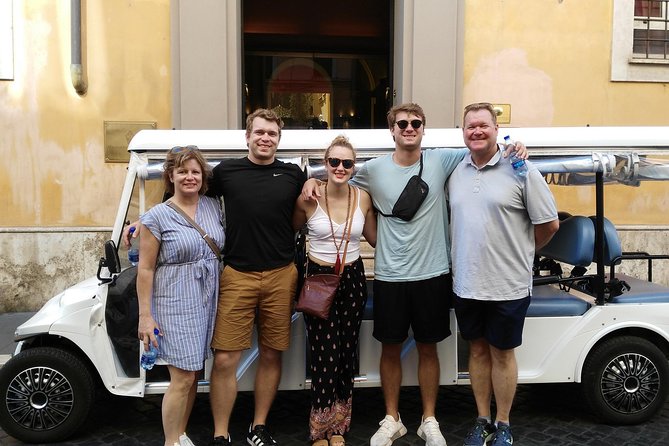
Reviewed · GOLF CART TOURS
Rome on a Golf Cart Semi-Private Tour Max 6 with Private Option
Rome is a city built for wandering, but its ancient center covers a lot of ground. This three-hour golf cart tour gives you a fast, open-air look at Rome’s major sights, from the Arch of Constantine to the Spanish Steps, without asking you to march across town in the heat.
I like the maximum six-person group, which keeps the ride personal and makes it easier to ask questions. I also like the mix of famous monuments and quieter stops, including Michelangelo’s church near Piazza della Repubblica and the sweeping view from Janiculum Hill. The main trade-off is simple: you see many places from outside, but you do not have time for long visits inside monuments or museums.
Key reasons to consider this Rome tour
- A full city overview in three hours: Cover ancient ruins, Baroque squares, fountains, and hilltop views in one outing.
- A true small-group ride: The semi-private vehicle is limited to six people, with a private option available.
- Useful for hot days or limited mobility: The cart cuts down on long walks while keeping you outdoors and close to the streets.
- A strong first-day choice: Use the route to decide which sights deserve a longer visit later.
- Local guides make the difference: Guides such as Andy, Luca, Riccardo, Emmanuel, Francesca, and others are praised for storytelling, local tips, and calm driving.
- A few stops go beyond the standard checklist: Look for the Michelangelo-designed church, Janiculum Hill, Largo di Torre Argentina, and smaller Roman corners.
Why a golf cart works so well in Rome
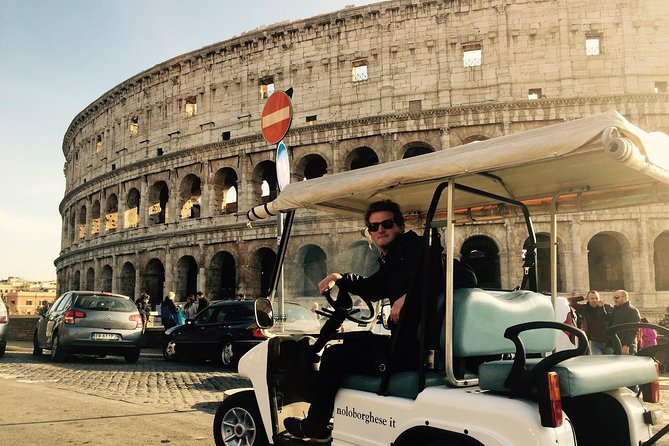
Rome can be tiring before you realize how far you have walked. The historic center is not laid out like a neat museum district. Ancient ruins sit beside busy roads, grand churches appear on side streets, and a short trip on the map can become a long walk over uneven pavement.
A golf cart solves much of that problem. You remain outside, so you still feel the traffic, church bells, narrow streets, and everyday Roman life, but you are not spending the whole day on foot. The open design also gives you a better view than a closed van.
The cart is especially useful in summer. Several guides have been praised for keeping the ride comfortable during very hot weather, and one family used it after a Vatican visit when everyone was already worn out. That is a smart pairing: schedule your more demanding indoor visit separately, then use the cart for a relaxed city overview.
Do not expect a hop-on, hop-off bus. The cart can reach central streets and pull close to many points of interest, but you will still get out for short walks, photos, and a better look. Three hours moves quickly, so the experience is about seeing Rome as a whole rather than studying each monument in detail.
Other easy ways to cover Rome:
- Rome by Golf Cart Private Tour: Beyond the Landmarks
★ 5.0 · 4,361 reviews - Rome Highlights by Golf Cart Private Tour
★ 5.0 · 2,379 reviews - Rome: City Highlights Golf Cart Tour
★ 4.8 · 857 reviews
Starting at Piazza della Repubblica
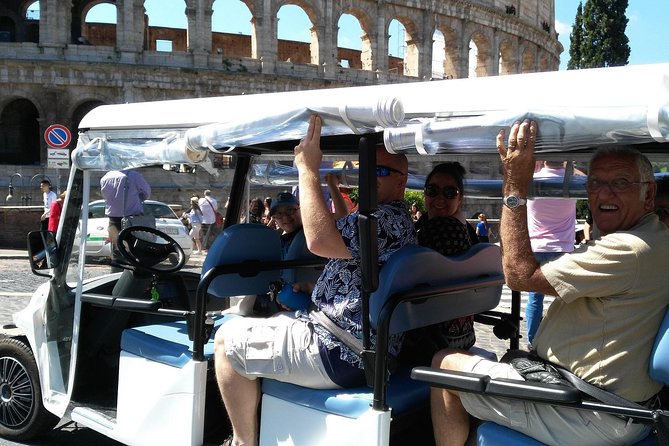
The tour begins at Piazza della Repubblica, a central location near public transportation. This is a practical starting point because you can reach it without first crossing the entire historic center.
Be precise about the meeting point. One person nearly missed the tour after waiting about a block away, so check the exact location in your confirmation before setting out. Piazza della Repubblica is large enough that a small misunderstanding can cost valuable time.
From here, your guide introduces the plan and begins threading through Rome’s central districts. Since the cart holds no more than six people, you should have a better chance to hear the guide than you would on a large bus. The private option makes even more sense if you want to control the pace or shape the route around your group.
Michelangelo’s church on a quiet side street
One early stop offers a change of mood. Near Piazza della Repubblica, you can see a church designed by Michelangelo on a side street that many people miss while rushing toward Rome’s biggest monuments.
This is the kind of stop that adds character to the outing. You are not only checking off famous names. You are also getting a glimpse of how Rome hides major art and architecture in ordinary-looking corners.
The stop is brief, so think of it as an introduction rather than a full church visit. If the interior interests you, note its location and consider returning later on your own.
Ancient Rome around the Arch of Constantine and Palatine Hill
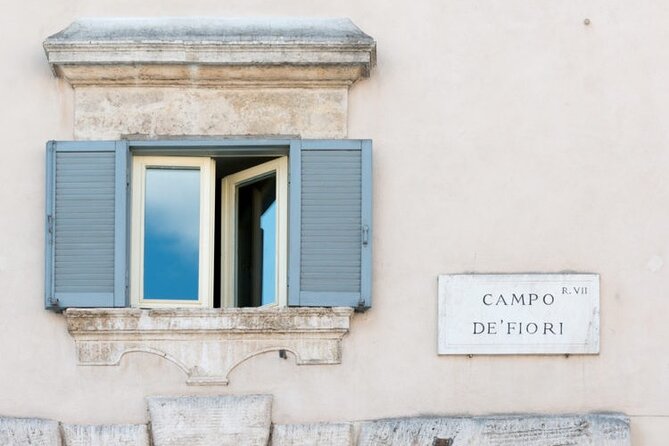
The route then moves into the ancient heart of Rome. The Arch of Constantine, built in 312 AD to mark Emperor Constantine’s victory, is one of the clearest surviving reminders of imperial power.
The arch is also a useful place to get your bearings. It sits near the Colosseum and the broad archaeological area that once formed the center of Roman public life. Your guide can help connect the monument to the larger setting instead of leaving it as an isolated photo stop.
Nearby Palatine Hill adds legend and status to the story. Romans traditionally linked the hill with the birth of the city, and emperors and wealthy families later made it their home. From the cart, you get an overview of the hill and its ruins, but you should not confuse this pass with entry to the Palatine archaeological site.
That distinction matters. If walking among the ruins is a priority, you need a separate ticket and more time. The golf cart tour is better for seeing where the hill fits into Rome’s story and deciding if you want to return.
A few more things to do in Rome
- Early Morning Vatican, Sistine, St. Peter’s Semi or Private Tour
★ 5.0 · 3,779 reviews - Rome Private Arrival Transfer: Fiumicino Airport to Hotel in Rome
★ 4.5 · 2,492 reviews - Private Pompeii, Positano & Amalfi coast Tour from Rome
★ 4.5 · 1,888 reviews - Rome: Caracalla Baths & Circus Maximus — Private or Shared
★ 4.7 · 835 reviews
Circus Maximus and the Mouth of Truth
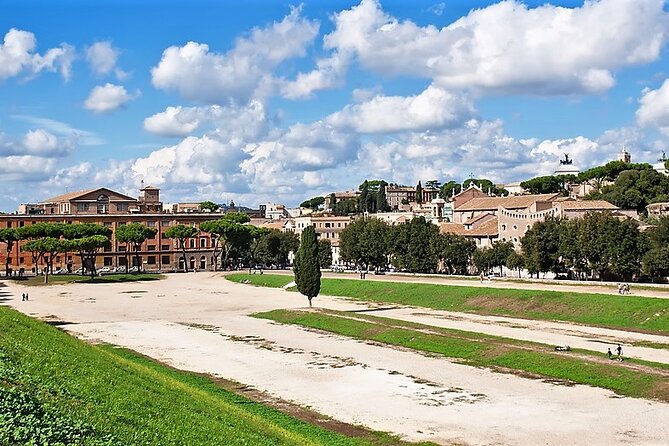
Circus Maximus gives you another sense of scale. This was ancient Rome’s largest stadium, where chariot races drew crowds said to number more than 150,000. Today, the open space can look surprisingly plain, which makes a guide’s explanation especially useful.
You may find this stop less visually dramatic than the Colosseum, but it helps you picture ancient Rome as a city built for mass entertainment. The cart lets you reach it without adding a long walk to your day.
At the Mouth of Truth, you get one of Rome’s most playful traditions. The ancient marble mask is said to bite the hand of a liar. It is a quick, amusing stop, and it works well for families because it gives the tour a break from dates and emperors.
Depending on the timing and crowd, you may have to keep this visit short. The point is the ritual and the photo, not a long archaeological discussion.
Capitoline Hill and Michelangelo’s Rome
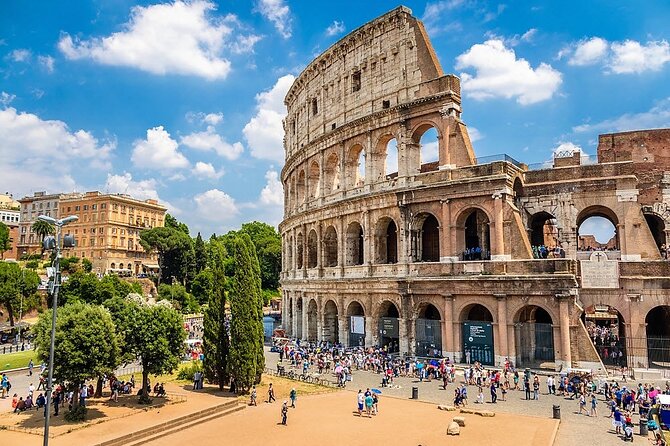
Capitoline Hill brings you into the political and religious center of ancient Rome. Michelangelo later redesigned the hill, including its grand piazza, giving the space a more ordered Renaissance feel.
This is one of the tour’s most rewarding contrasts. In a few minutes, you move from the rough remains of imperial Rome to a carefully shaped civic square. The nearby museums also make Capitoline Hill a good place to mark for a return visit.
The cart helps here because the hill sits above the surrounding streets. You will still need to walk around the piazza, but you avoid using your limited energy simply to get from one district to the next.
Julius Caesar’s death at Largo di Torre Argentina
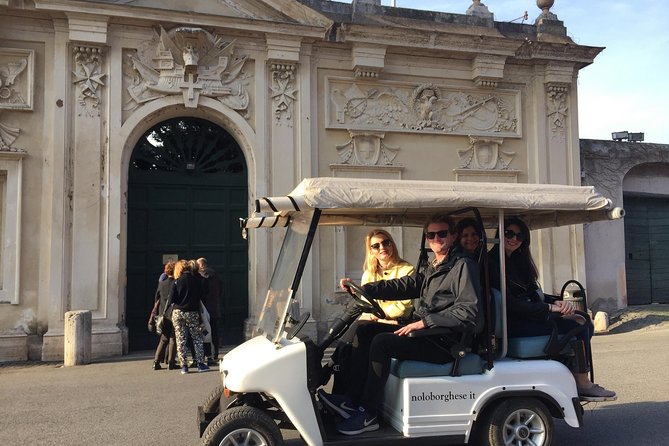
Largo di Torre Argentina is one of the more unusual stops. Ancient temple ruins sit in the middle of the modern city, and the site is linked to Julius Caesar’s assassination.
It is not as polished or instantly recognizable as the Trevi Fountain, but that is part of its appeal. You see Rome’s layers piled together: old stone, modern traffic, cats and city life, and a major turning point in Roman history.
The stop is best treated as a visual lesson in how much ancient Rome remains under the present-day city. You will likely spend more time listening and looking than walking through a formal site.
Piazza Venezia and the Pantheon’s famous portico
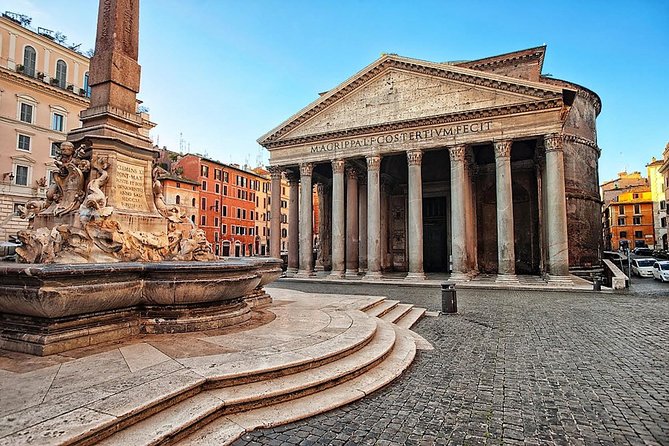
Piazza Venezia is a major city junction, dominated by the huge Vittorio Emanuele II Monument. It can feel noisy and traffic-heavy, but that is precisely why the cart is useful. You can take in the scale without needing to navigate every crossing on foot.
The monument itself divides opinion. Some people love its bright white marble and broad stairways; others find it oversized. Either way, it is impossible to miss and helps explain Rome’s modern national story.
At the Pantheon, the tour focuses on the iconic portico. The columns and triangular front make one of the city’s most recognizable views, but this is another place where you should understand the limit of the outing. Seeing the exterior does not include a full interior visit.
If the Pantheon’s dome and interior are high on your list, return separately. The cart tour gives you the setting and the chance to photograph the front without turning the entire route into a queue-based sightseeing day.
Trevi Fountain and Piazza Navona
The Trevi Fountain is one of Rome’s essential stops. Marble figures and cascading water fill a surprisingly tight square, creating one of the city’s most dramatic street scenes.
Crowds can be heavy, especially at popular times. Your guide can get you close to the action, but you should not expect a quiet moment or an uninterrupted photo. The fountain is still worth seeing, and the cart saves you the effort of walking there from another district.
Piazza Navona offers a different kind of Roman spectacle. Its Baroque fountains, open space, and long oval shape reflect the stadium that once occupied the site. Today, it is a place to watch street life and admire the architecture.
The guide’s storytelling matters here. Without context, the square can look like a pretty plaza with fountains. With a good explanation, you begin to see how ancient foundations, Baroque design, and modern Roman life share the same space.
Janiculum Hill for the best broad view
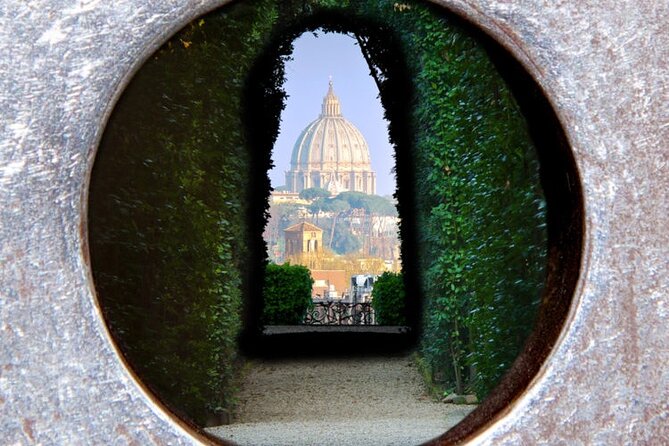
Janiculum Hill is the route’s big viewpoint. From above, Rome opens out in a way that is hard to understand while you are down among the ruins and narrow streets.
This stop gives the tour breathing room. After a run of monuments, you get a wider view and a chance to understand the city’s shape. It is also a strong photo stop, especially if the air is clear.
The hill is one reason the cart can cover more than a standard walking tour. Reaching a high viewpoint on foot would take time and energy that could otherwise be spent seeing another district. The visit is still weather-dependent in practical terms, since haze can soften the view.
Finishing at the Spanish Steps
The tour ends in central Rome, with the Spanish Steps among the final sights. The staircase connects the city’s shopping and café district with Trinità dei Monti above.
This is a fitting finish because it brings together architecture, public life, and the pleasure of simply watching Rome move around you. You are not far from other central sights, so the end point gives you options for lunch, dinner, shopping, or a return visit to something you saw from the cart.
The experience ends in Rome’s city center rather than at a distant transport hub. That makes it easier to continue your day, though the exact final drop-off can depend on the route and traffic.
What the guides add to the ride
The vehicle is only half the experience. The guide determines whether the route feels like a rushed list of monuments or a connected story about Rome.
Guides named in the feedback include Andy, Luca, Riccardo, Emmanuel, Xander, Matt, Massimo, Alice, Valentina, Francesco, Chiara, Brando, Francesca, and Carlo. The strongest praise centers on clear stories, local perspective, good humor, careful driving, and the ability to answer questions without making the outing feel like a lecture.
Several guides adjusted the route for the group. Alice helped a family member with limited mobility and brought the cart as close as possible to stops. Other guides tailored the ride to family interests, kept teenagers involved, or added local suggestions for the rest of the stay.
You cannot guarantee a particular guide from the details provided, so book this for the format and route rather than one individual. Still, the repeated pattern is encouraging: the guide is expected to do more than drive.
Is $168.09 a fair price?
At $168.09 per person, this is not the cheapest way to see Rome. You are paying for a small group, an open-air vehicle, a local English-speaking guide, and the ability to cover a wide area without organizing several taxi rides.
The value improves if you have only one or two days in Rome, are traveling with older relatives, have limited mobility, or want a quick overview before choosing where to return. It also makes sense after a demanding Vatican visit or on a hot afternoon when a long walking route sounds miserable.
The value is weaker if you prefer slow museum visits, already know Rome well, or mainly want to enter the Colosseum, Pantheon, and Palatine Hill. This tour does not replace admission tickets or a detailed archaeological tour.
A private upgrade costs more, but it may be worthwhile for a family with a fixed schedule or a group with specific interests. The semi-private version is the better value for most people who want personal attention without paying for the entire cart.
Who should book this experience?
I would put this tour near the start of a Rome visit. It gives you a fast mental map, shows you which neighborhoods deserve more time, and can prevent you from wasting half a day walking between disconnected sights.
It suits families, first-time visitors, couples, and anyone who wants history without a full day of walking. The open cart also works well for people who want to feel the city around them rather than watch Rome through a van window.
You should choose something else if your main goal is deep time inside museums or archaeological sites. In that case, spend three hours at one major complex with an entry ticket and a specialist guide.
You can cancel for a full refund up to 24 hours before the start time. Changes or cancellations inside that window are not accepted for a refund, so keep that cutoff in mind when planning around flights, trains, or weather.
Should you book the Rome golf cart tour?
Book it if you want to see a lot of Rome quickly, prefer a small group, or need to reduce the amount of walking without giving up the open-air feel of the city. The mix of iconic sights, Janiculum Hill, side-street architecture, and local stories gives you more than a simple monument checklist.
I would especially recommend it for your first day or after a major indoor visit. Just arrive at the exact meeting point, understand that most sights are viewed from outside, and save time later if you want to enter the Pantheon, Palatine Hill, or museums. For those limits, this is a practical and enjoyable way to get your bearings fast.
FAQ
Where does the Rome golf cart tour start?
The tour starts at Piazza della Repubblica in central Rome, at P.za della Repubblica, 00185 Roma RM, Italy.
Where does the tour finish?
The tour finishes in Rome city center. The supplied information does not name one exact final street or piazza.
How long is the tour?
The tour lasts approximately three hours.
How many people can join the semi-private tour?
The semi-private golf cart tour has a guaranteed maximum of six travelers.
Is a private tour available?
Yes. You can upgrade to a private tour for a more personal experience.
Is the tour offered in English?
Yes. The experience is offered in English with a professional local guide.
Can I cancel for a full refund?
Yes, if you cancel at least 24 hours before the experience start time. Cancellations or changes made less than 24 hours before the start time are not accepted for a refund.
Just added in Rome
- Civitavecchia Private Transfer: From the Port to Rome Airport★ 5.0 · 309 reviews
- Civitavecchia Shore Excursion: Best of Rome Private Tour★ 5.0 · 247 reviews
- Civitavecchia Private Transfer from ship to FCO airport or Rome★ 5.0 · 245 reviews
- Food Tasty and History Tour in Civitavecchia★ 5.0 · 256 reviews
- Palatine Hill and Roman Forum Tour with Fast-Track Entrance★ 4.2 · 417 reviews
- Tivoli: Villa D’Este & Villa Adriana Pass & App Audioguide★ 4.4 · 364 reviews
- Tivoli: Villa D’Este Entry Ticket and App Audio Guide★ 4.3 · 191 reviews
- Vatican Museums & Sistine Chapel Skip-the-Line Guided Tour★ 4.6 · 254 reviews
Golf Cart Tours, compared.
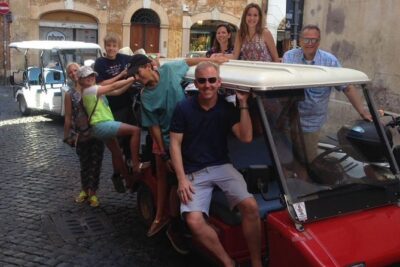
Rome by Golf Cart Private Tour: Beyond the Landmarks
Read our review →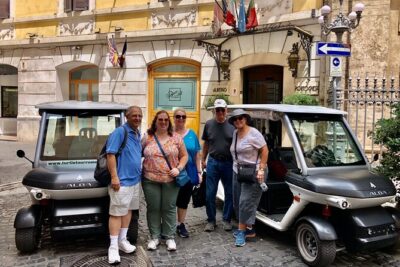
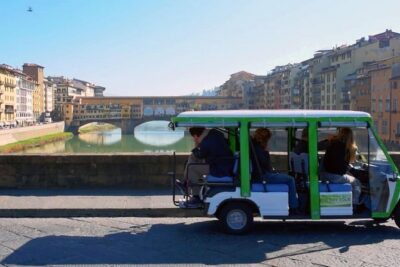
Golf Cart Tour to Fiesole Roman Theatre and Museum
Read our review →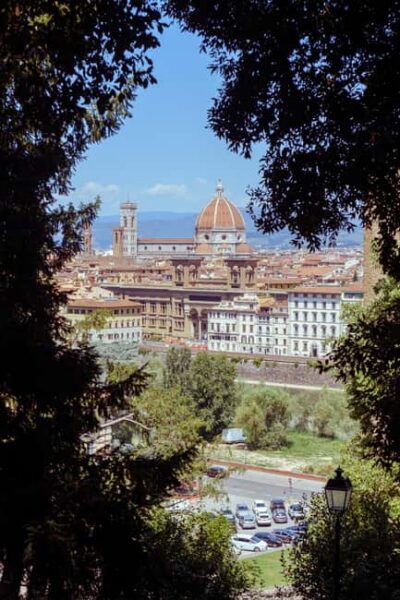
Eco-Friendly Golf Cart City Tour with Audio Guide
Read our review →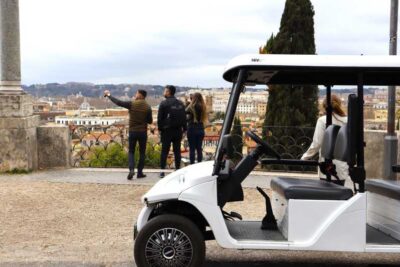
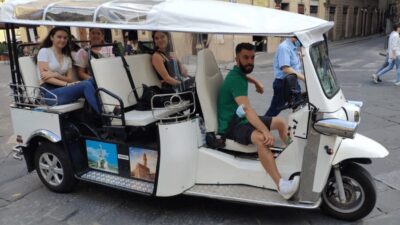
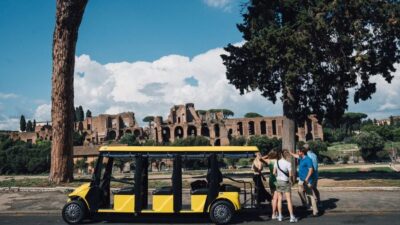
City Highlights Golf Cart Tour with Local Guide
Read our review →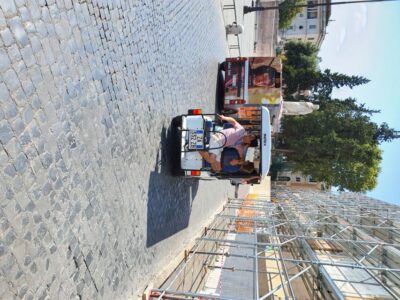
Browse the lists this tour appears in