
Reviewed · GOLF CART TOURS
Rome by Golf Cart Private Tour: Beyond the Landmarks
Rome by golf cart gives you something most walking tours cannot: a broad view of the city without wearing out your feet. In two or three hours, your private guide can connect the Colosseum, Aventine Hill, Piazza Navona, the Spanish Steps, and lesser-known churches into one sensible route.
I like the freedom to set priorities at the start, and I like the access to narrow streets and hilltop viewpoints that are awkward to reach on foot. Guides such as Francesca, Gabriel, Giulio, and Angelo are praised for warm, story-filled narration. The tradeoff is clear: this is a sightseeing tour, not an inside visit, so tickets to the Colosseum, Pantheon, Vatican Museums, and other paid sites are not included.
The best reasons to choose this Rome golf cart tour
- A private route, not a fixed loop: Tell your guide what matters most, then build a realistic plan around your time.
- Rome without the long marches: The cart handles hills, traffic, and wide distances between central sights.
- Small details along the way: Expect stories about churches, fountains, ancient monuments, Jewish Rome, and local neighborhoods.
- Excellent first-day orientation: You can see the city’s main shape before choosing where to return for longer visits.
- Useful for mixed-ability groups: A guest who walks with a stick described the cart as a way to see far more than was possible on foot.
- Full-day value: The longest option includes a lunch break and gives your guide time to add quieter corners and extra stops.
What the private format really gives you
The tour begins with pickup at a centrally located Rome hotel, provided you enter the correct hotel address in advance. If your hotel is outside the central area, you start at Rolling Rome’s office at Piazza del Gesù 47. The tour can also finish at your hotel, another point in Rome’s historic center, or the office.
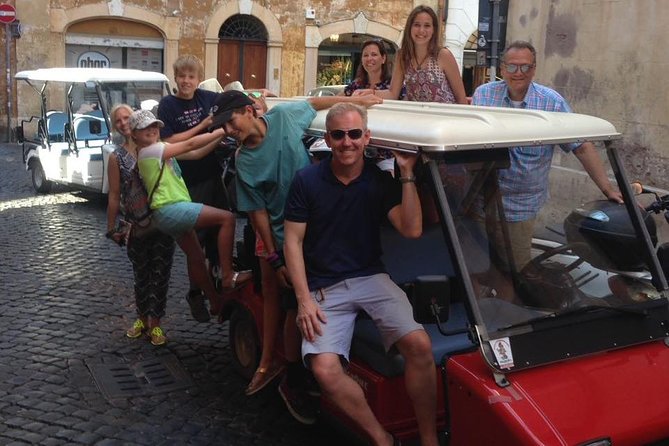
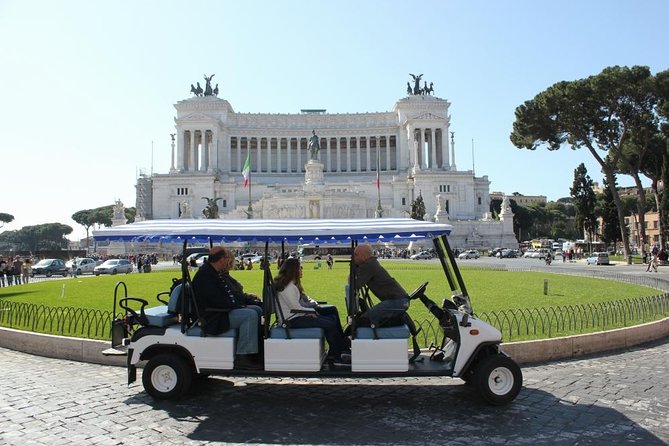
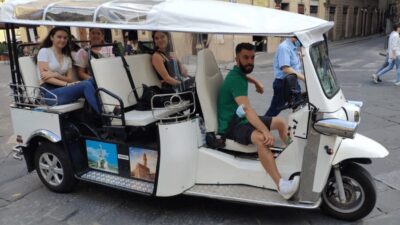
You meet an English-speaking driver-guide and settle into a covered, street-legal golf cart. Most carts seat six, with four positions facing forward, including the driver’s position, and two facing backward. Seat belts and side protection are provided, and rain covers keep the tour running in wet weather.
At the beginning, explain what you have already seen and what you most want to visit. Your guide then works out a route that fits the clock. The long list of possible stops is a menu, not a promise that every site will fit. A three-hour tour might cover six or seven major points, while the full-day option allows a much wider circuit.
That flexibility is the heart of the experience. If you have already visited the Colosseum, you can spend more time on churches, viewpoints, or neighborhoods. If this is your first day in Rome, you can ask for a broad introduction to the central sights. Guides such as Francesca and Gabriel have been praised for adjusting the route rather than forcing every group through the same sequence.
Other easy ways to cover Rome:
- Rome on a Golf Cart Semi-Private Tour Max 6 with Private Option
★ 5.0 · 2,502 reviews - Rome Highlights by Golf Cart Private Tour
★ 5.0 · 2,379 reviews - Rome: City Highlights Golf Cart Tour
★ 4.8 · 857 reviews
Colosseum, Circus Maximus, and the ancient city
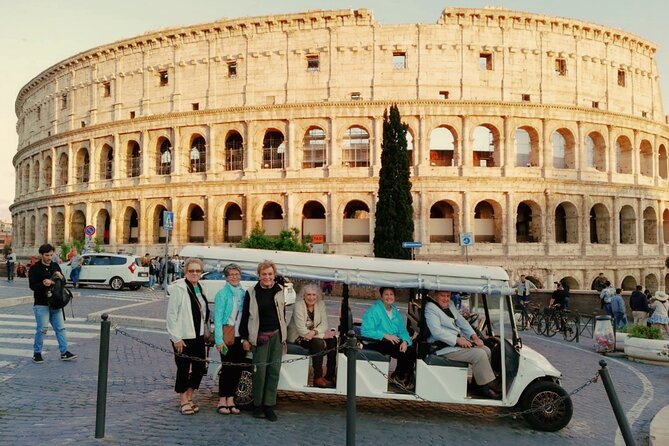
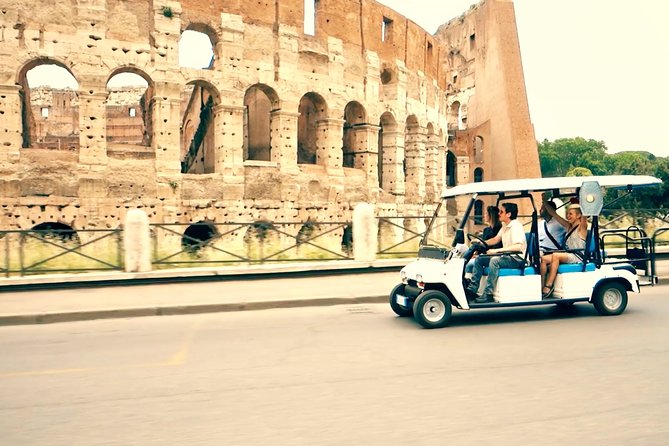
The Colosseum is usually a quick exterior stop, around 15 minutes in the suggested plan. Your guide can point out its enormous ring of arches and explain its role as an arena for gladiatorial contests and public spectacles. The cart lets you approach without committing half a day to the visit.
That last point matters. The Colosseum deserves an inside visit if it is high on your list, but this tour does not provide admission. You will see it from outside, take photographs, and hear context before returning later with a timed ticket if you choose.
Nearby, Circus Maximus offers a very different view of ancient Rome. The former chariot-racing ground now reads as a broad open space, and a short stop helps you understand its size. The suggested visit lasts about 10 minutes, enough for an explanation and a look across the site, but not enough for an extended archaeological examination.
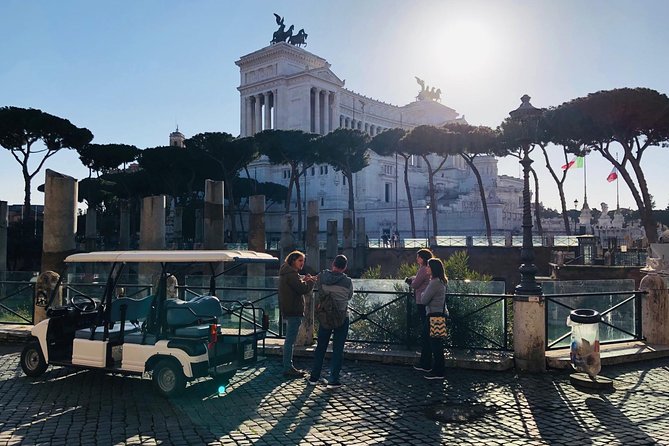
The route may also include the Arch of Constantine, Trajan’s Column, Piazza Venezia, and Teatro di Marcello. Trajan’s Column is especially rewarding from street level because its carved spiral tells the story of the emperor’s Dacian wars. Teatro di Marcello offers a fine lesson in how Rome keeps adding new lives to old buildings. It is older than the Colosseum and now includes privately owned structures.
Piazza Venezia is noisy and full of traffic, but it is also a useful crossroads for Rome’s ancient and modern stories. A guide can help you decide where to look first instead of leaving you to sort out the monuments alone.
Aventine Hill and Janiculum Hill for the city views
The golf cart earns its keep on Rome’s hills. On the Aventine, you may visit the Giardino degli Aranci, the Orange Garden, for a wide view over Roman rooftops. It is a calm pause after the traffic below, and the viewpoint helps you understand the city’s relationship to the Tiber and its historic center.
The Knights of Malta keyhole is another popular stop. Looking through it gives you a carefully framed view toward St. Peter’s Basilica, with the added novelty of peering into the territory of a small sovereign order. The stop is brief and free, but lines can affect the timing, so you should not expect to linger indefinitely.
Janiculum Hill supplies another strong panorama. The Fontana dell’Acqua Paola, known as Il Fontanone, marks the end of the restored Acqua Paola aqueduct and looks across toward Trastevere. The proposed stop is only about five minutes, but the fountain and view make it a good photographic pause.
The Garibaldi Monument sits higher on the same hill and connects the view to Italy’s unification. If you arrive around noon, you may hear the famous cannon fire. Timing is important here, so ask your guide at the start if this is a priority.
Churches with surprises inside
Some of the best moments on this tour are not the largest monuments. At Chiesa di Sant’Ignazio di Loyola, your guide can point out the painted ceiling and the clever illusion that creates the impression of a dome. The church is a good reminder that Rome’s visual drama is not limited to the Vatican.
Basilica of San Pietro in Vincoli houses Michelangelo’s Moses. The suggested stop lasts about 10 minutes and admission is free, making it an efficient addition to a route focused on art. You will not get the same extended study as on a dedicated museum visit, but the church gives you a memorable close look at one of the city’s famous sculptures.
The Caelian Hill offers another quieter section of Rome. Here you may see the church of Santi Giovanni e Paolo, remains connected with the Temple of Hadrian, and Villa Celimontana. The suggested 20-minute stop makes this one of the more substantial pauses on the menu.
One particularly useful detail from the tour is the guide’s ability to show a beautiful church that some people compare favorably with the Sistine Chapel’s ceiling. The exact route depends on your guide and available time, so ask specifically for lesser-known churches if that is what you want.
A few more things to do in Rome
- Early Morning Vatican, Sistine, St. Peter’s Semi or Private Tour
★ 5.0 · 3,779 reviews - Rome Private Arrival Transfer: Fiumicino Airport to Hotel in Rome
★ 4.5 · 2,492 reviews - Private Pompeii, Positano & Amalfi coast Tour from Rome
★ 4.5 · 1,888 reviews - Rome: Caracalla Baths & Circus Maximus — Private or Shared
★ 4.7 · 835 reviews
Squares, fountains, and Rome’s outdoor theater
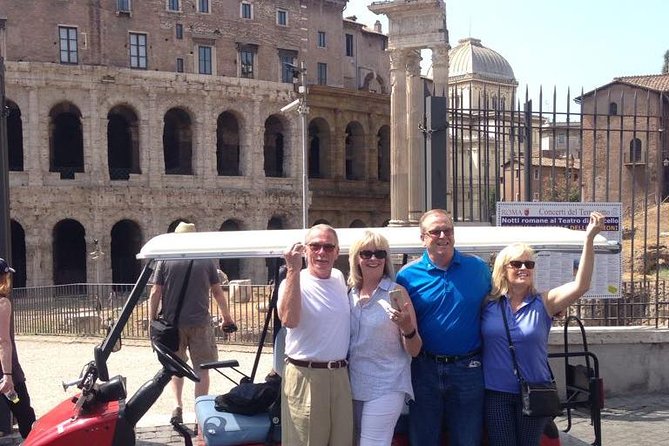
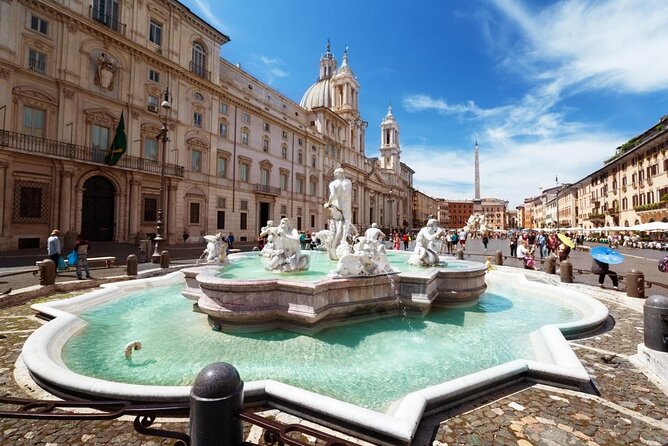
Piazza Navona is one of the surest highlights. Its long oval shape follows the outline of an ancient stadium, and Bernini’s Fountain of the Four Rivers dominates the center. Your guide can explain the rivalry between Bernini and Borromini, a story that gives the fountain more meaning than a quick photograph alone.
The tour may also stop at Fontana della Terrina, a smaller fountain with a romantic setting and its own local story. Rome rewards curiosity here. A short explanation can turn an ordinary-looking square into a place you remember.
The Spanish Steps are another ten-minute stop in the suggested plan. Their curves, straight flights, terraces, and views make them a fine example of Roman Baroque design. The area is often crowded, and the cart will not turn the steps into a quiet private space. Still, arriving with a guide helps you understand the design rather than simply joining the crowd for a picture.
The Mouth of Truth is a playful stop. You can place your hand in the ancient marble face and test the medieval tale that liars lose their fingers. Admission is not included, and the stop is brief. If you want to spend more time inside nearby churches or archaeological sites, tell your guide before the route is set.
Villa Borghese, Trastevere, and the Jewish Ghetto
Villa Borghese gives the tour a greener break from stone and traffic. The route may pass through the park and continue toward the Pincian Hill, where you can look toward Piazza del Popolo, St. Peter’s, and the historic center. The suggested 15-minute stop is enough for a view and orientation, but not for a full visit to the Borghese Gallery.
You can also pass through Trastevere, once associated with fishermen and now filled with restaurants, bars, and narrow lanes. The cart is useful here because it can carry you through more of the neighborhood than your feet may manage during a packed sightseeing day. Ask for time to pause if you want to explore on foot.
The Jewish Ghetto adds important historical context. Rome’s Jewish community is one of the oldest continuing Jewish communities in the world, and the neighborhood’s lanes, restaurants, and monuments tell a story that is easy to miss when you focus only on imperial Rome and Baroque fountains.
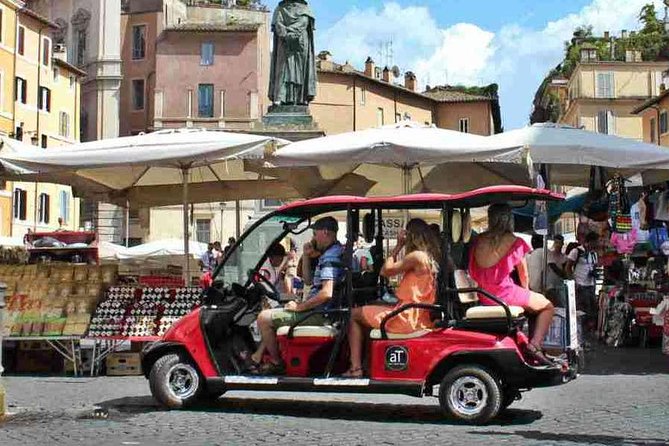
Campo de’ Fiori and the Giordano Bruno Monument may also be included. The market and surrounding streets are lively during the day, while Bruno’s statue recalls the darker religious and political history behind the square’s cheerful present-day setting. A guide can connect those layers in a way a quick pass-through cannot.
How much can you see in two, three, or seven hours?
The tour is offered from roughly two to seven hours. A short version works best if you have one clear goal, such as the main ancient sights or the city’s best viewpoints. A three-hour route is a strong introduction and may cover six or seven places, depending on traffic, walking time, and your choices.
The full-day option is the most useful choice for a first visit if you want both major sights and quieter corners. It includes a lunch break, and the extra hours let your guide avoid racing from one photograph to the next. One successful full-day plan included gardens, viewpoints, illuminated monuments, a quiet courtyard, a coffee stop, and the Pantheon by night, though the exact route will vary.
I would not book the full day simply to collect every stop on the list. That is not realistic. Book it because you want time for conversation, detours, food, and a slower look at parts of Rome you might otherwise skip.
Price, comfort, and who gets the best value
The listed price is $180.67 per person. That is not the cheapest way to see Rome, especially if you are comparing it with a group walking tour. It becomes easier to justify when you divide the cost among a private group and consider the time saved, hotel pickup, private guide, and custom route.
The value is strongest for families, couples, older people, and anyone who finds Rome’s hills and long distances tiring. It also suits repeat visitors. One repeat visitor used the ride to see parts of Rome missed on an earlier trip and enjoyed the city from a new angle.
The experience is less suitable if you want detailed interior visits. You will need separate tickets for the Colosseum, Roman Forum, Vatican Museums, Pantheon, and other paid attractions. Think of this as a moving orientation and sightseeing service, not a replacement for museum tours.
Large groups can use several carts, each with its own guide, while staying close together at stops. A baby seat is limited to one per cart and must be installed in the middle seat beside a parent. Service animals are allowed, and most people can participate, but the operator should receive accurate pickup and mobility information in advance.
The tour runs in rain as well as sunshine. Rain covers help, but the open-air feel will be different in wet weather. Free cancellation is available up to 24 hours before the start time. Poor weather may lead to a new date or a full refund.
Should you book Rome by golf cart?
Book this tour if you want a private, flexible introduction to Rome, especially on your first day. It is also a smart choice when walking long distances is difficult, or when your group has a mix of interests and energy levels.
Choose the three-hour option for a clear overview. Choose the full day if you want time for hills, churches, neighborhoods, lunch, and stories between the headline sights. At booking, give the company your hotel address, then tell your guide which stops matter most.
I would book it with realistic expectations. You will see a lot, but you will not enter the Colosseum or Vatican Museums, and traffic can affect the pace. For a comfortable, personal way to get your bearings and find the parts of Rome you want to explore more closely, this is a strong use of a day in the city.
FAQ
Where does the Rome golf cart tour start?
It can start at your centrally located Rome hotel if you provide an accurate address in advance. Otherwise, it starts at Rolling Rome, Piazza del Gesù 47.
Can the tour end at my hotel?
Yes. It can finish at your hotel, another location in Rome’s historic center, or the Rolling Rome office.
Is the itinerary fixed?
No. The tour is private, and the listed sights are options. Your guide discusses your interests at the start and creates a route that fits the time available.
Can I visit every listed attraction?
No. The full list is a menu of possible stops. A shorter tour cannot include all of them, and the route also depends on traffic and your priorities.
Does the tour enter the Colosseum?
No. The tour provides an exterior stop and photo opportunity. Admission to the Colosseum is not included.
Are Vatican Museums and Pantheon tickets included?
No. The tour does not include entry to ticketed sites such as the Vatican Museums, Pantheon, Colosseum, or Roman Forum.
How many people fit in one golf cart?
Most carts have six seats. Four seats face forward, including the driver’s position, and two face backward.
Is lunch included?
Lunch is included only with the full-day tour.
Does the tour operate in rain?
Yes. It runs rain or shine, and the carts have rain covers.
What is the cancellation policy?
You can cancel up to 24 hours before the start time for a full refund. Changes or cancellations within 24 hours are not accepted for a refund. If poor weather cancels the tour, you can receive a different date or a full refund.
Just added in Rome
- Civitavecchia Private Transfer: From the Port to Rome Airport★ 5.0 · 309 reviews
- Civitavecchia Shore Excursion: Best of Rome Private Tour★ 5.0 · 247 reviews
- Civitavecchia Private Transfer from ship to FCO airport or Rome★ 5.0 · 245 reviews
- Food Tasty and History Tour in Civitavecchia★ 5.0 · 256 reviews
- Palatine Hill and Roman Forum Tour with Fast-Track Entrance★ 4.2 · 417 reviews
- Tivoli: Villa D’Este & Villa Adriana Pass & App Audioguide★ 4.4 · 364 reviews
- Tivoli: Villa D’Este Entry Ticket and App Audio Guide★ 4.3 · 191 reviews
- From Rome: Villa D’Este & Villa Adriana Day Trip with Lunch★ 4.4 · 289 reviews
Golf Cart Tours, compared.
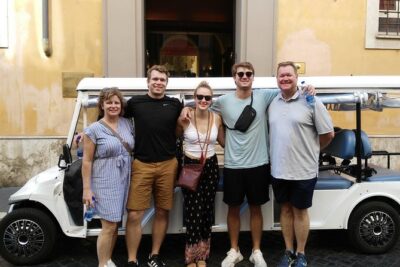
Rome on a Golf Cart Semi-Private Tour Max 6 with Private Option
Read our review →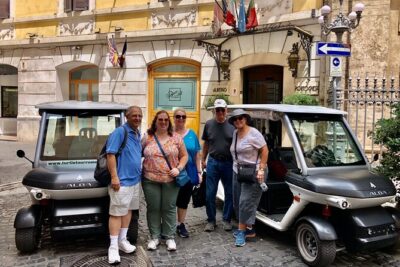
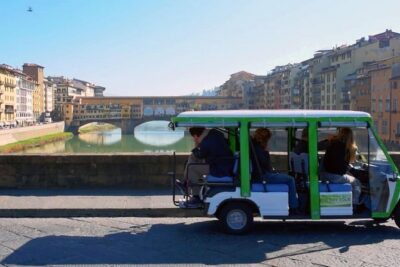
Golf Cart Tour to Fiesole Roman Theatre and Museum
Read our review →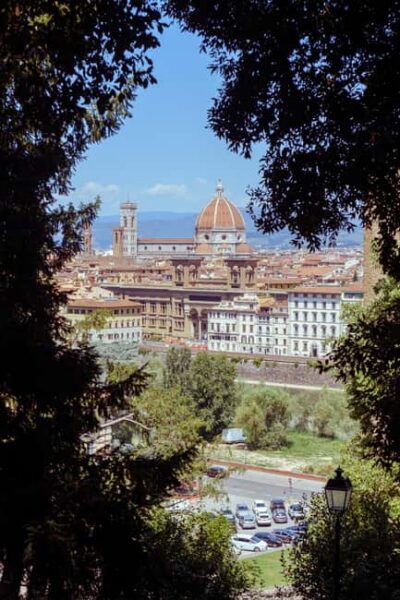
Eco-Friendly Golf Cart City Tour with Audio Guide
Read our review →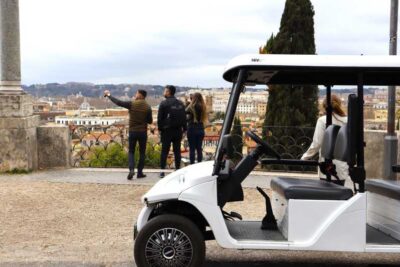
City Highlights Golf Cart Tour with Local Guide
Read our review →
Browse the lists this tour appears in