
Reviewed · POMPEII & HERCULANEUM TOURS
Herculaneum: 3D Walking Tour with Skip-the-Line Ticket
At Herculaneum, ancient walls suddenly gain roofs, frescoes, temples, and daily life through transparent AR glasses. You walk among the real ruins while 3D images line up with the buildings that once filled the Roman town. It is one of the clearest ways to understand what you are looking at without spending the whole visit squinting at a map.
I like two things here: the technology gives children and first-time visitors a quick sense of place, and the tour includes a guide who can explain what the images show. Guides including Chiara, Luigi, Roberta, Alessia, and Daniela have been praised for patience and clear explanations. The main drawback is that the glasses take a little time to get used to, and the experience runs in heat or rain, so clothing and footwear matter.
Key points to know before booking
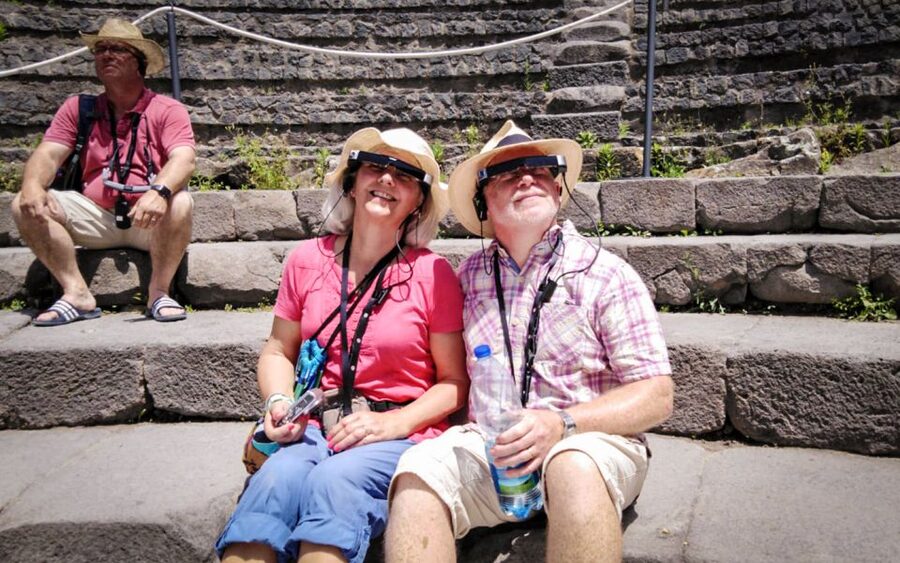
- The ruins and 3D reconstructions work together: Holographic buildings overlap the surviving walls, giving you a visual idea of the ancient town.
- A tour assistant stays with you: You receive the equipment, learn how to use it, and get help during the walk.
- The ticket line is skipped: Entry to the archaeological park is included, with no need to buy a separate standard ticket.
- The tour lasts two hours: After returning the glasses, you may stay inside and continue exploring on your own.
- Children must be at least eight for the technology: Younger children can enter with a normal ticket but cannot use the 3D system.
- Audio comes in six languages: English, French, German, Spanish, Italian, and Portuguese are available.
Seeing Herculaneum rebuilt over the ruins
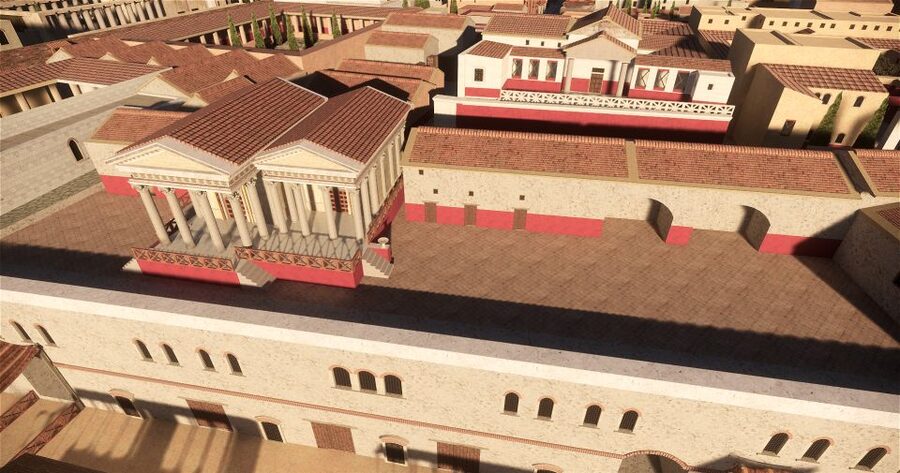
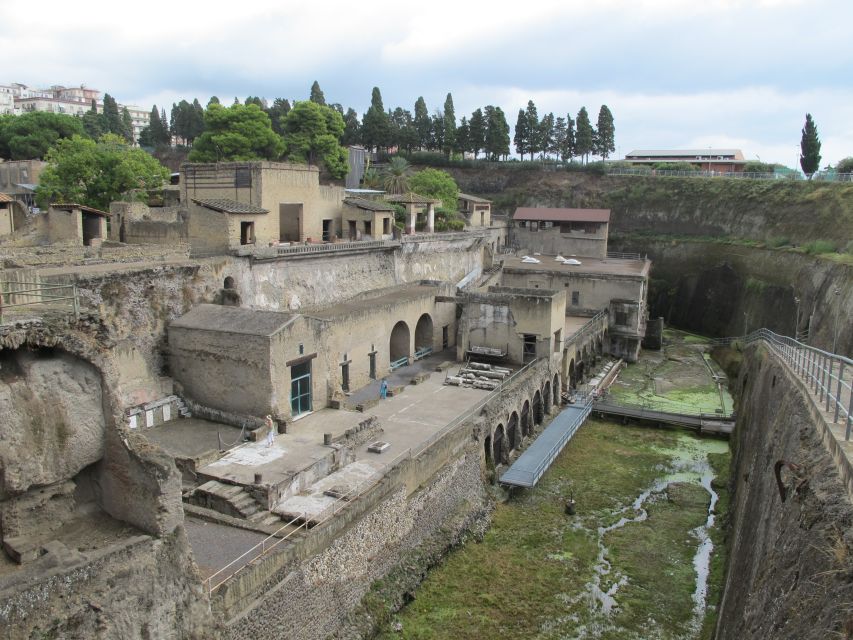
Herculaneum can be hard to read at first. You see walls, streets, columns, and fragments, but the original town has lost its upper floors and much of its color. The AR system tackles that problem directly by placing digital reconstructions over the remains.
The glasses have transparent lenses, so you can still see the real archaeological site. When the software adds a temple, house, or public building, the image appears in the correct setting rather than on a separate screen. You are looking at the ruins and the proposed reconstruction at the same time.
That makes the tour especially useful for visitors who do not already know Roman building design. Instead of hearing that a wall once formed part of a house, you can see how the structure may have fitted into the street. Instead of picturing an empty square, you get a visual suggestion of how the space looked before the eruption in 79 AC.
The result is more playful than a standard audio guide, but it is not only a gimmick. The best moments come when the digital image helps you understand the size and shape of something that otherwise looks incomplete.
Other Roman sites within reach of Pompeii:
- Pompeii: Entry Ticket and Guided Tour with an Archaeologist
★ 4.8 · 19,459 reviews - Pompeii: Entry Ticket with Optional Audio Guide
★ 4.2 · 12,360 reviews - Pompeii: Small Group Tour with an Archaeologist
★ 4.8 · 12,264 reviews
Meeting the assistant by the ticket office
Your starting point is the snack area beside the archaeological site ticket office. Look for the assistant near the vending machines, holding a sign marked AR Tour. This meeting point is simple, but allow enough time to find it and get ready.
The assistant supplies the smart glasses and gives a short introduction. You learn how to view the images and how to move through the site with the equipment. The assistant then remains with the group and helps if the glasses need adjusting or if you are unsure what you should be seeing.
Arrive on time. If you are late, the group waits for a maximum of five minutes before starting. That rule matters because the tour has a fixed route and other people are waiting. Train delays and crowded transport can happen around Naples and Campania, so give yourself a sensible margin.
You can wear the glasses over ordinary eyeglasses. Sunglasses are also listed among the useful things to bring, but you may need to manage both pairs carefully. Comfortable shoes, a hat, weather-appropriate clothes, and breathable clothing are sensible choices because the tour takes place outdoors and continues in poor weather.
What the two-hour walk feels like
The tour is designed as a guided walk through the most important parts of ancient Herculaneum. The supplied audio is available in six languages, while the tour assistants speak English or Italian. This arrangement gives you recorded narration in your chosen language and practical help from a person beside you.
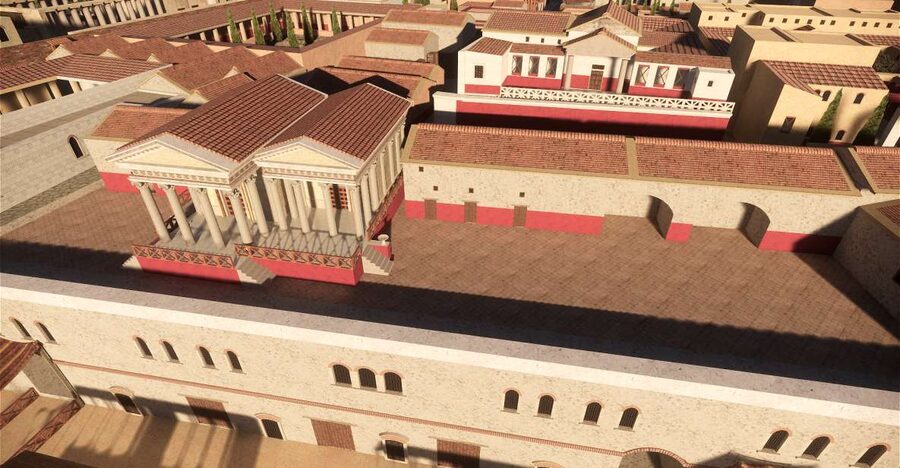
The route focuses on significant temples, houses, squares, and public buildings. As you move from one area to another, the glasses add visual information to the physical remains. You may turn your head to see a fuller 360-degree view, which takes a little practice but is part of the fun.
Do not expect the digital images to replace the ruins. The glasses show a reconstruction, not a time machine, and you should treat the images as an aid to understanding the site. Their value is greatest when you compare the suggested original building with the walls and foundations still under your feet.
The walking pace appears suited to questions. Guides such as Chiara have been described as warm and well informed, while Luigi has been praised for adding useful explanations beyond the recorded material. Roberta has been especially good at including children and handling questions, and Alessia has shown patience with younger visitors.
The tour can work for mixed-language groups, too. One guide switched between English and Spanish, and another allowed time for companions to translate. That may slow the route a little, but it is helpful if your group does not share one strong language.
Why the eruption story works better in 3D
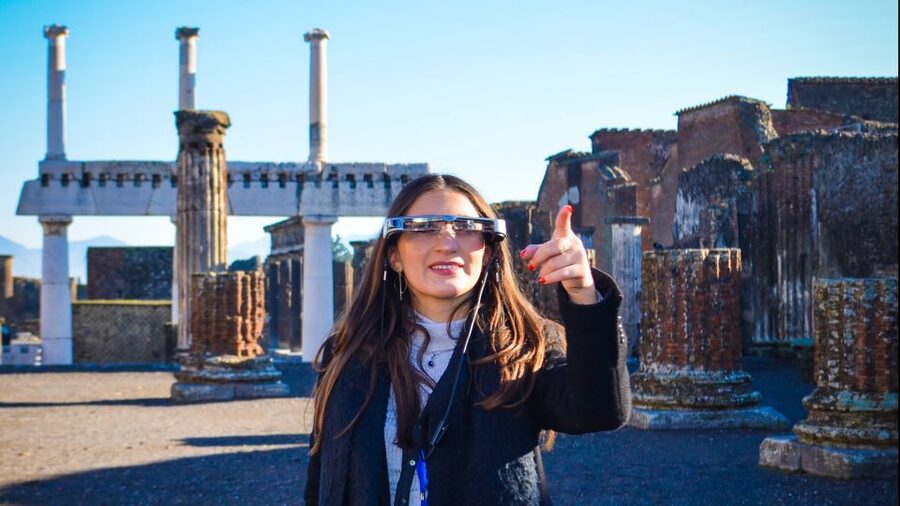
Herculaneum was destroyed by the eruption of Vesuvius in 79 AC. You will learn about that event during the tour, but the stronger point is the contrast between the living town shown through the glasses and the remains in front of you.
A bare wall can feel abstract. Add its missing upper level, roofline, doors, and surrounding buildings, and you can begin to understand how people used the space. The reconstruction gives context to the eruption without turning the visit into a simple disaster story.
Herculaneum also rewards close attention. Its streets and homes can feel more manageable than the much larger archaeological area at Pompeii, and a guided route helps you focus on details rather than wandering past them. One practical strategy is to visit Herculaneum first, then see Pompeii later if your schedule allows. The smaller scale makes it easier to ask questions and keep track of what you have seen.
The glasses do not make every part of the site equally important. Some images may feel more impressive than others, and the hardware can take a few minutes to master. If you prefer a quiet, traditional archaeological visit, the technology may feel distracting. If you learn best through pictures, it can make the ancient town easier to grasp.
Other walks around Pompeii:
- Pompeii: Guided Walking Tour with Entrance Ticket
★ 4.3 · 1,423 reviews - Discover Pompeii: French Walking Tour of the Buried City
★ 4.8 · 253 reviews - Milan: Guided Walking Tour & Last Supper Visit with Ticket
★ 4.7 · 5,409 reviews - Naples: Street Food Walking Tour with Local Guide
★ 4.8 · 4,256 reviews
The role of the guide beside the technology
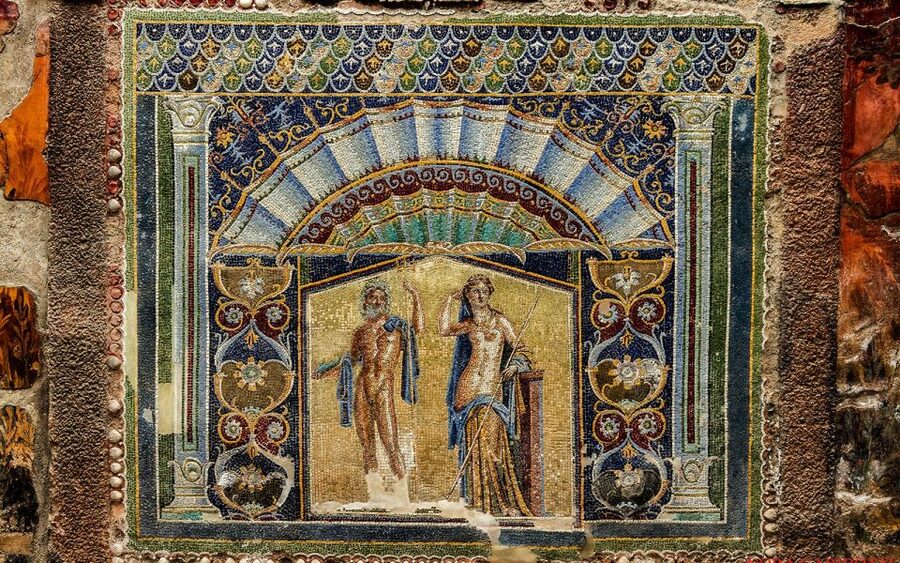
The assistant is not just there to hand you the equipment. A good guide keeps the group together, explains how the software connects with the ruins, and answers questions that a recording cannot handle.
That human element has been one of the strongest parts of this experience. Chiara has led tours for couples and larger groups, offering local knowledge and a friendly style. Luigi has been praised for being informative and easy to talk to. Roberta has included children in the explanations instead of treating them as passengers on an adult tour.
Daniela has also handled difficult timing situations with kindness, including a group delayed by train cancellations. That does not mean every late arrival will receive the same flexibility, since the stated waiting limit is five minutes. Still, it shows why a real assistant matters when the day does not go perfectly.
The best guide-led tours leave room for questions, and this one appears to benefit from smaller groups when available. Very small groups have allowed visitors to speak directly with the guide, while a group of eight was still able to follow the explanations and use the glasses comfortably.
Is the $45.55 price fair?
At $45.55 per person, this is not the cheapest way to enter Herculaneum. The price includes the archaeological park ticket, skip-the-line entry, the smart glasses, the tour assistant, and recorded audio. You also receive two hours of guided viewing and may remain in the park after returning the equipment.
That package can be good value if you want help understanding the site. A basic entry ticket gives you access to the ruins, but you must supply the interpretation yourself. Here, the digital reconstruction and human guide solve two common problems: knowing what you are seeing and picturing the missing parts.
The value is less clear if you already know Herculaneum well or prefer to move at your own pace. The glasses add interest, but they do not replace the pleasure of examining original walls, mosaics, and streets slowly. You may also want extra time after the tour, since two hours can pass quickly in an archaeological park.
The included freedom to stay afterward helps. You can follow the guided route first, return the glasses, and then revisit areas that caught your attention. That makes the experience more flexible than a tour that ends at the exit.
Family use and practical comfort
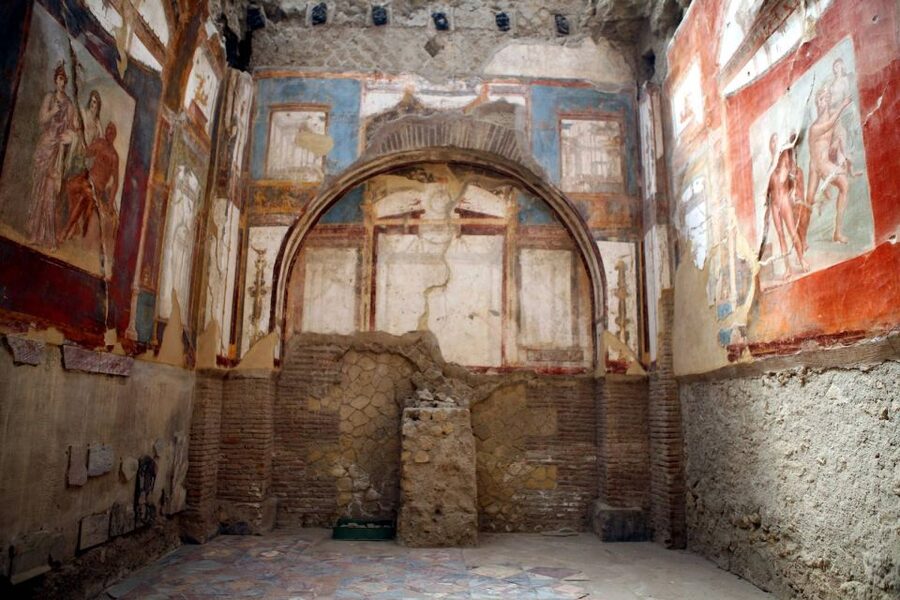
The experience is suitable for children aged eight and older. The visual reconstructions give younger visitors something clear to watch for, and guides have made a point of answering children’s questions and bringing them into the discussion.
Children under eight may enter the archaeological park with a normal ticket, but they cannot use the 3D technology. If your family includes younger children, check the booking arrangements carefully because the AR part is not available to them.
The site requires walking on comfortable shoes. A sun hat and sunglasses are useful, and weather-appropriate clothing is important because the tour operates in rain and heat. One particularly hot day did not stop the tour, but it did make the outing harder, so avoid heavy clothing and carry what you need for outdoor conditions.
The glasses are light and can be worn over prescription glasses. Even so, if you dislike wearing headsets or visual equipment for long periods, you may find the experience tiring. The assistant can help you get set up, but the technology remains part of the entire two-hour walk.
What to do after the glasses come off
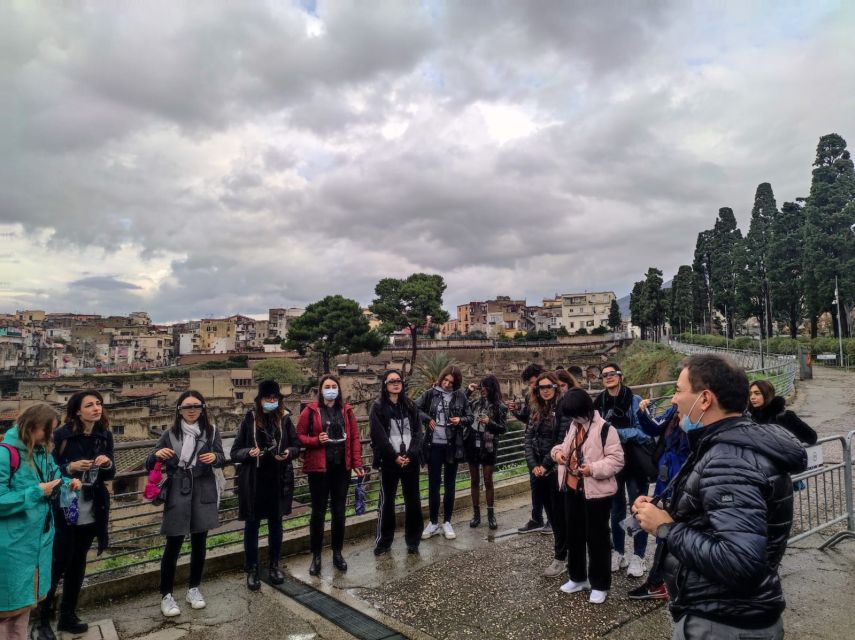
When the tour ends, return to the original meeting point and hand back the glasses. You can then remain in the archaeological park and explore independently.
I recommend using this extra time rather than rushing away. The guided route gives you a broad understanding of the town, while independent time lets you look again at the places that interested you most. You can also slow down without needing to keep pace with the group.
The extra time is important for another reason: the AR images are selective. They focus on major temples, houses, squares, and buildings, but you may notice smaller details along the route that deserve a closer look. The self-guided portion lets you balance the digital reconstruction with direct observation.
Transportation is not included. You need to arrange your own way to Herculaneum and arrive at the entrance meeting point. The tour itself ends where it begins, near the snack area and ticket office.
Who should book this Herculaneum tour?
I would choose this experience if you are visiting Herculaneum for the first time, want a clear explanation of the ruins, or are traveling with children who need more than bare walls and labels. It also suits couples and small groups who like asking questions.
The tour is a good match for anyone curious about how Roman houses and public spaces actually looked. The AR glasses give you a practical visual guide, while the assistant adds the human explanation that keeps the technology from feeling like a solo video game.
I would think twice if you want a silent, unhurried archaeological visit, dislike wearable devices, or already have a strong guidebook plan. You may prefer a standard ticket and your own pace. The two-hour format also requires you to follow the scheduled starting time.
For most first-time visitors, the combination of skip-the-line entry, clear narration, helpful guides, and 3D reconstructions justifies the added cost. Book it if you want Herculaneum to make visual sense, not simply appear as a collection of ancient walls.
FAQ
How long does the Herculaneum 3D walking tour last?
The guided activity lasts two hours. After you return the augmented reality glasses, you may stay in the archaeological park and continue exploring on your own.
Where do I meet the tour assistant?
Go to the snack area next to the ticket office. The assistant waits near the vending machines with a sign marked AR Tour.
What languages are available?
The recorded audio is available in English, French, German, Spanish, Italian, and Portuguese. The tour assistants speak English and Italian.
Are children allowed to use the AR glasses?
Children must be at least eight years old to use the 3D technology. Children under eight can enter the park with a normal ticket but cannot use the glasses.
Can I wear the glasses over prescription eyeglasses?
Yes. The AR glasses can be worn by participants who already wear eyeglasses.
What happens if the weather is bad?
The tour runs in all weather conditions, so dress for the forecast. Comfortable shoes, a sun hat, sunglasses, and suitable clothing are recommended.
Just added in Pompeii
- Pompeii Ruins Private Tour with Optional Skip-the-Line Entry★ 4.9 · 732 reviews
- Pompeii 3hours Villa of Mysteries tour with an Archaeologist★ 4.8 · 486 reviews
- Pompeii: Exclusive Tour with Archaeologist and Entry Tickets★ 4.9 · 634 reviews
- Pompeii: Small-Group Tour of Pompeii and Herculaneum★ 4.8 · 867 reviews
- Pompeii: Group Tour with an Archeologist Guide★ 4.4 · 490 reviews
- Pompeii: Skip-the-Line Tickets and Tour with Archaeologist★ 4.9 · 467 reviews
- Pompeii: Skip-the-Line Entry & Audioguide★ 3.8 · 225 reviews
- Pompeii: Skip-the-Line Guided Tour with Expert Archaeologist★ 4.8 · 196 reviews
Pompeii & Herculaneum Tours, compared.

Entry Ticket and Guided Tour with an Archaeologist
Read our review →



Pompeii and Mount Vesuvius Day Trip from Rome with Pizza Lunch
Read our review →
Pompeii Day Trip with Optional Vesuvius and Lunch
Read our review →Browse the lists this tour appears in