
Reviewed · GOLF CART TOURS
Rome: City Highlights Tour by Electric Golf Cart
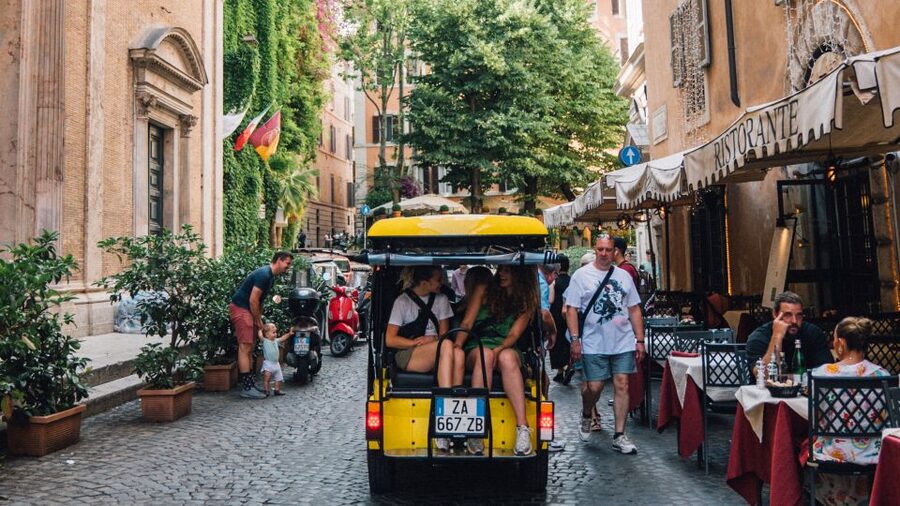
Rome’s grand sights are spread across a city that can be tiring to cross on foot. This small-group electric golf cart tour gives you a fast, comfortable introduction, moving from the Pantheon and Trevi Fountain to the Spanish Steps, Piazza Navona, and the Colosseum in 2.5 hours. The open sides let you see street life as you go, while the guide keeps the history moving through your headset.
I like two things right away: the efficient route and the included gelato stop. You cover a large part of central Rome without spending the morning dodging traffic and searching for the next monument. The main consideration is that this is an overview, not an in-depth visit. You see the Colosseum from outside, and no attraction entrance tickets are included.
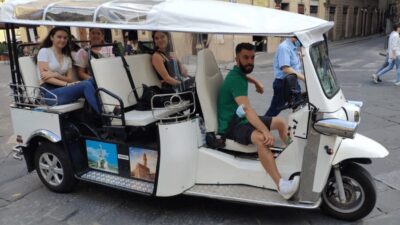
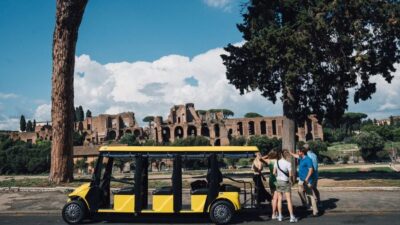
- Seven-seat electric carts: Small vehicles can get much closer to central sights than a large coach.
- A practical first-day tour: The route helps you decide which places deserve a longer visit later.
- English-speaking guides: Guides including Francesco, Amber, Leo, and Patricio are praised for clear stories, humor, and local tips.
- Gelato and water included: A favorite gelateria adds a tasty break without another purchase.
- Pantheon to Colosseum route: The tour begins near the Pantheon and ends beside the Colosseum.
- Limited walking, not no walking: You still need to get on and off the cart and walk short distances at some stops.
Why a golf cart works well in Rome
Rome is compact on a map, but its famous sights are separated by crowded streets, busy crossings, and uneven walking routes. A golf cart bridges that gap nicely. You sit high enough to see the streets, avoid the effort of a full walking tour, and reach places where a standard sightseeing bus cannot go.
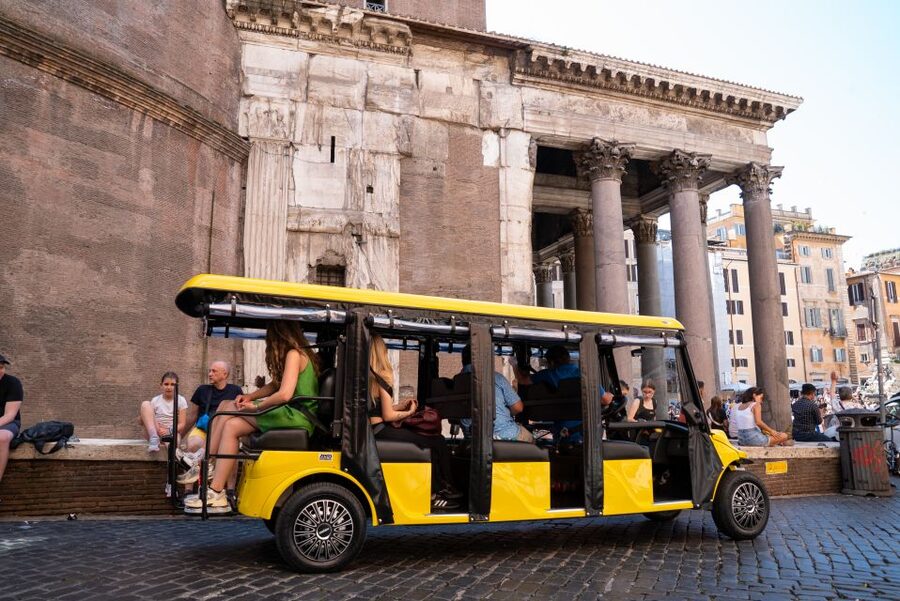
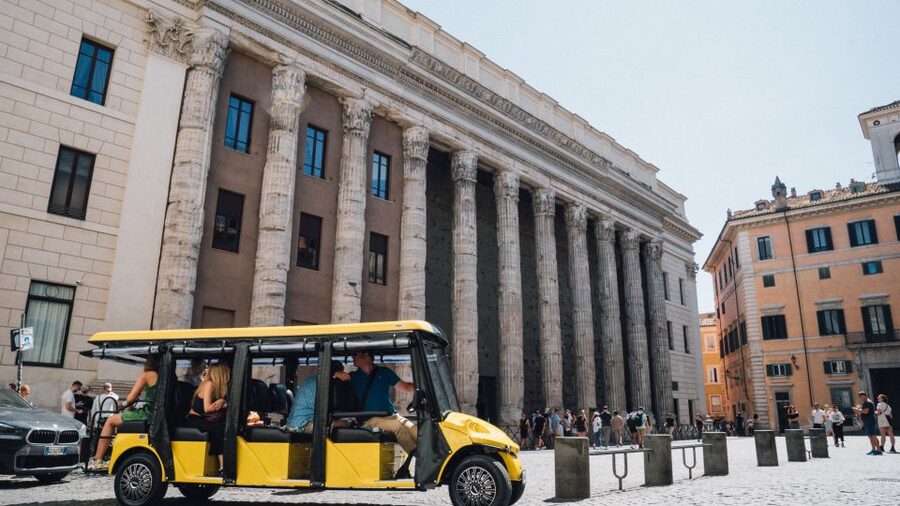
The electric carts have seven seats each. A full departure can use two carts, with up to 14 people traveling together. The vehicles move as a connected group, and everyone listens to the same guide through earpieces.
That setup keeps the experience personal enough for questions, though it is not a private tour. If you book with friends or family, you may be split between the two carts. You will still follow the same route and hear the same commentary.
I would choose this tour early in a Rome stay. It gives you a useful mental map, points out places you may want to return to, and helps you spend later days with more purpose. It also makes sense after a long flight, when a full day of walking may be more ambition than pleasure.
Starting near the Pantheon on Via Monterone
The meeting point is inside the tour office at Via Monterone 19. Look for the glass doors. The road has an L shape, and the office is on the section beside Via di Torre Argentina.
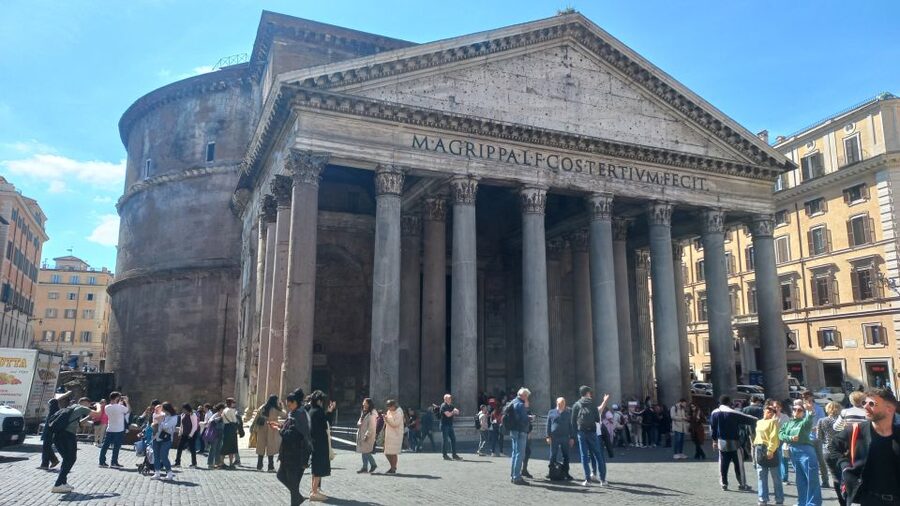
The tour begins near the Pantheon, one of Rome’s most impressive ancient buildings. You may not enter the Pantheon on this tour, but the area sets the right tone: old stone, busy cafés, narrow streets, and layers of Rome packed close together.
From here, your guide introduces the route and explains how the carts work. Headsets are supplied, which matters when traffic and street noise rise around you. Guides such as Francesco, Amber, and Leo have been singled out for clear English, humor, and an ability to keep children and adults interested at the same time.
Other easy ways to cover Rome:
- Rome by Golf Cart Private Tour: Beyond the Landmarks
★ 5.0 · 4,361 reviews - Rome on a Golf Cart Semi-Private Tour Max 6 with Private Option
★ 5.0 · 2,502 reviews - Rome Highlights by Golf Cart Private Tour
★ 5.0 · 2,379 reviews
Piazza Colonna and Via del Corso
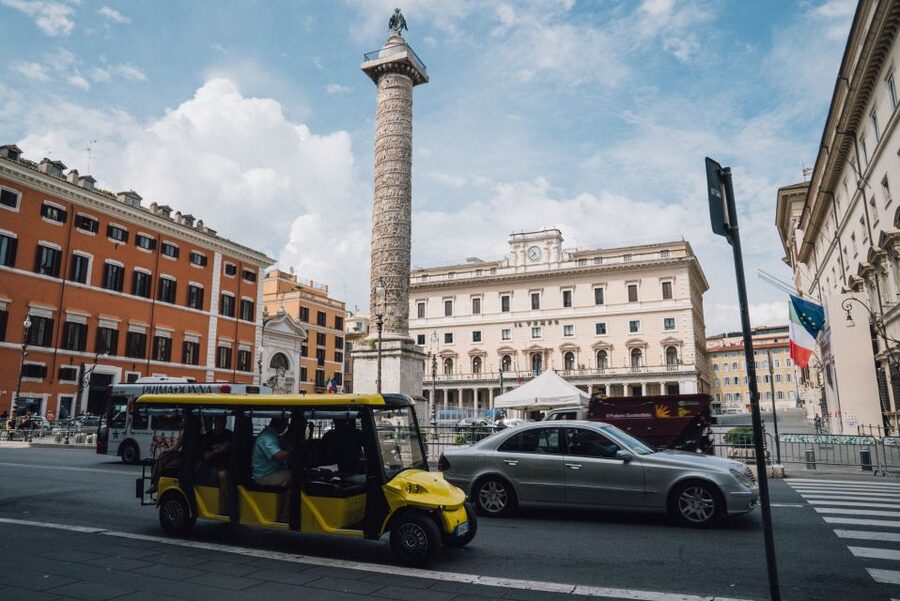
The cart continues through Piazza Colonna and along Via del Corso, Rome’s main central avenue. Piazza Colonna takes its name from the towering Column of Marcus Aurelius, while Via del Corso links several major squares through the heart of the city.
These stops help you understand Rome as a living city rather than a string of isolated monuments. You see government buildings, shops, traffic, and grand architecture sharing the same streets. The cart gives you a moving view that a museum visit cannot provide.
Photo opportunities are built into the route, but keep your camera ready between stops. The cart itself is part of the advantage here. You can watch the streets change as the group moves from one landmark to the next instead of spending the gaps underground or in a coach.
Trevi Fountain and the Spanish Steps
Trevi Fountain is one of the major stops, and it is usually the place where people most want time for photographs. Your guide explains the fountain and its setting, then gives you a chance to take in the details. The space can be crowded, so stay close to the group and pay attention to where the cart will meet you again.
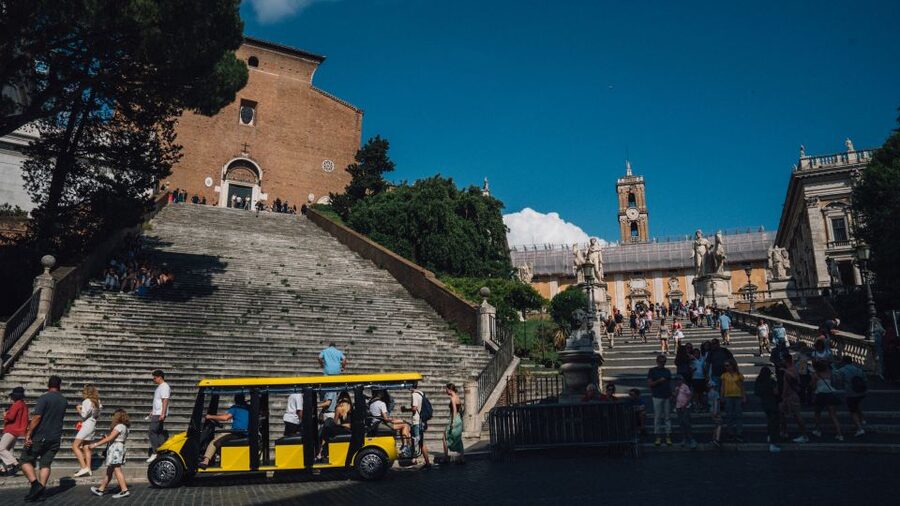
The Spanish Steps follow, with time to see the famous staircase and the surrounding area. This is a stop where a short walk may be required. The carts can approach the city’s monuments, but they cannot pull up directly in front of every sight.
The order and timing make these two stops useful together. You see two of Rome’s best-known public spaces without having to navigate the route yourself. If you want to return later for longer photography, shopping, or a slower look, the tour gives you a clear starting point.
An evening departure can be especially appealing. One participant specifically recommended the 6 p.m. timing for sunset and the Colosseum after dark. Since starting times vary, check the available schedule when booking rather than assuming a particular light or temperature.
Piazza del Popolo and the gelato stop
Piazza del Popolo adds another broad, elegant Roman square to the route. It is a good contrast to the tighter streets around Trevi and the Spanish Steps, and it gives the tour room to breathe before continuing through the historic center.
The gelato stop is one of the smartest parts of the experience. You receive one gelato per person at a gelateria chosen by the driver-guide, along with one bottle of water. This is not just a token snack. In Rome, a well-timed gelato break gives you a chance to cool down, regroup, and ask your guide for advice about the rest of your day.
The guides have different personalities. Francesco is repeatedly praised for mixing humor with clear explanations, while Amber is noted for local tips and an easy manner. Leo is described as enthusiastic and engaging. The company assigns the guide, so you should not book expecting a particular person, but the pattern is clear: the guide’s personality is a major part of the experience.
A few more things to do in Rome
- Rome: City Sightseeing Hop-on Hop-off Bus with Audioguide
★ 4.0 · 16,045 reviews - City Sightseeing Rome Hop-On Hop-Off Bus Tour
★ 3.5 · 5,446 reviews - Rome: Fettuccine Pasta Cooking Class in Rome’s City Center
★ 4.8 · 2,414 reviews - Vatican City: Vatican Museums & Sistine Chapel Entry Ticket
★ 4.3 · 2,185 reviews
Piazza Navona and Bernini’s fountains
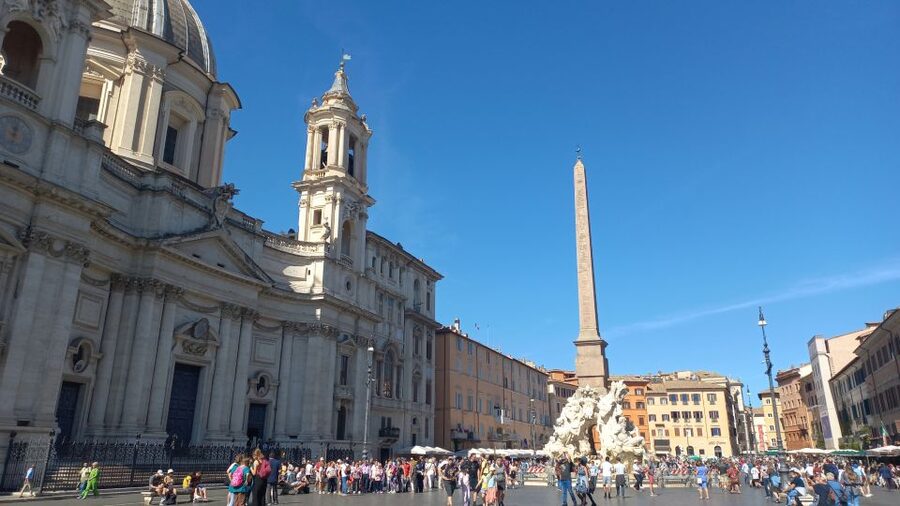
Piazza Navona is one of the most rewarding stops because the square works as both a monument and a public place. You see Bernini’s famous fountains, grand façades, street activity, and the long shape of the former stadium site.
Your guide provides the context while you look around and take photographs. This is where an entertaining guide helps. A long lecture would be too much during a fast city tour, but short stories about the fountains, the square, and Rome’s changing uses make the place easier to remember.
Piazza Navona is also a good example of what this tour does best. You receive enough background to recognize why a site matters, then you can decide if it deserves a return visit. If you want detailed art commentary or time to study every sculpted figure, plan to come back on foot.
Largo di Torre Argentina and Piazza Venezia
The route then reaches Largo di Torre Argentina, a striking archaeological area set below the surrounding streets. It is associated with ancient Roman ruins and the famous story of Julius Caesar. The tour treats it as a photo and commentary stop rather than an archaeological visit.
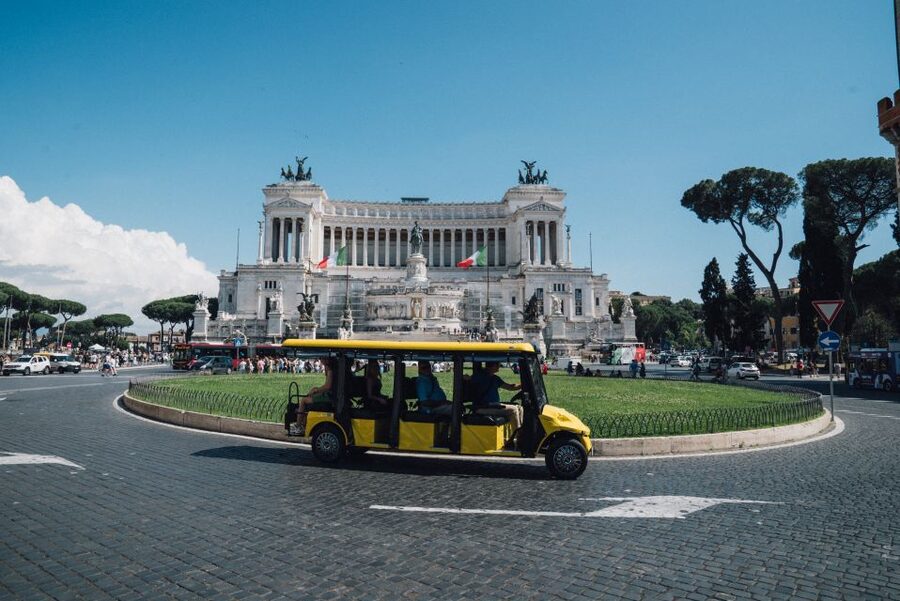
From there, the cart continues to Piazza Venezia. The square is one of central Rome’s major traffic and monument areas, with the enormous Vittoriano complex dominating the view. It can feel hectic from ground level, but the cart lets you take in the scale without having to cross the whole area alone.
These stops are valuable because they connect the better-known fountains and piazzas with less obvious pieces of Rome’s ancient and modern story. The tour does not spend long at each location, but the route gives you a broad sense of how the city fits together.
Ending outside the Colosseum
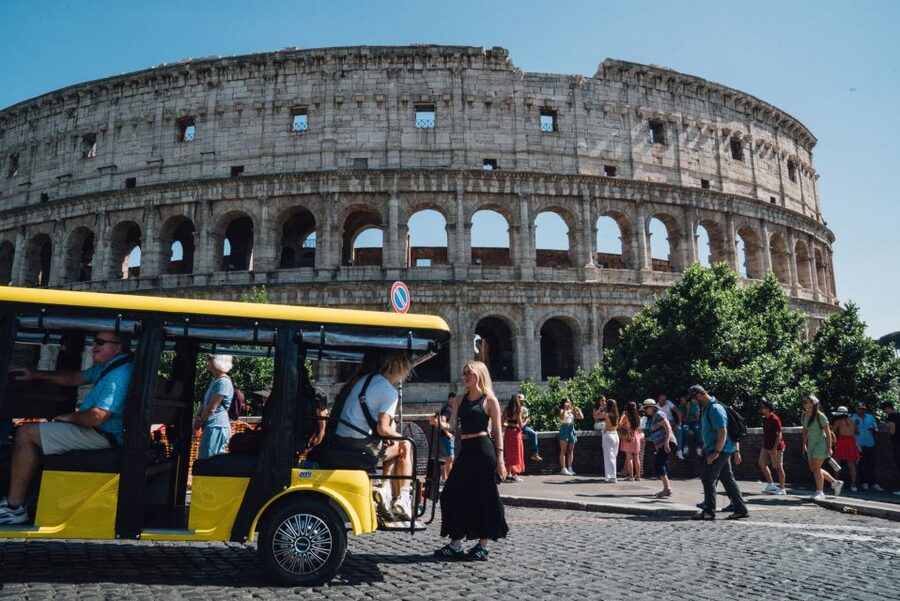
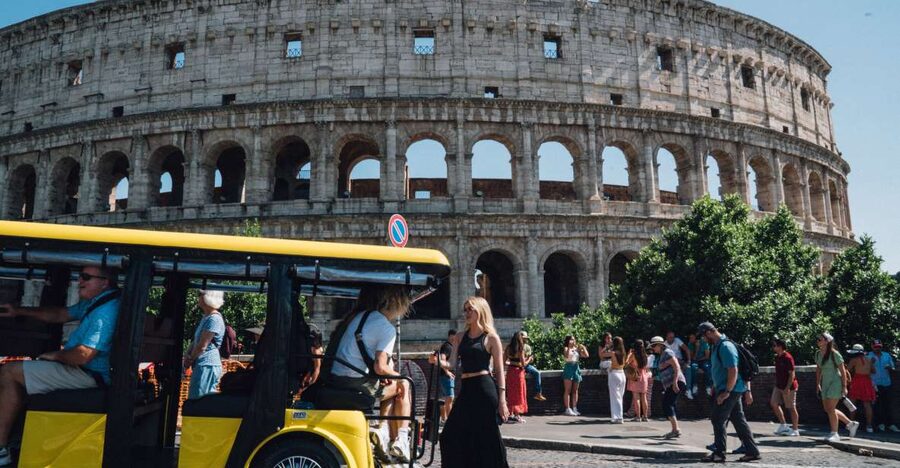
The final stop is the Colosseum. Your guide gives an outside description focused on games, gladiators, and the building’s role in ancient Rome. You can take photographs and then remain in the area to explore independently.
The important catch is simple: entry is not included. You do not enter the Colosseum as part of this 2.5-hour experience, and attraction tickets are not bundled into the $104 price.
That is not necessarily a flaw. The tour works well as an orientation, while a separate Colosseum visit lets you choose the ticket and time that suit your plans. Just avoid assuming you can walk straight inside after the tour without arranging admission. If the Colosseum is a top priority, plan that visit separately.
The finish is convenient if you want to continue sightseeing in the area. The tour ends at the Colosseum rather than returning to the Pantheon office. Some departures may offer the option to return to the starting point or remain at the last stop, but confirm that detail for your departure.
What the $104 price includes
At $104 per person, this is not the cheapest way to see Rome’s sights. You are paying for the guide, driver, electric transport, small group, headset, water, and gelato.
The value improves if you have limited time, dislike long walks, or want a clear introduction before exploring alone. A standard bus may cost less, but it usually feels less personal and may leave you farther from the monuments. A walking tour can offer more detail, but it asks more from your legs and may cover less ground.
I would not choose this tour if your main goal is entering several attractions. No admission is included, and the route moves quickly. I would choose it if you want to cover the city’s major public sights, hear useful stories, and save your energy for museums and ruins later.
The free cancellation deadline is 24 hours before the tour, and you can reserve while paying later. Those terms help if your Rome schedule is still shifting, though you should always check the exact conditions shown for your selected booking.
Who will enjoy this tour most
This is a strong fit for first-time visitors, families, older travelers, and anyone arriving during hot weather. Children from age two are accepted, and several guides have been praised for keeping children and teenagers involved. Infants under two are not accepted.
It also suits visitors with only a short stay. In one morning or evening, you can see the main public landmarks and learn where they sit in relation to one another. If you have several days in Rome, book it near the start so the rest of your sightseeing feels less scattered.
The tour is described as wheelchair accessible, but there are important limits. The carts can get close to many monuments, yet short walks are still needed. Wheelchair users must leave their chairs at the office, and on a group tour each person must be able to get on and off the vehicle without staff assistance. Contact the operator before booking if those conditions affect you.
Practical tips for a smoother ride
Arrive at the Via Monterone office with enough time to find the glass doors and settle in. The road’s L shape can make the address less obvious, so use the section beside Via di Torre Argentina as your reference.
Bring a phone or camera, but keep it ready rather than buried in a bag. Some views appear during the ride, and the photo stops can feel brief around busy landmarks.
Wear shoes suitable for short walks over Roman streets. This is a low-walking tour, not a no-walking tour. You will still get on and off the cart and may need to walk from the vehicle to a monument or meeting point.
For warm weather, the cart’s open design is pleasant, and the included water and gelato help. For cooler evening departures, bring an extra layer. On one cooler outing, blankets were provided, but you should not rely on that for every departure.
Finally, stay alert around Trevi Fountain and other crowded stops. The group uses earpieces and travels together, but crowded squares can make it easy to lose sight of the guide. If you do get separated, contact the tour company promptly.
Should you book the Rome golf cart tour?
Book it if you want a fast, comfortable first look at Rome with a guide who adds stories and local advice. The route covers the city’s biggest postcard sights, the gelato is a welcome touch, and the small carts reach places that large vehicles cannot.
Skip it if you want long visits inside monuments, a private guide, or detailed art and archaeology at every stop. For everyone else, especially first-time visitors with limited time or limited energy, the $104 cost is reasonable for the amount of ground covered.
My best advice is to take it near the beginning of your stay, choose an evening departure if sunset appeals to you, and reserve a separate Colosseum entry if you want to go inside.
FAQ
Where does the Rome electric golf cart tour start?
The tour starts inside the operator’s office at Via Monterone 19, near the Pantheon. Look for the glass doors on the section of the L-shaped road beside Via di Torre Argentina.
Where does the tour finish?
The tour finishes at the Colosseum. It does not include entry to the Colosseum, so you need separate admission if you want to go inside.
How long is the tour?
The tour lasts 2.5 hours.
What sights are included?
The route includes the Pantheon area, Piazza Colonna, Via del Corso, Trevi Fountain, the Spanish Steps, Piazza del Popolo, Piazza Navona, Largo di Torre Argentina, Piazza Venezia, and the Colosseum.
Is gelato included?
Yes. Each participant receives one gelato at a local gelateria selected by the driver-guide. One bottle of water per person is also included.
How many people fit in each golf cart?
Each vehicle has seven seats. The operator can run two vehicles, with a maximum group size of 14 people. Both vehicles travel together and use earpieces so everyone can hear the same guide.
Is the tour given in English?
Yes. The live tour guide provides the information in English.
Can wheelchair users join the tour?
The tour is described as wheelchair accessible, but wheelchair users must leave their chair at the office and be able to get on and off the vehicle without staff assistance. Short walks may still be needed because the cart cannot stop directly in front of every monument.
Just added in Rome
- Civitavecchia Private Transfer: From the Port to Rome Airport★ 5.0 · 309 reviews
- Civitavecchia Shore Excursion: Best of Rome Private Tour★ 5.0 · 247 reviews
- Civitavecchia Private Transfer from ship to FCO airport or Rome★ 5.0 · 245 reviews
- Food Tasty and History Tour in Civitavecchia★ 5.0 · 256 reviews
- Palatine Hill and Roman Forum Tour with Fast-Track Entrance★ 4.2 · 417 reviews
- Tivoli: Villa D’Este & Villa Adriana Pass & App Audioguide★ 4.4 · 364 reviews
- Tivoli: Villa D’Este Entry Ticket and App Audio Guide★ 4.3 · 191 reviews
- Vatican Museums & Sistine Chapel Skip-the-Line Guided Tour★ 4.6 · 254 reviews
Golf Cart Tours, compared.
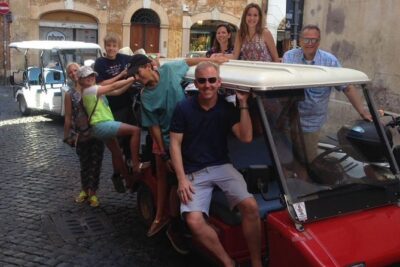
Rome by Golf Cart Private Tour: Beyond the Landmarks
Read our review →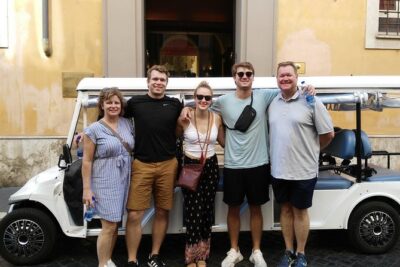
Rome on a Golf Cart Semi-Private Tour Max 6 with Private Option
Read our review →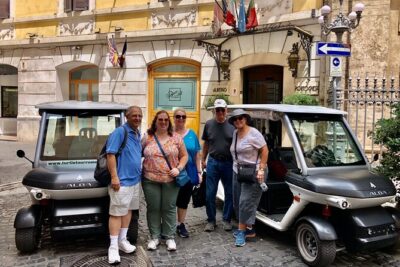
Golf Cart Tour to Fiesole Roman Theatre and Museum
Read our review →
Eco-Friendly Golf Cart City Tour with Audio Guide
Read our review →
City Highlights Golf Cart Tour with Local Guide
Read our review →Browse the lists this tour appears in