
Reviewed · GOLF CART TOURS
Rome: Night Tour of the City by Golf Cart (Private option)
Rome looks different after sunset. The Colosseum glows, the fountains catch the soft light, and the cooler air makes Rome’s traffic and crowds easier to handle. This 2.5-hour golf-cart tour gives you a broad first look without asking you to march from monument to monument.
I like the easy access to small city-center streets and the strong local touch from guides such as Max, Giovanni, and Massimo. I also like the generous photo stops, especially at the Trevi Fountain and Pincio Terrace. The catch is simple: you see the sights from outside, since this is a sightseeing ride and not an interior tour.
Key points at a glance
- Trevi Fountain access: Your guide may lead you close to the fountain for better photos, depending on conditions and crowd control.
- A useful first-night tour: The route covers major sights quickly and helps you decide where to return later.
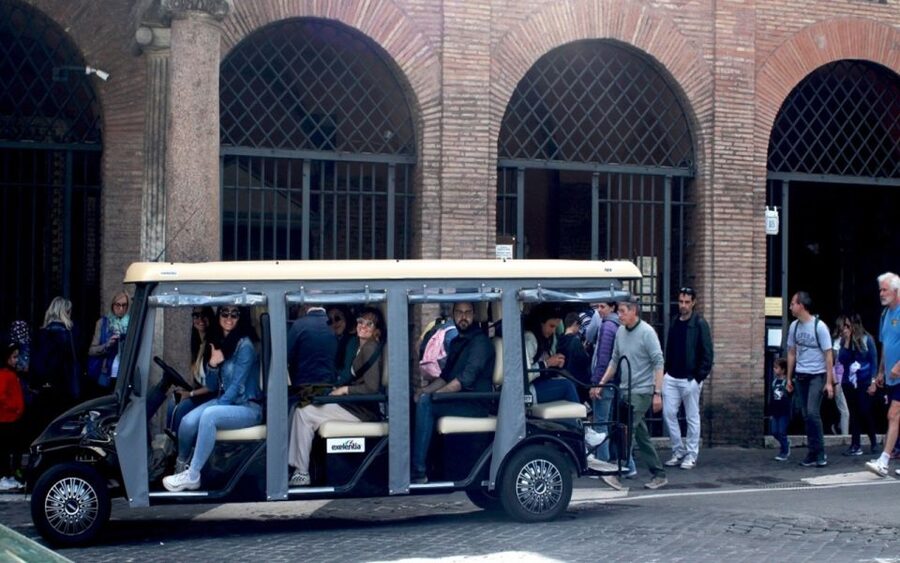
- Small-street advantage: The golf cart can reach central streets that larger vehicles cannot.
- Local guides: Max, Giovanni, and Massimo are frequently praised for humor, Roman stories, photo help, and restaurant advice.
- Private option: Private bookings include pickup and return to your hotel, making the experience easier for families and groups.
- No monument interiors: Bring this along with your Colosseum, Pantheon, or Vatican plans, not instead of them.
A relaxed way to meet Rome after dark
Rome can feel scattered when you first arrive. Ancient ruins sit beside busy roads, grand piazzas appear around corners, and the city center is larger than it looks on a map. This ride helps you connect the pieces.
You meet near the Colosseum at Via Marco Aurelio 19, unless your booking gives a different meeting point. From there, the street-legal electric cart carries you through central Rome while your host explains what you are seeing.
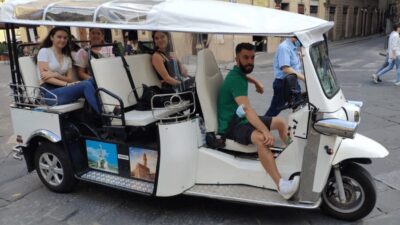
The cart is the main reason to choose this tour. You cover far more ground than you would on foot, but you still get the open-air feel of the city. You can watch the streets pass by, feel the evening air, and avoid spending the whole night on pavement.
This is especially useful in hot weather, for families with children, older visitors, and anyone who wants a broad look before choosing which sites deserve a full morning. The vehicle is wheelchair accessible, and one guide, Max, has been praised for helping a wheelchair user move the chair in and out of the cart.
Other easy ways to cover Rome:
- Rome by Golf Cart Private Tour: Beyond the Landmarks
★ 5.0 · 4,361 reviews - Rome on a Golf Cart Semi-Private Tour Max 6 with Private Option
★ 5.0 · 2,502 reviews - Rome Highlights by Golf Cart Private Tour
★ 5.0 · 2,379 reviews
The Colosseum gives the tour its opening scene
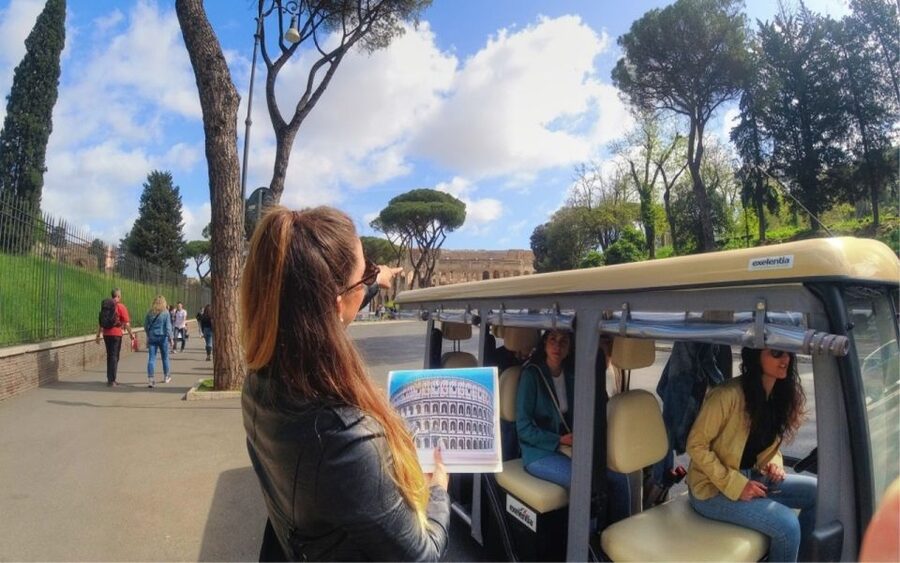
The Colosseum is the natural place to begin. You get a guided view and a short scenic drive around this massive ancient arena, with about ten minutes devoted to the area.
At night, the Colosseum has a different mood from its daytime appearance. The lighting brings out the arches and rough stone, while the traffic and crowds give the scene a distinctly modern Roman edge. Your host uses the stop to set up the story of Rome, from its early beginnings to the imperial city that shaped Europe.
Do not confuse this stop with a Colosseum visit. You will not enter the arena or see the underground levels. If you want the interior, you need a separate ticket and a dedicated visit. The golf-cart tour is better for orientation, exterior views, and a first sense of how the Colosseum fits into the city.
Circus Maximus and Palatine Hill after sunset
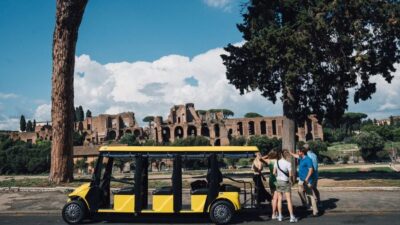
The cart continues toward Circus Maximus, the long open valley once used for chariot races. There is a photo stop and guided explanation, along with views toward Palatine Hill.
This part of the route gives you space to understand ancient Rome’s scale. The Colosseum is dramatic, but Circus Maximus helps explain how much room the city needed for public shows and mass entertainment. Palatine Hill, rising nearby, connects the setting to Rome’s imperial palaces and foundation stories.
I like this stop because it is less cramped than the Trevi Fountain or Spanish Steps. You can pause, look across the open ground, and hear the story without standing shoulder to shoulder with other people. The trade-off is that much of the area is viewed from outside, so the stop is about setting and context rather than close archaeological inspection.
Piazza Venezia brings Rome’s grand civic center into view
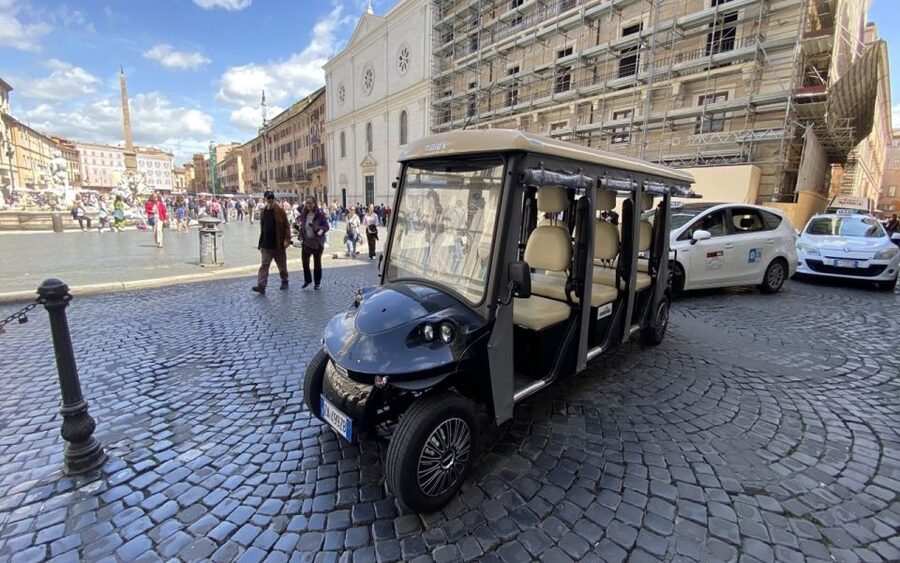
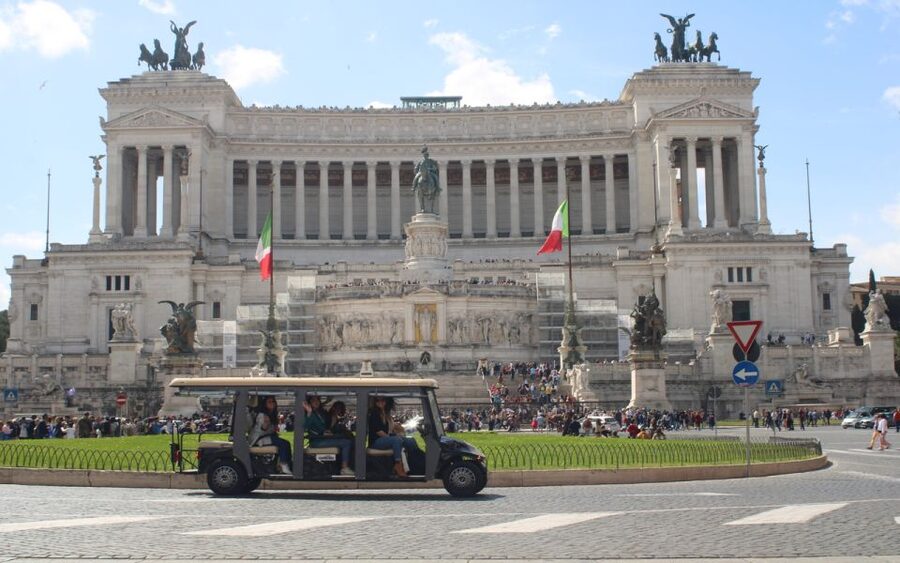
At Piazza Venezia, the tour shifts from ancient ruins to monumental modern Rome. Your host explains the square and its major buildings during a roughly ten-minute guided drive.
The broad roads and white stone of the Victor Emmanuel II monument make this one of the city’s most recognizable urban scenes. From the cart, you can appreciate how Rome layers old and new in the same view. This is also a useful point for getting your bearings between the Colosseum, the historic center, and the shopping streets farther west.
Because this is a moving city tour, the amount of time spent looking at each building depends on traffic and the guide’s pacing. You should expect a strong overview, not a long architectural lecture. The guide’s local knowledge matters here, since the best explanation often comes from connecting the square to the streets you will use later on foot.
A few more things to do in Rome
- Early Morning Vatican, Sistine, St. Peter’s Semi or Private Tour
★ 5.0 · 3,779 reviews - Rome Private Arrival Transfer: Fiumicino Airport to Hotel in Rome
★ 4.5 · 2,492 reviews - Private Pompeii, Positano & Amalfi coast Tour from Rome
★ 4.5 · 1,888 reviews - Rome: Caracalla Baths & Circus Maximus — Private or Shared
★ 4.7 · 835 reviews
The Pantheon stop adds an ancient interior feel from outside
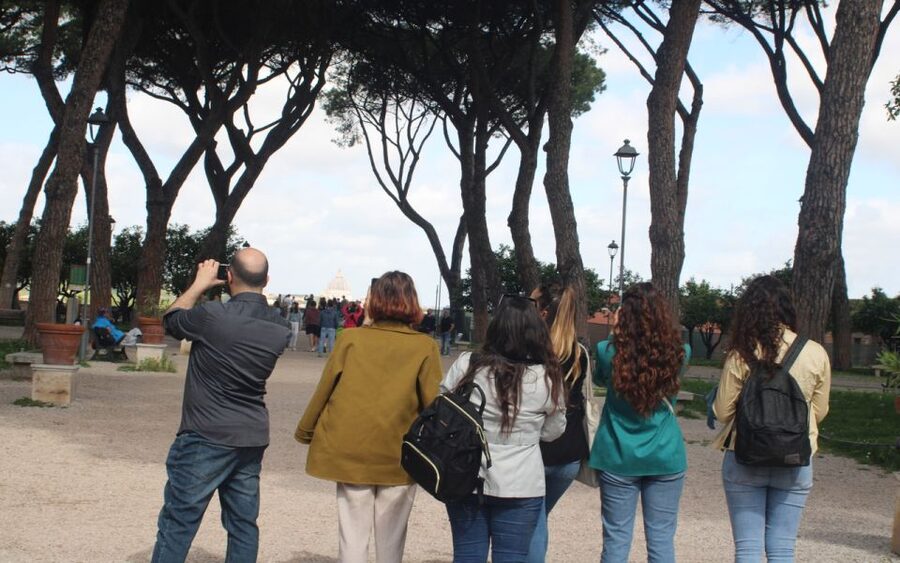
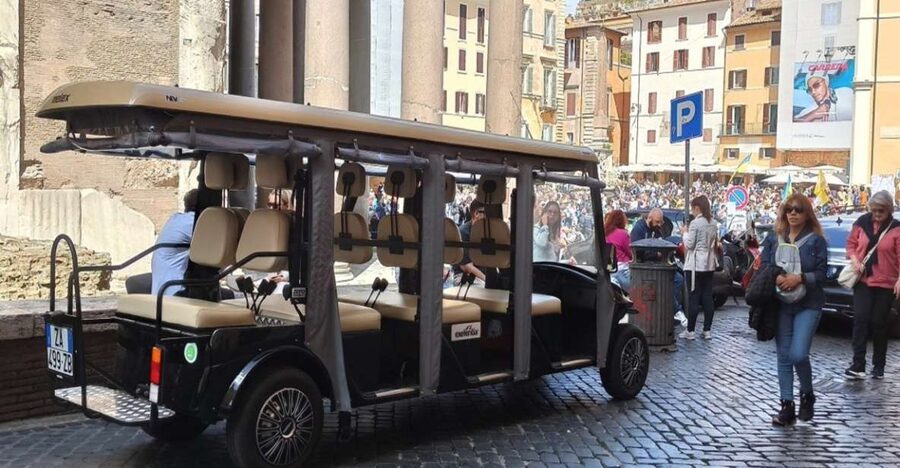
The Pantheon receives one of the longer stops, about twenty minutes, with time for photographs and a guided explanation. This former Roman temple is one of the most remarkable buildings in central Rome, even before you know the engineering behind its dome.
The stop puts you in the lively square around the Pantheon. You can look closely at the ancient columns, notice how the building has been absorbed into the modern city, and take photographs without rushing straight back to the cart.
The tour does not include entry to the Pantheon or any other major attraction. That limitation matters here. The interior, including the dome and oculus, is a separate experience, so plan another visit if you want to see it from within.
Piazza Navona is best understood as a public stage
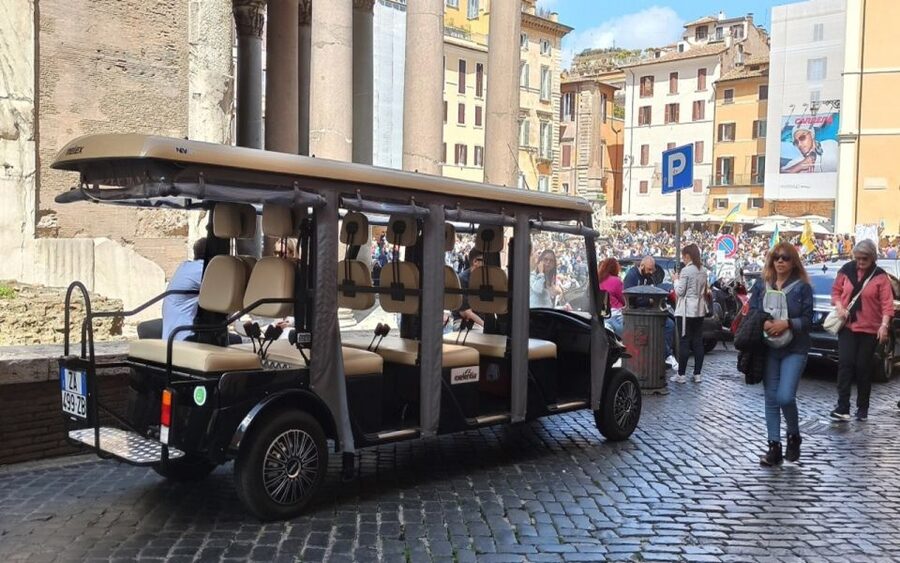
Next comes Piazza Navona, with about fifteen minutes for sightseeing and commentary. The long oval shape follows the outline of an ancient stadium, while the fountains and Baroque buildings give the square its grand theatrical feel.
This is one of Rome’s best places to watch the city perform. People gather, artists work, and cafés line the edges. At evening, the lights soften the stone and water, making the square feel more intimate than it can during the hot middle of the day.
The golf cart makes the route between stops easier, but you still need to walk briefly at each location. Wear shoes that can handle uneven paving, and keep your phone ready for quick photos. The tour moves at a good overview pace, not at the slow pace of a private art-history lesson in one square.
Trevi Fountain is the emotional high point
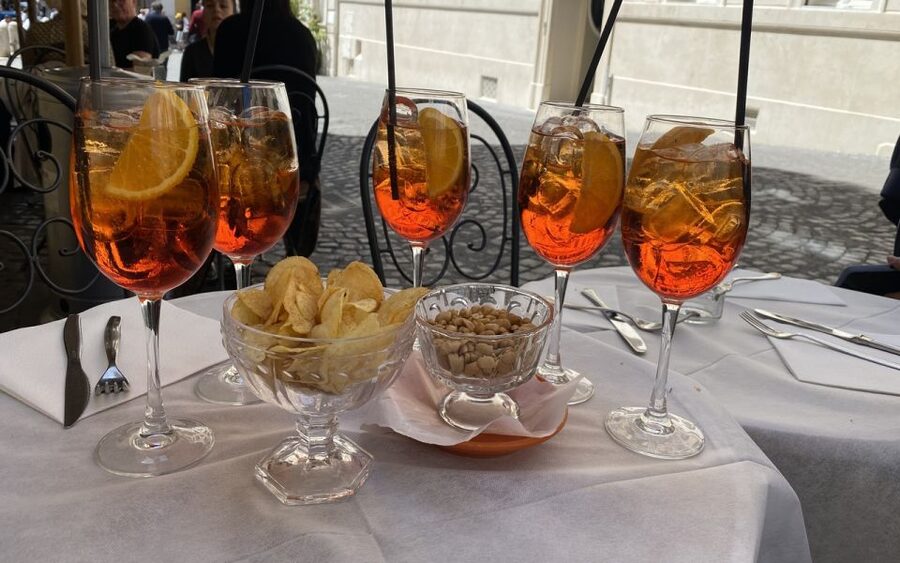
The Trevi Fountain gets about fifteen minutes, including a photo stop and guide commentary. This is where the tour’s evening timing pays off most clearly. The fountain is lit, the water gleams against the stone, and the scene feels more romantic than it does under the strong midday sun.
You can toss a coin over your shoulder and make the familiar wish. More practically, you can use this stop to take the classic front-facing photo, though the exact crowd conditions will vary.
Several guides have been able to lead groups close to the fountain area and help them reach a good photo position without a long wait. Treat that as a helpful guide skill rather than a guaranteed skip-the-line service. Crowd rules and access can change, and the tour does not include a formal attraction ticket.
This stop can feel short if you want time for every angle. Still, the cart gets you here without spending energy walking across the city, and your host can point out where to stand for a stronger picture. That personal photo help is one of the tour’s most useful touches.
The Spanish Steps and Pincio Terrace finish the route well
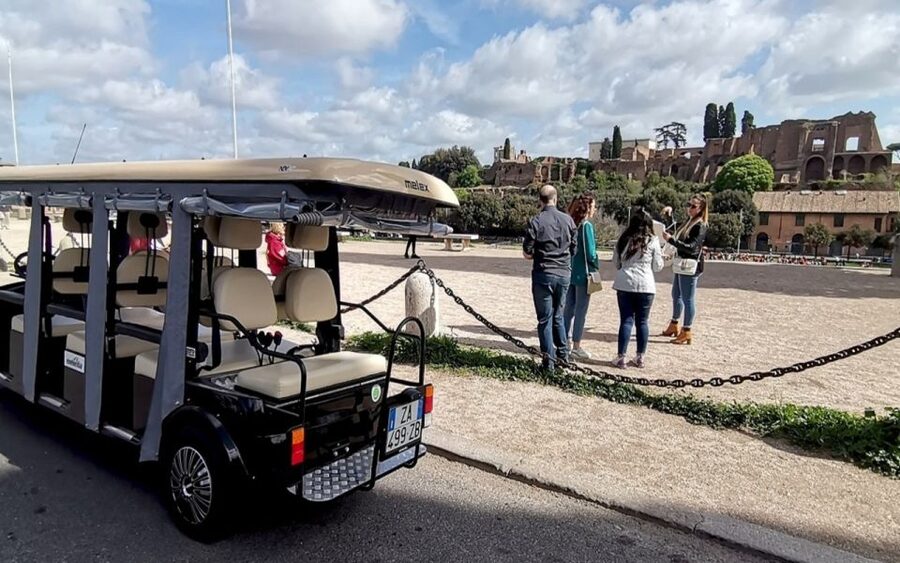
The cart reaches the Spanish Steps from above, giving you a different approach from the usual climb up from Piazza di Spagna. You get about fifteen minutes to see the steps, hear their story, and take photographs.
The steps themselves are not a place to sit and eat, and your guide will give you the practical rules for enjoying the area. The nearby streets also show Rome’s polished shopping side, a change from the ruins and working streets earlier in the evening.
The final stop is Pincio Terrace, with around ten minutes for views over Rome. This is a smart ending because you get a wide panorama after seeing the city at street level. Domes and rooftops spread below you, and the fading light gives the city a softer outline.
The terrace is not a long sunset picnic. It is a short viewpoint stop before the return ride. If you want to linger, take more pictures, or watch the city darken completely, you may wish you had extra time. One person specifically wished the tour lasted another hour, a fair point for a route that covers so much.
What the guides add to the ride
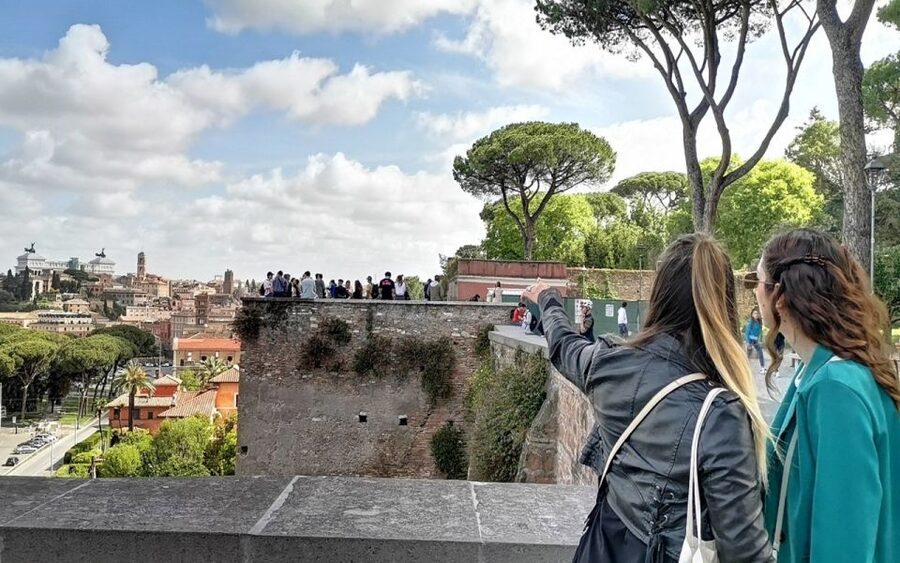
The guide can make or break a city overview, and this experience depends heavily on that human element. Max is often praised for humor, Roman stories, photo advice, and practical help. Giovanni is described as warm, funny, and strongly connected to his home city. Massimo has been noted for giving a clear introduction to Rome’s origins and keeping the ride light.
You may receive an English or Spanish-speaking host. The guide explains the major monuments, points out smaller details, and can suggest places to eat or visit later. One guide recommended Gelateria Fassi to a group, while another dropped a group at a restaurant after the tour.
That sort of advice is most useful when you take the tour early in your stay. You can use the route to mark places for a return visit, then ask your host what deserves more time. If you book it on your final evening, it still works as a pleasant farewell, but you lose some of its practical planning value.
Private bookings and comfort
The private option is the strongest choice for families, couples, or anyone who wants a more flexible pace. Hotel pickup and drop-off are included with private bookings, while the regular meeting point is near the Colosseum at Via Marco Aurelio 19.
Private touring also makes it easier to ask for extra photo time or help with mobility needs. The cart is wheelchair accessible, though you should still confirm the exact arrangements when booking if a wheelchair user is in your group. Large bags and luggage are not allowed, so leave suitcases at your hotel.
The cart is comfortable, but it is not a silent viewing platform. Rome has traffic, narrow streets, and normal city noise. Bring a light layer for the evening, and keep valuables secure while moving through crowded areas.
Is $93 per person fair?
At $93 per person, this is not the cheapest way to see Rome. You are paying for the vehicle, a local host, insurance, taxes, and the convenience of linking many sights in one evening.
The value is strongest if you want to save your legs, have limited time, or are visiting Rome for the first time. Walking the same route would take much longer, while a standard bus may not reach the smaller central streets or provide the same stop-by-stop attention.
The value is weaker if you want long visits inside monuments. Entry fees are not included, and no major attraction is entered during the tour. You will need separate plans for the Colosseum, Pantheon, Vatican Museums, or other interiors.
For a private group, the price can make more sense because hotel pickup, direct attention, and a flexible experience are included. For a larger family group, compare the total private price with the per-person rate before booking.
Who should book this Rome golf-cart tour?
I would choose it for a first evening in Rome, especially after a long flight or during hot weather. You get a quick map of the center, see the major postcard sights, and learn which areas deserve a return visit.
It also suits visitors who cannot comfortably walk several miles over uneven streets. The accessible cart and guide assistance can remove much of the strain, though the stops still involve some walking.
Families may appreciate the movement, short stops, and friendly guide style. Couples will like the evening lights and Pincio view. Photographers should enjoy the repeated chances to stop, but serious photographers may want a separate, slower evening for careful compositions.
I would skip it if your main goal is detailed archaeology or museum time. In that case, spend the $93 on a focused interior tour and use Rome’s buses, taxis, or your own feet for the rest.
Should you book it?
Book this tour if you want a comfortable, social introduction to Rome’s center with strong evening views and a guide who can make the city feel less confusing. Max, Giovanni, and Massimo have each brought humor, local stories, and practical help to the experience, and the small-cart route reaches places larger vehicles cannot.
Choose the private option if hotel pickup matters, someone in your group uses a wheelchair, or you want more control over the pace. Just remember what you are buying: a well-planned outdoor overview, not entry to Rome’s monuments. For most first-time visitors, it works best near the start of a stay, when the city still needs a map in your head.
FAQ
Where does the tour start?
The listed starting point is Via Marco Aurelio 19, near the Colosseum. The exact meeting point may vary according to the option booked.
How long does the golf-cart tour last?
The tour lasts 2.5 hours.
What sights does the route include?
The route includes the Colosseum, Circus Maximus, Palatine Hill views, Piazza Venezia, the Pantheon, Piazza Navona, Trevi Fountain, the Spanish Steps, and Pincio Terrace.
Does the tour enter the Colosseum or Pantheon?
No. This is an outdoor sightseeing tour, and entry to major attractions is not included.
Is hotel pickup available?
Hotel pickup and return are available with the private option only.
Is the golf cart wheelchair accessible?
Yes, the activity is listed as wheelchair accessible. Large bags and luggage are not allowed.
What languages are available?
Hosts or greeters are available in English and Spanish.
Can children join the tour?
Unaccompanied minors are not allowed. Children must take part with an accompanying adult.
What is included in the price?
The price includes transport by a street-legal luxury golf cart, an expert local guide, insurance, fees, and taxes. Food, drinks, and attraction entry are not included.
Just added in Rome
- Civitavecchia Private Transfer: From the Port to Rome Airport★ 5.0 · 309 reviews
- Civitavecchia Shore Excursion: Best of Rome Private Tour★ 5.0 · 247 reviews
- Civitavecchia Private Transfer from ship to FCO airport or Rome★ 5.0 · 245 reviews
- Food Tasty and History Tour in Civitavecchia★ 5.0 · 256 reviews
- Palatine Hill and Roman Forum Tour with Fast-Track Entrance★ 4.2 · 417 reviews
- Tivoli: Villa D’Este & Villa Adriana Pass & App Audioguide★ 4.4 · 364 reviews
- Tivoli: Villa D’Este Entry Ticket and App Audio Guide★ 4.3 · 191 reviews
- Vatican Museums & Sistine Chapel Skip-the-Line Guided Tour★ 4.6 · 254 reviews
Golf Cart Tours, compared.
Rome by Golf Cart Private Tour: Beyond the Landmarks
Read our review →
Rome on a Golf Cart Semi-Private Tour Max 6 with Private Option
Read our review →
Golf Cart Tour to Fiesole Roman Theatre and Museum
Read our review →
Eco-Friendly Golf Cart City Tour with Audio Guide
Read our review →
City Highlights Golf Cart Tour with Local Guide
Read our review →Browse the lists this tour appears in