Reviewed · TOURS IN ROME
Rome: Capuchin Crypts Skip-the-Line Ticket and Tour
Rome’s Capuchin Crypt is not a normal church stop. Beneath the Capuchin Museum, human bones form walls, patterns, symbols, and chapels, with the remains of about 3,700 people arranged across several underground rooms. I like the small group size, capped at 10, and the way a good guide can explain the spiritual meaning behind this unusual display rather than leaving you with simple shock value.
I also like the short, focused format. In about an hour, you see the museum and the main crypts without giving up half a day. The main consideration is the subject matter: this is a place built from human remains, so it may feel too grim for some people, and you must keep your shoulders and knees covered to enter.
Key points about the Capuchin Crypt tour
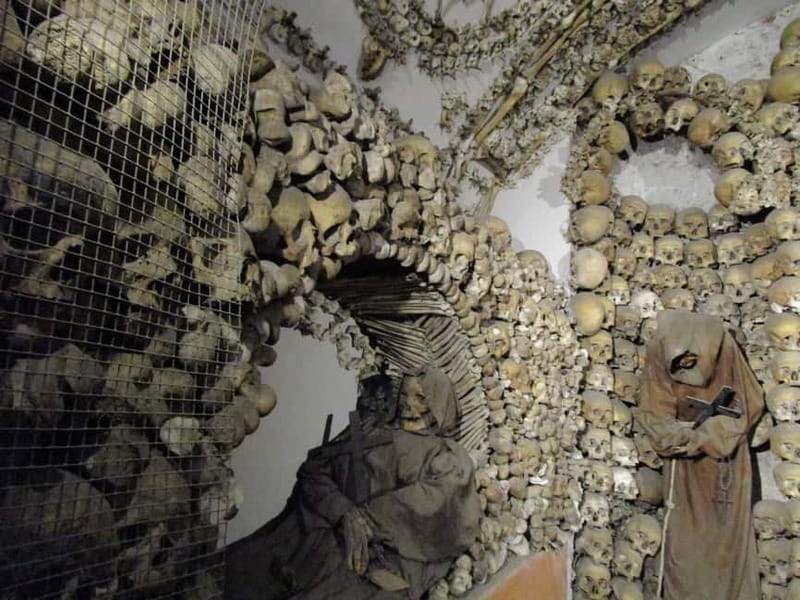
- About 3,700 remains: Bones collected over the centuries form the walls and designs of the underground crypts.
- Six or more distinct spaces: See the Crypt of the Three Skeletons, Leg Bones and Thigh Bones, Pelvises, Skulls, Resurrection, and the Mass Chapel.
- A small group of up to 10: This gives you a better chance to hear the guide and ask questions.
- English-speaking guide: Guides such as Luigi and Slobodan have been praised for mixing facts, humor, and clear explanations.
- A quick central Rome stop: The tour takes about 50 minutes to one hour and begins at Via Vittorio Veneto 27.
- A thoughtful visit, not just a macabre attraction: The bones connect to Capuchin religious practice, burial rules, faith, and the passing of life.
Why the Capuchin Crypt is unlike other Rome sights
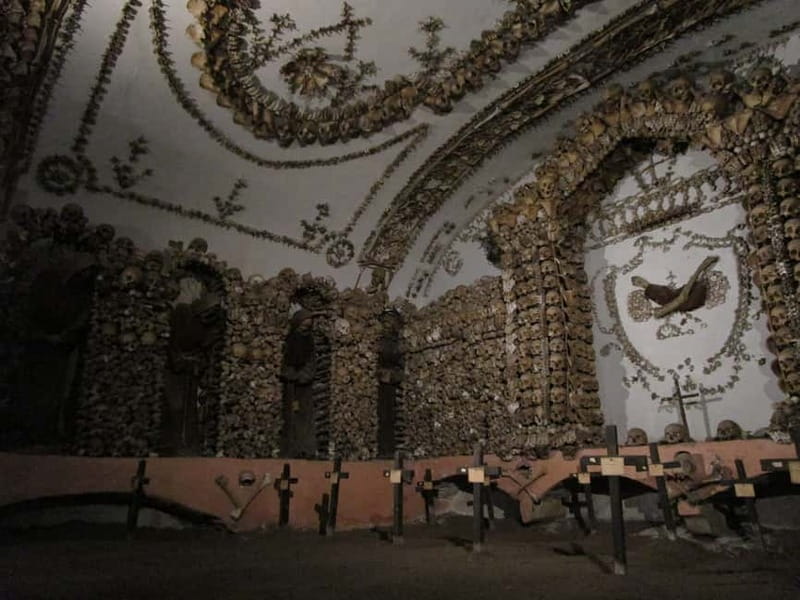
Rome is filled with grand churches, ancient ruins, and painted ceilings. The Capuchin Crypt offers something far stranger: a series of rooms decorated almost entirely with the bones of Capuchin friars.
The first reaction may be surprise. Then the details begin to matter. A femur becomes part of a pattern. A skull appears among other skulls. A cross on the floor marks the resting place of seven Capuchins. The result is unsettling, but it is also carefully arranged and tied to a religious view of death.
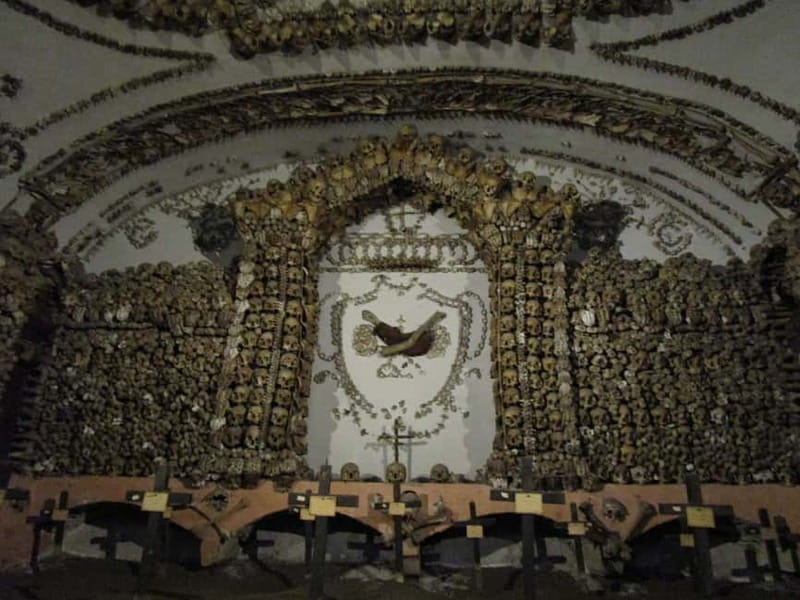
The crypt holds the remains of approximately 3,700 individuals collected over the centuries. The bones came from the old Capuchin friary near the Trevi Fountain. Since Capuchin rules did not allow burials inside churches, an underground cemetery was created here for the friars.
That background changes the visit. You are not simply looking at a room decorated with bones for dramatic effect. You are seeing the final resting place of Capuchin friars and a physical expression of their beliefs about mortality, humility, and the life beyond death.
A guide helps put the rooms in order. Without one, you could see the same bones but miss the symbols and the reason the collection was moved. The best guides make the subject easier to approach without turning it into a joke.
A few more things to do in Rome
- Vatican: Museums & Sistine Chapel Entrance Ticket
★ 4.5 · 144,003 reviews - Rome: Pantheon Fast-Track Ticket and Official Audio Guide
★ 4.3 · 21,008 reviews - Rome:Hop-On Hop-Off Panoramic Open Bus Ticket 3 Circuits x 1
★ 4.0 · 15,405 reviews
Meeting at Via Vittorio Veneto 27
The tour begins at Via Vittorio Veneto 27, at street level next to the bronze gate. You return to the same meeting point when the activity ends.
This is a useful starting place because the tour does not require a complicated transfer or a long walk between separate sights. You meet, join the guide, and head into the Capuchin Museum and crypt. Since the duration is only 50 minutes to one hour, it can fit neatly into a morning or afternoon in central Rome.
Take the meeting instructions seriously. The stated meeting point is in front of the address, next to the bronze gate, not simply somewhere along Via Veneto. Arriving a little early gives you time to identify the entrance and avoid starting the visit in a rush.
The activity is offered in English. Private or small-group options are available, with small groups limited to 10 people. That limit matters in the underground rooms, where a large crowd would make it harder to hear explanations or see the arrangements clearly.
The Capuchin Museum gives the crypt a human context
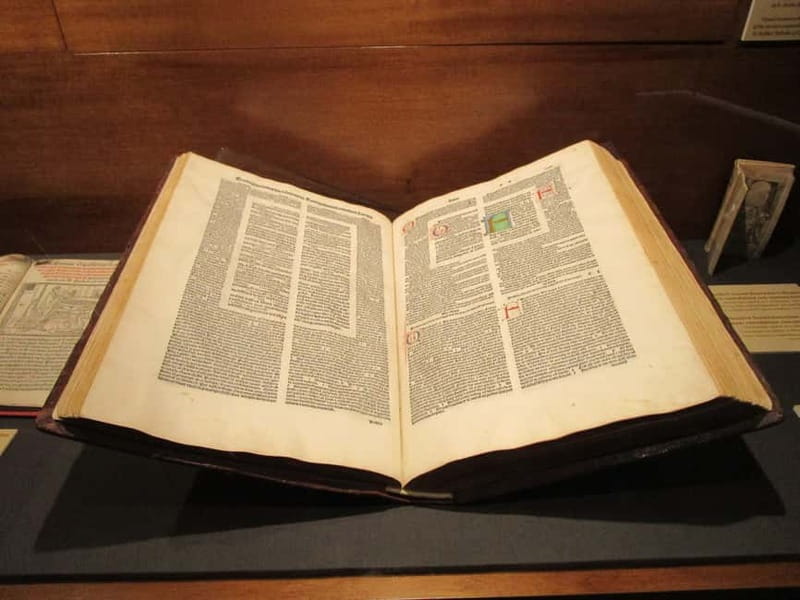
The visit begins in the Capuchin Museum. This first section helps explain the order of the visit and the place of the Capuchins within Rome’s religious story.
The museum is important because it gives you a frame for what follows. If you walked straight into the bone rooms, the display could feel like a strange curiosity. The museum helps connect the crypt to the friars, their former home near Trevi Fountain, and their burial customs.
I would pay attention here even if you are most eager to see the bones. The museum material and the guide’s commentary help you understand why the underground cemetery exists and why the remains were arranged in particular ways.
The tour is short, so the guide has to keep the pace moving. That is usually an advantage. You receive the essential background without a long lecture, then move into the crypts while the information is fresh.
The Crypt of the Three Skeletons
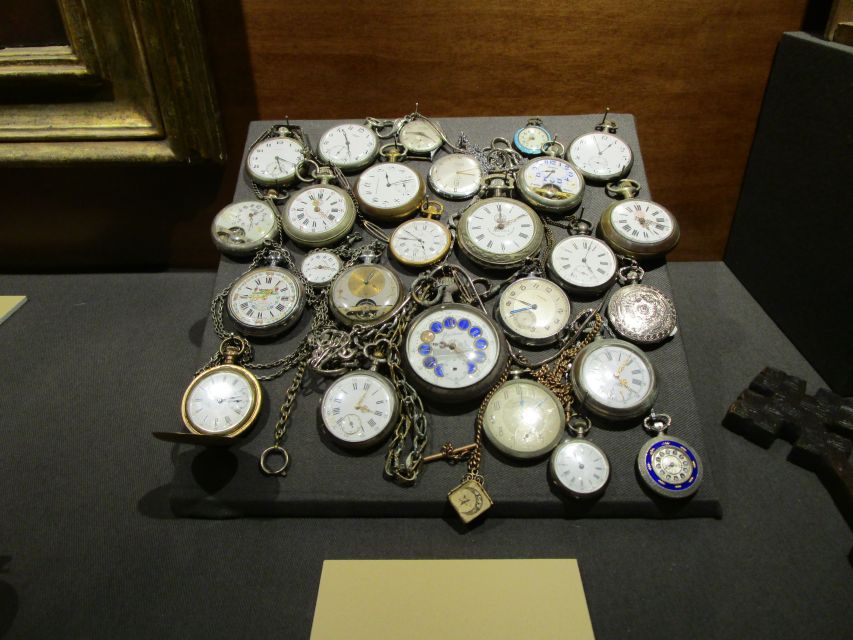
The first major room is the Crypt of the Three Skeletons. It is the only area where a complete human skeleton is displayed in its natural state.
That makes this room different from the others. In many sections, bones are arranged into designs or architectural patterns. Here, you see the human form more directly. The effect is simple and immediate.
This room also sets the tone for the visit. The crypts are not designed as a haunted attraction. The complete skeleton makes the subject personal and reminds you that the displays began with real people, not decorative objects.
If you have a strong reaction to human remains, this is the point to judge how comfortable you feel. The experience becomes no less serious after this room, although the arrangements in later chambers may seem more artistic than anatomical.
Same base, a different kind of day:
- Vatican Museums & Sistine Chapel Tour with Optional Basilica
★ 4.3 · 67,413 reviews - Colosseum, Roman Forum & Palatine Guided Tour
★ 4.7 · 63,148 reviews - Vatican Museums, Sistine Chapel & St Peter’s Basilica Guided Tour
★ 4.5 · 39,149 reviews - Rome: Colosseum, Palatine Hill and Roman Forum Guided Tour
★ 4.8 · 32,814 reviews
Leg bones, thigh bones, and the Crypt of Pelvises
The tour then moves through the Crypt of the Leg Bones and Thigh Bones. Here, individual parts of the skeleton become building material for patterns and decorations.
The arrangement can be hard to take in at first. The guide’s role is especially useful because you can look at the shapes while hearing what they represent and how they fit into Capuchin practice.
The Crypt of Pelvises has a different visual character. Two Capuchin friars are positioned peacefully in an arched formation, surrounded by pelvis bones. Crosses on the floor mark the burial places of seven Capuchins.
These details show how carefully the crypt was planned. The rooms are not random piles of remains. They combine human bones, religious symbols, and architectural forms. That combination is why the experience feels more reflective than frightening once you understand what you are seeing.
The Crypt of the Skulls and its famous hourglass
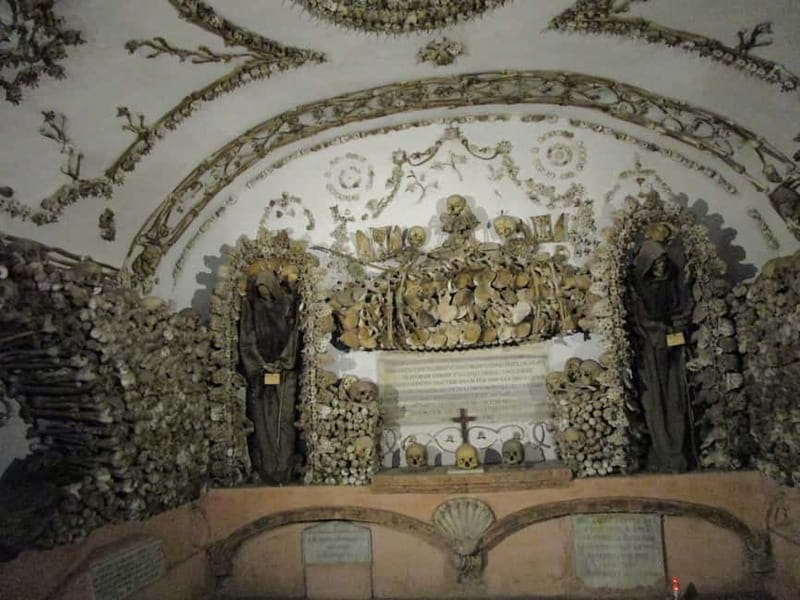
The Crypt of the Skulls is among the most recognizable rooms in the complex. Skulls form the central visual language, and the famous hourglass adds another reminder that time passes quickly.
The hourglass is a simple object, but it carries a clear message in this setting. Surrounded by skulls and bones, it points toward death and the temporary nature of earthly life. The symbols are not subtle, but they are effective.
A lively guide can make this room easier to approach. Guides such as Luigi have been praised for pairing strong subject knowledge with an engaging personality. Slobodan has also been noted for using humor, answering questions, and involving the group while keeping the topic respectful.
Your assigned guide may be someone else, but the format gives the guide room to explain the symbols rather than rush you past them. In a group of 10 or fewer, you can usually follow the commentary more easily than in a packed public tour.
The Crypt of the Resurrection and the Mass Chapel
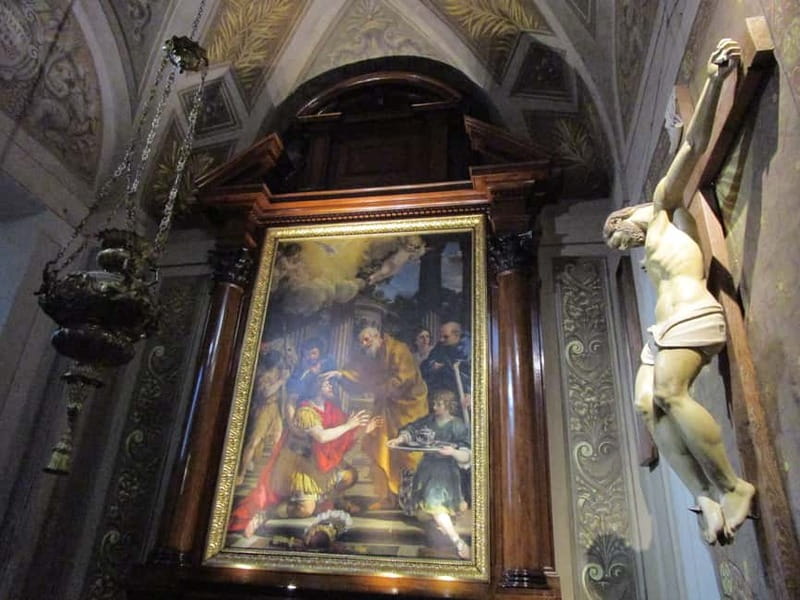
The Crypt of the Resurrection continues the theme of death, faith, and the hope of life beyond death. The name itself points to the Christian meaning behind the rooms. The bones are not meant only to remind you that life ends. They are also connected to resurrection and spiritual belief.
The Mass Chapel provides another change of mood. It is a place for worship within the crypt complex, not merely another display room. This helps show that the site remains tied to religious practice and memory.
You should not expect a long time for quiet reflection in each chamber. The full guided visit lasts about an hour, and the group keeps moving. Still, the sequence of rooms creates a clear progression from museum context to skeletons, arranged bones, skulls, religious symbols, and the chapel.
After the guided portion, you may be able to walk back through the museum again. That is useful because the first pass can feel quick. A second look lets you return to a display or piece of information that you did not absorb while following the guide.
Why the guide matters here
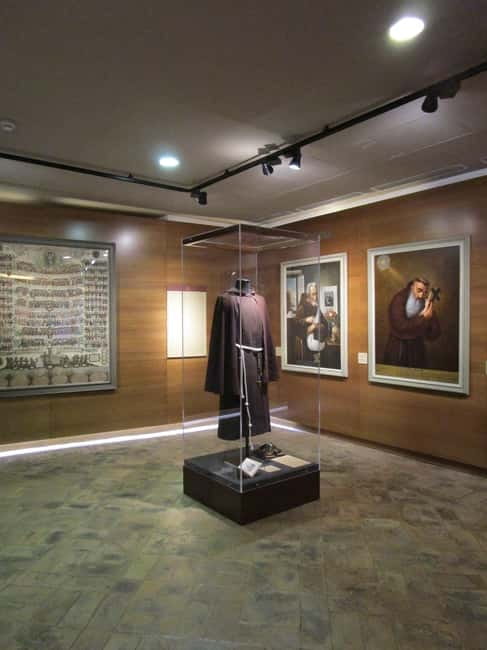
The guide is the main reason to choose this experience instead of visiting the crypt without commentary. The rooms are visually memorable, but the meaning is less obvious than the design.
A good guide explains:
- Why the Capuchins moved the bones from the old friary near Trevi Fountain.
- Why the underground cemetery was created.
- How the bones were arranged in the different rooms.
- What the crosses, hourglass, skeletons, and religious spaces represent.
- How to view the crypt as a place of faith and burial, not only as a macabre display.
The strongest feedback about this experience focuses on the guides’ energy, clarity, and sense of humor. That balance matters. The subject is difficult, but a guide who is too solemn can make the visit feel heavy, while someone who treats it as a joke can miss its purpose.
Names that have received special praise include Luigi and Slobodan. Luigi has been described as combining personality with strong command of the subject. Slobodan has been appreciated for making the tour accessible and even helping with a leg covering when a child arrived without knees covered.
Guide assignments can change, so do not book solely for a particular person unless the provider confirms it. What you can count on is an English-speaking guide and a small-group format.
Price, timing, and overall value
The listed price is $44.41 per person. That is not a cheap walk-up museum admission, but the cost includes the Capuchin Crypt entry ticket, skip-the-line access, and an English-speaking guide.
The value depends on what you want from the visit. If you only want to glance at the bones, the price may feel high for an attraction that takes less than an hour. If you want the context, symbols, and burial story explained clearly, the guide adds real value.
The small group also helps justify the cost. A maximum of 10 participants is much more personal than a large group moving through narrow underground rooms. You have a better chance of hearing the guide and asking a question without stopping the entire tour.
The 50-minute to one-hour length is another strength. Rome can wear you out with long museum visits and crowded archaeological sites. This experience gives you something distinctive without taking over your day.
Skip-the-line entry is useful at a popular sight, but it should not be mistaken for a private visit. You still enter as part of a tour group and follow the planned route.
Dress properly for the crypts
You must cover your shoulders and knees to enter. This applies to everyone, so check your clothing before leaving for the meeting point.
A simple cover-up can solve the problem. One guide, Slobodan, provided a cover for a child’s legs when the family had not realized that covered knees were required. That was helpful, but you should not rely on a guide having spare clothing available.
This rule fits the religious setting. The crypt is part of a church and museum complex, not a secular oddity. Dress respectfully and you will avoid an awkward delay at the entrance.
Who should book this experience?
I would recommend it to you if you enjoy unusual religious sites, lesser-known corners of Rome, or places that make you think about the past in a direct physical way.
It also suits families with older children and teenagers who may be less interested in another painting gallery. One family found the crypt a highlight for two teenage boys, partly because the guide kept the information clear and engaging.
The tour can work well for history fans, art and architecture enthusiasts, and anyone curious about how religious communities treated death. It is also a good choice if you have already seen Rome’s major sights and want something very different.
I would think twice if human remains make you uncomfortable. The visit is not violent, but it is visually direct. Skulls, skeletons, and bones are the subject from beginning to end.
I would also avoid booking it for someone who expects a grand, spacious monument. The rooms are underground, the subject is serious, and the main attraction is the arrangement of human remains rather than ornate sculpture or large-scale architecture.
Should you book the Capuchin Crypt tour?
Book it if you want a short Rome experience with a strong sense of place and a story that you will not find at the Colosseum or Vatican Museums. The combination of the museum, bone-filled crypts, religious symbols, and a small English-speaking group makes the price easier to accept.
The best reason to choose this tour is the guide. The bones catch your attention, but the explanation gives the visit its meaning. You should also be comfortable covering your shoulders and knees and spending an hour with an unsettling subject.
For most curious visitors, I think it is worth adding to a Rome schedule, especially if you prefer unusual churches and quieter historical experiences over another standard monument. Just go prepared: this is memorable, thoughtful, and unmistakably macabre.
FAQ
Where does the Capuchin Crypt tour begin?
Meet at Via Vittorio Veneto 27, at street level next to the bronze gate.
Where does the activity end?
The tour ends back at the same meeting point, the Capuchin Crypt area.
How long does the tour last?
The activity lasts between 50 minutes and one hour. Check the available start times when booking.
What language is the tour conducted in?
The tour is conducted in English with a live English-speaking guide.
How many people are in the small group?
The small group option has a maximum of 10 participants.
What is included in the price?
The price includes an English-speaking guide and the Capuchin Crypt entry ticket.
Is skip-the-line entry included?
Yes. The activity includes skip-the-ticket-line entry to the Capuchin Crypt.
Do I need to cover my shoulders and knees?
Yes. Shoulders and knees must be covered to enter the crypts.
What will I see during the tour?
You will visit the Capuchin Museum, the Crypt of the Three Skeletons, the Crypt of the Leg Bones and Thigh Bones, the Crypt of Pelvises, the Crypt of the Skulls, the Crypt of the Resurrection, and the Mass Chapel.
Can I cancel the booking?
You can cancel up to 24 hours in advance for a full refund. Reserve-now, pay-later booking is also available.
Just added in Rome
- Civitavecchia Private Transfer: From the Port to Rome Airport★ 5.0 · 309 reviews
- Civitavecchia Shore Excursion: Best of Rome Private Tour★ 5.0 · 247 reviews
- Civitavecchia Private Transfer from ship to FCO airport or Rome★ 5.0 · 245 reviews
- Food Tasty and History Tour in Civitavecchia★ 5.0 · 256 reviews
- Palatine Hill and Roman Forum Tour with Fast-Track Entrance★ 4.2 · 417 reviews
- Tivoli: Villa D’Este & Villa Adriana Pass & App Audioguide★ 4.4 · 364 reviews
- Tivoli: Villa D’Este Entry Ticket and App Audio Guide★ 4.3 · 191 reviews
- Vatican Museums & Sistine Chapel Skip-the-Line Guided Tour★ 4.6 · 254 reviews
Tours in Rome, compared.
Vatican: Museums & Sistine Chapel Entrance Ticket
Read our review →
Vatican Museums & Sistine Chapel Tour with Optional Basilica
Read our review →
Colosseum, Roman Forum & Palatine Guided Tour
Read our review →
Vatican Museums, Sistine Chapel & St Peter’s Basilica Guided Tour
Read our review →
Colosseum & Forum with Audio Guide App -Optional Arena
Read our review →
Pantheon Fast-Track Ticket and Official Audio Guide
Read our review →
City Sightseeing Hop-on Hop-off Bus with Audioguide
Read our review →