
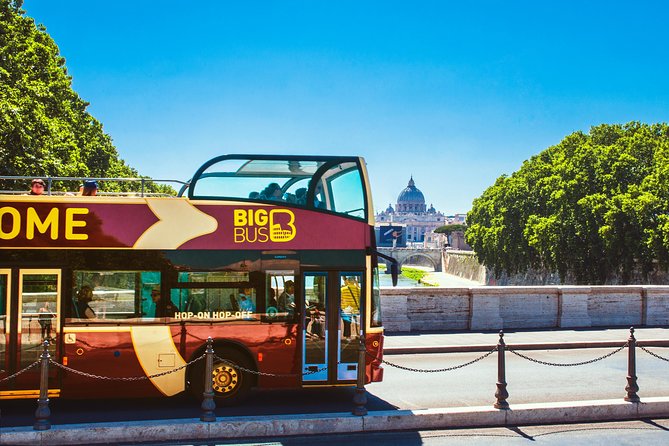
Reviewed · HOP-ON HOP-OFF BUS TOURS
Rome: Big Bus Hop-on, Hop-off Open-Top Sightseeing Tour
Rome is easiest to understand from above street level, and this open-top bus tour gives you a quick look at the city’s grandest sights without making you cross its traffic-clogged center on foot. You can ride the full circuit in about 1 hour 40 minutes, then hop off to explore.
I like the useful historical audio and the freedom to spend extra time at the Colosseum, Pantheon, Trevi Fountain, Vatican City, or the Spanish Steps. I also like that every ticket includes a VOX digital walking tour, giving you something to do after leaving the bus. The catch is that several stops sit 10 to 20 minutes from the actual sights, and temporary closures are not always obvious.
Key points to know before you board
- The full loop takes about 1 hour 40 minutes: Use it first to get your bearings, then repeat only the sections you need.
- Eight listed stops cover Rome’s main center: You can reach Termini, Santa Maria Maggiore, the Colosseum area, Circus Maximus, Piazza Venezia, the Vatican, the Spanish Steps, and Barberini.
- The audio guide adds useful context: Headphones are supplied, but some passengers have found faulty headphone sockets or audio that does not match the view during traffic delays.
- The bus does not always stop beside the monument: The Vatican and Trevi Fountain can require a walk, while a closed Colosseum stop may send you to another stop altogether.
- Longer tickets make the bus more useful: Options include 3, 24, 48, and 72 hours, depending on the selected fare.
- The 72-hour ticket may include a night ride: This is a panoramic night tour, not a hop-on, hop-off service, and it is offered only during the warmer months.
Why this bus can be a smart first ride in Rome
I would use this tour early in a Rome visit, not as a replacement for the city itself. The first circuit helps you see how the ancient center, Vatican side of the river, shopping streets, and Termini area fit together. That matters in Rome, where a sight that looks close on a map can take time to reach because of traffic, restricted streets, and large archaeological sites.
The bus is also a break from Rome’s hard pavement. You can sit, listen, and watch the city pass by instead of walking between every major stop. That is especially useful on a rainy day or after a long flight. Passengers using wheelchairs or dealing with limited mobility should still plan carefully, since several stops are not right beside the sights.
At about $26.43 per person, the price is reasonable if you use the bus for transportation as well as sightseeing. A single loop is not enough to make the fare feel like a bargain. The value improves when you hop off at two or three places, then use the bus again later rather than paying for separate rides.
Other sightseeing routes around Rome:
- Rome: City Sightseeing Hop-on Hop-off Bus with Audioguide
★ 4.0 · 16,045 reviews - Rome:Hop-On Hop-Off Panoramic Open Bus Ticket 3 Circuits x 1
★ 4.0 · 15,405 reviews - City Sightseeing Rome Hop-On Hop-Off Bus Tour
★ 3.5 · 5,446 reviews
Stop 1: Termini puts you near Rome’s transport hub
Termini Railway Station is the practical starting point for many people. It connects with trains and local public transportation, and it gives you an easy place to begin if you are staying near the station or arriving in Rome by rail.
I would not make Termini a sightseeing stop in itself. Use it to confirm the route, collect your headphones, and get settled. The station area can feel confusing at first, so check the stop location before setting out. The real benefit here is orientation: from Termini, the route leads toward Santa Maria Maggiore and the ancient center.
Stop 2: Santa Maria Maggiore offers an early church visit
The Papal Basilica of Saint Mary Major is one of Rome’s major churches and a worthwhile stop if you want something quieter than the Colosseum or Trevi Fountain. Its location at Piazza dell’Esquilino makes it a useful early hop-off point.
I like this stop because it gives you a choice. You can leave the bus for an important religious site, or stay aboard and save your walking energy for the ancient ruins. The church is not simply a backdrop on the route. It helps show how Rome’s identity grew from imperial power into the center of Catholic Christianity.
Stop 3: The Colosseum stop needs careful checking
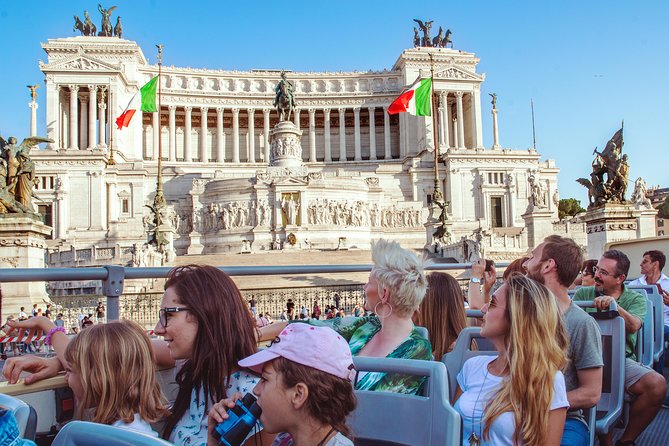
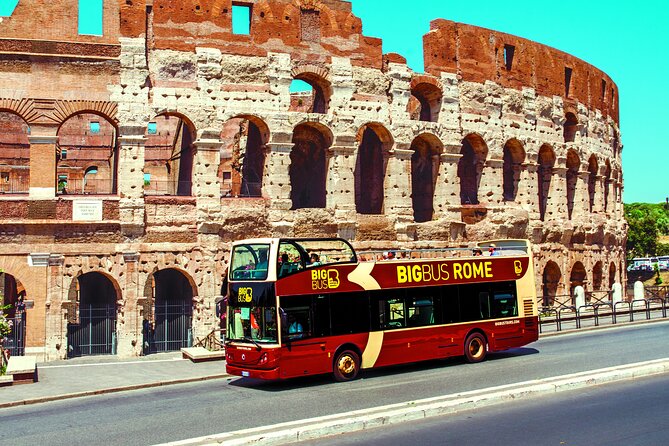
The Colosseum is the obvious priority for many people, but this is also the stop that has caused the most practical trouble. The listed location is near the Roman Forum entrance on Via di San Gregorio, yet the stop has sometimes been temporarily closed or moved. In those cases, the bus may pass without stopping, and you may need to walk from Circus Maximus or another nearby point.
Do not assume the bus will stop exactly where the promotional photographs suggest. Check the current service information before you set out, and ask staff or the driver if the Colosseum stop is operating that day. This small check can save you a long walk, especially if you have leg braces, a wheelchair, or tired children in tow.
When the stop is running, it is a useful place to leave the bus for the Colosseum and Roman Forum. You will still need separate admission if you want to enter either site. The bus ticket provides transportation and commentary, not entry to the monuments.
Same base, a different kind of day:
- Vatican: Museums & Sistine Chapel Entrance Ticket
★ 4.5 · 144,003 reviews - Vatican Museums & Sistine Chapel Tour with Optional Basilica
★ 4.3 · 67,413 reviews - Colosseum, Roman Forum & Palatine Guided Tour
★ 4.7 · 63,148 reviews - Vatican Museums, Sistine Chapel & St Peter’s Basilica Guided Tour
★ 4.5 · 39,149 reviews
Stop 4: Circus Maximus gives you room to breathe

Circus Maximus is a broad archaeological site that once hosted chariot races. Today, it feels much more open than the tight streets around the Trevi Fountain or Pantheon. The stop at Piazzale Ugo La Malfa can serve as an alternative when the Colosseum stop is closed.
I like this part of the route for the contrast. You see the scale of ancient Rome without immediately joining a dense crowd. If you hop off here, allow extra time for walking to the Colosseum area. The distance can be more than a short stroll, and it has been especially difficult for people with mobility issues.
The bus ride past the Circus Maximus is also one of the more rewarding sections. Even without getting off, you get a broad view of the site and its position below the Palatine Hill.
Stop 5: Piazza Venezia connects ancient and modern Rome
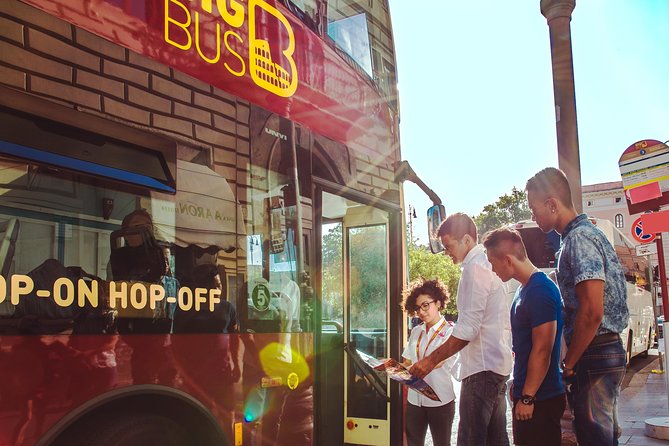
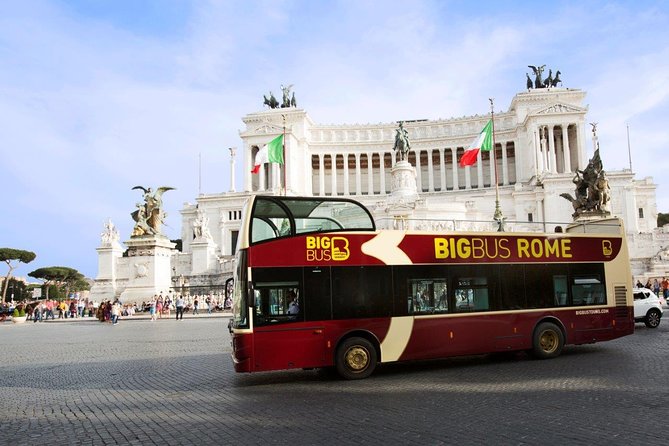
Piazza Venezia is one of Rome’s busiest central crossroads, with the massive Victor Emmanuel II monument nearby. The stop on Via di Teatro Marcello puts you close to the Capitoline Hill, Roman Forum approaches, and the narrow streets leading toward the Pantheon.
This is a good place to leave the bus if you want to explore central Rome on foot. You can work toward the Pantheon, browse the lanes around the historic center, or continue toward the Trevi Fountain. The bus does not eliminate walking, but it places you within reach of several sights.
Traffic is a factor here. The audio narration may describe a monument before you pass it, or after you have already gone by, if the bus is held up. I would treat the recording as background information rather than a perfectly timed guide.
Stop 6: Vatican City is close, but not right at the museums

The Vatican stop is on Lungotevere Tor di Nona, near the river. It is not a doorway to the Vatican Museums, and you should not expect to step off and immediately see the entrance. The walk can be around 15 minutes, depending on your pace and destination.
That distance is worth knowing before you buy the ticket. If your main plan is the Vatican Museums, you need a timed museum reservation and enough time to reach the entrance. The bus helps with the general journey across Rome, but it does not remove the final walk.
I still find this stop useful because Vatican City is on the opposite side of the historic center from the Colosseum. The ride gives you a break between sightseeing areas, and the audio places the Catholic Church within Rome’s long story. After visiting the museums or St. Peter’s area, you can walk back toward the stop or use another form of local transportation.
Stop 7: Spanish Steps are reached after a city walk
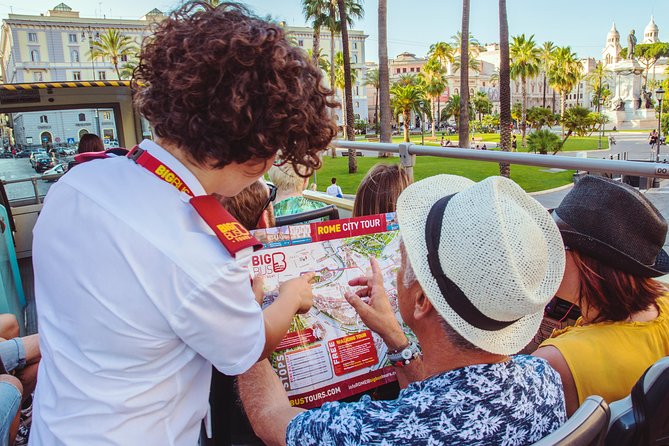
The Spanish Steps stop is on Via Ludovisi, not directly at the base of the steps. You will need to walk downhill toward Piazza di Spagna. This is manageable for many people, but it can be tiring if you have already spent the day on Rome’s uneven streets.
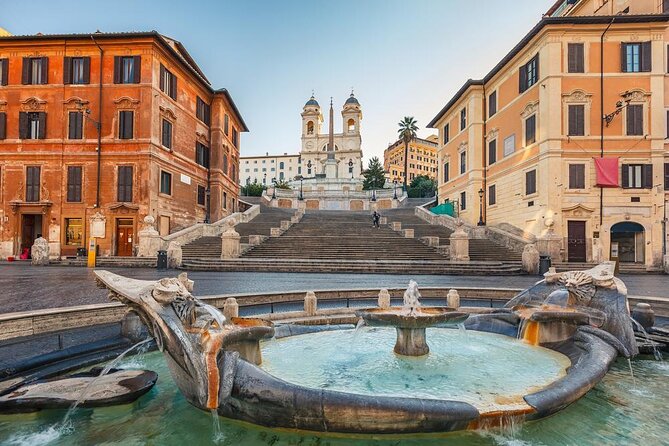
The reward is one of Rome’s most recognizable urban scenes. You can sit near the steps, stop for gelato, and continue toward nearby shopping streets or the Trevi Fountain. I would not plan a quick five-minute stop here. The area works better as part of a walking route through the center.
Because the stop is not beside the monument, use the app’s stop-finding feature or a map before leaving the bus. Several people have had trouble locating stops, particularly when streets are crowded or signs are not easy to see.
Stop 8: Barberini is useful for the Trevi area
The Barberini stop on Via Barberini 12 is a practical point for reaching the Trevi Fountain, although you should again expect a walk. The fountain is not directly at the bus stop. Depending on foot traffic and your route, the walk can take about 10 minutes.
This stop also gives you access to Piazza Barberini and the streets around it. The area works well as a final hop-off point after the Spanish Steps, or as a place to rejoin the bus after visiting the Trevi Fountain. Remember that the fountain itself is usually crowded, so a short stop can easily turn into a longer visit.
Rome’s famous coin tradition is simple: toss one in and legend says you will return. The bus cannot promise that, but it does make it easier to see the fountain without walking all the way from the Vatican or Colosseum.
Audio commentary, Wi-Fi, and the digital walking tour
The recorded commentary is one of the stronger parts of the experience. Headphones are included, and the narration covers Roman history as well as the city’s modern role in Italy. It gives you useful context while you sit above the street.
The audio is not flawless. Some headphone ports have not worked, and a few passengers have heard music where they expected more narration. Traffic can also throw off the timing, so the commentary may not always match the monument in front of you. Test your socket early and ask for help before the bus gets far from the starting point.
Free Wi-Fi is included, though I would not depend on it for your whole day. The real-time tracking app can help you see where buses are, but its stop information has not always been easy to use. I would keep a separate map handy and confirm the exact stop location before walking away from a monument.
The included VOX digital walking tour adds real value. Once you hop off, you have a self-guided option for exploring on foot rather than simply wandering without context.
Choosing between the 3-hour, 24-hour, 48-hour, and 72-hour tickets
A short ticket suits you if you want a quick survey of Rome and have limited time. Ride the complete loop first, then use the remaining validity to return to one or two stops. Do not expect to see every major monument in depth within a single short ride.
The 24-hour option is the best fit for many visitors. You can ride once for orientation, hop off for the Colosseum or Vatican area, and use the bus again later. The 48-hour and 72-hour choices make more sense if you plan to spread sightseeing across several days or want transportation between distant parts of the route.
The 72-hour ticket includes a panoramic night tour during the stated seasonal period. It is not hop-on, hop-off, so you stay aboard for the nighttime circuit. The supplied details refer to April through October in one place and May through October in another, so confirm the operating dates before counting on it.
Timing, closures, and mobility advice
Rome’s traffic can slow the buses. A posted 9:00 departure does not always mean the bus will arrive at exactly 9:00, and waits can stretch when streets are crowded. Use the live tracking feature, but allow extra time if you have a museum reservation or train to catch.
City events can change the route. Marathons, roadworks, and other closures have caused the Colosseum, Trevi Fountain, or other stops to be skipped. Check the operator’s service update page on the day of your ride, and ask directly if a stop is open.
The bus is not a luggage service. Bags are not permitted on board for security reasons, so leave suitcases at your accommodation or another approved storage point. Service animals are allowed, and most people can participate, but the walking distance from stops remains the main concern for anyone with limited mobility.
Who should book this Rome bus tour?
I would recommend it to a first-time visitor who wants a broad view before choosing where to spend time. It also suits you if walking all day is difficult, provided you understand that the stops are not always beside the monuments.
It is less suitable if you want an exact guided visit inside the Colosseum, Vatican Museums, or Roman Forum. It is also a poor fit for a tightly timed itinerary during a major city event, when route changes and traffic can eat into your day.
FAQ
How long is the full bus route?
The complete sightseeing circuit takes approximately 1 hour and 40 minutes.
Which sights are included on the route?
The listed stops include Termini Railway Station, Santa Maria Maggiore, the Colosseum area, Circus Maximus, Piazza Venezia, Vatican City, the Spanish Steps, and Piazza Barberini.
Are headphones and audio commentary included?
Yes. Headphones and recorded commentary in multiple languages are included.
Does the tour include entry to the Colosseum or Vatican Museums?
No. The bus ticket includes sightseeing transportation, commentary, Wi-Fi, and the VOX digital walking tour. Admission to individual attractions is not listed as included.
Is the night tour hop-on, hop-off?
No. The night option included with the 72-hour ticket is a panoramic ride, not a hop-on, hop-off service. It is offered only during the stated seasonal period.
Can I bring luggage on the bus?
No. Luggage is not permitted on board for security reasons.
Should you book it?
Book this tour if you want a low-effort introduction to Rome, useful commentary, and the freedom to ride between the city’s main sightseeing zones. For the strongest value, choose at least 24 hours and use the bus more than once.
Skip it if you need stops directly outside each monument or if you are booking around a marathon, major road closure, or a strict museum schedule. Check the Colosseum and Vatican stop locations before paying, then treat the bus as a sightseeing and orientation tool, not a door-to-door shuttle.
Just added in Rome
- Civitavecchia Private Transfer: From the Port to Rome Airport★ 5.0 · 309 reviews
- Civitavecchia Shore Excursion: Best of Rome Private Tour★ 5.0 · 247 reviews
- Civitavecchia Private Transfer from ship to FCO airport or Rome★ 5.0 · 245 reviews
- Food Tasty and History Tour in Civitavecchia★ 5.0 · 256 reviews
- Palatine Hill and Roman Forum Tour with Fast-Track Entrance★ 4.2 · 417 reviews
- Tivoli: Villa D’Este & Villa Adriana Pass & App Audioguide★ 4.4 · 364 reviews
- Tivoli: Villa D’Este Entry Ticket and App Audio Guide★ 4.3 · 191 reviews
- Vatican Museums & Sistine Chapel Skip-the-Line Guided Tour★ 4.6 · 254 reviews
Hop-On Hop-Off Bus Tours, compared.

City Sightseeing Hop-on Hop-off Bus with Audioguide
Read our review →
Hop-on Hop-off Bus Tour: 24, 48 or 72-Hour Ticket
Read our review →
City Sightseeing Hop-On Hop-Off Bus with Audio Guide
Read our review →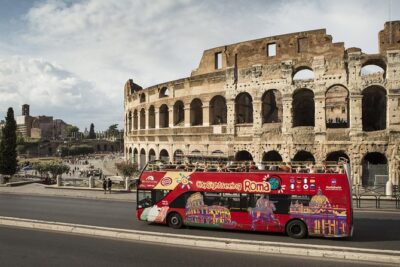
City Sightseeing Rome Hop-On Hop-Off Bus Tour
Read our review →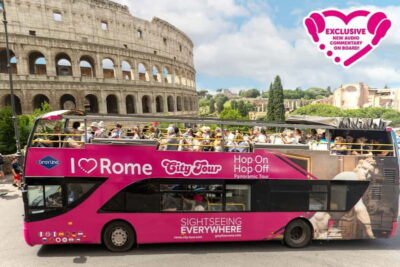
Hop-on Hop-off Sightseeing Bus Tour with Audioguide
Read our review →
Stresa: 3 Borromean Islands Hop-On Hop-Off Boat Tour
Read our review →
Gray Line Milan Open Tour Hop-On Hop-Off Bus Tour
Read our review →Browse the lists this tour appears in