
Reviewed · POMPEII & HERCULANEUM TOURS
Herculaneum: Skip-the-Line Entry Ticket with Audio Guide
Herculaneum gives you something Pompeii often cannot: a close look at Roman homes with wooden doors, furniture, painted walls, and details that survived the eruption of Vesuvius in 79 AD. The city is smaller and easier to cover, but it is not a quick half-hour stop. You can spend two to four hours here without running out of worthwhile things to see.
I like the freedom of the self-guided audio tour, since you can linger in a villa or skip ahead without keeping pace with a group. I also like the included map, which helps you connect the numbered audio stops with the streets, fountains, market, theatre, temples, and houses. The main catch is that the ticket arrangement can be unclear, and the audio numbers do not always match the site perfectly.
Key points to know before you go
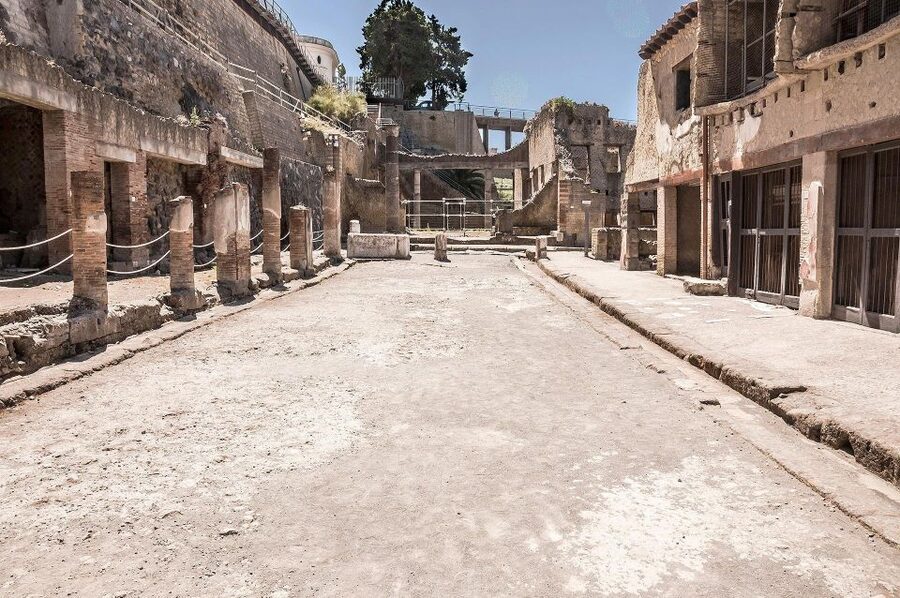
- Herculaneum is compact but exceptionally well preserved, with frescoes, mosaics, doors, wooden beams, and household spaces.
- The audio guide works in English, French, German, Italian, and Spanish, with commentary you can follow at your own pace.
- Allow at least two to three hours, and more if you want to study the museum displays and take breaks.
- The entry process may involve several desks, especially if you need both the admission ticket and audio device.
- The site has cobblestones and steep steps, so comfortable shoes are important.
- The most moving area is near the ancient shoreline, where about 300 people died while waiting for rescue.
Why Herculaneum feels different from Pompeii
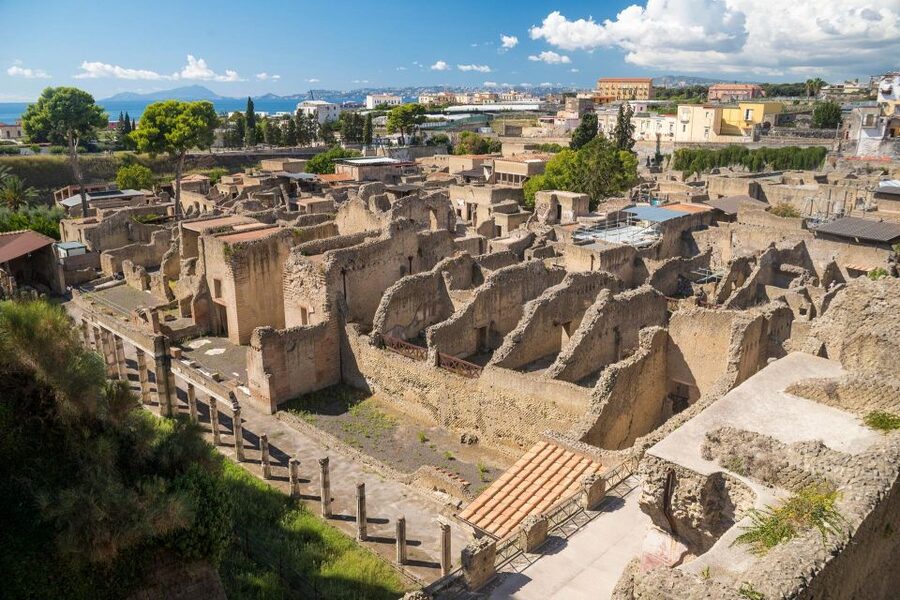
Herculaneum was a Roman town buried by the eruption of Mount Vesuvius, just as Pompeii was. But the two sites do not feel alike. Pompeii spreads across a huge area and can take a full day, or more, to understand properly. Herculaneum is more compact, so you can form a clearer picture of a town within a few hours.
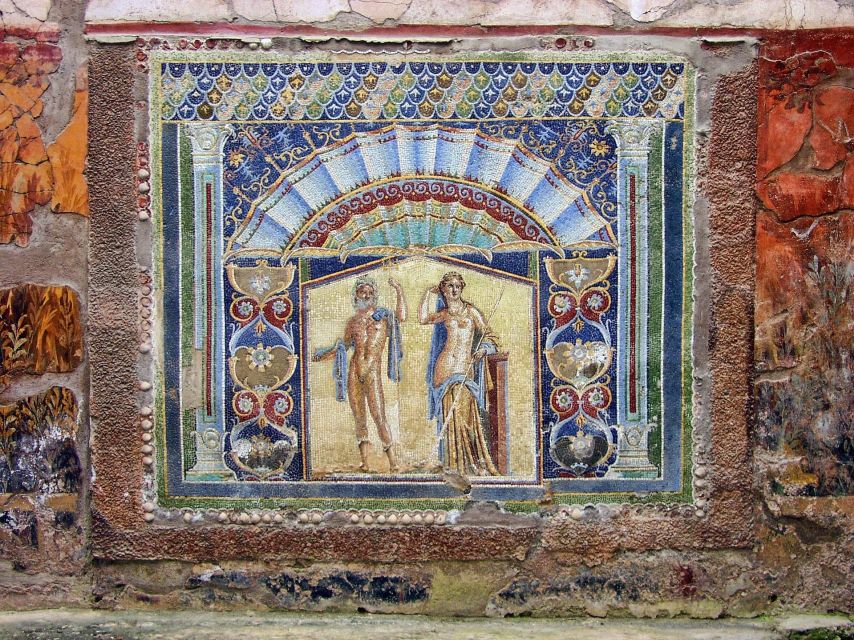
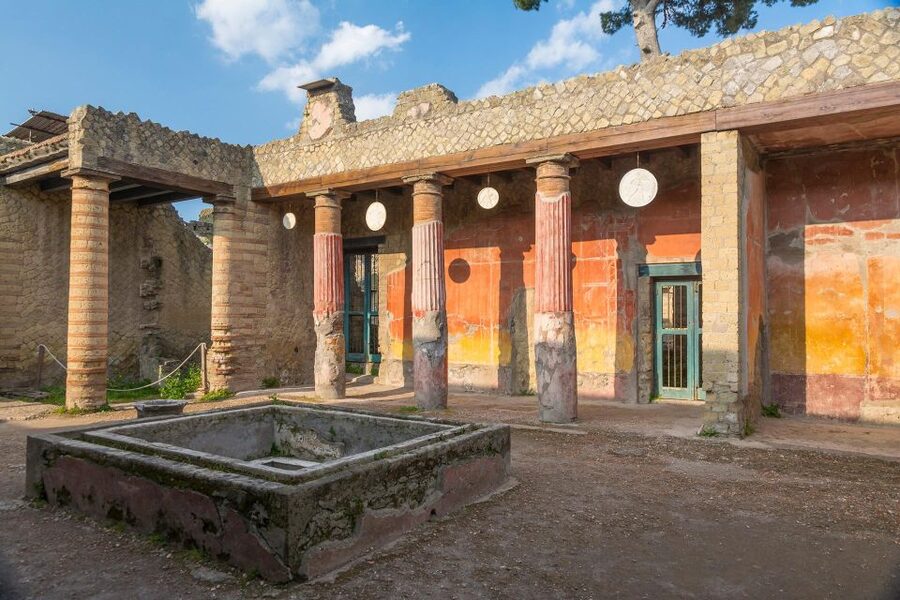
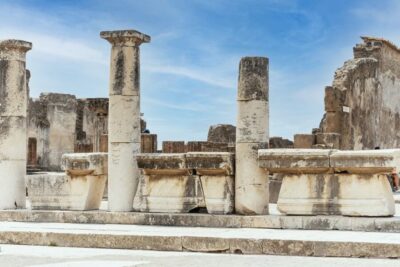
The preservation is the real prize. You might see original wooden doors, beams, painted walls, mosaics, and household fittings. Those details help you picture daily life more clearly than a bare stone wall ever could. The town feels less like a field of ruins and more like a collection of interrupted homes.
I particularly value the contrast between the houses. Some rooms belonged to wealthy Roman families, with decorated floors and carefully painted walls. Other areas show the far simpler spaces used by enslaved people. The audio guide helps explain that difference, so you are not simply admiring pretty decoration without understanding the society behind it.
The site is also quieter than Pompeii in many periods of the year. Early morning visits are especially useful if you want to look closely at frescoes or take your time in narrow rooms. Still, do not assume the skip-the-line label guarantees a completely frictionless arrival. The exact entry procedure can depend on queues and on which ticket option you booked.
Other Roman sites within reach of Naples:
- From Naples: Pompeii Ruins & Mount Vesuvius Day Tour
★ 4.3 · 11,459 reviews - Naples or Sorrento: Full-Day Pompeii and Mount Vesuvius Tour
★ 4.6 · 4,235 reviews - Herculaneum: Skip-the-Line Guided Tour with Archaeologist
★ 4.8 · 3,439 reviews
Arriving at the archaeological park
The meeting point is the Herculaneum ticket office. You show your ticket there, but the practical process may involve more than one stop. Some people collect the audio device from a small office or desk, then return to the ticket queue for admission. Others have found the process quick, especially when there was no queue.
Read your booking option carefully before arriving. The ticket and audio guide are not always bundled in the same way. One option may be for the audio guide without an admission ticket, with the Herculaneum entry ticket selected as an extra. If you arrive expecting both and have only purchased the audio portion, you may need to pay for admission at the park.
The phrase skip-the-line also needs a little caution. It can save time when the entrance is busy, but on quieter days there may be almost no queue to skip. One practical issue is that the skip-the-line point is not always obvious, so people in the regular line may wonder why you are approaching another desk. Ask staff where to go rather than assuming the route from the entrance signs.
You may need to leave identification as security for the audio device. An insurance card has been accepted in at least one reported case, but bringing your passport or identity card is the safer choice. The booking information also asks you to bring comfortable shoes, and that advice is worth taking seriously.
Starting with the map and audio guide
The audio guide is designed for independent exploring. It provides explanations in English, French, German, Italian, and Spanish, and it lets you choose stops rather than forcing you into a fixed route.
The system uses numbers linked to points of interest around the site. In theory, that makes it easy to stand in front of a house, fountain, or temple and select the matching commentary. In practice, some numbers are hard to find, some buildings are not clearly marked, and the physical order does not always follow the order in the device.
Take a few minutes at the start to compare the map, the numbered stops, and the direction you want to walk. You do not have to follow the numbers in sequence. If the guide suddenly jumps to another house, check the map before assuming you have taken a wrong turn.
The audio is detailed and useful, but not flawless. Some people found it quiet, and some descriptions did not line up neatly with what was in front of them. The device has also been described as a smartphone-style unit, with options for maps and, in some cases, 3D or 360-degree views of objects as they may have looked before the eruption. If you use your own headphones or earbuds, check the exact equipment and connection arrangements before relying on them.
This is still a good format for Herculaneum. You can listen in a courtyard, pause while examining a mosaic, and then continue when you are ready. A live guide can provide better orientation, but the audio option costs less and gives you more control over your time.
The houses, frescoes, and wooden doors
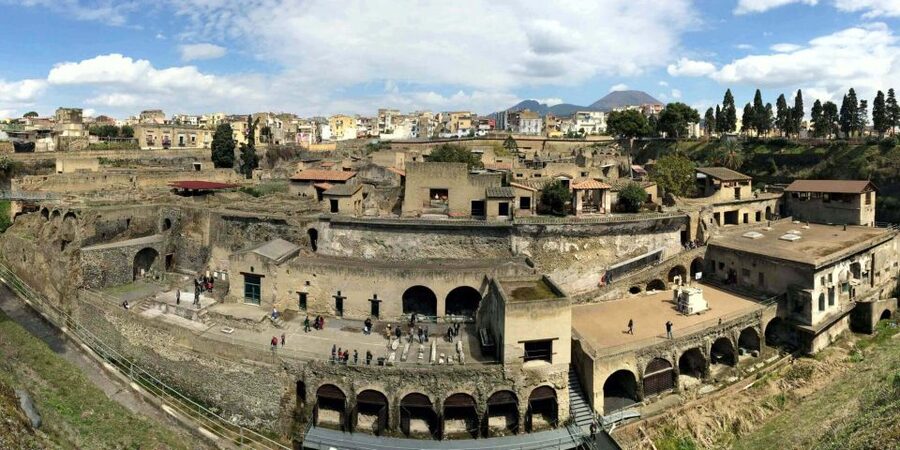
The houses are the heart of the visit. Walk slowly through the rooms and look down as often as you look up. Floors can be as revealing as walls, with mosaics showing patterns, borders, and signs of the wealth of the household.
Painted walls remain in several buildings, and some colors are surprisingly strong. Original doors and wooden elements are especially striking because they make the past feel physical. You are not only looking at a plan of an ancient home. You are looking at the way people entered rooms, arranged their living space, and decorated their surroundings.
The audio commentary adds useful context about Roman domestic life. You may hear how rooms were used, how status appeared in house design, and how different members of society lived under the same roof or in the same town. The guide is at its best when it connects an individual feature, such as a wall painting or fountain, to a larger picture of daily life.
Do not rush from one famous house to the next. Herculaneum rewards short pauses. Sit when you find a suitable place, study the wall details, and let the scale of the rooms sink in. The site has areas where you can rest, and there are places suitable for a packed lunch, although food and drink facilities are limited to the café or snack area.
A few more things to do in Naples
- Naples: Naples Underground Entry Ticket and Guided Tour
★ 4.4 · 21,781 reviews - Naples: Catacombs of San Gennaro Entry Ticket & Guided Tour
★ 4.6 · 7,941 reviews - Naples: Downtown Tour with Veiled Christ & St Clare Tickets
★ 4.9 · 6,462 reviews - Naples: Hop-on Hop-off Bus Tour 24-Hour Ticket
★ 4.3 · 5,157 reviews
The market, fountains, temples, and theatre
The route also covers public parts of the town. The ancient market gives you a sense of commerce and ordinary business, while the fountains show how water was part of the town’s public life. These features help balance the grand villas, reminding you that Herculaneum was a working community rather than only a collection of wealthy homes.
Temples bring a different mood. Depictions of ancient gods and the remains of religious spaces show how public and private life were tied to belief. The audio guide is valuable here because the surviving stones may not immediately reveal the purpose of each building.
The theatre is another key stop, although access and visibility can vary across the site. Some areas or exhibits may be temporarily closed, so the route you see on the day may not match every item shown in the guide. That is one reason to treat the map as a useful tool rather than a promise that every numbered stop will be open.
The compact layout makes it easy to revisit a street or building. At Pompeii, turning back can cost a great deal of time. Here, you can usually correct your route without losing half the afternoon.
The boat shelter and the hardest part of the visit
Near the lower area of the town, you reach the place associated with the people who waited for rescue from the sea. About 300 died there. The skeletons and the boat display make this the most emotionally difficult part of the visit.
The remains are not presented as a theatrical spectacle. They are a blunt reminder that the eruption was a human disaster, not simply an interesting archaeological event. Give yourself time here, and expect the mood of the visit to change.
The Antiquarium and museum displays near the entrance or exit add another layer. Artefacts, furniture, and other finds help fill in what the buildings alone cannot show. If you have time, do not treat this area as an optional afterthought. It gives you a closer look at objects removed from the town and helps explain how the rooms were furnished.
How much time should you allow?
Two hours is enough for a purposeful visit focused on the main houses, painted walls, public buildings, and shoreline area. Three hours is a better target if you want to use the audio guide properly and stop for photographs or rest.
You can spend about four hours here without feeling that you are repeating yourself, particularly if you include the museum displays and take a packed lunch break. One useful plan is to arrive near opening time, when the site is often calmer, then work steadily through the main streets before the crowds build.
The ground is uneven. Expect cobblestones, steps, and some steep sections. Good shoes matter more here than fancy clothing, and hot weather can make the climb and exposed streets tiring. Several places allow you to sit, but not every building offers shade.
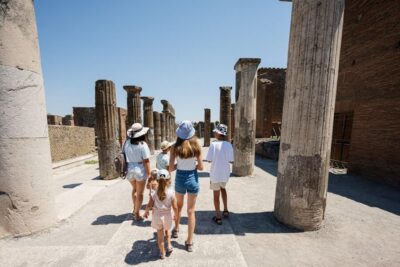
The site is suitable for people who enjoy history, architecture, archaeology, and close observation. It is less suitable if you want a short, effortless attraction with constant signage and a perfectly linear route. Families can enjoy it, but younger children may need help turning the ruins into a story.
Price, ticket value, and guide upgrades
At about $15 per person, the audio guide option can be strong value if admission is included in the version you select. You get access for the day, the audio commentary, and a map, which is less expensive than hiring a private guide and gives you freedom to set your own pace.
The value drops if you arrive expecting an admission ticket and discover that you purchased only the audio guide. Check the wording before payment, especially the option described as audio guide without ticket. The ticket may need to be selected separately.
A live guide can be worth considering if you prefer clear orientation and conversation. Some visitors have been offered upgrades, including tours led by Tony, Fabio, or Amara. Fabio was singled out for explaining the site at a steady pace, while Tony was praised for adjusting the amount of walking and discussion during a hot day. That kind of human guidance can solve the audio guide’s numbering problems, but it changes the price and removes some of the freedom to wander alone.
For most independent visitors, the audio guide is enough. If you already know Roman history and mainly want to inspect the buildings, you may even use it selectively rather than listening to every stop.
Getting there and making the day work
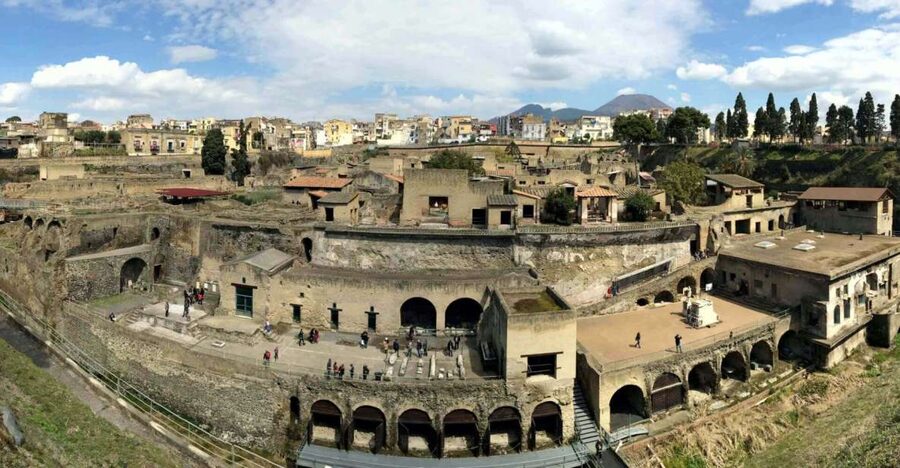
Herculaneum is in Campania, and the park is within walking distance of the local train station. One account describes an easy 12-minute walk from the station, with EAV trains from Naples Garibaldi providing a practical connection. You can also visit from Pompeii, and the train journey between the area and Pompeii Central Station has been described as straightforward.
Allow extra time for the walk, ticket collection, and audio pickup. The entrance location can be confusing if you rely only on a street number, so use the Herculaneum ticket office as your reference point.
There is a café and a place to buy snacks and drinks, plus places where you can eat a packed lunch. Toilet facilities have received mixed practical reports, so use them before entering if that is important to you.
Free cancellation is available up to 24 hours before the visit, and the reserve-now, pay-later option can help if your Campania plans are still moving around. Availability and starting times depend on the date you select, even though the booking is described as a one-day activity.
Should you book this Herculaneum audio tour?
Book it if you want to explore at your own speed and care about seeing Roman homes in unusually complete condition. The compact site, strong domestic details, museum displays, and moving shoreline remains make Herculaneum one of the most rewarding historical stops near Naples.
Choose a live guide instead if you dislike finding numbered stops, want to ask questions, or worry that you will miss the meaning of what you are seeing. If you book the audio option, confirm that your package includes the entry ticket, arrive with identification and good shoes, and give yourself at least three hours.
Herculaneum is not simply a smaller Pompeii. It offers a more concentrated look at Roman homes and the people who lived in them. At around $15 when the ticket and audio guide are correctly selected, it is a sensible choice for anyone who wants substance without the scale and fatigue of Pompeii.
FAQ
Is the Herculaneum entry ticket included?
It depends on the option you select. The ticket must be selected as an extra with the option described as Herculaneum audio guide without ticket, so check the booking details carefully.
What does the activity include?
The experience includes the Herculaneum entry ticket when selected in the appropriate option, an audio guide, and a map.
Which languages are available for the audio guide?
The audio guide is available in English, French, German, Italian, and Spanish.
How long does the visit last?
The booking is valid for one day. In practice, allow at least two to three hours, with about four hours suitable if you want to explore slowly and see the museum displays.
Where do I collect the ticket?
Show your ticket at the Herculaneum Archaeological Park ticket office.
Do I need identification?
Bring a passport or identity card. Identification may be held as security when you collect the audio device.
What should I wear?
Wear comfortable shoes. The site includes cobblestones and some steep steps.
Is a live guide included?
No. This activity includes an audio guide, not a live guide. Upgrades to guided tours may be offered separately.
Can I cancel the booking?
You can cancel up to 24 hours in advance for a full refund. A reserve-now, pay-later option is also available.
Just added in Naples
- Boat excursion with lunch on board to discover Ischia★ 5.0 · 474 reviews
- Tour of the island of Ischia in schooner★ 5.0 · 208 reviews
- Vesuvius National Park Skip-the-Line Ticket★ 3.8 · 221 reviews
- Naples: The Holy Mile 3-Hour Guided Tour★ 4.9 · 711 reviews
- Procida: Boat Tour with Swimming Stops and Underwater Photos★ 5.0 · 322 reviews
- Pompeii and Vesuvius Full-Day Tour from Amalfi Coast★ 4.4 · 319 reviews
- From Naples: Pompeii and Herculaneum Tour with Lunch★ 4.3 · 444 reviews
- From Naples: Pompeii & Herculaneum with Archaeologist Guide★ 4.8 · 665 reviews
Pompeii & Herculaneum Tours, compared.
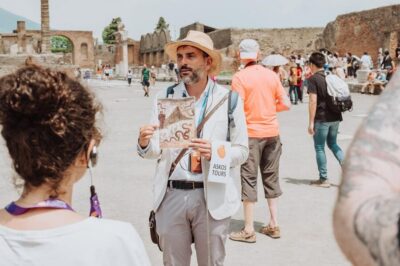
Entry Ticket and Guided Tour with an Archaeologist
Read our review →



Pompeii and Mount Vesuvius Day Trip from Rome with Pizza Lunch
Read our review →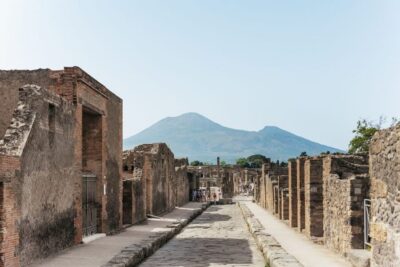
Pompeii Day Trip with Optional Vesuvius and Lunch
Read our review →Browse the lists this tour appears in