
Reviewed · PASTA
Homemade Pasta and Pesto Class with a Local Chef in Genoa
Genoa’s best food lesson may begin with a climb. In a historic palazzo apartment, you’ll make picagge, a wide Ligurian pasta, and grind basil pesto by hand before sitting down to eat it on a rooftop above the old city. Alberto leads many sessions, with Alessandra and Silvia hosting others.
I like the tiny groups of no more than six, because you get real time at the table instead of watching a chef work from across a room. I also like the generous meal: focaccia, savory Genoese starters, wine, dessert, and a local liqueur accompany the pasta you make.
The main catch is practical: the apartment is on the fifth floor with no elevator. The address can also be tricky to find, so arrive early, read the directions, and make sure the person who booked the class passes all messages to everyone attending.
Key points at a glance
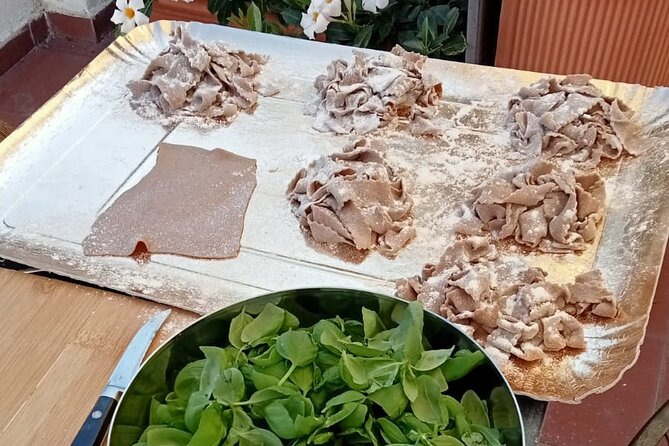
- Handmade Ligurian pasta: Prepare picagge from flour, egg, water, and careful mixing, then roll and shape the dough yourself.
- Traditional pesto technique: Grind basil, garlic, pine nuts, salt, cheese, and olive oil in the old-fashioned mortar-and-pestle style.
- Small-group teaching: A maximum of six people allows the chef to correct your dough, answer questions, and keep everyone involved.
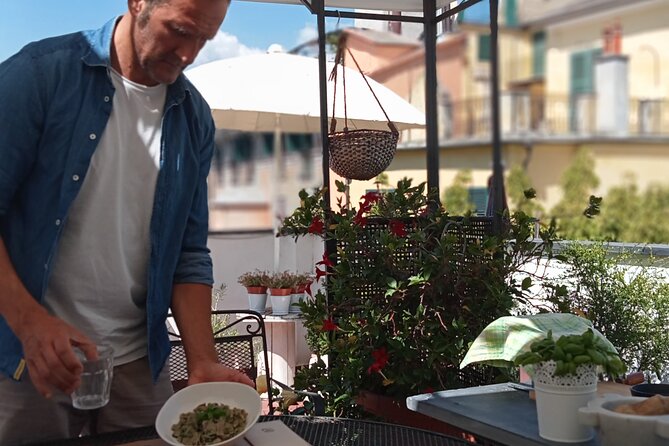
- Rooftop meal in a palazzo: The cooking and lunch take place in a private historic apartment with views over Genoa’s old center and rooftops.
- More than a main course: Focaccia, focaccette di patate, savory pies, wine, a Genoese dessert, and a typical liqueur are part of the meal.
- A stair-heavy arrival: There is no elevator, and several flights of stairs are part of the experience.
Why this class fits Genoa so well
Genoa is the home of pesto, so this is not a generic Italian cooking lesson with a few regional labels attached. The class focuses on two foods that belong to Liguria: fresh pasta and basil pesto. That gives the meal a clear local purpose, and it helps you understand why Genoese cooking often depends on a short list of good ingredients handled with care.
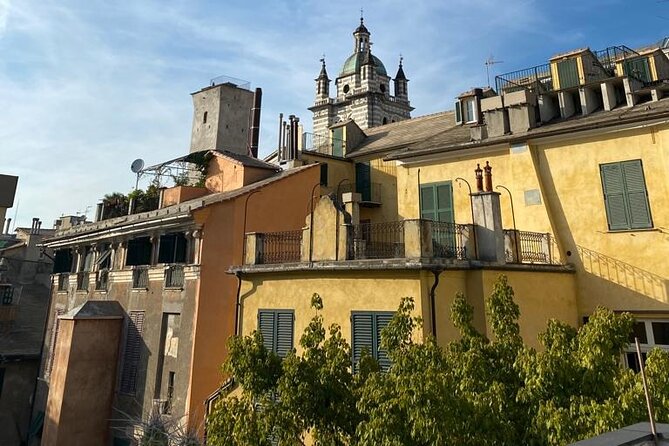
The setting adds plenty. You meet at Vico Inferiore Valoria, 1, in the historic center, then enter a private apartment in an old palace. The rooftop terrace changes your view of Genoa. From street level, the city can feel tight, steep, and maze-like. From above, the roofs, church towers, and surrounding hills make the layout easier to grasp.
I would allow extra time to find the entrance. The building may not be hard to reach, but the precise door and buzzer are not obvious from the street. The host has sent guests the floor, buzzer name, address, and map instructions by message, so check WhatsApp or your booking messages before leaving your hotel. If you arrive by taxi, Piazza de Ferrari is a useful nearby reference point mentioned by past participants.
Other pasta to make in Genoa:
- Genova: Homemade Pasta & Pesto Local Chef Class with Wine
★ 5.0 · 217 reviews - Florence: Pasta Cooking Class with Unlimited Wine
★ 4.9 · 10,285 reviews - Florence Pizza or Pasta Class with Gelato Making at a Tuscan Farm
★ 5.0 · 6,801 reviews
What you make: picagge and Genoese pesto
The class begins with pesto, the sauce most closely tied to Genoa. Traditionally, it combines basil, garlic, European pine nuts, coarse salt, hard cheese such as Parmigiano-Reggiano, and olive oil. You do not simply watch the ingredients go into a food processor. The method centers on crushing and blending them in a mortar and pestle.
That matters because the texture and aroma change as the basil is worked. You also get a better feel for the balance between garlic, salt, cheese, nuts, and oil. The host explains the order and timing of the ingredients, along with the role of freshness. It is the kind of lesson you can repeat at home, though you may need to adjust quantities for your own kitchen.
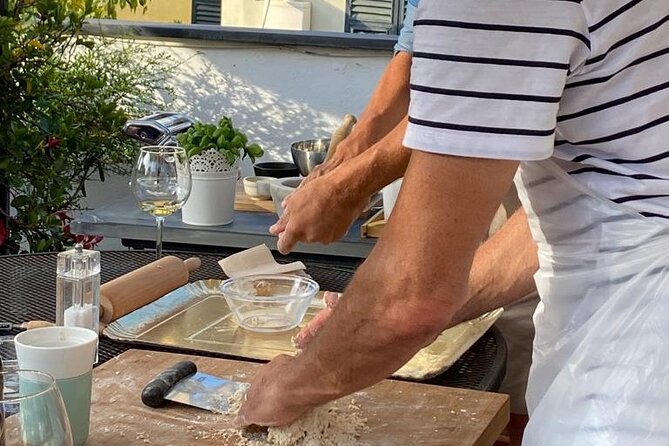
Next comes the pasta dough. The basic ingredients are simple: flour, egg, water, and flavor. The difficult part is judging the dough. You learn how to mix it, how much patience it needs, and how to roll it thin enough without tearing it. A chef can show you small adjustments that are hard to learn from a recipe alone.
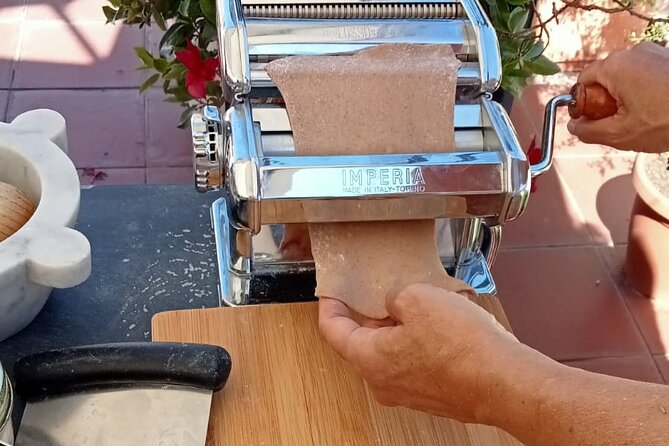
The pasta is shaped as picagge, a traditional Ligurian form similar to wide tagliatelle. Everyone takes part in the rolling and shaping. That hands-on approach is one of the strongest reasons to choose this class over a demonstration. You leave with a method, not just a plate of food and a few photographs.
A three-hour rhythm, from welcome to lunch
The class lasts about three hours, though the pace can feel relaxed rather than rushed. You first settle into the apartment and meet the chef and the rest of the small group. Depending on the host, you may begin with coffee and focaccia before moving into the cooking lesson.
Alberto is the main host named for many sessions. He combines cooking instruction with stories about Genoa, regional ingredients, and local food customs. Alessandra and Silvia also host classes, and one session included Alessandra selecting the wine as a certified sommelier. The exact host may vary, but the format remains focused on personal instruction and a shared meal.
After the pasta dough is prepared, you roll and shape it. Then you make the pesto, working with the mortar and pestle. The order may vary slightly, but the important point is that you participate in both parts from start to finish.
While the pasta cooks, the class shifts into lunch. You sit at a prepared table and eat the pasta with the pesto you made. The meal also includes Genoese focaccia, focaccette di patate, and torte salate, or savory pies. Wine is served, followed by a traditional Genoese dessert and a typical local liqueur.
This makes the price easier to judge. At $102.84 per person, you are paying for about three hours of instruction, a full meal, drinks, a small-group setting, and access to a private home and rooftop terrace. It is more expensive than buying a plate of pesto pasta, of course, but it offers something a restaurant cannot: you learn the process and share the table with the person teaching you.
The rooftop terrace is part of the meal
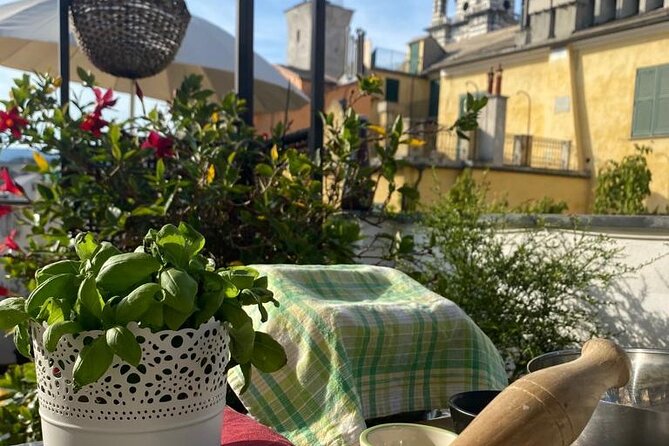
The terrace is not just a photo stop. It gives the class a social center. Once the cooking is done, you can sit with wine and antipasti while the pasta finishes cooking, then enjoy the meal in a calm setting above the narrow streets.
Views vary with the weather, but the terrace overlooks Genoa’s historic center and surrounding hills. Some sessions have views toward cathedral roofs and the city’s old buildings. The setting is especially appealing for a birthday, anniversary, family outing, or a relaxed afternoon after arriving from a cruise ship.
The apartment itself is part of the appeal. You are not in a commercial cooking studio with rows of workstations. You are welcomed into a home in a historic palace, which gives the meal a more personal feel. That also means you should respect the household setting and expect a less formal setup than you would find in a culinary school.
There is an important trade-off here. A private apartment creates atmosphere, but it also means stairs and a residential entrance. The fifth-floor climb can be tiring, especially after walking Genoa’s hills or carrying luggage. If stairs are difficult for you, this is a serious consideration, not a minor footnote.
Other things to learn to make in Genoa:
- Levanto: Pesto-Making Class
★ 4.8 · 196 reviews - Genoese cooking lesson in the with lunch in the terrace
★ 5.0 · 189 reviews - 3 in 1 Cooking Class near Navona: Fettuccine, Ravioli & Tiramisu
★ 5.0 · 7,376 reviews - Florence: Pasta & Tiramisu Cooking Class with Unlimited Wine
★ 4.9 · 6,708 reviews
What the food adds beyond pasta
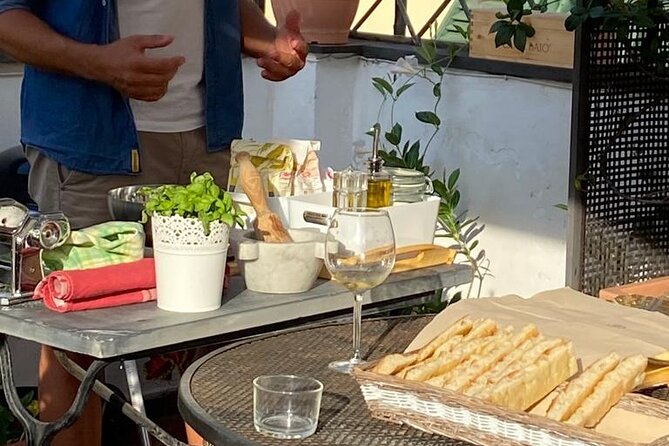
The pasta is the focus, but the extra dishes help turn a lesson into lunch. Genoese focaccia gives you a first taste of Ligurian baking, while focaccette di patate and savory pies add variety before the main course. These items also give the chef room to explain how everyday regional food fits around the famous pesto.
The dessert and liqueur finish the meal in a distinctly local way. Exact dessert details are not fixed in the supplied information, so you should expect a traditional Genoese sweet rather than a named, guaranteed recipe. The same applies to the liqueur. They are small additions, but they make the meal feel complete.
Wine is included, and the class is built around conversation as much as cooking. You will have time to meet the other people in the group, ask about ingredients, and hear about Genoa’s food traditions. If you enjoy shared meals, this social element is a real part of the value.
If you have dietary restrictions, tell the provider in advance. The menu includes wheat, egg, dairy, pine nuts, and other ingredients that may matter for allergies or special diets. The experience is not recommended for people with serious cat allergies, so ask before booking if that is a concern.
A useful choice for cruise days
This class can work well during a Genoa port stop, but timing deserves care. The meeting point is in the city center, and the class lasts about three hours. It ends back at the same meeting point, so you must allow time to return to your ship and deal with traffic, walking, and any delay at the class.
Some people have chosen this instead of a cruise-organized shore activity and appreciated the small group and central location. I would make that choice only if your ship schedule leaves a generous buffer. The class is designed to be relaxed, not to end with a sprint to the pier.
The meeting point is near public transportation, and the experience is offered in English. A mobile ticket is provided. Since the class is often booked well ahead, with an average booking window of about 47 days, reserve early if your Genoa dates are fixed.
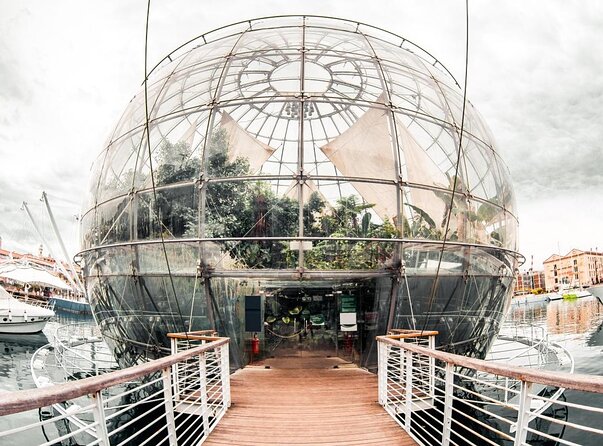
The listed sightseeing stops include the Aquarium of Genoa and Museo di Palazzo Reale, but the detailed activity centers on the cooking class and apartment. Do not book this expecting guided visits inside either attraction. Treat those names as nearby Genoa reference points unless your confirmation clearly says otherwise.
Who will enjoy this most
I would choose this class if you want to bring home a practical skill. You will learn how to mix pasta dough, roll and shape wide noodles, and prepare pesto with traditional ingredients and tools. The lesson suits beginners because the chef guides each stage and keeps the group small.
It also works well for couples, families, and friends. Several sessions have included birthday and anniversary celebrations, and the shared table makes it easy to mark a special day without booking a formal restaurant. Children may enjoy the hands-on work, but the stair climb and the three-hour meal mean parents should judge the fit for their own family.
Food lovers will get the most from the class, but you do not need advanced cooking skills. The emphasis is on participation, regional context, and eating together. You can ask questions as you work, and the chef can offer immediate corrections when the dough feels too dry or the shaping goes wrong.
This is less suitable if you want a fast sightseeing tour, a polished restaurant setting, or a class with many different dishes. The menu is tightly focused on pasta, pesto, local starters, dessert, and wine. That focus is a strength if you want Ligurian food, but a limitation if you are looking for a broad survey of Italian cooking.
Price, booking, and the details that matter
At $102.84, the class sits in the mid-to-high range for a three-hour food activity. The value comes from the combination of teaching, food, drinks, small numbers, and the private rooftop setting. You are also paying for the host’s time before and after the class, not only the ingredients on the table.
The group limit of six is important. With that few people, each person gets a turn with the dough and pesto rather than standing behind someone else. If you are comparing this with a cheaper class, check the group size before deciding. A lower price may buy less personal attention.
The class has a five-star average from 305 ratings, with 99 percent recommending it. The strongest pattern is clear: people value the warm hosting, the rooftop setting, the hands-on cooking, the food, and the chance to learn about Genoese culture while eating.
Communication is part of making the day work. Confirmation arrives at booking, but you should still check the final meeting instructions and keep your phone reachable. If someone else books for your party, make sure every person receives the address, start time, floor, buzzer details, and map link. One missed meeting resulted from the booking information not reaching the people who attended, and the class could not be refunded after the start time.
Free cancellation is available up to 24 hours before the start. Changes or cancellations inside that 24-hour window are not refunded, and late changes are not accepted. The minimum group rule also applies: if the provider cancels because too few people book, you will be offered another date or a full refund.
Should you book this Genoa pasta class?
Book it if you want a personal, food-centered afternoon and can manage the stairs. The combination of pesto made by hand, fresh picagge, Genoese starters, wine, dessert, and rooftop views gives you a strong sense of place without turning the class into a lecture.
I would especially recommend it for couples, small families, food lovers, and cruise passengers with plenty of time in port. Arrive early, read the directions, notify the host about food restrictions, and confirm that the fifth-floor climb suits everyone in your group.
Skip it if you need step-free access, dislike shared meals, have a serious cat allergy, or want a sightseeing tour that includes the Aquarium and Palazzo Reale. For the right person, though, this is a memorable way to meet Genoa through its most famous sauce and a plate of pasta you helped make yourself.
FAQ
Where does the cooking class meet?
The meeting point is Vico Inferiore Valoria, 1, 16123 Genova GE, Italy. The activity ends back at the same meeting point.
How long does the experience last?
The class lasts approximately three hours.
How many people can join the class?
The maximum group size is six people.
Is the class offered in English?
Yes. The experience is offered in English.
Which dishes will I prepare?
You will prepare fresh picagge, a wide Ligurian pasta similar to tagliatelle, and traditional basil pesto.
What ingredients are used in the pesto?
Traditional pesto includes basil, garlic, European pine nuts, coarse salt, hard cheese such as Parmigiano-Reggiano, and olive oil.
Is the apartment accessible by elevator?
No. The apartment is on the fifth floor of a historic palace and does not have an elevator.
Are food restrictions accepted?
You should communicate any dietary restrictions in advance. The experience is not recommended for people with serious allergies to cats.
Can I cancel for a refund?
You can cancel at least 24 hours before the start time for a full refund. Cancellations or changes made less than 24 hours before the start are not refunded or accepted.
Just added in Genoa
- 2 Hours Private Historical Tour in Genoa★ 5.0 · 248 reviews
- Genoa Food, Wine Tasting & History Walking Tour★ 5.0 · 212 reviews
- City Sightseeing Genoa Hop-On Hop-Off Bus Tour★ 3.0 · 259 reviews
- Genoese cooking lesson in the with lunch in the terrace★ 5.0 · 189 reviews
- Taste Genoa: A Full Meal Walking Food Tour by Do Eat Better★ 5.0 · 509 reviews
- Genoa: Impossible Museum Entry Ticket★ 4.2 · 226 reviews
- Levanto: Pesto-Making Class★ 4.8 · 196 reviews
- Guided Tour of Rolli Palaces UNESCO Site, Genoa★ 4.4 · 539 reviews
Pasta, compared.
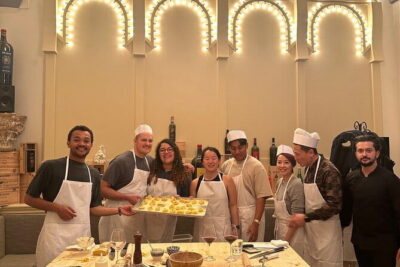
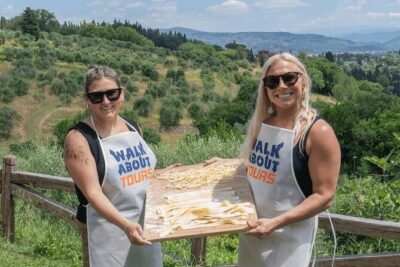
Florence Pizza or Pasta Class with Gelato Making at a Tuscan Farm
Read our review →
Pasta & Tiramisu Class with Fine Wine by the Vatican
Read our review →
Pasta Making Class with Wine, Limoncello, and Dessert
Read our review →
Fettuccine Pasta Cooking Class in Rome’s City Center
Read our review →
Traditional Pasta with Cocktails Cooking Class
Read our review →
Learn to Make Pasta & Tiramisu with Wine and Limoncello Included
Read our review →Browse the lists this tour appears in