
Reviewed · COOKING CLASSES
Genoese cooking lesson in the with lunch in the terrace
Genoa’s best cooking lesson may happen above the city, in a private garden where grapevines and fruit trees frame the harbor. You’ll make fresh pasta, grind pesto with a mortar and pestle, then sit down to eat what you prepared. The garden setting and the view over the port give this class a sense of place that a standard kitchen lesson cannot match.
I like two things especially: you learn recipes you can repeat at home, and the food is served right away with local wine. Alessandro is patient and warm, while Emma and Emanuela have also led sessions. The main caution is that the class can run late, and the steep walk to the meeting point may be hard for some people.
Key points at a glance
- Traditional Genoese pesto: You use a mortar and pestle rather than simply watching a blender do the work.
- Several fresh pastas: Depending on the session, you may prepare corzetti, testaroli, trofie, or more than one kind.
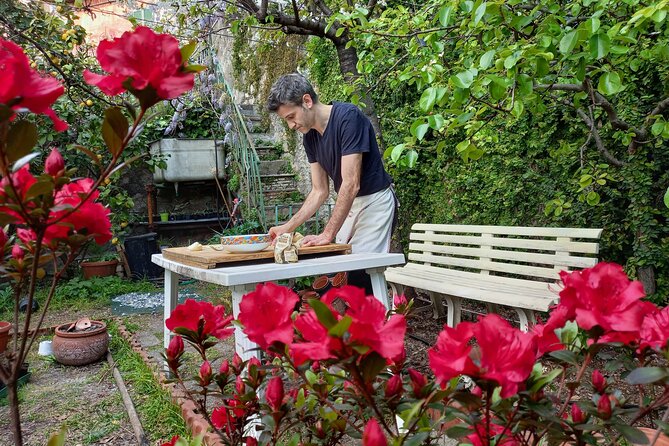
- Lunch in a hillside garden: Your meal comes with harbor views, grapevines, fruit trees, and local wine.
- Small-group feel: Classes are often described as intimate, with one account noting a group of eight, though the size can vary.
- A practical souvenir: Recipes are sent after the class, making it easier to repeat the dishes at home.
- A real timing issue: The advertised length is about 3 hours 15 minutes, but a busy class may finish later than planned.
Why this Genoa cooking lesson feels different
Genoa is a port city with a strong food identity, and pesto is its edible calling card. This class gives you more than a plate of pasta. It shows you how flour, basil, cheese, pine nuts, garlic, and olive oil become part of a local tradition.
The setting does much of the work. The activity takes place inside a beautiful palace or home setting, then opens onto a private terrace or garden overlooking the square, port, and sea. Descriptions from different sessions refer to grapevines, lemon trees, apple trees, fruit trees, and even box turtles in the garden. That makes the lesson feel personal rather than staged for a large tour company.
I would choose this over a formal restaurant meal if you want to meet a local host and spend an afternoon doing something with your hands. You are not simply eating Genoese food. You are learning how it is made, then sitting down with the people from your group to enjoy it.
The experience is offered in English. Alessandro is the main host named in the descriptions, with Emma and Emanuela also leading some classes. The tone is friendly and informal, with time for questions about ingredients, family cooking, and Genoese traditions.
Other classes where you do the cooking in Genoa:
- Florence: Pasta Cooking Class with Unlimited Wine
★ 4.9 · 10,285 reviews - 3 in 1 Cooking Class near Navona: Fettuccine, Ravioli & Tiramisu
★ 5.0 · 7,376 reviews - Florence Pizza or Pasta Class with Gelato Making at a Tuscan Farm
★ 5.0 · 6,801 reviews
Meeting at Piazza della Nunziata and walking uphill
The meeting point is Piazza della Nunziata, 5, in central Genoa. It is near public transportation, which helps if you are staying in the city or arriving by train, but the final walk deserves attention.
One class description specifically warns that the uphill route is very steep. You should wear comfortable shoes and allow yourself enough time to arrive without rushing. This is not presented as a difficult hike, but Genoa’s hills and stairways can be demanding, especially in hot weather or if you are carrying luggage.
The climb is part of the setting. The class takes you away from the street and up toward a quieter terrace with views across the port. Still, if anyone in your group has trouble with steep paths, ask for precise meeting instructions before booking. The available information does not promise step-free access.
The activity ends back at the meeting point. That makes planning simple, though you should not schedule a tight connection immediately afterward. The class is listed at approximately 3 hours 15 minutes, and one account describes a delayed meal when the session became busy.
Mixing dough and shaping Genoese pasta
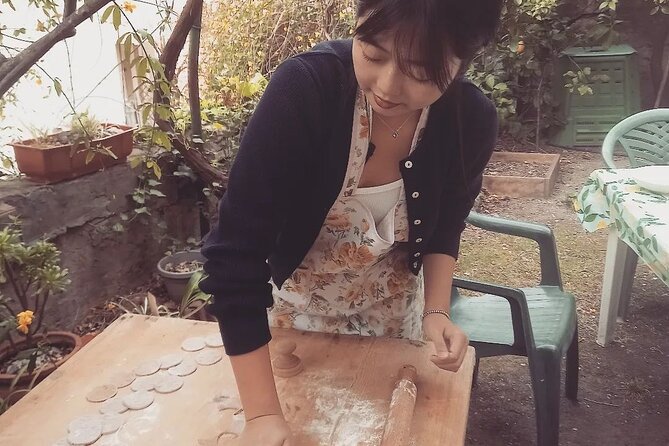
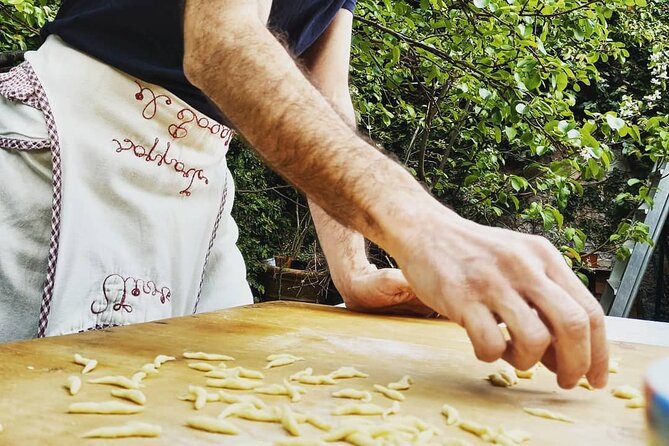
The class begins with the basic building block: fresh pasta dough. You learn about the ingredients, mix the dough, and work out how to shape it.
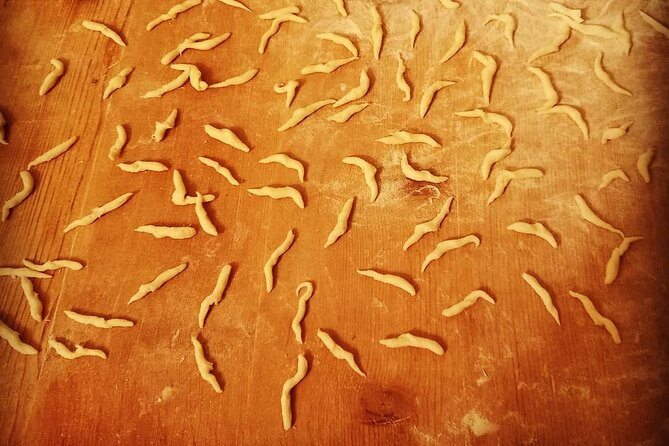
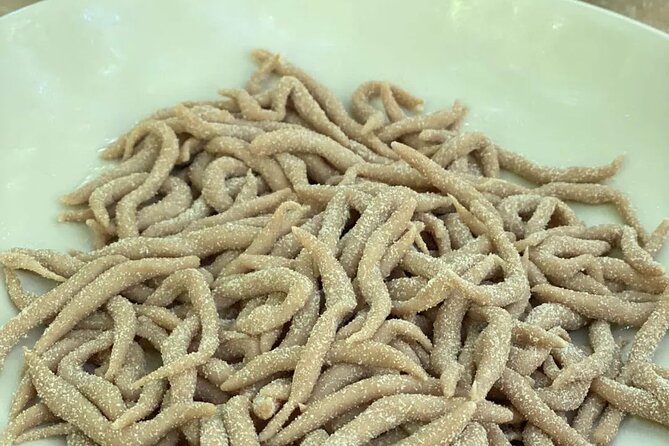
The exact menu can vary. The listed main course is corzetti, testaroli, or trofie with pesto, while descriptions of individual sessions mention two or three pasta types. That variety is part of the fun, but it also means you should not assume you will make one specific shape unless the provider confirms it.
Each pasta has its own character. Trofie are small, twisted shapes that hold pesto well. Corzetti are associated with Liguria and are often stamped into decorative rounds. Testaroli are a different sort of pasta, broad and soft, with roots in the wider Ligurian food tradition.
The useful part is that these are not restaurant tricks requiring special equipment. Several recipes are described as easy to make at home. You leave with methods you can repeat, not just memories of a chef doing everything for you.
That said, the hands-on level may depend on the group. Most accounts describe everyone getting a chance to roll pasta, shape it, or work on the pesto. One less positive account felt the session became more of a watch-me-cook class when the group was larger and the host was handling several tasks at once.
My advice is to take part early and ask directly to handle each stage. If you are booking for children, remember that this is a cooking lesson, not a play activity. Young children may enjoy the garden and turtles, but they need to stay involved and supervised around the food.
Grinding pesto the traditional way
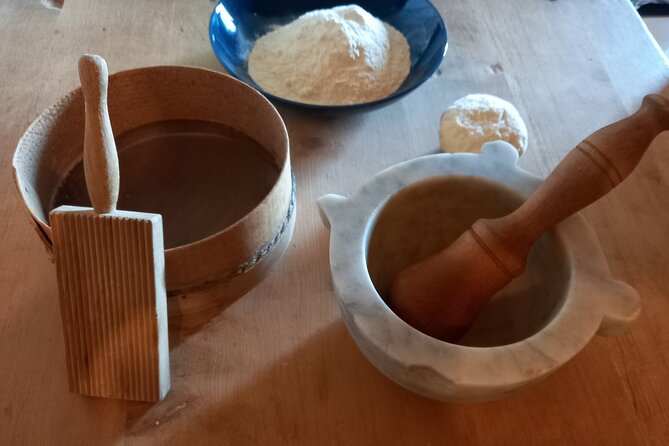
Pesto is the heart of the lesson. Instead of treating it as a green sauce from a jar, you learn the older Genoese method with a mortar and pestle.
That matters because the motion, order of ingredients, and texture all affect the result. You get a better feel for how basil, garlic, pine nuts, cheese, and oil come together when you make the paste yourself. You also understand why pesto tastes different when it is freshly prepared.
The mortar-and-pestle work is shared among the group. It may take patience, especially when several people want a turn, but that is the point. You are learning a traditional kitchen technique rather than pressing a button.
The class also covers ingredients and local customs. Alessandro’s approach is described as patient and clear, and he explains the steps carefully for first-time pasta makers. That makes this a good choice if you cook very little at home and want a relaxed introduction.
Vegetarians should find the menu suitable. One account specifically notes that a vegetarian participant was able to eat all the dishes. Still, tell the provider about dietary needs before the class, since the information provided does not promise accommodations for every allergy or restriction.
Other things to learn to make in Genoa:
- Homemade Pasta and Pesto Class with a Local Chef in Genoa
★ 5.0 · 305 reviews - Genova: Homemade Pasta & Pesto Local Chef Class with Wine
★ 5.0 · 217 reviews - Levanto: Pesto-Making Class
★ 4.8 · 196 reviews - Florence: Pasta & Tiramisu Cooking Class with Unlimited Wine
★ 4.9 · 6,708 reviews
Lunch beneath the grapevines
Once the pasta and pesto are ready, you sit down to eat. This is where the activity earns much of its price.
Lunch is served outdoors when the weather allows, usually in the garden or on a terrace overlooking Genoa’s port, bay, or square. The setting includes grapevines and fruit trees, and the garden has been described as quiet and unexpectedly private despite being in the city.
The meal may include local wine, water, and a small appetizer such as cheese-filled bread. The wine receives repeated praise, and it gives the lunch a distinctly Ligurian feel without turning the class into a formal tasting.
Eating food you have just made creates a satisfying rhythm. You remember how the dough felt, which pasta shape you formed, and how much work went into the pesto. The lunch is not simply a break between activities. It is the payoff.
Weather can change the plan. On rainy days, the class has moved indoors, with the food and instruction continuing. If the weather is poor enough to cancel the activity, you are offered another date or a full refund. I would still bring a light layer, since the terrace and garden may feel cooler than the city street.
The view, the garden, and the small details
The garden is the most praised feature of this cooking lesson. It is described as a hillside terrace with fruit trees, grapevines, lemon trees, and views toward the harbor and sea.
You may also see the resident turtles. They are a memorable touch for families, though they are animals rather than toys. Children may enjoy watching them, but they should not handle them during the cooking session.
The view is especially useful if you have only one day in Genoa or are visiting on a cruise stop. You get a meal, a local activity, and a city panorama in one booking. It is still important to watch the clock if your ship has a strict departure time. The listed duration is approximate, and one session ran later than planned.
The terrace also gives the class a social side. You may cook with people from Canada, Australia, the United Kingdom, the United States, or elsewhere, then share the meal together. Since this is a private activity for your booked group, you are not mixed with a large public tour, but the exact number in your own booking can vary.
Group size and the pace of the lesson
The strongest accounts describe an organized class of around eight people, with everyone taking part. A smaller group can make a big difference because you get more time with the dough, the pasta tools, and the mortar.
There is one important qualification. The host acknowledged that a session once grew from eight to ten people, which affected the timing and flow. A larger group can mean more waiting, less room around the work surface, and a later lunch.
Most people will find the pace relaxed, but this is not a tightly timed demonstration with a bell at every stage. The host may need to move between explaining, checking dough, cooking pasta, setting the table, and keeping the meal on track.
I would book this when you can give the afternoon some breathing room. Do not place a museum reservation, train, or cruise departure immediately afterward. The class is meant to be social and hands-on, and rushing it would undercut the best part.
Is the $83.48 price good value?
At $83.48 per person, this is not the cheapest lunch in Genoa. You can buy pasta and pesto for less at a neighborhood restaurant. The value comes from combining instruction, ingredients, a prepared meal, wine, a private garden setting, and a local host.
You are also paying for time. Three hours 15 minutes is a substantial portion of an afternoon, but it gives the activity room to feel like a real visit rather than a quick tourist demonstration. The recipes can be repeated at home, and the recipes are emailed afterward, which adds lasting value.
I think the price makes sense for couples, families, and food-focused visitors who want more than sightseeing. It is less compelling if you only want a fast meal, dislike group cooking, or have a very tight schedule.
The high rating, 4.9 from 189 reviews and a 98 percent recommendation rate, points to a consistently strong experience. I would not treat those figures as a promise of a perfect class, since weather, group size, and timing can affect the day. They do suggest that the format works well for most people.
Who should book this class?
I would recommend it to first-time pasta makers. Alessandro is described as patient, and the recipes are practical enough to try again in your own kitchen.
It also suits families with older children or teenagers who can follow instructions and take part in food preparation. The garden and turtles add interest, but the main activity is cooking, not entertainment for very young children.
Couples will appreciate the long lunch and sea view. Cruise passengers can use it as a memorable shore activity, but only if they have enough time between the meeting point and all-aboard deadline.
Vegetarians should find the menu workable, based on the information available. People with serious allergies should contact the provider before booking, since no detailed allergy policy is provided.
You may want to skip it if steep uphill walking is a concern, if you need guaranteed outdoor seating, or if you cannot tolerate a schedule that might run over. Rain does not always cancel the class, since it can move indoors, but the terrace view is a major part of its appeal.
Booking, cancellation, and practical planning
Confirmation is provided at booking, and the activity is offered with a mobile ticket. Free cancellation is available up to 24 hours before the start time. Cancellations or changes made less than 24 hours before the start time are not refunded or accepted.
The activity requires good weather and a minimum number of participants. If poor weather or insufficient bookings cause cancellation, you are offered another date, another experience, or a full refund.
Plan to arrive ready to cook. Wear shoes suited to the steep walk and clothes you do not mind wearing around flour, dough, and pesto. Since lunch is part of the class, you do not need to arrange another meal immediately afterward.
Should you book the Genoese cooking lesson?
Book it if you want a personal Genoa memory built around food, conversation, and a remarkable city view. The best parts are the mortar-ground pesto, the fresh pasta you shape yourself, the garden, and the chance to eat lunch in a setting that feels like a local home rather than a restaurant dining room.
Book with realistic expectations about the timing and group size. The experience can be less hands-on when the class is crowded, and the uphill approach is not ideal for everyone. Leave a generous buffer after the class, then you can enjoy the terrace, the wine, and the pasta without watching the clock.
FAQ
How long does the Genoese cooking lesson last?
The activity lasts approximately 3 hours 15 minutes, although one session ran longer than the stated time.
Where does the activity start?
It starts at Piazza della Nunziata, 5, 16124 Genoa, Italy, near public transportation.
Where does the activity end?
The activity ends back at the meeting point.
What pasta will I make?
The listed main course is corzetti, testaroli, or trofie with pesto. Individual sessions may include two or three different pasta types.
Is the class offered in English?
Yes. The activity is offered in English.
Is this a private activity?
Yes. Only your group participates in the private activity, although the number of people in the group can vary.
What happens if the weather is poor?
The class may move indoors in rainy weather. If the experience is canceled because of poor weather, you are offered another date or a full refund.
Just added in Genoa
- Homemade Pasta and Pesto Class with a Local Chef in Genoa★ 5.0 · 305 reviews
- 2 Hours Private Historical Tour in Genoa★ 5.0 · 248 reviews
- Genoa Food, Wine Tasting & History Walking Tour★ 5.0 · 212 reviews
- City Sightseeing Genoa Hop-On Hop-Off Bus Tour★ 3.0 · 259 reviews
- Taste Genoa: A Full Meal Walking Food Tour by Do Eat Better★ 5.0 · 509 reviews
- Genoa: Impossible Museum Entry Ticket★ 4.2 · 226 reviews
- Levanto: Pesto-Making Class★ 4.8 · 196 reviews
- Guided Tour of Rolli Palaces UNESCO Site, Genoa★ 4.4 · 539 reviews
Cooking Classes, compared.
3 in 1 Cooking Class near Navona: Fettuccine, Ravioli & Tiramisu
Read our review →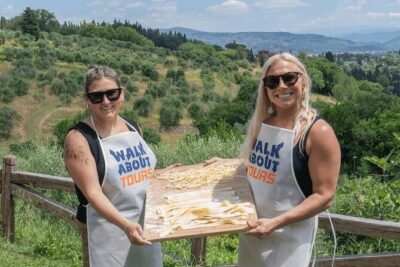
Florence Pizza or Pasta Class with Gelato Making at a Tuscan Farm
Read our review →
Pasta & Tiramisu Class with Fine Wine by the Vatican
Read our review →
Authentic Pizza Making Class in Naples with Appetizers and Drink
Read our review →
Pasta Making Class with Wine, Limoncello, and Dessert
Read our review →
3-in-1 Fettuccine, Ravioli, and Tiramisu Cooking Class
Read our review →Browse the lists this tour appears in