Reviewed · TOURS IN ROME
Rome: Santa Maria Maggiore Upper Areas Skip-the-Line Ticket
Santa Maria Maggiore keeps one of Rome’s best small surprises above the main church: a balcony lined with medieval mosaics, a formal Hall of the Popes, and a museum of sacred art. The upper areas give you a different view of the basilica, both literally and historically.
I like the open-time ticket, since you can visit at any point on your chosen day instead of racing across Rome for a fixed appointment. I also like the compact route: Rusuti’s mosaics, the Bernini Staircase, and the Liberian Historical Museum give you plenty to see without turning the visit into an all-day project.
The weak spot is value. At $21, this is not just a ticket to walk into the church, and some people find the upper areas too brief for the price. The skip-the-line benefit can also be modest in quieter periods, when there may be one general security queue rather than separate lines.
Key points to know before you go
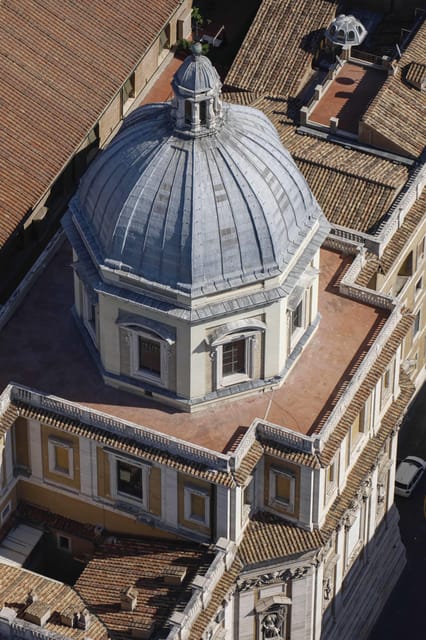
- Rusuti’s medieval mosaics decorate the Loggia of Blessings, with a view toward the square and the basilica’s foundation legend.
- The Hall of the Popes displays portraits and memorabilia connected with popes, cardinals, and the Spanish royal family.
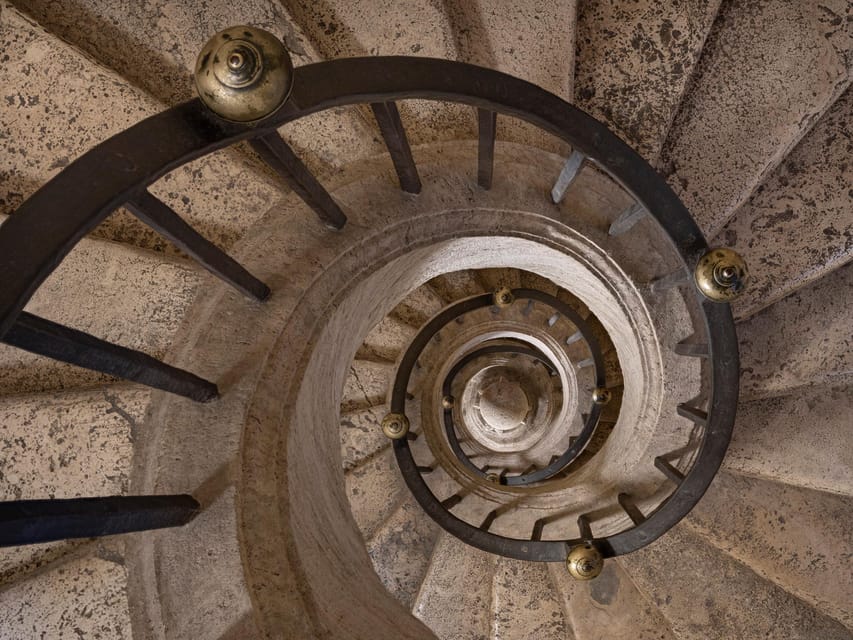
- Bernini’s Staircase is a graceful travertine spiral, included as part of the upper-area visit.
- The Liberian Historical Museum adds paintings, old musical manuscripts, and sacred relics to the experience.
- The ticket is open-time, but you still need to visit on the selected date and during opening hours.
- A voucher exchange is required at the desk on the right after security, and you must visit the upper areas before entering the church.
Why Santa Maria Maggiore’s upper level is worth seeing
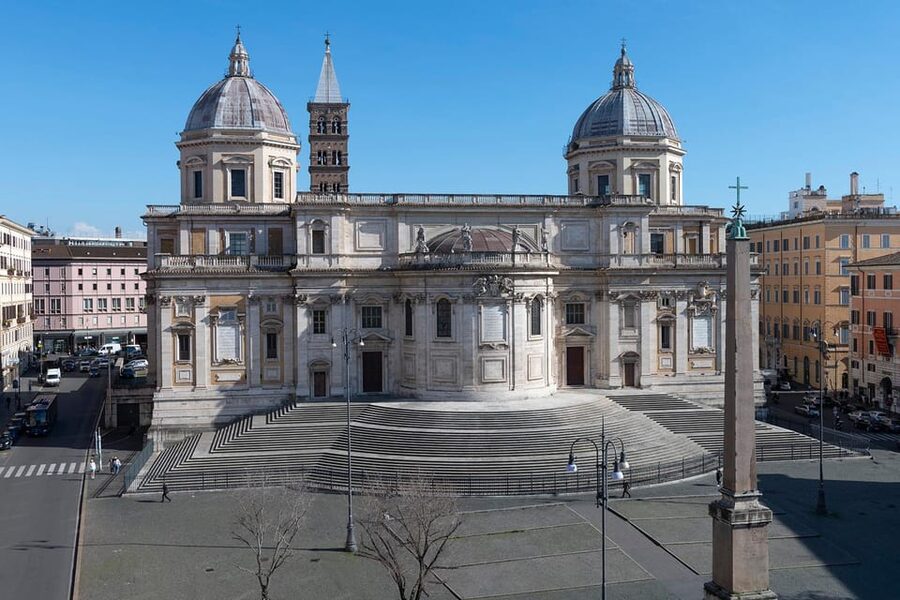
Santa Maria Maggiore is one of Rome’s major papal basilicas, but the main church is only part of the story. This ticket takes you upstairs into spaces that many people miss when they enter, look at the grand nave, and move on.
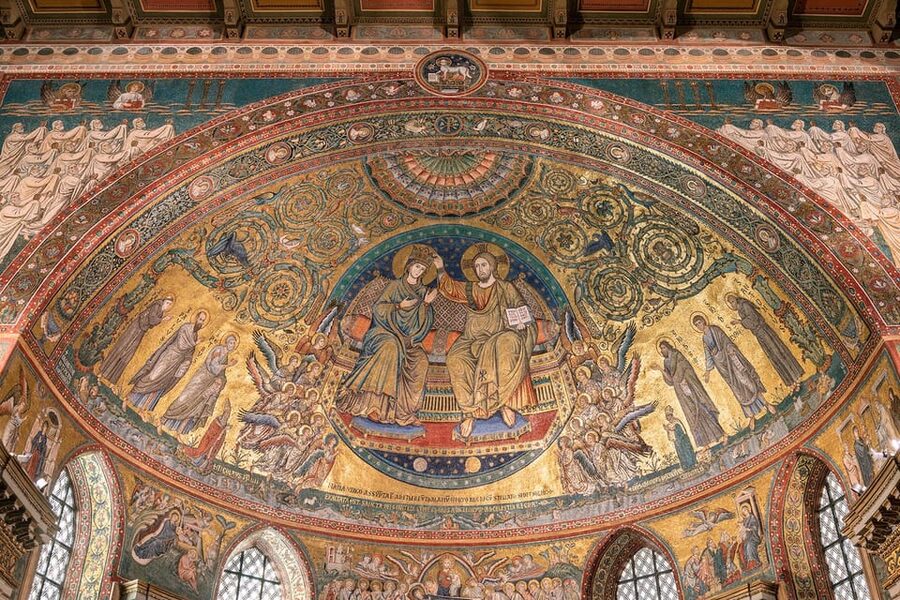
The strongest reason to book is the Loggia of Blessings. Here, you can look closely at medieval mosaics by Filippo Rusuti and look down toward the square below. The setting ties art to the basilica’s famous foundation story, in which a miraculous snowfall marked the site for the church.
I like this combination of artwork and viewpoint. You are not only staring at a mosaic behind a barrier. You are also seeing the urban setting connected with the basilica’s legend. That makes the stop more memorable than a simple museum display.
The upper areas are not a full guided tour of Santa Maria Maggiore. They are a self-guided visit through selected spaces, so you need to bring your own curiosity and read the available information at your own pace.
A few more things to do in Rome
- Vatican: Museums & Sistine Chapel Entrance Ticket
★ 4.5 · 144,003 reviews - Rome: Pantheon Fast-Track Ticket and Official Audio Guide
★ 4.3 · 21,008 reviews - Rome:Hop-On Hop-Off Panoramic Open Bus Ticket 3 Circuits x 1
★ 4.0 · 15,405 reviews
Finding the entrance and exchanging your voucher
The practical instructions matter here. First, go to Santa Maria Maggiore and pass through the security check. After that, head to the desk on the right, where an operator changes your voucher into the ticket needed for the upper areas.
Do not skip this desk. The digital voucher itself is not the final access ticket for the upper spaces. The operator must process it before you continue.
You are instructed to visit the upper areas before entering the church. This is easy to miss if you see the basilica doors first and walk straight inside. Follow the order carefully, since access depends on the voucher being converted and the upper route being completed properly.
You can show the voucher on your phone or bring a printed copy. Each person needs a personal ticket with their name, plus identification showing the same first and last name. Bring a passport or identity card, with a copy accepted according to the supplied instructions.
The process is not an escorted entrance. There is no guide leading you from room to room, and no guide is included in the $21 price. You are responsible for reaching the correct desk and following the instructions.
The Loggia of Blessings and Rusuti’s mosaics
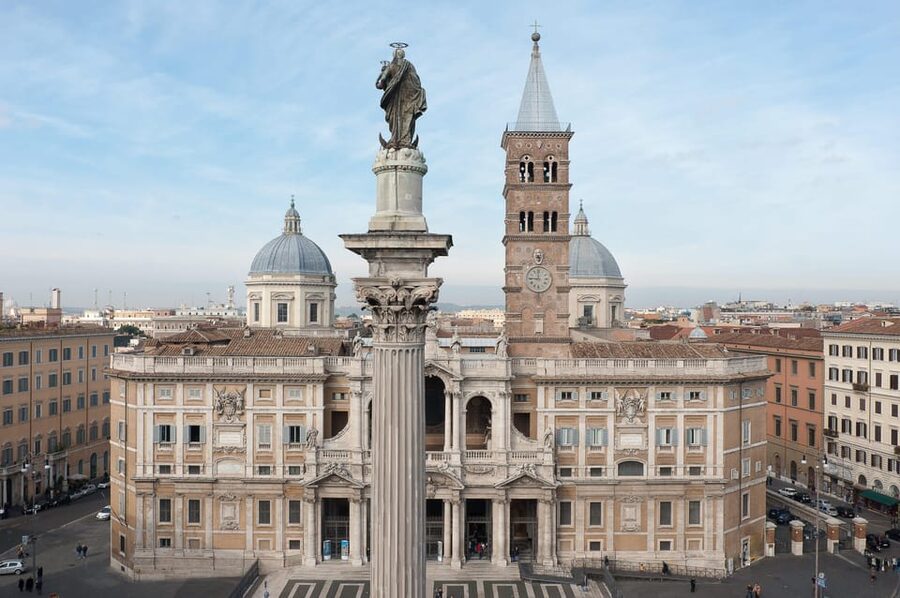
The Loggia of Blessings is the visual centerpiece of the visit. From this upper position, you can see medieval mosaics made by Filippo Rusuti and look out over the square in front of the basilica.
The mosaics connect the building to its religious purpose and to the story of its foundation. The view below also helps you understand how the basilica relates to daily Rome, rather than treating it as an isolated art object.
I would give this part time instead of hurrying through for the staircase. Medieval mosaics reward close looking. Notice the figures, the arrangement of the scenes, and the way the upper loggia frames the square.
Do keep your expectations sensible. This is a special access area, not a vast series of rooms filled with major paintings. The appeal comes from the combination of a medieval work, an unusual viewpoint, and the chance to see a quieter part of a famous basilica.
If you already plan to visit Santa Maria Maggiore for the church interior, the loggia gives you an extra layer of the building. If you are buying the ticket only for a long museum visit, the route may feel short.
The Hall of the Popes and its formal displays
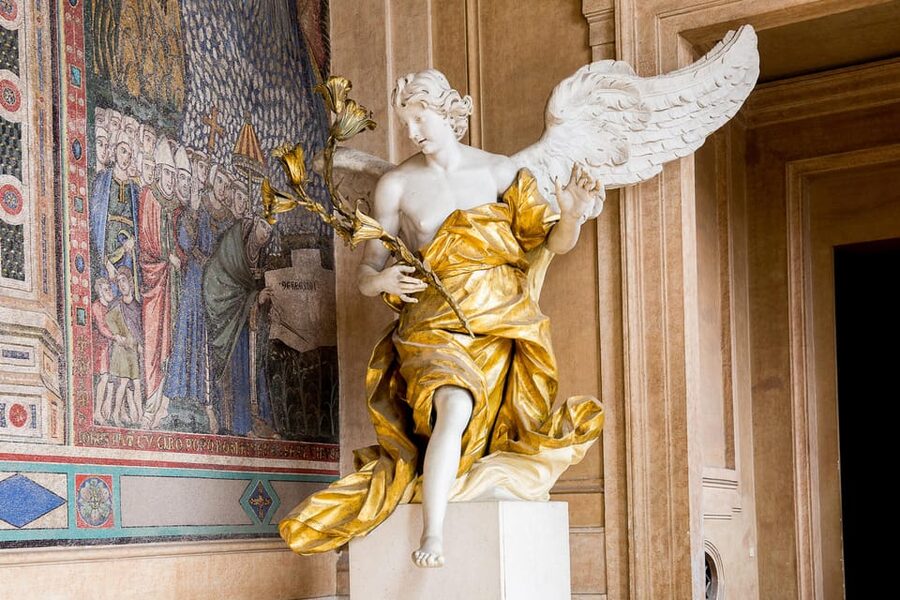
The Hall of the Popes shifts the mood from medieval mosaic to institutional memory. This gallery contains portraits and memorabilia connected with popes, cardinals, and the Spanish royal family.
It is a useful stop for anyone interested in the basilica’s place within papal and royal history. The displays help explain that Santa Maria Maggiore has been more than a neighborhood church. It has carried formal religious and political importance for centuries.
The hall is best approached as a historical gallery rather than a dramatic art room. Portraits and objects may appeal strongly to visitors who enjoy church history, while people looking only for famous masterpieces may find it less exciting.
I like the contrast with the Loggia of Blessings. One space presents medieval religious art in an open architectural setting. The next gives you portraits and memorabilia tied to institutions and people. Together, they make the upper route more varied than a single-artwork visit.
Same base, a different kind of day:
- Vatican Museums & Sistine Chapel Tour with Optional Basilica
★ 4.3 · 67,413 reviews - Colosseum, Roman Forum & Palatine Guided Tour
★ 4.7 · 63,148 reviews - Vatican Museums, Sistine Chapel & St Peter’s Basilica Guided Tour
★ 4.5 · 39,149 reviews - Rome: Colosseum, Palatine Hill and Roman Forum Guided Tour
★ 4.8 · 32,814 reviews
Climbing Bernini’s travertine staircase
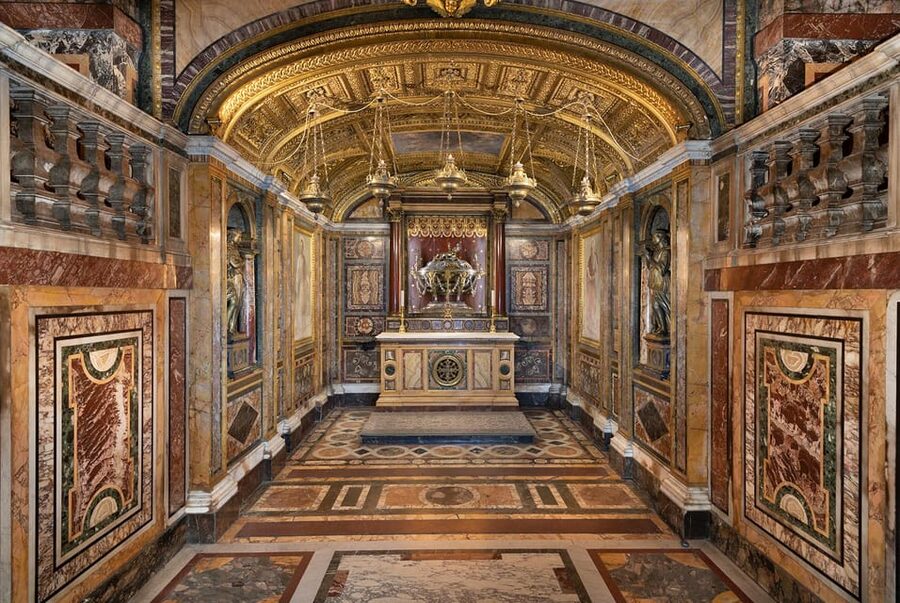
The Bernini Staircase is a graceful spiral made from travertine. Its design is described as a symbolic ascent toward divine light, which suits the upward route through the basilica’s upper spaces.
This is one of the more distinctive architectural moments on the visit. Rather than simply moving between rooms, you pass through a staircase with its own visual character and religious meaning.
The staircase also reminds you that the upper areas are part of the building itself. You are not entering a detached exhibition hall. You are moving through the structure of Santa Maria Maggiore, with its levels, views, and ceremonial spaces.
Wear comfortable shoes. That advice appears basic, but it matters when a visit includes stairs and standing on hard surfaces. The activity is wheelchair accessible, though the route includes a staircase, so anyone who needs step-free access should confirm the exact arrangement before booking.
The Liberian Historical Museum
The final major stop is the Liberian Historical Museum. Here you can see works of art, ancient musical manuscripts, and sacred relics connected with the basilica’s spiritual and cultural life.
This museum gives the visit more substance. Without it, the upper route would mainly be a viewpoint, a gallery, and a staircase. The museum adds objects that show how worship, music, art, and relics have shaped the basilica over time.
The musical manuscripts are especially useful for visitors who want more than architecture. They point to the role of music in Catholic worship and offer a different way to think about the building’s past.
Again, expect a compact museum rather than a major Rome collection. The value comes from the connection between the objects and Santa Maria Maggiore. You are seeing material linked to the basilica, not a random group of artworks assembled for a general exhibition.
How much time should you allow?
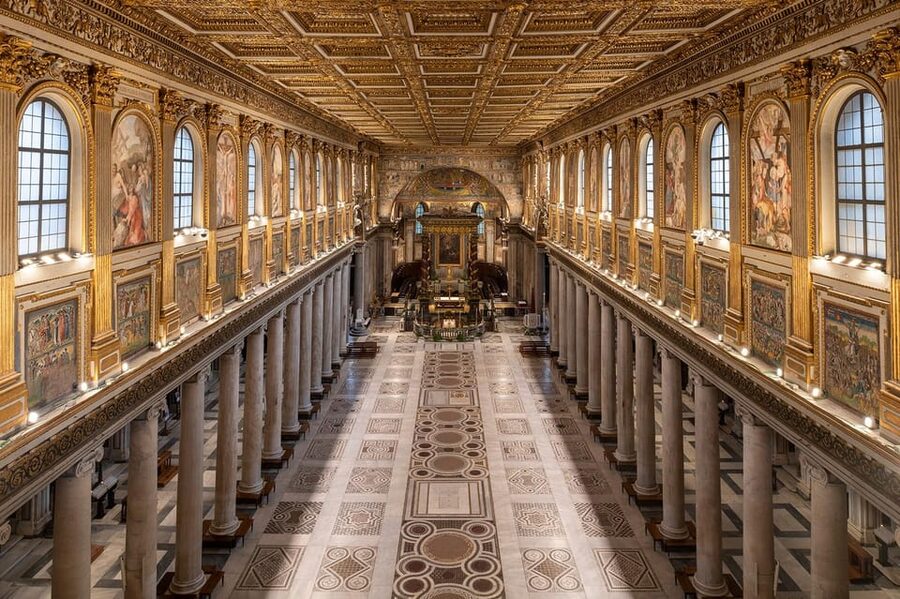
The ticket is valid for one day, and the open-time format lets you choose when to go during the available hours. The supplied information does not give a fixed visit length, so allow enough time to pass security, exchange the voucher, visit the upper areas, and then see the church interior if you wish.
The flexibility is useful when you are building a Rome day around other sights. You can visit earlier or later than the time selected during booking, as long as you go on the chosen date and within opening hours.
From Monday through Saturday, the stated opening hours are 8:00 a.m. to 6:30 p.m. On Sunday, the upper area opens from 12:30 p.m. to 5:30 p.m.
Sunday requires special planning. The basilica is open in the morning for Holy Mass, and access during the service is free and open to all. The upper area does not open until after Mass, at 12:30 p.m., so do not arrive expecting to use this ticket early on Sunday.
Is the skip-the-line benefit worth $21?
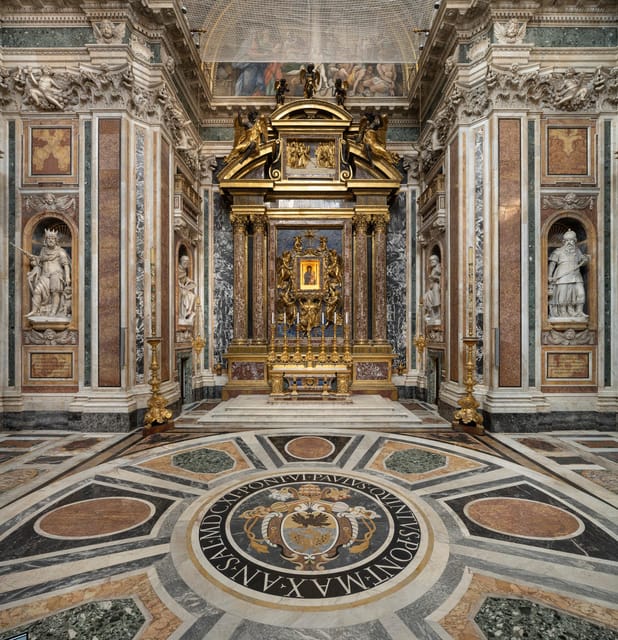
The price is $21 per person. That is reasonable if you specifically want the upper areas, the Loggia of Blessings, the Hall of the Popes, Bernini’s Staircase, and the Liberian Historical Museum.
It is less attractive if you mainly want to enter the basilica. The church itself has free access during Mass, according to the supplied information, while this ticket pays for priority access and special entry to the upper spaces.
The skip-the-line promise deserves a careful look. One Swedish visitor found that, during a quiet period, there was only one queue for everyone and entry took about ten minutes. The practical lesson is simple: in low season, you may pay extra for a time-saving benefit that saves little time.
That does not make the ticket useless. The main purchase is access to the upper areas, not just queue cutting. If those spaces are high on your list, the ticket can make sense. If you are comparing it only with ordinary church entry, the price feels harder to justify.
The open-time feature improves the value because it reduces the risk of missing a strict appointment. Still, the wording says availability and opening hours apply, so flexibility is not the same as guaranteed access at every moment.
Dress rules and what not to bring
Santa Maria Maggiore requires visitors to cover their shoulders and knees. Wear long pants or a long skirt, a shirt with sleeves, and clothing suitable for a place of worship.
Shorts, short skirts, sleeveless shirts, and see-through clothing are not allowed. You should also avoid bringing alcohol, drugs, pets, or anything related to smoking.
Large bags and luggage are not permitted, and access will not be granted to people carrying bags or luggage. This is one of the most important practical points. Visit with only what you need, rather than arriving with a suitcase or oversized day bag.
Comfortable clothes and shoes are recommended. Bring your named ticket and matching identification, either in printed or digital form.
Who will enjoy this experience most?
I would recommend this ticket to you if you like church architecture, medieval mosaics, papal history, or smaller museum collections. It is also a good fit if you prefer wandering independently rather than joining a guided group.
The visit suits people who already have time for Santa Maria Maggiore and want to see more than the main nave. The upper areas add viewpoints and rooms that are easy to miss on a standard church visit.
Families with older children may appreciate the variety. A mosaic, a staircase, portraits, and museum objects create more changes of scene than a single quiet chapel. Younger children who need constant activity may find the historical displays slow.
This is less suitable if you want a full explanation from a local guide. No guided tour or escorted entrance is included. It is also not the best choice if your Rome schedule is packed and you would resent paying $21 for a visit that may feel brief.
Booking risks and useful caution
The experience has a rating of 3.8 from 223 reviews, which points to a generally mixed but workable product rather than a sure thing for every booking.
The most serious problem in the supplied feedback is an attempted visit that was refused at the door, despite arriving before the selected time, with no refund provided. Another booking was not accepted because the reservation did not match the basilica’s available places.
These reports make the voucher exchange and date details especially important. Check the name on every ticket, bring matching identification, go to the correct desk after security, and do not assume the selected booking time is the only instruction you need to follow.
There is also conflicting policy information: the activity details state cancellation up to 24 hours before the visit for a full refund, while the conditions also say tickets purchased for the basilica are non-refundable and cannot be modified. Check the cancellation terms shown at the time of purchase before paying.
Sections of the basilica or museum can close because of circumstances beyond the operator’s control, and such closures do not qualify for a refund under the stated conditions.
Should you book Santa Maria Maggiore’s upper areas?
Book it if you want the Loggia of Blessings, Rusuti’s medieval mosaics, the Popes’ Hall, Bernini’s Staircase, and the Liberian Historical Museum. The open-time format is helpful, and the route gives you a more complete look at Santa Maria Maggiore than the main church alone.
Skip it if you only want to step inside the basilica or if your visit falls in a quiet season and you are paying mainly to avoid a queue. At $21, the value depends on your interest in the upper spaces, not simply on the promise of fast entry.
My practical choice would be to book it on a busy Rome day when you want flexibility and have a clear interest in church art and papal history. Arrive without luggage, dress correctly, exchange the voucher at the desk on the right, and visit the upper areas before entering the church. Those small steps make the experience much less likely to go wrong.
FAQ
Is this a guided tour?
No. The ticket includes priority access to the upper areas, but it does not include a guide or escorted entrance.
How much does the ticket cost?
The listed price is $21 per person.
Can I visit at any time on my chosen date?
Yes. Although the booking process may ask you to choose a time slot, the ticket is described as open-time. You may visit earlier, later, or at another point on the selected date, subject to opening hours and availability.
What are the opening hours?
From Monday through Saturday, the stated hours are 8:00 a.m. to 6:30 p.m. On Sunday, the upper area is open from 12:30 p.m. to 5:30 p.m.
What must I do when I arrive?
Pass through security first, then go to the desk on the right. An operator will convert your voucher into the ticket needed for the upper areas. Visit the upper areas before entering the church.
What clothing is required?
Your shoulders and knees must be covered. Shorts, short skirts, sleeveless shirts, and see-through clothing are not allowed.
Can I bring luggage or a large bag?
No. Access will not be granted to visitors with bags or luggage, and oversized luggage and large bags are not allowed.
Just added in Rome
- Civitavecchia Private Transfer: From the Port to Rome Airport★ 5.0 · 309 reviews
- Civitavecchia Shore Excursion: Best of Rome Private Tour★ 5.0 · 247 reviews
- Civitavecchia Private Transfer from ship to FCO airport or Rome★ 5.0 · 245 reviews
- Food Tasty and History Tour in Civitavecchia★ 5.0 · 256 reviews
- Palatine Hill and Roman Forum Tour with Fast-Track Entrance★ 4.2 · 417 reviews
- Tivoli: Villa D’Este & Villa Adriana Pass & App Audioguide★ 4.4 · 364 reviews
- Tivoli: Villa D’Este Entry Ticket and App Audio Guide★ 4.3 · 191 reviews
- Vatican Museums & Sistine Chapel Skip-the-Line Guided Tour★ 4.6 · 254 reviews
Tours in Rome, compared.
Vatican: Museums & Sistine Chapel Entrance Ticket
Read our review →
Vatican Museums & Sistine Chapel Tour with Optional Basilica
Read our review →
Colosseum, Roman Forum & Palatine Guided Tour
Read our review →
Vatican Museums, Sistine Chapel & St Peter’s Basilica Guided Tour
Read our review →
Colosseum & Forum with Audio Guide App -Optional Arena
Read our review →
Pantheon Fast-Track Ticket and Official Audio Guide
Read our review →
City Sightseeing Hop-on Hop-off Bus with Audioguide
Read our review →