Reviewed · TOURS IN ROME
Rome: Palazzo Barberini Galleria Corsini Ticket & Audioguide
The best reason to book this experience is simple: two important Roman art galleries come under one ticket. At Palazzo Barberini, you see works by Caravaggio and Bernini inside a grand palace built for Pope Urban VIII. At Galleria Corsini, you get a quieter late-Baroque setting designed by Ferdinando Fuga.
I like the chance to explore at my own pace, and I like the range of artists, from Raphael and Beato Angelico to Rubens, El Greco, and Titian. The $19 price is fair if you plan to see both galleries, though the audioguide is delivered through an app rather than a live guide.
The main drawback is that this is not a guided tour. You must exchange your smartphone voucher at the Palazzo Barberini ticket office, and some areas may occasionally be closed for a conference or special use.
Key points to know before booking
- Two galleries, one art-focused outing: Visit Palazzo Barberini and Galleria Corsini with one admission package.
- Caravaggio and Bernini are the main draw: You will also find works by Raphael, Rubens, Titian, Van Dyck, El Greco, and many others.
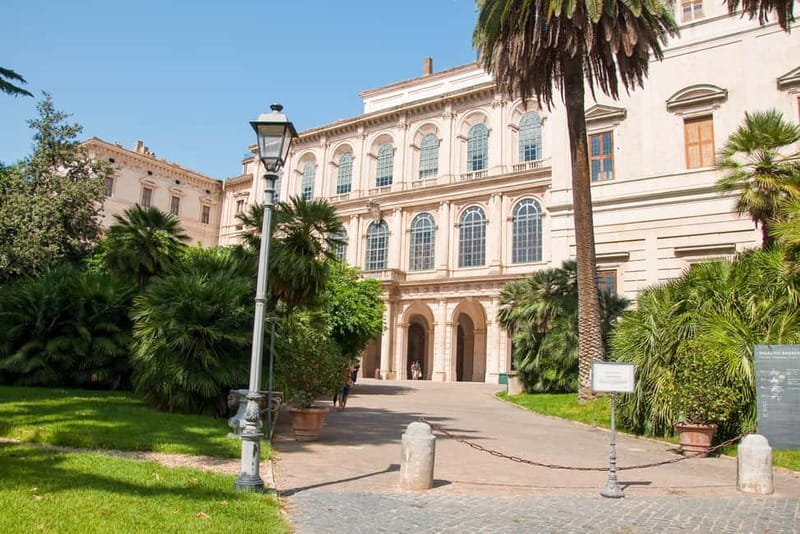
- Palazzo Barberini gives the visit architectural weight: The building was created for Pope Urban VIII, a member of the Barberini family.
- Galleria Corsini offers a different setting: Its late-Baroque palace was built for the Corsini family between 1730 and 1740.
- The audioguide is app-based: You explore independently rather than following a live guide.
- Plan for occasional access changes: A conference or other event may make some areas unavailable.
Why these two galleries make a good Rome pairing
Rome has no shortage of famous museums, but these two galleries give you a useful change of pace from the city’s biggest sights. You are not simply entering a modern exhibition hall. You are seeing art inside the palaces that once housed powerful Roman families and church leaders.
The Barberini Gallery is the stronger half for most people. Its collection includes Caravaggio and Bernini, two artists closely tied to Rome’s Baroque identity. You also get a broad sweep of European painting, with Raphael, Holbein, Van Dyck, Lippi, Lotto, Poussin, El Greco, Tintoretto, Rubens, Murillo, Ribera, and Titian included among the named artists.
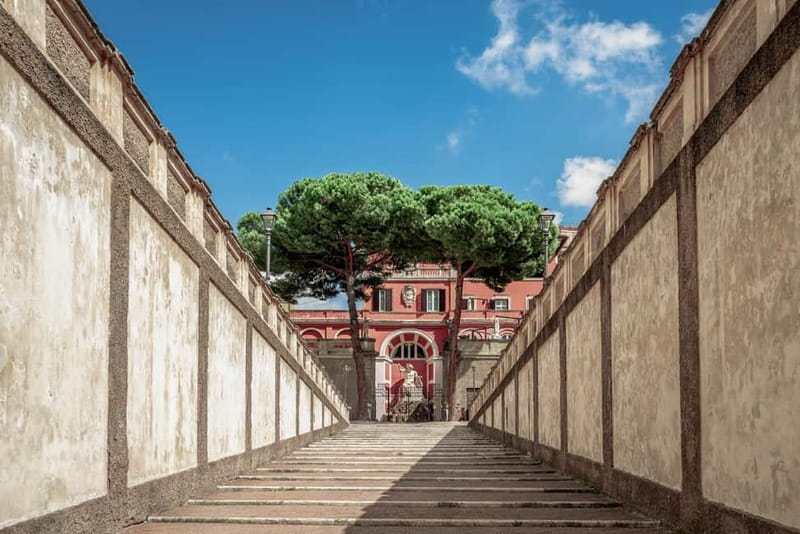
Corsini gives you a second setting and a different mood. The palace was erected for the Corsini family between 1730 and 1740, with architecture based on designs by Ferdinando Fuga. The art is part of the experience, but so is the chance to see how a late-Baroque Roman palace was arranged and designed.
I would choose this combination if you want a focused art stop that fits neatly into a day of sightseeing. It is also a good choice if you have already seen Rome’s largest museums and want more painting without committing to a long guided itinerary.
A few more things to do in Rome
- Vatican: Museums & Sistine Chapel Entrance Ticket
★ 4.5 · 144,003 reviews - Rome: Pantheon Fast-Track Ticket and Official Audio Guide
★ 4.3 · 21,008 reviews - Rome:Hop-On Hop-Off Panoramic Open Bus Ticket 3 Circuits x 1
★ 4.0 · 15,405 reviews
Entering Palazzo Barberini, a palace built for Pope Urban VIII
Your visit begins at Palazzo Barberini. You exchange the smartphone voucher at the ticket office for the official entry ticket, then enter the gallery inside the palace.
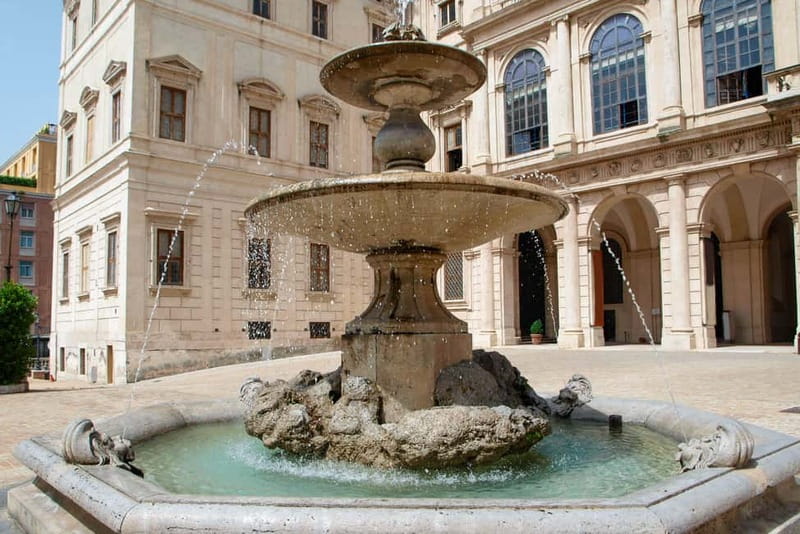
The building has a strong historical connection to the Barberini family. It was designed for Pope Urban VIII and was created in the sixteenth-century setting of the former Villa Sforza. Carlo Maderno was the architect named for the project, giving the palace an importance beyond its collection of paintings.
That matters because the rooms are not just neutral containers for art. You are moving through a building shaped by papal power, family wealth, and Roman Baroque design. Even if you arrive mainly for Caravaggio, take time to look around the architecture.
The gallery works well for an independent visit. You can pause at the paintings that interest you and move on from artists who do not hold your attention. The app audioguide adds information through your phone, but you should expect a self-directed experience rather than a personal explanation from a guide.
A small practical point: make sure your phone is ready before entering. The included guide is digital, so battery life and a working connection to the app matter more here than they would on a standard paper-based museum visit.
Finding Caravaggio and Bernini in the collection
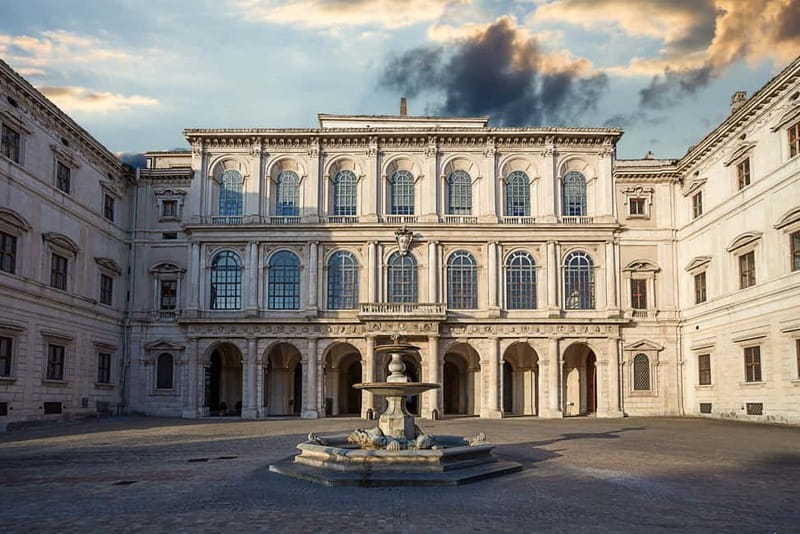
Caravaggio and Bernini are the most obvious names attached to this experience. Both artists help explain why Rome became such an important center of Baroque art.
Caravaggio is known for dramatic light, strong human emotion, and figures that feel close enough to touch. Bernini is represented as one of the leading artists of Roman Baroque, a period when painting, sculpture, architecture, and religious drama were often designed to work together.
The supplied details do not specify the exact location of each work inside the gallery, so use the audioguide and museum signage to find your way. The app can help you decide where to spend your time instead of trying to cover every room with equal attention.
The collection is not limited to those two artists. Raphael gives the gallery an important Renaissance connection, while Titian, Tintoretto, and Veronese-era traditions are represented through the broader Venetian and Italian painting story. Rubens, Van Dyck, Murillo, Ribera, and Poussin add a wider European frame.
I like this range because it keeps the visit from becoming a one-painting stop. You can come for Caravaggio, then compare different approaches to color, portraiture, religious scenes, and courtly art. The gallery is likely to suit you best if you enjoy making those connections rather than only checking off one famous masterpiece.
The named collection also includes Beato Angelico, Lippi, Lotto, Holbein, Preti, El Greco, and Tiepolo. That is a useful reminder that this is a serious art collection, not a small exhibit built around two celebrity names.
Using the app audioguide without a live tour
The digital audioguide is included, but the format needs to be clear. You do not join a guided group, and no live guide is part of the standard package.
Instead, you download or access the app audioguide and use it as you move through the galleries. This gives you control over the pace. You can listen closely to major works, skip sections, or stop for a break without holding up a group.
That freedom is especially useful in an art museum. Some visitors want a detailed explanation of every major painting. Others prefer to look first and read later. This ticket supports both habits, provided you are comfortable using your phone.
The tradeoff is that the quality of your visit depends partly on how well you use the app. A live guide can answer a question immediately and point out details you might miss. The app cannot adjust its explanation to your interests.
A review of the experience praised a guided visit as enjoyable and informative, but the included features here specify a digital app audioguide and no guided tour. Do not book this expecting a named guide or a scheduled talk. Book it for independent access with extra information available on your device.
Same base, a different kind of day:
- Vatican Museums & Sistine Chapel Tour with Optional Basilica
★ 4.3 · 67,413 reviews - Colosseum, Roman Forum & Palatine Guided Tour
★ 4.7 · 63,148 reviews - Vatican Museums, Sistine Chapel & St Peter’s Basilica Guided Tour
★ 4.5 · 39,149 reviews - Rome: Colosseum, Palatine Hill and Roman Forum Guided Tour
★ 4.8 · 32,814 reviews
Galleria Corsini and its late-Baroque rooms
The second admission takes you to Galleria Corsini, part of Palazzo Corsini. The palace was built for the Corsini family between 1730 and 1740, and its design follows plans by Ferdinando Fuga.
This stop adds a useful architectural contrast to Palazzo Barberini. Instead of seeing all your art in one large Roman palace, you get a second family residence with its own late-Baroque character.
The Corsini visit is included in the same package, but the information provided does not give a fixed route, specific room list, or required order. Treat it as a separate gallery visit and allow yourself enough time to look at both the building and the collection.
I would not rush here simply because it is the second stop. The point of the combination is not only to gather more paintings. It is to compare two Roman palaces and see how art fits into different historic interiors.
If your interest is only Caravaggio, Palazzo Barberini will likely feel more central to your plans. If you enjoy architecture and the setting of a collection, Corsini makes the $19 ticket more worthwhile.
How much time should you allow?
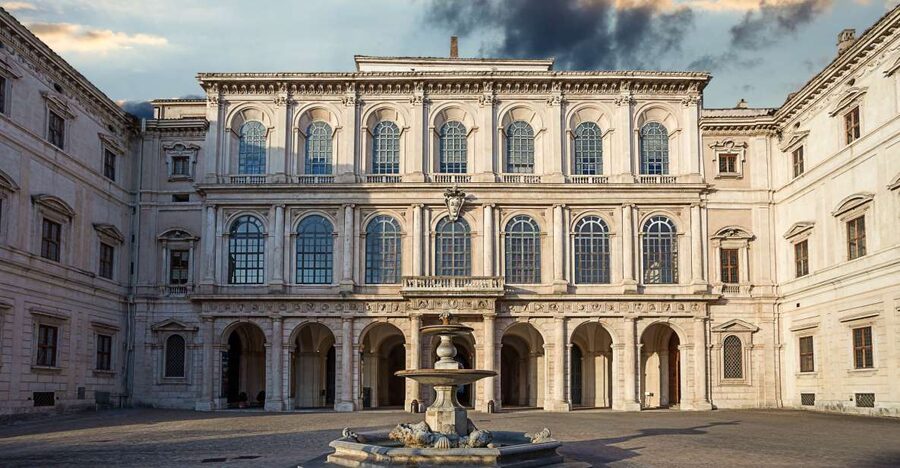
The ticket is described as valid for one day, with starting times available when you check availability. It also states that the one-visit tickets are valid for 20 days after purchase. Because those details refer to different parts of the booking, check the exact conditions attached to your selected date and time before you pay.
You can use the ticket to visit each attraction at your own pace, but the supplied information does not give a fixed duration or an official time split between the galleries. That is useful if you prefer flexibility, but you will need to manage your own schedule.
I would plan the day around the two galleries rather than treating them as a quick add-on. Palazzo Barberini deserves time for both the collection and the building. Corsini adds another palace and another group of works, so rushing through both would reduce the value of the combination.
The audioguide can help you make decisions once inside. Listen to the introduction, identify the artists you most want to see, and then return to works that catch your eye. You do not need to study every painting equally.
Is $19 good value?
At $19 per person, the ticket is reasonably priced if you intend to visit both galleries. You get admission to Galleria Barberini, admission to Galleria Corsini, and the digital audioguide.
The value is strongest for someone who wants art rather than a general sightseeing loop. You are paying for access to two historic palaces and collections that include major names such as Caravaggio, Bernini, Raphael, Rubens, and Titian.
It is less compelling if you only want one famous painting or if you strongly prefer a guide who explains everything in person. In that case, the second gallery may feel like an extra stop, and the app may not replace the interaction you want.
The ticket also lets you explore independently, which has real value in Rome. You do not have to match a group’s speed, wait for late arrivals, or remain with a guide after you have seen the works that matter most to you.
There is one caution. Some areas may be unavailable because of a conference. That does not make the ticket a poor buy, but it means you should keep your expectations sensible. Museum access can sometimes change, and this experience does not promise that every room will always be open.
Who will enjoy this experience most?
I would recommend this ticket to you if you fit one or more of these descriptions:
- You want to see Caravaggio and Bernini in a serious art collection.
- You enjoy historic buildings as much as paintings.
- You prefer to set your own pace.
- You like having audio information available but do not need a live guide.
- You want a smaller art-focused plan to balance Rome’s major archaeological sights.
- You are interested in comparing two Roman palaces in one outing.
Families and mixed-interest groups may also find the flexible format useful. One person can spend longer with a favorite painting while another moves ahead. Since there is no fixed live tour described, you have more control over the visit.
I would be more cautious if you dislike app-based guides, have limited phone battery, or want a guide to answer questions as you go. The ticket is also non-refundable, so you should be confident about your plans before booking.
Practical details at the ticket office
Start at Palazzo Barberini, where you exchange your smartphone voucher for the official entry ticket. Keep the voucher accessible on your phone, and allow time for this exchange before beginning your gallery visit.
The activity includes skip-the-ticket-line access, which can save useful time in Rome. It does not remove every possible delay, especially if the museum is managing a conference or another event, but it is still a helpful feature.
The experience is wheelchair accessible. The stated end point is back at the meeting point, though the information does not provide a separate transport service or a guided transfer between the two galleries.
The activity is non-refundable. Check the available starting times and the exact validity information before confirming, since the booking details refer both to a one-day visit and to one-visit tickets valid for 20 days after purchase.
My verdict: book it for art and freedom
You should book this experience if you want two palace galleries, important Italian and European paintings, and the freedom to explore without a live group. Caravaggio, Bernini, Raphael, and Titian give Palazzo Barberini plenty of weight, while Corsini adds a second late-Baroque setting and makes the ticket more useful than a single-gallery admission.
I would skip it if you want a fully guided tour or if your Rome schedule is so tight that you can only spare time for one work. For most art-minded visitors, though, $19 is a sound price for two galleries, especially when you value a flexible pace and an app audioguide.
FAQ
What does the ticket include?
It includes entrance to Galleria Barberini, entrance to Galleria Corsini, and a digital app audioguide.
Is a live guided tour included?
No. The package includes a digital app audioguide, not a live guided tour.
Which artists can I see?
The collections include works by Caravaggio, Bernini, Raphael, Van Dyck, Holbein, Beato Angelico, Lippi, Lotto, Preti, Poussin, El Greco, Tiepolo, Tintoretto, Rubens, Murillo, Ribera, and Titian.
Where do I start the experience?
You start at Palazzo Barberini by exchanging your smartphone voucher at the ticket office for the official entry ticket.
Can I visit both galleries at my own pace?
Yes. The tickets are intended for independent visits, allowing you to explore each attraction at your own pace.
How much does the experience cost?
The listed price is $19 per person.
Is the ticket refundable?
No. The activity has a non-refundable cancellation policy.
Is the experience wheelchair accessible?
Yes. The activity is listed as wheelchair accessible.
Can some areas be closed?
Yes. Some areas may be unavailable because of a conference or another event, so access to every area is not guaranteed.
Just added in Rome
- Civitavecchia Private Transfer: From the Port to Rome Airport★ 5.0 · 309 reviews
- Civitavecchia Shore Excursion: Best of Rome Private Tour★ 5.0 · 247 reviews
- Civitavecchia Private Transfer from ship to FCO airport or Rome★ 5.0 · 245 reviews
- Food Tasty and History Tour in Civitavecchia★ 5.0 · 256 reviews
- Palatine Hill and Roman Forum Tour with Fast-Track Entrance★ 4.2 · 417 reviews
- Tivoli: Villa D’Este & Villa Adriana Pass & App Audioguide★ 4.4 · 364 reviews
- Tivoli: Villa D’Este Entry Ticket and App Audio Guide★ 4.3 · 191 reviews
- Vatican Museums & Sistine Chapel Skip-the-Line Guided Tour★ 4.6 · 254 reviews
Tours in Rome, compared.
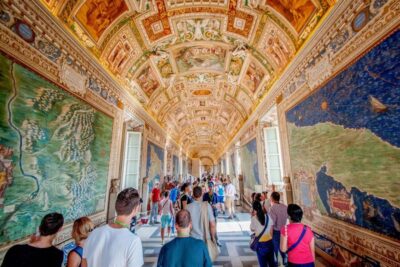
Vatican: Museums & Sistine Chapel Entrance Ticket
Read our review →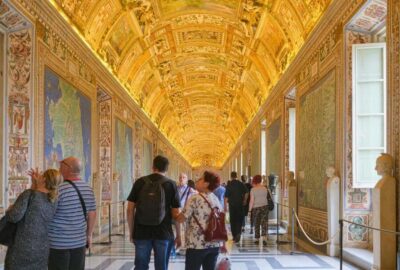
Vatican Museums & Sistine Chapel Tour with Optional Basilica
Read our review →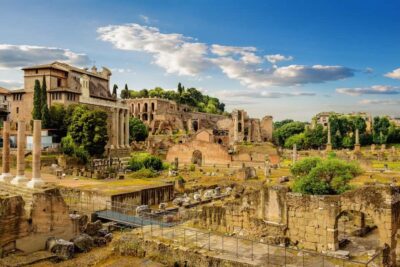
Colosseum, Roman Forum & Palatine Guided Tour
Read our review →
Vatican Museums, Sistine Chapel & St Peter’s Basilica Guided Tour
Read our review →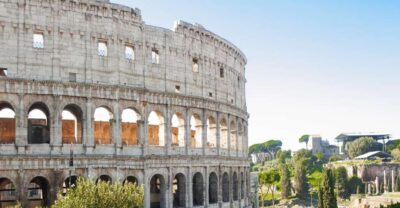
Colosseum & Forum with Audio Guide App -Optional Arena
Read our review →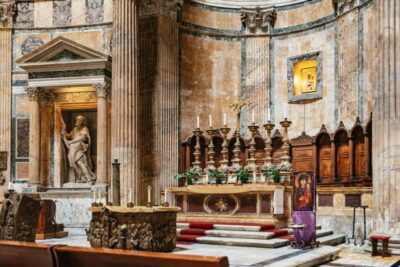
Pantheon Fast-Track Ticket and Official Audio Guide
Read our review →
City Sightseeing Hop-on Hop-off Bus with Audioguide
Read our review →