
Reviewed · PASTA
Milan: Pasta, Ravioli, and Gelato Class in a Glamorous Home
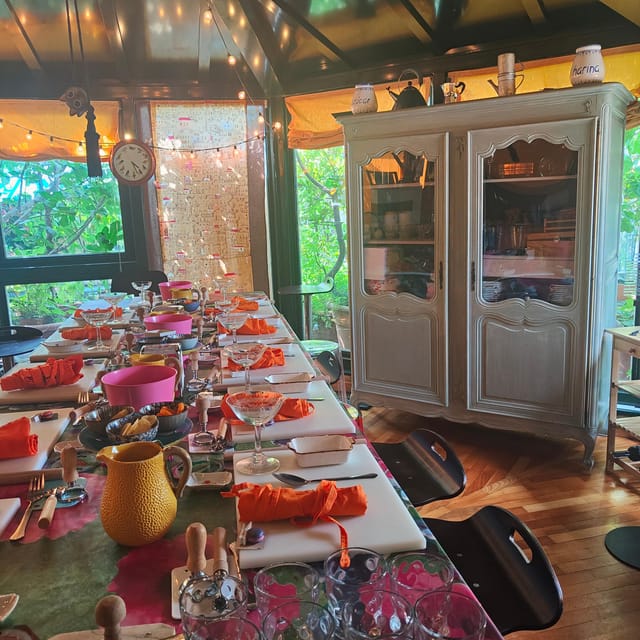
Milan’s best food lesson may happen far from a restaurant kitchen. In an elegant home about a 20-minute walk from the Duomo, you roll pasta, shape ravioli, and prepare gelato or tiramisù among antique furniture and 16th-century paintings. The setting feels personal, not like a standard cooking school.
I like the family recipes and the amount of hands-on work. You do not simply watch a chef toss dough around. You make the food yourself, then sit down to eat it with wine and homemade limoncello. I also like the range of instructors, including Bruna, Laura, Marco, Federico, Katerina, and Paolo, who are repeatedly praised for patience, humor, and clear instruction.
The main consideration is group size. It is advertised as a small group of up to 10, but some sessions have had around 15 or 16 people. Portions may also feel modest if you arrive very hungry, so think of this as a generous tasting meal and cooking lesson rather than an all-you-can-eat dinner.
Key points at a glance
- A historic Milanese home: Cook in an elegant downtown residence filled with family art, antique furniture, and fine furnishings.
- Three Italian staples: Prepare tagliatelle, handmade ravioli, and either gelato or tiramisù, depending on the session.
- Family teaching tradition: Bruna’s daughter and grandchildren sometimes lead the class, joined by instructors such as Laura, Marco, Federico, and Paolo.
- A social meal afterward: Eat your own pasta and ravioli with tomato sauce, butter and sage, organic wine, water, and homemade limoncello.
- Useful take-home lesson: Recipes arrive by email, giving you a real chance to repeat the dishes at home.
- Easy transport: The home is about 20 meters from the Coni Zugna subway stop on Milan’s blue line.
Cooking pasta in a Milanese family home
The first surprise is the address. This is not a rustic farmhouse outside the city or a restaurant basement. You enter an elegant home in one of Milan’s fashionable central districts, close to the Designer and Fashion area and roughly 20 to 25 minutes on foot from Duomo Square.
The home itself is part of the experience. Family paintings, antique furniture, and objects from a Palladian family palace give the room a museum-like feel, though you are there to work with flour, eggs, and filling. That combination makes the class more memorable than a plain commercial kitchen.
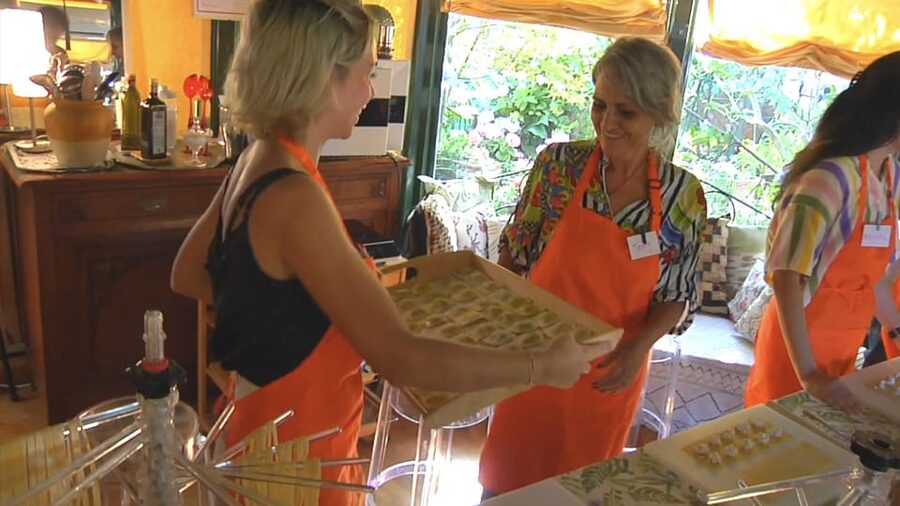
You are welcomed into a family cooking tradition linked to Grandma Bruna. When Bruna is resting, her daughter or grandchildren take over. Other sessions may be led by Laura, Marco, Federico, Katerina, Paolo, Luca, Catarina, or another member of the teaching team. The instructors vary, but the basic approach remains the same: clear guidance, plenty of help, and a relaxed social tone.
The class is taught in English. Some instructors speak additional languages, including Italian, Spanish, French, German, Russian, Ukrainian, Hebrew, and Persian, but you should request another language in advance. Language support is not guaranteed in every regular group.
Other pasta to make in Milan:
- The Secrets to Learn Fresh Pasta and Tiramisù in a Glam Home
★ 5.0 · 1,182 reviews - Milan: Pasta and Tiramisu Cooking Class with Wine
★ 4.8 · 1,106 reviews - Gnocchi, Pasta, Tiramisù and Wine Class
★ 5.0 · 691 reviews
Mixing dough and making tagliatelle
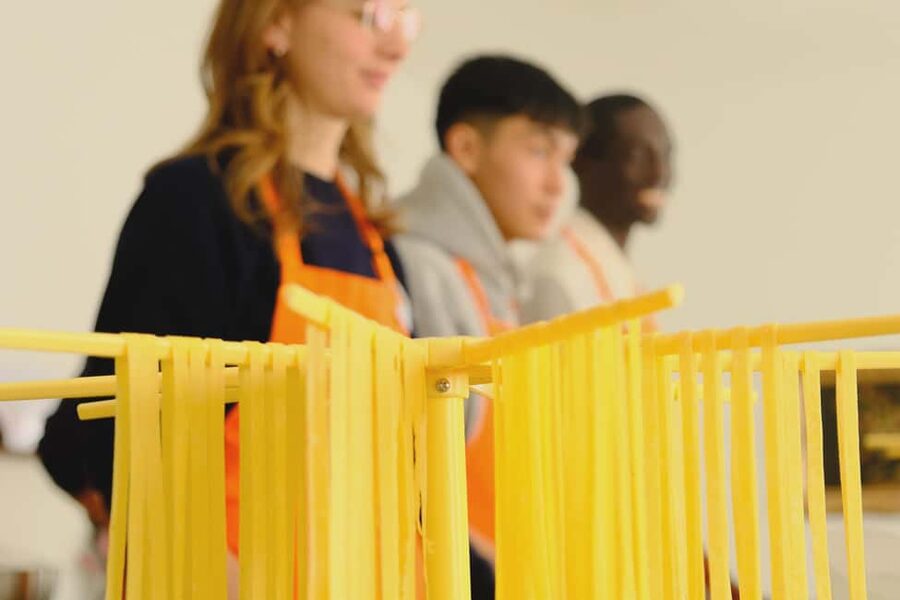
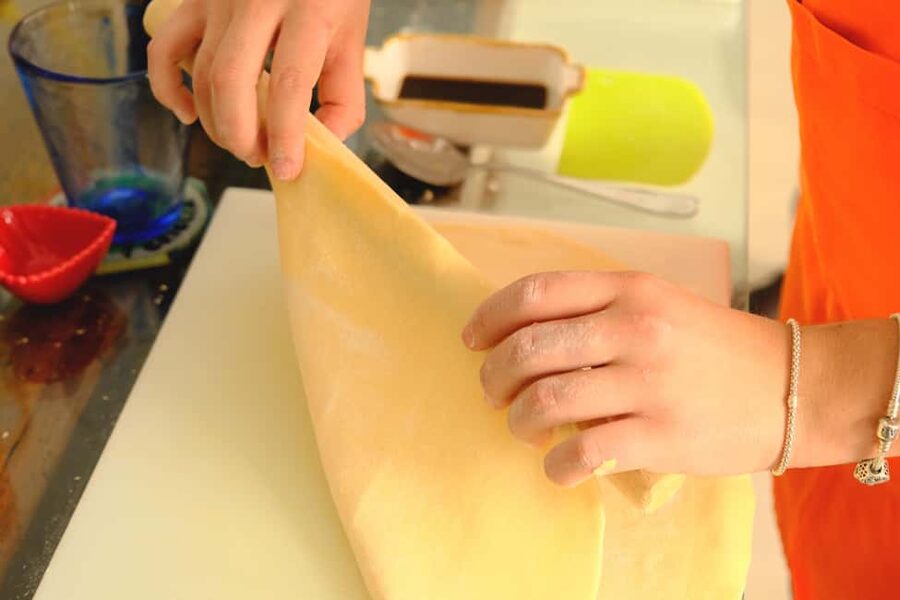
The lesson centers on fresh pasta made from scratch. You work with the ingredients, learn the basic texture to look for, and shape the dough into tagliatelle. This is the useful part of the class because fresh pasta is one of the easiest Italian dishes to attempt at home once you understand the feel of the dough.
The teachers also share small kitchen lessons that make a difference later. You learn how to handle the dough, how thin it should be, and how to avoid turning fresh pasta into a sticky pile. The class is designed for beginners, so you do not need advanced cooking skills. Several instructors are praised for moving around the room and helping each person rather than leaving anyone stuck at the table.
Your tagliatelle is served with tomato sauce. The sauce is simple, which is exactly why it works well in a class. You can pay attention to the pasta instead of juggling a complicated recipe with a long ingredient list.
One useful detail: some sessions have included a light debate over how much garlic belongs in the sauce. That is a fitting reminder that Italian cooking is not one fixed rulebook. The recipes are traditional, but the class still leaves room for personal habits and regional preferences.
Filling ravioli with a chef’s recipe
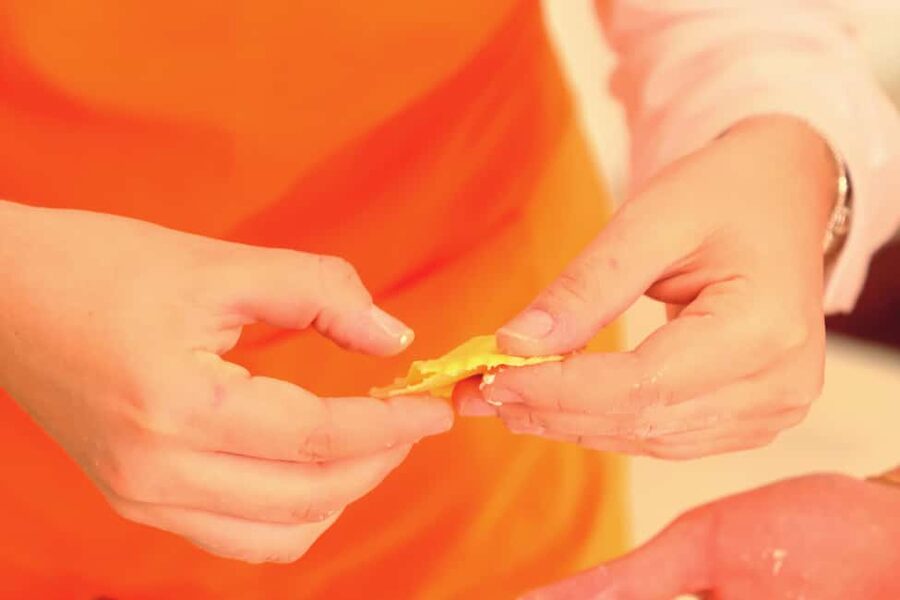
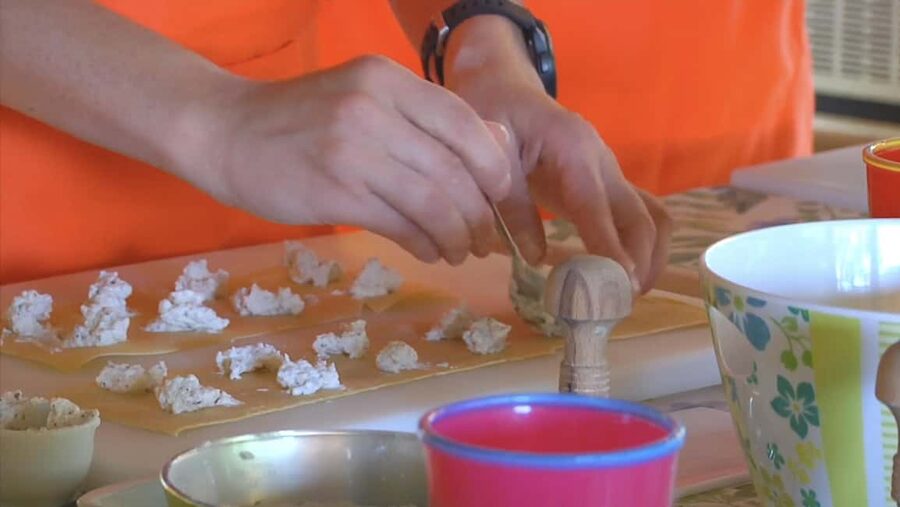
Ravioli is the more delicate part of the class. You fill and seal the pasta by hand, learning how to keep the filling inside and how to shape the edges neatly. It is satisfying work, but it takes more care than cutting tagliatelle.
The filling is described as a recipe created by a Michelin-starred chef, with ricotta-based versions appearing in the menu details and cooking sessions. It is served with butter and sage, a classic combination that lets the ravioli do the talking.
I would pay close attention during this section. Ravioli is the dish most likely to cause trouble at home, especially if the dough is too thick, the filling is too wet, or the edges are not sealed firmly. The instructors help with those practical points, and you leave with a better sense of how much filling to use.
The finished ravioli is often the favorite course. That makes sense. You have handled each piece yourself, and the butter and sage sauce is both simple and rich. It is also the course that gives you the clearest feeling of having made a proper Italian meal rather than merely following a demonstration.
Gelato or tiramisù for the sweet course
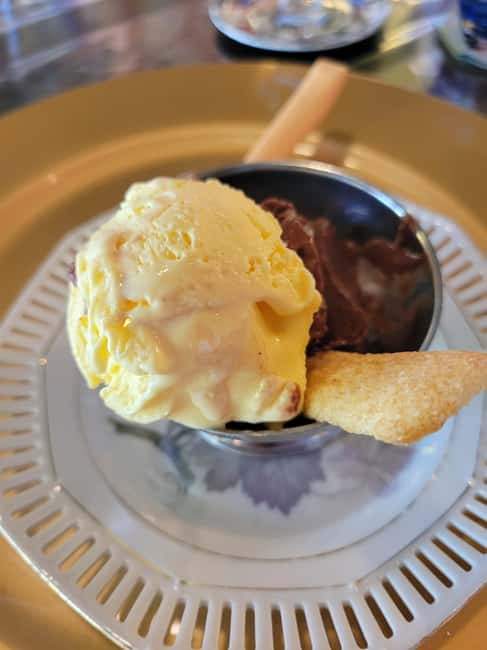
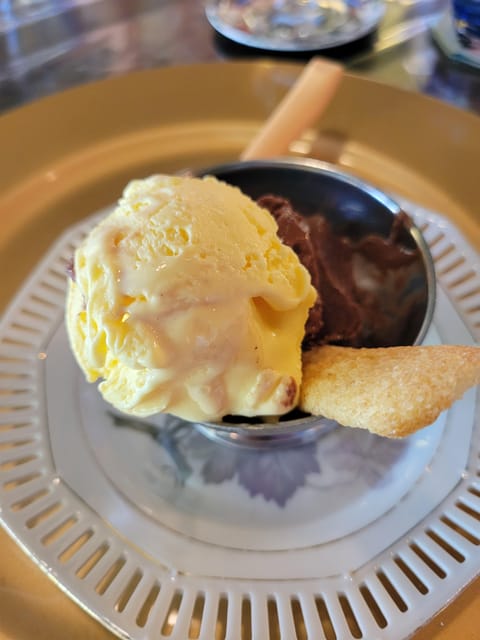
The dessert portion varies. The experience includes gelato, with chocolate and tiramisù flavors listed, while other sessions prepare tiramisù as the sweet course. Some class participants have chosen a gelato option while most of the group made tiramisù.
If you are especially interested in one dessert, confirm the exact menu before booking. The wording suggests that the available choice can depend on the session or booking arrangement. That small bit of planning avoids disappointment.
Tiramisù is presented as a soft, approachable recipe that is easier to repeat than you might expect. Gelato takes a little more planning because the mixture needs time to chill and set. One session prepared zabaglione and chocolate ice cream early, then served it later after the pasta work. The timing matters, since gelato is not instant.
This is a good example of how the class balances fun with real cooking. You get a sweet finish, but you also see that some Italian recipes require advance preparation. The lesson is not just about collecting dishes. It helps you understand the order in which a home cook should make them.
Other things to learn to make in Milan:
- Milan: Pasta and Tiramisu Small Group Cooking Class with Wine
★ 5.0 · 660 reviews - Milan Cooking Class: Authentic Pizza & Gelato Making
★ 5.0 · 582 reviews - Milan: Italian Cooking Class with Food and Wine
★ 4.7 · 509 reviews - Milan Culinary Experience: Pasta & Gelato or Tiramisù Class
★ 5.0 · 337 reviews
Sitting down to eat what you made
After the work is finished, you eat the pasta, ravioli, and dessert as a shared meal. The included menu lists tagliatelle with tomato sauce, ravioli with butter and sage, and gelato or tiramisù. Water is provided, along with organic wine made without pesticides.
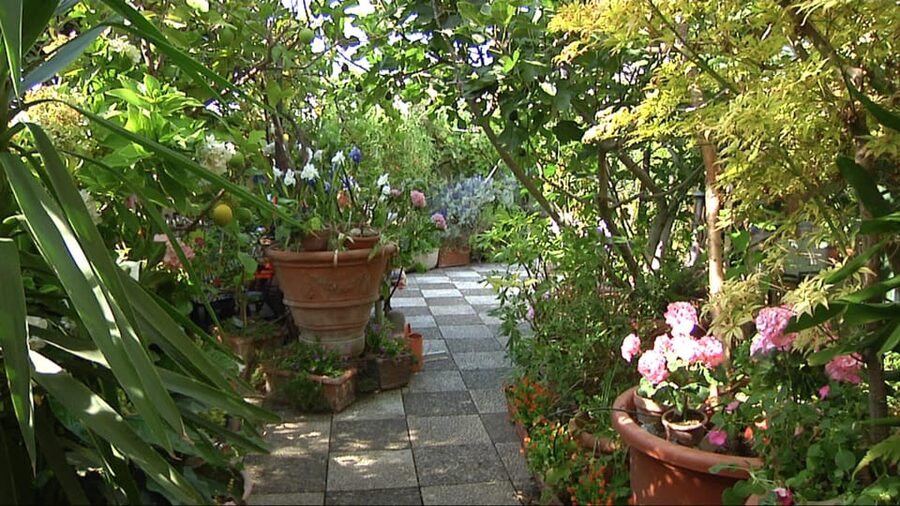
The wine portion is listed as one quarter of a bottle per person, with a soft drink available instead. Homemade limoncello made with lemons from the family terrace provides the final touch. It is not a formal wine tasting, and you should not expect unlimited alcohol. The appeal is the relaxed meal and the chance to try products connected to the household.
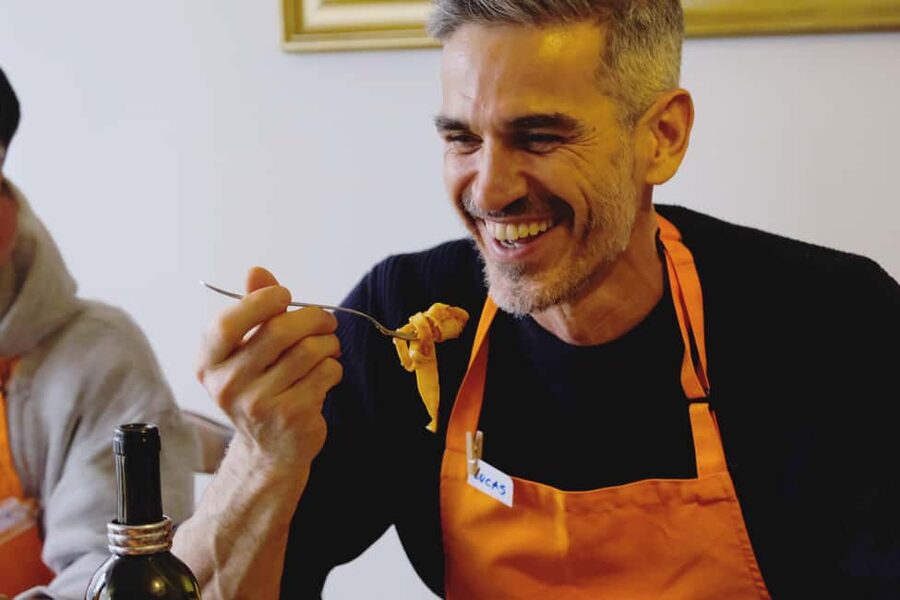
The social side matters here. You eat with people from different countries, and the cooking gives everyone an easy subject to talk about. If you are traveling alone, this is a good way to spend an evening without sitting by yourself at a restaurant. If you are with family, the shared work gives children and older relatives something to do together, though age restrictions apply.
One important value point is portion size. The food is described as plentiful by some participants, but one person found the portions a little small because the meal was so good. I would plan a light snack earlier if you tend to eat a large dinner. The class is primarily a lesson with a meal, not a restaurant feast.
The instructors make the difference
The teaching team is one of the strongest parts of the experience. Bruna is presented as the family matriarch and the source of many of the recipes. When she teaches, the tone is especially personal. Her daughter and grandchildren continue the class when she needs to rest.
Laura is often praised for keeping the room lively while still explaining each recipe carefully. Federico is known for humor and smooth organization, while Marco is described as helpful and professional. Katerina and Paolo also receive praise for patience, energy, and clear instruction.
That variety can be a benefit. You may get a warm family lesson with Bruna, or a more energetic class led by a younger instructor. The personality of the teacher shapes the evening, so do not assume every session will feel exactly the same. The consistent thread is practical help and a welcoming manner.
The class works for beginners, but it also suits cooks with some experience. You are not taking a technical pasta-making course at a professional culinary school. Instead, you are learning reliable home methods, family recipes, and a few techniques you can repeat without special equipment.
Location and timing near Coni Zugna
The easiest way to reach the class is by subway. Take Milan’s blue line to Coni Zugna and use the Coni Zugna to Via Foppa escalator exit. The building is about 20 meters from the subway stop, which is much simpler than navigating the central streets on foot with a cooking class start time approaching.
The Duomo is close enough for the class to fit neatly into a day of sightseeing. You can spend the morning around the cathedral and Galleria, walk through the central shopping district, then head toward the class. An evening start around 6:00 p.m. works particularly well if you want the daytime free for Milan’s major sights.
Allow extra time to find the exact building. After booking, you receive the private address and phone details by email. Since this takes place in a residence, you should rely on those final instructions rather than simply turning up at a general neighborhood address.
Wear comfortable clothes. You will be working with flour and food for three hours, so this is not the moment for delicate clothing. Baby strollers, baby carriages, and non-folding wheelchairs are not permitted. The information also says children under 6 are not allowed, while another section lists children under 7 as unsuitable, so families should confirm the minimum age before booking.
Is $88 a fair price?
At $88 per person, the class is not the cheapest way to eat pasta in Milan. It is a fair price if you value the setting, instruction, drinks, and the chance to make several dishes yourself.
You are paying for three hours, all tools and an apron, the meal, organic wine or a soft drink, water, homemade limoncello, and recipes sent by email. You also get access to a private family home filled with art and antiques. A restaurant meal may cost less, but it will not teach you how to make the pasta or give you the same personal setting.
The recipes add practical value. You can make tagliatelle, ravioli, sauce, and dessert again at home, perhaps with an ordinary rolling pin and basic kitchen tools. The class is especially worthwhile if you enjoy food experiences that continue after the holiday.
The value is weaker if you only want a quick meal or dislike group activities. You should also check the expected class size. The advertised limit is 10, but some sessions have been larger, with one class reaching about 16 people. A larger group may mean more waiting and less one-on-one attention, even when the instructor works hard to include everyone.
Who should book this Milan cooking class?
I would recommend it to couples, families with older children, solo visitors, and friends who want a social evening with a real activity attached. It suits people who like to learn by doing and who would enjoy taking home recipes instead of just photographs.
It is also a good choice for mixed-age groups. An 80-year-old participant had a wonderful time, and a 10-year-old joined one session successfully, though the stated age restrictions mean you should check before booking for children. The work can be adjusted to different skill levels, and the instructors are used to helping beginners.
You may want another type of class if you need strict dietary accommodations, a highly technical professional course, or a guaranteed private lesson. The supplied information does not specify vegetarian, allergy, or gluten-free arrangements, so ask in advance. Other languages are available only by request and generally for private groups of at least 10.
Cancellation is free up to 24 hours before the start, and you can reserve now and pay later. Those terms are useful if your Milan schedule is still shifting, especially when you are fitting the class around museum visits and train plans.
Should you book it?
Book this class if you want to make fresh pasta in a beautiful Milanese home, eat what you prepare, and spend an evening with an instructor who treats the kitchen as a family tradition. The art-filled setting, homemade limoncello, organic wine, and recipes by email give it more character than a basic pasta demonstration.
Before paying, confirm three details: the final class size, whether your session includes gelato or tiramisù, and the minimum age for children. If those points suit your group, $88 buys a substantial three-hour experience with food, instruction, drinks, and a useful skill you can carry into your own kitchen.
FAQ
How long does the Milan pasta class last?
The class lasts three hours. Starting times vary, so you need to check availability for your chosen date.
What dishes do you make?
You make tagliatelle with tomato sauce, ravioli with a butter and sage sauce, and either gelato or tiramisù depending on the session or booking arrangement.
Is the class taught in English?
Yes. The regular lesson is held in English. Other languages may be available by request, usually for private groups, and instructors may be able to help with French, Ukrainian, Russian, Hebrew, or Persian if you have trouble understanding.
Where does the class meet?
The class takes place in an elegant home near the Coni Zugna subway stop in central Milan. The building is about 20 meters from the subway exit, and the Duomo is roughly a 20 to 25-minute walk away.
Are drinks included?
Yes. You receive water, homemade limoncello, and organic wine, listed as one quarter of a bottle per person. A soft drink is available instead of wine.
Can children join the class?
Children under 6 are not allowed according to one section of the activity information, while another section says children under 7 are unsuitable. Confirm the exact age requirement before booking for a child.
Just added in Milan
- Highlights and hidden gems of Milan Bike Tour★ 5.0 · 491 reviews
- Milan Gourmet Tour: A Premium Tasting Experience by Do Eat Better★ 5.0 · 241 reviews
- Private Milan Food Walking Tour of Brera★ 5.0 · 217 reviews
- Da Vinci’s Last Supper and Santa Maria delle Grazie Church Tour★ 4.5 · 218 reviews
- Learn to Cook Italian Recipes with an Italian Chef★ 5.0 · 283 reviews
- Leonardo3 The World of Leonardo: Tickets for the Interactive Exhibition★ 4.0 · 220 reviews
- La Scala Theatre and Museum guided experience★ 4.5 · 664 reviews
- La Scala Theatre and Museum Tour in Milan With Private Guide★ 3.5 · 384 reviews
Pasta, compared.
Florence Pizza or Pasta Class with Gelato Making at a Tuscan Farm
Read our review →
Pasta & Tiramisu Class with Fine Wine by the Vatican
Read our review →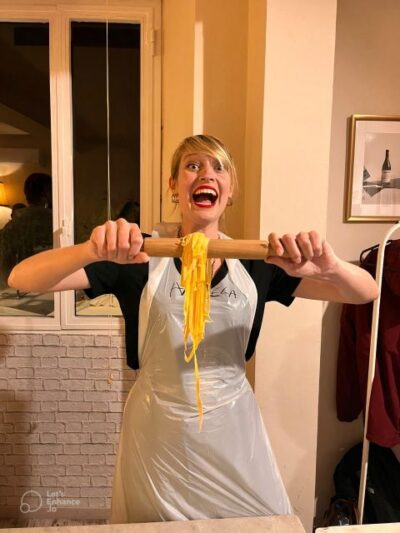
Pasta Making Class with Wine, Limoncello, and Dessert
Read our review →
Fettuccine Pasta Cooking Class in Rome’s City Center
Read our review →
Traditional Pasta with Cocktails Cooking Class
Read our review →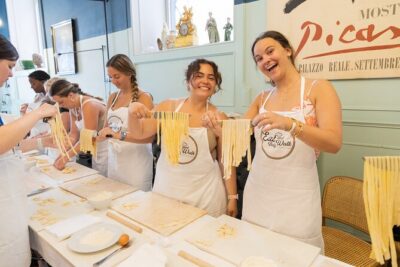
Learn to Make Pasta & Tiramisu with Wine and Limoncello Included
Read our review →Browse the lists this tour appears in