
Reviewed · ACCADEMIA & DAVID TOURS
Small-group Accademia tour with skip-the-line access to David
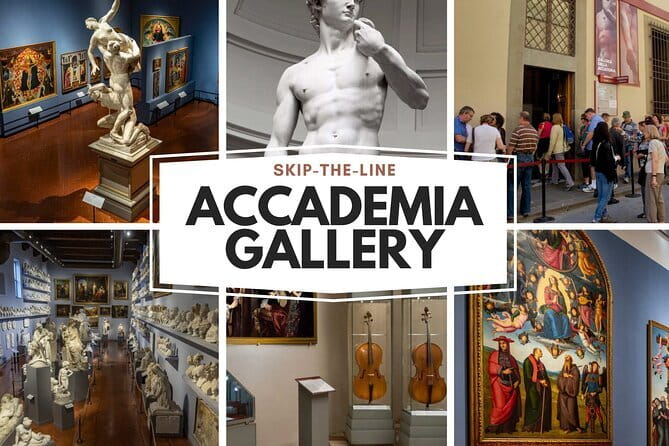
Florence’s Accademia Gallery is small enough to cover in an hour, yet David alone can fill your mind for much longer. This tour gets you past the ordinary entry line and places a guide beside you for Michelangelo’s unfinished figures, the famous statue, paintings, and an unexpected collection of historic instruments.
I like the small-group format, which keeps the visit more personal than a large museum procession. I also like the musical instrument stop, especially the 1690 Stradivarius and Florence’s early piano. The main drawback is time: one hour passes quickly, and the quality of the visit depends heavily on the guide assigned to your group.
Key points to know before booking
- David is the clear centerpiece: You see Michelangelo’s most famous sculpture after building context with his unfinished works.
- Priority entry matters: Lines at the Accademia can be long, so the included fast-track ticket can save valuable Florence sightseeing time.
- The instruments add a welcome surprise: The collection includes a Stradivarius made in 1690 and the first modern piano.
- Groups are intended to stay small: The tour is described as a maximum of nine people, though the booking information also lists a maximum of 12.
- The guide makes the difference: Guides named in praise include Laura, Fabio, Elisabeth, Jannett, Ivano, Guido, Gianna, and Christina Maria.
- You may stay after the tour: Once the guided hour ends, you can continue looking around the museum at your own pace.
Why the Accademia is worth an hour of your Florence day
The Accademia is not Florence’s largest museum. That is part of its appeal. You do not need half a day to make sense of it, and its main works are close enough together for a short guided visit to feel focused rather than rushed from room to room.
The museum’s fame rests on Michelangelo’s David, but stopping only for the statue misses much of what gives the visit meaning. The unfinished sculptures show the artist working toward the human form, while the paintings and religious works add the setting in which David was first understood.
I find a guide especially useful here because many visitors arrive with one question: how did Michelangelo make this? A good guide can shift your attention from the statue’s fame to its details, proportions, pose, and political meaning in Florence. You still see David for yourself, but you gain a way to look.
This is not a broad Florence art tour. It concentrates on one museum and its most important works. If you want the Uffizi, the Duomo, or a walking tour of the city, those are separate experiences. If you want to understand David without spending hours reading labels, this is a sensible choice.
Other sculpture and collections in Florence:
- Florence: Timed Entrance Ticket to Michelangelo’s David
★ 4.6 · 16,983 reviews - Florence: Michelangelo’s David Skip-the-Line Entry Ticket
★ 4.5 · 12,764 reviews - Florence: Michelangelo’s David Priority Ticket & Audio App
★ 4.4 · 6,812 reviews
Entering through Florence’s busy Accademia doorway
The meeting point is outside the Galleria dell’Accademia di Firenze at Via Ricasoli 58/60. The central location makes it practical to fit the tour between other stops in Florence, and public transportation is nearby.
The mobile ticket is useful, but you still need to arrive at the stated meeting point and connect with the guide. Priority entry does not mean that every delay disappears. Museum procedures can still create a wait, and the operator does not promise that the priority gate will always be free of queues.
That said, the fast-track ticket is one of the tour’s strongest practical benefits. On a busy Florence day, an unplanned wait outside the Accademia can eat into lunch, the Duomo, or another timed booking. The tour helps protect your schedule, especially if you choose an early departure.
One particularly useful tip is to book early in the day if possible. A 9:15 a.m. visit allowed one group to get close to David before the museum became much more crowded later in the morning. That early timing is not a guarantee of a quiet gallery, but it improves your odds of seeing the statue without being pressed shoulder to shoulder.
The musical instruments many visitors miss
The first stop is not always the one people expect. The tour includes the Conservatorio Luigi Cherubini collection of musical instruments, an area often skipped by visitors focused only on Michelangelo.
This room gives the museum a different character. You see an original Stradivarius made by Antonio Stradivari in 1690 for the Great Prince, along with what is described as the first modern piano, invented in Florence. These objects connect art, craft, court life, and music in a way that broadens the visit beyond sculpture.
I like this part because it gives you a short break from the familiar David storyline. The instruments also reward a guide who can explain why they matter rather than simply point them out. If this room is open, it can be one of the most memorable details of the tour.
There is an important qualification. Museum rooms can close without advance notice, including the musical instrument room. The provider may alter the route if that happens, and it is not responsible for internal museum changes. Treat the instruments as a valuable bonus, not the one feature on which you base your booking.
Michelangelo’s unfinished figures before David
The tour then turns to Michelangelo’s sculptures and the works connected with David. The unfinished figures are a strong lead-in because they help you notice the sense of bodies emerging from stone.
You do not need an art degree to appreciate them. Their rough, incomplete surfaces invite a different kind of looking than David’s polished finish. A good guide can use these pieces to explain Michelangelo’s approach and prepare you for the final, complete figure.
This is also where the small group helps. With up to nine people advertised, and some departures apparently smaller, it is easier to hear the explanation and ask a question than it would be in a large crowd. The booking information also gives a maximum of 12, so group size is not perfectly consistent in the description. I would plan for a small group, but not assume that every departure will be private.
Several guides received especially warm praise for making these works clear and engaging. Laura was described as lively and informative, while Elisabeth helped connect the fine details of the statues and paintings. Christina Maria was praised for making Michelangelo’s works entertaining as well as understandable. Those comments point to what you should hope for from the experience: not just facts, but a guide who helps you look closely.
Same base, a different kind of day:
- Florence: Skip-The-Line Uffizi Gallery Timed Entry Ticket
★ 4.5 · 27,832 reviews - Tuscany Day Trip from Florence: Siena, San Gimignano, Pisa and Lunch at a Winery
★ 5.0 · 21,634 reviews - The Best tour in Florence: Renaissance & Medici Tales – guided by a STORYTELLER
★ 5.0 · 12,316 reviews - Florence: Leonardo Interactive Museum Entry Ticket
★ 4.5 · 11,763 reviews
Meeting David in the Tribune

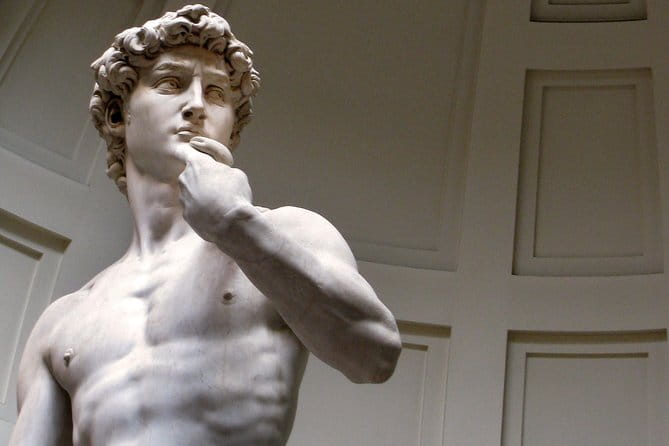
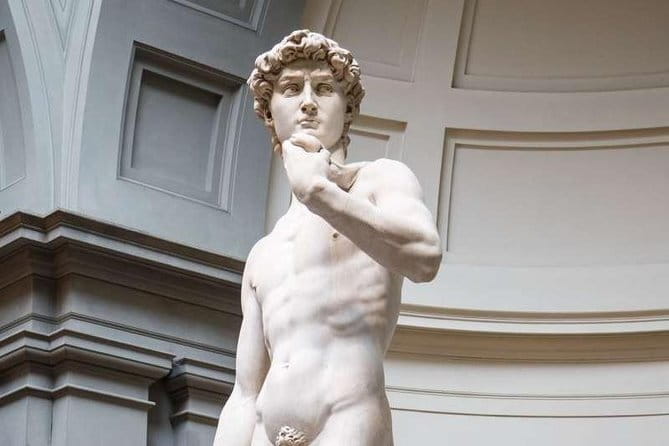
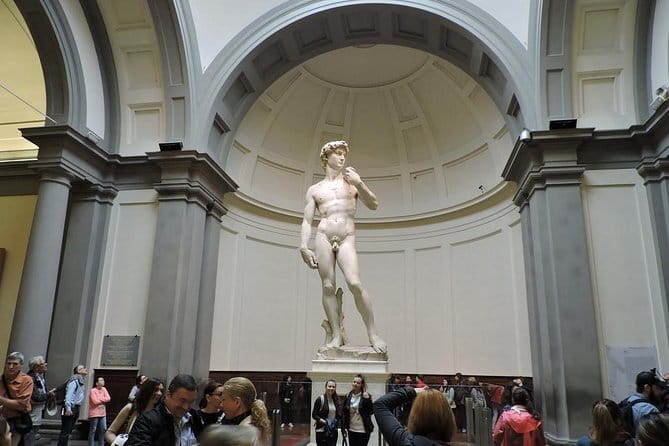
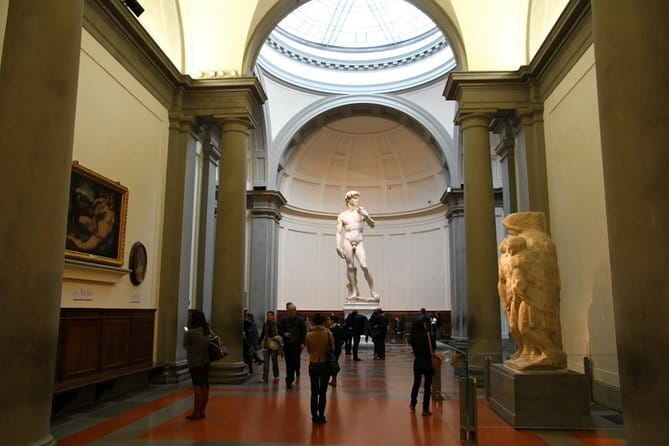
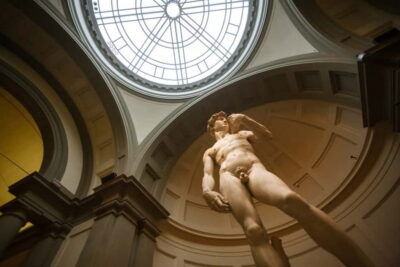
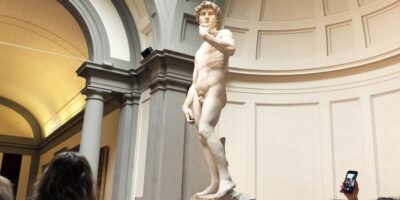
The high point is Michelangelo’s David, the symbol of Florence. The statue is enormous in reputation, but seeing it in person reveals details that photographs flatten. The scale, the carefully worked anatomy, and the concentration in the face all become more powerful when you are standing in the same room.
The guide’s job here is not to drown out the sculpture with a lecture. The best approach gives you enough context to understand the work, then leaves room for you to look. Guides praised for this tour were often noted for explaining details, sharing stories about Michelangelo, and making the material accessible without making it dull.
You should expect the guided section around David to be fairly brief because the entire tour lasts about one hour. That is enough for a focused introduction, not enough for a leisurely study of every room. If you want more time with the statue, the included admission allows you to remain in the museum after the guide finishes.
The later self-guided time is important. You can return to David, revisit the unfinished sculptures, or spend longer with the paintings and instruments if that room is open. I would not rush away when the formal tour ends. Use the guided hour to gain a framework, then enjoy the museum at your own speed.
Paintings, sacred works, and the rest of the gallery
The Accademia is not only a Michelangelo museum. Its collection includes paintings and sacred works displayed throughout the gallery. Bright religious paintings received special praise from one visitor, and they can provide a welcome change of pace after the sculptural focus.
You may find that the paintings receive less time than David and the Michelangelo works. That is natural for a tour designed around the gallery’s most famous object. Still, your guide should point out the major works and help you understand how they fit into Florence’s artistic world.
This is where the tour’s value depends on your priorities. If you want a detailed account of every painting, you will need more time after the guided hour or a different museum program. If you want the main story, clear explanations, and a chance to browse afterward, the format works well.
How much value do you get for $71.38?
At $71.38 per person, this is not the cheapest way to enter the Accademia. You are paying for admission, priority access, and a professional guide rather than admission alone.
The price makes the most sense if you are short on time or visiting Florence during a crowded period. Avoiding a long line can protect a valuable morning, and a good guide can add context that wall labels cannot. Several guides, including Jannett, Gianna, Guido, and Ivano, were singled out for their strong explanations and warm manner.
The value is weaker if you are comfortable exploring independently and already understand Michelangelo’s work. You may prefer to buy entry and spend as long as you wish with the collection. The one-hour limit also means you are paying for a focused introduction, not an exhaustive museum visit.
I would compare the price with your schedule, not just with the cost of a ticket. Losing an hour in line can cost more than the difference between independent entry and this tour, particularly if you have a tightly planned Florence itinerary.
What the guide experience is really like
Most of the feedback points to guides who are friendly, animated, and well prepared. Jannett was praised for giving extra time and care. Laura was described as passionate and fun. Fabio was appreciated for a welcoming manner, and one very small departure became a private tour for a family group.
That last possibility is worth noting, but it should not be expected. The tour is sold as a small group, not a guaranteed private visit. Some departures may have only a few people, while others may approach the stated limit.
There was also a serious negative account describing a guide who did not introduce herself, did not engage the group, and sometimes walked away while speaking. The complaint also raised concern about inappropriate comments and a lack of useful art context. The provider responded that the guide had generally been well received and said it would investigate.
That criticism matters because the guide is central to the product. The included ticket can get you inside, but the main reason to pay this price is interpretation. Most of the available feedback is strongly positive, yet no tour can guarantee that every guide will match your preferred style.
The listening equipment may also affect comfort. One person advised bringing personal earbuds because the provided hard plastic pieces were uncomfortable. If the tour uses audio equipment, your own earbuds could make the hour easier, though the supplied information does not confirm that every departure uses the same setup.
Who should book this Accademia experience?
I would choose this tour for a first visit to Florence, especially if David is high on your list and you want someone to explain what you are seeing. It suits couples, families, and small groups who prefer a focused visit rather than a long museum lecture.
It is also a good fit for anyone with limited time. The one-hour length leaves room for the Duomo, Ponte Vecchio, the Uffizi, or a long Florentine lunch. An early start is the smartest option if your schedule allows it.
Families with older children and teenagers may also find the short format manageable. The guide can keep the visit moving, and the statue provides a clear focal point. People who want a quiet, extended study of art may prefer to enter independently and stay as long as they like.
The tour is offered in English. Hotel pickup and drop-off are not included, so you must make your own way to Via Ricasoli. Most people can participate, and the meeting point is near public transportation.
Should you book it?
Book this tour if you want David plus useful context, priority entry, and a small group without committing half a day to the museum. The musical instruments and unfinished sculptures make the route more interesting than a quick statue-only visit, and you can stay inside after the guided hour.
Skip it if you are confident exploring alone, dislike timed group visits, or want detailed attention to every gallery. At $71.38, the tour earns its price through the saved time and the guide’s interpretation. I would book it for an early morning slot, arrive ready to meet the guide, and keep extra time afterward for the rooms that interest you most.
Free cancellation is available until 24 hours before the start time. Cancellations or changes made later are not refunded or accepted.
FAQ
How long does the Accademia tour last?
The guided tour lasts approximately one hour. Afterward, you can remain in the museum and continue exploring.
Is admission to the Accademia Gallery included?
Yes. The guided experience includes the museum admission ticket and priority entry.
Does the tour include skip-the-line access?
It includes fast-track entry, but the provider notes that queues can still occur at the priority entrance because of museum operations.
Where does the tour begin?
The meeting point is at Galleria dell’Accademia di Firenze, Via Ricasoli 58/60, 50129 Florence, Italy.
Where does the tour end?
The activity ends back at the meeting point, with the option to remain inside the museum afterward.
How large is the group?
The tour is described as a small group with a maximum of nine people. The additional booking information lists a maximum of 12, so the exact size can vary by departure.
Is the tour offered in English?
Yes. English is the stated language for the experience.
Are the musical instruments included on every visit?
The musical instrument collection is part of the planned route, but rooms can close without advance notice. If that room is unavailable, the guide may follow a different itinerary.
Is hotel pickup included?
No. Hotel pickup and drop-off are not included, so you need to reach the Accademia meeting point yourself.
Just added in Florence
- Wine Tasting Experience in Ponte Vecchio: Best Tuscany selection!★ 5.0 · 197 reviews
- Walking Food Tour of Florence with Tastings and Wine★ 5.0 · 518 reviews
- Wine Experience In Chianti Hills from Florence★ 4.5 · 195 reviews
- Florence Sunset Food Tour with Wine & Dine at a Tuscan farmhouse★ 5.0 · 194 reviews
- Uffizi and Accademia Small Group Guided Tour★ 4.5 · 449 reviews
- Val d’Orcia Brunello Wine Tour with Montalcino and Montepulciano★ 4.5 · 359 reviews
- Uffizi Gallery Timed Entry Admission Tickets★ 4.0 · 392 reviews
- Uffizi Gallery Small Group Tour with Guide★ 4.5 · 879 reviews
Accademia & David Tours, compared.
Timed Entrance Ticket to Michelangelo’s David
Read our review →
Michelangelo’s David Skip-the-Line Entry Ticket
Read our review →
Michelangelo’s David Priority Ticket & Audio App
Read our review →
Florence Accademia Gallery Tour with Entrance Ticket Included
Read our review →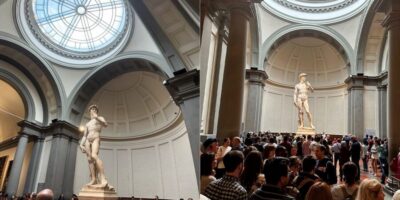
Timed Entry Ticket to Michelangelo’s David & eBook
Read our review →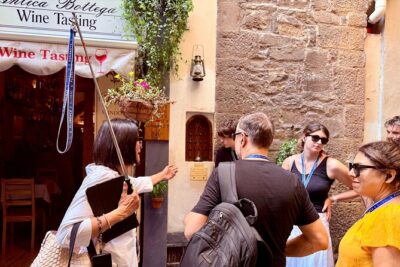
Skip the line: Uffizi and Accademia Small Group Walking Tour
Read our review →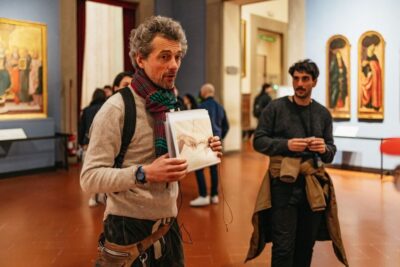
Browse the lists this tour appears in