Reviewed · TOURS IN FLORENCE
The Best tour in Florence: Renaissance & Medici Tales – guided by a STORYTELLER
Florence makes more sense when you follow its stories rather than simply chase its famous buildings. This walking tour connects the Medici family, Renaissance politics, Dante’s neighborhood, and the city’s grand public squares in about 2 hours 15 minutes, finishing beside Ponte Vecchio.
I like the strong storytelling, especially from guides such as Michele, Riccardo, Chiara, Glenda, and Angela, and I like the route’s useful first-day orientation. The main consideration is that the advertised price is only $3.62, while the tour depends on tips, commonly around €10 to €50, and some stops are viewed from outside.
Key points to know before you book
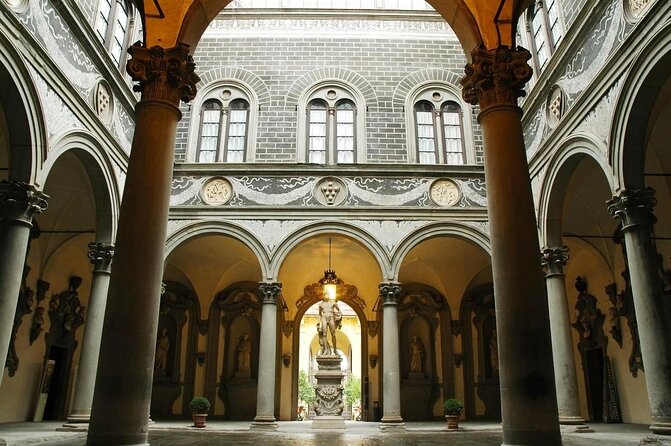
- Medici-focused storytelling: San Lorenzo and Palazzo Medici Riccardi give the tour its central theme.
- A fast Florence orientation: The route links major squares and landmarks without requiring museum entry.
- Several praised guides: Michele, Riccardo, Chiara, Glenda, Angela, Manuel, and others are noted for clear, lively presentations.
- Outdoor sightseeing: Much of the tour takes place in streets and squares, with admission tickets not included.
- Pay-as-you-wish pricing: The low booking price does not tell the whole cost. Bring cash for a tip.
- A practical finish: The walk ends near the Uffizi Galleries and Ponte Vecchio, useful for continuing your day.
Florence history told through Medici power
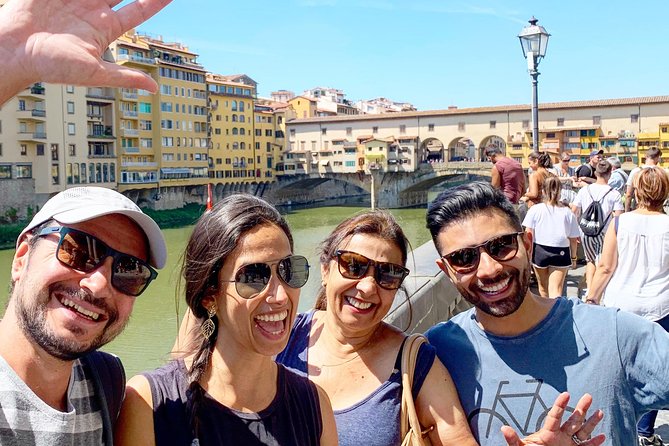
The best part of this tour is its focus. Florence can feel like a dense cluster of churches, palaces, statues, and narrow streets. A good storyteller gives those places a reason to matter.
Here, the Medici family provides the thread. You learn how this powerful Florentine family shaped politics, art, religion, and the city’s public image. The Renaissance is not presented as a pile of dates. Instead, the route ties important buildings to the people who commissioned them, lived in them, or used them to display power.
I especially like this approach for a first visit. You get the basic map of central Florence while hearing why San Lorenzo, the Medici palace, the cathedral area, and Piazza della Signoria belong in the same story.
The guides are the heart of the experience. Michele is repeatedly praised for his oratory, humor, and ability to keep the two hours moving. Riccardo is described as enthusiastic, clear, and strong at explaining where you are in relation to the city. Chiara brings a warm, charming style, while Glenda is noted for her comfortable speaking tone and willingness to give extra information.
Guide quality can vary on any walking tour, but the range of positive comments here points to a clear strength: the experience depends less on a memorized script and more on how well the guide tells the story.
A few more things to do in Florence
- Florence: Duomo Cathedral Guided Tour
★ 3.9 · 5,970 reviews - Uffizi Gallery Small Group Tour with Guide
★ 4.5 · 4,923 reviews - Florence: Accademia Gallery Guided Tour
★ 4.6 · 4,156 reviews
Starting at San Lorenzo, Florence’s Medici doorway
The walk begins at the Basilica di San Lorenzo, where the guide spends about 20 minutes explaining the site. Admission is not included, so the stop is an exterior explanation rather than a guaranteed church visit.
San Lorenzo is a sensible starting point because it introduces the Medici connection immediately. The church and surrounding area help set up the family’s role in Florence, giving you a framework for the rest of the walk.
You should expect the guide to explain what you are looking at and why it matters, not lead you through a full interior tour. If entering the basilica is important to you, plan that separately and check the church’s current admission arrangements.
This first stop also places you near the meeting point at Piazza di San Lorenzo. The area is central and close to public transportation, but check your final meeting instructions carefully. One poor experience involved confusion at check-in and a separate English-speaking line, so arrive with enough time to find the right group.
Palazzo Medici Riccardi and the family behind the city
From San Lorenzo, the route continues to Palazzo Medici Riccardi, with another 20-minute explanation. This is one of the most important stops for understanding why the tour is called Renaissance and Medici Tales.
The palace represents wealth, influence, and carefully managed public image. Your guide uses the building as a way to explain how the Medici family rose from banking power to political control, then helped shape the artistic identity of Florence.
The stop is again focused on the guide’s explanation. The admission ticket is not included, so do not assume you will enter the palace as part of the scheduled walk.
I like the balance here. You get an important Medici site without spending the entire tour inside one building. The tradeoff is that anyone looking for detailed architectural study or interior art will need to add a separate palace visit.
Piazza del Duomo in a quick 20-minute view
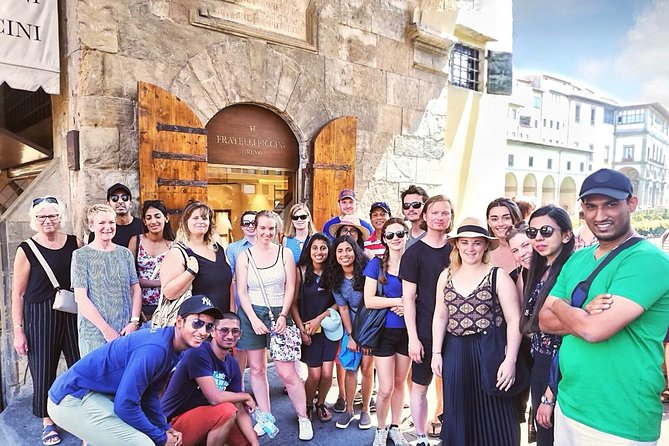
Piazza del Duomo receives about 20 minutes. This is the stop most people associate with Florence, with the cathedral complex forming one of the city’s unmistakable visual centers.
The tour gives you context for the buildings and their role in Florence’s rise as a center of art and civic ambition. It is a good place to connect the city’s religious power with the political and financial influence already introduced at San Lorenzo and Palazzo Medici Riccardi.
Admission is not included. The scheduled time is enough for an explanation and an exterior look, but not enough for a full visit to the cathedral complex, its museums, or any climb.
That limitation matters. If your main goal is to enter the Duomo or spend time studying its art, this walking tour should be an introduction, not a substitute. It works best when you want to understand what you are seeing before returning later with a timed ticket.
Same base, a different kind of day:
- Florence: Skip-The-Line Uffizi Gallery Timed Entry Ticket
★ 4.5 · 27,832 reviews - Tuscany Day Trip from Florence: Siena, San Gimignano, Pisa and Lunch at a Winery
★ 5.0 · 21,634 reviews - Florence: Timed Entrance Ticket to Michelangelo’s David
★ 4.6 · 16,983 reviews - Florence: Michelangelo’s David Skip-the-Line Entry Ticket
★ 4.5 · 12,764 reviews
Dante’s neighborhood adds a literary turn
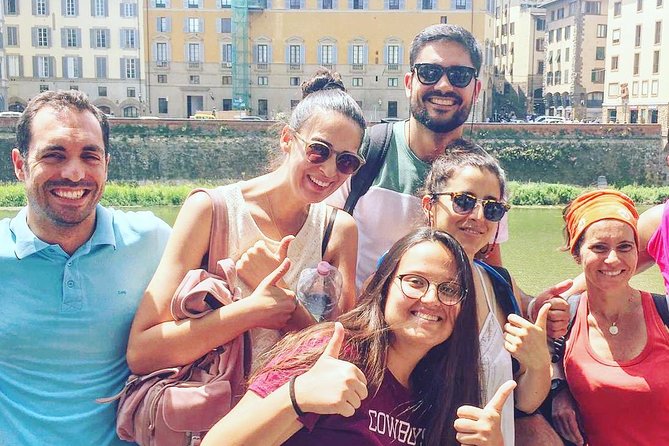
The brief stop at the Museo Casa di Dante and the surrounding Dante neighborhood lasts about five minutes. It is an outdoor explanation, and admission is free according to the tour details.
This is a short pause, but it adds welcome variety. The story moves beyond Medici banking and Renaissance art to Florence’s literary past and Dante’s place in the city’s identity.
Do not expect a museum visit or a long discussion here. The value comes from seeing how the historic center holds several different chapters of Florence’s story in a small area.
For me, this kind of quick connection is useful. It helps you notice that Florence is not only about the cathedral and the Medici. The city’s streets also carry political, artistic, and literary memories side by side.
Piazza della Repubblica and the changing city
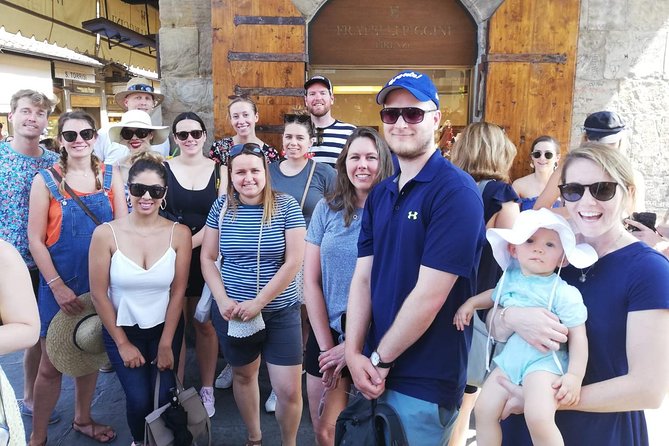
The tour spends about 20 minutes at Piazza della Repubblica. This large square gives the guide room to explain another phase in Florence’s urban story.
The square is a useful contrast to the tighter streets around San Lorenzo and Dante’s neighborhood. It helps you see that Florence changed over time, rather than remaining frozen in the Renaissance.
The stop is mainly about explanation and orientation. Admission is not included, and no museum visit is built into this part of the walk.
This is also a practical place to reset your sense of direction. One of the tour’s strengths is that guides such as Riccardo explain not only what buildings mean, but also where you are in relation to the rest of central Florence. That matters when you are walking without a map and trying to plan the rest of your day.
Piazza della Signoria brings politics into the open
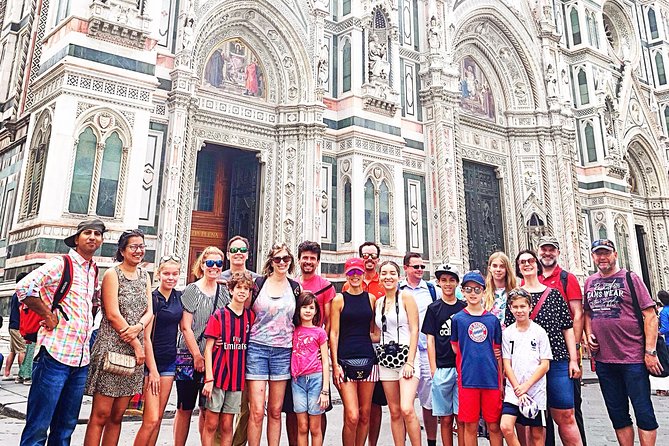
Piazza della Signoria receives another 20-minute presentation. This is where Florence’s public life feels especially clear. The square connects government, sculpture, ceremony, and political conflict.
The guide uses the setting to explain how power was displayed in public. You see how Florence’s rulers and institutions communicated authority through buildings and works of art, not just through private wealth.
Admission is not included, and the tour does not promise entry into the nearby museums or palaces. That is a plus if you want a moving city walk rather than a long indoor visit. It is a drawback if you expect close study of every statue or a guided museum tour.
One useful feature is the guide’s ability to keep the story human. The strongest versions of this tour do not treat the square as a list of names. They explain the rivalries and ambitions that made the setting important.
Ponte Vecchio is the natural finish
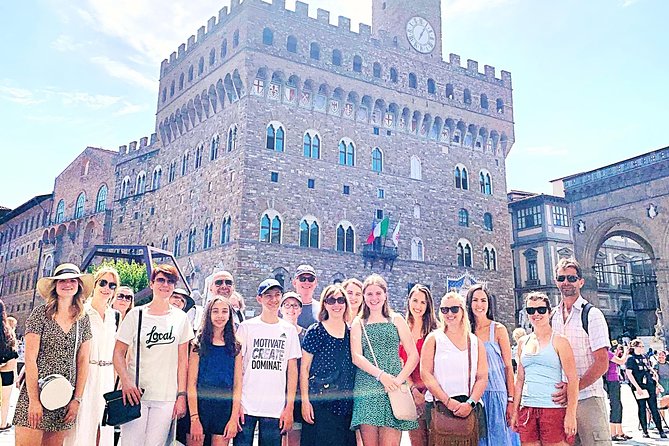
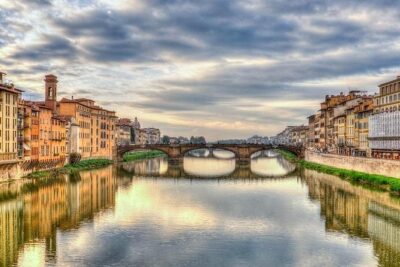
The route ends at the Uffizi Galleries area, with the final look at Ponte Vecchio. The bridge itself is free to view, and the guide spends about 10 minutes explaining it.
This is a satisfying endpoint. After the Medici quarter, cathedral area, civic squares, and Dante neighborhood, you reach the Arno and one of Florence’s most recognizable sights.
The ending is practical, too. You are close to the Uffizi Galleries, although entry to the galleries is not part of this walking tour. You can continue sightseeing from there, arrange a museum visit for another time, or simply enjoy the river view.
The bridge stop is brief. It gives you orientation and context rather than a long pause for shopping or photography. If you want quiet photos, you may need to return later on your own.
What the low price really means
The listed booking price is $3.62 per person, which looks extraordinary for more than two hours of guided sightseeing. The important detail is that this operates as a pay-as-you-wish experience.
The guide’s fee is not fully covered by that small booking amount. Tips are not included, and the stated guidance suggests amounts from €10 to €50. One direct piece of advice: bring cash, with at least €10 per person if you want to support the guide.
That makes the tour potentially excellent value, but not exactly a free activity. Think of the listed price as a reservation cost, then decide what the guide’s time and performance are worth to you.
At the lower end, you receive a city orientation, history, and practical suggestions about what to see, do, and eat. At the higher end, you are still paying less than many traditional private tours, but the final amount depends on your choice.
The group limit is 30 people. That is smaller than a large bus tour, though it is not the same as having a fully private guide. The tour details also refer to private tours and personalized attention, so confirm the format at booking if a private experience is essential to you.
How the storytelling affects the experience
This tour succeeds or fails on delivery. The route itself is strong, but these are mostly outdoor stops that you can locate without a guide. The added value comes from the explanations.
Michele receives especially strong praise for keeping people engaged and making the history entertaining. Riccardo is noted for combining enthusiasm with useful geographical context. Chiara is praised for making the period easy to follow, while Glenda is described as clear, friendly, and comfortable to listen to.
Other named guides include Manuel, Angela, Mikhal, Andrea, and Ricca. The comments about them are not identical, which is normal when several people lead the same route. One person felt there was not enough Medici detail, while another felt the tour leaned almost entirely on Medici influence and did not show enough of Florence’s other sights.
That contrast is important. If you want a broad survey of Florence’s art, food, churches, and museums, this is not the most balanced choice. If you want a story-led walk centered on Florence’s political and Renaissance development, the focus is a strength.
Timing, walking, and practical fit
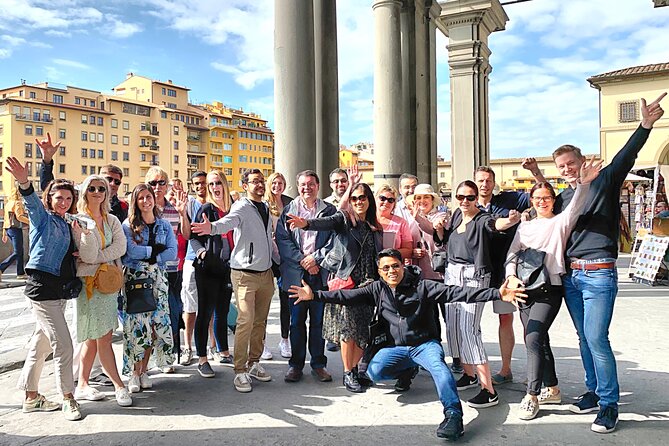
The tour lasts about 2 hours 15 minutes and moves through central Florence on foot. Most people can participate, and service animals are allowed. It is near public transportation, which helps with arrival and departure.
The schedule is packed. San Lorenzo, Palazzo Medici Riccardi, Piazza del Duomo, Piazza della Repubblica, and Piazza della Signoria each receive about 20 minutes, while Dante’s neighborhood and Ponte Vecchio receive shorter explanations.
That pace gives you a lot in one sitting, but it does not leave much time for lingering. Wear comfortable shoes and expect the group to keep moving between stops.
I would place this early in a Florence stay. You get a mental map quickly, plus ideas about what deserves a longer visit. It also suits a short stop in the city, including a cruise visit, though one person had to leave early to return to a ship. Tell your guide promptly if your departure time is tight.
The tour is offered in English. Since it depends on outdoor sightseeing, poor weather can lead to a new date or a full refund if the experience is canceled.
Who should book this Florence walk
I would choose this tour for:
- First-time visitors who want Florence explained before visiting museums.
- Return visitors who enjoy political stories and Medici history.
- Families who prefer lively narration to a formal lecture.
- Solo visitors who want a quick sense of direction.
- Cruise passengers with enough time for a 2-hour-plus city walk.
- Anyone who wants practical suggestions about what to visit, eat, and do next.
I would look elsewhere if you want a museum ticket, guaranteed interior access, a quiet private walk, or a highly detailed study of architecture. The tour gives you context at many sites, but it does not replace a dedicated visit to the Duomo, Palazzo Medici Riccardi, Uffizi Galleries, or other interiors.
Cancellation is free up to 24 hours before the start time. Inside that window, the amount paid is not refunded, and changes are not accepted. The tour also needs a minimum number of participants, so a cancellation for that reason brings a different date or a refund.
Should you book Renaissance and Medici Tales?
Book it if you want a lively first orientation to Florence, especially one built around Medici power, Renaissance politics, and memorable city stories. The strongest guides, including Michele, Riccardo, Chiara, and Glenda, appear to make the route feel personal and easy to follow.
Go in with the right expectations. The $3.62 price is not the full cost because tips are expected, most stops are outdoors, and a group of up to 30 people may not feel private. Bring cash, allow the full 2 hours 15 minutes, and treat the tour as a smart introduction rather than a substitute for Florence’s museums.
FAQ
How long does the Florence Renaissance and Medici tour last?
The tour lasts approximately 2 hours and 15 minutes.
Where does the tour start?
It starts at Florence Free Tour-Tale, at Piazza di San Lorenzo, 50123 Firenze FI, Italy.
Where does the tour end?
It ends at the Uffizi Galleries area, near Ponte Vecchio. The tour finishes by looking at the bridge.
Is the tour offered in English?
Yes. The experience is offered in English.
Are attraction admission tickets included?
No. Admission tickets are not included for stops such as the Basilica di San Lorenzo, Palazzo Medici Riccardi, Piazza del Duomo, Piazza della Repubblica, or Piazza della Signoria. Ponte Vecchio and the outdoor Dante neighborhood stop are listed as free.
Is the tour really free?
The booking price is listed as $3.62 per person, but tips are not included. The stated tip guidance is from €10 to €50, so you should treat it as a pay-as-you-wish tour rather than a completely free activity.
How many people can join the tour?
The maximum group size is 30 people.
Can I cancel for a full refund?
Yes, if you cancel at least 24 hours before the experience starts. Cancellations made less than 24 hours before the start time are not refunded.
What happens if bad weather cancels the tour?
If poor weather causes a cancellation, you are offered a different date or a full refund.
Just added in Florence
- Wine Tasting Experience in Ponte Vecchio: Best Tuscany selection!★ 5.0 · 197 reviews
- Walking Food Tour of Florence with Tastings and Wine★ 5.0 · 518 reviews
- Wine Experience In Chianti Hills from Florence★ 4.5 · 195 reviews
- Florence Sunset Food Tour with Wine & Dine at a Tuscan farmhouse★ 5.0 · 194 reviews
- Uffizi and Accademia Small Group Guided Tour★ 4.5 · 449 reviews
- Val d’Orcia Brunello Wine Tour with Montalcino and Montepulciano★ 4.5 · 359 reviews
- Uffizi Gallery Timed Entry Admission Tickets★ 4.0 · 392 reviews
- Uffizi Gallery Small Group Tour with Guide★ 4.5 · 879 reviews
Tours in Florence, compared.
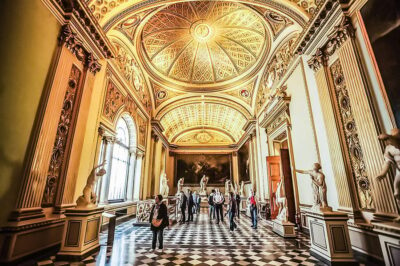
Skip-The-Line Uffizi Gallery Timed Entry Ticket
Read our review →
Tuscany Day Trip from Florence: Siena, San Gimignano, Pisa and Lunch at a Winery
Read our review →
Timed Entrance Ticket to Michelangelo’s David
Read our review →
Michelangelo’s David Skip-the-Line Entry Ticket
Read our review →
The Best Tour in Florence: Renaissance and Medici Tales
Read our review →