
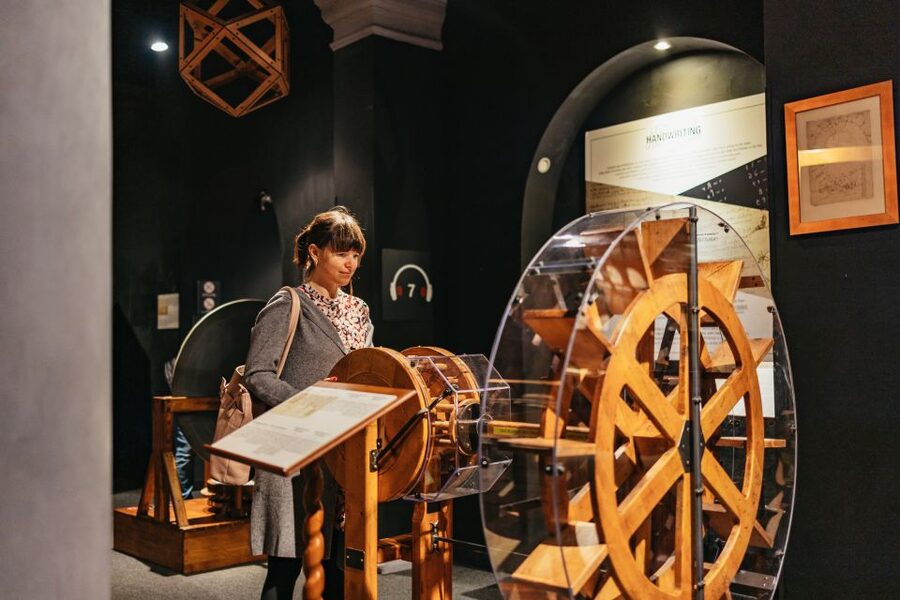
Reviewed · MUSEUMS
Florence: Leonardo Interactive Museum Entry Ticket
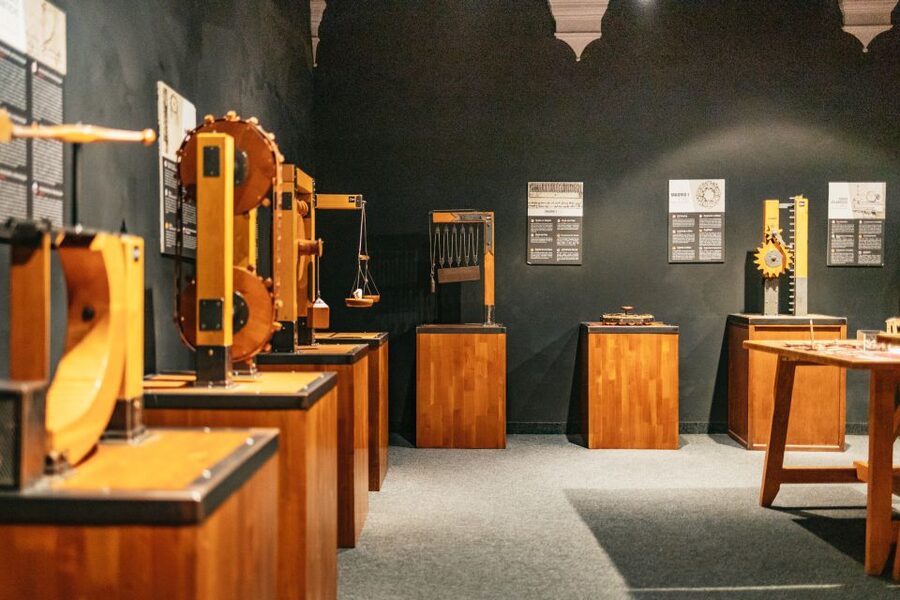
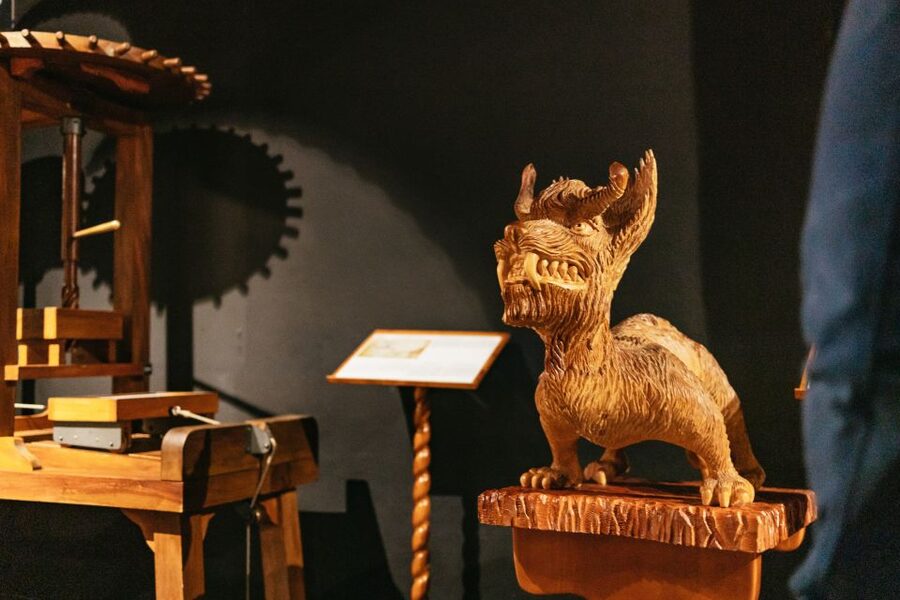
Leonardo’s drawings can feel remote on a museum wall. Here, they become working wooden machines you can turn, pull, test, and study. The tank, catapult, printing press, hydraulic saw, and screw mechanisms show how a sketch from the Renaissance can still make sense in your hands.
I like two things especially: the museum lets you learn by doing, and it works well for families who need a break from please do not touch museums. The central Florence location is another plus. The main drawback is that it is a compact, self-guided museum, so you should not expect a long formal tour or a large collection of original Leonardo artworks.
Key points to know
- Hands-on inventions: Try replicas based on Leonardo’s famous codex drawings, including the tank, catapult, worm screw, and printing press.
- Good family stop: Children and teenagers can test machines and solve puzzles instead of only reading labels.
- Useful location: The entrance is close to both the Duomo and the Accademia Gallery.
- Self-guided visit: Your ticket includes an audio guide accessed on your smartphone, but you need to bring earphones.
- Allow about one hour: Some people move through quickly, while curious children and engineering fans may stay 90 minutes or more.
- Buy the correct ticket: Florence has another museum with a similar name, and the entrance signage can be confusing.
Leonardo’s sketches become machines you can touch
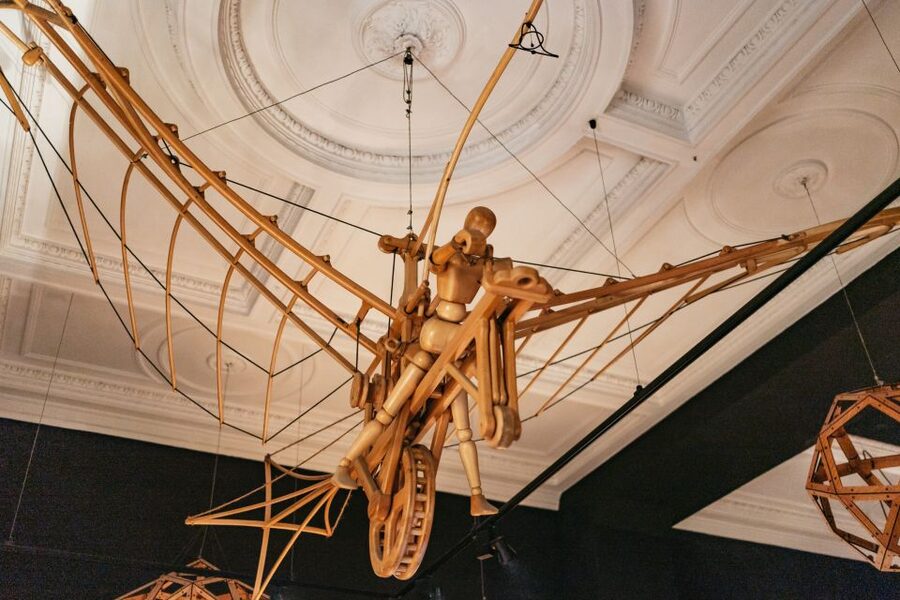
This museum focuses on the practical side of Leonardo da Vinci. You are not simply looking at framed paintings or reading about his life. You are seeing physical models based on ideas recorded in his codexes, then testing how those ideas work.
That difference matters. A drawing of a gear or lifting device may look simple on paper. Once you turn a handle and watch the parts move, the design becomes easier to understand. You see the relationship between force, balance, rotation, and movement rather than trying to picture it from a paragraph.
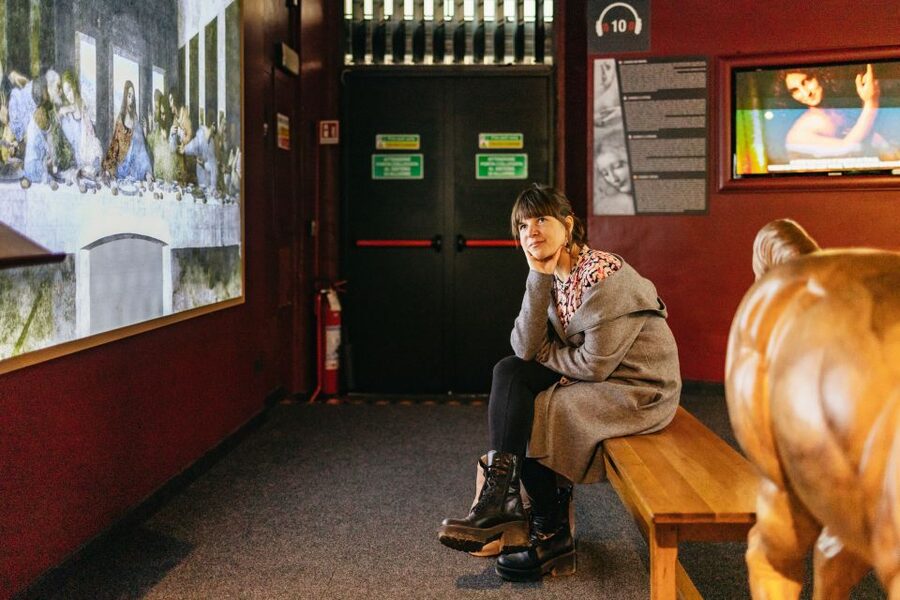
The models cover several parts of Leonardo’s work. Engineering and physics receive plenty of attention, but the museum also touches on anatomy and painting. You get a sense of Leonardo as a curious observer who studied many subjects at once, not simply as the painter of the Mona Lisa.
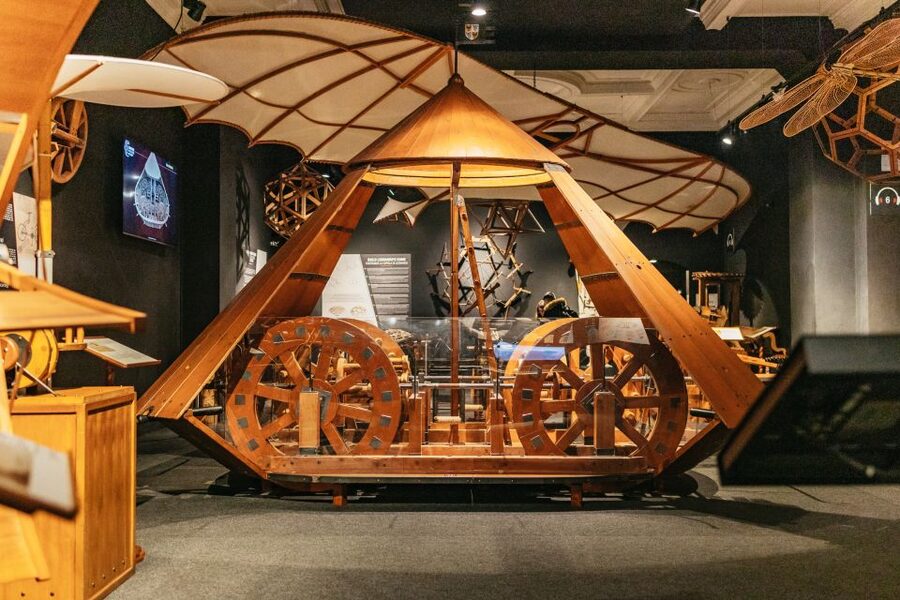
The machines are replicas, not original Renaissance objects. That is important to understand before you book. The value comes from interaction and explanation. If you want to see original masterpieces, this is not the right museum for that purpose.
Other museums and galleries in Florence:
- Florence: Skip-The-Line Uffizi Gallery Timed Entry Ticket
★ 4.5 · 27,832 reviews - Florence Accademia Gallery Tour with Entrance Ticket Included
★ 4.5 · 6,148 reviews - Uffizi Gallery Small Group Tour with Guide
★ 4.5 · 4,923 reviews
The main machines to try inside
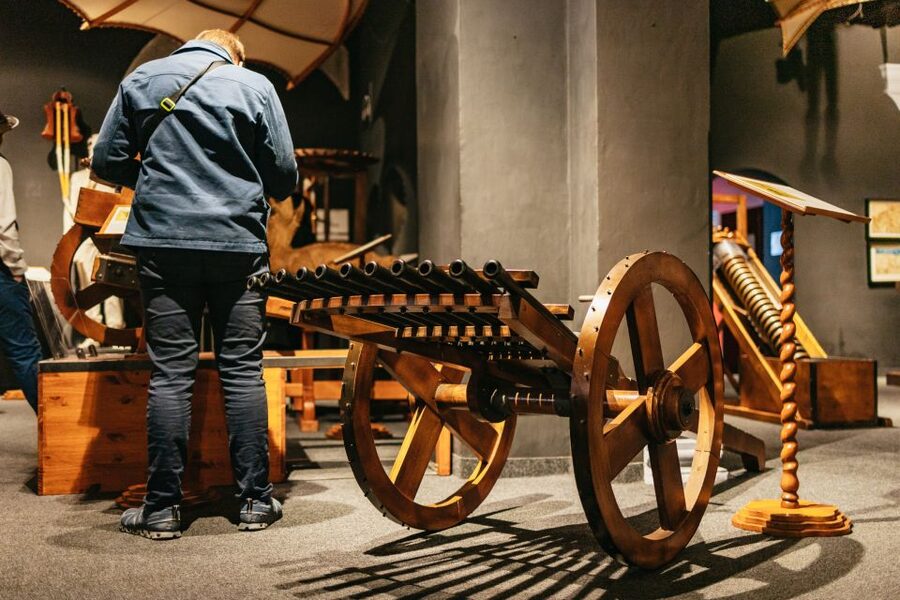
The exact order of your visit is self-paced, so you can move toward the displays that interest you most. The collection includes a range of mechanical ideas taken from Leonardo’s codices.
The tank is one of the eye-catching models. It gives you a physical sense of how Leonardo imagined armored movement and complex machinery. The catapult shows the force stored and released by a simple mechanical system. These are the kinds of displays that make the museum especially effective for children and teenagers.
The worm screw and vertical screw demonstrate how rotation can create movement or lift. These are less instantly dramatic than a tank, but they reward a little patience. You can see why Leonardo’s studies remain useful when you handle the mechanism yourself.
The hydraulic saw connects Leonardo’s interest in water and machinery. The printing press shows how mechanical movement can be used to repeat a practical task. Together, the models make the point that Leonardo was not drawing random inventions. He was examining how systems worked and how one motion could produce another.
Some exhibits are best understood through trial and error. You may need to turn a handle slowly, watch the moving parts, and then try again. That is part of the appeal. The museum asks you to think like a problem solver rather than simply admire an object.
Building bridges, domes, and geometric forms
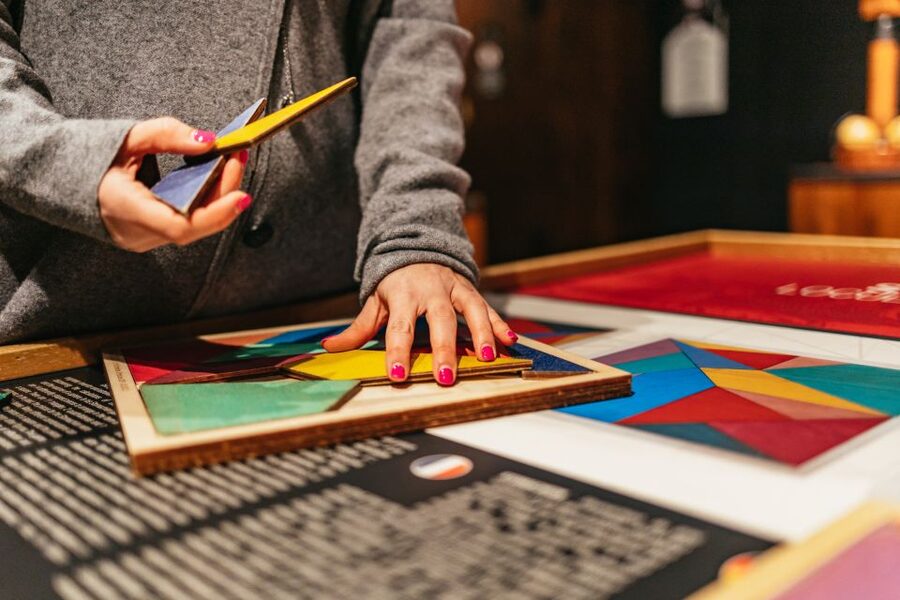
The interactive work is not limited to large machines. You can also take part in activities involving bridges, domes, and polyhedrons.
These hands-on tasks help explain Leonardo’s interest in structure and geometry. Building a bridge lets you see how pieces can support one another without relying on a complicated design. Working with a dome or polyhedron gives you a more direct feel for shape, balance, and construction.
I find these smaller activities valuable because they give children a clear task. A child who might lose interest in a long label can spend several minutes trying to make a structure hold together. Adults can enjoy the same displays, especially if they like engineering, design, or puzzles.
The museum is designed for visitors around age 7 or 8 and older. Younger children may still be attracted to the moving parts, but the explanations and problem-solving tasks are likely to make the most sense to school-age children, teenagers, and adults.
A compact visit near the Duomo and Accademia
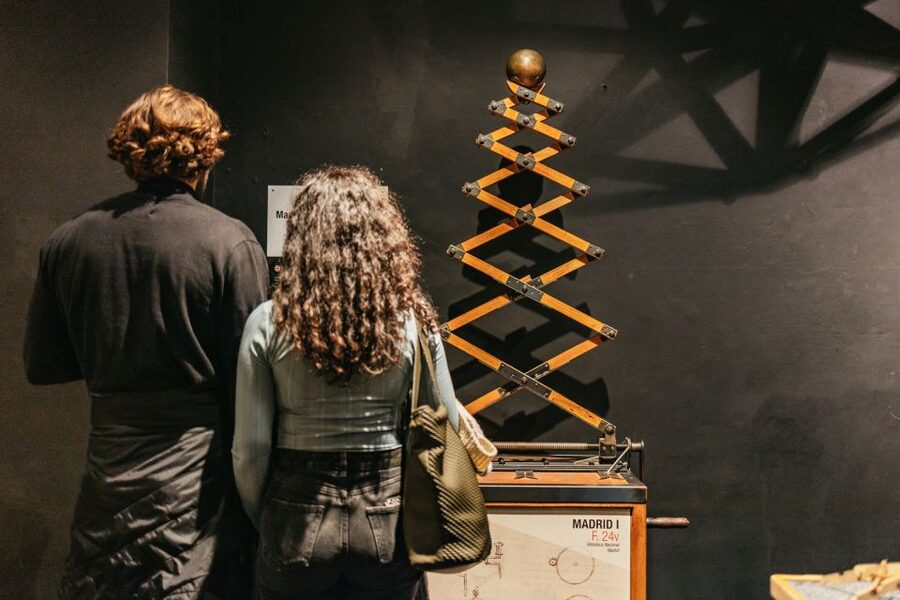
The museum sits in central Florence, only a few steps from the Duomo and the Accademia Gallery. That makes it easy to add to a day of sightseeing without arranging transport or setting aside half a day.
You could visit before seeing Michelangelo’s David at the Accademia, after time around the cathedral, or during a midday break from larger art museums. The one-hour format is useful when you want something focused rather than another major museum that demands several hours.
The entrance can be confusing. If you walk from the Duomo, look for the actual entrance to the Leonardo Interactive Museum and do not follow the red vertical advertisement marked Da Vinci Museum with two arrows pointing right. Those signs do not lead to this museum’s entrance.
There is also another museum in Florence with a very similar name. Check your booking details and address carefully. The original museum described here is the one near the Duomo and Accademia, and the two locations should not be treated as the same place.
A few more things to do in Florence
- Florence: Timed Entrance Ticket to Michelangelo’s David
★ 4.6 · 16,983 reviews - Florence: Michelangelo’s David Skip-the-Line Entry Ticket
★ 4.5 · 12,764 reviews - Florence: Cathedral & Brunelleschi’s Dome Ticket & Audio App
★ 4.4 · 6,973 reviews - Florence: Michelangelo’s David Priority Ticket & Audio App
★ 4.4 · 6,812 reviews
How long should you plan?
The stated duration is about one hour, which is a sensible minimum for a quick visit. You can see the main machines and try several mechanisms in that time.
I would allow 60 to 90 minutes if you are visiting with children or if mechanical design interests you. Young people may take longer than expected because they want to try the same machine more than once. Families have found that teenagers who normally dislike traditional museums can stay busy here for more than an hour.
The museum is self-paced. You are not tied to a group schedule or a guide moving everyone from one station to the next. That gives you freedom, but it also means you must decide how much time to spend at each display.
If you are visiting during a quiet period, you may be able to test the machines without much waiting. Busy periods can change that. The interactive format works best when you have room to approach the models and operate them carefully.
Audio guide, labels, and the lack of a live guide
Your admission includes an audio guide available through your smartphone. It is offered in Italian, English, French, Spanish, German, and Portuguese. Bring your own earphones, since they are not listed as included.
The audio guide gives the visit more structure than a completely unlabeled collection. You can combine listening with testing the machines, which helps explain why a model was designed and what problem it was meant to solve.
There is no live guide included. That can be an advantage if you prefer to move at your own speed, but it may disappoint you if you want to ask detailed questions about Leonardo’s drawings, personal life, or the technical accuracy of every replica.
Free Wi-Fi is included, which supports use of the smartphone audio guide. Still, make sure your phone is charged before arriving. The museum experience depends partly on your ability to use your own device.
Why the interactive format works
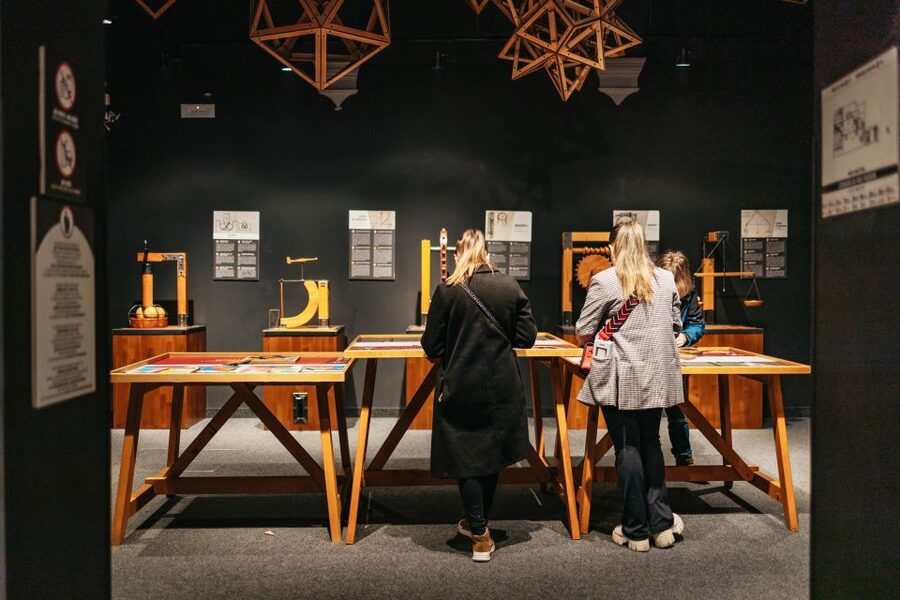
Florence has no shortage of beautiful paintings, sculptures, and historic buildings. After several hours of looking carefully and standing quietly, a museum where you are encouraged to handle machines can feel like a welcome change.
The strongest feature here is the connection between sketch and function. You see an idea from hundreds of years ago, then test the basic principle. That makes Leonardo’s work feel less like distant genius and more like a series of questions: How can a wheel transfer force? How can water power a device? How can a structure support itself?
The exhibits also help you see why Leonardo’s work still matters. Not every design was built or practical in its original form, but the mechanical principles remain understandable. You do not need a background in physics to notice how a screw lifts, how a lever changes force, or how a gear transfers motion.
This is especially useful for tactile learners. If you understand a process better by touching and testing it, the museum offers more than a wall of text. If you prefer original art, quiet galleries, and careful conservation, the hands-on setup may feel less satisfying.
Is $9 good value?
At about $9 per person, this is one of the easier Florence activities to justify. The price is modest compared with major ticketed attractions, and the visit can fill an hour without taking over your whole day.
The value is strongest for families. You are paying for an activity that gives children something to do, while still offering adults a clear lesson in Leonardo’s engineering, physics, anatomy, and painting studies. It is also a practical choice for teenagers who may not want another conventional art museum.
For adults traveling without children, the value depends on your interest. Engineering fans, design students, Renaissance enthusiasts, and anyone curious about how machines work are likely to get more from it than someone seeking original paintings.
Because the museum is small and compact, you should not book it expecting a full-day institution. Think of it as a focused one-hour stop that pairs well with nearby sights. At this price, that is a fair exchange.
Best time and best type of visit
The museum does not require a guide-led itinerary, so you can fit it around your plans. An early visit may feel calmer, particularly if you want children to use the machines without having to wait.
A quiet period also gives you more time to read the explanations and listen to the audio guide. If you arrive with a large family group, agree on a meeting point inside so everyone does not scatter among the displays.
The experience works particularly well for:
- Families with school-age children and teenagers
- Adults who prefer models and demonstrations to formal galleries
- Visitors interested in engineering, mechanics, geometry, or Renaissance ideas
- People looking for a short activity near the Duomo and Accademia
- Anyone who wants a break from Florence’s no-touch museum routine
It may be less suitable if your main goal is to see original Leonardo paintings or artifacts. The focus here is on interactive replicas and practical understanding.
Booking, cancellation, and entrance details
Tickets are sold online, and you select the day and time of your visit. This system is intended to reduce queues at the entrance, so booking ahead is part of the normal process rather than an optional extra.
You can cancel up to 24 hours before the scheduled visit for a full refund. A reserve-now, pay-later option is also available, which can help if your Florence schedule is still changing.
At the entrance, double-check that you are at the correct Leonardo museum. The similar name used by another Florence attraction can cause confusion, and the red street advertisement near the Duomo is specifically not the correct way to find this entrance.
Should you book the Leonardo Interactive Museum?
I would book it if you want a practical, hands-on look at Leonardo’s ideas and have an hour to spare near the Duomo. The machines, puzzles, bridges, and geometric models make the visit more active than a standard museum stop.
Families should give it serious consideration, especially after several days of churches and galleries. Children can test the inventions, teenagers can work through the mechanisms, and adults can appreciate the link between Leonardo’s drawings and later engineering principles.
Skip it if you are looking for original masterpieces, a live expert guide, or a large collection that requires half a day. For most people, the $9 price and central location make it a useful short stop, provided you arrive at the correct entrance and bring earphones for the audio guide.
FAQ
Where is the Leonardo Interactive Museum?
The entrance is in central Florence, a few steps from the Accademia Gallery and the Duomo.
How long does the visit last?
The stated duration is about one hour. You may spend longer if you want to test many of the machines or complete the hands-on activities at a relaxed pace.
What can I do inside the museum?
You can try replica machines based on Leonardo’s codex drawings, including a tank, catapult, worm screw, vertical screw, hydraulic saw, printing press, and other mechanisms.
Can I build anything at the museum?
Yes. Interactive activities include building bridges, domes, and polyhedrons.
Is the museum suitable for children?
The museum is described as suitable for everyone aged 7 or 8 and older. Its hands-on machines and puzzles are particularly useful for children and teenagers who prefer active learning.
Is there a live guide?
No. The ticket includes an audio guide for your smartphone, but not a live guide.
Which languages are available for the audio guide?
The audio guide is available in Italian, English, French, Spanish, German, and Portuguese.
Do I need to bring earphones?
Yes. The audio guide uses your smartphone, and you should bring your own earphones.
Can I cancel my ticket?
You can cancel up to 24 hours in advance for a full refund. A reserve-now, pay-later option is also available.
Just added in Florence
- Wine Tasting Experience in Ponte Vecchio: Best Tuscany selection!★ 5.0 · 197 reviews
- Walking Food Tour of Florence with Tastings and Wine★ 5.0 · 518 reviews
- Wine Experience In Chianti Hills from Florence★ 4.5 · 195 reviews
- Florence Sunset Food Tour with Wine & Dine at a Tuscan farmhouse★ 5.0 · 194 reviews
- Uffizi and Accademia Small Group Guided Tour★ 4.5 · 449 reviews
- Val d’Orcia Brunello Wine Tour with Montalcino and Montepulciano★ 4.5 · 359 reviews
- Uffizi Gallery Timed Entry Admission Tickets★ 4.0 · 392 reviews
- Uffizi Gallery Small Group Tour with Guide★ 4.5 · 879 reviews
Museums, compared.

Vatican: Museums & Sistine Chapel Entrance Ticket
Read our review →
Vatican Museums & Sistine Chapel Tour with Optional Basilica
Read our review →
Vatican Museums, Sistine Chapel & St Peter’s Basilica Guided Tour
Read our review →
Skip-The-Line Uffizi Gallery Timed Entry Ticket
Read our review →
Vatican Museums & Sistine Chapel Skip-the-Line Entry Ticket
Read our review →Browse the lists this tour appears in