
Reviewed · WINE TOURS
Rome: Jewish Ghetto & Campo de Fiori by Night Food Wine Tour
Rome’s best food tours do more than feed you. They show you how the city’s history appears on a plate, and this four-hour evening walk does that especially well. Starting at the Turtle Fountain in Piazza Mattei, you move through the Jewish Ghetto, Campo de’ Fiori, and Piazza Navona while stopping for food, wine, and local stories.
I like the seven tasting stops, which turn the tour into a progressive dinner rather than a quick round of samples. I also like the way the route links food with places such as Pompey Theatre, the Theatre of Marcellus, and the Portico of Octavia. The main drawback is dietary: vegetarian choices are available, but the tour cannot accommodate vegan, gluten-free, or dairy-free diets, and it is not a kosher food tour.
Key points to know before booking
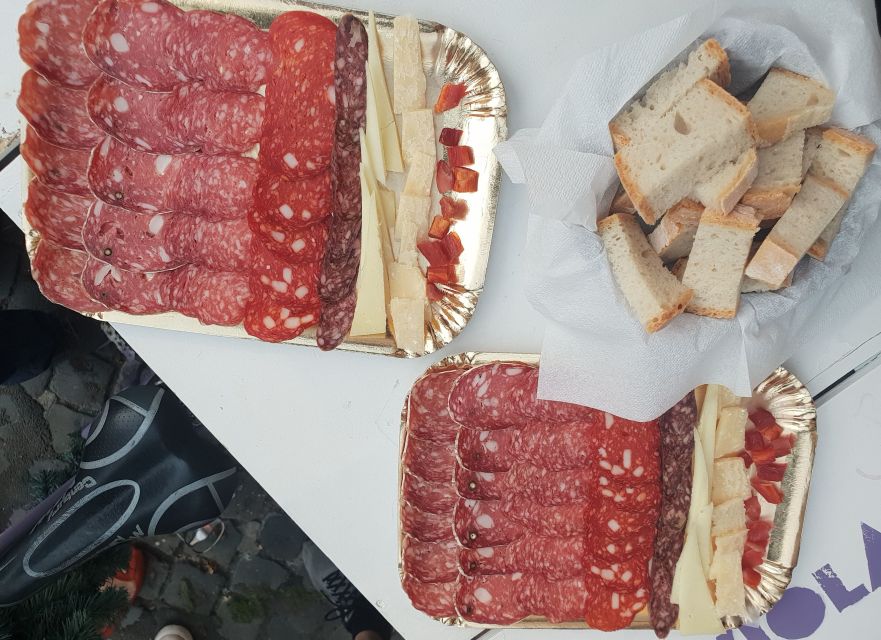
- Seven food stops: Expect up to 15 samples, including pasta, pastries, Roman specialties, dessert, and drinks.
- A history walk with dinner attached: The route covers the Jewish Ghetto, Campo de’ Fiori, Piazza Navona, and ancient Roman remains.
- Small-group format: Groups are limited to 14 people, so you can usually hear the guide and speak with fellow diners.
- A generous amount of food: This is not a nibble-only outing. Several people found it closer to a full progressive dinner.
- Strong local guiding: Guides including Fabrizia, Marco, Maria, Andrea, and Julia have been praised for combining food knowledge with stories about Rome.
- Bring walking shoes and an appetite: The tour operates in rain or shine and includes several hours on foot.
Starting at the Turtle Fountain in the Jewish Ghetto
The meeting point is Piazza Mattei, beside Rome’s charming Turtle Fountain. This small square is a good beginning because it gets you away from the main traffic almost at once and places you in the historic Jewish Ghetto.
The first part of the evening focuses on the neighborhood’s Jewish Roman traditions, its streets, and its long connection to the city. The tour is not a kosher food tour, so you should not book it expecting a strictly kosher meal. Instead, the food and the history are presented together, giving you a wider look at how Roman and Jewish culinary traditions have met over time.
This is one of the tour’s strongest features. You are not simply told where to eat. You learn why certain foods matter in this part of Rome and how recipes have passed through families and local businesses. Guides such as Fabrizia, Andrea, and Matteo have been praised for making the history clear without turning the walk into a dry lecture.
The small group helps here. With a maximum of 14 people, the guide can answer questions and keep the group together in narrow streets and busy squares. It is still a walking tour, not a private outing, but it has a more personal feel than a large group of 30 or 40.
More Wine Tours in Rome
- Rome: Tuscany & Montepulciano Day Trip with Lunch & Wine Tasting
★ 4.5 · 5,232 reviews - Rome Food Tour: Unlimited Tastings with Fine Wine & Barolo
★ 5.0 · 3,365 reviews - Rome: Food Tour with Unlimited Food and Barolo Wine
★ 4.8 · 1,883 reviews
Ancient streets, fountains, and Roman stories
The route connects several parts of central Rome that are easy to visit separately but more interesting when tied together. You pass grand Baroque fountains and statues, then move toward places linked to ancient and medieval Rome.
One important stop is Pompey Theatre, associated with the assassination of Julius Caesar. You do not need to be an ancient-history expert to appreciate the setting. Rome often places a modern restaurant, apartment, or street over layers of history, and the guide helps you notice what is beneath the ordinary city scene.
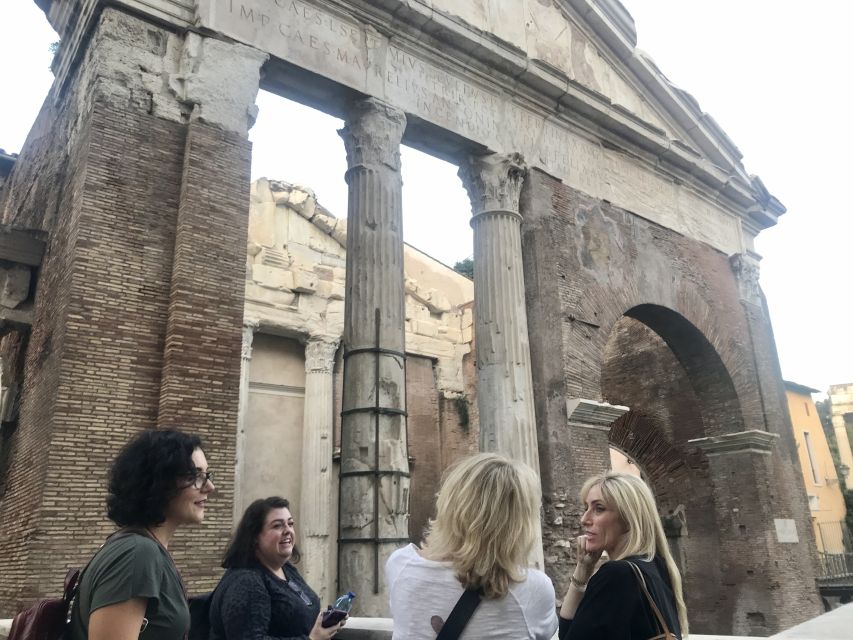
The walk also passes the Theatre of Marcellus, the Temple of Apollo, and the Portico of Octavia. These are not presented as isolated archaeological stops with long formal explanations. Instead, they appear as part of the evening route, giving you short pauses between food tastings and a better sense of how old Rome is woven into daily life.
I like this balance. You get enough context to understand where you are, but the evening keeps moving toward the next plate. Several guides have been praised for maintaining a good pace without rushing people through the food or the stories.
What you eat at the seven stops
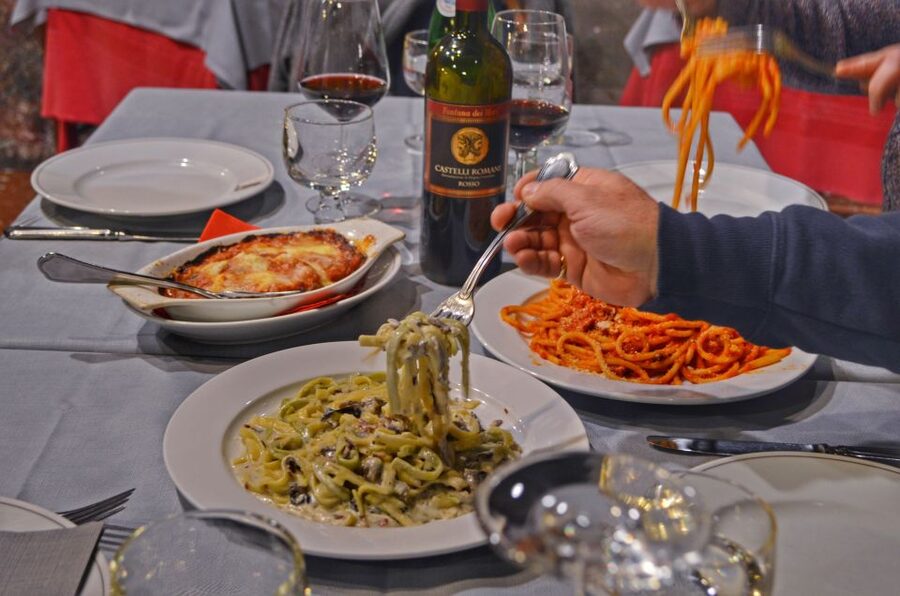
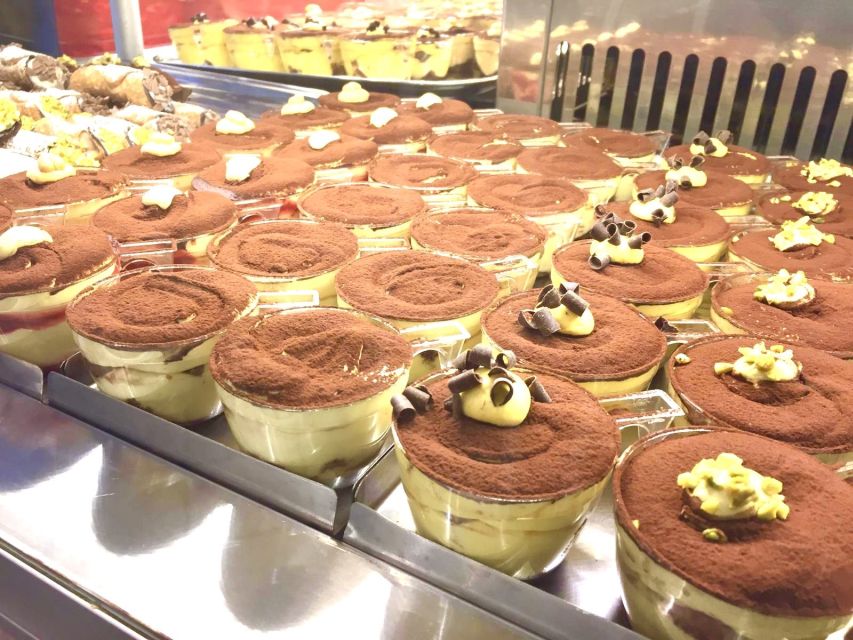
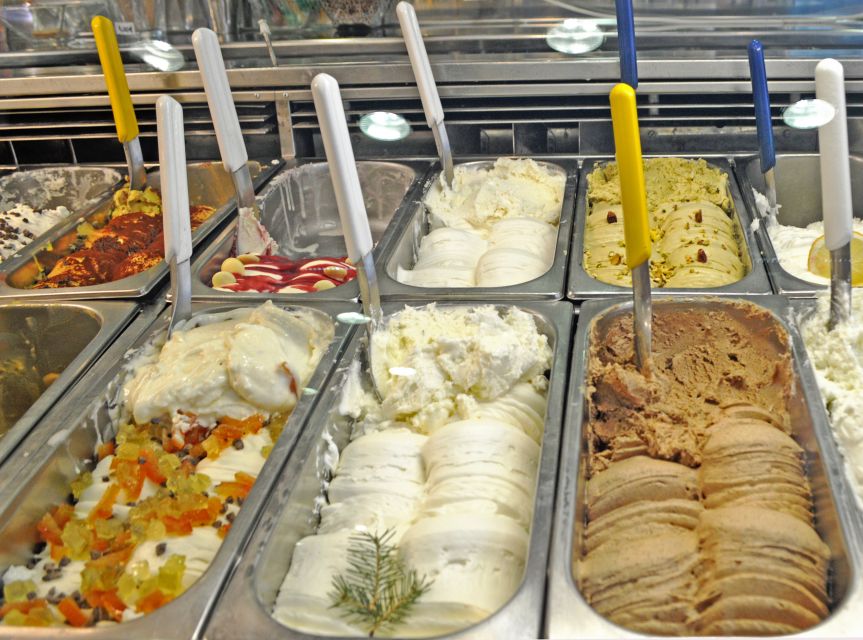
The exact dishes can vary, but the format is clear: you visit up to seven restaurants, delicatessens, and other food venues, with as many as 15 samples. Tastings may include Roman appetizers, fried specialties, homemade pasta, pastries, tiramisu, gelato, and espresso, along with wine, beer, and soft drinks.
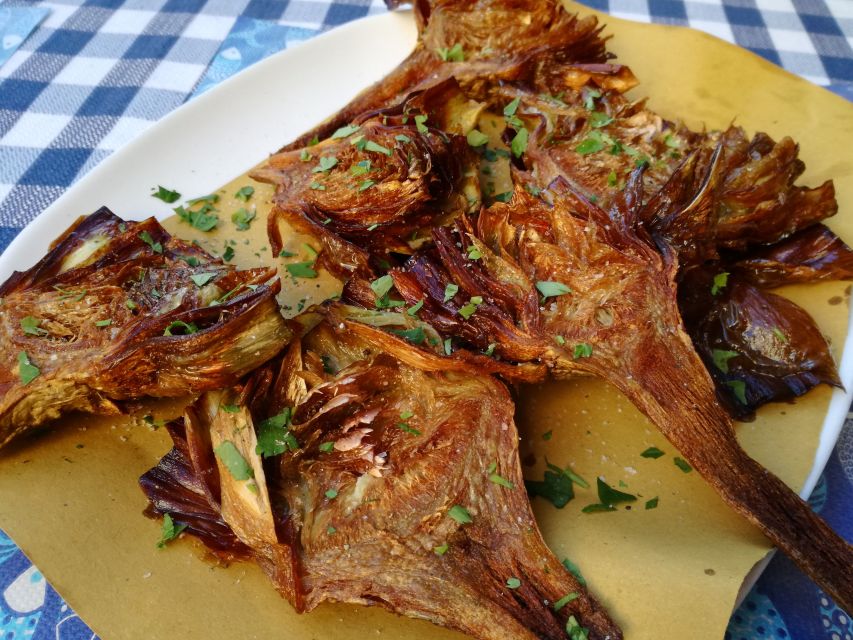
Past food examples include fried artichokes, Jewish Roman appetizers, several pasta dishes, tiramisu, and gelato. You might also try pizza, fresh vegetables, or other classic Roman preparations. The point is variety. Instead of sitting down to one large plate of pasta, you gradually build a meal across the city.
The first tastings are generally spread out as you walk. Later stops become more substantial, including sit-down food. This is why the tour works best when you arrive hungry but not uncomfortable. You do not need to skip every meal beforehand, but a large late lunch would make the final courses harder to enjoy.
Several people found the quantity surprisingly generous. The experience is best understood as a progressive dinner: small bites at the start, then a proper meal, then sweets and coffee. You should not plan a full restaurant dinner afterward.
The food also has a useful practical benefit. Your guide can introduce you to places you might not find on your own, and you can return later in your visit if something especially appeals to you. One food-focused evening can help shape the rest of your Rome dining plans.
Campo de’ Fiori after dark
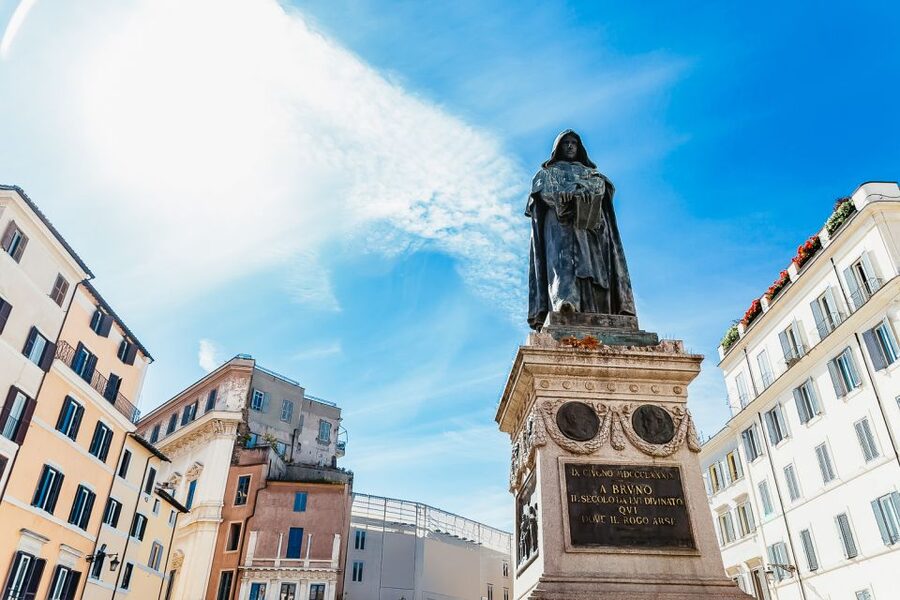
Campo de’ Fiori is one of the route’s main landmarks. By day, the square is associated with its market. By night, it takes on a different character, with restaurants, bars, and people moving through the historic center.
The tour uses Campo de’ Fiori as more than a photo stop. You learn about its medieval market role and see how the square has changed from a trading place into one of Rome’s better-known evening meeting points. The contrast between daytime market life and nighttime dining makes the area worth seeing at both hours if your schedule allows.
This part of the route can feel busier than the Jewish Ghetto, especially around restaurant streets. Stay close to your guide and expect some standing while the group gathers for food. Comfortable shoes matter more than fashionable ones here. You are walking for four hours, with regular pauses rather than one long seated meal.
A few people have enjoyed the tour on their first night in Rome because it gives them a quick orientation to several central neighborhoods. I agree with that advice. You see places you may want to revisit, learn some food terms, and get a better idea of how close several major sights are to one another.
Other cellars and estates near Rome:
- Pasta Making & Wine Tasting with Dinner in Frascati from Rome
★ 5.0 · 1,326 reviews - Rome: E-Bike Night Tour with Food and Wine Tasting
★ 4.9 · 1,131 reviews - Rome: Trastevere Guided Food and Wine Tour with 20+ Tastings
★ 4.9 · 1,022 reviews - Rome: Pasta Making with Wine Tasting and Dinner in Frascati
★ 4.9 · 979 reviews
Piazza Navona and the Fountain of the Four Rivers
From Campo de’ Fiori, the route continues to Piazza Navona. The square occupies the site of the Stadium of Domitian and later became a city market. Today, its long open shape and Baroque buildings make it one of Rome’s most memorable public spaces.
The main artistic focus is Bernini’s Fountain of the Four Rivers. This is a useful place for the guide to explain how Rome’s fountains, churches, and palaces were designed to impress. You get the architecture and the food in the same evening, without needing to plan a separate sightseeing walk.
Piazza Navona can be crowded, but an evening visit brings a different mood from a daytime tour. The statues and fountains are especially effective after dark, when the square’s lighting draws attention to its shapes and stonework.
Do not expect an uninterrupted sightseeing lecture here. The tour’s main purpose is food and culture, so the guide’s explanation is likely to be concise and connected to the route. That suits most people, especially after several tastings. If you want a detailed art-history tour of every church and fountain, book a separate specialist walk.
The guides make the difference
The experience depends heavily on the individual guide, and the named guides have received especially warm praise. Marco has been described as engaging, warm, and good at answering unexpected questions. Fabrizia has been praised for her history of the Jewish Ghetto and Rome, as well as her ability to keep the group going in heavy rain.
Other guides, including Andrea, Maria, Julia, Matteo, Fabrizio, Isabel, and Giulia, have been noted for clear explanations, friendly conversation, and a good pace. The exact guide is not guaranteed, but the pattern is encouraging: the strongest part of the experience is not only the food list. It is the way the guide connects each bite to a neighborhood, tradition, or historical detail.
One useful example comes from a group that arrived late because of street closures during a bike race. The guide kept in contact and arranged for them to join at a later stop. That kind of flexibility is valuable in Rome, where processions, races, demonstrations, and road closures can affect a walking route.
The tour also continues in bad weather. Some guides have kept the evening going under bridges and umbrellas during heavy rain. Bring a light rain layer and wear shoes with good grip. Rain will not automatically cancel the outing.
Price, group size, and what the $105 includes
At $105 per person, this is not a cheap snack walk, but the value is reasonable if you use the food and drinks fully. You receive up to 15 samples, wine, beer, and soft drinks, plus four hours of guiding and sightseeing. With seven stops and several sit-down courses, the amount of food can approach a full dinner.
The price makes less sense if you eat very little, avoid alcohol, or have major dietary restrictions. It also is not the best choice if you want a short introduction lasting an hour or two. Four hours is a significant block of an evening.
The group limit of 14 is another part of the value. You are still sharing the route with others, but the guide can usually communicate with the whole group. The format is well suited to solo visitors, couples, families with older children, and people who enjoy talking over food.
Transportation is not included. That is not much of a problem because the tour is designed as a central walking route, but you need to arrange your own way to Piazza Mattei and your own return afterward. Check the starting time when booking, since departure times can vary.
Free cancellation is available up to 24 hours before the tour, and you can reserve and pay later. Those policies help if your Rome plans are still shifting.
Who should book this evening walk
I would choose this tour if you want food, history, and neighborhood orientation in one outing. It suits first-time visitors who want to get their bearings, as well as repeat visitors who have seen the Colosseum and Vatican but have not spent much time in the Jewish Ghetto or around Campo de’ Fiori.
It is also a good pick for people who are nervous about choosing restaurants in Rome. You get several introductions in one evening, and you can return to the places you like best.
Families can enjoy it, though the four-hour length and steady eating schedule may be tiring for very young children. Teenagers have enjoyed the combination of food, walking, and stories, but everyone should be comfortable walking for several hours.
You should skip it if you need vegan, gluten-free, or dairy-free food. Vegetarian choices are available, but the tour cannot meet those other dietary needs. It is also not suitable for wheelchair users, and anyone who dislikes group dining or evening walking may prefer a private restaurant experience.
Should you book it?
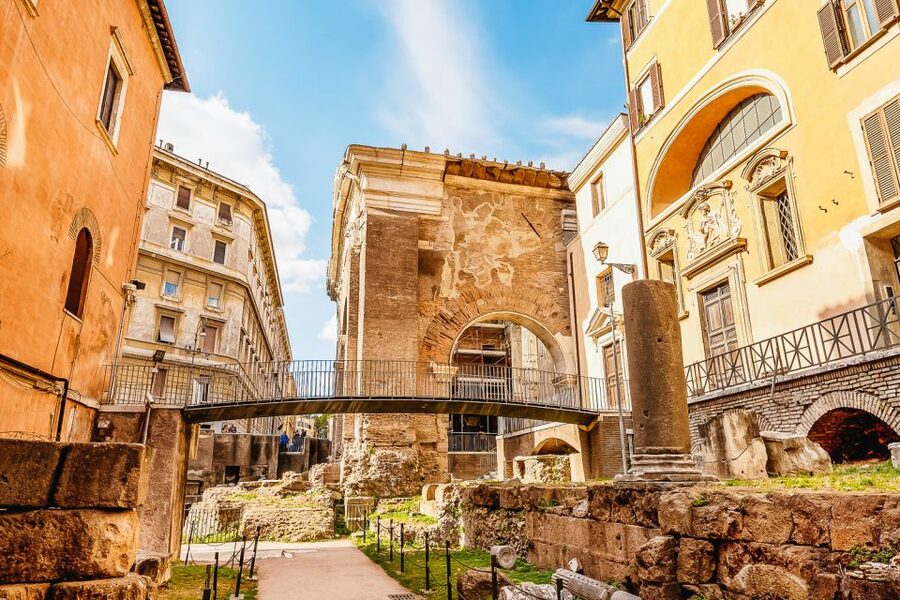
Book this Rome food tour if you want a substantial evening, not just a handful of tastings. The route gives you seven food stops, ancient and Baroque sights, Jewish Roman history, and enough drinks and dishes to replace dinner for many people.
I especially like it for a first or second night in Rome. You get practical neighborhood knowledge, a sense of the city after dark, and a list of foods and restaurants worth revisiting. Just arrive hungry, wear walking shoes, check the dietary limits carefully, and leave room in your schedule for four hours of eating at a Roman pace.
FAQ
Where does the Rome food and wine tour meet?
Meet your English-speaking guide at Piazza Mattei, beside the Turtle Fountain in the Jewish Ghetto.
How long does the tour last?
The walking food tour lasts four hours. Starting times vary, so check availability when booking.
How many food stops are included?
The tour visits seven different eateries, including restaurants, delicatessens, and other food venues. You may receive up to 15 food samples.
What drinks are included?
Wine, beer, and soft drinks are included during the tour.
Is this a kosher food tour?
No. The tour explores Rome’s Jewish Ghetto and includes Jewish Roman food traditions, but it is not a kosher food tour.
Are vegetarian, vegan, or gluten-free options available?
Vegetarian options are available. The tour does not accommodate vegan, gluten-free, or dairy-free diets.
What happens if it rains?
The tour operates rain or shine. Bring suitable clothing and comfortable shoes because the route remains a walking tour in wet weather.
How large is the group?
Groups can include up to 14 people, except by special arrangement.
More food to try in Rome
- Rome Street Food Tour with Local Guide
★ 5.0 · 2,361 reviews - Rome: Award Winning Trastevere Group Food Tour with Wine
★ 5.0 · 2,273 reviews - Rome: Guided Food Tour in Trastevere
★ 4.8 · 2,266 reviews - Rome:Appian Way E-bike Tour with Catacombs, Aqueducts & Food
★ 4.9 · 1,210 reviews
More eating and drinking in Rome
- Winner 2025 Rome Twilight Trastevere Food Tour by Eating Europe
★ 5.0 · 5,157 reviews - Rome: Trastevere or Jewish Quarter Street Food Tour
★ 4.8 · 3,839 reviews - Rome: Trastevere Food tour with Free-Flowing Fine Wine
★ 5.0 · 2,853 reviews - Rome: Trastevere & Campo de Fiori Street Food Walking Tour
★ 4.9 · 2,768 reviews
Just added in Rome
- Civitavecchia Private Transfer: From the Port to Rome Airport★ 5.0 · 309 reviews
- Civitavecchia Shore Excursion: Best of Rome Private Tour★ 5.0 · 247 reviews
- Civitavecchia Private Transfer from ship to FCO airport or Rome★ 5.0 · 245 reviews
- Food Tasty and History Tour in Civitavecchia★ 5.0 · 256 reviews
- Palatine Hill and Roman Forum Tour with Fast-Track Entrance★ 4.2 · 417 reviews
- Tivoli: Villa D’Este & Villa Adriana Pass & App Audioguide★ 4.4 · 364 reviews
- Tivoli: Villa D’Este Entry Ticket and App Audio Guide★ 4.3 · 191 reviews
- Vatican Museums & Sistine Chapel Skip-the-Line Guided Tour★ 4.6 · 254 reviews
Wine Tours, compared.
Tuscany Day Trip from Florence: Siena, San Gimignano, Pisa and Lunch at a Winery
Read our review →
Tuscany & Montepulciano Day Trip with Lunch & Wine Tasting
Read our review →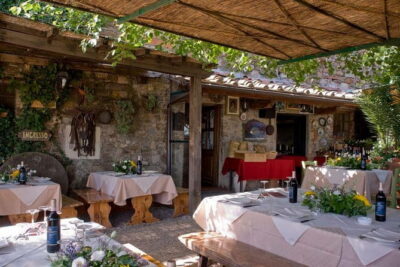
SMALL-GROUP Wine Safaris: Tuscan Wine Tasting Tours from Florence
Read our review →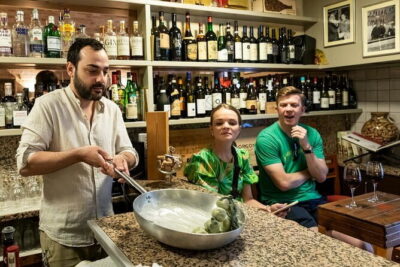
Winner 2025 Florence Sunset Food & Wine Tour by Eating Europe
Read our review →
Siena, San Gimignano, Pisa & Lunch at Winery
Read our review →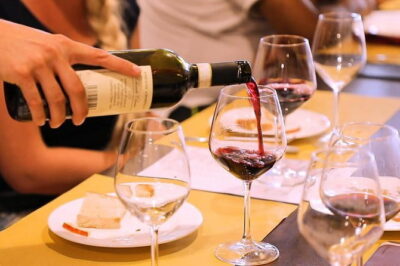
San Gimignano, Siena, Monteriggioni, Chianti Day Trip with Lunch & Wine Tasting
Read our review →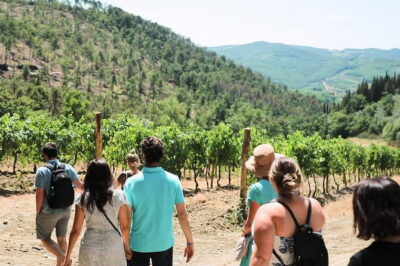
Browse the lists this tour appears in