
Reviewed · TOURS IN ROME
Rome: 2-Hour Gladiator School
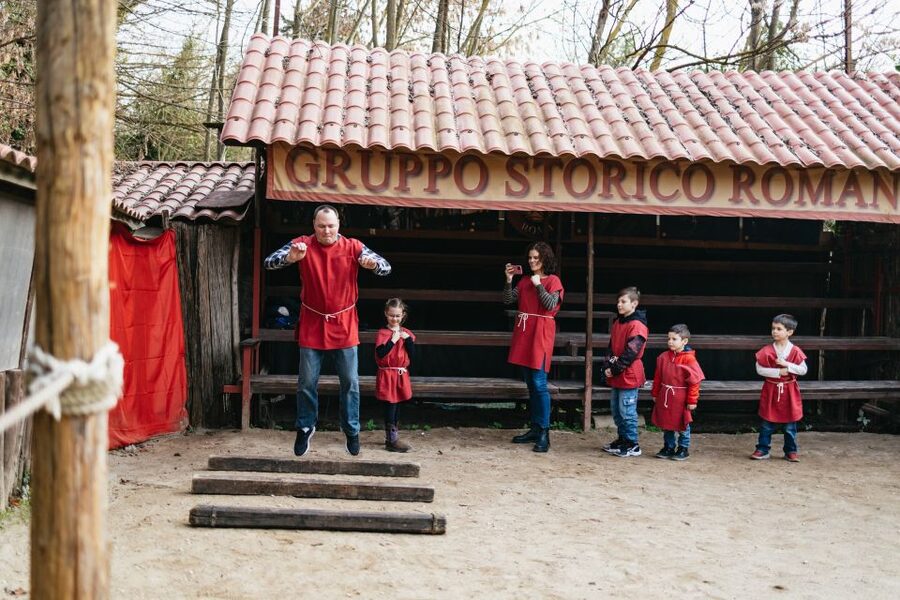
Rome’s gladiator school is more than a costumed photo stop. You spend two active hours learning how Roman fighters trained, handling replica weapons, and taking part in a safe arena battle on the Appian Way. The history lesson is brief but lively, so children stay involved rather than sitting through a long talk.
I like the balance of movement and Roman history, and I like that parents can watch without buying a course ticket if they do not take part. Guides such as Mirko, Cena, Marko, and Olympus are praised for keeping children focused and making each participant feel capable. The main drawback is the setting: summer heat and mosquitoes can be bothersome, so bring water-friendly clothing and insect repellent.
Key points to know before booking
- A real Appian Way setting: The school is located on the ancient Via Appia Antica, away from the main Colosseum crowds.
- A hands-on two-hour lesson: You learn basic sword-fighting movements, Roman weapons, and the daily life of gladiators.
- Made for families: Children as young as five have taken part, while adults can join the training and final battle too.
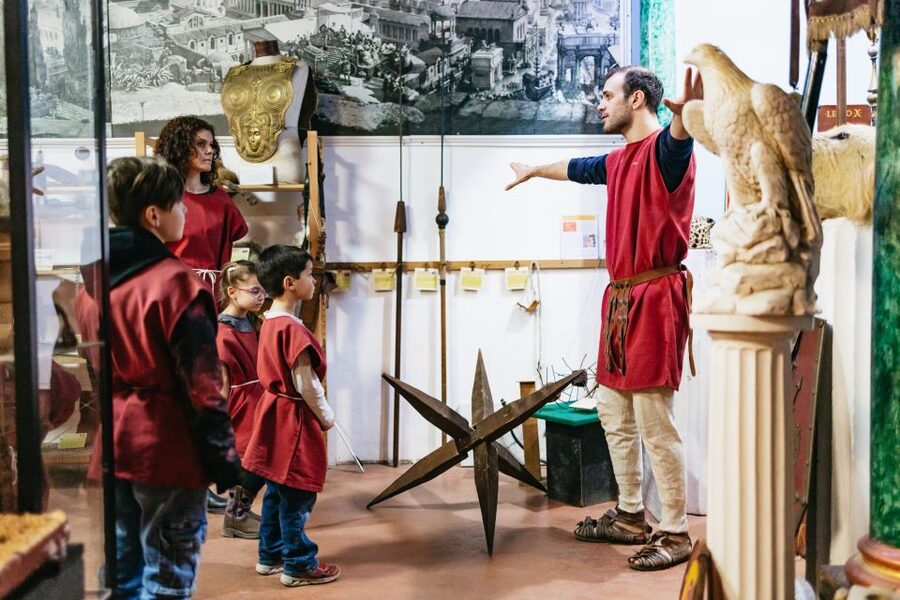
- A museum comes first: The small museum offers unusual objects and context before the physical training begins.
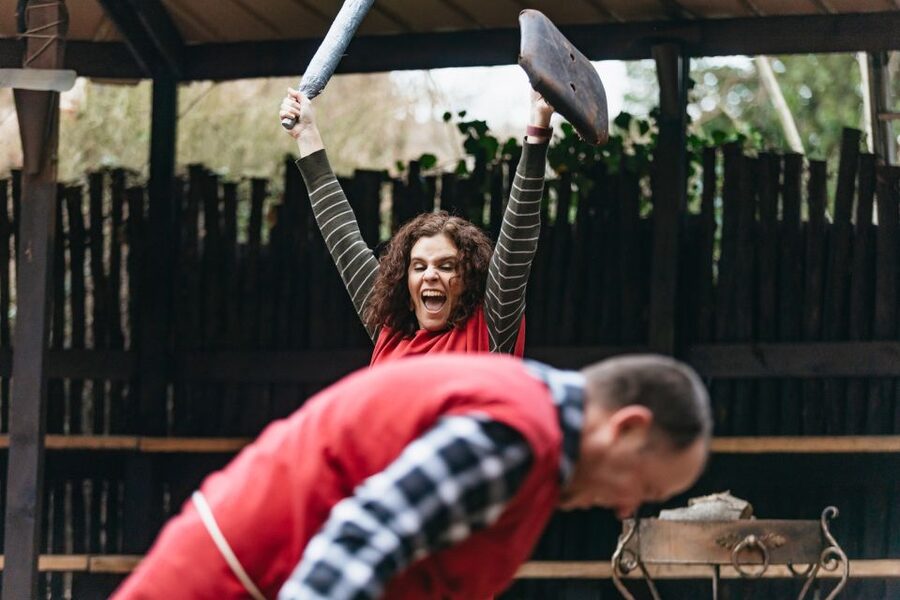
- The final arena fight is the payoff: Participants use safe foam swords in a staged battle in front of the group.
- Practical extras are included: Drinks, a certificate, and the museum visit are part of the experience.
Why the Appian Way location changes the experience

The Gladiator School of Rome is on the Via Appia Antica, one of the oldest roads leading out of ancient Rome. That matters because this outing feels separate from a standard city-center attraction. You are not simply standing beside a famous ruin while someone explains gladiators. You are heading to a purpose-built school where the lesson takes place.
The nearest bus stop is Appia Antica-Travicella, served by buses 118 and 218. Check your route carefully before leaving, since the school is not at the Colosseum itself. The activity begins and ends at the school, which keeps the plan simple once you arrive.
I would allow extra time for the journey, especially if you are traveling with young children or meeting a fixed starting time. Starting times vary, so check availability before you build this into a busy sightseeing day.
The location also means you should think about the weather. Rome can be very hot, and one family reported temperatures above 95 degrees Fahrenheit during the training. Shaded areas and cold water were available, but light clothing, sunscreen, and insect repellent are sensible additions.
Other days out people book in Rome:
- Vatican: Museums & Sistine Chapel Entrance Ticket
★ 4.5 · 144,003 reviews - Vatican Museums & Sistine Chapel Tour with Optional Basilica
★ 4.3 · 67,413 reviews - Colosseum, Roman Forum & Palatine Guided Tour
★ 4.7 · 63,148 reviews
The museum visit sets up the lesson
The first part of the activity is a visit to the school’s museum. It is small, so do not expect a major Roman collection or a long museum tour. Its value is the focus: the objects and displays are chosen to support the gladiator lesson rather than compete with the Colosseum or Rome’s major archaeological museums.
Your guide introduces Roman history, gladiators, soldiers, weapons, and the basic structure of gladiator life. The best part is that the information leads directly into the practical work. You are not asked to memorize a long list of dates. Instead, you get enough context to understand why different weapons, clothing, and fighting methods mattered.
The museum portion can work well after a visit to the Colosseum. One family paired the school with an underground Colosseum tour later in the day, using the school to learn the human side of gladiatorial combat and the Colosseum to see where fighters and animals waited before entering the arena.
Keep your expectations in check. The museum is not the main reason to book this activity. It is a useful opening chapter, while the training and battle provide the memorable part.
Wearing the tunic makes children part of the story
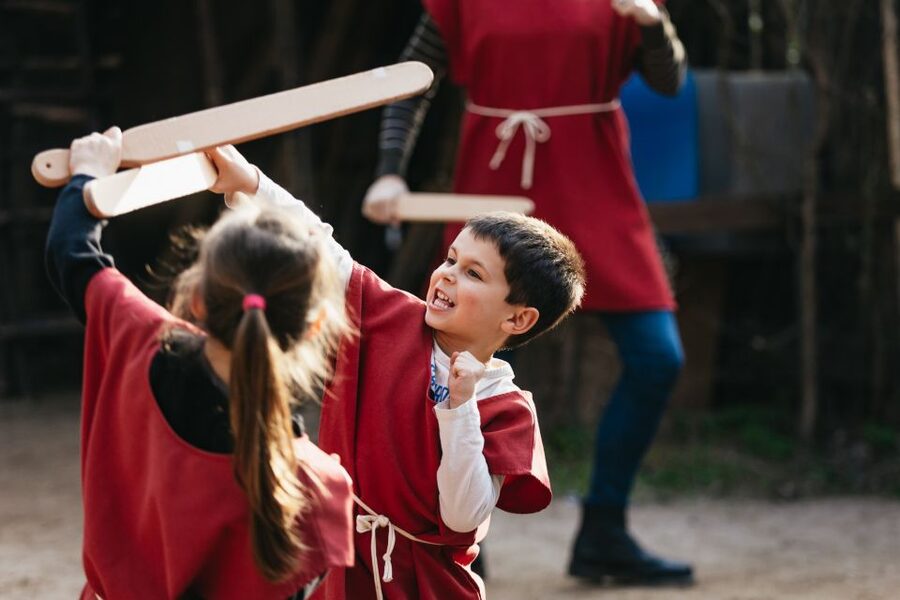
Participants wear a gladiator tunic during the course. This is a simple detail, but it helps children shift from watching Roman history to acting inside it. The costume also makes photographs more fun without requiring an elaborate production.
Adults can take part as well. Parents who join the lesson can learn the movements, practice with the group, and enter the final battle. If you prefer to watch, you do not have to pay for a ticket as a parent or companion who does not attend the course.
That flexible arrangement is useful for families with mixed interests. One adult can participate with the children while another takes photographs or watches from the side. The activity is not limited to children, and several families found that the adults enjoyed the fighting as much as the younger members.
The school welcomes a wide age range. Children aged five, seven, eight, ten, twelve, and fourteen have all been described as enjoying the activity, and one family with three generations, from age 11 to 76, took part in the same session. Physical ability and enthusiasm will vary, but the format allows the guide to work with different ages.
Learning Roman sword skills safely

After the introduction, the instructor teaches basic gladiator sword-fighting techniques. The emphasis is on movement, discipline, and control rather than force. The weapons used for the final battle are foam swords, so the activity is designed as safe family entertainment rather than actual combat.
The training is active. You can expect repeated practice, demonstrations, and corrections rather than a single quick explanation followed by free play. Guides move around the group, encourage participants, and help children feel successful with each new movement.
This is where the instructor makes a major difference. Mirko is praised for working closely with children, while Marko is noted for holding the attention of both children and adults. Patriccio was particularly good at helping a child feel accomplished, and Cena brought strong enthusiasm for Rome and its past.
Olympus has also led sessions and is described as a real gladiator who has taken part in modern gladiator events. His session included detailed discussion of authentic Roman fighting rather than only the Hollywood version. Instructor names can vary, but the consistent requirement is English or Italian, so confirm your preferred language when booking.
The lesson is not a formal martial arts class. You will not leave with advanced sword skills, and the emphasis is on a shared family activity. If you want a serious combat workshop, this is not the right product. If you want a structured, entertaining introduction to Roman weapons, it fits well.
Same base, a different kind of day:
- Vatican Museums, Sistine Chapel & St Peter’s Basilica Guided Tour
★ 4.5 · 39,149 reviews - Rome: Colosseum, Palatine Hill and Roman Forum Guided Tour
★ 4.8 · 32,814 reviews - Rome: Guided Tour of Colosseum, Roman Forum & Palatine Hill
★ 4.7 · 27,897 reviews - Rome: Colosseum & Forum with Audio Guide App -Optional Arena
★ 4.2 · 24,770 reviews
The final arena battle brings everyone together
The last battle is usually the most exciting part. After practicing the movements, participants face one another in an arena using foam swords. The action is staged and supervised, but it still feels like a contest, especially when a child defeats a parent in front of the group.
The battle also gives the lesson a clear ending. Instead of simply listening to information and leaving, you use what you have learned in a playful test. Children can see the purpose of the earlier drills, while adults get a chance to join the fun instead of remaining on the sidelines.
The group may include children and adults of different ages. That mixed format can be an advantage because it creates a friendly, theatrical atmosphere. It can also mean that the pace is not perfectly matched to every participant. A teenager seeking a demanding physical challenge may find it light, while a younger child may find it just right.
The arena setting adds a sense of occasion. Some sessions finish with participants appearing before an emperor figure, followed by certificate presentation. The certificate is a small souvenir, but it gives children something tangible to take home and helps the activity feel like a completed achievement.
What makes the teaching work for children
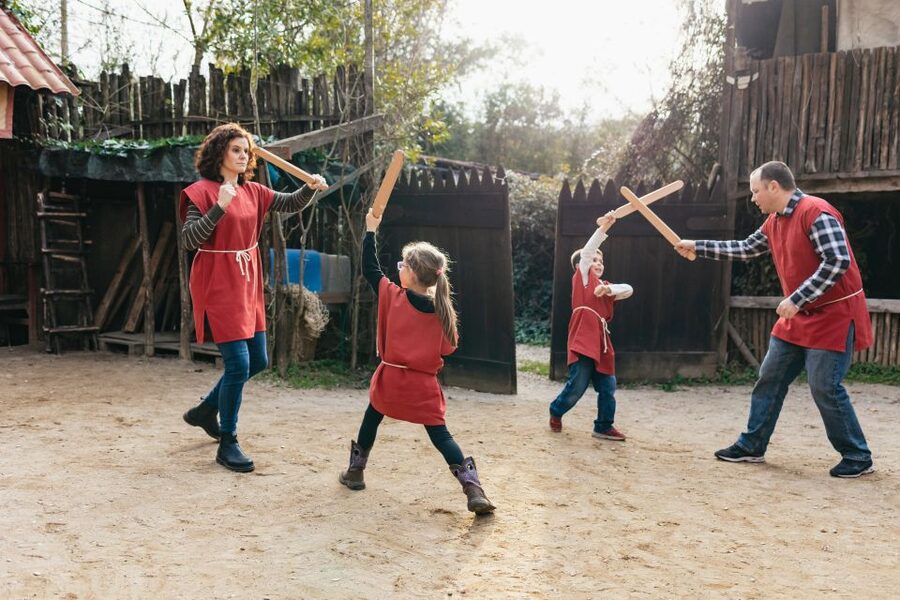
The school succeeds because it does not separate education from entertainment. Children hear about gladiators and Roman soldiers, see weapons and armor, practice movements, and then use those movements in a battle. Each part reinforces the next.
Guides use humor, encouragement, and frequent interaction. That matters with younger children, who may lose interest during a lecture. Families with children aged five through twelve found the mix manageable, while older children and adults also had enough activity to stay involved.
I would especially recommend this for children who have just visited the Colosseum. After seeing the arena, they can ask more practical questions about who fought there, how fighters trained, and what weapons they used. The school turns an impressive building into a story about people.
The activity also works for a birthday outing. An eight-year-old’s birthday group received a lesson that combined movement, costumes, and a certificate without making the event feel like a simple play session. It can be a strong choice when a child wants something more active than another museum.
How much value does the $135.94 price offer?

At $135.94 per person, this is not a low-cost family activity. The price makes the most sense when you count the full package: two hours of instruction, the museum visit, equipment, drinks, a certificate, and a guided educational program in a distinctive Roman setting.
The value improves if several family members take part. Adults and children can train together, and the final battle creates a shared memory rather than dividing the group into spectators and participants. If only one child participates while the adults watch, the cost may feel harder to justify, although nonparticipating parents and companions do not need to buy a ticket.
I would compare this with the cost of another guided attraction, not with the price of a free walk around the Appian Way. You are paying for a prepared lesson, an instructor who manages the group, and an activity that keeps children occupied for two hours.
The high rating of 4.7 from 630 reviews supports the idea that the format works well for families, but price remains personal. Book it if your group values active learning and unusual experiences. Skip it if you prefer quiet archaeological sites or if your children are unlikely to enjoy costumes and staged combat.
Timing, heat, and what to bring
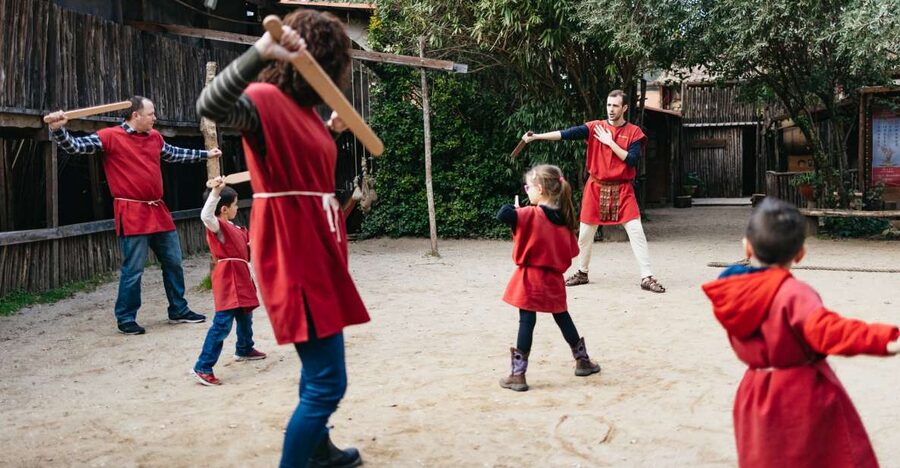
The course lasts two hours, but you should plan for travel to the Appian Way and a little extra time around the meeting point. Since start times depend on availability, check the schedule before arranging lunch, a Colosseum visit, or another timed entry.
Wear comfortable clothes that allow easy movement. The tunic is provided for the activity, but you still want shoes and clothing suitable for standing, walking, and practicing sword movements.
Heat deserves serious attention in summer. The school has shaded areas and provides cold water, but you should still bring sun protection and drink regularly. Mosquitoes can also be an issue around the Appian Way, so insect repellent is a practical item to pack.
The activity is wheelchair accessible. If you have specific mobility needs, confirm the details at booking so the school can prepare for your visit.
Cancellation is free up to 24 hours before the start time, and you can reserve now and pay later. Those terms are useful when Rome’s weather or your family schedule is uncertain.
Who should book this gladiator school?
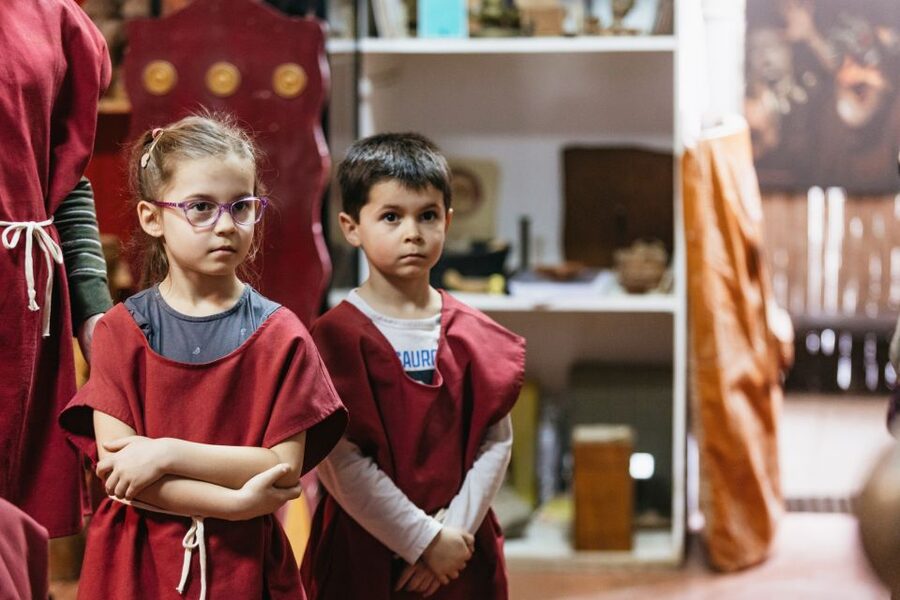
I would book this for families with children who enjoy role-play, movement, and short bursts of history. It is particularly well suited to children between about five and twelve, though the activity can include teenagers and adults. A child who has just seen the Colosseum may get even more from it.
It also suits adults who enjoy Roman history but do not want another quiet museum visit. The course is playful, yet the instructors explain real aspects of gladiator life and Roman military practice.
Groups with different ages can work well. A session has included three generations, and the format lets adults participate at their own level. The guide’s patience matters here, and instructors such as Cena, Mirko, Marko, Patriccio, and Olympus have been praised for adapting to their groups.
I would be cautious if your priority is archaeological depth, an intimate small-group tour, or serious weapons training. The museum is small, the battle is theatrical, and the lesson is designed for broad family appeal. That is precisely why it works for many people, but it will not satisfy every Roman history specialist.
Should you book the two-hour Gladiator School?
Book it if you want your children to remember Rome as something they did, not only something they looked at. The mix of Appian Way setting, Roman history, sword practice, foam-sword combat, and certificate gives the day a clear sense of adventure.
The best plan is to pair it with the Colosseum or another Roman site, then let the school provide the active part of the day. Bring repellent, prepare for heat, and allow time to reach the meeting point.
At $135.94 per person, it is a premium family activity. But for a group that enjoys participation and wants a break from museums, the two hours provide real entertainment and useful historical context. I would choose it for families, birthday outings, and adults who are willing to look a little silly while learning something about Rome’s fighters.
FAQ
Where does the Gladiator School take place?
The activity takes place at the Gladiator School of Rome on the ancient Appian Way, or Via Appia Antica.
How long does the activity last?
The gladiator school lasts two hours. Starting times vary, so check availability when booking.
What does the course include?
The course includes a museum visit, gladiator training, drinks, and a certificate.
Is the activity suitable for children?
Yes. The course is designed for both children and adults. Children as young as five have taken part, and older children and adults can join the training and final battle.
Do parents have to buy a ticket if they only watch?
No. Parents or companions who do not attend the course do not have to pay for a ticket.
What languages are available?
Instruction is available in English and Italian.
How do I reach the meeting point?
The nearest bus stop is Appia Antica-Travicella, served by bus lines 118 and 218. The activity ends back at the meeting point.
Can I cancel the booking?
Yes. You can cancel up to 24 hours in advance for a full refund. You can also reserve now and pay later.
Just added in Rome
- Civitavecchia Private Transfer: From the Port to Rome Airport★ 5.0 · 309 reviews
- Civitavecchia Shore Excursion: Best of Rome Private Tour★ 5.0 · 247 reviews
- Civitavecchia Private Transfer from ship to FCO airport or Rome★ 5.0 · 245 reviews
- Food Tasty and History Tour in Civitavecchia★ 5.0 · 256 reviews
- Palatine Hill and Roman Forum Tour with Fast-Track Entrance★ 4.2 · 417 reviews
- Tivoli: Villa D’Este & Villa Adriana Pass & App Audioguide★ 4.4 · 364 reviews
- Tivoli: Villa D’Este Entry Ticket and App Audio Guide★ 4.3 · 191 reviews
- Vatican Museums & Sistine Chapel Skip-the-Line Guided Tour★ 4.6 · 254 reviews
Tours in Rome, compared.

Vatican: Museums & Sistine Chapel Entrance Ticket
Read our review →
Vatican Museums & Sistine Chapel Tour with Optional Basilica
Read our review →
Colosseum, Roman Forum & Palatine Guided Tour
Read our review →
Vatican Museums, Sistine Chapel & St Peter’s Basilica Guided Tour
Read our review →
Colosseum & Forum with Audio Guide App -Optional Arena
Read our review →
Pantheon Fast-Track Ticket and Official Audio Guide
Read our review →
City Sightseeing Hop-on Hop-off Bus with Audioguide
Read our review →
Colosseum, Forum & Palatine Hill Tour & Optional Arena
Read our review →Browse the lists this tour appears in