
Reviewed · ANCIENT RUINS & TEMPLES
Paestum: Small-Group Tour with an Archaeologist and Tickets
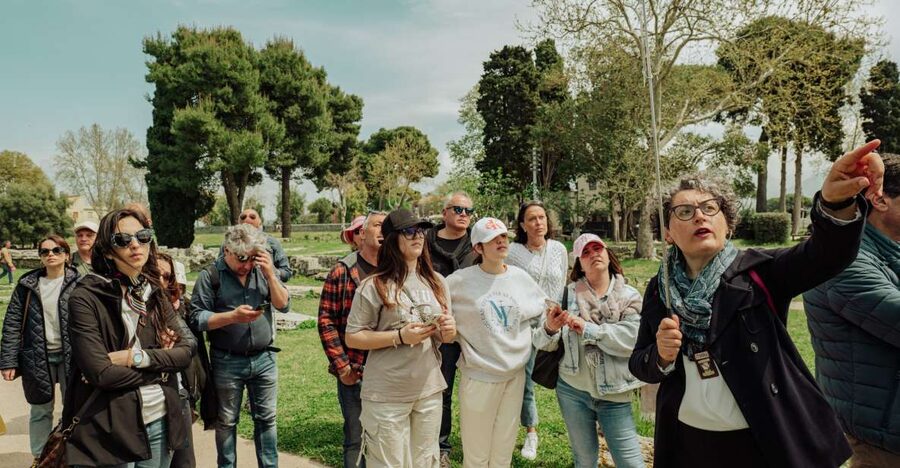
Paestum’s three Greek temples are the stars here: tall, graceful, and remarkably intact after more than two thousand years. This two-hour tour with an archaeologist helps you see more than a few impressive columns. You’ll learn how Greek, Lucanian, and Roman communities shaped the same city.
I like the small-group setup because you can hear the guide and ask questions. I also like the museum visit, especially the famous Tomb of the Diver, which gives the ruins a human touch. The main drawback is time. Two hours moves quickly, and the tour keeps you on your feet in an open site with little shade.
Key points at a glance
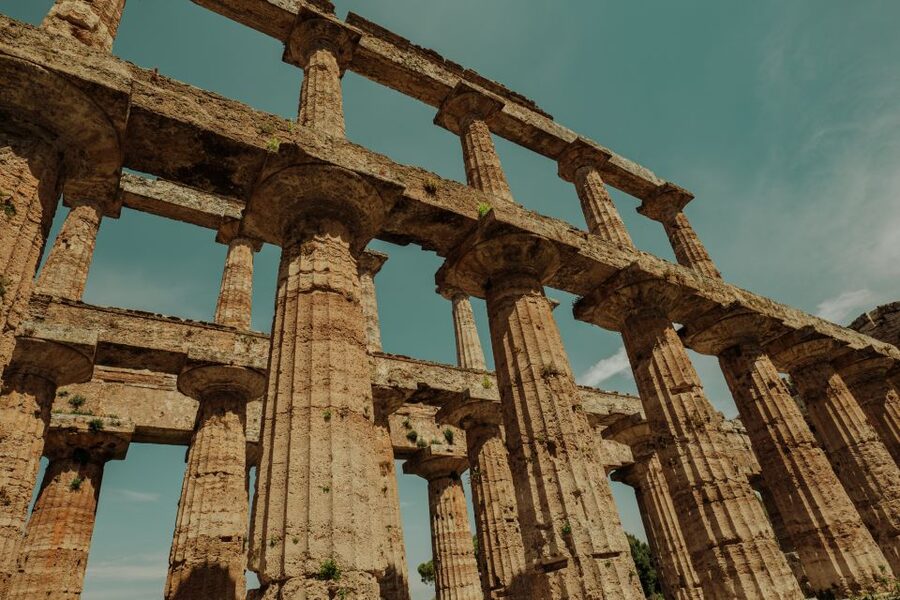
- Three extraordinary Greek temples: See the Temple of Neptune, Temple of Ceres, and the basilica, all dating from around the 6th century BC.
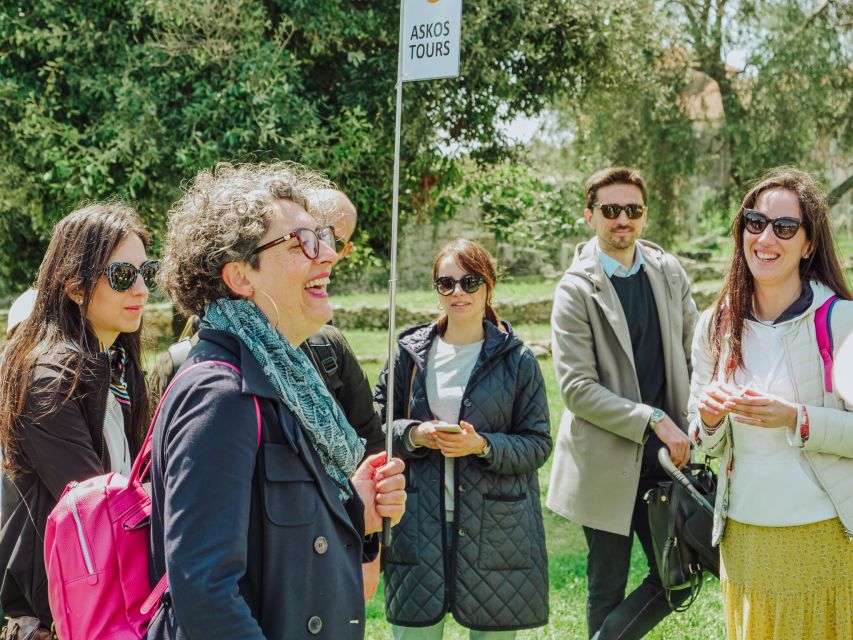
- Archaeologist-led explanations: Guides such as Mario, Ivan, Maria, Francesca, and Angelo bring professional field experience and clear storytelling.
- Ruins plus museum: The tour connects the city’s temples and Roman buildings with artifacts found at Paestum.
- Small groups help: Groups are often small enough for easy questions and clear listening.
- Skip-the-line entry included: Your admission to the archaeological park is covered.
- Plan for heat and walking: Wear comfortable shoes, bring water, and expect to remain on your feet for much of the visit.
Why Paestum deserves a place beside Pompeii
Many people heading through Campania make straight for Pompeii and skip Paestum. That is a mistake if ancient Greek architecture interests you. Paestum is one of the best-preserved Graeco-Roman cities in Italy, and its three temples are the clearest reason to come.
The site began as a Greek city before later communities changed its name, buildings, and use. The ruins show Greek, Lucanian, and Roman layers rather than one tidy historical chapter. A guide can point out how those cultures lived alongside one another and how building styles changed over time.
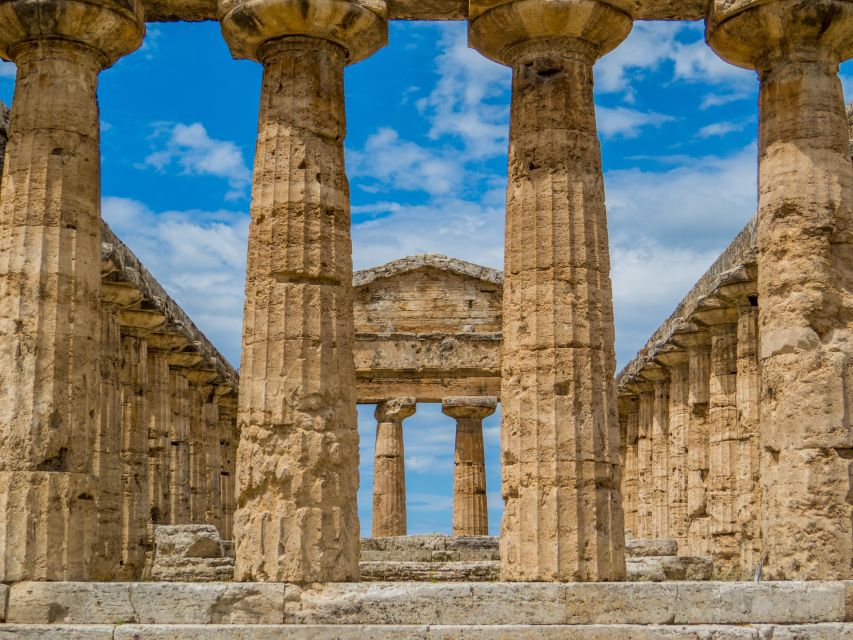
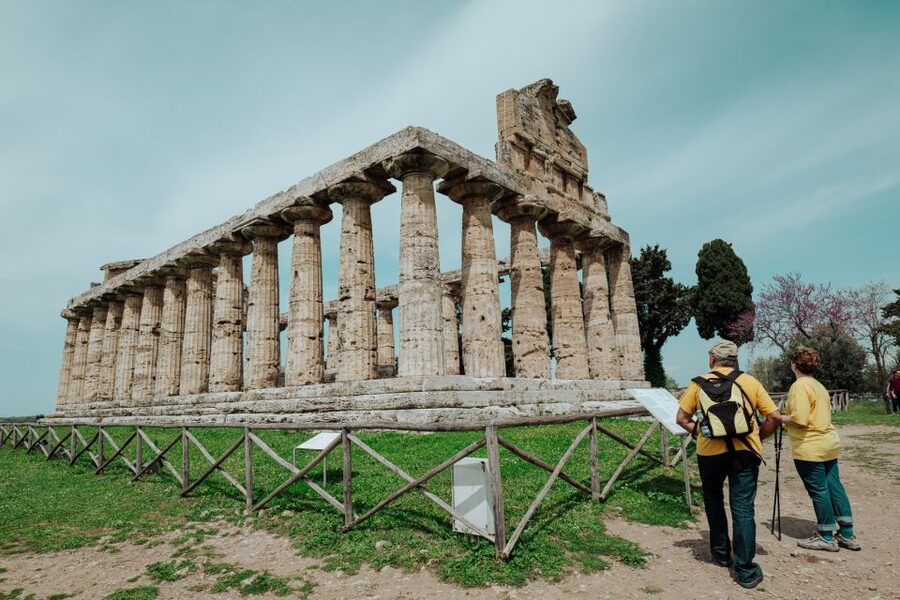
The temples are especially powerful because they are not reduced to scattered fragments. Their columns and broad stone forms still give you a strong sense of the original buildings. The Temple of Neptune, Temple of Ceres, and basilica each have their own character, and the guide explains how they differ and who they were connected with.
You may have seen the Parthenon in Athens, but Paestum offers a different kind of encounter. The temples are less crowded, and you can spend time looking closely at their proportions and construction. One particularly memorable feature is the chance to step inside one of the temples during the visit.
Other ruins to walk round near Italy:
- From Naples: Pompeii Ruins & Mount Vesuvius Day Tour
★ 4.3 · 11,459 reviews - Pompeii: Archaeological Park Tour with Ticket on request
★ 4.5 · 2,283 reviews - Discover the Ancient Ruins of Pompeii: Day Trip from Rome
★ 3.5 · 2,247 reviews
Beginning at the Basilica Paleocristiana dell’Annunziata
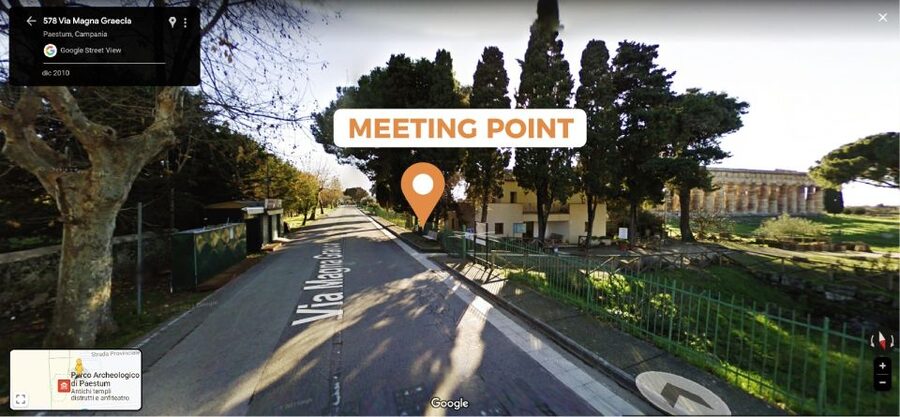
The usual meeting point is near the Basilica Paleocristiana dell’Annunziata on Via Magna Graecia, 919. The exact meeting arrangement can vary with the option you book, so check your confirmation carefully before setting out.
This is not a hotel pickup. Transportation and food are not included, so you need to make your own way to Paestum and arrive ready to walk. If you are driving, nearby street parking has been available for about €1 per hour, though the meters can be confusing to use.
The tour begins with the archaeological park and then moves to the museum. That order works well. You first see the large structures in their original setting, then examine smaller objects and artworks that explain how the city functioned.
The Greek temples: Paestum’s unforgettable first impression
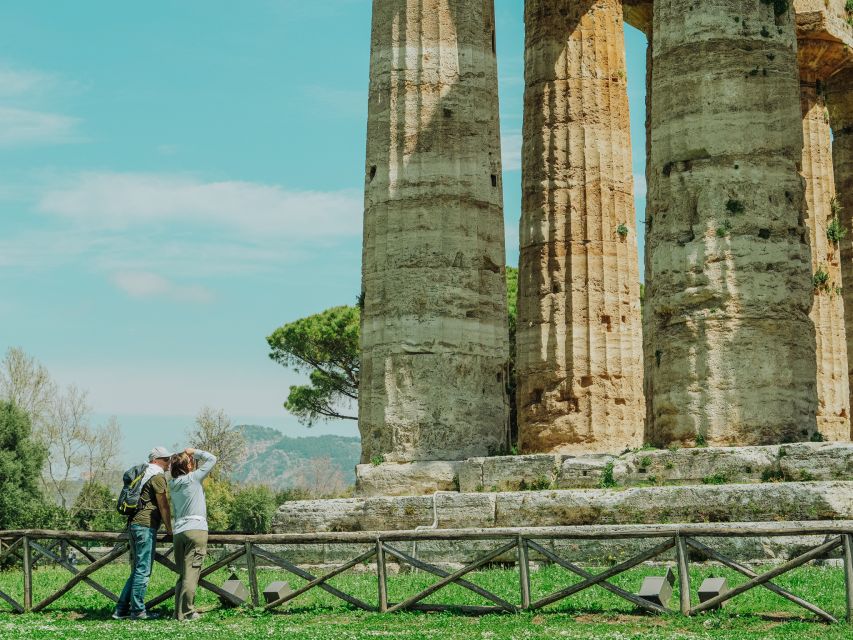
The first 90 minutes are devoted to the archaeological park. The three Greek temples provide the visual high point, but a good guide makes sure you do not rush past the less obvious remains.
The Temple of Neptune is usually the grandest of the three. Its columns and overall scale show why Paestum is such an important stop for anyone interested in Greek architecture. The Temple of Ceres offers a different view of the city’s religious buildings, while the structure commonly called the basilica adds another layer to the comparison.
Your guide explains the temple dates, architectural differences, and likely religious roles. This is where an archaeologist makes a real difference. Without help, you can admire the stonework but miss the clues in the layout, masonry, and later alterations.
Ivan has been praised for his direct experience with excavations at the site. Some guides, including Mario and Nan, have also connected the visible ruins with their own archaeological work. That kind of explanation gives you a better sense of how archaeologists interpret incomplete evidence, rather than simply reciting dates.
The temples are not the only reason to keep walking. You will also see sections of the city walls and Roman remains, including the comitium, the political assembly hall, the amphitheater, markets, roads, and other public buildings.
These areas help turn Paestum from a group of temples into a real city. You can begin to picture political meetings, commerce, public events, and ordinary movement through the streets. The Roman remains also make clear that Paestum was used and altered long after its Greek foundation.
Roman buildings and the layers beneath them
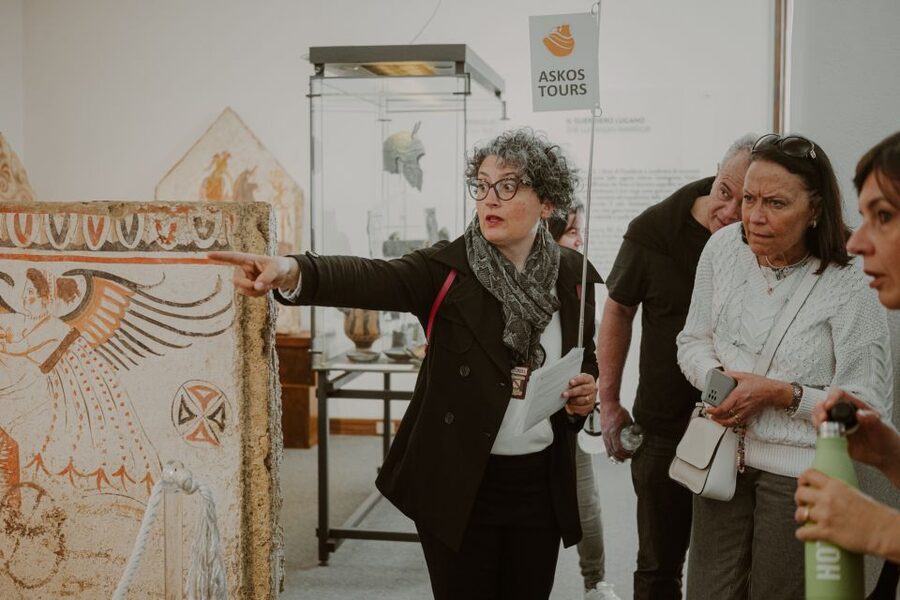
Paestum rewards visitors who enjoy historical layers. The same site contains Greek religious buildings, Lucanian traces, and Roman civic structures. That mix can be confusing when you walk alone, especially because not every ruin looks dramatic.
The guides do useful sorting work. They explain which remains belong to which period and how the city’s purpose changed. Mario has been especially effective at pointing out features that many people would otherwise walk past, including the marketplace, forum, prison, roads, and political buildings.
I would pay attention during this section even if your main goal is the temples. The Roman ruins show how a living city adapted over centuries. They also help you understand why the site is called Graeco-Roman rather than simply Greek.
The tour is conducted in English, Italian, French, Spanish, or German. Several guides are praised for adjusting their language to the group and explaining complex ideas in terms that non-specialists can follow. That matters at Paestum, where the interest lies as much in interpretation as in what you can see.
A few more things to do in Italy
- Vatican: Museums & Sistine Chapel Entrance Ticket
★ 4.5 · 144,003 reviews - Milan: Cathedral and Duomo’s Terraces Entrance Ticket
★ 4.6 · 61,054 reviews - Venice: Doge’s Palace Reserved Entry Ticket
★ 4.6 · 42,716 reviews - Florence: Skip-The-Line Uffizi Gallery Timed Entry Ticket
★ 4.5 · 27,832 reviews
The National Archaeological Museum and Tomb of the Diver
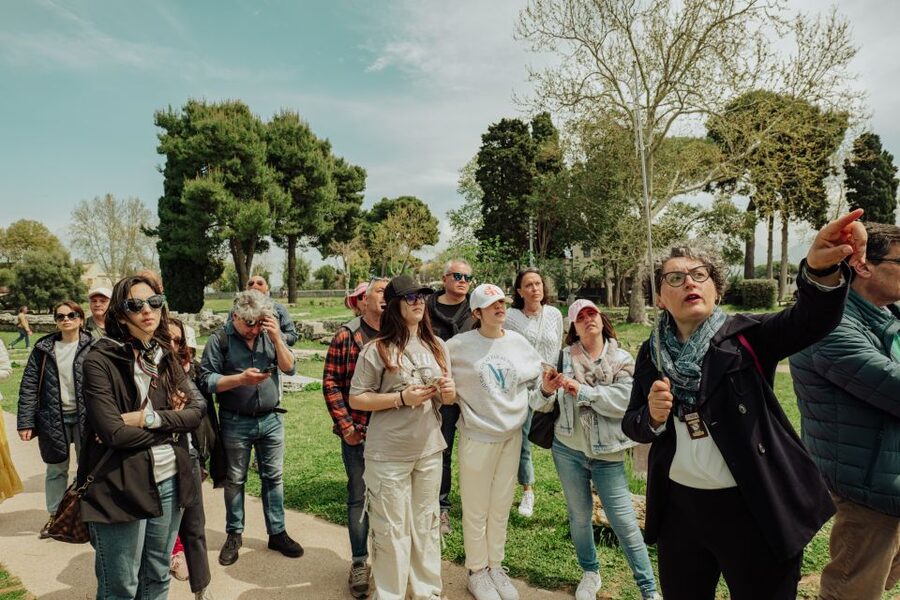
The final 30 minutes take place in the National Archaeological Museum of Paestum. The museum contains Greek artworks and finds from the local area, including pieces dating as far back as the 7th century BC.
This visit is not an afterthought. It fills in the details that the large ruins cannot show. Inside, you can see objects connected to the people and beliefs of the ancient city, then relate them to the temples and public buildings outside.
The museum’s star attraction is the Tomb of the Diver. Its painted interior is unusual and gives the ancient world a more personal feel than monumental columns alone. The image and the tomb’s setting add a human dimension to the religious and civic remains you have just seen.
Guides such as Maria and Silvia have been praised for using the museum exhibits to explain the park more clearly. Ivan has also brought personal excavation experience into the museum discussion, including work connected with objects on display. This link between fieldwork and museum pieces is one of the strongest parts of the tour.
There is one practical point to consider. The guided visit ends after the museum portion, and re-entry may not be possible afterward. If you want extra time with the exhibits, ask about the arrangement before the tour begins. You may need to choose between staying with the group and setting aside time for a longer independent museum visit.
How the small-group format changes the visit
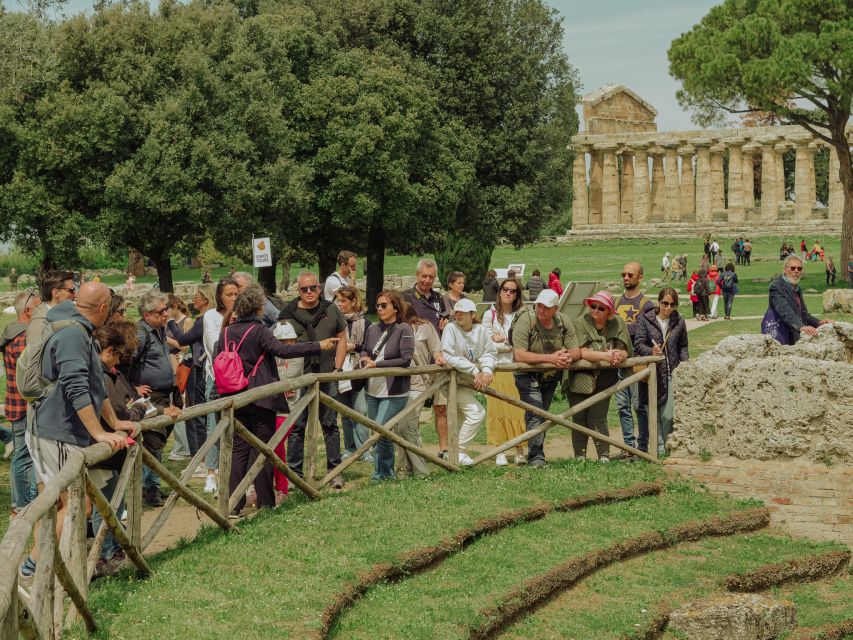
The small group is a real advantage at an archaeological site. When only a handful of people are gathered around a temple or display case, you can hear the explanation without standing shoulder to shoulder with strangers.
Groups have sometimes been as small as six people, and a few bookings have effectively turned into private tours when no one else joined. That is not guaranteed, but the format gives you a better chance to ask questions than a large coach excursion would.
A larger group can still work. Disposable earphones are provided when needed so you can hear the guide. Still, if you are choosing between a standard small group and a private option, the private format may suit you if your family has specific interests or if you want a slower question-and-answer session.
The guide quality is central to the experience. Mario appears often among the strongest guide experiences, while Ivan is especially appealing if you want someone with direct archaeological work at Paestum. Maria, Francesca, Angelo, Nan, Silvia, and Fiorenza have also been praised for clarity, warmth, and good storytelling.
Is two hours enough for Paestum?
Two hours is enough for a strong introduction, but it is not enough for every corner of the site at a relaxed pace. The schedule allows about 90 minutes outdoors and 30 minutes in the museum, so the guide must keep the group moving.
That compact timing works well if you want the main temples, the key Roman remains, and the museum highlights. It is also useful if Paestum is one stop in a longer Campania trip.
You may want more time if you are serious about ancient architecture, visiting with curious children, or hoping to study every museum display. One visitor found the two-hour format short, especially in hot weather and after standing for much of the visit.
Heat is worth taking seriously. Bring water, wear comfortable clothes, and choose supportive shoes. Paestum’s paths and open spaces require walking, and the site may feel tiring in temperatures above 30°C. A morning start is likely to be more comfortable when that option is available, but check the current start times before booking.
What the $47 price includes
At $47 per person, the tour sits in a sensible range for a guided visit that includes admission and a museum stop. You are paying not only for entry but also for an archaeologist who can explain the site’s architecture, chronology, and excavation history.
The value is strongest if you would otherwise walk through Paestum without context. The temples are impressive enough to justify a visit on their own, but the forum, comitium, amphitheater, markets, and museum pieces are easier to understand with help.
The price does not include transportation, food, or drinks. That means you should build in your own travel and refreshment costs. The meeting point is in Paestum, and the tour finishes at the stated local drop-off point rather than returning you to another city.
A private group is available for people who want more control over the pace. For most couples and families, the small-group option should offer the better balance of cost and personal attention.
Who will enjoy this tour most
I would choose this tour if you care about ancient Greek architecture but do not have formal training in archaeology. The guides explain technical points without assuming that you already know the difference between a Greek temple and a Roman civic building.
It also suits visitors who want more than photographs. You will hear about the city’s different cultures, see how archaeologists read the ruins, and connect the outdoor remains with objects in the museum.
Families can do well with this experience, particularly when children are curious and willing to walk and listen. Fiorenza, for example, has been praised for keeping children interested. Still, the two-hour format involves a lot of standing, so very young children may find it demanding.
This is not a good choice for anyone with limited mobility. The experience is not suitable for wheelchair users or people with mobility impairments, and the supplied guidance specifically calls for comfortable shoes and clothes.
Booking and cancellation details
You can cancel up to 24 hours before the scheduled start for a full refund. The reserve-now, pay-later option also gives you some flexibility while you finalize your Campania plans.
The tour runs in English, Italian, French, Spanish, and German. Starting times depend on availability, and the meeting point may vary according to the option selected. Confirm those details before you leave for the site.
Should you book the Paestum archaeologist tour?
I would book it if you are visiting Paestum for the first time and want the site to make sense, not just look impressive. The temples are the obvious draw, but the guide’s explanations of the Roman city, museum, and Tomb of the Diver are what give the visit depth.
Skip it if you prefer to wander alone for several hours or want extensive time in the museum after the guided portion. For most people, though, the $47 cost is fair because it includes entry and a professional guide in a small group.
Bring water, wear good shoes, and do not schedule yourself too tightly afterward. With Mario, Ivan, Maria, Francesca, Angelo, or another strong guide, Paestum becomes more than a quick stop between better-known destinations. It becomes a clear, memorable lesson in how a city can change while its temples endure.
FAQ
How long does the Paestum tour last?
The tour lasts two hours, with about 90 minutes in the archaeological park and 30 minutes in the National Archaeological Museum.
What does the tour include?
It includes an archaeologist-led guided tour and a skip-the-line entry ticket for Paestum.
Does the tour include transportation?
No. Transportation, food, and drinks are not included.
Which languages are available?
The live tour guide is available in English, Italian, French, Spanish, and German.
What will I see in the archaeological park?
You will see the Temple of Neptune, Temple of Ceres, the basilica, city walls, Roman ruins, the comitium, amphitheater, markets, roads, and other buildings.
Is the museum included?
Yes. The tour includes a guided visit to the National Archaeological Museum of Paestum, including the Tomb of the Diver.
Can I book a private group?
Yes. A private group option is available.
Is the tour suitable for wheelchair users?
No. The activity is not suitable for wheelchair users or people with mobility impairments. Comfortable shoes, water, and comfortable clothing are recommended.
Just added in Italy
- Highlights and hidden gems of Milan Bike Tour★ 5.0 · 491 reviews
- Milan Gourmet Tour: A Premium Tasting Experience by Do Eat Better★ 5.0 · 241 reviews
- Private Milan Food Walking Tour of Brera★ 5.0 · 217 reviews
- Leonardo3 The World of Leonardo: Tickets for the Interactive Exhibition★ 4.0 · 220 reviews
- Da Vinci’s Last Supper and Santa Maria delle Grazie Church Tour★ 4.5 · 218 reviews
- Learn to Cook Italian Recipes with an Italian Chef★ 5.0 · 283 reviews
- La Scala Theatre and Museum guided experience★ 4.5 · 664 reviews
- La Scala Theatre and Museum Tour in Milan With Private Guide★ 3.5 · 384 reviews
Ancient Ruins & Temples, compared.
Archaeological Park Tour with Ticket on request
Read our review →
Discover the Ancient Ruins of Pompeii: Day Trip from Rome
Read our review →
Agrigento: Valley of the Temples Skip-the-Line Sunset Tour
Read our review →
Agrigento and the Valley of the Temples Day Tour
Read our review →
Agrigento: Valley of the Temples Ticket & App Audioguide
Read our review →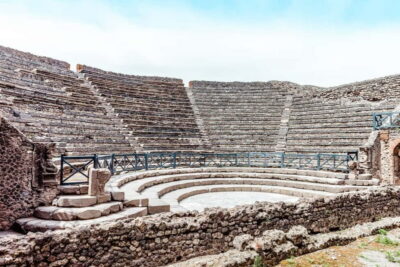
Pompeii Ruins Private Tour with Optional Skip-the-Line Entry
Read our review →
National Archaeological Museum Ticket & Audio App
Read our review →Browse the lists this tour appears in