
Reviewed · MUSEUMS
Guided tour of the Trapani Salt Pans and Salt Museum
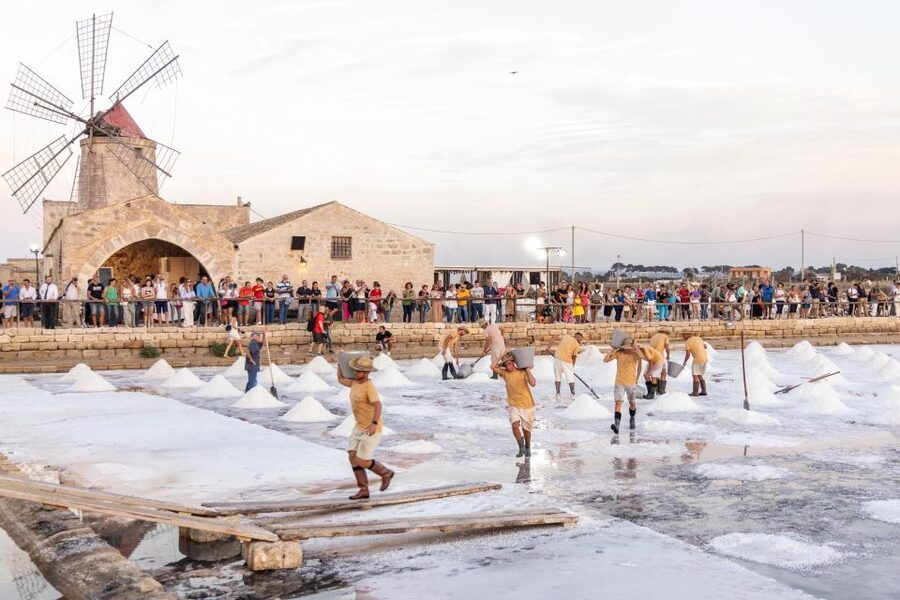
Trapani’s salt pans turn a working industry into a hands-on outing. You walk beside white salt banks, pink-tinted pools, gray clay, and sea-blue water, then collect a little salt from the production tanks with your own hands. The second half takes you into an old farmhouse, salt museum, and mill dating from the 1400s.
I especially like the family connection: the Culcasi family has worked salt for four generations, and the museum explains that work through its own story. I also like the tasting, which includes whole salt and flavored fleur de sel from the Slow Food Presidium. The main caution is simple: this is a roughly one-hour walk, and that fitness requirement may not be obvious until after booking.
Key points to know
- Four generations of salt workers: The Culcasi family still presents the trade through its own salt pans and museum.
- A real hands-on stop: You can touch salt forming in the tanks and follow the change from seawater to table salt.
- Flavored fleur de sel tasting: Try several aromas, along with whole salt made on site.
- Two-part visit: The first section is outdoors among the pools, while the second moves inside the old museum and mill.
- A protected natural setting: The salt pans sit within a WWF reserve, with protected plants and birds.
- Good value at $21: The price covers the 75-minute guided visit, museum entry, and salt tasting.
Why Trapani’s salt pans are worth your time

The salt pans near Trapani are not simply scenic pools beside the sea. They are working salt beds, shaped by wind, sun, seawater, and careful human labor. That makes the visit more useful than a quick photo stop at a windmill. You see a product in the place where it is made, then taste it at the end.
The Culcasi family has produced salt for four generations. That detail gives the visit a personal center. Instead of hearing only a broad account of Sicilian salt production, you follow one family’s connection to the trade and see how a working salt pan fits into the wider coastal setting.
The tour is also a good change of pace from churches, markets, and crowded historic centers. You get open air, sea views, and a slow walk through an unusual part of western Sicily. The setting is calm, but the subject is practical: how water becomes salt.
Other museums and galleries in Italy:
- Vatican: Museums & Sistine Chapel Entrance Ticket
★ 4.5 · 144,003 reviews - Vatican Museums & Sistine Chapel Tour with Optional Basilica
★ 4.3 · 67,413 reviews - Vatican Museums, Sistine Chapel & St Peter’s Basilica Guided Tour
★ 4.5 · 39,149 reviews
Starting below the windmill at Via Salina Chiusa
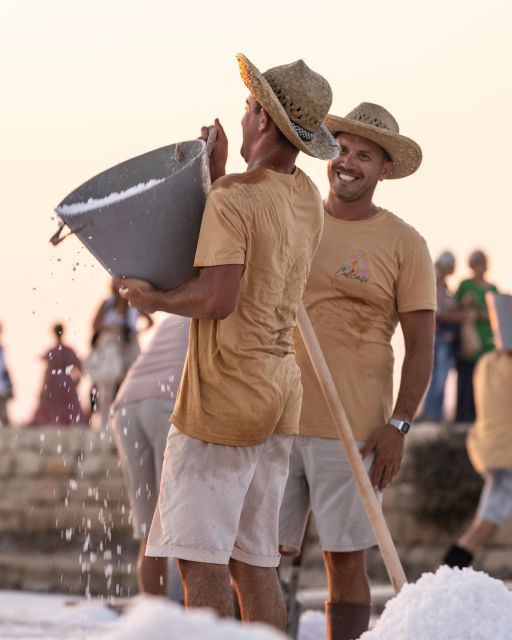
The meeting point is the ticket office in the forecourt below the windmill at Via Salina Chiusa, 1. Look for the guide behind the salt sales counter. This is useful to know because the site includes a sales area, museum, mill, and working salt pans, so arriving at the wrong building could cost you time.
The guide leads in English or Italian. No individual guide names are provided, so you should choose your preferred language when booking or checking availability. The tour lasts 75 minutes, though the outdoor portion involves about an hour of walking.
Wear shoes you can comfortably walk in and clothes suited to sun and wind. A hat is a smart choice. The information specifically calls for a basic level of fitness, so this is not the right pick if you need to avoid a long walk or prolonged standing.
The tour is listed as wheelchair accessible, but the outdoor route still deserves a practical check if you have specific mobility needs. The salt pans are a working outdoor site, and the walk follows their perimeter and banks.
Walking through white, pink, gray, and blue
The first part follows the edge of the salt pan. The color changes are the immediate attraction: white salt, pink pools, gray clay, and the blue of the sea. Water in the tanks reflects the sky, giving the route a broad, open feel.
The guide explains the process step by step. Seawater moves through the salt pans, water evaporates, and salt forms in the production tanks. You do not just hear the explanation. You can touch the salt as it develops and collect it with your hands.
That small action makes the process easier to understand. Salt is usually something you reach for in a kitchen cupboard, not something you associate with shallow pools and hours of sun. Here, the product stays connected to its source.
The route passes protected plants and bird habitat inside the WWF reserve. The emphasis is not only on salt production. You also get a look at a coastal environment where industry and nature share the same space.
This part is strongest in good weather, when the colors and reflections are easy to see. The tradeoff is exposure. Bring a hat and comfortable clothes, and plan on walking for about an hour. The outdoor route is not a quick stroll from one display to another.
Seeing the salt form in the tanks

The salt tanks are the heart of the visit. The guide shows how seawater gradually changes, and you can see the material that will later be dried, collected, and sold. Touching the salt gives the tour a direct, physical quality that a museum display alone cannot provide.
The process also explains why the salt pans need space and time. This is not factory production hidden behind walls. The work depends on water, evaporation, the sun, and the layout of the pans. The pools, banks, and channels all have a role.
I like this section because it keeps the story grounded. You do not need specialist knowledge to follow it. The guide connects what you see underfoot with the salt used at home, then the tasting helps you notice that salt can have different textures and flavors.
The walk also gives you time to see the setting from several angles. The water mirrors the sky, while the banks create strong lines through the pools. If you want the best photographs, stay alert to the changing colors rather than focusing only on the windmill.
A few more things to do in Italy
- Colosseum, Roman Forum & Palatine Guided Tour
★ 4.7 · 63,148 reviews - Rome: Colosseum, Palatine Hill and Roman Forum Guided Tour
★ 4.8 · 32,814 reviews - Rome: Guided Tour of Colosseum, Roman Forum & Palatine Hill
★ 4.7 · 27,897 reviews - Rome: Colosseum & Forum with Audio Guide App -Optional Arena
★ 4.2 · 24,770 reviews
Entering the old salt museum and 1400s mill
The second half moves indoors to the salt museum, housed in an ancient farmhouse. The museum is included in the tour price, and it carries official recognition in the European Union guide.
The old mill, dating from the 1400s, adds weight to the story. You are not looking at a modern visitor center built only for tourism. The buildings and tools connect the salt trade to earlier working life in the area.
The guide explains the hard labor involved in the salt pans, as well as the family’s role in keeping the site going. This is where the visit shifts from nature walk to local history. The sea supplied the water, but generations of workers made the salt trade possible.
The museum is not described as a large collection, so you should expect a focused visit rather than a full-scale museum day. That is part of its appeal. The old farmhouse and mill provide a clear setting for the story, and the guided explanation helps you understand what you are seeing.
The museum also shows the close link between salt and the sea. That connection runs through the whole visit, from the first pools outside to the family business inside.
Tasting whole salt and flavored fleur de sel
The tasting is included, not an extra purchase. You try whole salt and fleur de sel in different aromas produced by the Culcasi operation.
Fleur de sel forms as a delicate layer on the surface of salt ponds. Here, tasting it gives you a reason to notice differences in texture and seasoning rather than treating all salt as the same. The flavored versions add another layer to the stop and make the tasting more than a quick pinch of plain salt.
This was one of the most praised parts of the experience, along with the clear information about salt and the harvest. If you enjoy food products with a strong connection to place, the tasting adds real value to the $21 price.
The salt is linked to the Slow Food Presidium, a useful detail for anyone interested in traditional food production and small-scale regional products. You can also browse the sales counter at the meeting point, though the included tasting is the part covered by the tour.
Do not expect a full meal. This is a tasting of salt and flavored salt, not a cooking class or restaurant course. If you want to extend the visit, the site also offers the option of an aperitif with a view or dinner at the restaurant after the tour.
What the $21 price really covers
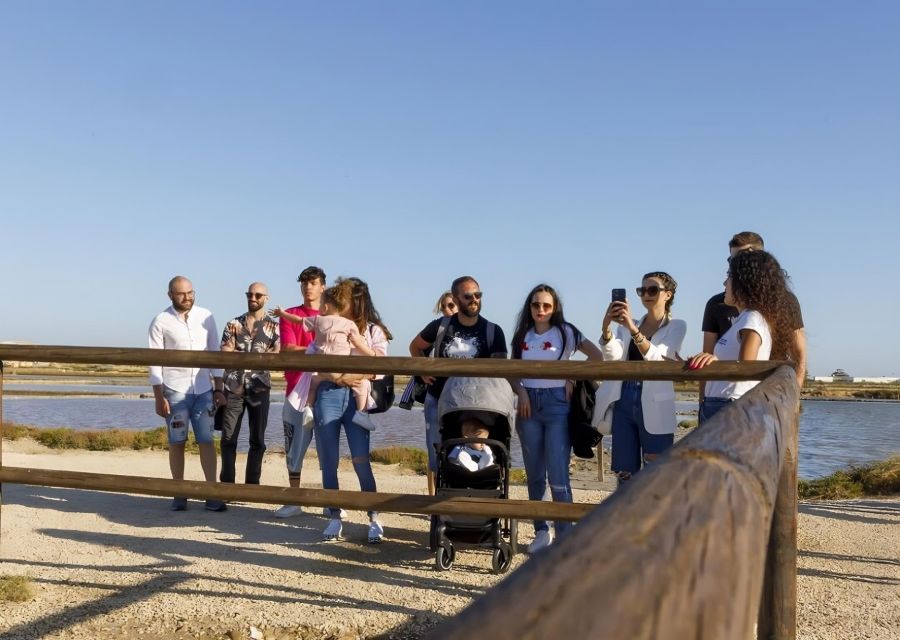
At $21 per person, the price is reasonable for a 75-minute guided visit. It includes the outdoor tour of the Culcasi salt pan, entrance to the salt museum, the old mill visit, and a tasting of whole salt and flavored fleur de sel.
The value comes from the combination. A short walk around the pools alone might feel thin, and a small museum alone might not justify the cost for every visitor. Together, they form a clear sequence: see the salt, understand the labor, visit the old site, and taste the finished product.
The tour also gives you a local family story rather than only a general explanation of salt making. That makes the price more attractive for visitors who want an activity rooted in western Sicily instead of another standard sightseeing stop.
You should still consider the time commitment. The 75-minute duration looks modest, but the outdoor section includes about an hour of walking. If you want a short, seated visit, this will not be the best value for you. If you enjoy an active outing with a guide, the cost is easier to justify.
Who will enjoy this tour most
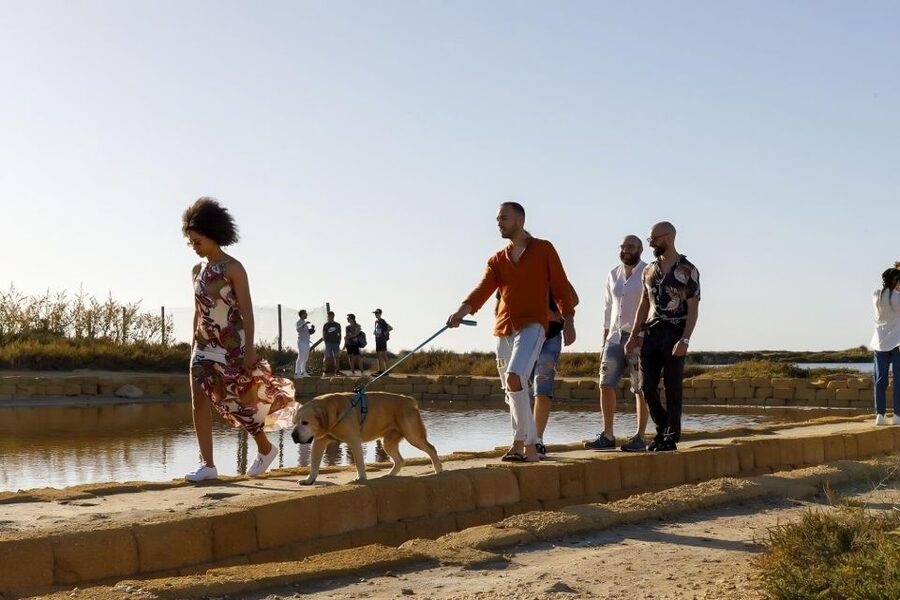
This is a strong choice for families, food-minded visitors, and anyone who wants to see a working side of Sicily. The route is described as suitable for all age groups, and the mix of outdoor space, hands-on salt, museum displays, and tasting gives children several ways to stay interested.
It also suits visitors who have already seen Trapani’s main streets and want a different kind of afternoon. You spend time among sea water, salt banks, protected plants, and birds rather than inside another historic building.
Photography fans will appreciate the reflections and changing colors. The white salt, pink pools, gray clay, and blue sea provide plenty to look at, while the windmill and old mill add human detail.
Food lovers get the clearest extra benefit from the tasting. You can compare whole salt with flavored fleur de sel and learn why a simple ingredient can have different forms.
I would be more cautious if you have limited stamina or are recovering from illness. One booking was missed by a participant who had not realized until after signing up that the tour required an hour of walking. Treat the fitness note as important, not as fine print.
Practical timing and booking advice
The tour runs for 75 minutes, with starting times subject to availability. English and Italian guiding are offered. The activity allows free cancellation up to 24 hours before the start, and you can reserve now and pay later, which helps if your western Sicily plans are still shifting.
Arrive at the ticket office below the windmill and find the guide behind the salt sales counter. Bring comfortable shoes, a hat, and comfortable clothes. Those are not packing suggestions for style. They match the outdoor route and the sun-exposed salt pans.
The tour is wheelchair accessible, but anyone with particular mobility concerns should confirm that the route works for their needs before booking. The stated walking requirement is the key practical point for everyone.
If you want more time at the site, plan for an aperitif with a view or dinner at the restaurant after the tour. Those options are available after the guided visit, but they are separate from the 75-minute tour itself.
Should you book the Culcasi salt pan tour?
Book it if you want a compact, local activity that combines nature, food, family history, and a working craft. The hands-on salt collection and flavored fleur de sel tasting give it more character than a simple viewpoint stop, while the old farmhouse museum and 1400s mill add context.
Skip it if you need a fully seated activity or do not want an hour-long walk. For everyone else, $21 buys a well-shaped visit with an English or Italian guide, museum entry, and tasting. Wear good shoes, bring a hat, and arrive ready to see salt as a product of both the sea and four generations of work.
FAQ
Where does the tour begin?
Meet at the ticket office in the forecourt below the windmill at Via Salina Chiusa, 1. Find the guide behind the salt sales counter.
How long does the tour last?
The guided tour lasts 75 minutes. The outdoor section involves about one hour of walking.
What languages are available?
The live guide is available in English and Italian.
What is included in the price?
The $21 price includes the guided tour of the Culcasi salt pan, entry to the salt museum, and a tasting of whole salt and flavored fleur de sel.
Can I taste different types of salt?
Yes. The tasting includes whole salt and fleur de sel in different aromas produced at the site.
Can I touch the salt during the visit?
Yes. You can touch salt forming in the production tanks and follow the process from seawater to finished salt.
Is the tour suitable for children?
The experience is described as suitable for all age groups. A basic level of fitness is still required because the route includes about an hour of walking.
Is the tour wheelchair accessible?
Yes, the activity is listed as wheelchair accessible. If you have specific mobility requirements, confirm that the walking route suits you before booking.
What should I bring?
Bring comfortable shoes, a hat, and comfortable clothes.
Can I cancel the booking?
You can cancel up to 24 hours in advance for a full refund. The activity also offers a reserve-now, pay-later option.
Just added in Italy
- Highlights and hidden gems of Milan Bike Tour★ 5.0 · 491 reviews
- Milan Gourmet Tour: A Premium Tasting Experience by Do Eat Better★ 5.0 · 241 reviews
- Private Milan Food Walking Tour of Brera★ 5.0 · 217 reviews
- Leonardo3 The World of Leonardo: Tickets for the Interactive Exhibition★ 4.0 · 220 reviews
- Da Vinci’s Last Supper and Santa Maria delle Grazie Church Tour★ 4.5 · 218 reviews
- Learn to Cook Italian Recipes with an Italian Chef★ 5.0 · 283 reviews
- La Scala Theatre and Museum guided experience★ 4.5 · 664 reviews
- La Scala Theatre and Museum Tour in Milan With Private Guide★ 3.5 · 384 reviews
Museums, compared.

Vatican: Museums & Sistine Chapel Entrance Ticket
Read our review →
Vatican Museums & Sistine Chapel Tour with Optional Basilica
Read our review →
Vatican Museums, Sistine Chapel & St Peter’s Basilica Guided Tour
Read our review →
Skip-The-Line Uffizi Gallery Timed Entry Ticket
Read our review →
Vatican Museums & Sistine Chapel Skip-the-Line Entry Ticket
Read our review →
Browse the lists this tour appears in