
Reviewed · ANCIENT RUINS & TEMPLES
From Rome: Ostia Antica Guided Half-Day Trip by Train
Ostia Antica gives you something Rome’s famous ruins often cannot: room to picture ordinary city life. In about three hours, you walk the Decumanus Maximus, inspect a communal toilet with 80 marble openings, study the Baths of Neptune mosaic, and take in an amphitheater built for 3,500 people.
I like the easy train ride from Piramide and the small group, limited to 12. I also like the guides’ practical storytelling. Rob, Cat, Alberto, Laura, and Caterina have been singled out for making trade, bathing, theater, and daily life easy to understand. The main drawback is the amount of walking on an open archaeological site, with limited shade and uneven ground.
Key points before you book
- A short train ride from central Rome: The journey from Piramide to Ostia Antica takes about 15 minutes, with the guide accompanying you.
- A working Roman port city: You see taverns, warehouses, baths, theaters, shops, and streets instead of only grand monuments.
- The Baths of Neptune mosaic: A sea god riding a four-horse chariot is one of the site’s most striking surviving images.
- A small English-speaking group: The tour is limited to 12 people, making it easier to hear, ask questions, and keep pace.
- Free time after the guided walk: You can stay for the museum and more ruins, visit modern Ostia, head to the beach, or return to Rome.
- A strong alternative to Pompeii: Ostia is close to Rome and often much quieter, though its wide site demands comfortable shoes.
Why Ostia Antica belongs on a Rome itinerary
Rome can make ancient history feel like a parade of emperors, generals, and marble temples. Ostia Antica changes the subject. This was Rome’s harbor town, a place shaped by shipping, food supply, trade, military needs, housing, and work.
The site was founded in the 4th century BC and eventually became home to more than 100,000 people. Its importance came from its connection to Rome. Goods moved through the port, businesses operated in the streets, and a large population needed places to eat, bathe, worship, shop, work, and use the toilet.
That everyday angle is the best reason to come. You are not simply looking at broken columns. You are following a Roman street plan and seeing the practical buildings that made a city function. The surviving walls can give you a better sense of urban scale than a single isolated monument.
I find Ostia especially useful after a few days in central Rome. Once you have seen the Colosseum and the Forum, this half-day trip adds the missing ordinary people. It helps explain how Roman society worked below the level of senators and emperors.
Other ruins to walk round near Rome:
- From Naples: Pompeii Ruins & Mount Vesuvius Day Tour
★ 4.3 · 11,459 reviews - Pompeii: Archaeological Park Tour with Ticket on request
★ 4.5 · 2,283 reviews - Discover the Ancient Ruins of Pompeii: Day Trip from Rome
★ 3.5 · 2,247 reviews
Meeting at Cafe Piramide
The tour starts at Cafe Piramide, at Piazzale Ostiense 9. When you face the Piramide Metro stop on Line B, the cafe is on your right, near the train tracks and the station exit. White umbrellas outside help identify it, and the guide carries a City Wonders sign.
Give yourself enough time to find the correct side of the station. One useful point is that the meeting place is by the cafe in view of the tracks, not simply any outdoor cafe near the station. If you arrive by Metro, allow extra time for the station crowds and for getting your bearings.
This location works well because Piramide is both a Metro stop and a rail connection point. The guide provides the return train ticket and explains the route before the group leaves. That removes much of the minor stress that can come with using public transport in an unfamiliar city.
The tour is in English. The group limit is 12, which is a practical size for a site where the guide needs to explain details without shouting across a crowd. It also gives you a fair chance to ask questions.
The 15-minute train ride to the ruins
The journey to Ostia Antica is short, about 15 minutes according to the stated schedule. Your guide goes with you on the outward trip, keeps the group together, and explains what to expect at the archaeological area.
This is not a private vehicle excursion, so you do not get hotel pickup or a chauffeur. For most people, that is a fair trade for the low price of $58. The train is simple, direct, and far less elaborate than arranging a private transfer.
The return works a little differently. The guided service ends back at Piramide at about 1:00 PM, but you can remain at Ostia Antica or continue to modern Ostia and the beach. Return tickets are supplied, but the later journey back to Rome is unescorted. Your guide gives instructions, so pay attention if you choose to stay behind.
If public transport is affected by a strike or another unforeseen problem, a minibus is provided at no extra cost. That is a useful safeguard, though the normal plan is definitely a train trip.
Walking the Decumanus Maximus
The guided visit lasts about three hours. The main route follows the Decumanus Maximus, the broad street that runs through the ancient town. As you walk, the guide explains how the city was organized and points out the remains of shops, taverns, warehouses, thermal baths, theaters, and homes.
This is where a guide makes a real difference. Much of Ostia consists of walls, doorways, foundations, and fragments. Without context, you can easily walk past a commercial building or a public space without understanding its purpose.
The strongest guides use stories and simple comparisons rather than only dates. Rob has been praised for acting out small scenes and adding funny details. Alberto is known for clear explanations and a lively manner. Cat, Laura, Caterina, and other guides have also been described as engaging and attentive. Guide assignments vary, so you should not book expecting one particular person, but the experience clearly depends heavily on who leads the group.
The pace appears designed for seeing the important areas without racing. Breaks may be included so you can look around on your own, and the guide watches the group closely across the large site. Still, this is a walking tour, not a quick roadside stop. Wear shoes that can handle uneven paths and bring water, especially in warm weather.
Other journeys by rail from Rome:
- Rome to Pompeii Guided Tour with Wine & Lunch by High Speed Train
★ 5.0 · 1,379 reviews - Rome: Pompeii Tour with Wine and Lunch by High Speed Train
★ 4.8 · 485 reviews - From Rome: Day Trip to Venice by High-Speed Train
★ 4.6 · 352 reviews - From Rome: Pompeii and Naples Day Trip by High-Speed Train
★ 4.7 · 234 reviews
The Baths of Neptune and its sea-god mosaic
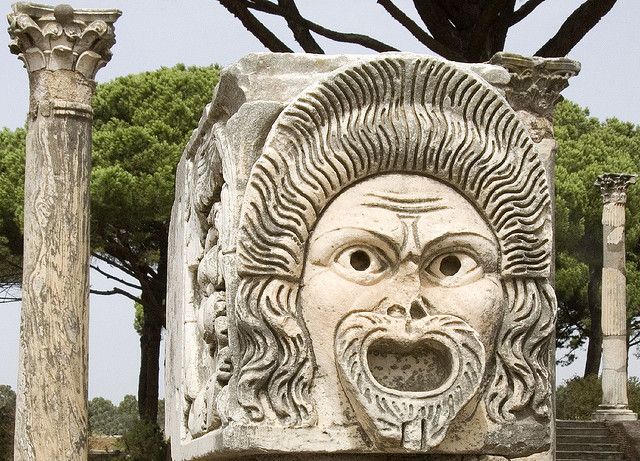
The Baths of Neptune are one of the visual highlights. The surviving mosaic shows Neptune, the sea god, being pulled by a four-horse chariot. It is an unusually strong connection between the building and the world of Roman decoration.
The baths were not merely places to wash. Public bath complexes were social centers where people met, relaxed, and followed a daily routine. At Ostia, the remains help you think about how a large Roman population shared public facilities.
The mosaic also shows why a guide adds value. You can see the image on your own, but the guide places it within the larger setting of Roman public life, architecture, and decoration. A good explanation helps you notice how art was used to make a public building impressive.
There is limited shade around parts of the site. On hot days, the practical advantage goes to the guide who knows where to pause. One detailed account praised Alberto for finding shade during a very warm visit. That sort of care matters more here than it would on a compact city-center walk.
The communal Forica and the ordinary Roman body
The Forica, or public washroom, may be the most memorable stop because it is so direct. A marble bench runs along four walls of a large open room, with 20 well-spaced openings on each side.
It is not grand or glamorous, but that is exactly the point. The Forica makes ancient life physical and human. Roman cities needed sewers, water systems, bathhouses, kitchens, markets, and toilets. Here, you see one of the facilities that served the public rather than the elite.
The guide can use this stop to explain social habits and city planning in a way that a monument cannot. You may even be invited to sit briefly, as long as the site rules and conditions allow. It is a small moment, but it often becomes one of the details you remember.
Taking a seat in the ancient amphitheater
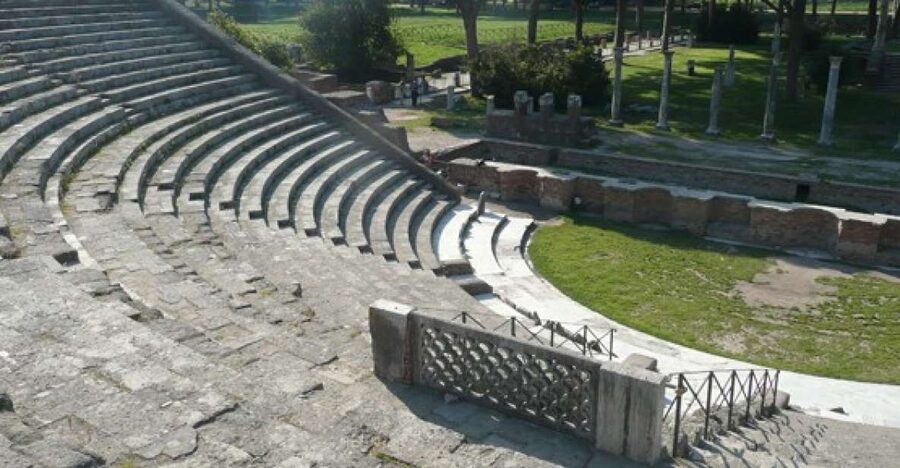
The amphitheater was first built in 12 BC and held about 3,500 spectators. Sitting in the stands gives you a quick sense of how entertainment fit into urban life.
The theater is not on the scale of Rome’s Colosseum, and that is part of its appeal. You can look across the structure and imagine a local crowd gathering for a performance. The guide explains the building and helps you picture how the space worked.
This stop also breaks up the long street walk. You move from shops and service buildings to a place designed for shared spectacle. It is another reminder that Ostia was a functioning city, not a small ceremonial outpost.
What you can see beyond the headline stops
The main route also includes remains of taverns, warehouses, thermal baths, theaters, and commercial spaces. These details give Ostia its strength. You see the machinery of a port town, not simply the decorative side of Roman culture.
The site is large. Three guided hours will show you major areas, but it will not reveal every corner. If you want a slow look at every building, a half-day tour may feel like an introduction rather than a complete visit.
That is not a flaw, as long as you plan for it. The guided walk gives you a structure and historical framework. Afterward, you can continue alone if the site remains open and your schedule allows. One useful tip is to check the museum first, especially in winter, when it may close around 1:30 PM. Opening hours can change, so confirm them before your visit.
Staying on for the museum, modern Ostia, or the beach
At the end of the guided portion, you have choices. You can remain inside the archaeological area and explore more on your own, including the museum when it is open. You can also visit the modern town of Ostia or go to a nearby beach.
This flexibility is unusual for a short organized tour. You are not forced onto the train immediately after the final explanation. If the ruins have caught your interest, stay longer. If you want a change of scene, the beach option turns the morning into a fuller outing.
Bring beachwear and a towel if you plan to continue to the coast. Sports shoes are also listed among the useful items to bring. Do not assume the beach is part of the guided tour. It is an optional extension after the service ends, and you arrange your unescorted return using the supplied ticket.
Families and mixed-age groups can enjoy the site, but small children may find the walking and open spaces tiring. Baby strollers are not allowed, and the tour is not suitable for wheelchair users. Anyone with limited mobility should think carefully about the ground conditions and the length of the walk.
Is $58 good value?
At $58 per person, the tour includes the return train ticket, entry to Ostia Antica, and an English-speaking guide. There is no hotel pickup, food, or private transport.
I consider that a reasonable price for a four-hour outing. The entry and transport are straightforward costs, but the main value is the guide. Ostia’s scale and partly ruined buildings make it harder to read than a compact museum. A well-planned route and clear explanations help you see far more than you likely would by wandering in without preparation.
The small group improves the value. With no more than 12 people, you can usually hear the guide and ask questions. The tour is less private than a one-to-one visit, but it is also much cheaper.
Food and drinks are not included. There is a toilet break with time for a snack or drink at a snack bar, so carry water and do not expect a meal to be part of the package.
The practical drawbacks to keep in mind
Ostia Antica is open and exposed. You should expect sun, uneven surfaces, and a fair amount of walking. Comfortable shoes are essential, and a hat or sunscreen is sensible even though they are not specifically listed.
The site can be underfunded and may show signs of maintenance pressure. That gives the place a less polished feel than Rome’s best-known attractions. I see this as part of the trade-off: you get a quieter, more spacious archaeological setting, but not every path or building will feel perfectly finished.
The tour is also less convenient for anyone who wants to sleep late or avoid public transport. You must reach Piramide yourself. The return is escorted only if you leave with the group, and staying on means following the guide’s instructions for the train.
Who should book this Ostia Antica tour?
I would choose it if you want to understand how regular Romans lived and worked. It is especially good for anyone who has already seen the Forum and wants a different side of Roman society.
It also suits people comparing Ostia with Pompeii. The two sites are not identical, but Ostia offers a similarly broad ancient town experience without requiring a long trip from Rome. It is often much quieter, which makes it easier to stop, listen, and look.
I would hesitate if you dislike walking, need step-free access, or want a fully escorted day from hotel door to hotel door. I would also avoid the hottest part of the day if you are sensitive to sun and heat.
Should you book it?
Book this tour if you want a well-organized introduction to a large Roman port city and value a guide who can explain ordinary life, not just famous rulers. The train ride is short, the price is fair, and the group size keeps the experience personal enough.
The best plan is to wear sturdy shoes, bring water, and decide in advance if you want to stay for the museum or continue to the beach. If you have the energy, remain at Ostia after the guided walk. The tour gives you the story, then the extra time lets you explore at your own pace.
FAQ
How long does the Ostia Antica tour last?
The activity lasts about four hours, including the train journey and guided visit. The guided portion at Ostia Antica lasts about three hours.
Where does the tour meet?
The meeting point is Cafe Piramide at Piazzale Ostiense 9. When facing the Piramide Metro stop on Line B, look to your right for the cafe near the train tracks and station exit. White umbrellas mark the outdoor seating, and the guide carries a City Wonders sign.
Is the train ticket included?
Yes. A return train ticket from Rome to Ostia Antica is included. The guide accompanies the group on the outward trip, but the return journey is unescorted if you stay behind after the guided service.
What language is the tour in?
The live guided tour is conducted in English.
How large is the group?
The group is limited to 12 participants.
Can I stay at Ostia Antica after the tour?
Yes. You can stay to explore more of the archaeological site or visit the museum when it is open. You can also continue to modern Ostia or a nearby beach.
Is the beach included in the guided tour?
No. The beach is an optional plan after the guided portion ends. Bring beachwear and a towel if you want to continue to the coast.
Is the tour suitable for wheelchair users or strollers?
The tour is not suitable for wheelchair users, and baby strollers are not allowed. Comfortable shoes are recommended because the visit involves extensive walking around an archaeological site.
Just added in Rome
- Civitavecchia Private Transfer: From the Port to Rome Airport★ 5.0 · 309 reviews
- Civitavecchia Shore Excursion: Best of Rome Private Tour★ 5.0 · 247 reviews
- Civitavecchia Private Transfer from ship to FCO airport or Rome★ 5.0 · 245 reviews
- Food Tasty and History Tour in Civitavecchia★ 5.0 · 256 reviews
- Palatine Hill and Roman Forum Tour with Fast-Track Entrance★ 4.2 · 417 reviews
- Tivoli: Villa D’Este & Villa Adriana Pass & App Audioguide★ 4.4 · 364 reviews
- Tivoli: Villa D’Este Entry Ticket and App Audio Guide★ 4.3 · 191 reviews
- Vatican Museums & Sistine Chapel Skip-the-Line Guided Tour★ 4.6 · 254 reviews
Ancient Ruins & Temples, compared.
Archaeological Park Tour with Ticket on request
Read our review →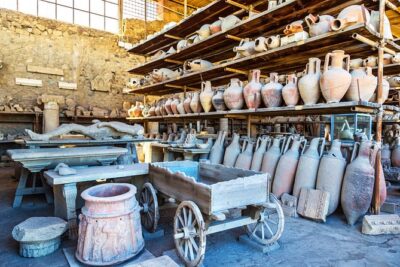
Discover the Ancient Ruins of Pompeii: Day Trip from Rome
Read our review →
Agrigento: Valley of the Temples Skip-the-Line Sunset Tour
Read our review →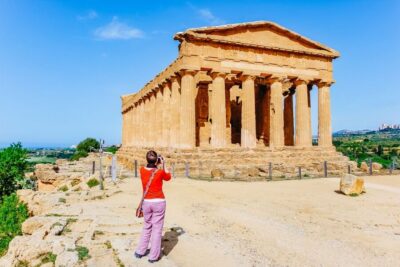
Agrigento and the Valley of the Temples Day Tour
Read our review →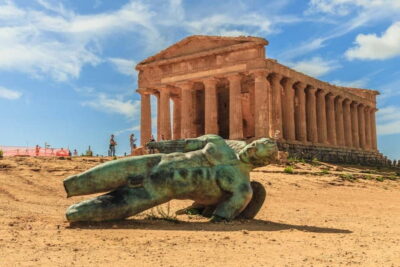
Agrigento: Valley of the Temples Ticket & App Audioguide
Read our review →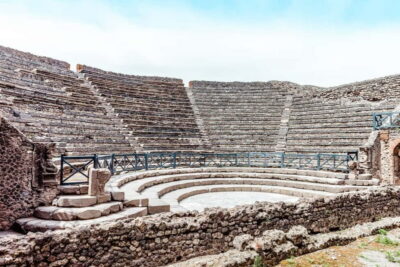
Pompeii Ruins Private Tour with Optional Skip-the-Line Entry
Read our review →
National Archaeological Museum Ticket & Audio App
Read our review →Browse the lists this tour appears in