Reviewed · TOURS IN FLORENCE
Florence: Santa Maria Novella Entry Ticket & Audioguide
Santa Maria Novella brings together Florence’s early Dominican roots, Gothic architecture, and Renaissance art in one compact visit. I especially like the chance to see major works by Giotto, Masaccio, Botticelli, and Ghirlandaio without waiting in the regular ticket line.
The multimedia tablet adds useful context to paintings and frescoes that can otherwise blur together. The main drawback is practical: the entrance instructions can be confusing, the device may be awkward to operate, and you must leave a valid ID while using it.
Key points at a glance
- The basilica dates from the 13th century: Dominican friars began the complex, which grew in size and importance over the centuries.
- The 7-inch guide uses more than audio: Expect images, video, high-definition details, and 3D reconstructions.
- The art spans the Middle Ages and Renaissance: Look for work linked to Giotto, Masaccio, Brunelleschi, Vasari, Paolo Uccello, Ghirlandaio, and Filippino Lippi.
- Your entry time matters: The chosen date and time are binding, and late arrival can mean refused entry.
- The ticket office is to the church’s right or rear side: Look for the tourist office across from Florence’s train station rather than assuming the main front doors are the correct check-in point.
- The audio guide is not a private tour: No live guide is included, and the same multimedia content is used by children and adults.
Why Santa Maria Novella deserves an hour
Florence can make you choose between famous museums, grand churches, and smaller historic sites. Santa Maria Novella earns its place because it combines all three elements in a manageable setting.
The complex began after the first Dominican friars settled in Florence during the early 13th century. It then expanded over many generations. That long development explains the mix of Gothic and Renaissance forms. You are not looking at one single architectural idea, but at a building shaped by changing tastes, religious needs, and the city’s growing wealth.
Michelangelo reportedly called Santa Maria Novella his bride. The nickname makes sense once you see the balance between the church’s structure, decoration, and proportion. The building is not simply a box filled with paintings. Its walls, chapels, cloisters, and covered walkways work together.
I would allow at least an hour, even though some people may move through faster. The site rewards a slower pace because the important details are spread across the complex rather than gathered in one famous room.
A few more things to do in Florence
- Florence: Skip-The-Line Uffizi Gallery Timed Entry Ticket
★ 4.5 · 27,832 reviews - Florence: Timed Entrance Ticket to Michelangelo’s David
★ 4.6 · 16,983 reviews - Florence: Michelangelo’s David Skip-the-Line Entry Ticket
★ 4.5 · 12,764 reviews
Finding the correct entrance near the station
The meeting instructions deserve careful attention. The ticket collection point is to the right of Santa Maria Novella, and pre-booked visitors may be directed to the rear or north-side entrance. The tourist office is across from Florence’s main train station, so use the station as your landmark.
Do not simply join the largest line in front of the church. The front piazza can be busy, and the correct place to redeem your ticket is not always obvious. Give yourself extra time to locate the office, especially if you have a firm reservation slot.
Your selected time is mandatory. This is not an attraction where you can arrive at any point during the day and expect entry. If you miss the allotted time, admission can be refused.
There is another practical matter: the multimedia guide is collected inside the basilica, but you must leave a valid passport or identity card at the ticket office. A driver’s license may also be accepted, but the supplied information specifically requires valid ID, so bring the document you are comfortable leaving temporarily.
The basilica’s Gothic and Renaissance mix
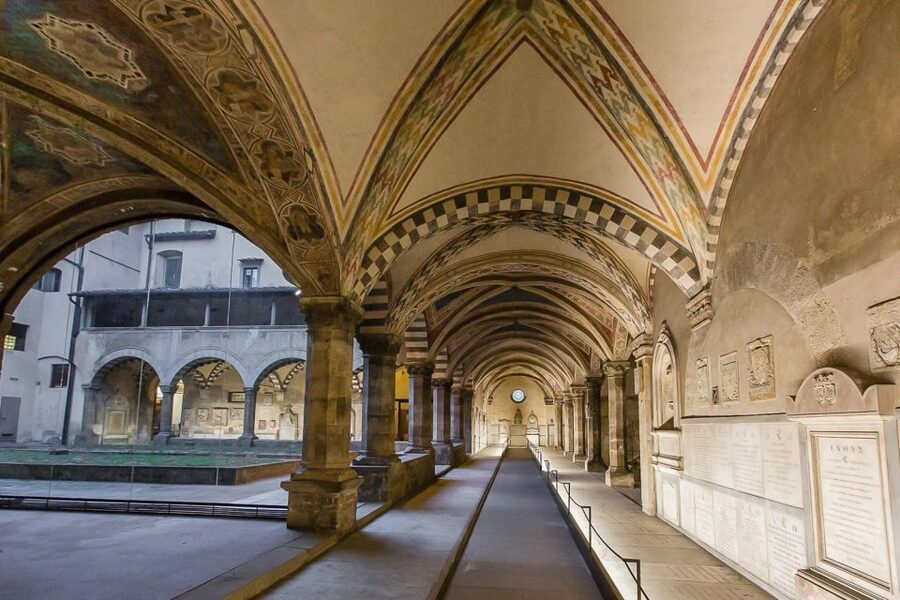
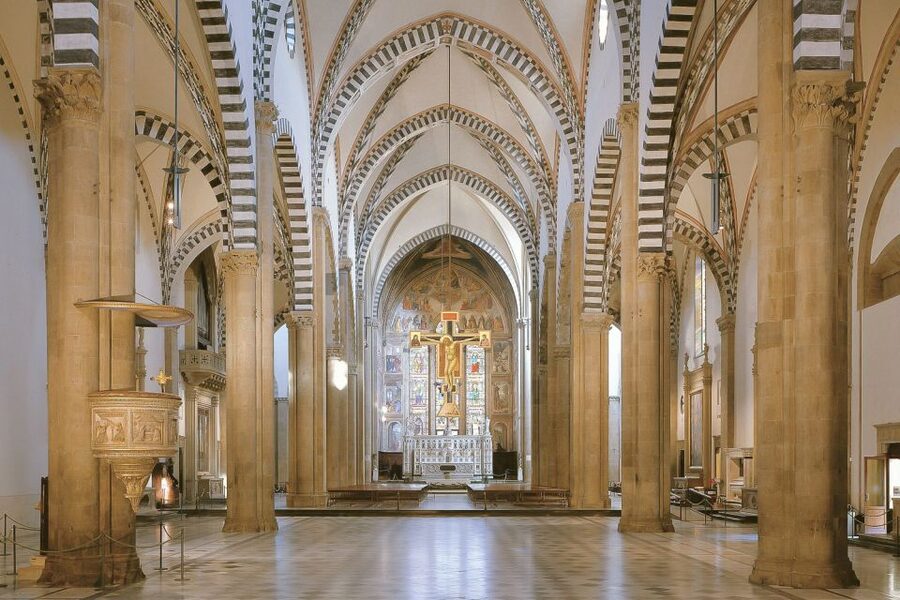
Once inside, start by looking at the whole space before focusing on individual artworks. Santa Maria Novella’s appeal comes from the way its architecture frames the art.
The church’s Gothic character reflects its medieval beginnings, while later Renaissance work brings a different sense of order and control. This makes the basilica especially helpful for understanding Florence’s artistic transition. Instead of studying the Middle Ages and Renaissance in separate museums, you see them meet within one religious complex.
The exterior is also worth attention. The covered walkways and decorative surfaces create a calmer setting than the busy piazza outside. Some visitors come mainly for the church interior and leave too quickly, missing the architectural details around the cloisters.
The site includes exhibitions and displays connected with the complex. Access to certain areas can change, and portions have occasionally been closed. That means the full experience may not always be available, even when the church itself remains open.
The art: Giotto, Masaccio, and Ghirlandaio
The strongest reason to choose the multimedia option is the art. Santa Maria Novella is not short on names that matter in European painting and architecture.
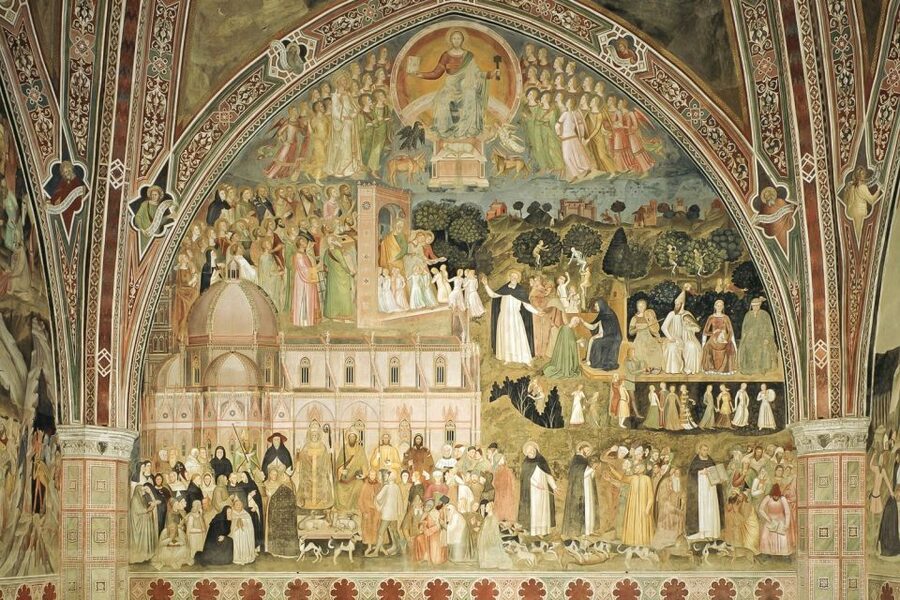
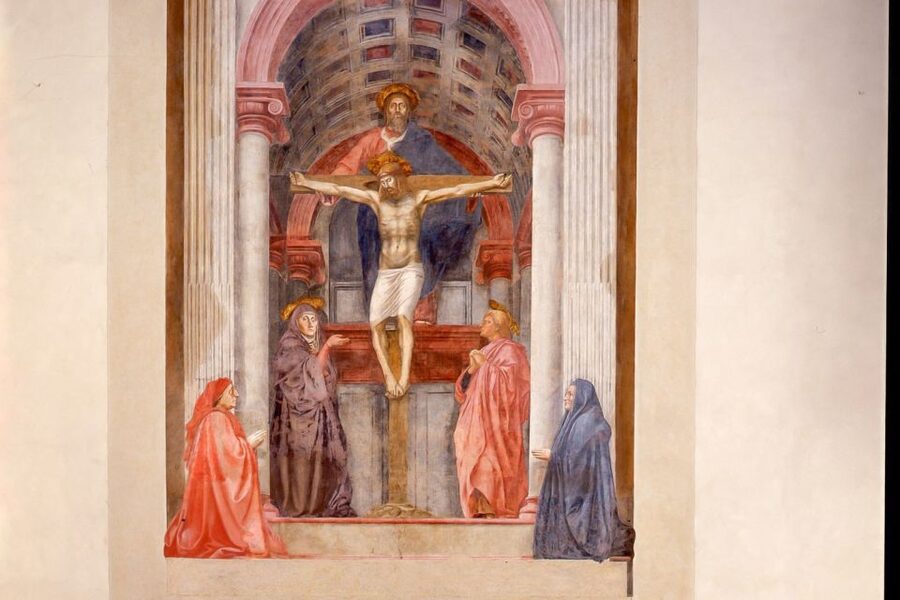
You may encounter work associated with Giotto, one of the key figures in the move toward more natural and expressive medieval painting. Masaccio is another major presence. His work matters because it helped push Florentine art toward stronger perspective, volume, and human feeling.
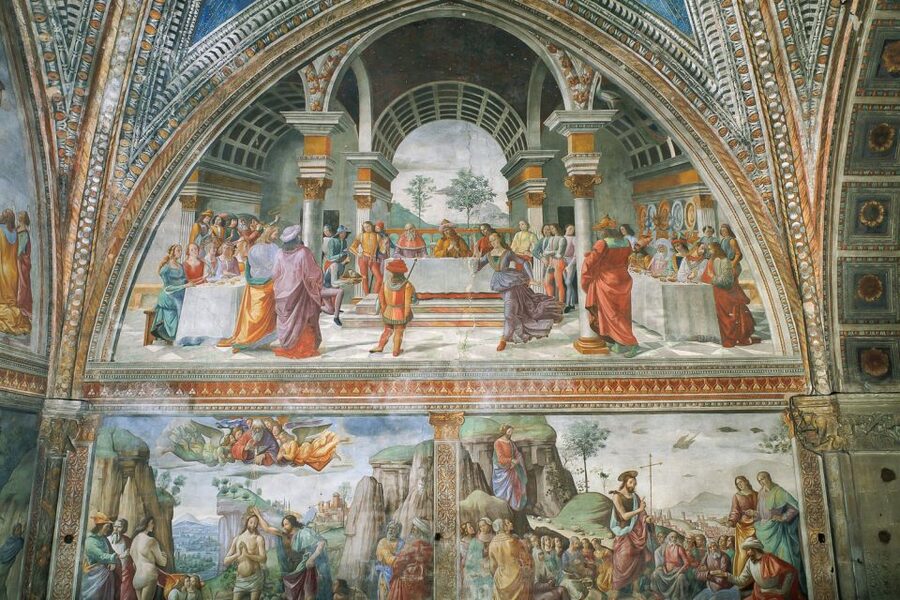
Domenico Ghirlandaio and Filippino Lippi represent later Renaissance achievement. Their paintings reward close attention to figures, setting, and detail. Paolo Uccello adds another important chapter in the Florentine interest in perspective and visual structure.
The complex also connects with Filippo Brunelleschi and Giorgio Vasari. Their names help place Santa Maria Novella within the wider story of Florence, where architecture, painting, sculpture, and religious patronage constantly overlapped.
You do not need an art-history background to enjoy the visit. The key is to use the guide selectively. Listen to the explanation for the works that catch your eye, then pause the narration and look on your own. Trying to follow every available item can make a one-hour visit feel rushed.
Same base, a different kind of day:
- Tuscany Day Trip from Florence: Siena, San Gimignano, Pisa and Lunch at a Winery
★ 5.0 · 21,634 reviews - The Best tour in Florence: Renaissance & Medici Tales – guided by a STORYTELLER
★ 5.0 · 12,316 reviews - Florence: Leonardo Interactive Museum Entry Ticket
★ 4.5 · 11,763 reviews - The Best Tour in Florence: Renaissance and Medici Tales
★ 5.0 · 10,810 reviews
What the 7-inch multimedia guide adds
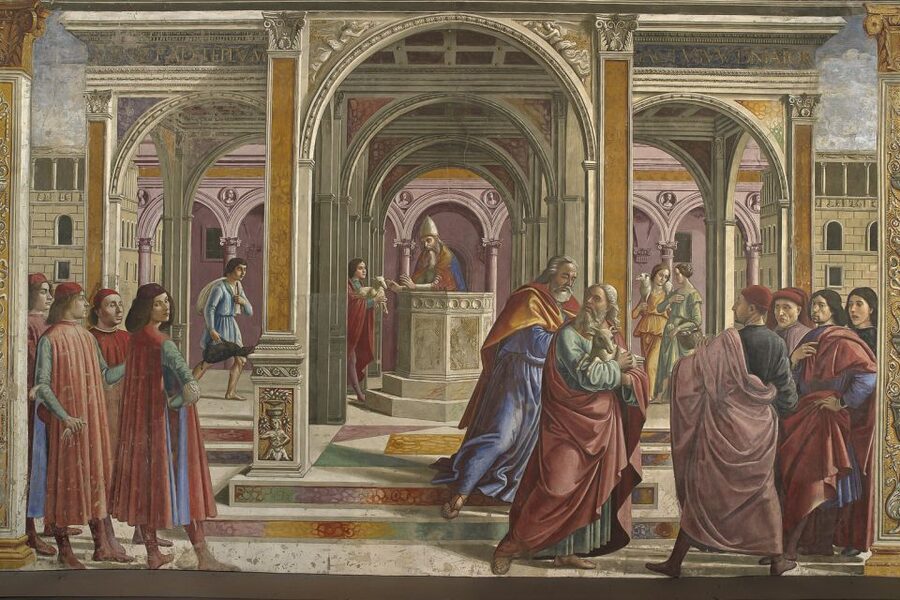
The guide is a 7-inch tablet with audio, high-definition images, video, and 3D reconstructions. That is more ambitious than a basic recorded narration.
The visual material can help you see details that are hard to pick out from the floor. A reconstruction may also show how a section of the complex looked or functioned in another period. For visitors who prefer context over silent wandering, this can make the church easier to understand.
English, Spanish, French, German, and Italian are available. The main exhibitions themselves may use English and Italian, so selecting the audio guide in your strongest language can make a real difference.
The device is not perfect. Its controls can be fiddly, especially when the screen times out. One practical complaint is that the tablet can lock itself, leaving you to work out how to restart the content. The instructions for moving between sections could also be clearer.
I suggest testing the device before walking far into the complex. Make sure the volume works, learn how to wake the screen, and ask staff for help immediately if the controls are unclear. A little attention at the start can save you from missing the narration later.
The same guide is used for adults and children. Families should not expect a separate child-focused version. The content may still be useful for young visitors who enjoy screens and visual reconstructions, but the format is not tailored by age.
Cloisters, covered walkways, and quieter details
The cloisters provide a welcome change from the main church. Here, you can focus on the complex’s structure and decoration without looking only toward an altar or chapel.
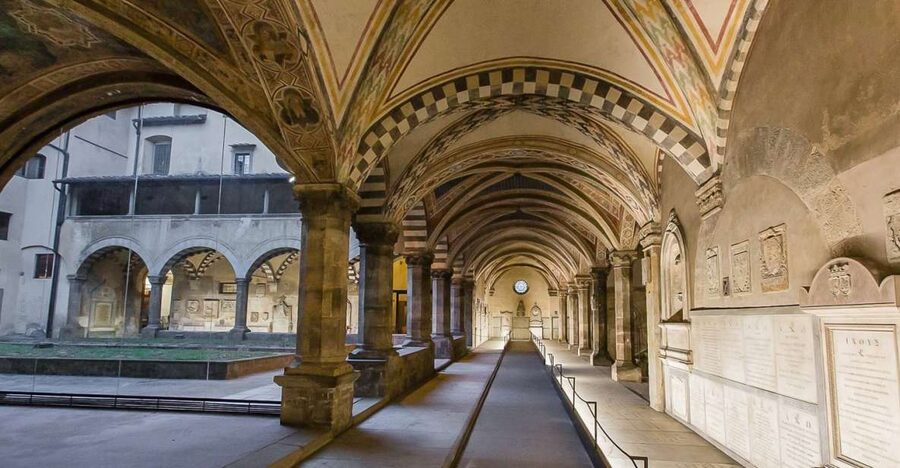
The covered walkways include murals and architectural details. They also help explain why Santa Maria Novella feels like a monastery complex rather than just a church. The outdoor sections add space, rhythm, and a different kind of visual interest.
The cloisters are particularly worthwhile if you enjoy architecture. You can study repeated arches, wall decoration, and the relationship between open courtyard space and covered passages. The visit is not just about famous paintings.
Keep in mind that parts of the museum or grounds may be closed on a given day. If a particular exhibition is important to you, check the current access situation before booking. A closure does not erase the value of the basilica, but it can affect what you receive for the admission price.
Is the $18 price good value?
At $18 per person, this is not the cheapest way to enter Santa Maria Novella. Some visitors have found that buying admission and an audio guide directly at the church can cost less.
The extra money may make sense if you value a reserved entry time and want to avoid the regular ticket line. It can also suit you if you prefer to arrange your visit before arriving in Florence, rather than sorting out tickets at the door.
The value is weaker if you are comfortable waiting, already know the site well, or only want a quick look inside. In that case, the independent option may be better.
I would think of the price as paying for convenience, advance planning, and the multimedia format, not simply for the church entrance. Compare the direct admission price before booking if your budget is tight.
The free cancellation policy gives you some flexibility up to 24 hours before the visit, and the reserve-now, pay-later option can help when your Florence schedule is still moving. Still, once you choose the date and time, treat that slot as fixed.
How long to stay and how to plan the visit
The advertised visit is about one hour, but your pace will decide the total time. A focused visit that follows the main guide points can fit comfortably into that period.
I would plan a little extra time for check-in, finding the correct entrance, collecting the device, and returning it. If you arrive late in the afternoon, be especially careful. The ticket office may close before the church does, and a tight schedule can leave you rushing through the tablet pickup and return process.
A sensible plan looks like this:
- Arrive early enough to locate the office near the station.
- Redeem the ticket at the correct side or rear entrance.
- Leave your valid ID and collect the tablet.
- Test the device before entering the main viewing areas.
- Begin with the basilica, then continue through the cloisters and covered walkways.
- Return the multimedia guide and collect your ID before leaving.
Wear respectful clothing suitable for a church visit. The supplied information does not list a formal dress code, so I would simply avoid treating this as a casual outdoor stop.
The piazza and station area require normal city awareness. Keep your bag closed and secure, particularly in crowded spaces. One booking companion had a wallet stolen near the piazza, so do not leave valuables in an open bag while you are reading directions or taking photographs.
Who will enjoy this visit most?
I recommend Santa Maria Novella for first-time visitors who want a strong introduction to Florence’s art without committing half a day to a major museum. The church, cloisters, architecture, and guide fit neatly into a busy city schedule.
It also suits you if you enjoy learning as you look. The tablet gives names and explanations that can turn a wall of painted scenes into a series of connected works.
Families may appreciate the visual format, but remember that the guide is the same for adults and children. Art lovers should allow more than the basic hour if the main frescoes catch their attention.
This is less suitable if you want a personal guide who can answer questions or adjust the pace. A live guide is not included. It is also a poor match if you dislike electronic devices, do not want to leave ID at the office, or need complete certainty that every section will be open.
Should you book Santa Maria Novella with the multimedia guide?
Book it if you want a reserved entry, clear art context in your own language, and a compact visit close to Florence’s train station. The basilica is genuinely worth seeing, and the cloisters add more than a quick church stop.
Before paying, compare the direct ticket price and decide how much the skip-the-line arrangement matters to you. Also check the entrance instructions twice, bring valid ID, and leave enough time for the tablet rather than arriving at the last minute.
For a first visit to Florence, I think the experience earns a place on your list, especially if you appreciate painting and architecture. Just treat the $18 price as a convenience fee, not automatically the cheapest admission.
FAQ
How long does the Santa Maria Novella visit take?
The planned visit to the basilica and cloisters lasts about one hour. You should also allow extra time to find the ticket office, collect the multimedia guide, and return it.
Is a live tour guide included?
No. The ticket includes admission and a multimedia guide on a 7-inch tablet, but no live tour guide.
Which languages are available on the multimedia guide?
The guide is available in English, Spanish, French, German, and Italian.
Do I need to bring identification?
Yes. You must bring a valid passport or ID card. The ticket office holds the ID while you use the multimedia guide.
Can I arrive at any time during the day?
No. Your selected date and time slot are binding. You can be refused entry if you do not arrive at the allotted time.
Can I cancel the booking?
You can cancel up to 24 hours in advance for a full refund. The reserve-now, pay-later option lets you book without paying immediately.
Just added in Florence
- Wine Tasting Experience in Ponte Vecchio: Best Tuscany selection!★ 5.0 · 197 reviews
- Walking Food Tour of Florence with Tastings and Wine★ 5.0 · 518 reviews
- Wine Experience In Chianti Hills from Florence★ 4.5 · 195 reviews
- Florence Sunset Food Tour with Wine & Dine at a Tuscan farmhouse★ 5.0 · 194 reviews
- Uffizi and Accademia Small Group Guided Tour★ 4.5 · 449 reviews
- Val d’Orcia Brunello Wine Tour with Montalcino and Montepulciano★ 4.5 · 359 reviews
- Uffizi Gallery Timed Entry Admission Tickets★ 4.0 · 392 reviews
- Uffizi Gallery Small Group Tour with Guide★ 4.5 · 879 reviews
Tours in Florence, compared.
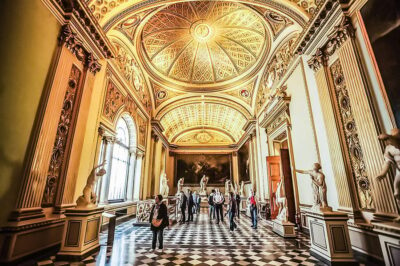
Skip-The-Line Uffizi Gallery Timed Entry Ticket
Read our review →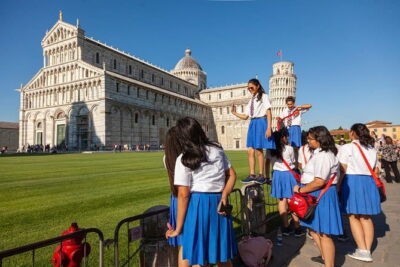
Tuscany Day Trip from Florence: Siena, San Gimignano, Pisa and Lunch at a Winery
Read our review →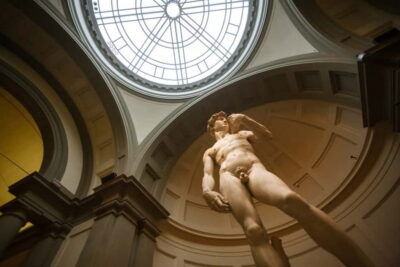
Timed Entrance Ticket to Michelangelo’s David
Read our review →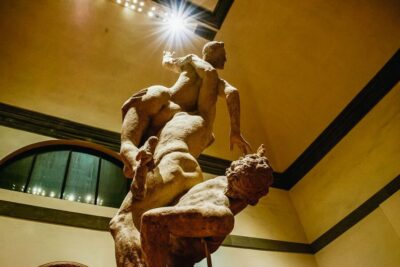
Michelangelo’s David Skip-the-Line Entry Ticket
Read our review →
The Best Tour in Florence: Renaissance and Medici Tales
Read our review →