
Reviewed · TRAIN EXPERIENCES
Cagliari: Conti Vecchi Salt Flats Train and Tour
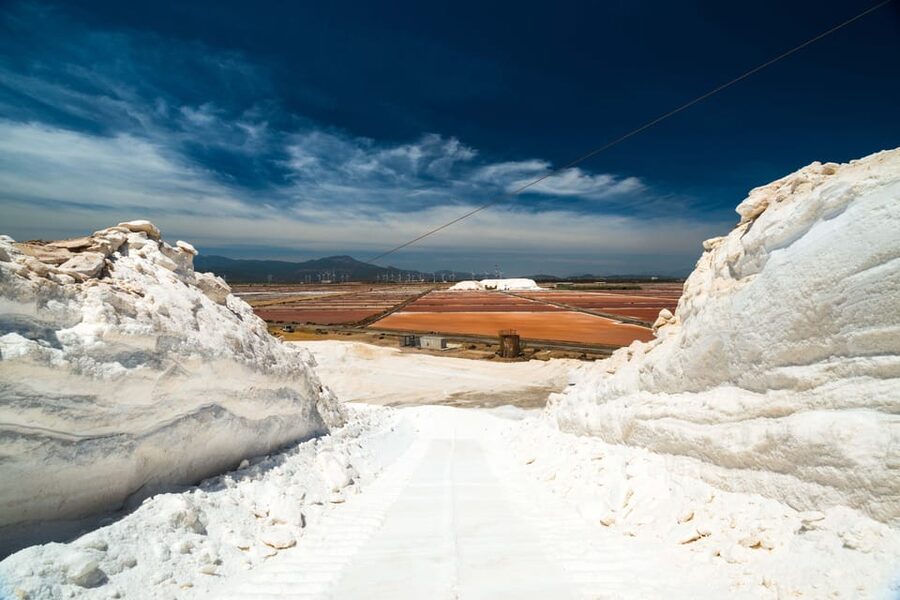
The surprise here is how much story sits inside a pile of salt. At the Conti Vecchi Saltworks, white gold once powered jobs and growth around Cagliari. You get an old industrial village, a working salt plant, and a train ride through broad pans where flamingos feed beside pink water.
I like the clear mix of culture and nature. The museum explains Luigi Conti Vecchi and the people who worked here, while the train brings you close to salt production and birdlife. At $14 for two hours, it is also one of Cagliari’s better-value outings. The main drawback is language: the live tour is in Italian, and English explanations may be brief or hard to hear from the second train carriage.
Key points to know
- Flamingos in the Santa Gilla Basin: Look for pink birds against white salt heaps and shallow colored water.
- A working industrial site: This is not just a museum. You see an active salt operation and the machinery, buildings, and methods behind it.
- A one-hour train ride: The small train carries you through the salt pans and natural area, with commentary along the way.
- Luigi Conti Vecchi’s story: The visit connects salt production with Cagliari’s economic development and the daily lives of workers.
- Italian guide, English limitations: Short films may have English subtitles, but live commentary is listed in Italian.
- Easy access by car: Free parking is available inside the industrial area at Assemini and Macchiareddu, followed by a short walk to the bookshop and entrance.
Why Cagliari’s salt flats are worth your afternoon
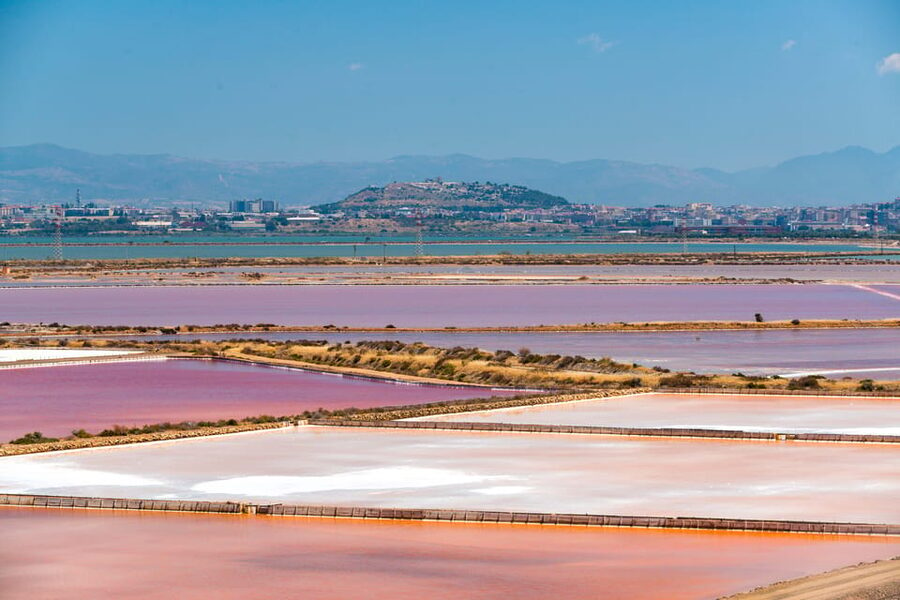
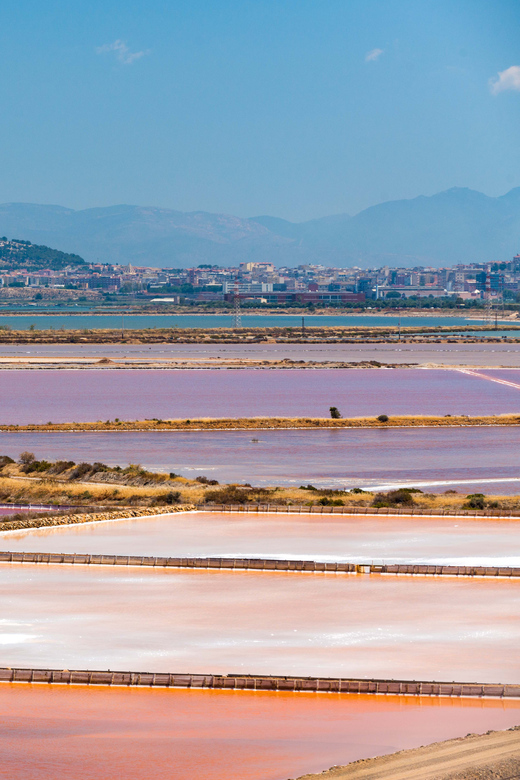
Cagliari is often treated as a gateway to Sardinia’s beaches, but the Santa Gilla Basin offers a different look at the island. Here, the main attractions are salt pans, drainage channels, old work buildings, and flocks of birds. It is a working place with a long economic story, not a polished theme park.
The Conti Vecchi Saltworks gives you two experiences in one. First comes the museum and historic site, where you learn how salt was made and how the operation affected local life. Then you board the train for a broad view of the basin, the salt heaps, and the wildlife.
That combination makes the visit useful for people who want more than a quick flamingo photo. You see why the birds are here, how salt is separated and stored, and how an industrial project changed the area around Cagliari.
At two hours, the outing fits neatly into a morning or afternoon. It is also short enough to suit families and visitors with limited time. The $14 price is modest for entry, a guide, museum access, two films, and a one-hour train ride.
Other journeys by rail from Cagliari:
- Bernina Red Train, Swiss Alps & St Moritz From Milan
★ 5.0 · 2,954 reviews - Swiss Alps Bernina Red Train and St.Moritz Tour from Milan
★ 4.5 · 2,369 reviews - Sorrento: Skip-the-Line Pompeii Express Tour by Train
★ 4.8 · 2,038 reviews
Getting to the Conti Vecchi Saltworks from Cagliari
The saltworks are in the industrial area known as Assemini and Macchiareddu, outside central Cagliari. You drive into the industrial zone and leave your car in the free parking area. From there, walk to the bookshop at the main entrance.
This location matters when planning your day. Hotel pickup and drop-off are not included, so you need to arrange your own transport. The setting is practical rather than scenic at first, with industrial roads and work facilities surrounding the entrance. Do not expect to stroll from Cagliari’s old center to the site.
Once you reach the entrance, the visit becomes more organized. The bookshop is the meeting point, and staff direct you toward the museum, old buildings, and train. Give yourself enough time to park and walk in without arriving at the last second.
The site is wheelchair accessible in important areas. The train can accommodate wheelchairs, and the old building is accessible on the first floor. If you need access to other parts of the historic buildings, confirm the details before booking.
Inside the museum, salt becomes a human story
The museum and old saltworks buildings give context before the train ride. You see historical documents, tools, a vintage workshop, and a restored chemical laboratory. These details help explain that salt production depended on far more than sun and seawater.
The films are useful here. One presents the history of Sardinia and the salt flats, while the second adds background to production and the site’s development. English subtitles are available on at least one of the films, which helps if you do not speak Italian.
I especially like this part because it puts names and working lives behind the machinery. Luigi Conti Vecchi was an engineer linked to the development of the saltworks and the economic growth of the area. The visit also introduces Macchiareddu, the historic village associated with salt workers.
You learn about the people who handled the daily work, not only the technical process. Salt could be collected, processed, stored, and moved on a large scale, creating employment and supporting wider development around Cagliari. That makes the site a useful stop for understanding Sardinia’s modern economic past.
The presentation is not built around flashy displays. It depends on documents, old tools, restored rooms, and explanation. If you enjoy industrial archaeology, this may be the strongest section of the visit. If you mainly want birds and outdoor scenery, the museum can feel like an introduction you need to get through before the train.
The one-hour train ride through the salt pans
The train is the main outdoor portion of the experience. It carries you into the Santa Gilla Basin, described as Sardinia’s most important wetland, and passes through the salt flats and natural area.
From the carriage, you can see the different stages and settings connected with salt production. White heaps rise against the flat basin, and shallow water may take on pink or reddish tones. These colors come from the salt environment and make the ride far more striking than a standard industrial tour.
The train also gives you a chance to spot birds. Flamingos are the headline sight, and they often provide the most memorable moment of the outing. You might also see other wetland birds, depending on the conditions and timing.
Bring a camera, but keep your eyes moving. The attraction is not one single viewpoint. It is the contrast between the bright birds, pale salt mountains, reflective pans, old structures, and wide open basin.
The train ride lasts about an hour, which gives you enough time to understand the scale of the operation. It also means you are seated for much of the outdoor portion, rather than walking directly among the pans. One visitor specifically wished there had been a chance to get off the train and experience the salt environment on foot. That is a fair point. If you want a hands-on walk beside the pans, this tour may feel limited.
Same base, a different kind of day:
- Cagliari: Underground Cagliari Walking Tour
★ 4.7 · 2,329 reviews - Cagliari: Devil’s Saddle Boat Tour with Spritz and Chips
★ 4.9 · 1,193 reviews - Cagliari: Boat Tour with 4 Swim Stops, Snorkeling & Prosecco
★ 4.9 · 865 reviews - Cagliari: Walking Tour of the Old City
★ 4.8 · 560 reviews
Flamingos, pink water, and the best viewing expectations
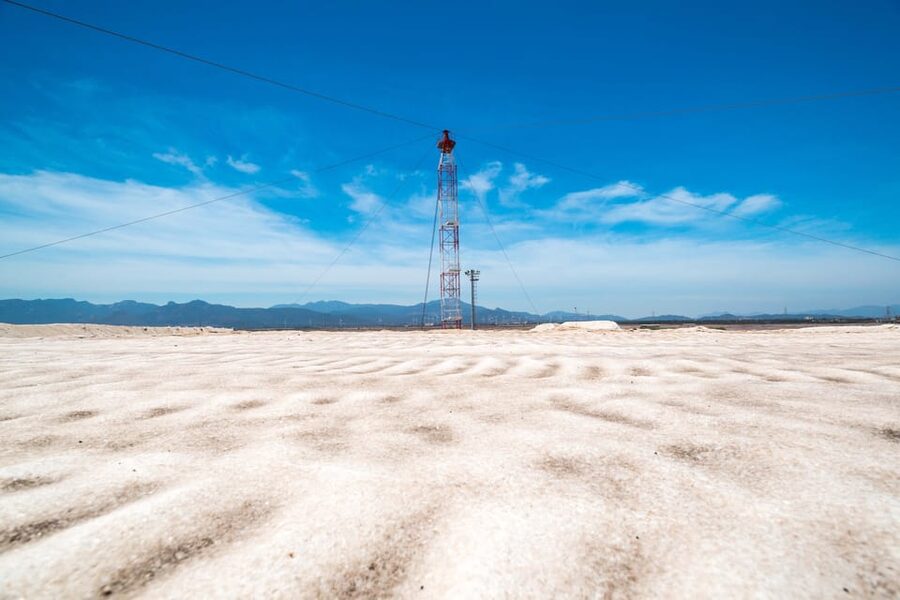
The flamingos are real, wild birds in their own habitat, not animals brought in for display. That is a major strength of the experience. You see them as part of a wetland connected to the saltworks, which makes the sighting feel more natural and less staged.
Still, birdwatching always depends on conditions. The birds may be farther away than you hope, and the train does not appear to stop for a long birdwatching session. One visitor wanted more time to watch the birds, so bring realistic expectations.
Weather can affect the ride too. A thunderstorm once forced a train group to return early, leaving little time for flamingo viewing. That is nobody’s fault, but it shows why you should treat the birds as a bonus rather than a guarantee of close-up photographs.
The salt colors may also change with light and conditions. On a bright day, the contrast between white salt, pink water, and pink flamingos can be remarkable. On a gray day, the site feels more stark and industrial. Either way, the setting gives you something different from Cagliari’s churches, markets, and beaches.
How the guide and language affect the visit
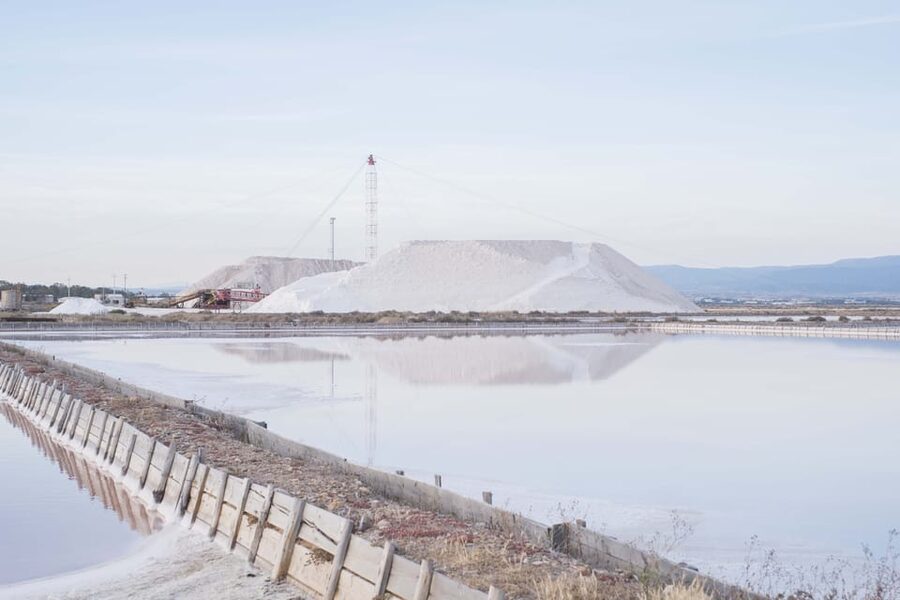
The experience is listed with a live Italian-speaking guide. The walking portion through the old buildings can be informative and well organized, especially when the guide explains the tools, documents, laboratory, and workers’ routines.
Elena has been singled out as an enthusiastic guide, and the quality of the staff is an important part of the visit. The best explanations connect the salt process to Cagliari’s development instead of simply naming machines.
Language is the biggest practical issue. If you understand Italian, you should get the fullest version of the live commentary. If you do not, the films and visual setting still provide plenty to see, but the train narration may not give you the same detail.
Some English speaking visitors have found the live explanation short or delivered after the train had already passed a point of interest. The speaker in the second carriage can also be difficult to hear because the train shakes and makes noise. Sit as close to the guide or speaker as possible, and do not assume that booking an English option guarantees a full English presentation.
The old building tour may work better for English speakers than the train commentary because the guide can stop and explain each room. Even so, check the language offered for your date before you commit, especially if detailed interpretation is central to your decision.
What makes the $14 price good value
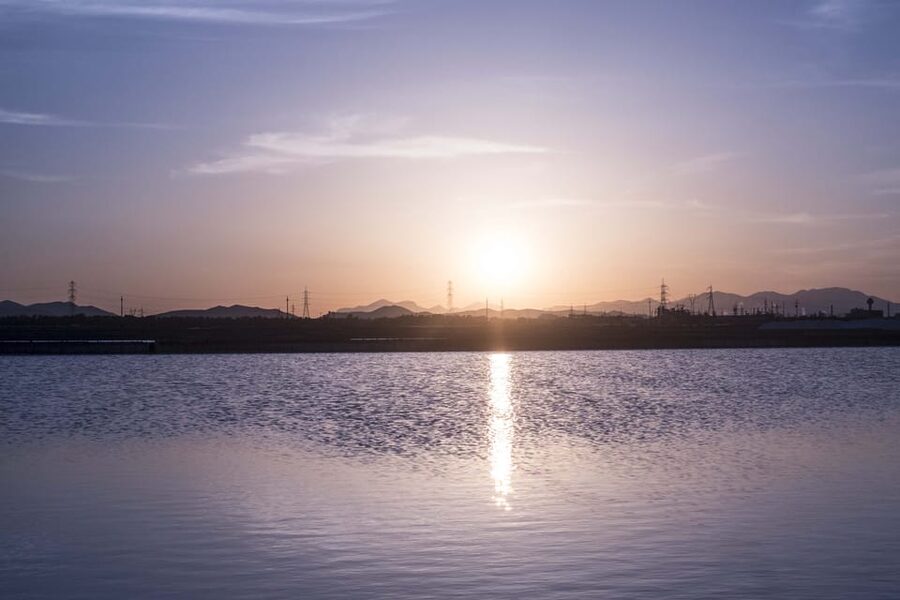
At $14 per person, this is an inexpensive way to fill two hours near Cagliari. The price includes entry to the salt flats, a guide, the historic buildings, two films, and the one-hour train ride.
The value comes from the variety. You are not paying only for a museum ticket or only for a short scenic ride. You get industrial history, a working plant, a wetland setting, and a chance to see flamingos.
The experience is also easy to fit around other plans. It does not take a full day, and the train saves you from walking long distances across the saltworks. For families, that can make the visit less tiring. For adults interested in engineering or local history, the museum adds substance to what could otherwise be a quick photo stop.
The limitation is that the outing depends on a guided schedule and a fixed train route. You do not have unlimited time to explore or photograph the pans. If you prefer independent wandering, a conventional nature reserve may suit you better. If you like a clear introduction to an unfamiliar place, the structure works well.
Free cancellation up to 24 hours before the start and reserve now, pay later terms also make it easier to fit into a changing itinerary. Those booking conditions are useful, but the real value comes from the low price and the amount included.
Who should book this saltworks tour
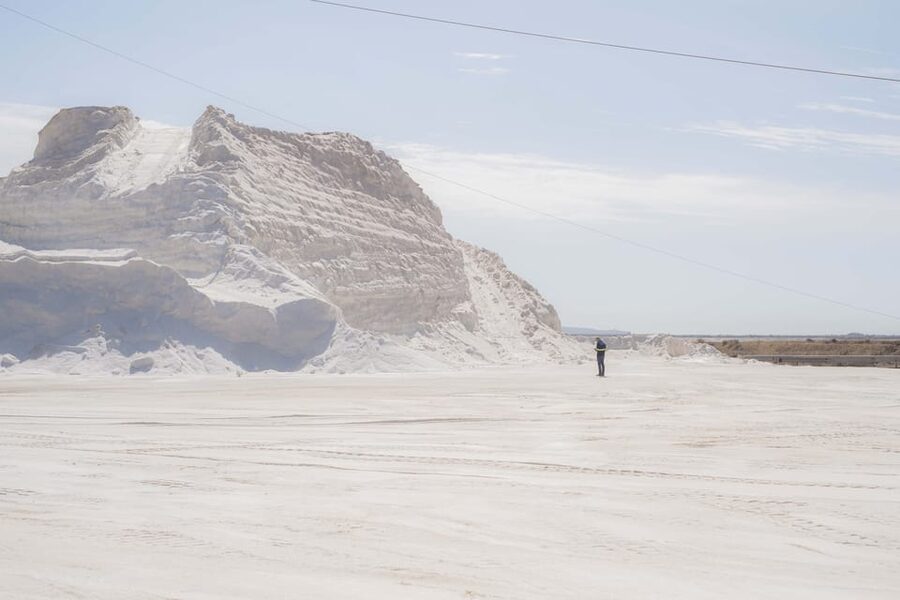
I would recommend it to anyone curious about how ordinary products shaped local communities. Salt sounds simple until you see the engineering, labor, storage, chemistry, and transport behind it.
It is a particularly good choice for:
- Families who want an easy activity outside the city
- Visitors interested in Sardinian industry and local development
- Bird lovers who would like a chance to see flamingos in a wetland
- Photographers looking for white salt heaps, colored water, and birds
- People who want a short outing priced below most major Cagliari attractions
- Anyone who has a car and wants a different side of the area
You may want to skip it if your priority is a long walk among the salt pans, guaranteed close bird sightings, or a fully detailed English narration. The train keeps you moving, and the live language service may not match what you expect.
Practical tips for a better visit
Arrive at the free parking area with enough time to walk to the bookshop at the entrance. The saltworks are in an industrial zone, so follow the meeting point details rather than expecting a historic village entrance from the road.
If you want the best chance of understanding the commentary, sit near the guide or the front speaker. The second carriage can be noisy, and the train itself shakes as it moves.
Watch the films carefully, especially if English subtitles are available. They give useful background before the ride and help you recognize why the pans, buildings, and machinery matter.
Keep your camera ready for the flamingos, but do not plan the entire visit around one perfect photograph. Bird locations change, and poor weather can shorten the outdoor ride.
The train is wheelchair accessible, and the first floor of the old building is accessible. If you have mobility needs beyond those areas, ask for current access details before arrival.
Should you book the Conti Vecchi Salt Flats tour?
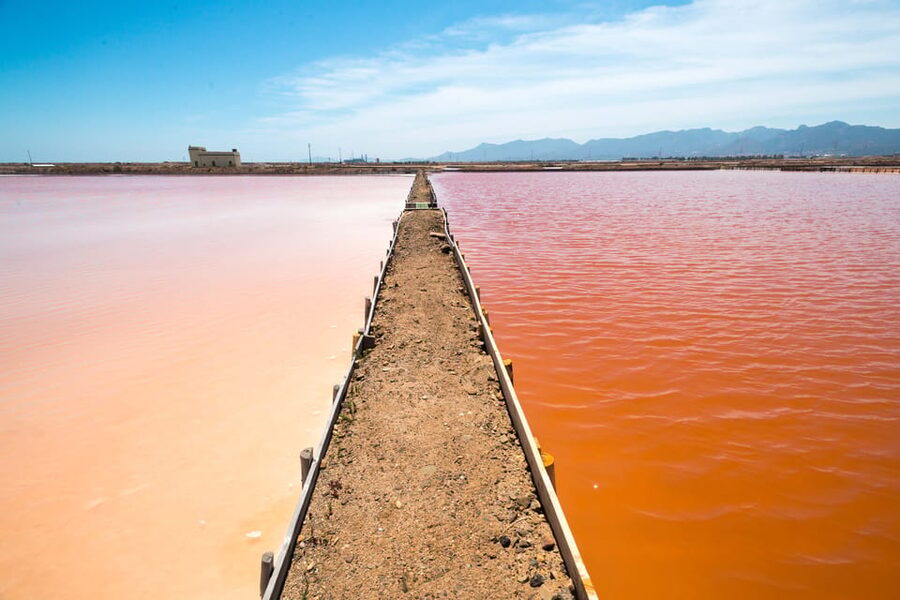
Book it if you want a low-cost, two-hour outing that links Sardinia’s industry with its wildlife. The best parts are the working salt operation, the story of Luigi Conti Vecchi and the salt workers, the white salt mountains, and the chance to see flamingos in the Santa Gilla Basin.
The choice is less clear if you need extensive English guiding or want to walk freely through the pans. For everyone else, this is a smart change of pace from Cagliari’s historic center. It gives you a real sense of how work, engineering, water, birds, and local prosperity meet in one unusual place.
FAQ
How long does the Conti Vecchi Salt Flats experience last?
The experience lasts about two hours, including the museum visit, old buildings, films, and the train ride.
How much does the tour cost?
The listed price is $14 per person.
Is the train ride included?
Yes. The ticket includes a one-hour train ride through the salt flats and the natural area.
What language is the tour in?
The live guide language is Italian. Some films include English subtitles, but live English commentary may be limited.
Can I see flamingos on the tour?
The Santa Gilla Basin is home to flamingos, and you have the chance to see them from the train. Bird sightings and viewing time depend on conditions.
Where do I meet the guide?
Drive to the Conti Vecchi Saltworks in the Assemini and Macchiareddu industrial area. Park free of charge inside the industrial area, then walk to the bookshop at the main entrance.
Is the tour wheelchair accessible?
The train is wheelchair accessible. The old building is wheelchair accessible on the first floor.
Can I cancel for a refund?
Yes. You can cancel up to 24 hours in advance for a full refund. Reserve now and pay later is also available.
Just added in Cagliari
- Boat Tour at Devil’s Saddle: 4 Swim Stops, Snorkeling & Prosecco★ 5.0 · 263 reviews
- Catamaran tour stops bathing and snorkeling toast with prosecco★ 5.0 · 214 reviews
- 4×4 Mountains And Beaches – Chia area★ 5.0 · 330 reviews
- Small-Group Food and Wine Tour from Cagliari★ 5.0 · 237 reviews
- Cagliari Vintage Tour★ 5.0 · 185 reviews
- Guided Electric Bicycle Tour in Cagliari★ 5.0 · 320 reviews
- Cagliari: Sailing Tour with 4 Stops, Snorkeling and Prosecco★ 4.8 · 341 reviews
- Cagliari: Zodiac Boat Tour, 3-4 SwimStops, Wine & Snorkeling★ 4.9 · 500 reviews
Train Experiences, compared.
Bernina Red Train, Swiss Alps & St Moritz From Milan
Read our review →
Rome to Pompeii Guided Tour with Wine & Lunch by High Speed Train
Read our review →
From La Spezia: Shore Excursion to Cinque Terre by Train
Read our review →
Guided tour of Pompeii skip-the-line and round-trip train
Read our review →
Intimate Small-Group Bernina UNESCO Scenic Train on Swiss Alps
Read our review →
Browse the lists this tour appears in