Reviewed · TOURS IN FLORENCE
Florence: 1.5-hour Santa Croce Guided Experience
Santa Croce is Florence’s Italian hall of fame, where art, faith, politics, and national memory meet under one Gothic roof. In 90 minutes, a certified guide leads you past Giotto’s frescoes, the Pazzi Chapel, major sculptures, and the tombs of Michelangelo, Galileo Galilei, and Machiavelli.
I like the small-group format, which makes it easier to hear the guide and ask questions. I also like the way the tour connects the artwork to Florence’s political story instead of treating the basilica as a silent gallery. The main consideration is timing: latecomers are not accepted, and the church can feel hot in summer.
Key points at a glance
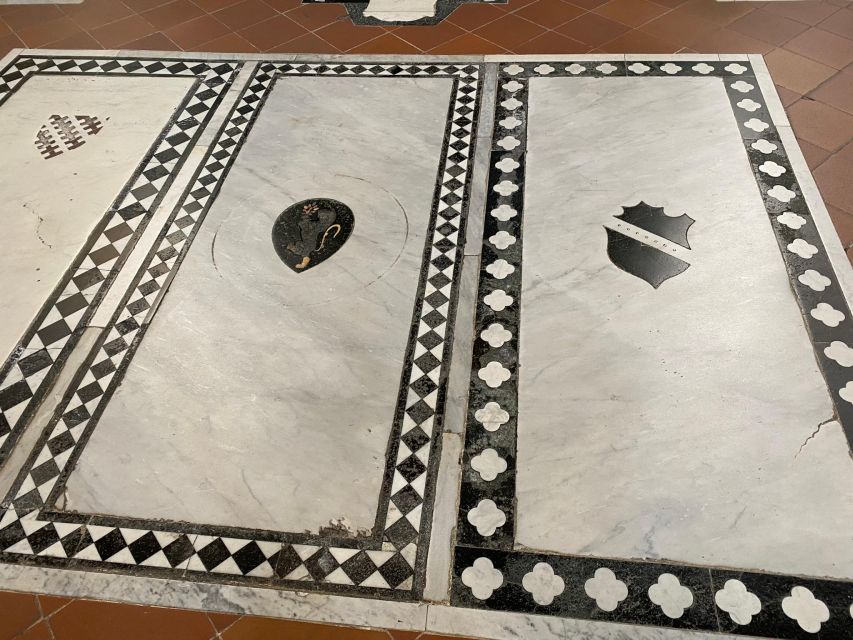
- Famous tombs: See memorials to Michelangelo, Galileo Galilei, Machiavelli, and other major Italian figures.
- Art in context: Giotto’s frescoes, the Bardi Chapel, the Medici Chapel, and works by Donatello and Brunelleschi make more sense with a guide beside you.
- A focused visit: The 1.5-hour schedule gives you a clear introduction without taking up half your day.
- Small-group attention: The guide can answer questions and adjust explanations to your interests when the group is compact.
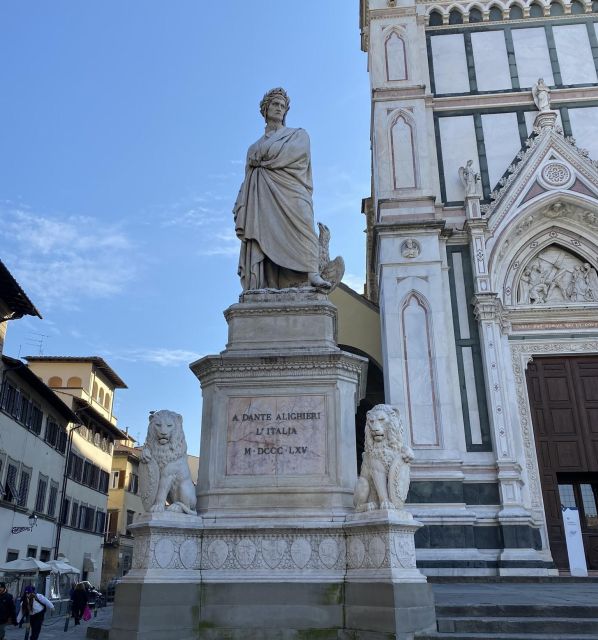
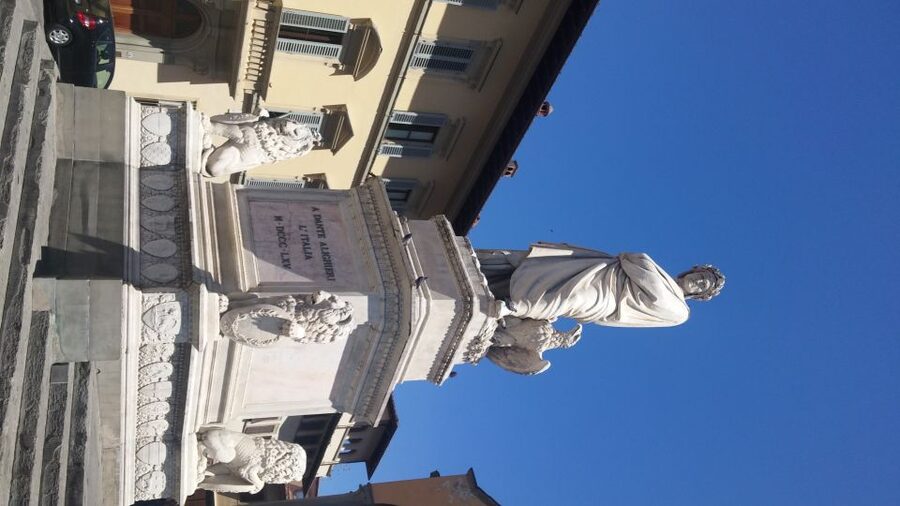
- Easy central meeting point: Meet at Dante Alighieri’s statue on the steps in front of the basilica.
- Languages and access: Tours are offered in English, Spanish, and Italian, with wheelchair access and private groups available.
Why Santa Croce deserves more than a quick look
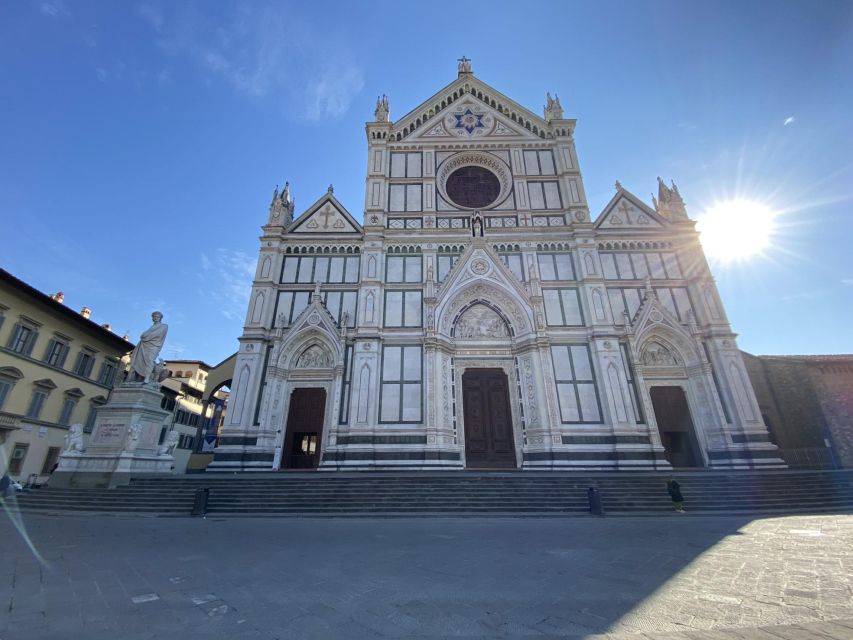
Many people come to Santa Croce, glance at the grand interior, and move on to the Duomo or Uffizi. That is a mistake if you care about Florence’s art and public memory. This Franciscan basilica is not just a church. It is also a place where later generations decided which Italians deserved to be remembered.
The building began in the 13th century and became Florence’s main Franciscan church. Its long Gothic interior gives the artwork room to breathe, but the scale can also make the place feel hard to read on your own. A guide helps you understand where to look and why particular chapels, frescoes, and monuments matter.
I especially like the way this visit brings together people who are usually studied in separate chapters. Galileo belongs to science, Michelangelo to sculpture and painting, Machiavelli to political thought, and Florence Nightingale to nursing and social reform. Inside Santa Croce, their memorials share the same setting.
That combination gives the tour a broader purpose. You are not simply checking off a church. You are seeing how Florence and Italy built a story about their own great minds.
A few more things to do in Florence
- The Best tour in Florence: Renaissance & Medici Tales – guided by a STORYTELLER
★ 5.0 · 12,316 reviews - Florence: Duomo Cathedral Guided Tour
★ 3.9 · 5,970 reviews - Uffizi Gallery Small Group Tour with Guide
★ 4.5 · 4,923 reviews
Meeting Dante and entering the basilica
The meeting point is straightforward: look for the statue of Dante Alighieri on the steps in front of Santa Croce. The guide carries a purple Hidden Experiences flag or sign, and the guide has the tickets, so you do not need to visit a separate ticket office first.
This is also the part where you need to be strict with yourself. Latecomers will not be accepted. Arrive early enough to find the steps, locate the purple sign, and settle in before the group moves inside. Florence’s streets around Santa Croce are easy to reach on foot, but a few extra minutes can save you from missing the entire visit.
Fast-track entry is useful here. Santa Croce is one of Florence’s better-known sights, and skipping the ticket line preserves your limited sightseeing time. It does not mean you skip security or the basilica’s visitor rules, so arrive dressed for a religious site.
Sleeveless shirts are not allowed. Choose shoulders-covered clothing, especially if Santa Croce is part of a full day of church visits.
A Gothic church with a clear human scale
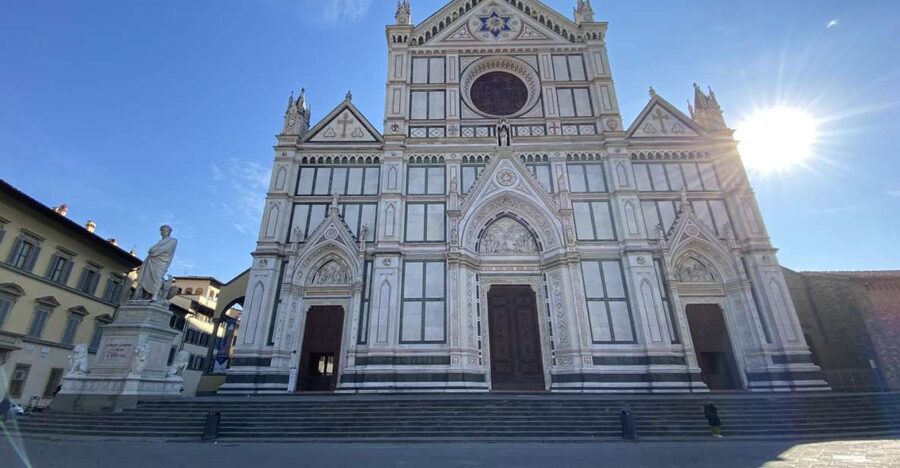
Once inside, your guide introduces the basilica’s Gothic architecture and Franciscan role. The church is large, but its appeal is not only in size. It is the contrast between the plain sweep of the structure and the detailed chapels, paintings, carved monuments, and tombs that line it.
This is where a live guide earns the $42 price. Without help, you may notice a beautiful wall painting but miss its subject, its sponsor, or its place in Florentine history. A guide can point out how the chapels work as family statements as well as religious spaces.
The tour also helps you separate original artistic purpose from later national memory. Santa Croce began as a religious center, yet it later became closely tied to the public image of Italy. The memorials here were not placed by accident. They reflect the people later generations chose to honor.
The guide’s job is to keep those threads manageable. The strongest feedback about guides such as Francesca, Ivan, Annette, Marta, Silvia, and Steffi centers on clear explanations, humor, and a willingness to answer questions. Several guides are described as especially good at connecting church art with Florence’s politics and wider Italian culture.
Giotto’s frescoes and the Bardi Chapel
Giotto’s frescoes are among the main reasons to visit Santa Croce. You will see them in the chapels, where scenes from the lives of saints unfold across the walls. These paintings are not best understood as isolated decoration. They were designed to teach, inspire, and tell religious stories to people who might not read.
Your guide can give you the visual order that the large interior does not always provide. Look for the gestures, faces, and details that make the scenes readable. Even if you do not usually spend much time on medieval or early Renaissance painting, the frescoes become more approachable when someone explains what you are seeing.
The Bardi Chapel is one of the stops named in the experience. It is a good example of why context matters. A quick look gives you color, figures, and architectural framing. An explanation gives you a better sense of how the chapel fits into the church and why Giotto’s work changed European painting.
The amount of detail you receive can depend on the group and guide. The scheduled visit is short enough that it will not cover every painting in museum-like depth. That is a fair trade if you want a strong overview rather than a specialist lecture.
Same base, a different kind of day:
- Florence: Skip-The-Line Uffizi Gallery Timed Entry Ticket
★ 4.5 · 27,832 reviews - Tuscany Day Trip from Florence: Siena, San Gimignano, Pisa and Lunch at a Winery
★ 5.0 · 21,634 reviews - Florence: Timed Entrance Ticket to Michelangelo’s David
★ 4.6 · 16,983 reviews - Florence: Michelangelo’s David Skip-the-Line Entry Ticket
★ 4.5 · 12,764 reviews
The Pazzi Chapel and Brunelleschi’s design
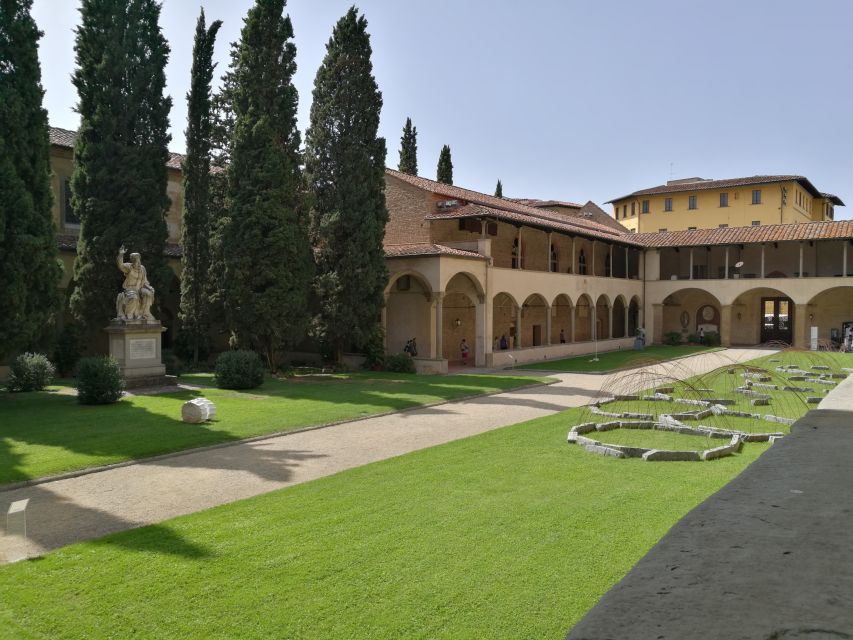
The Pazzi Chapel offers a different mood from the fresco-filled chapels. It is associated with Brunelleschi and is valued for its careful balance, geometry, and restrained architectural design. The change in style gives the tour a useful rhythm: you move from narrative painting to architecture that asks you to notice proportion and structure.
I appreciate having both in the same visit. If you saw only paintings, you might miss how much Florence’s artistic achievement depends on buildings and spaces. If you focused only on architecture, you would lose the human stories shown in the frescoes.
The guide can help you look beyond the famous name. Brunelleschi is often reduced to the dome of Florence’s cathedral, but Santa Croce gives you another way to think about his work. Here, the interest is in order, light, and the relationship between a chapel and the people who commissioned it.
The church also includes the Medici Chapel, another reminder that Florentine families used religious spaces to display faith, status, and artistic taste. The tour does not ask you to admire the decoration without question. It gives you a way to see how private power and public devotion overlapped.
Donatello, sculpture, and the art between the famous names
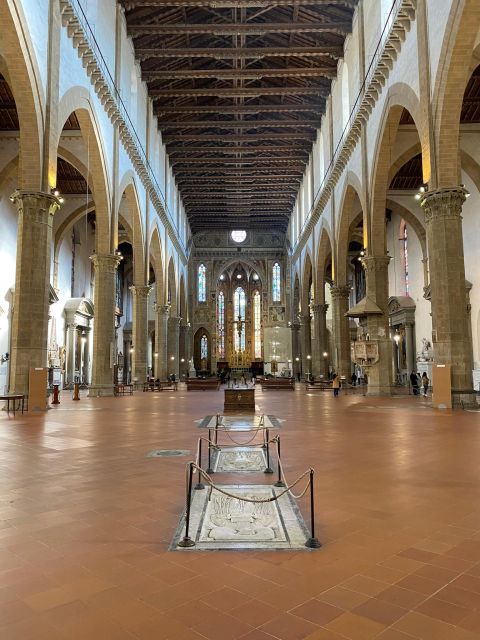
Santa Croce is not only a place for famous tombs and Giotto. The route also includes works connected with Donatello, Brunelleschi, and other important artists. These pieces reward a slower look because sculpture can be easy to miss when the walls and chapels compete for your attention.
A guide’s pointing hand matters. You may be standing only a few feet from a significant work and fail to notice it because the church offers so much to see at once. The best explanations give you a few details to hold onto rather than flooding you with dates and names.
That balance comes through in the strongest guide experiences. Francesca is repeatedly praised for giving the right amount of information, while other guides are praised for making complicated subjects understandable to children and teenagers. That matters if your group includes different ages or people with different levels of interest in art.
The tour can also be tailored in small ways. One private visit focused more closely on the Medici because that was the visitor’s main interest. A compact group makes this kind of question-and-answer exchange more realistic than it would be in a large crowd.
The tombs of Michelangelo, Galileo, and Machiavelli
The memorials are the emotional center of the visit. Santa Croce is often called a hall of fame because it contains or commemorates figures who shaped Italian art, science, literature, and politics.
Michelangelo’s tomb is a major stop. Even if you know his work from the Sistine Chapel or Florence’s museums, seeing his memorial in Santa Croce gives his place in Florentine memory a physical setting. The monument itself is treated as a work of art, not simply a marker.
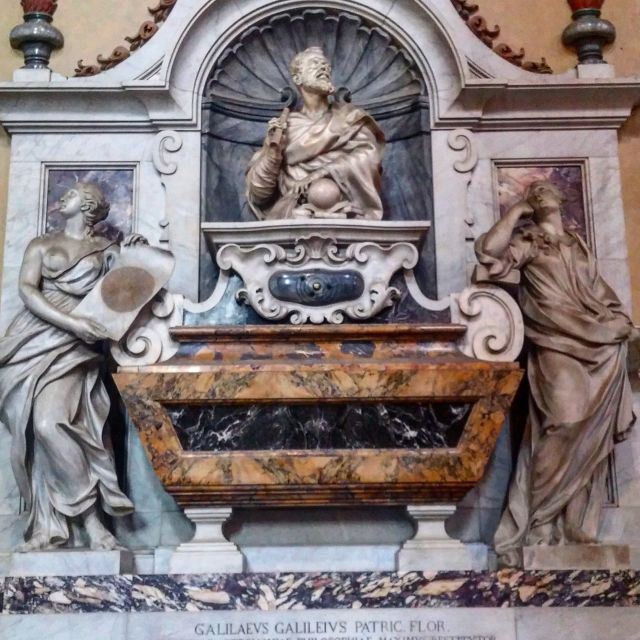
Galileo’s tomb adds a different kind of weight. His memorial connects Santa Croce to the history of science and to the tensions between discovery, authority, and public reputation. A guide can make that story easier to follow without turning the tour into a technical science lesson.
Machiavelli brings politics into the church. His presence helps explain why Santa Croce feels larger than a collection of religious monuments. The basilica became a place where Italy could honor writers, thinkers, artists, and scientists as part of a shared national identity.
You may also hear about other people memorialized here, including Florence Nightingale. This is one of the tour’s more unusual details. Her association with the basilica widens the story beyond the usual list of famous male figures.
The tombs are not all equally old, and not every person buried or honored here belongs to the same period. That mixture is part of the point. Santa Croce reflects centuries of changing ideas about who should be remembered and why.
What the 90-minute format does well
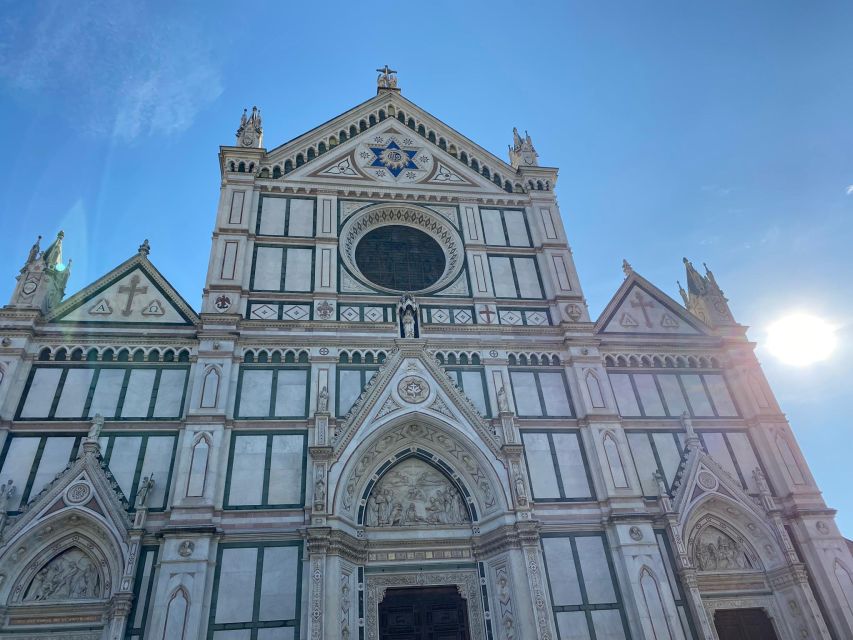
Ninety minutes is a good length for Santa Croce. You have enough time to understand the main art, chapels, architecture, and memorials, but you are unlikely to lose your focus before the visit ends.
The format works particularly well early in a Florence stay. It gives you background that can sharpen later visits to the Uffizi, Accademia, Medici sites, and the Duomo. You may recognize names and artistic connections that would otherwise remain separate.
The limit is just as clear. This is not a complete study of every chapel, tomb, or artwork. If you already have a strong background in Florentine art, you may want a longer specialist tour or more time on your own after the guide finishes.
For most visitors, the focus is a strength. You get the main story, key masterpieces, and memorable people without spending an entire morning inside one complex.
Group size, sound, and comfort
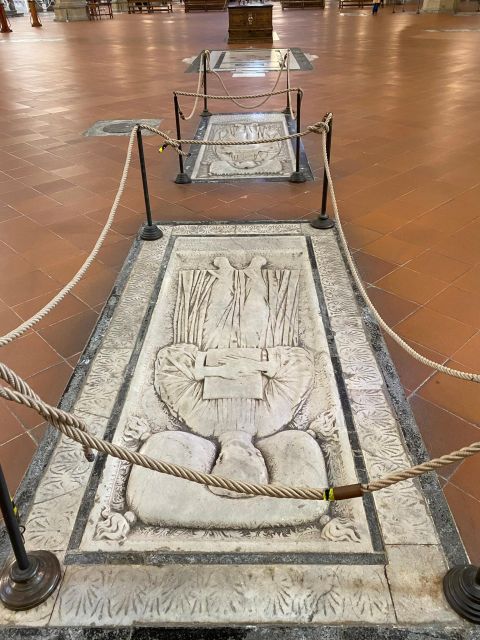
The experience is described as a small-group tour, with private groups available. Group size can affect the feel of the visit. A very small party allows more questions and can make the guide’s explanation feel almost personal. Several visits ended up with only two to four people, which created an unusually relaxed setting.
Larger groups can still work, especially because headphones are provided when more than seven people participate. That is a practical detail in a large church, where voices can carry poorly and other visitors may be nearby.
Summer comfort deserves attention. The interior can become very hot, and one July visit was especially difficult because of the heat. Wear light but respectful clothing, carry water for before and after the visit, and avoid arriving already worn out from a long walk.
The basilica is wheelchair accessible. One guide was especially careful to include a visitor who used a wheelchair, making sure he was comfortable and could hear the explanation. If access needs are important for your group, the tour offers a useful option, though you should still confirm any specific needs when booking.
Is $42 a fair price?
At $42 per person, this is not the cheapest way to enter Santa Croce. You are paying for fast-track admission, a certified live guide, and the structure that turns a large church into a readable visit.
I think the price is fair if you are interested in art, Italian history, or famous Florentine figures and would otherwise wander through without understanding what you are seeing. The value is strongest for first-time visitors, families, and anyone who wants explanations in English, Spanish, or Italian.
The value is weaker if you prefer silent exploration or already know Santa Croce well. One person who had visited many times still found a guided visit worthwhile because the guide pointed out details they had missed, but that will not be true for everyone.
You also receive free cancellation up to 24 hours before the tour and can reserve now while paying later. Those terms help if your Florence schedule is still shifting, but the real reason to book is the guide’s interpretation, not just the ticket shortcut.
Who should book this Santa Croce visit?
I would choose this tour for:
- First-time visitors who want the main story without a long academic lecture.
- Families with teenagers or older children, since several guides are praised for making the material easy to follow.
- Art lovers who want help finding Giotto, Donatello, Brunelleschi, and the key chapels.
- People interested in Michelangelo, Galileo, Machiavelli, the Medici, or Italian national memory.
- Visitors using wheelchairs who want a guided and accessible church visit.
- Anyone with limited time who wants a focused introduction to Santa Croce.
I would skip it if you want a quiet, self-guided visit and already understand the basilica’s art and memorials. You should also be comfortable meeting the group exactly on time and following church dress rules.
My verdict on the Santa Croce experience
Book this tour if you want Santa Croce to become more than a beautiful room filled with names. The most useful part is the connection between frescoes, architecture, religion, and the people Italy chose to honor.
The 1.5-hour length is sensible, the central meeting point is easy to find, and the small-group setup gives you a better chance to ask questions. Guides such as Francesca, Ivan, Annette, Marta, and Steffi have earned especially warm praise for clear storytelling, humor, patience, and personal attention.
For the best experience, arrive early, cover your shoulders, and go in with one or two interests ready. Ask about the Medici, Giotto, Galileo, or the tombs, and the visit is likely to feel much more personal than a standard audio guide. At $42, it is a solid choice for understanding one of Florence’s most important churches in a manageable amount of time.
FAQ
How long does the Santa Croce guided experience last?
The experience lasts 1.5 hours.
What language is the tour offered in?
The live guide is available in English, Spanish, or Italian.
Where is the meeting point?
Meet at the statue of Dante Alighieri, on the steps in front of the Basilica of Santa Croce. Look for the guide holding a purple Hidden Experiences flag or sign.
Do I need to arrive early?
Yes. Latecomers will not be accepted, so arrive with enough time to find the meeting point before the scheduled start.
Are tickets included?
Yes. Fast-track entry tickets are included, and the guide has the tickets for the group.
Is the tour wheelchair accessible?
Yes, the activity is listed as wheelchair accessible.
What should I wear?
Sleeveless shirts are not allowed. Wear clothing that covers your shoulders when entering the basilica.
Just added in Florence
- Wine Tasting Experience in Ponte Vecchio: Best Tuscany selection!★ 5.0 · 197 reviews
- Wine Experience In Chianti Hills from Florence★ 4.5 · 195 reviews
- Florence Sunset Food Tour with Wine & Dine at a Tuscan farmhouse★ 5.0 · 194 reviews
- Walking Food Tour of Florence with Tastings and Wine★ 5.0 · 518 reviews
- Uffizi and Accademia Small Group Guided Tour★ 4.5 · 449 reviews
- Val d’Orcia Brunello Wine Tour with Montalcino and Montepulciano★ 4.5 · 359 reviews
- Uffizi Gallery Timed Entry Admission Tickets★ 4.0 · 392 reviews
- Uffizi Gallery Small Group Tour with Guide★ 4.5 · 879 reviews
Tours in Florence, compared.
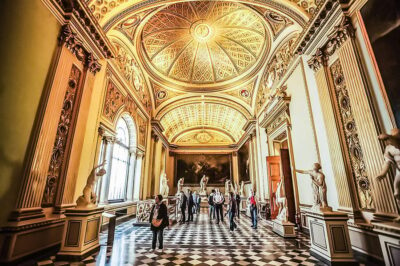
Skip-The-Line Uffizi Gallery Timed Entry Ticket
Read our review →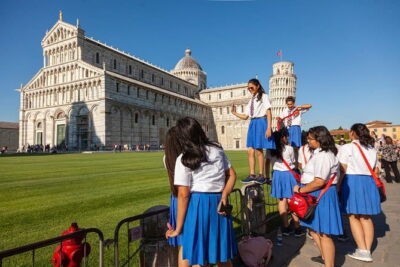
Tuscany Day Trip from Florence: Siena, San Gimignano, Pisa and Lunch at a Winery
Read our review →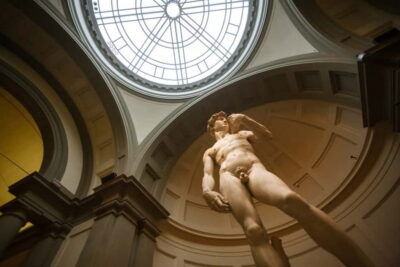
Timed Entrance Ticket to Michelangelo’s David
Read our review →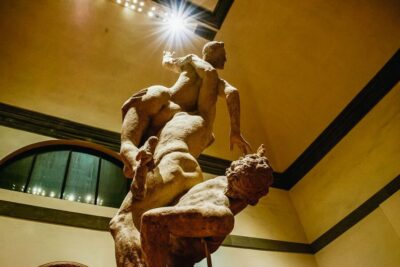
Michelangelo’s David Skip-the-Line Entry Ticket
Read our review →
The Best Tour in Florence: Renaissance and Medici Tales
Read our review →