Reviewed · TOURS IN ROME
Roman Gladiator School: Learn How to Become a Gladiator
The best part of this experience is that you do not just look at Roman weapons behind glass. You put on a tunic, belt, gloves, and training sword, then learn how a gladiator might have moved in the arena. I especially like the hands-on museum visit and the final mock battle, which gives children a story to act out after seeing the Colosseum.
I also like the small-group format, with no more than 15 people, and the choice of lesson times throughout the day. Instructors such as Mirkos, Patricio, Ivan, and Flama are described as warm, funny, and strong with children. The main drawback is the location: the school is outside the central sights, and several people found the entrance and transport harder than expected.
Key points to know before you book
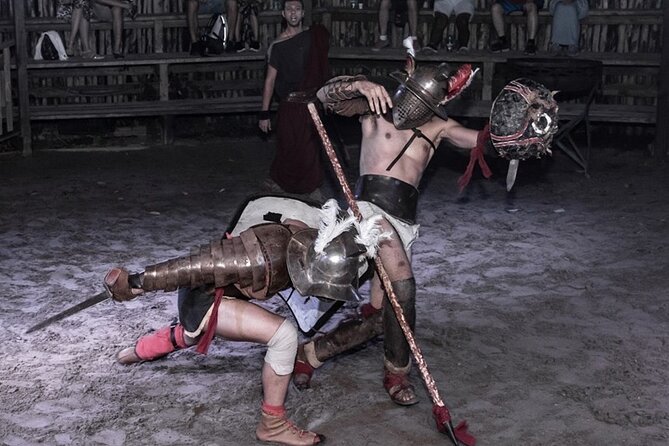
- You wear Roman-style gear: A tunic, belt, leather gloves, and a wooden training sword called a rudis are provided for the lesson.
- The museum comes first: You see weapons, helmets, armor, and other Roman objects before practicing with replicas.
- The class ends in an arena: Expect warm-ups, sword and shield drills, mock opponents, and an optional tournament.
- Families are the main audience: The minimum age is 6, and children often respond especially well to the playful format.
- The school takes planning to reach: The address is Via Appia Antica 18, with bus 118, taxis, and walking routes among the options mentioned.
- You receive a certificate: Every participant gets one at the end, whether or not they enter the tournament.
Roman weapons before Roman swordplay

The lesson begins at the Gladiator School of Rome on the Appian Way, not inside the Colosseum itself. That setting matters. You are away from the busiest central streets, in an area connected with Rome’s old roads and military past, though the school is not a surviving gladiator barracks or ancient arena.
The first portion takes place in the school museum. An instructor introduces the equipment used by gladiators and Roman soldiers, including weapons, shields, helmets, armor, and displays that help explain how different fighters were equipped. In some sessions, you can try on pieces of the gear and take photographs.
I like this opening because it gives the sword lesson some context. Instead of waving a wooden weapon without knowing what it represents, you learn why a shield mattered, how armor affected movement, and how gladiator fighting differed from ordinary soldiering. The museum is not enormous, so do not expect a full morning museum visit. The class moves fairly quickly toward the active portion.
The instructor is a big part of the experience. Names reported for different sessions include Mirkos, Patricio, Ivan, and Flama. Your guide may be someone else, but the teaching style is clearly meant to be lively rather than academic. Expect history mixed with jokes, demonstrations, and questions aimed at keeping children involved.
Other days out people book in Rome:
- Vatican: Museums & Sistine Chapel Entrance Ticket
★ 4.5 · 144,003 reviews - Vatican Museums & Sistine Chapel Tour with Optional Basilica
★ 4.3 · 67,413 reviews - Colosseum, Roman Forum & Palatine Guided Tour
★ 4.7 · 63,148 reviews
Getting dressed as a gladiator
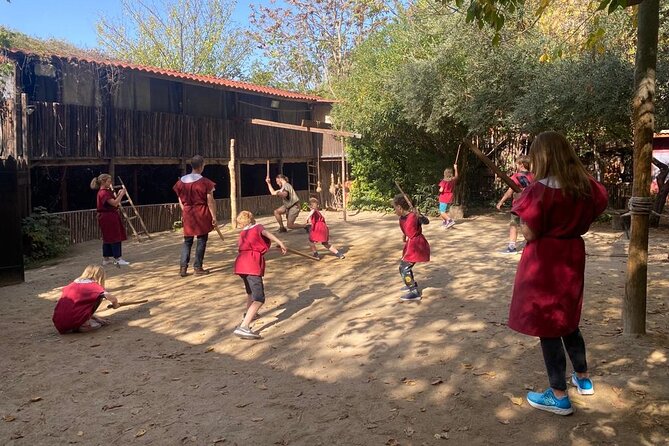
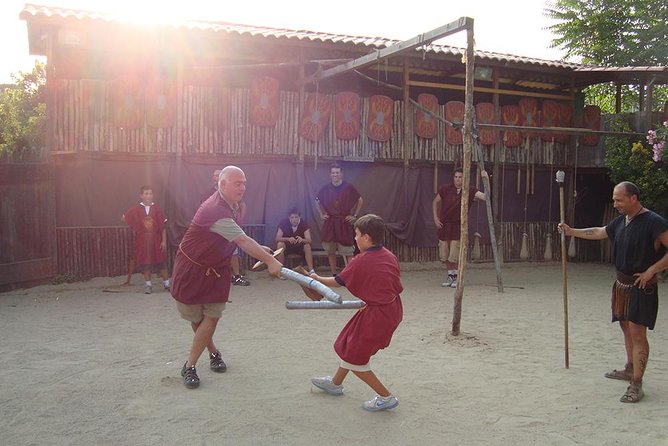
After the introduction, you change into the clothing supplied for the class. The package includes a traditional belt, tunic, leather gloves, and a rudis, the wooden training sword used for practice. The school also provides gladiator clothing and weapons for the duration of the lesson, so you do not need to bring equipment.
This is one of the small details that makes the activity work well for families. Children often enjoy the costume as much as the history lesson, and adults can join in rather than standing at the edge with a camera. Friends and family who do not participate may watch from a viewing platform.
The equipment is for reenactment and training. This is not a lesson in full-contact combat, but the activities are physical, and the session can become boisterous when children face one another in the arena. Comfortable clothes and shoes are sensible beneath the costume. Bring mosquito repellent, especially if you are visiting during a season when insects are active. Several people found the outdoor area unpleasant without it.
Warm-ups, sword drills, and the gladiator mindset
The training begins with warm-ups and basic movement. You may work through agility exercises, simple obstacle activities, and mental games designed to get participants thinking like arena fighters. The exercises help younger children burn off energy before the more structured sword work begins.
The instructor then teaches basic offensive and defensive techniques. You practice handling the wooden sword and shield, learn how to move toward an opponent, and work on simple blocks and strikes. The tone is playful, but there is enough instruction to give the session shape. You are not simply handed a prop and told to act fierce.
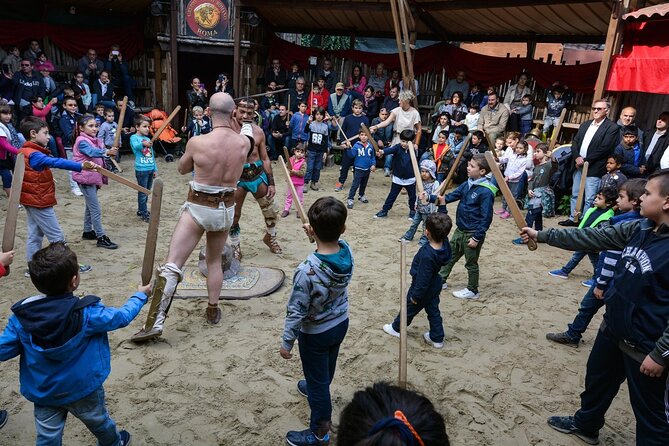
The class also uses imagination. You may be asked to fight off lions or face other sword-wielding gladiators in a staged scenario. These are theatrical games, not dangerous encounters with animals, and the instructor controls the pace. That makes the activity accessible to children who enjoy pretend play and to adults who do not have any martial arts experience.
I would still pay attention to how your children handle physical play. One family found that several young participants became upset during mock fighting. The official minimum age is 6, but children vary widely in comfort and coordination. If your child dislikes rough-and-tumble games, the museum and costume may be enough of a draw, but the battle section could be less enjoyable.
The arena finish and optional tournament

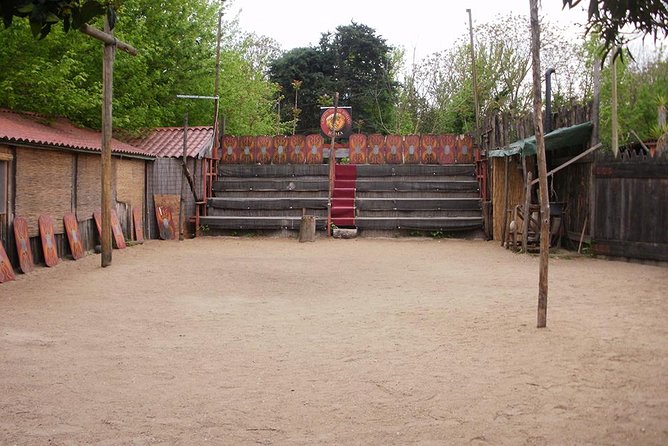
The class builds toward a mock fight in the arena. By this point, you have seen the equipment, dressed for the part, practiced movements, and learned the basic rules. The final match gives the group a clear finish and often becomes the funniest part of the session.
The fight is structured by the instructor, which helps keep it manageable. You may face another participant or take part in a group contest. The activity information also describes lions and other gladiators as part of the imaginative play. An optional tournament can crown a winner and includes a prize for the victor.
You do not have to enter the tournament. That is useful if someone in your group prefers to watch, feels tired, or is too young for the competitive part. Everyone who takes the lesson receives a certificate of accomplishment at the end.
Family members who are not taking part can watch from the viewing platform. That gives parents a way to see the action without buying a participant ticket for themselves. Some adults choose to join their children, and the format works best when the whole group is willing to play along.
Same base, a different kind of day:
- Vatican Museums, Sistine Chapel & St Peter’s Basilica Guided Tour
★ 4.5 · 39,149 reviews - Rome: Colosseum, Palatine Hill and Roman Forum Guided Tour
★ 4.8 · 32,814 reviews - Rome: Guided Tour of Colosseum, Roman Forum & Palatine Hill
★ 4.7 · 27,897 reviews - Rome: Colosseum & Forum with Audio Guide App -Optional Arena
★ 4.2 · 24,770 reviews
Why families rate this experience so highly
I can see why this becomes a favorite activity for children. The class combines three things that normally appear separately: a museum, a costume experience, and an active game. A child who has just seen the Colosseum can now handle a shield and practice the kind of movement associated with Roman arena combat.
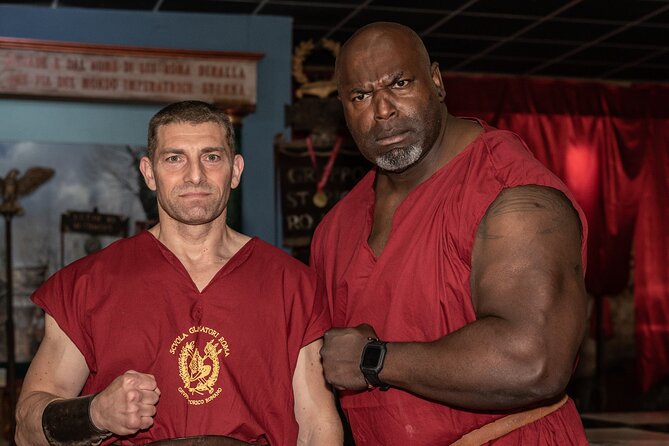
The instructors receive the strongest praise. Mirkos is described as attentive and welcoming, Patricio as engaging with families, Ivan as especially good at holding children’s interest, and Flama as funny and energetic while explaining Roman soldiers and gladiators. These names are not a promise that you will have one of them, but they show the kind of personality the school aims for.
The experience can also work well for mixed-age groups. Children from around 6 through the early teenage years are likely to get the most from the role-play, while adults can participate as partners, opponents, or enthusiastic supporting actors. Several adults have enjoyed it, but one useful warning is that the class is designed mainly with children and families in mind, not with serious adult martial arts training.
The school has also worked well for children who need extra encouragement. One account describes staff handling a group of autistic children kindly and helping them take part. That does not replace asking the provider about your child’s specific needs, but it is a positive sign for families looking for a structured activity with a friendly tone.
Reaching Via Appia Antica 18
The meeting point is Via Appia Antica 18, 00179 Rome, and the activity returns to the same place. Hotel pickup and drop-off are not included, so you need to build transport time into your day.
The address is described as near public transportation, and bus 118 along the Via Appia is one option mentioned. Taxis are another, though taxi costs can add up. Walking from the Colosseum may take around 45 minutes, and one family found the route confusing. The school can be at the end of a long driveway rather than exactly where a map pin first seems to place it.
My practical advice is simple: do not schedule this immediately before a timed Colosseum entry or a train departure. Leave extra time for finding the driveway, especially if you are walking. A taxi may be worth the cost for families with young children, heavy bags, or a tight schedule.
The location is both a weakness and part of the appeal. You are not stepping straight out of the Roman Forum into the class. You are going to a separate school on the Appian Way, so the experience takes more planning. In return, you get room for an outdoor training session rather than trying to stage sword drills in the middle of central Rome.
What the $108.16 price includes
At about $108.16 per person, this is not a cheap add-on like a quick photo opportunity. The price covers roughly two hours, museum admission, instruction by members of the Historic Group of Rome, the costume, training weapons, and a certificate. A drink is also listed among the inclusions, though one person found that it was not provided during their session, so I would not count on it as a major part of the value.
The price makes the most sense when you compare it with a standard guided walk. You are paying for an instructor, a prepared setting, equipment, museum access, and a scheduled activity that occupies a meaningful part of the day. If you have children who enjoy history only when they can touch, wear, or act something out, the extra cost may be worthwhile.
Group discounts may help larger parties. Food is not included, and nearby food choices are limited, so eat before you arrive or bring a plan for the next stop. The school may have snacks, but this should not be treated as a meal stop.
The maximum group size is 15 people. That is small enough for the instructor to give individual help, though the exact feel will depend on how many people book your time. In the low season, some sessions may be very small, even with only two participants.
When to schedule it in your Rome plans
This works especially well after a visit to the Colosseum. The ancient amphitheater gives children a visual reference, and the school then lets them act on what they have just seen. You could also schedule the class before the Colosseum, using it as a playful introduction to gladiators and Roman soldiers.
Allow more than two hours from door to door. The class itself lasts about two hours, but transport to and from Via Appia Antica takes extra time. Since lesson times are offered throughout the day, you have some flexibility, but I would still avoid stacking it against another fixed reservation.
The activity is offered in English. Confirmation is provided at booking, and a mobile ticket is available. Free cancellation applies if you cancel at least 24 hours before the local start time. Changes or cancellations inside that window are not accepted for a refund.
Who should book this class
I would choose this for families who want more than another look at ancient stones. It is particularly well suited to children who like costumes, pretend combat, physical activity, and stories with a clear hero-and-arena shape.
It can also suit adults who are willing to be playful. The museum presentation gives the class substance, and the instructors add enough historical explanation to keep it from feeling like a simple children’s game. Still, adults seeking serious sword instruction should choose a specialist martial arts lesson instead.
I would think twice if your group dislikes outdoor activity, has mobility concerns that make the training difficult, or expects a quiet museum visit. The school is outside the center, mosquitoes can be an issue, and the mock battles may feel too physical for some young children.
Should you book the Gladiator School of Rome?
Book it if you want an active family experience that connects the Colosseum with Roman weapons, costumes, and arena play. The museum, small-group teaching, certificate, and final battle give the two hours a satisfying structure.
Skip it if your Rome plans already feel overpacked or if reaching Via Appia Antica will create more stress than fun. For most families with children aged 6 and up, though, this is a memorable change of pace from sightseeing. Plan the transport carefully, bring mosquito repellent, eat beforehand, and arrive ready to play the part.
FAQ
Where does the gladiator lesson take place?
It takes place at the Gladiator School of Rome at Via Appia Antica 18, 00179 Rome, Italy.
How long does the experience last?
The class lasts approximately two hours.
What is the minimum age?
The minimum age is 6 years.
Is the activity offered in English?
Yes. The experience is offered in English.
What does the costume include?
You receive a traditional belt, tunic, leather gloves, and a training sword called a rudis for the lesson.
Is museum admission included?
Yes. Admission to the Gladiator School of Rome Museum is included.
Can nonparticipants watch the class?
Yes. Friends and family can watch from the viewing platform.
How many people can join the class?
The maximum group size is 15 participants.
Is transportation from my hotel included?
No. Hotel pickup and drop-off are not included. You must make your own way to and from Via Appia Antica 18.
Can I cancel for a refund?
Yes. You can receive a full refund if you cancel at least 24 hours before the experience starts. Cancellations or changes made less than 24 hours before the start time are not accepted for a refund.
Just added in Rome
- Civitavecchia Private Transfer: From the Port to Rome Airport★ 5.0 · 309 reviews
- Civitavecchia Shore Excursion: Best of Rome Private Tour★ 5.0 · 247 reviews
- Civitavecchia Private Transfer from ship to FCO airport or Rome★ 5.0 · 245 reviews
- Food Tasty and History Tour in Civitavecchia★ 5.0 · 256 reviews
- Palatine Hill and Roman Forum Tour with Fast-Track Entrance★ 4.2 · 417 reviews
- Tivoli: Villa D’Este & Villa Adriana Pass & App Audioguide★ 4.4 · 364 reviews
- Tivoli: Villa D’Este Entry Ticket and App Audio Guide★ 4.3 · 191 reviews
- From Rome: Villa D’Este & Villa Adriana Day Trip with Lunch★ 4.4 · 289 reviews
Tours in Rome, compared.

Vatican: Museums & Sistine Chapel Entrance Ticket
Read our review →
Vatican Museums & Sistine Chapel Tour with Optional Basilica
Read our review →
Colosseum, Roman Forum & Palatine Guided Tour
Read our review →
Vatican Museums, Sistine Chapel & St Peter’s Basilica Guided Tour
Read our review →
Colosseum & Forum with Audio Guide App -Optional Arena
Read our review →
Pantheon Fast-Track Ticket and Official Audio Guide
Read our review →
City Sightseeing Hop-on Hop-off Bus with Audioguide
Read our review →