
Reviewed · PERFUME & CRAFT MASTERCLASSES
Perfume Masterclass in Florence: Make your Own Personal Fragrance
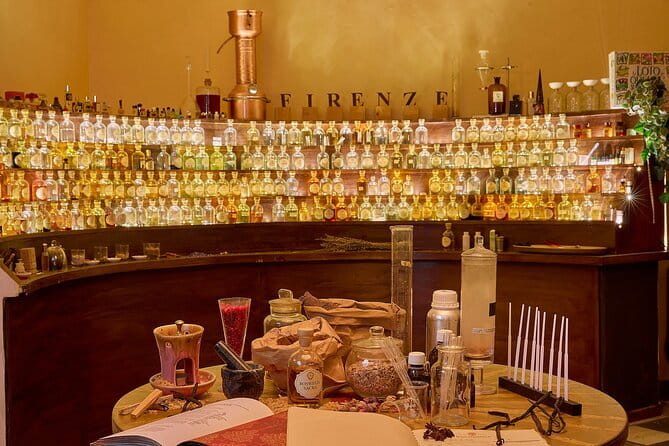
The best part of this Florence perfume class is the setting: you make a personal fragrance inside Antica Erboristeria San Simone, an atmospheric apothecary dating to the 1700s. Glass bottles, ampules, dried herbs, and old-world shop details give the activity a sense of place that a modern perfume counter cannot match.
I like the take-home 30ml bottle and the fact that your formula can be recorded for future orders. I also like the friendly, hands-on format, which works well for couples, friends, parents and children, or anyone who wants a different kind of Florence souvenir. The main caution is that this is a guided blending session, not a full laboratory course, and the scent selection may feel limited if you expect dozens of oils.
Key points before you book
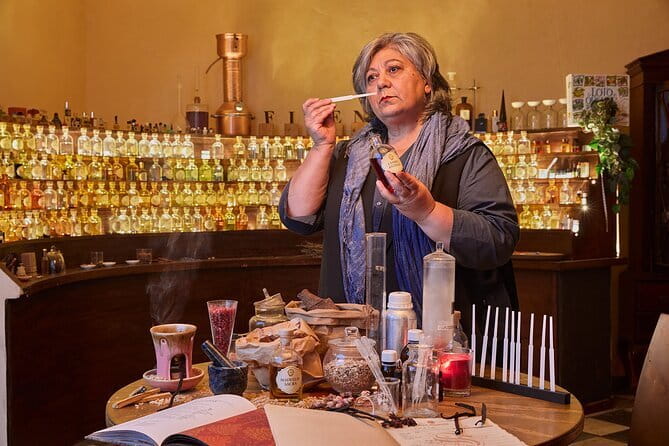
- Historic setting: The class takes place at an 18th-century Florentine apothecary with an artisanal laboratory and old perfume-making objects.
- Your own scent: You select from a prepared group of essences, then the staff combine them into a 30ml bottle.
- Useful perfume basics: You learn how top, heart, and base notes work, along with some background on Florentine perfumery.
- Small-group format: The maximum is 15 people, though some sessions may feel fairly full around shared tables.
- A practical souvenir: You leave with your perfume, a signed certificate, and a recipe that can help you reorder it later.
- Allow extra arrival time: The class begins at the stated meeting time, and one participant found that arriving only a few minutes late meant missing the opening.
A 1700s apothecary in central Florence
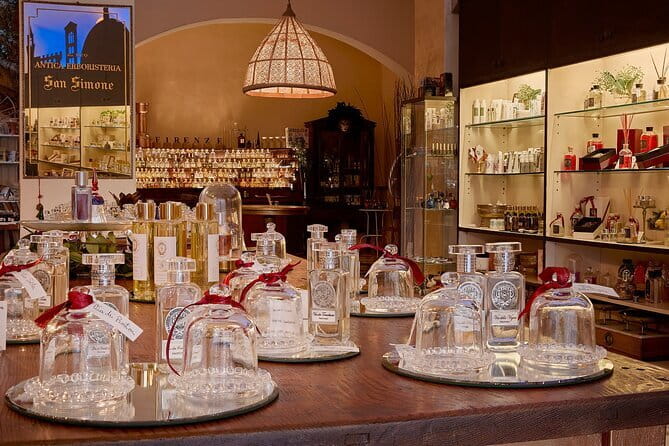
The class begins at Via Ghibellina 190, in Florence’s historic center. You meet the perfumer and enter Antica Erboristeria San Simone, a shop and working laboratory with an old apothecary feel.
This setting matters. You are not simply sitting in a bright retail shop and choosing a bottle from a shelf. The room is part of the experience, with antique-style glassware, ampules, herbs, and fragrance materials around you. It helps explain why Florence became associated with botanical preparations, medicines, soaps, and perfumes.
The introduction connects local scent-making with Renaissance Florence and the alchemists and apothecaries who worked with plants, oils, flowers, and dried materials. The amount of history can vary. Some sessions give a satisfying introduction to the shop and Florentine perfume traditions, while others move quickly to the hands-on portion.
If the historical side is important to you, keep your expectations measured. This is not a museum lecture or a long lesson in Renaissance trade. It is a practical class with a short historical introduction. The atmosphere does much of the teaching.
Other things to learn to make in Florence:
- Florence: Uffizi Highlights, In-Depth Masterclass or Private Tour
★ 4.5 · 641 reviews - Florence: Perfume Masterclass and Sensory Experience
★ 4.7 · 463 reviews - Handmade Tuscan Ceramics Masterclass in Montelupo
★ 5.0 · 205 reviews
Choosing from the fragrance kit
After the introduction, you begin testing the available essences. The materials are presented in small dropper vials, and you select the scents that appeal to you.
The class explains the basic structure of a fragrance:
- Top notes provide the first impression and tend to appear quickly.
- Heart notes give the perfume its main character.
- Base notes help provide depth and staying power.
That simple framework is useful, especially if you normally shop for perfume by spraying one bottle after another and deciding only whether you like it. Here, you begin to notice how different notes work together and why a fragrance can change after it sits on your skin.
The scent choices are preselected rather than unlimited. This keeps the process manageable for a group, but it also creates the biggest point of concern. Some people expect a large perfumer’s organ with a wide range of oils. Instead, you may work with roughly 20 to 30 available essences, depending on the session and the chosen materials.
That is enough to make many combinations, but not enough to guarantee every favorite scent will be available. Gardenia and other special ingredients may carry an extra charge. If you want a particular flower, wood, or spice, ask about availability before the formula is finalized.
How your personal perfume is blended
You first smell the options and decide which ones suit you. The staff then help determine how many drops of each ingredient should go into the blend.
This is where the class feels more personal than simply buying perfume. You are not given a finished product and told its notes. You make choices based on your own taste, then see how those choices are translated into a formula.
The staff handle the final measuring and mixing. That is an important distinction. You create the concept and select the ingredients, but you are not conducting a full chemistry experiment or independently formulating every drop.
Some people will appreciate this approach because it removes guesswork. The perfumer or assistant can help prevent an overly sharp, sweet, floral, or heavy mixture. Others may feel that the process is less hands-on than expected, especially if they imagined weighing oils, aging a blend, and adjusting it through several rounds.
You may smell the ingredients separately and then consider how they might work together. The finished perfume needs time to settle, so its scent may change during the following weeks. A few people are told to wait around 30 days before judging the final result. That waiting period is part of the fun, but it also means the bottle you carry away is not necessarily at its final scent on the same day.
The 30ml bottle, certificate, and formula
At the end of the class, your custom fragrance is placed in a 30ml bottle. That is a reasonable size for a personal souvenir. It is large enough to use at home, yet small enough to pack without turning your luggage into a perfume cabinet.
You also receive a certificate signed by the master perfumer. It is a simple extra, but it gives the activity a clear finish and makes the experience feel more substantial than a quick shopping stop.
The most useful part may be the perfume formula. Keep it with your travel papers or photograph it before leaving. If you love the scent later, the recorded recipe can help you order more.
That reorder option gives the purchase more value. You are not limited to one bottle made during your holiday. At the same time, the $84.69 price is easier to justify if you care about the class, the historic shop, and the personal formula. If you only want a bottle of perfume, you may find cheaper choices in ordinary shops.
Same base, a different kind of day:
- Florence: Skip-The-Line Uffizi Gallery Timed Entry Ticket
★ 4.5 · 27,832 reviews - Tuscany Day Trip from Florence: Siena, San Gimignano, Pisa and Lunch at a Winery
★ 5.0 · 21,634 reviews - Florence: Timed Entrance Ticket to Michelangelo’s David
★ 4.6 · 16,983 reviews - Florence: Michelangelo’s David Skip-the-Line Entry Ticket
★ 4.5 · 12,764 reviews
What the two-hour schedule feels like
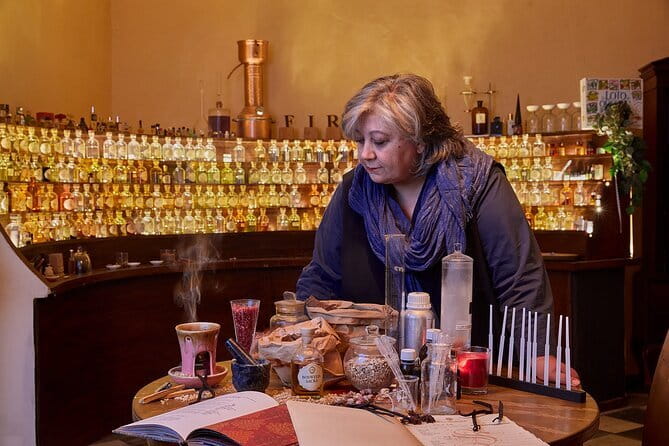
The experience lasts about two hours, including the introduction, scent selection, mixing, and a short break. The pace is generally relaxed, but the group size affects how much individual attention you receive.
With a maximum of 15 people, the class is small enough for a shared activity, yet it is not a private lesson. One staff member may need to move between several participants while helping blend their choices. If everyone takes time to test and compare scents, there can be pauses while the staff prepare each formula.
That is not necessarily wasted time. You can talk with the people at your table, compare how different combinations develop, and take a coffee, tea, or water break. Still, anyone expecting constant instruction should know that part of the session involves waiting.
The setting is air-conditioned, which is useful during Florence’s warmer months. Strong smells can become tiring, so the break helps you reset your nose before making final decisions.
Arrive early. The stated time is not merely a loose meeting window, and the opening can begin promptly. Aim for at least 10 to 15 minutes before the start, especially if you are walking across Florence or have trouble locating Via Ghibellina 190.
Language and teaching style
The class is offered in English. The English explanation may be shorter than the Italian presentation when both languages are used in the same session. This is worth considering if your main reason for booking is a detailed lesson about perfume history or technique.
The basic perfume vocabulary is usually clear enough to follow, especially the explanation of top, heart, and base notes. Staff members are described as warm, helpful, and encouraging, and Elena is specifically noted for being charming and attentive.
The experience works best if you are comfortable asking questions. Ask what each ingredient contributes, how long it may last, and what happens if you add a special scent. You may also want to ask whether an ingredient carries an extra fee before choosing it.
For a more serious perfume student, the class may feel introductory. You do not appear to spend the session studying extraction methods, alcohol ratios, maturation, concentration levels, or advanced formulation. You receive an enjoyable first step into the subject rather than professional training.
Who will enjoy this Florence activity
I would recommend this class to several types of people.
Couples and friends get a shared activity with different results at the end. It is entertaining to see how one person prefers floral notes while another chooses woods, herbs, or warmer ingredients.
Parents and older children can also enjoy it. Children over 12 are subject to the stated health documentation requirement, and one family found the activity engaging for a 10-year-old. If you are booking for a younger child, confirm the age rules before paying because the official participation information specifically addresses those over 12.
Solo visitors should not feel awkward booking. The class is structured around the scent-making task, so you have something to do from the beginning. It also gives you a social activity without requiring a full-day commitment.
Perfume fans will appreciate the chance to build a scent instead of simply buying one. If you already make fragrances or have attended several perfume workshops, the limited selection and staff-led mixing may feel basic.
This is also a good choice when you need a break from churches, galleries, and ancient stones. Florence has plenty of major sights, but a two-hour creative class can add variety to a tightly planned city visit.
What the activity does not include
Transportation is not provided. You make your own way to Via Ghibellina 190, and the activity ends back at the same meeting point.
That is not a problem for most people staying in central Florence, but you should allow time to walk there. Do not schedule the class too tightly between a museum reservation and a train departure. The perfume session is approximately two hours, and a full group may need extra time to finish the bottles and certificates.
The activity welcomes service animals, is near public transportation, and is designed for most participants. The information provided does not give detailed guidance about every mobility need, so contact the provider if you require specific assistance.
A mobile ticket is accepted, and confirmation is issued when you book. Ciao Florence Tours Srl operates the experience.
Is $84.69 a fair price?
At $84.69 per person, this is not a bargain if you measure value by the amount of perfume alone. A 30ml bottle from a standard perfume shop can cost less, and a department store may offer more scents to test.
The price makes more sense when you count the full package: entry into a historic apothecary, the introduction to Florentine perfume traditions, staff guidance, the custom blend, the certificate, refreshments, and the recorded recipe. You are paying for an activity and a souvenir, not only for liquid in a bottle.
The value is strongest for someone who enjoys making things and wants a personal reminder of Florence. It is weaker for someone who cares only about having the widest possible scent selection or the lowest price.
The strong overall score of 4.7 from 253 ratings and a 93 percent recommendation rate suggest that the format works well for most people. Still, the lower ratings point to a real limitation: some participants want more education, more choice, or more control over the actual mixing.
Practical advice for getting the best result
Go in with a general idea of the scents you like, but stay open to combinations you would not normally buy. You may discover that a favorite single note is too strong on its own but works well as part of a blend.
Ask for help early rather than waiting until the final mixing. The staff can explain how many drops to use and may steer you away from a mixture that becomes too heavy or one-dimensional.
Do not judge the perfume too quickly. The blend may need time to settle, and its scent can change as the ingredients combine. If you dislike the first impression, give it time before deciding that the formula failed.
Take a photo of the recipe and certificate. The formula is one of the best long-term benefits of the class, especially if you want to reorder the scent later.
Finally, inspect the shop’s collection before leaving. The perfume displays and owners’ collection add another layer to the visit, and it is easy to hurry out once your own bottle is finished.
Should you book this perfume class?
Book it if you want a creative Florence souvenir, enjoy fragrance, and like the idea of working inside an old apothecary. It is especially suitable for a mother and daughter, a small group of friends, a birthday gift, or a solo afternoon away from the city’s main sights.
Skip it if you expect a professional perfumery course, a huge wall of ingredients, or complete control over every stage of production. You will choose the notes, but the staff guide the proportions and complete the final blend.
For most visitors, the appeal is the combination of place, personal choice, and a bottle you can use later. Just arrive early, ask about extra-cost ingredients, and treat the class as an introductory scent workshop rather than advanced training. With those expectations, the experience offers a pleasant and memorable way to take a small piece of Florentine craft home.
FAQ
Where does the perfume class begin?
The class begins at Antica Erboristeria San Simone, located at Via Ghibellina 190, 50122 Florence, Italy. The activity ends back at the same meeting point.
How long does the perfume-making experience last?
The experience lasts approximately two hours, including the introduction, scent selection, blending, break, and certificate presentation.
What do I take home?
You take home a 30ml bottle of your personalized perfume, a signed certificate, and the recipe for your fragrance so you can order it again later.
Is the class offered in English?
Yes. The experience is offered in English. The English introduction may be shorter than the Italian explanation when both are presented in the same session.
How many people can join the class?
The maximum group size is 15 participants.
Can I cancel for a full refund?
Yes. You can cancel at least 24 hours before the local start time for a full refund. Cancellations or changes made less than 24 hours before the experience are not accepted for a refund.
Just added in Florence
- Wine Tasting Experience in Ponte Vecchio: Best Tuscany selection!★ 5.0 · 197 reviews
- Walking Food Tour of Florence with Tastings and Wine★ 5.0 · 518 reviews
- Wine Experience In Chianti Hills from Florence★ 4.5 · 195 reviews
- Florence Sunset Food Tour with Wine & Dine at a Tuscan farmhouse★ 5.0 · 194 reviews
- Uffizi and Accademia Small Group Guided Tour★ 4.5 · 449 reviews
- Val d’Orcia Brunello Wine Tour with Montalcino and Montepulciano★ 4.5 · 359 reviews
- Uffizi Gallery Timed Entry Admission Tickets★ 4.0 · 392 reviews
- Uffizi Gallery Small Group Tour with Guide★ 4.5 · 879 reviews
Perfume & Craft Masterclasses, compared.
2-in-1 Pasta and Tiramisu Cooking Masterclass in Rome
Read our review →
Uffizi Highlights, In-Depth Masterclass or Private Tour
Read our review →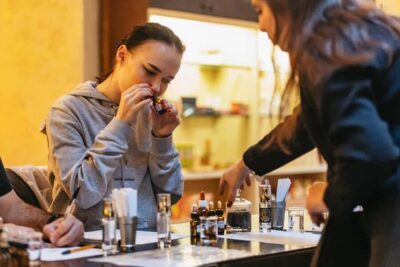
Pasta Fettuccine, Ravioli and Tiramisu MasterClass
Read our review →
Handmade Tuscan Ceramics Masterclass in Montelupo
Read our review →Browse the lists this tour appears in