
Reviewed · COOKING CLASSES
Florence: Pasta Cooking Class with Unlimited Wine
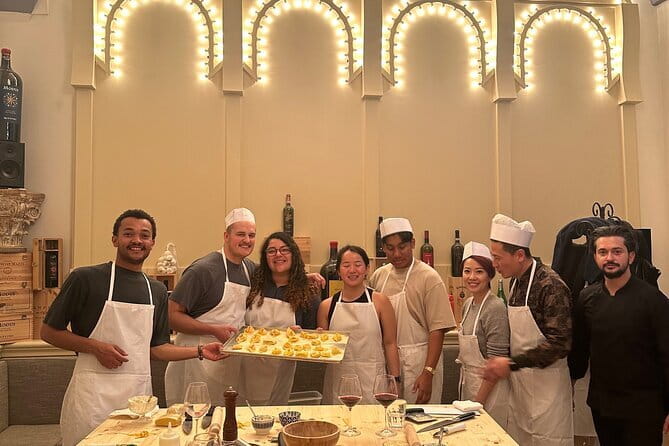
Making pasta inside a 13th-century medieval tower near Florence’s Duomo gives this class more character than a standard cooking studio. The setting is tied to Dante’s wife’s family, and the three-hour lesson takes you from flour to ravioli, tortelli, and pappardelle before you sit down to eat it all.
I like the hands-on format, since you make the pasta yourself rather than only watching a chef. I also like the relaxed social side: the class suits couples, families, solo visitors, and friends, with unlimited Tuscan wine and soft drinks keeping the meal informal.
The main point to consider is group size. The maximum is 15, but some people find the room busier than expected. You should also check the meeting address carefully, since one booking confirmation has directed a participant to the wrong venue, creating a poor start before the class was moved to another location.
Key points to know before booking
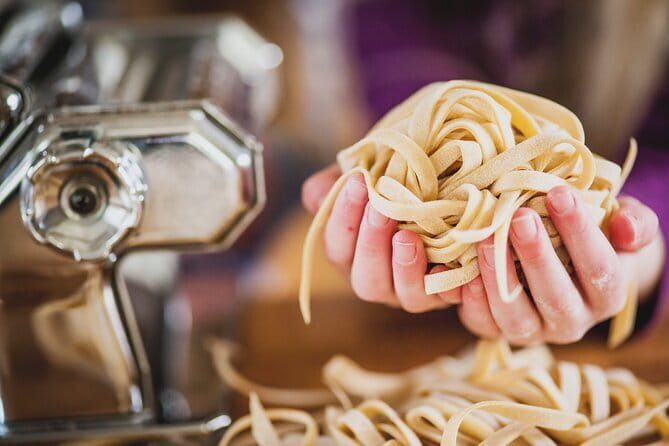
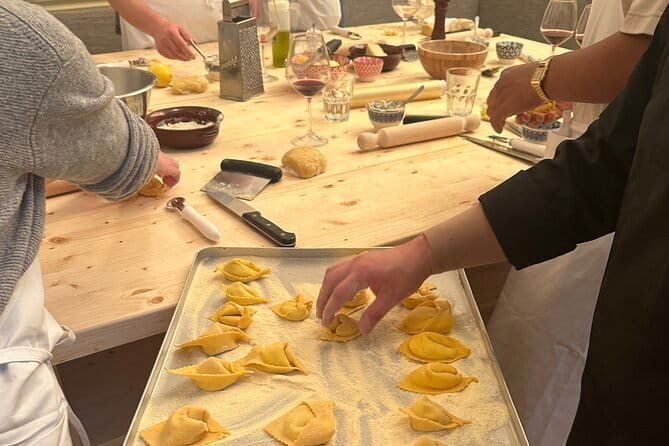
- Three fresh pastas in one class: You prepare ravioli, tortelli, and pappardelle rather than focusing on just one recipe.
- A historic cooking room: The class takes place inside a stone medieval tower from the 1200s, close to Brunelleschi’s Dome.
- The chef handles the sauces: You concentrate on shaping and working the pasta while the instructor prepares butter and sage, arrabbiata, and Tuscan ragù.
- A full meal is included: You eat the pasta made during the class, with Tuscan wine and unlimited soft drinks.
- Friendly, social teaching: Instructors such as Lorenzo, Antonio, Valentino, David, and others are praised for clear explanations, humor, and patience.
- Good for mixed groups: Vegetarian participants have been accommodated, and the class works for beginners, families, couples, and solo visitors.
Cooking pasta in Dante’s old neighborhood
The setting is one of the strongest reasons to choose this experience. The cooking school sits inside a stone tower dating from the 1200s, a short walk from Brunelleschi’s Dome. The tower belonged to the family of Dante Alighieri’s wife, giving the room a direct link to Florence’s medieval past.
That does not mean you are taking a history tour. The focus is cooking, and the historic setting works more like an atmospheric backdrop than a formal attraction. Still, there is something satisfying about kneading pasta in a building that predates the Renaissance palaces most people associate with Florence.
The meeting point is listed as Via de’ Bardi, 23 r, in central Florence. The activity returns to the meeting point, and the area is near public transportation. Give yourself enough time to find the entrance, since old Florence addresses and narrow streets can be confusing.
One practical note matters here. A booking confirmation has occasionally shown a different venue from the one used for the class. That meant a walk of about 10 minutes and an unpleasant conversation at the first location before the correct room was found. Check your confirmation shortly before departure, and ask for help promptly if the address does not match what you see on arrival.
More Cooking Classes in Florence
- Florence: Pasta Cooking Class with Unlimited Wine
★ 4.9 · 10,285 reviews - Florence Pizza or Pasta Class with Gelato Making at a Tuscan Farm
★ 5.0 · 6,801 reviews - Florence: Pasta & Tiramisu Cooking Class with Unlimited Wine
★ 4.9 · 6,708 reviews
From flour to three types of handmade pasta
The class begins with the basic pasta mixture, using flour and the other ingredients supplied by the school. You work through the process step by step, with the chef demonstrating and then moving around the room to help.
This is designed for beginners. You do not need prior cooking experience, and all equipment is supplied. The teaching style is practical rather than technical: watch the demonstration, copy the movement, and adjust your dough as the chef helps.
The first pasta might be ravioli, tortelli, or pappardelle, depending on the class flow. The important point is that you make three different shapes. Ravioli and tortelli teach you how to fill and seal pasta, while pappardelle gives you practice with long, broad ribbons.
That variety makes the lesson more useful than a single-pasta workshop. You see how the dough behaves in different forms, and you leave with a better sense of how fresh pasta is shaped by hand. Several people finish the class feeling confident enough to try the recipes at home.
The pace is necessarily brisk. In roughly three hours, the chef has to explain the dough, guide the shaping, prepare sauces, cook the pasta, and serve the meal. If you want a slow technical course covering every regional variation, this will feel light. If you want an approachable introduction with plenty of eating, the pace works well.
What goes into the three pasta dishes
The sample menu includes tortello all’arrabbiata, pappardelle with Tuscan ragù, and ravioli with butter and sage. These sauces give you three different styles of Italian cooking, from a spicy tomato preparation to a slow, hearty meat sauce and a simple butter-based dressing.
The chef prepares the sauces while you focus on the pasta. This division keeps the class manageable, but it also means you are not making every component entirely from scratch. If your goal is a full restaurant-style kitchen lesson, you may wish for more sauce work. If your goal is to learn fresh pasta without being overwhelmed, the arrangement is sensible.
The Tuscan ragù is the heaviest and most substantial of the three dishes. Pappardelle is a natural match because its wide ribbons hold a thick sauce well. The butter and sage ravioli offers a simpler contrast, letting the pasta and filling do more of the work.
The arrabbiata brings heat and tomato flavor to the tortelli. Ingredient choices may change with the season, since the class uses seasonal vegetables and products from around Italy. The exact balance of fillings and sauces can therefore vary, but the class is built around these three broad combinations.
Vegetarian diners have been accommodated successfully. If you have a dietary concern, raise it when booking or before the class begins. The available information confirms vegetarian participation, but it does not promise a full menu for every allergy or dietary restriction.
The chefs make the difference
The listed instructors include professional chefs with experience in Italian kitchens. In practice, the personality of the individual chef can shape the whole evening.
Lorenzo is praised for his energy, clear explanations, smile, and ability to explain why ingredients are used differently in Florence and other Italian regions. Antonio is described as friendly, patient, funny, and easy to follow. Valentino is noted for careful instruction and a calm manner with the whole group.
David has also received warm praise for creating a relaxed class atmosphere, while Eddie is singled out for leading a fun session with plenty of food. Other instructors, including Nico and Eduardo, are described as friendly and helpful.
You should expect a teaching style that is social and conversational. The best part is not only learning how to roll or shape pasta, but understanding what you are doing. The chefs explain the process, demonstrate techniques, answer questions, and offer encouragement when a piece of dough refuses to cooperate.
The class does not appear to depend on one single instructor for its appeal. That said, the experience can vary in tone from chef to chef. Some are highly animated, while others may be more focused on the technical steps. The overall feedback is strongly positive, but the occasional less welcoming first contact at a mistaken venue shows why the arrival arrangements matter.
Other classes where you do the cooking in Florence:
- Cooking Class and Lunch at a Tuscan Farmhouse with Local Market Tour from Florence
★ 5.0 · 4,831 reviews - Pastamania – Florence Pasta Making Class
★ 5.0 · 3,050 reviews - Florence: Cooking Class Pasta & Tiramisu Making Unlimited Wine
★ 5.0 · 2,234 reviews - Florence Cooking Class The Art of Making Gelato & Authentic Pizza
★ 5.0 · 2,053 reviews
A sociable meal with unlimited Tuscan wine
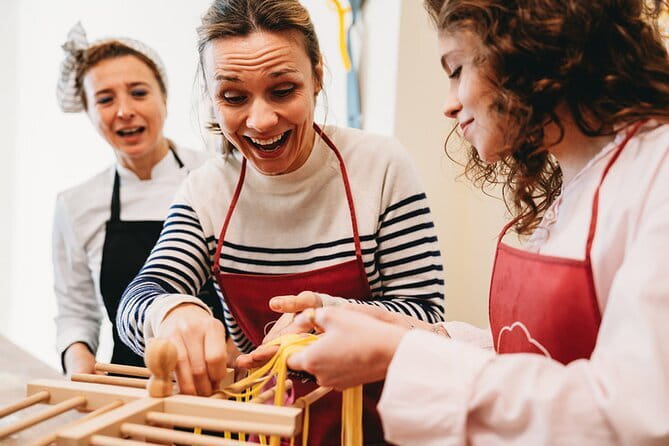
After the pasta is made and cooked, you eat the results as lunch or dinner, depending on the scheduled time. This is not a quick taste at the end. The three pasta dishes form a substantial meal, and several people find they have more than enough to eat.
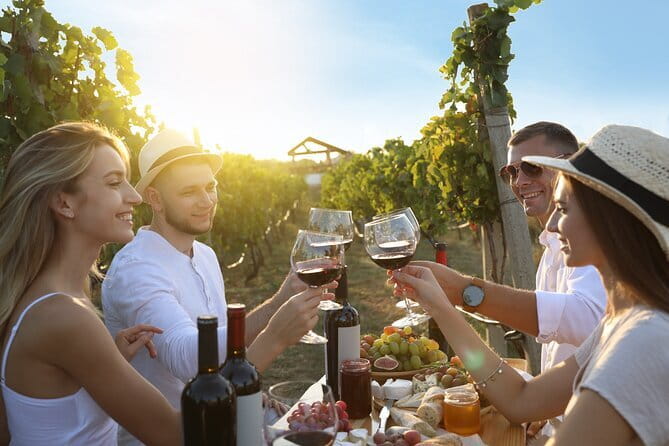
Tuscan wine is available without a set limit during the experience. Unlimited soft drinks are also included, which helps families and anyone who does not drink alcohol. The wine is part of the relaxed atmosphere, not a separate tasting focused on vintages, producers, or formal pairing.
This arrangement works especially well for people who want to meet others. You share work surfaces, compare pasta shapes, and sit down together afterward. Solo visitors can join in without feeling stranded, while couples and families have an easy activity that gives everyone something to do.
If you prefer a quiet, private lesson, this is probably not the right choice. Even with a maximum of 15 people, the room may feel lively, and one participant described the class as larger than expected. The social format is a benefit if you like conversation, but a drawback if you want close, individual attention throughout.
Is the three-hour format good value?
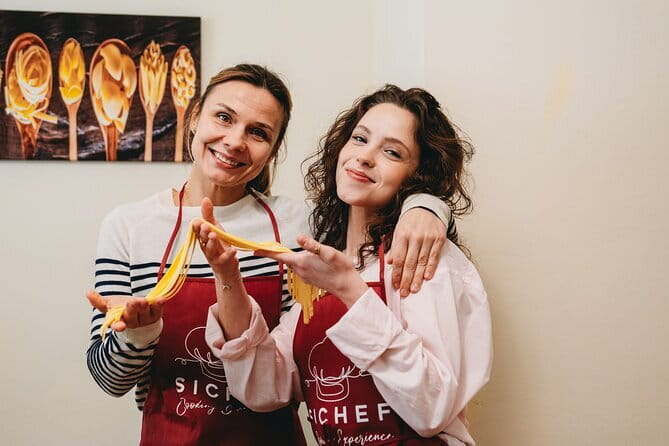
The value comes from combining a lesson, a full meal, drinks, and a distinctive historic setting. You are not paying only for a plate of pasta, and you are not spending the whole session watching someone else cook. You make three pasta shapes, eat what you prepare, and take home skills you can use again.
The actual price is not provided here, so I cannot judge it against a specific figure. At a reasonable Florence cooking-class rate, the inclusion of lunch or dinner, all ingredients, equipment, a professional chef, Tuscan wine, and unlimited soft drinks makes the package look strong.
You should compare it with other pasta classes by checking what is included. Some cheaper lessons may offer one dish, a tasting, or limited drinks. This class gives you three pasta types and enough food to replace a meal, which improves the practical value.
The class is also a useful choice when you want a break from museums and churches. Florence can become visually intense after several days of art and architecture. A hands-on evening gives you a different way to connect with the city, even though the class itself is not a formal food tour.
Who will enjoy this pasta class most?
I would recommend it to first-time pasta makers, families with older children, couples, groups of friends, and solo visitors who enjoy meeting people. The instruction is simple enough for beginners, and the meal gives the activity a clear payoff.
It is also a good choice for a mother-and-daughter trip or another family visit where you want a shared memory rather than another sightseeing stop. Everyone has a task, but nobody needs to be an experienced cook.
Food-focused visitors will appreciate the chance to compare three pasta shapes and three sauce styles. You will not receive a highly technical study of regional pasta, but you will gain a useful foundation and several recipes to try at home.
I would hesitate if you need a private class, dislike group dining, or want to prepare every sauce yourself. The unlimited wine is valuable only if you plan to drink it, though the soft drinks mean non-drinkers are still covered.
Useful planning details for the day
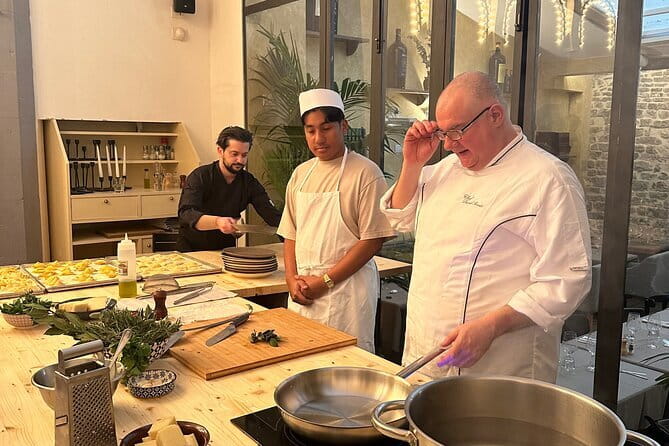
The experience lasts about three hours. Wear something comfortable for standing and working with dough, although no special equipment is required. The school provides the ingredients and all cooking tools.
Your mobile ticket is accepted, and the class is offered in English. Confirmation is received at booking. The activity has a maximum of 15 participants, but the practical feel can change depending on the final group and the room arrangement.
Free cancellation is available up to 24 hours before the start time for a full refund. Changes or cancellations within 24 hours are not accepted for a refund, and the cut-off follows Florence local time.
Private transportation is not included. Since the class is in central Florence and near public transportation, getting there should be handled independently. I would not schedule a major timed attraction immediately afterward, since the class may run close to its three-hour estimate and the meal is meant to be enjoyed at an easy pace.
Should you book it?
Book this class if you want an active Florence experience with a proper meal at the end. The medieval tower, three pasta shapes, warm teaching style, and unlimited Tuscan wine make it a strong choice for people who value atmosphere and social fun as much as kitchen technique.
Choose another class if you want a private setting, advanced pasta theory, or detailed sauce preparation. Also check the venue details carefully before setting out.
For most first-time pasta makers, the balance is right: enough instruction to learn something useful, enough food to count as dinner, and enough conversation to make the evening feel like part of your Florence experience rather than a standard cooking demonstration.
FAQ
How long does the Florence pasta cooking class last?
The class lasts approximately three hours, including pasta preparation, cooking, and the meal.
Where does the class meet?
The listed meeting point is Via de’ Bardi, 23 r, 50100 Florence, Italy. The activity ends back at the meeting point.
What types of pasta will I make?
You will prepare three types of fresh pasta, typically ravioli, tortelli, and pappardelle.
What sauces are served with the pasta?
The sample menu includes butter and sage, arrabbiata, and old-fashioned Tuscan ragù.
Is wine included?
Yes. Tuscan wine and unlimited soft drinks are included in the experience.
Do I need to bring cooking equipment or ingredients?
No. The school provides all ingredients and equipment for the fresh pasta course.
Is the class suitable for vegetarians?
Vegetarian participants have been accommodated in the class. Contact the provider in advance if you have a specific allergy or dietary requirement.
More classes and workshops in Florence
- Small Group Cooking Class & Market Food Tour in Florence
★ 5.0 · 1,574 reviews - Florence: Pizza and Gelato Preparation Class
★ 4.8 · 1,143 reviews - Florence: Pizza and Gelato Class at a Tuscan Farmhouse
★ 5.0 · 822 reviews - Tuscany Day Trip: Chianti & Cooking Class Small Group
★ 4.5 · 770 reviews
More pasta to make and eat in Florence
- Florence: Handmade Pasta & Dessert Class with Unlimited Wine
★ 4.8 · 788 reviews - Florence: Premium Cooking Class for Pasta and Gelato
★ 4.9 · 695 reviews - Florence: Pasta Class with Wine, Limoncello and Dessert
★ 4.9 · 674 reviews - Pasta Cooking Class: Mastering Nonna’s Recipes
★ 5.0 · 554 reviews
Just added in Florence
- Wine Tasting Experience in Ponte Vecchio: Best Tuscany selection!★ 5.0 · 197 reviews
- Wine Experience In Chianti Hills from Florence★ 4.5 · 195 reviews
- Florence Sunset Food Tour with Wine & Dine at a Tuscan farmhouse★ 5.0 · 194 reviews
- Walking Food Tour of Florence with Tastings and Wine★ 5.0 · 518 reviews
- Uffizi and Accademia Small Group Guided Tour★ 4.5 · 449 reviews
- Val d’Orcia Brunello Wine Tour with Montalcino and Montepulciano★ 4.5 · 359 reviews
- Uffizi Gallery Timed Entry Admission Tickets★ 4.0 · 392 reviews
- Uffizi Gallery Small Group Tour with Guide★ 4.5 · 879 reviews
Cooking Classes, compared.
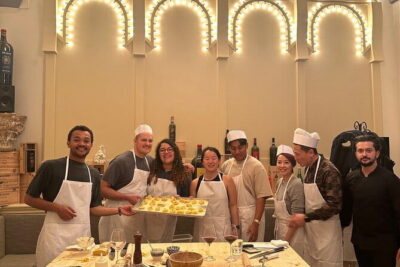
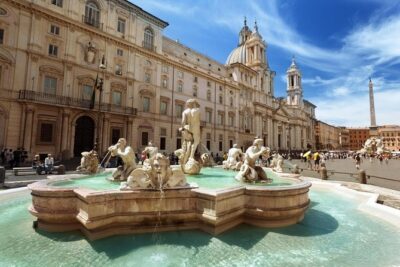
3 in 1 Cooking Class near Navona: Fettuccine, Ravioli & Tiramisu
Read our review →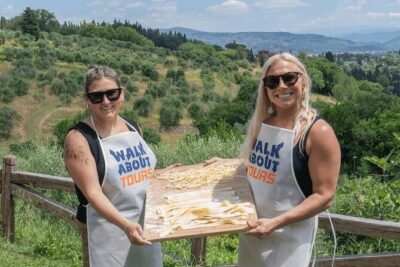
Florence Pizza or Pasta Class with Gelato Making at a Tuscan Farm
Read our review →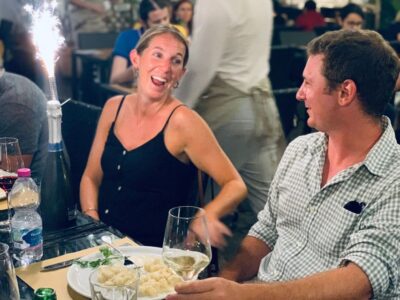
Pasta & Tiramisu Class with Fine Wine by the Vatican
Read our review →
Authentic Pizza Making Class in Naples with Appetizers and Drink
Read our review →
Pasta Making Class with Wine, Limoncello, and Dessert
Read our review →
3-in-1 Fettuccine, Ravioli, and Tiramisu Cooking Class
Read our review →Browse the lists this tour appears in