
Reviewed · COOKING CLASSES
Bologna Local Pasta Cooking Class, Ragu, Spritz, Wine & Gelato
Fresh pasta is the heart of this three-hour Bologna cooking class. You’ll work with just flour, eggs, a rolling pin, and your own hands to make tagliatelle, then eat it with homemade ragù and aged Parmigiano Reggiano. The class also includes a local aperitif, wine, coffee, amaro, and gelato, so this is as much a shared meal as a lesson.
I like the friendly size, usually capped at 10 people, though the stated maximum is 13. I also like that the pasta is made by hand, with no machine doing the work for you. The main consideration is that the ragù is prepared before class, not cooked from start to finish with you, and the steady flow of drinks may not suit everyone.
- Handmade tagliatelle: Mix, knead, roll, dry, cut, and cook fresh pasta with a local sfoglina.
- Bolognese aperitivo: Taste Mortadella, Crescenta or piadina, and Pignoletto before cooking.
- Casoni spritz lesson: Learn a regional version made with local herbs and recipes.
- Full meal included: Eat your pasta with homemade ragù, Parmigiano Reggiano, and San Giovese red wine.
- Small-group setting: The class is designed for conversation, shared work, and meeting people from other places.
- Take-home value: Recipes can be sent as PDF files, and you may have leftover pasta to cook later.
A Bolognese kitchen lesson with a social side
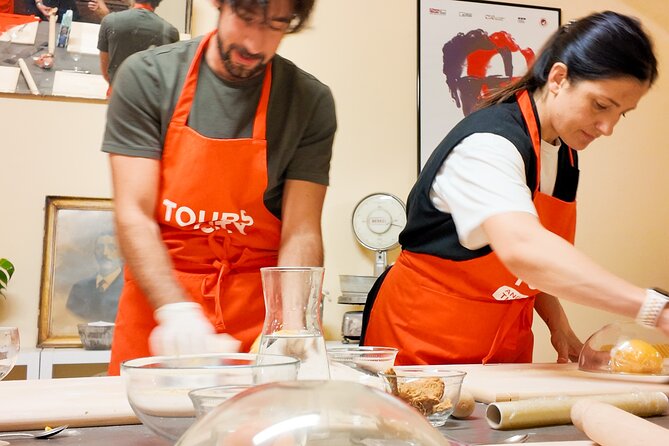
Bologna is often called Italy’s food capital, and this class gives you a useful reason to believe it. You do not simply watch someone prepare a plate of pasta. You sit at a worktable, make the dough yourself, share ingredients with the group, and then eat what you made.
The mood is informal. Previous sessions have been led by instructors including Sonia, Stella, Stefania, Claudia, Valentina, Roberta, Lucrezia, Beatrice, and others. The exact teaching team may vary, but the format stays focused on clear demonstrations and hands-on help. Beginners are welcome, and experienced home cooks can still pick up small tricks about texture, rolling, and cutting.
This is also a good way to meet people if you are traveling alone. You start by eating and drinking together, then work in pairs or as a group while the instructors keep things moving. Couples and families fit in well, but the menu and pacing are designed with adults in mind.
The opening aperitivo: Mortadella, Crescenta, and Pignoletto
The class begins at Piazza Galileo Galilei in Bologna’s old town. The meeting point is near public transportation, and the activity finishes at the same place. Allow time to find the square without rushing, especially if you are arriving from another part of the city.
The first course is not a formal meal. It is a Bolognese welcome. Expect local wine, usually Pignoletto, along with Mortadella and Crescenta or piadina. These simple foods set the regional tone better than a generic snack would.
Mortadella is Bologna’s famous finely textured pork sausage. Crescenta and piadina are local flatbreads, useful for making a quick bite while everyone introduces themselves. You get a taste of Emilia-Romagna before the flour hits the table.
This opening is one of the class’s practical strengths. You are not thrown into a technical lesson with strangers. A drink and a few bites make it easier to ask questions, laugh at a messy dough, and settle into the group.
More Cooking Classes in Bologna
- Pastamama, Home Cooking Classes at Grace’s Home
★ 5.0 · 521 reviews - Bologna: Pasta and Tiramisu Cooking Class with Wine
★ 4.7 · 507 reviews - Bologna: Pasta and Tiramisu Small Group Cooking Class with Wine
★ 5.0 · 409 reviews
Mixing flour and eggs without a machine
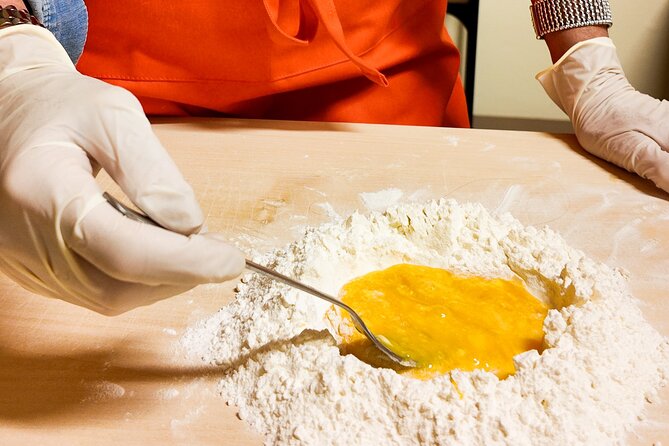
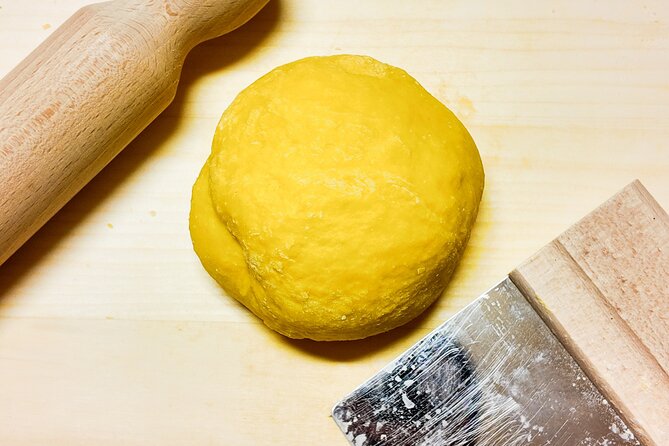
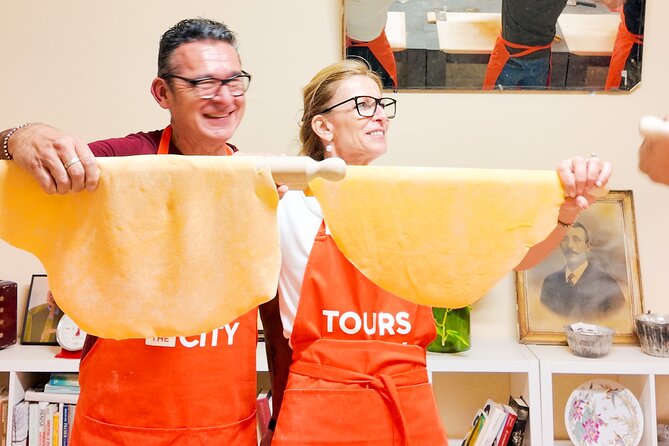
The main lesson uses the classic fresh-pasta combination of flour and eggs. You mix the dough by hand, knead it, and learn how it should feel as it comes together. The instructors demonstrate each step, then help when the dough is too dry, too sticky, or simply not behaving.
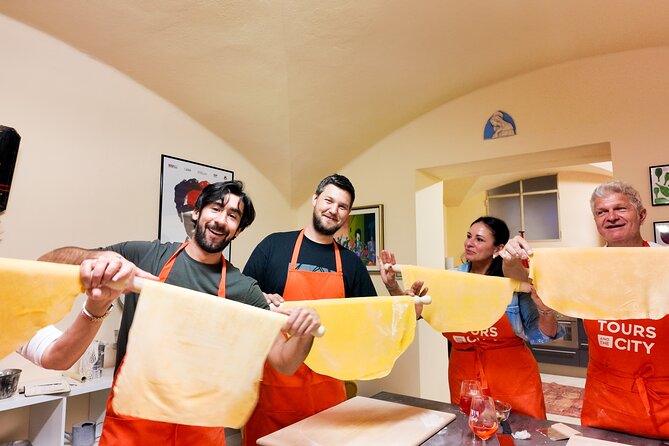
There is no electric pasta machine here. The rolling pin becomes your tool, and your arms provide the power. That makes the lesson more physical than a demonstration class, but it also gives you a better sense of how fresh pasta is actually made in a home kitchen.
You do not need prior experience. One useful feature of the class is its patient, step-by-step approach. First-timers have been able to turn two basic ingredients into workable dough, while more experienced cooks have still found room to improve their technique.
The drawback is that hand-rolling takes time and effort. If you want a polished chef demonstration with little work of your own, this is not the right format. If you want to understand the process well enough to repeat it at home, the hands-on method is exactly the point.
Cutting tagliatelle the Bolognese way
Once the dough is rolled thin, you cut it into tagliatelle. This is the signature pasta shape for the meal, and the difference between homemade and packaged pasta becomes clear once you handle it yourself.
The instructors show you how to fold or arrange the sheet, then cut even ribbons. Your first pieces may not be perfectly uniform. That is part of the fun, and the finished dish does not need factory precision to taste good.
The pasta is allowed to dry briefly before cooking. This gives you time to prepare your drink, learn about the sauce, and continue chatting with the group. Some sessions have also left participants with extra pasta to cook later, though you should not treat leftovers as guaranteed.
Recipes are available by email as PDF files on request. That matters because a cooking class can be entertaining for three hours and useless afterward if you cannot remember the proportions. Here, you have a written starting point for trying fresh pasta at home.
Making a Casoni spritz with local character
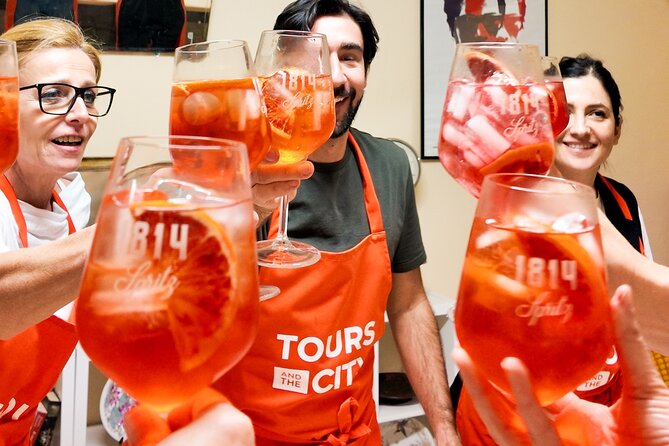
While the pasta rests, you learn to make a Casoni spritz. This is not simply a repeat of the familiar Aperol version. Casoni is associated with local herbs and regional recipes, giving the drink a stronger Bologna connection.
The lesson is a pleasant change of pace from kneading and rolling. You measure, mix, taste, and compare the drink with other spritz styles. One session included a comparison between Campari and Aperol, which helps explain how the bitter element changes the final drink.
The spritz is part of the meal, not a separate cocktail stop. That means you may be drinking while cooking, then moving on to white and red wine, coffee, amaro, and dessert. The generous beverage list is a major part of the value, but you should pace yourself if you plan to walk around Bologna afterward.
The class is not a cocktail-school course. You will learn the local recipe and the basic balance, but the main focus remains pasta and food.
Other classes where you do the cooking in Bologna:
- Bologna: Pasta Tagliatelle Ragu Cooking Class with Spritz
★ 4.9 · 407 reviews - Bologna on the plate, Cooking Class with Alessia
★ 5.0 · 260 reviews - Bologna: Pasta Tagliatelle al Ragu Cooking Class with Wine
★ 4.7 · 225 reviews - Florence: Pasta Cooking Class with Unlimited Wine
★ 4.9 · 10,285 reviews
Homemade ragù, prepared before your arrival
The tagliatelle is served with house-made ragù. The important detail is that the ragù preparation is not included in the class because of the three-hour schedule. It is made in advance, then combined with your freshly cooked pasta.
That is both a strength and a limitation. You get a properly prepared sauce without spending the whole class waiting for it to simmer. You also miss the full process of making Bolognese ragù from raw ingredients.
The sauce is paired with Parmigiano Reggiano aged 24 months. The cheese adds salt, nuttiness, and a firm finish to the soft pasta and slow-cooked meat sauce. This is a traditional pairing, not a pile of random toppings added for effect.
The meal comes with San Giovese red wine. After making the pasta yourself, the final plate feels earned. You have seen the dough go from flour and eggs to ribbons, and you can taste why fresh pasta is worth the work.
A shared meal with wine, coffee, amaro, and gelato
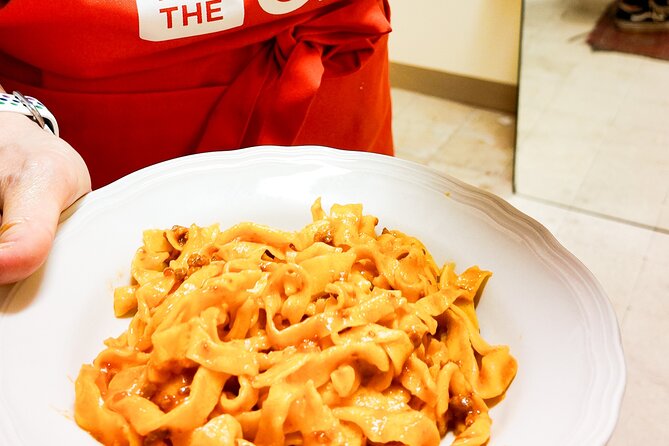
The meal is served together at the end, giving the class a communal finish. You are not handed a plate and sent away. The group sits down with the pasta, wine, and conversation, which is why the activity works well for couples, friends, and solo visitors alike.
Dessert includes local coffee, amaro, and mystery gelato. The exact flavor is not stated in advance, so you get a small surprise at the end. One version of the meal also included a drizzle of very aged balsamic vinegar from Modena with the gelato, though that detail may vary by session.
This long food sequence helps explain the price of $59.26 per person. You are paying for instruction, ingredients, several drinks, a full meal, dessert, and a small-group social setting. Compared with a simple pasta demonstration, it offers much more. Compared with a serious culinary school class, it is lighter and less technical.
The class lasts about three hours. That is long enough to feel like a proper meal and short enough to fit into a day of sightseeing. I would avoid scheduling another fixed activity immediately afterward. The experience has a relaxed pace, and the meeting, cooking, eating, and final drinks all take time.
Why the small group makes a difference
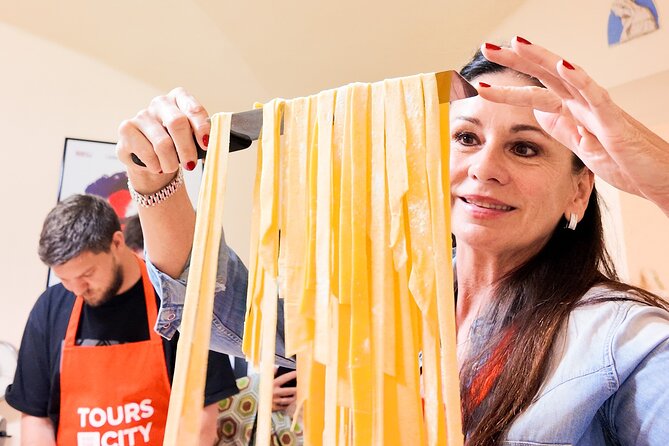
The advertised group size is limited to 10 people, with a maximum of 13. Some sessions may be smaller. A particularly small group gives you more direct help when the dough needs attention, while a fuller class creates more energy around the table.
The instructors’ names vary, but the teaching style is consistent in the strongest accounts: welcoming, encouraging, and willing to step in when someone hits a rough patch. That support matters because pasta dough can look simple but behave differently depending on egg size, flour, humidity, and kneading.
The social setting is a central part of the experience. You make new acquaintances over Mortadella, drink together while cutting pasta, and share the finished meal. If you want quiet, private instruction, a private class would be better. If you like cooking with other people, this format has a lot going for it.
Children are welcome, but the experience is built for adult participation. A young person who enjoys cooking may have fun, but the wine, amaro, and adult pacing clearly shape the class.
Dietary needs and practical limits
Gluten-free pasta and vegetarian sauces can be accommodated if you provide advance notice. The class may not be suitable for severe allergies or strict dietary requirements, so do not rely on a last-minute request.
You should contact the provider before booking if you have several restrictions, cross-contamination concerns, or a serious allergy. The menu includes flour, eggs, dairy, meat, alcohol, and multiple prepared foods, so the kitchen may not be able to meet every need.
The class is offered in English. That makes the demonstrations accessible to English-speaking visitors, and the instructors also provide local food context along the way. The exact depth of the cultural explanation can depend on the instructor and group, but you will learn more than a recipe alone.
Free cancellation is available if you cancel at least 24 hours before the start time. Changes or cancellations inside that window are not accepted for a refund.
Who should book this Bologna pasta class?
I would choose this class if you want to do something active with your meal instead of sitting through another restaurant dinner. It suits first-time pasta makers particularly well, but experienced cooks can enjoy the regional focus and the relaxed company.
It is a strong choice for:
- Couples looking for a shared activity
- Solo visitors who want an easy social setting
- Families with children interested in cooking
- Home cooks who want fresh-pasta skills
- Food lovers who enjoy wine and aperitivo
- Anyone with a rainy afternoon or evening in Bologna
I would think twice if you dislike group activities, avoid alcohol, need strict allergy control, or specifically want to learn ragù from start to finish. The sauce is homemade, but it is prepared before the class. You also spend much of the three hours eating and drinking, so this is not a technical pasta workshop from beginning to end.
Should you book it?
At $59.26, this is good value if you count the food and drink as part of the experience, which you should. You receive a local aperitivo, pasta instruction, a full tagliatelle meal with ragù and cheese, wine, coffee, amaro, gelato, and the chance to leave with recipes.
I like the balance of instruction and pleasure. You learn a skill, but you are never made to feel like you are taking an exam. The strongest reason to book is the chance to make fresh pasta by hand, then eat it with a group in the city where this style of food belongs.
Book it if you want a friendly, practical taste of Bologna and are happy with a pre-prepared ragù. Skip it only if you need a highly technical course or a tightly controlled dietary menu.
FAQ
How long does the Bologna pasta class last?
The experience lasts approximately three hours, including the aperitivo, pasta lesson, meal, drinks, coffee, amaro, and gelato.
What pasta will I make?
You will make tagliatelle by hand using flour and eggs. You will roll and cut the dough with a rolling pin rather than using a pasta machine.
Is the ragù made during the class?
No. The ragù is 100 percent homemade, but its preparation is not included because of the limited three-hour schedule. It is prepared in advance and served with your pasta.
Is the class suitable for vegetarians or people avoiding gluten?
Gluten-free pasta and vegetarian sauces can be accommodated with advance notice. The experience may not suit people with severe allergies or strict dietary requirements, so contact the provider before booking.
Where does the activity start and finish?
The class starts at Piazza Galileo Galilei in Bologna and ends back at the same meeting point.
What is included in the meal?
The experience includes local aperitivo foods, Pignoletto, a Casoni spritz, handmade tagliatelle with homemade ragù, 24-month aged Parmigiano Reggiano, San Giovese red wine, coffee, amaro, and mystery gelato.
More classes and workshops in Bologna
- 3 in 1 Cooking Class near Navona: Fettuccine, Ravioli & Tiramisu
★ 5.0 · 7,376 reviews - Florence: Pasta Cooking Class with Unlimited Wine
★ 5.0 · 6,413 reviews - Naples: Pizza-Making Workshop with Drink and Appetizer
★ 4.9 · 5,411 reviews - Rome: Pasta & Tiramisu Class with Fine Wine by the Vatican
★ 4.9 · 4,852 reviews
More pasta to make and eat in Bologna
- Bologna Food & Market Tour with 6 Tastings, Pasta, Wines & More
★ 5.0 · 1,328 reviews - Bologna: Food Tour with Pasta Tasting & Local Specialties
★ 4.8 · 312 reviews - Florence Pizza or Pasta Class with Gelato Making at a Tuscan Farm
★ 5.0 · 6,801 reviews - Florence: Pasta & Tiramisu Cooking Class with Unlimited Wine
★ 4.9 · 6,708 reviews
Just added in Bologna
- Bologna Food Experience: Factory tours & Family-Style Lunch★ 5.0 · 1,201 reviews
- Bologna on the plate, Cooking Class with Alessia★ 5.0 · 260 reviews
- Bologna Private Highlights & Hidden Gems Tour with a Local★ 5.0 · 359 reviews
- Bologna gastronomic experience with a local★ 5.0 · 626 reviews
- Bologna Private Food Tour with 6 or 10 Tastings★ 4.5 · 344 reviews
- Bologna: Full meal Food Tour with Local Delights by Do Eat Better★ 5.0 · 541 reviews
- Bologna Food Tour by Taste Bologna: Intimate Group (Max 10)★ 5.0 · 424 reviews
- Bologna Food & Market Tour with 6 Tastings, Pasta, Wines & More★ 5.0 · 1,328 reviews
Cooking Classes, compared.
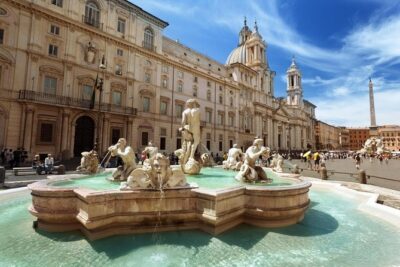
3 in 1 Cooking Class near Navona: Fettuccine, Ravioli & Tiramisu
Read our review →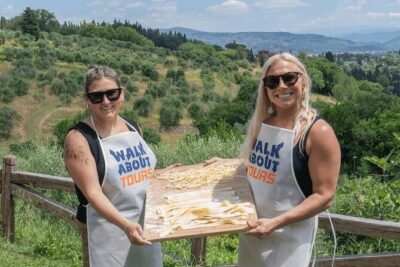
Florence Pizza or Pasta Class with Gelato Making at a Tuscan Farm
Read our review →
Pasta & Tiramisu Class with Fine Wine by the Vatican
Read our review →
Authentic Pizza Making Class in Naples with Appetizers and Drink
Read our review →
Pasta Making Class with Wine, Limoncello, and Dessert
Read our review →
3-in-1 Fettuccine, Ravioli, and Tiramisu Cooking Class
Read our review →Browse the lists this tour appears in