Reviewed · TOURS IN ROME
Rome: Small Group Guided Tour of Castel Sant’Angelo
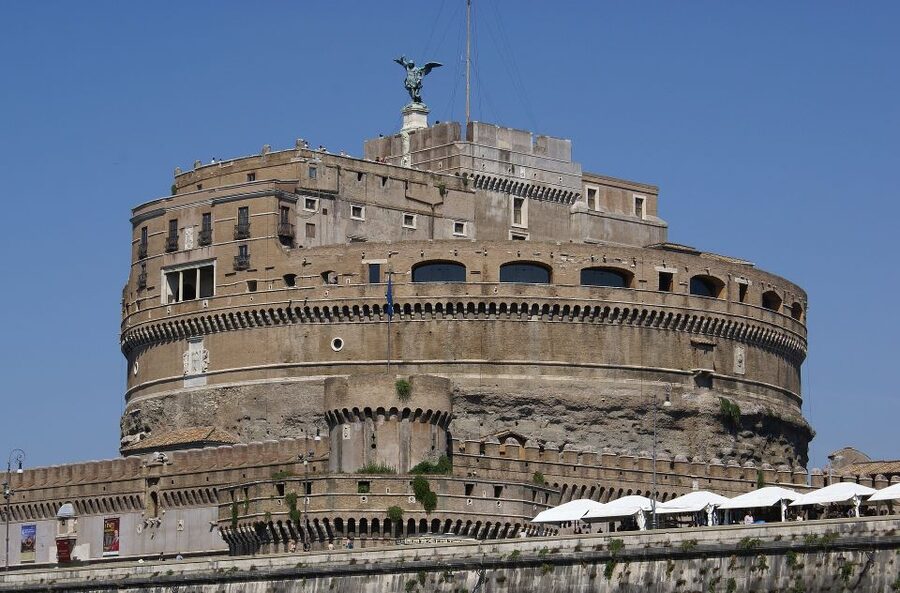
Castel Sant’Angelo is one of Rome’s most unusual monuments because it has been a tomb, fortress, prison, papal residence, museum, and archaeological site. This two-hour tour takes you through all five levels, from Emperor Hadrian’s burial chamber to the rooftop terrace, where Rome opens up around you. The castle’s changing purpose gives the visit a strong sense of drama.
I like the small-group format, which makes it easier to hear the guide and ask questions. I also like the mix of places you see: preserved Renaissance frescoes, old weaponry, fortified passageways, prison cells, and the chamber of ashes. The main drawback is physical. You walk a spiral ramp and visit several levels, so this tour is not suitable for people with mobility impairments.
Key points at a glance

- Five levels tell five different stories: Start with Hadrian’s tomb, then move through defensive corridors, cells, papal rooms, and museum spaces.
- The rooftop terrace is the payoff: You get memorable views across Rome and strong photo opportunities from the top.
- The guides shape the experience: Alec, Barbara, Lorenzo, Silvia Rossetti, and Oleg have all been praised for clear storytelling, humor, and patient answers.
- The history is not tidy: The building changed from imperial mausoleum to fortress, prison, and papal refuge.
- The price includes admission: At $75 per person, the €16 adult museum ticket is already covered.
- Bring identification and travel light: Tickets are issued in each participant’s name, and large bags, luggage, weapons, and sharp objects are not allowed.
Why Castel Sant’Angelo is worth two hours
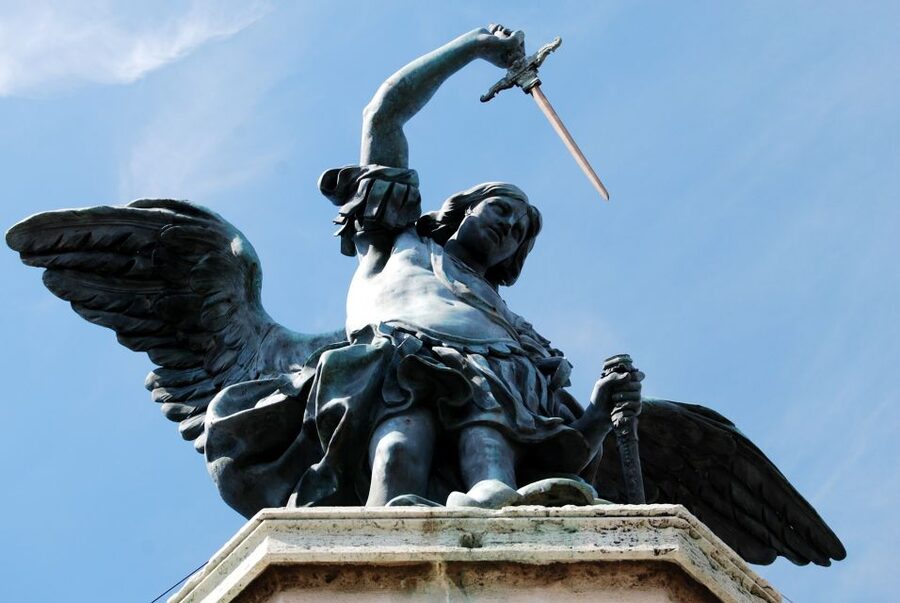
Many visitors see Castel Sant’Angelo from the outside while crossing the bridge toward St. Peter’s Basilica. The massive round building is hard to miss, but its exterior tells only part of the story. Inside, you move through an architectural record of Rome’s changing rulers and priorities.
The monument began as Emperor Hadrian’s tomb. Later, it became a fortified stronghold, a prison, and a place connected to the papacy. Parts of the building served as papal rooms, while other areas held prisoners. That mixture makes the tour more interesting than a simple walk through an old palace.
I find the building most rewarding when you notice the contrast between its functions. One room may show refined Renaissance decoration, while the next leads into a severe corridor built for defense. The castle is not arranged like a single-period museum, and that is exactly the point.
A guide helps you connect those layers. Without context, the spiral ramp and stone chambers can blur together. With a good explanation, each floor has a reason for being there.
A few more things to do in Rome
- Colosseum, Roman Forum & Palatine Guided Tour
★ 4.7 · 63,148 reviews - Vatican Museums, Sistine Chapel & St Peter’s Basilica Guided Tour
★ 4.5 · 39,149 reviews - Rome: Colosseum, Palatine Hill and Roman Forum Guided Tour
★ 4.8 · 32,814 reviews
Starting at the entrance with City Walkers
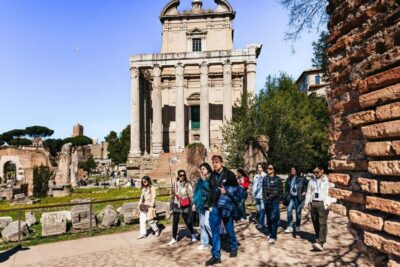
Your guide waits outside the entrance with a City Walkers sign. You should arrive with the correct names and birthdates for everyone in your party, since the tickets are nominal and museum staff check identification at the entrance.
The tour lasts about two hours. It is offered in English, French, Italian, or Spanish, and headsets are available if needed. A private group option is also available, which may suit you if you want more control over questions and pacing.
The small-group setup is an important part of the value. Several of the strongest guide experiences came from groups of only a few people, including one group of five and another of four. In a compact building with narrow passages, a smaller group also makes it easier to stay close to the guide without losing the thread of the story.
The meeting point is straightforward, but Rome can be hard to navigate when streets close for events. One guide, Barbara, waited briefly for guests delayed by road closures during a running race. You should still plan to arrive early, since waiting for late arrivals cannot be guaranteed.
Hadrian’s tomb and the spiral ramp
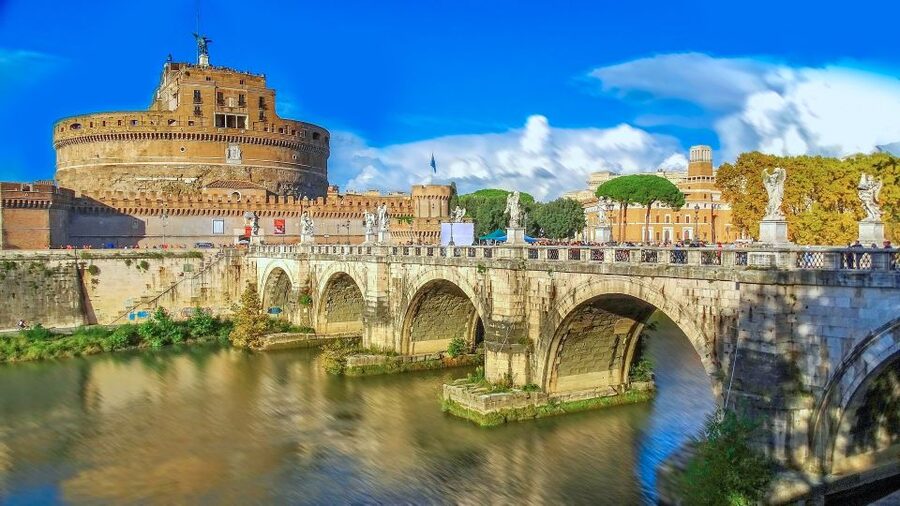
The first major surprise is that you enter a burial monument before seeing the castle as a fortress. Hadrian’s tomb formed the original core of the building, and the lower sections retain that connection to ancient Rome.
From there, the route follows a spiral ramp through the structure. The ramp is not just a way to reach the next floor. It shows how the original building was designed and how later changes adapted it for defense and control.
You will walk through fortified corridors and reach the chamber of ashes. This section can feel stark compared with the painted rooms above, but it gives the castle its foundation. You begin with imperial death and burial, then gradually move into military and religious history.
The route requires steady walking and some physical effort. Since the tour covers five floors, it is a poor match for anyone with limited mobility. The information says the experience is not suitable for people with mobility impairments, so take that warning seriously rather than assuming the guide can alter the route.
Cells, corridors, and the castle’s harder side
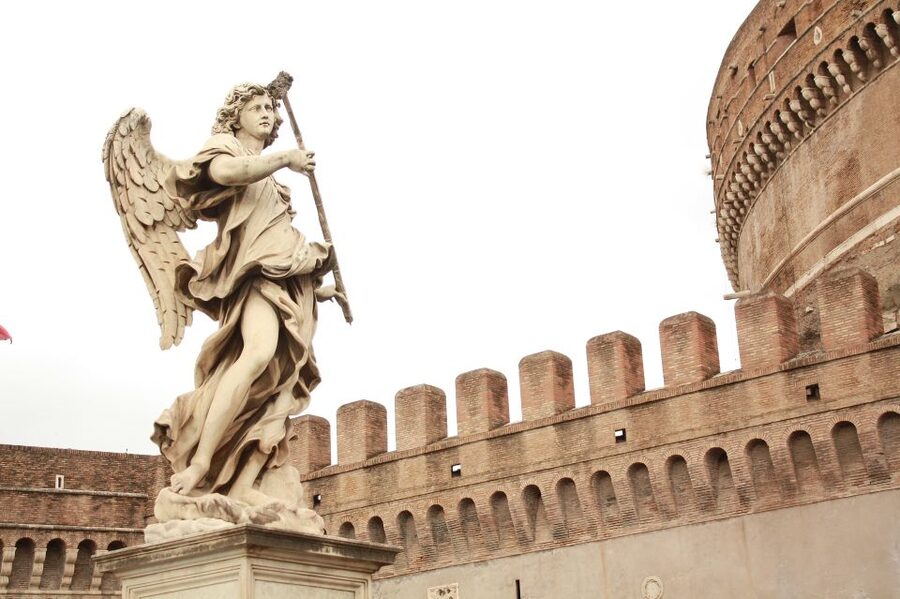
The castle was not only a grand residence. Its cells imprisoned historical figures, and the tour includes spaces connected to that darker role.
The prison areas help explain why Castel Sant’Angelo feels different from Rome’s grand palaces. You are not simply looking at art and decoration. You are also walking through a building designed to control movement, protect power, and hold people against their will.
A guide can make these rooms easier to understand by placing them within the castle’s wider story. Oleg, one of the guides praised for this tour, prepared background material that helped guests follow the events in chronological order. That kind of structure matters here, because the monument’s many roles can otherwise become confusing.
The best guides also leave room for questions. Alec is repeatedly praised for answering detailed questions and explaining the castle clearly without losing the group. His humor appears to be part of his method, not a distraction. It helps keep the subject moving through the more technical parts of the visit.
Same base, a different kind of day:
- Vatican: Museums & Sistine Chapel Entrance Ticket
★ 4.5 · 144,003 reviews - Vatican Museums & Sistine Chapel Tour with Optional Basilica
★ 4.3 · 67,413 reviews - Rome: Guided Tour of Colosseum, Roman Forum & Palatine Hill
★ 4.7 · 27,897 reviews - Rome: Colosseum & Forum with Audio Guide App -Optional Arena
★ 4.2 · 24,770 reviews
Papal rooms and Renaissance frescoes
As you reach the upper sections, the tone changes. The route leads into rooms that served as a papal residence, with Renaissance frescoes that remain remarkably well preserved.
These rooms are valuable because they show how the building shifted from military refuge to a place of comfort and authority. The painted interiors are not an isolated art display. They are part of a working residence within a fortified structure.
You might find the transition from rough defensive spaces to decorated rooms especially striking. It is one of the clearest signs that the castle was repeatedly adapted rather than built for one purpose and left unchanged.
The guides are particularly useful here because a quick look cannot explain why these rooms are in a fortress. Silvia Rossetti was praised for combining enthusiasm with strong knowledge of the castle, while Lorenzo was valued for finding a good balance between detail and pace. That balance matters when frescoes compete with the building’s larger story.
The tour also includes an extensive collection of weaponry. This adds another layer to the visit, linking the elegant rooms with the castle’s defensive role. You do not need to be a military-history enthusiast to appreciate the contrast. The weapons help you see that the monument was built around real concerns about protection, siege, and authority.
The terrace and Rome from above
The upper terrace is the tour’s clearest reward. After moving through the enclosed corridors and rooms, you step into open air and look across Rome.
The view gives you a useful sense of the city’s scale and layout. It is also a fine place for photographs, so keep your phone or camera ready. The rooftop does not replace Rome’s other famous viewpoints, but it offers a distinctive angle because you are standing on a building that has watched the city change for centuries.
This is also where the tour’s different themes come together. You have seen a tomb, a fortress, prison spaces, papal rooms, artwork, and weapons. From the terrace, those parts no longer feel like unrelated exhibits. They form one complicated building with a long working life.
The terrace can be the busiest-feeling part of the route, especially when other visitors are taking photos, but a guide still helps you understand what you are looking at. The view becomes more useful when you can connect it to the monument’s place in Rome.
The guides are the main reason to book
The admission ticket matters, but the guide is the heart of this experience. A self-guided visit can show you the rooms. It may not show you how the building’s purposes changed over time.
Alec receives especially strong praise for clear English, humor, and a talent for making complicated material easy to follow. Guests describe him as engaging without rushing, and several say he made the tour one of their best in Rome. Barbara is noted for patience and for taking time with questions. Lorenzo is praised for a comfortable pace and well-chosen detail.
Silvia Rossetti is another strong choice if you want a guide who brings visible energy to the subject. Oleg’s chronological approach may help you if Roman history tends to feel like a jumble of names and dates. Guide availability depends on the date and language, so you cannot assume you will receive a particular person.
What you can reasonably expect is an interpretive tour rather than a simple escort through the rooms. The guides explain the building’s many uses, connect the spaces to wider events, and make room for questions. That is the part of the tour most likely to justify paying more than the ticket price alone.
Is $75 good value?
The tour costs $75 per person and includes the Castel Sant’Angelo admission ticket. The adult ticket is listed at €16, while admission is free for children under 18. That means much of the remaining cost pays for the two-hour guided experience and the convenience of joining a planned visit.
For an adult who wants context, the price is reasonable, especially if you value a small group and the ability to ask questions. The castle is large enough and complicated enough that a guide adds real value. You also avoid the uncertainty of wandering through five floors without knowing which details matter.
The calculation changes for children under 18, since their admission is free. Families should consider how much the guided explanation will add for each child before booking. The tour is also less appealing if you prefer to move alone, read at your own pace, or spend a long time photographing each room.
The price does not include food, drinks, hotel pickup, or hotel drop-off. Those omissions are easy to manage because the tour is a two-hour visit rather than a full-day outing, but you should plan your own transport to and from the entrance.
Practical details that affect your visit
Bring a valid passport or ID card. The museum checks the names on the tickets, and you need to provide correct participant names and birthdates when booking. This is not a detail to leave until the last minute.
Travel light. Large bags and luggage are not allowed, along with weapons, sharp objects, alcohol, and drugs. A small day bag is the sensible choice, but the provided information does not promise storage facilities.
The tour runs rain or shine. The terrace is part of the appeal, but bad weather can affect how long you want to spend outside and how good your photographs look. You should dress for conditions rather than treating the rooftop as optional.
Free cancellation is available up to 24 hours before the tour for a full refund. You can also reserve now and pay later, which helps if your Rome schedule is still shifting.
The biggest practical issue is mobility. The spiral ramp and five-floor route make this unsuitable for people with mobility impairments. If you have any concern, ask before booking rather than relying on an adjustment once inside.
Who should book this Castel Sant’Angelo tour?
I would choose this tour if you want Rome’s history explained through one building rather than presented as a list of disconnected monuments. It suits first-time visitors who want a clear introduction, as well as returning visitors looking for a less predictable stop than the city’s most famous churches and ruins.
It is especially good for people who enjoy architecture, political history, prisons, military spaces, Renaissance decoration, or city views. You do not need expertise. The strongest guides make the story understandable and add humor when the facts become dense.
You should think twice if you dislike stairs and ramps, need a slow-access visit, or want to spend most of your time taking photos. The tour follows a set two-hour structure, and the guide’s job is to keep the group moving.
Should you book it?
Yes, if you want to understand why Castel Sant’Angelo is more than a large round building near the Vatican. The combination of Hadrian’s tomb, prison cells, papal rooms, frescoes, weaponry, and the rooftop view gives you a varied visit in a compact time.
At $75, the tour makes the most sense when you value explanation and a small group. The admission ticket alone is much cheaper, but the castle’s complicated past is exactly where a strong guide earns the difference.
Book it if you can manage the spiral route and remember to bring identification. Skip it if mobility is a concern or if you prefer exploring museums without a fixed pace.
FAQ
How long does the Castel Sant’Angelo tour last?
The guided walking tour lasts two hours.
What languages are available?
Live guides are available in English, French, Italian, and Spanish.
What does the $75 price include?
The price includes the Castel Sant’Angelo admission ticket, the two-hour guided tour, and headsets if needed.
Is admission included for children?
The listed adult admission is €16, and admission is free for children under 18. The tour price includes the cost of the tickets.
Where do I meet the guide?
The guide waits in front of the Castel Sant’Angelo entrance with a City Walkers sign.
Do I need to bring identification?
Yes. Tickets are issued in each participant’s name, and museum staff check identification at the entrance. Bring a valid passport or ID card.
Are large bags allowed?
No. Luggage and large bags are not allowed. Weapons and sharp objects are also prohibited.
Is the tour suitable for people with mobility impairments?
No. The route includes a spiral ramp and five floors, and the experience is listed as unsuitable for people with mobility impairments.
Can I cancel or pay later?
You can cancel up to 24 hours in advance for a full refund. Reserve now and pay later is also available.
Just added in Rome
- Civitavecchia Private Transfer: From the Port to Rome Airport★ 5.0 · 309 reviews
- Civitavecchia Private Transfer from ship to FCO airport or Rome★ 5.0 · 245 reviews
- Civitavecchia Shore Excursion: Best of Rome Private Tour★ 5.0 · 247 reviews
- Food Tasty and History Tour in Civitavecchia★ 5.0 · 256 reviews
- Palatine Hill and Roman Forum Tour with Fast-Track Entrance★ 4.2 · 417 reviews
- Tivoli: Villa D’Este & Villa Adriana Pass & App Audioguide★ 4.4 · 364 reviews
- Tivoli: Villa D’Este Entry Ticket and App Audio Guide★ 4.3 · 191 reviews
- Vatican Museums & Sistine Chapel Skip-the-Line Guided Tour★ 4.6 · 254 reviews
Tours in Rome, compared.
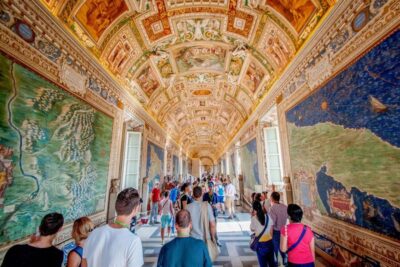
Vatican: Museums & Sistine Chapel Entrance Ticket
Read our review →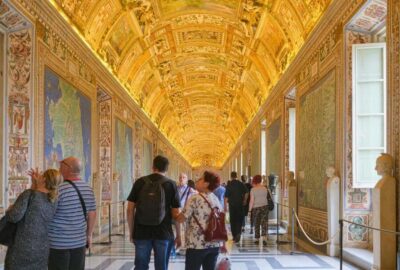
Vatican Museums & Sistine Chapel Tour with Optional Basilica
Read our review →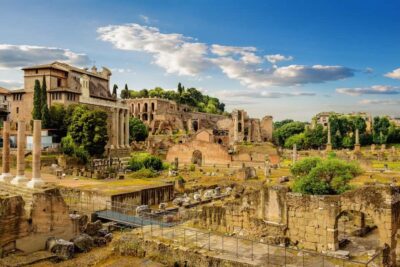
Colosseum, Roman Forum & Palatine Guided Tour
Read our review →
Vatican Museums, Sistine Chapel & St Peter’s Basilica Guided Tour
Read our review →
Colosseum & Forum with Audio Guide App -Optional Arena
Read our review →
Pantheon Fast-Track Ticket and Official Audio Guide
Read our review →
City Sightseeing Hop-on Hop-off Bus with Audioguide
Read our review →