
Reviewed · PANTHEON & TREVI FOUNTAIN TOURS
Rome: Pantheon Small Group Tour and Skip-the-Line Ticket
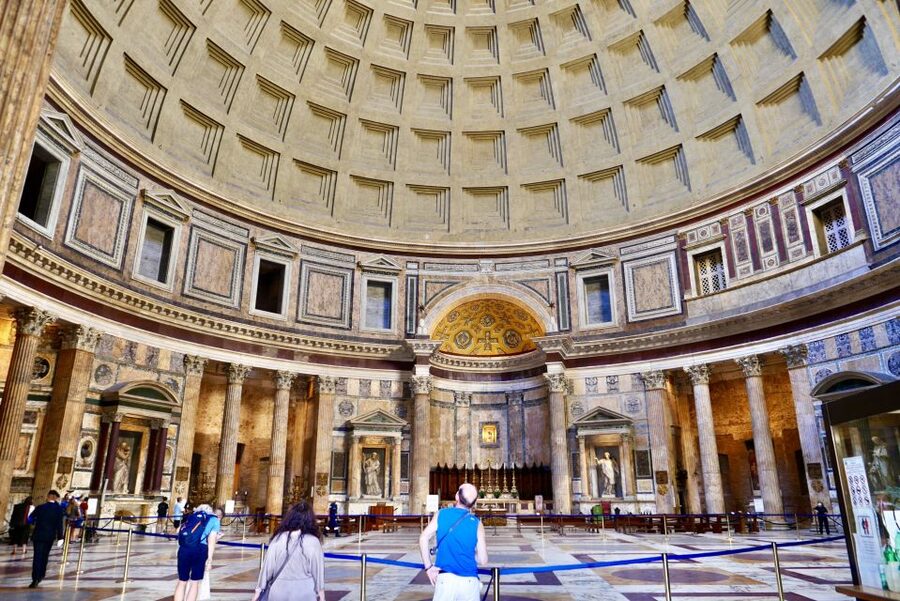
The Pantheon gives you one of Rome’s biggest surprises: a building from antiquity that still feels whole, useful, and astonishingly large inside. This tour explains how the dome stays up, why the proportions mattered to Roman builders, and how a pagan temple became a Christian church.
I like the small group limit of 10, which makes it easier to hear and ask questions. I also like the choice to add an extra walk through nearby squares and churches, turning a short monument visit into a useful introduction to central Rome. The main consideration is time: the basic tour lasts only 40 minutes, so anyone wanting a slow look at every detail should choose the extended option.
Key points to know before booking
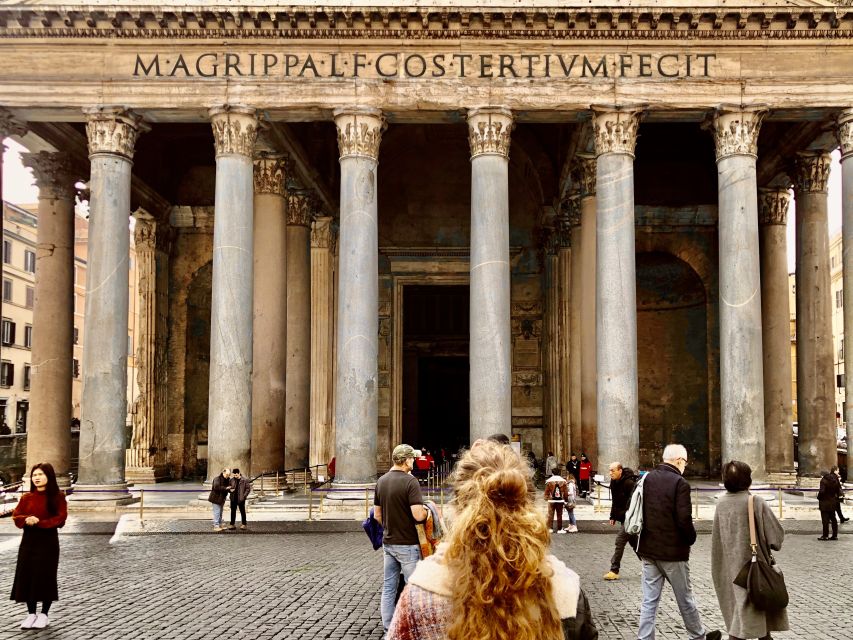
- See the Pantheon’s original marble floor and Egyptian columns: The interior preserves far more than you might expect from a building of its age.
- Learn the practical secrets of the dome: Your guide explains its structure, proportions, and famous central opening.
- Enter with a small group: The maximum group size is 10, with private tours also available.
- Hear about Raphael and the church’s later life: The tour covers the artist’s tomb, Christian martyrs, and Italian royals.
- Add 40 minutes in central Rome: The optional extension includes Piazza della Minerva, the Temple of Hadrian, and Piazza Navona.
- Plan for church dress rules: Your knees and shoulders must be covered, and shorts, short skirts, and sleeveless shirts are not allowed.
Why the Pantheon deserves a guided visit
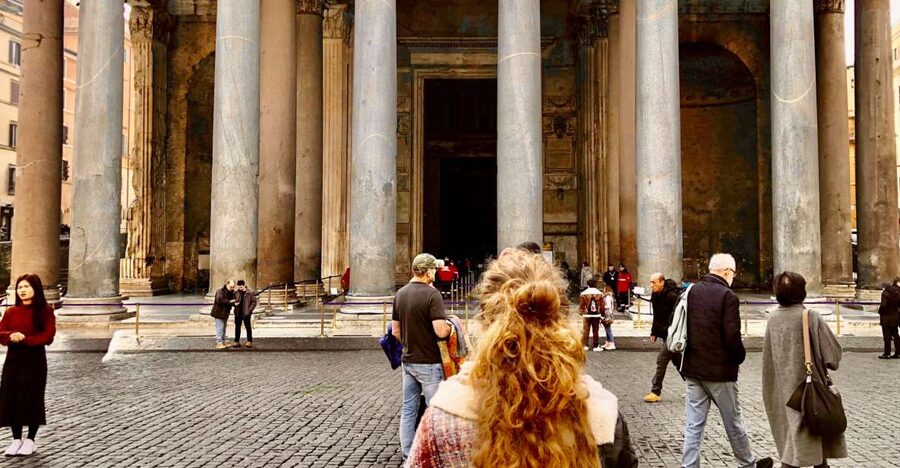
You can look at the Pantheon and see a grand ancient building. With a good guide, you begin to see the decisions behind it: the scale of the columns, the shift from a dark entrance to a bright round interior, and the way the dome seems to float above you.
That extra explanation matters because the Pantheon is not a site that unfolds through a long sequence of rooms. You enter, look upward, and take in one vast space. Without context, you may spend your visit admiring the spectacle without understanding what makes it so unusual.
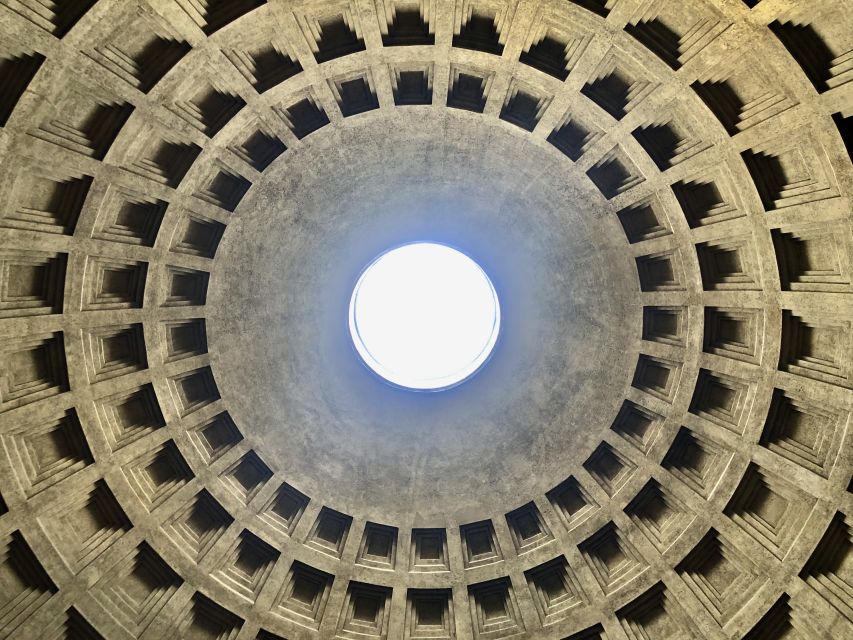
The tour focuses on the building’s engineering and design. You learn about the dome’s construction, its proportions, and the central opening that lets in daylight and weather. You also hear why ancient Roman builders considered the geometry meaningful, rather than merely decorative.
I especially like that the guide connects the building to later Rome. The Pantheon is now a church, and its interior includes the tomb of Raphael, along with burials connected to Christian martyrs and Italian royalty. That gives you several layers of the city in one stop: ancient religion, imperial building, Christian worship, and modern national memory.
Other landmarks within a walk in Rome:
- Rome: Pantheon Fast-Track Ticket and Official Audio Guide
★ 4.3 · 21,008 reviews - Pantheon Reserved Entry Ticket with Audio Guide
★ 4.0 · 4,486 reviews - Rome: Pantheon Timeless Marvel Guided Tour with Entry Ticket
★ 4.9 · 4,002 reviews
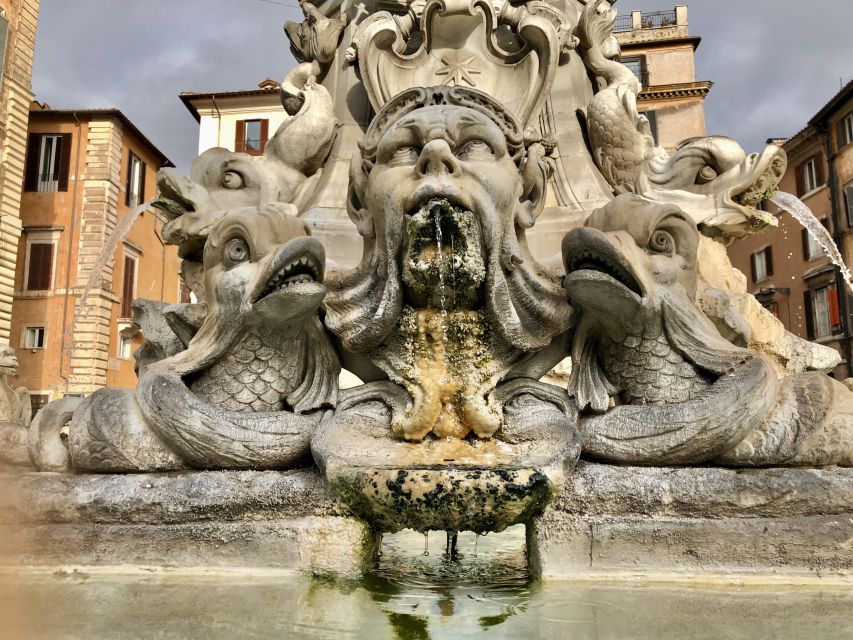
Meeting at the Pantheon fountain
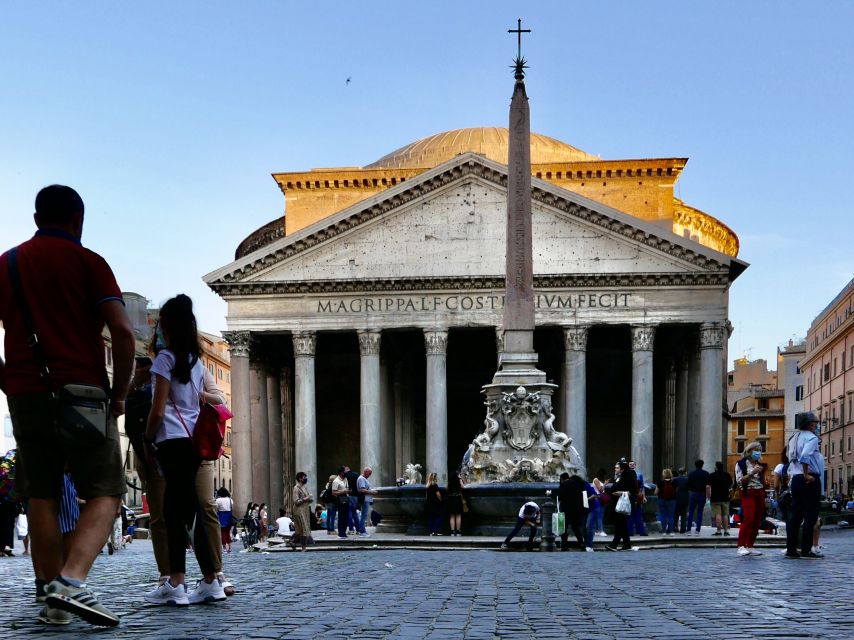
The meeting point is the fountain directly in front of the Pantheon entrance. Look for a guide carrying a yellow sign with the Touriks logo.
This is a busy part of central Rome, so arrive at least five minutes early. The fountain is a clear landmark, but the square can be crowded, and guides may be coordinating several groups. Do not cut it close, especially if you are unfamiliar with the narrow streets around the Pantheon.
The tour includes the entrance fee and headsets. Those headsets are useful inside because the Pantheon’s open interior can carry voices in unexpected ways, while surrounding visitors may be moving around you. One past problem involved a guide being hard to hear when enough radios were not available, so it is sensible to check that your headset works before the explanation begins.
Guides are available in English, Spanish, French, German, Italian, and Portuguese. Private and small-group formats are offered, with the small group capped at 10 people.
Inside the 40-minute Pantheon tour
The core visit begins with the exterior. Your guide sets up the story of the monument before you cross the threshold, pointing out the Corinthian columns and explaining that they were brought from Egypt. Their size gives you an immediate sense of the resources and ambition behind the building.
Inside, the change is dramatic. You step from the heavy portico into a vast circular space topped by the dome. The original marble floor remains underfoot, and the walls retain a surprising amount of their decorative character.
Your guide explains the relationship between the height of the interior and the width of the rotunda. The balance is not accidental. Roman builders worked with proportion to create a sense of order, and the tour helps you see why the room feels so calm despite its size.
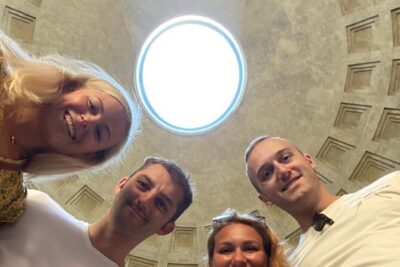
The dome is the main event. You learn about the engineering choices that made it possible, including the way Roman construction could manage weight and pressure across such a large span. The oculus at the center is part of the design, not a later opening added for effect. It brings in the daylight that gives the room its changing mood.
Because the tour lasts about 30 minutes inside the Pantheon after the opening explanation, the pace is brisk but manageable. You have time to look up, inspect the marble, and ask questions, but this is not a long architectural seminar. If you enjoy lingering over chapels, inscriptions, or details in the floor, you will appreciate having extra time after the guide finishes.
The strongest part of this experience depends on the individual guide. Francesca is repeatedly praised for her explanations, humor, and enthusiasm. Paul is noted for storytelling and a clear passion for Roman history. Samuel, Chiara, Federica, Annalisa, Mario, Aly, and others have also led tours described as warm, patient, and engaging.
You cannot choose a particular guide based on the information available, but the pattern is useful. This is not simply an entry escort. The guide is there to interpret the building, answer questions, and make a short visit feel purposeful.
Raphael’s tomb and the Pantheon as a church
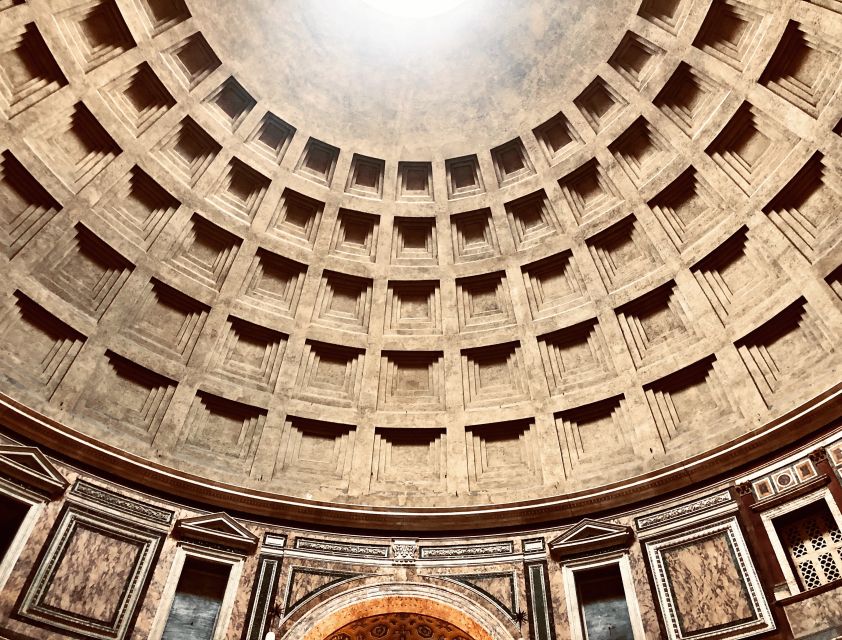
The Pantheon’s Christian chapter changes the way you read the interior. It is not preserved only as an ancient Roman temple. It has continued as a place of Christian worship, which is why suitable clothing is required.
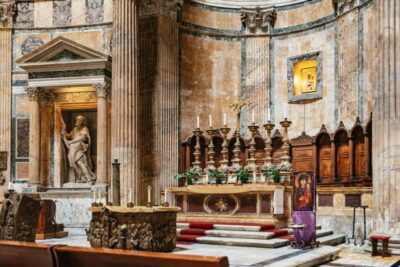
Your guide discusses its use as a church and as a resting place for Christian martyrs, Italian royals, and important artists. Raphael’s tomb is the best-known example. The famous Renaissance artist chose to be buried here, linking the Pantheon’s ancient architecture to the artists and architects who admired it centuries later.
That detail also explains the connection to Michelangelo mentioned during the tour. The Pantheon has long been treated as an architectural model by later artists. You are not only seeing a Roman monument, but also a building that influenced the way Europeans thought about monumental design.
Keep your expectations practical. The Pantheon remains an active church, so access can change during special events. If the church closes its doors to visitors, the tour can be rescheduled or refunded in full. This is one reason to avoid building an overly tight schedule around the visit.
A few more things to do in Rome
- Vatican: Museums & Sistine Chapel Entrance Ticket
★ 4.5 · 144,003 reviews - Rome:Hop-On Hop-Off Panoramic Open Bus Ticket 3 Circuits x 1
★ 4.0 · 15,405 reviews - Vatican Museums & Sistine Chapel Skip-the-Line Entry Ticket
★ 4.4 · 13,838 reviews - Rome: Vatican Museums & Sistine Chapel Skip-The-Line Ticket
★ 4.2 · 11,708 reviews
The optional 40-minute walk through central Rome
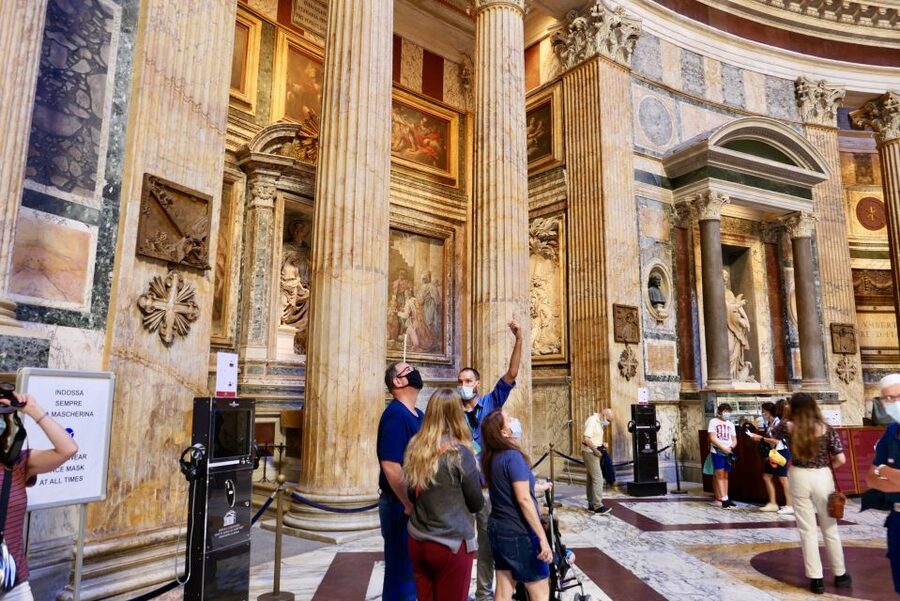
The extended version adds another 40 minutes outside the Pantheon. It is a good choice if you want help connecting the monument to the surrounding city.
The first additional stop is Piazza della Minerva, a smaller square near the Pantheon. Its scale offers a useful contrast with the grand spaces elsewhere in Rome. Your guide provides more local history and points out nearby churches and details that are easy to miss when you move from one major sight to the next.
The route then includes the Temple of Hadrian. The surviving columns give you a direct look at how ancient structures have been absorbed into modern Rome. The stop is brief, but it adds another Roman-era monument without requiring a separate trip across town.
The walk continues toward Piazza Navona. This is one of Rome’s major public squares, and it is a natural place to finish a central-city orientation. You get time to walk and take in the setting rather than simply stopping for a quick photograph.
The extra section is especially useful if this is your first day in Rome. It gives you a sense of how close many historic sites are to one another, while your guide supplies the links between them. Several guides have also offered restaurant suggestions or pointed people toward less crowded squares and museums, though those extras should not be treated as guaranteed parts of the route.
The drawback is that the extension makes the activity less compact. If you have a reservation elsewhere or are visiting Rome in hot weather, the additional walking may feel less attractive than a short Pantheon-only visit. Check the selected option when booking so you know if you have reserved 40 or 80 minutes.
Is $53 a fair price?
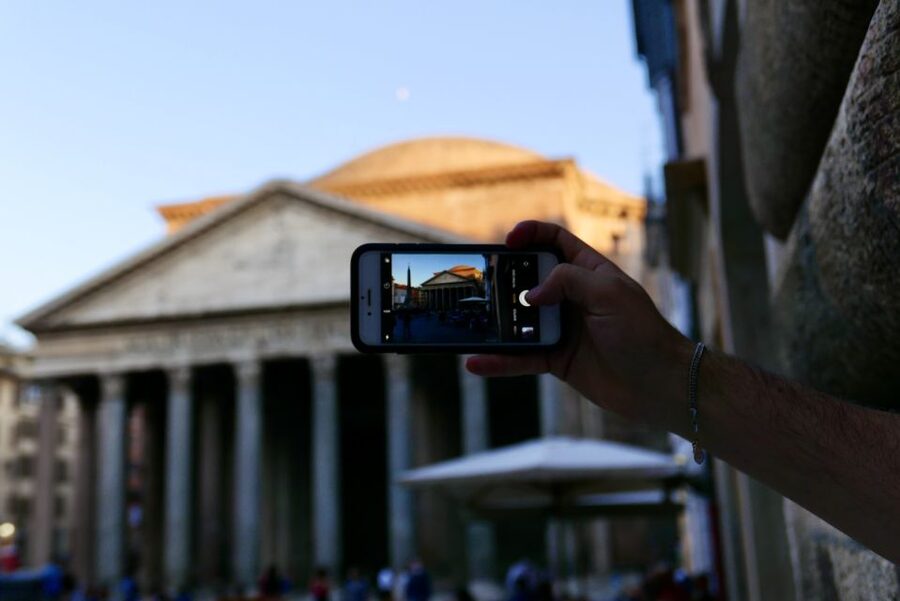
At $53 per person, this is not the cheapest way to enter the Pantheon. The value comes from the combination of entry, a live guide, headsets, and the chance to avoid the regular entry queue.
The fee makes the most sense if you want the monument explained rather than simply photographed. A self-guided visit can show you the dome and marble, but it will not automatically explain the building’s proportions, Egyptian columns, Christian history, or Raphael’s burial place.
The small group also matters. With no more than 10 people, you have a better chance of hearing the guide and getting an answer to a specific question. Some departures may be even smaller, and private options are available for those who want a more personal pace.
I would consider the price worthwhile for a first visit, particularly if you are short on time. If you already have strong knowledge of Roman architecture and do not mind waiting or arranging entry yourself, you may prefer to visit independently.
The extended option improves the value for people who want a short orientation walk through central Rome. You are paying for interpretation and structure, not just transport from one place to another. There is no hotel pickup, food, or drink included, but none of those would add much to this compact city-center experience.
Timing, clothing, and practical details
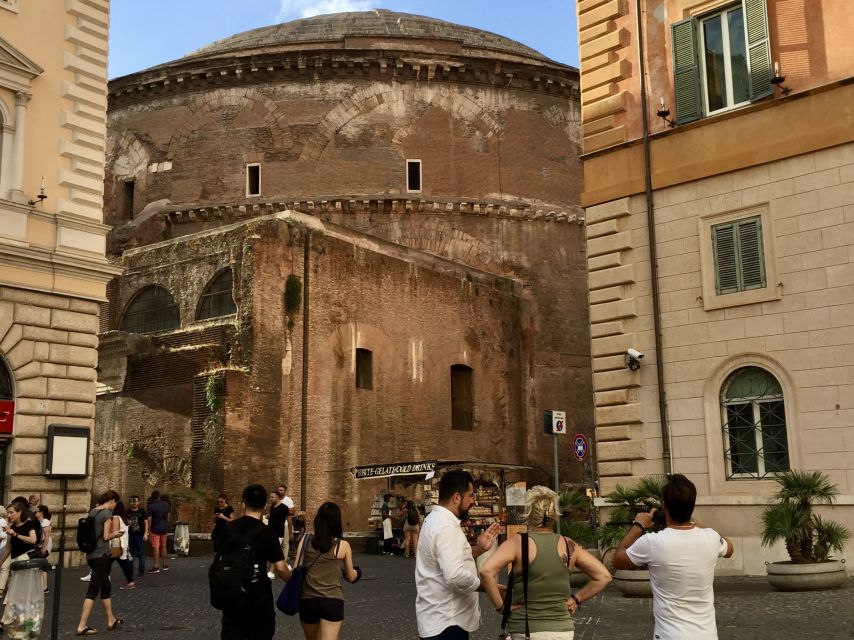
The Pantheon is a church today, so cover your shoulders and knees. Do not arrive in shorts, a short skirt, or a sleeveless shirt and expect to enter. A light layer is useful in Rome because it can solve the dress issue without adding much weight to your day bag.
Arrive five minutes before the start time at the fountain. The activity does not include hotel pickup or drop-off, so you must make your own way to the Pantheon.
The basic experience lasts 40 minutes. The extended version lasts 80 minutes and adds the outdoor walk. Starting times vary, so check availability for your date.
You can cancel up to 24 hours before the start for a full refund, and the reserve-now, pay-later option keeps you from paying at the time of booking. If a special event closes the Pantheon, you can reschedule or receive a full refund.
The tour is not built around food, shopping, or long free periods. It is a focused history and architecture visit. That makes it easy to fit between other central Rome plans.
Who will enjoy this Pantheon tour most?
This tour suits you if you want a clear explanation without committing to a half-day activity. Families can benefit from the stories and the short format, while older children and teenagers may find the engineering questions more interesting than a long chronological lecture.
It also works well for first-time visitors who want to get their bearings around the Pantheon, Piazza della Minerva, and Piazza Navona. The extended walk adds useful context before you explore the area on your own.
Architecture fans will appreciate the focus on the dome, proportions, materials, and construction. Art lovers will value the discussion of Raphael and the way later artists looked to the Pantheon.
You may want to skip it if you prefer to wander alone, already know the monument well, or have only a few minutes before another fixed appointment. The 40-minute format is efficient, but it leaves little time for a slow independent look during the guided portion.
Should you book it?
Book this tour if you want to understand why the Pantheon is more than an old temple with a spectacular roof. The combination of skip-the-line entry, a small group, headsets, and strong individual guides such as Francesca, Paul, Samuel, and Chiara makes the visit easier and more rewarding than a quick walk-through.
Choose the 40-minute option for a focused introduction. Choose the 80-minute version if you want nearby squares, the Temple of Hadrian, and Piazza Navona added to the same outing.
The main things to remember are simple: dress for a church, arrive early at the fountain, and do not expect hotel pickup or refreshments. For most first-time visitors to Rome, the $53 cost is justified by the time saved and the useful explanation packed into a short visit.
FAQ
How long does the Pantheon tour last?
The basic Pantheon tour lasts 40 minutes. An optional extension adds another 40 minutes, bringing the total to about 80 minutes.
Where is the meeting point?
Meet your guide at the fountain in front of the Pantheon entrance. The guide will carry a yellow sign with the Touriks logo.
How early should I arrive?
You should arrive at the meeting point five minutes before the tour starts.
Is the entrance fee included?
Yes. Entrance fees, a live professional guide, and headsets are included.
What languages are available?
Tours are available in English, Spanish, French, German, Italian, and Portuguese.
Is this a private tour?
Private and small-group options are available. Small groups have a maximum of 10 participants.
What should I wear to enter the Pantheon?
Because the Pantheon is now a church, your shoulders and knees must be covered. Shorts, short skirts, and sleeveless shirts are not allowed.
What happens if the Pantheon closes for a special event?
If the church closes its doors to visitors because of a special event, you can reschedule the tour or receive a full refund.
Just added in Rome
- Civitavecchia Private Transfer: From the Port to Rome Airport★ 5.0 · 309 reviews
- Civitavecchia Private Transfer from ship to FCO airport or Rome★ 5.0 · 245 reviews
- Civitavecchia Shore Excursion: Best of Rome Private Tour★ 5.0 · 247 reviews
- Food Tasty and History Tour in Civitavecchia★ 5.0 · 256 reviews
- Palatine Hill and Roman Forum Tour with Fast-Track Entrance★ 4.2 · 417 reviews
- Tivoli: Villa D’Este & Villa Adriana Pass & App Audioguide★ 4.4 · 364 reviews
- Tivoli: Villa D’Este Entry Ticket and App Audio Guide★ 4.3 · 191 reviews
- Vatican Museums & Sistine Chapel Skip-the-Line Guided Tour★ 4.6 · 254 reviews
Pantheon & Trevi Fountain Tours, compared.
Pantheon Fast-Track Ticket and Official Audio Guide
Read our review →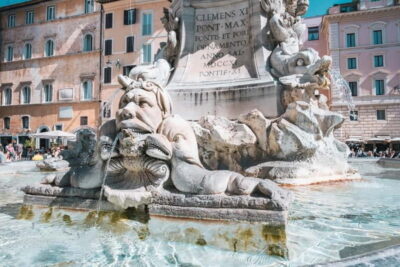
Pantheon Reserved Entry Ticket with Audio Guide
Read our review →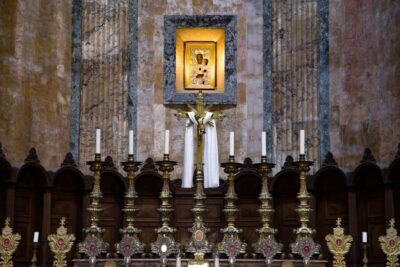
Pantheon Timeless Marvel Guided Tour with Entry Ticket
Read our review →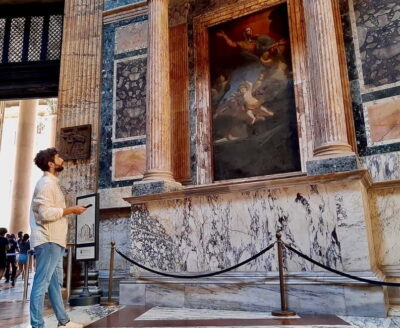
Pantheon Priority Entry Ticket & Audio Guide App
Read our review →
Pantheon Elite Guided Tour – Rome’s Iconic Ancient Temple
Read our review →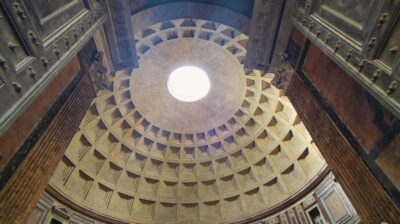
Pantheon Small-Group Guided Tour with Entry Ticket
Read our review →
Opera Concert at Palazzo Poli – Fontana di Trevi
Read our review →Browse the lists this tour appears in